 7 minutes
If you’re creating content that ranks, converts, and stands out, finding the right keywords is half the battle. In Contentpen, spotting high opportunity keywords, those with good traffic potential and low competition, is a breeze if you know where to look.
Here’s a step-by-step guide to help you uncover keywords that bring results without too much hassle.
Table of contents
- Step 01: Log in to your Contentpen dashboard
- Step 02: Add keywords manually or generate with AI
- Step 03: Filter keywords by opportunity
- Step 04: Analyze the keyword metrics
- Step 05: Generate articles instantly (Optional)
- Benefits of using high-opportunity keywords for your content
- Final words
- Frequently asked questions
Step 01: Log in to your Contentpen dashboard
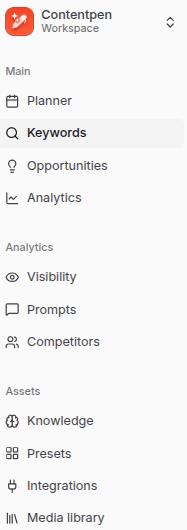
Once you’re logged in, go to the “Keywords” tab in the left-hand menu.
Step 02: Add keywords manually or generate with AI
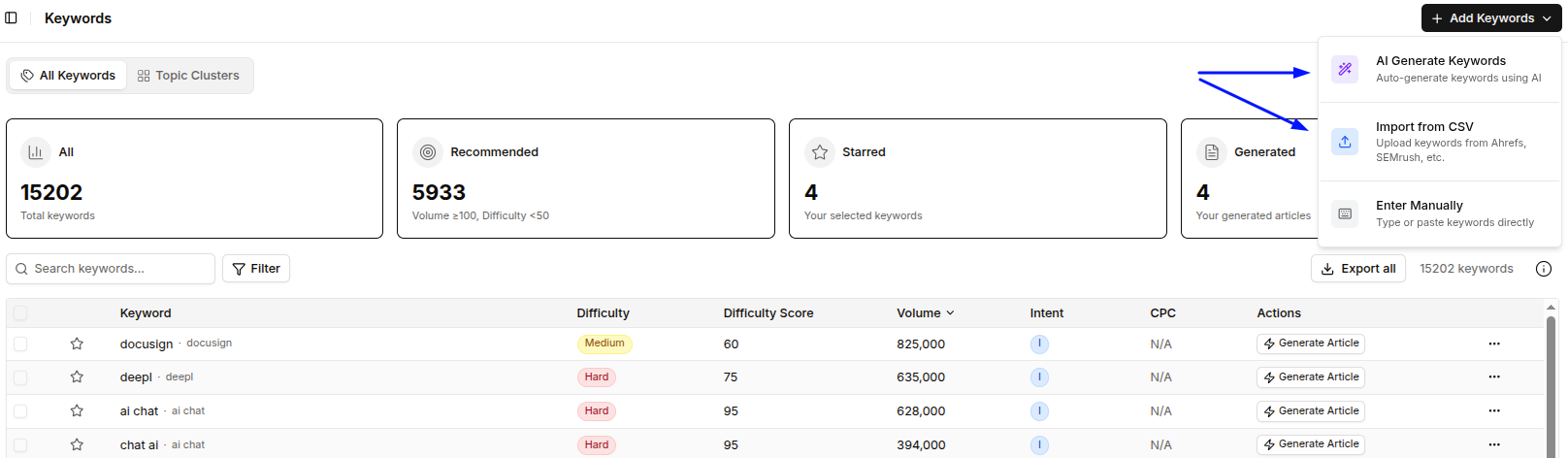
After that, you’ll be taken to a new window where you will be given three options.
You can either:
- Add keywords manually by typing them in one by one.
- Import from CSV to bring in keyword lists exported from Semrush, Ahrefs, or any other SEO tool.
- AI-generated keywords to let Contentpen suggest keywords based on your content pillars.
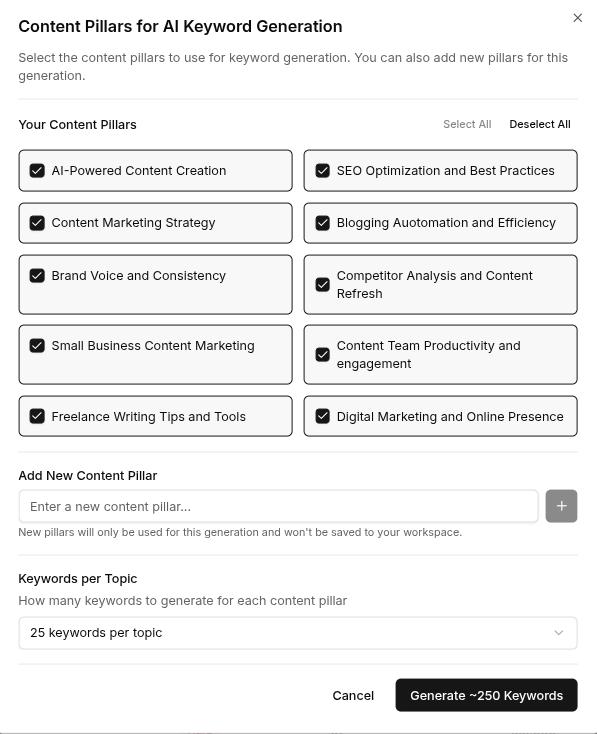
- If you choose ‘AI Generated Keywords’, you’ll be required to select or deselect your existing content pillars. The tool will also allow you to add a new content pillar if one doesn’t exist, and the option to change the number of keywords received per topic.
- If you choose the manual option, type each keyword and press Enter. Repeat this process until all keywords are added. Duplicates will be ignored by the system.

Also read: How to use Contentpen presets to save time and write faster?
Step 03: Filter keywords by opportunity
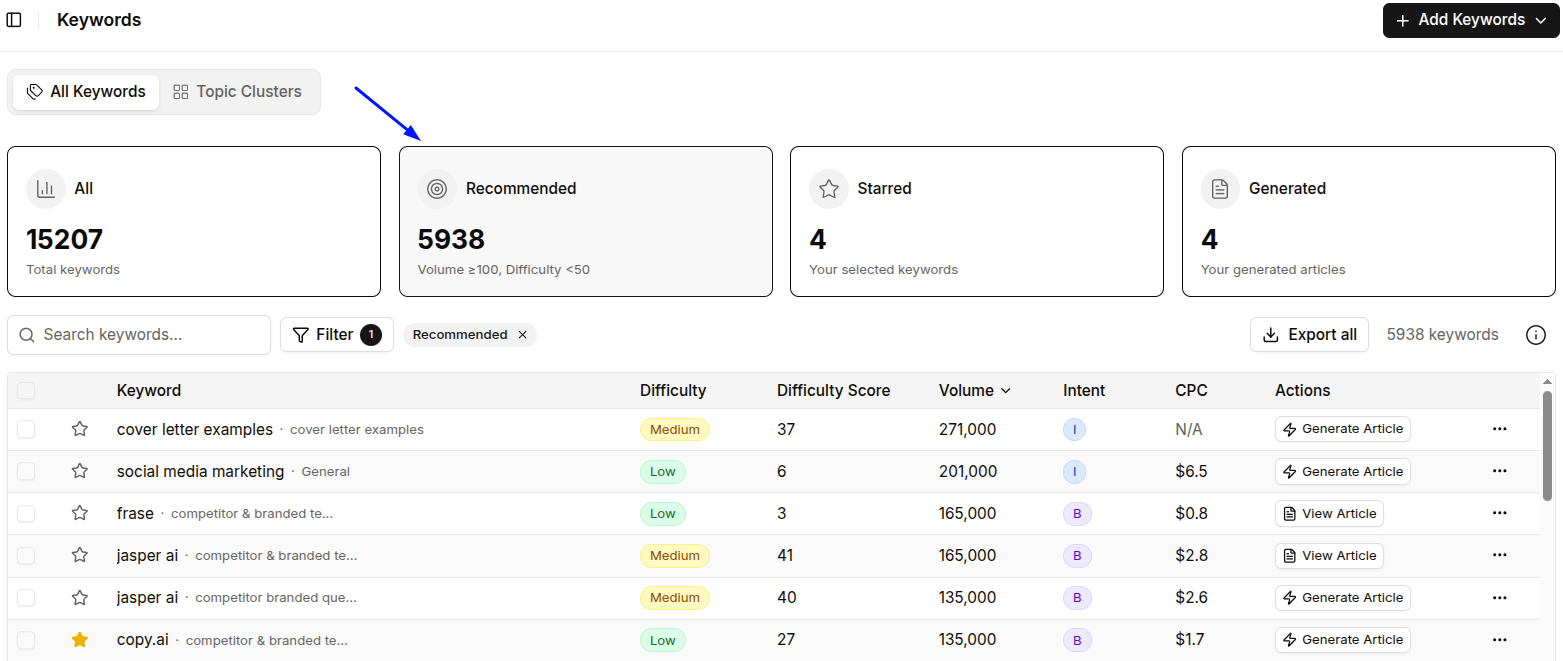
After entering your keywords, you’ll see four filter cards at the top of the page:
- All
- Recommended
- Starred
- Generated
From these cards, choose the ‘Recommended’ card to filter your list for keywords with high volume, high cost-per-click (CPC), and lower difficulty.
Step 04: Analyze the keyword metrics
Each keyword will show useful data such as:
- Difficulty and Difficulty Score: How hard it will be to rank, shown as a label and a number
- Volume: How many people search for the keyword each month
- Intent: Whether searchers want information, a comparison, or to buy
- CPC: What advertisers pay per click, which signals commercial value
- Actions: Star the keyword for later or generate an article from it
Look for keywords that combine reasonable volume, lower difficulty, and an intent that matches the content you want to create.
Step 05: Generate articles instantly (Optional)
Once you’ve narrowed down a high-opportunity keyword, click on “Generate article” to start creating content right away.
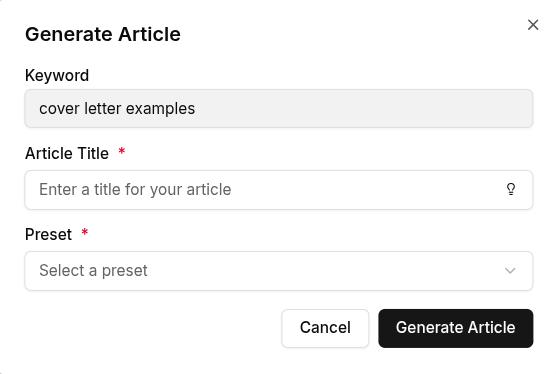
On this screen, enter the article title, or use integrated AI to suggest an SEO-optimized topic. Then, select your content preset, and you’ll get your complete article in a few minutes. No switching tabs or tools, Contentpen handles it all in one place.
Also read: How to create a blog in less than 10 minutes using content presets.
| 💡 Tip: Once you have published content, Contentpen can find opportunities for you. On the Growth plan and above, SEO opportunities flags quick wins, CTR gaps, and topics your competitors cover that you don’t, and Autopilot can find topics, write articles in your brand voice, and publish them on a schedule. |
Benefits of using high-opportunity keywords for your content
Here are the top benefits of using high-opportunity keywords for your content:
1. Faster rankings with less competition
High-opportunity keywords typically have lower competition, meaning fewer websites are actively targeting them. This allows your content to rank higher in search engine results more quickly, especially if your website is relatively new or doesn’t have a high domain authority.
Instead of struggling to outrank established competitors on broad, high-difficulty keywords, you can focus on terms where you have a realistic chance of appearing on the first page.
2. More targeted and qualified traffic
High-opportunity keywords often align with specific search intent. Users searching for them usually have a clear idea of what they’re looking for, whether it’s information, a solution, or a product.
By targeting these terms, you’re more likely to attract visitors who are genuinely interested in your content, product, or service, resulting in higher engagement and conversion rates. Specific, intent-driven keywords also tend to match the questions people ask AI engines like ChatGPT and Perplexity, giving your content a better chance of being cited in AI answers.
3. Higher return on content investment
Creating content requires time, research, and resources. High-opportunity keywords enable more value from that investment.

Automated keyword research
Work on keywords worth writing for
Get search terms with real ranking potential, not just high volume.
Try Keyword Research for FREE →
Since these keywords are easier to rank for and still offer decent traffic potential, you can achieve meaningful SEO results without a large budget or a long wait. This is especially beneficial for small businesses, startups, and agencies aiming for efficiency.
4. Smarter content planning and topic selection
Focusing on high-opportunity keywords allows you to build a content strategy around real search gaps in your niche. You’re not just creating random content, you’re addressing actual queries that aren’t yet fully answered by competitors.
This not only improves your chances of ranking but also positions your brand as a valuable and helpful resource in your industry.
5. Data-driven decision-making
High-opportunity keywords are identified through clear SEO metrics such as search volume, keyword difficulty, CPC, and user intent.
This means you’re making informed decisions based on actual data, not just assumptions. It ensures that the topics you target have both demand and potential, reducing the risk of wasting time on content that won’t perform.
Final words
High-opportunity keywords equal faster rankings, more traffic, and better results. With Contentpen’s keyword research tools, you’re not guessing; you’re building content around real data and real potential.
So before you write, let our AEO SEO tool guide you to the keywords that help you build topical authority in search and visibility in AI answers.
From outline to publish-ready content that fills them

Structured
Consistent
SEO-aligned
Fast