SERP analyzer

Cover what page one missed and take its place
Contentpen’s SERP analyzer reads the top results for your keyword, finds the subtopics and questions they skip, and writes an SEO- and GEO-optimized blog that covers them all.




The SERP gap analyzer that ends with a draft
Live SERP breakdown
Competitor keyword mapping
Outlines built from the gaps
How to find and fix your content gaps with Contentpen
Our content gap analysis tool does the research for you. Here’s how it works in three simple steps.
Step 1: Choose your target keyword and market
Set your target keyword, language, and country. The SERP analyzer pulls the pages ranking for that search in the exact region, helping you earn qualified clicks and visibility.
Step 2: See what competitors are covering
Choose two-step generation to review the full SERP competitor analysis and knowledge tabs before any content is written. Or pick the one-shot mode, and the AI pulls in the research and builds the blog for you.
Step 3: Generate content that dominates SERPs
Create SEO- and GEO-optimized articles that capitalize on the SERP and gap analysis conducted by Contentpen to win rankings and AI citations.
See the full picture of any SERP instantly
Contentpen performs a proper Google SERP analysis and pulls up the top-ranking pages for your target keyword. It gives you a written breakdown of their structure and depth, so you know exactly what to cover before you write.


Write for the intent search engines already reward
Built-in search intent analysis tags each keyword as informational, commercial, branded, or transactional and recommends the intent your article should serve, so the format fits before the first draft.
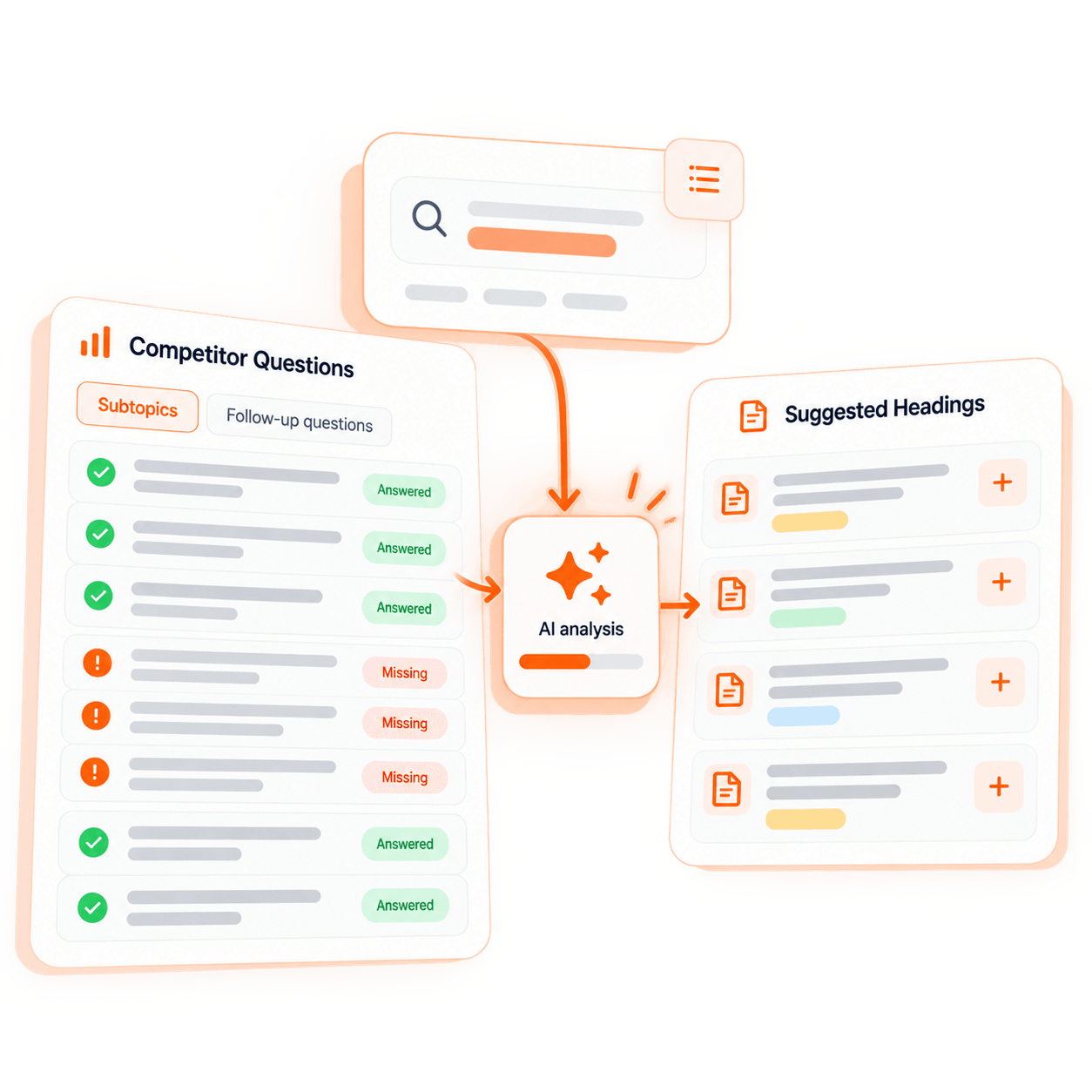
Answer the questions competitors left hanging
Readers arrive with follow-up questions. Our AI agents pull the subtopics and queries around your keyword and mark the ones your rivals skip, turning SEO content gap analysis into headings you can use.
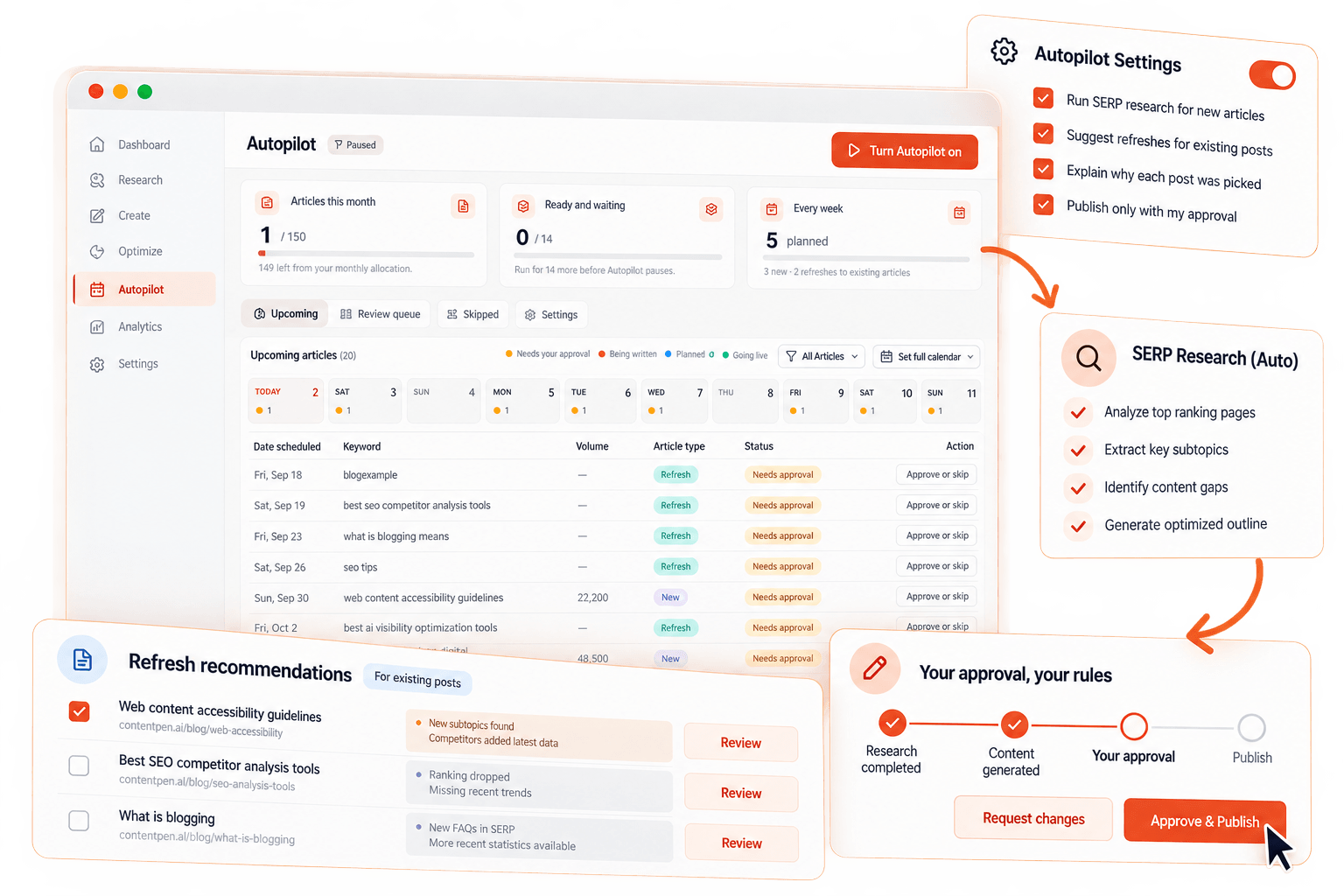
Put SERP research on repeat with Autopilot
Turn on Contentpen’s Autopilot, and every new, planned article will get the same SERP research without you starting it. It also suggests refreshes for existing posts, explains why each was picked, what will change, and publishes content only with the approval settings you choose.
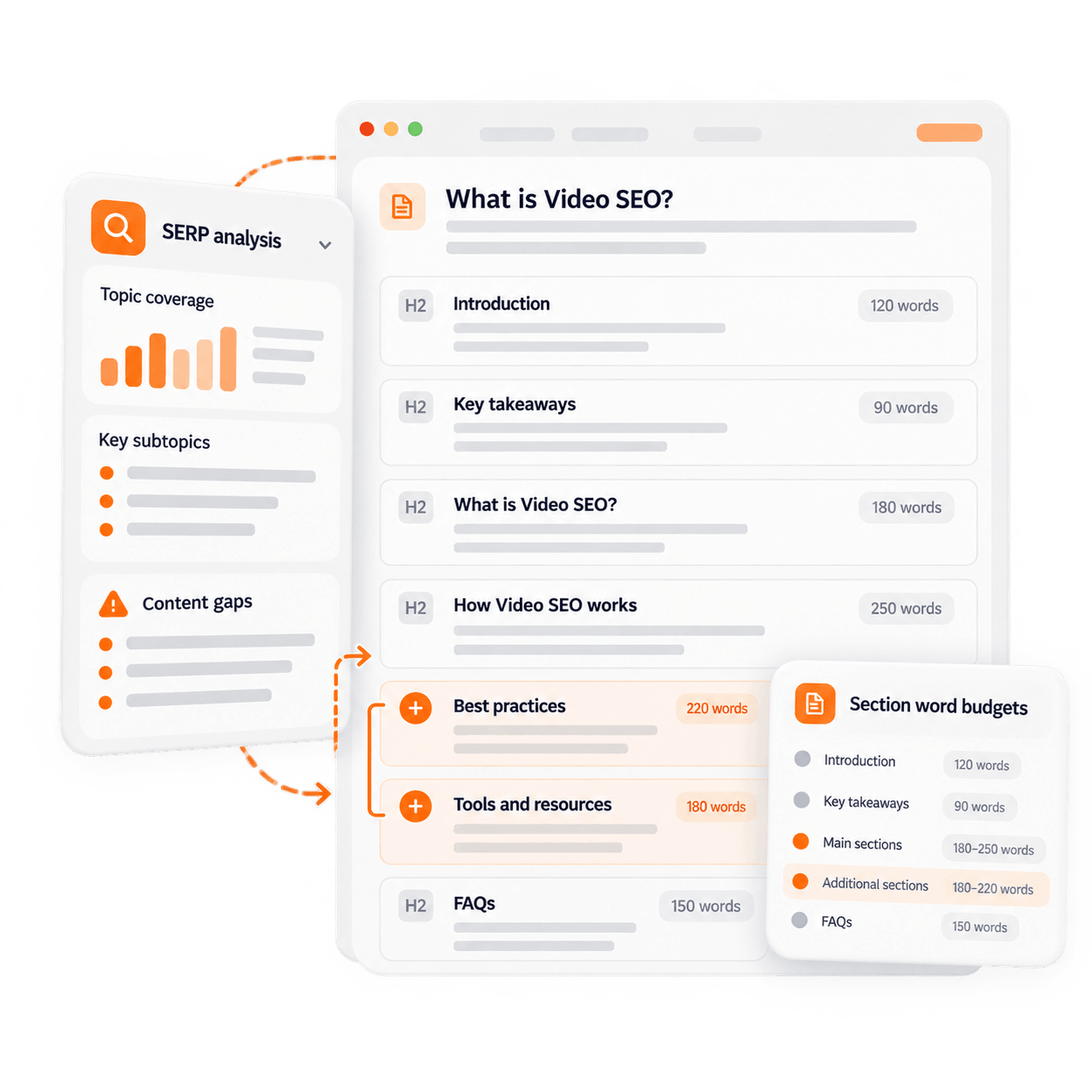
Depth set by the topic, not a template
Contentpen sizes each outline to what the SERP covers, gives every section its own word budget, and adds headings when the topic demands them. No gap gets cut to fit a format in our SEO tool.
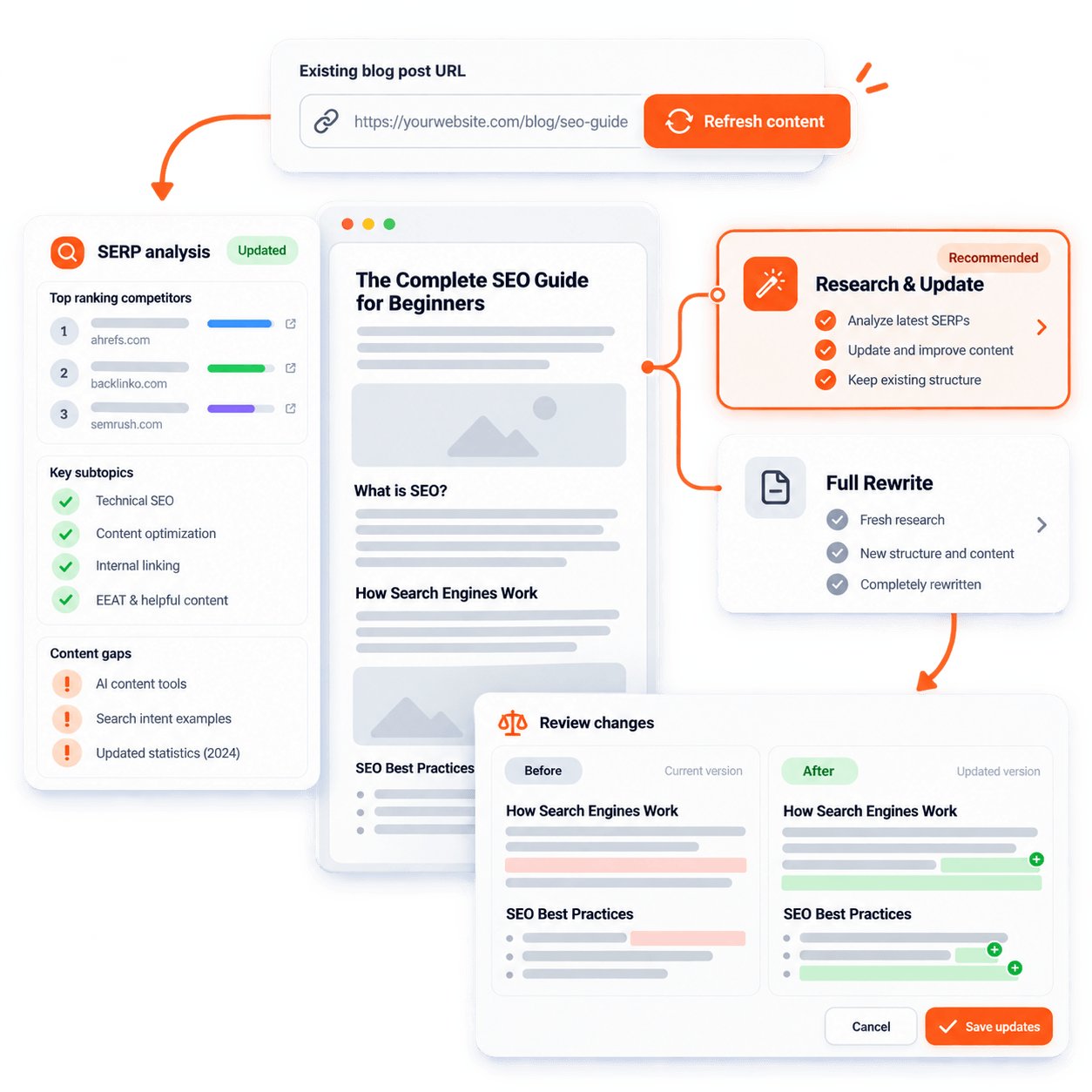
Close the gaps on posts you already published
Paste an older post's URL into Content Refresh, and run a fresh SERP analysis against current results. Choose ‘Research & Update’ to add what's missing while your structure stays intact, or ‘Full Rewrite’ for a complete do-over. Review every change side by side before you save.
What it costs to publish without checking SERPs
Every post you publish without SERP research competes against pages that already did the homework. Here’s where it shows up.
Your post gets left unread
If your article covers the same points as the ten pages above it, Google has no reason to swap one of them out for yours. So, your content remains unread, which means no conversion opportunities for your business.
The right topic in the wrong format
A how-to guide aimed at a keyword where buyers want comparisons won’t rank, no matter how well it’s written. That’s hours spent on a page searchers skip.
Unanswered questions send readers elsewhere
Readers who can’t find their follow-up answer on your page head back to the results page, which leads them to a competitor’s site.
Fixing it later costs more than covering it now
A post that misses key subtopics sits on page two until someone rewrites it. Covering the gaps before you publish is cheaper than a refresh three months later.
Read the SERP, publish the winner
Point our SERP analysis tool at your next keyword, then let Contentpen create an SEO- and GEO-optimized article that covers everything page one misses.
Teams that stopped guessing what to write
Hear from marketers and SEO leads about what changed once their briefs started with real SERP data in Contentpen.

“Contentpen spotted 7 keyword gaps our client’s top competitor was owning. Instant clarity on what to create next.”
 @JeremyHillsFounder, Rankline Agency
“I wrote a blog post for one of my hospital clients using Contentpen. Once it got indexed, it started ranking at position 4 on the first page of Google. What's interesting is that I didn't build a single backlink.”
#4position0backlinks Ankit PrajapatiCEO at Consultant Ankit
“Contentpen helped us establish our presence both on SEO and AI search. Top-Quality content at the speed of thought.”
 Alban TaraireGeneral Manager at NETK5 Technology Group
“Contentpen delivers amazing quality blog posts and saves hours of research. It's fast, reliable, and perfect for efficient content creation.”
 Raj KandelMortgage Broker at Everest Home Loans
“I spend my time saved from blog writing and SEO tasks on building relationships with my clients, which actually benefits my business.”
$1000saved3-8h/weeksaved Keith HillPresident at Go Smart Mortgage
 AlaminMarketing content creator
“After publishing our first 23 blogs through Contentpen, we noticed steady keyword growth in Google Search Console within three weeks. Impressions and clicks doubled, and a few articles started ranking on page one without paid promotion.”
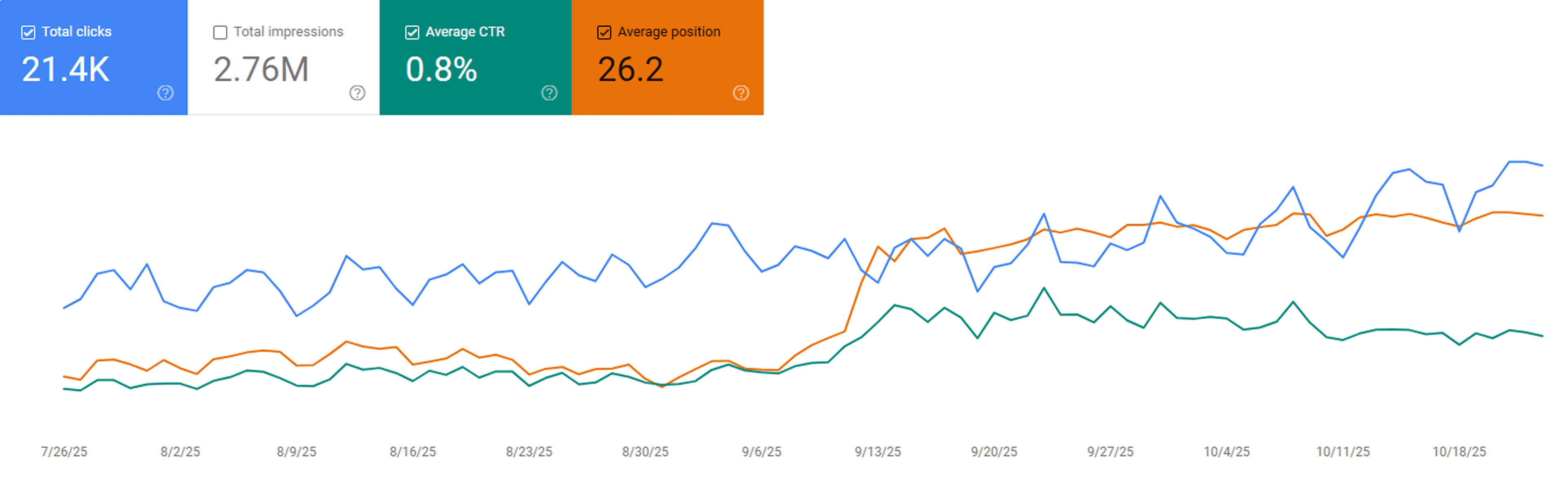
 Sarah MalikSEO manager at GrowthHive
“We analyzed our new posts in Ahrefs and saw a clear lift in organic keywords and referring domains. The internal link suggestions from Contentpen helped us strengthen our site structure, which improved our overall domain visibility.”
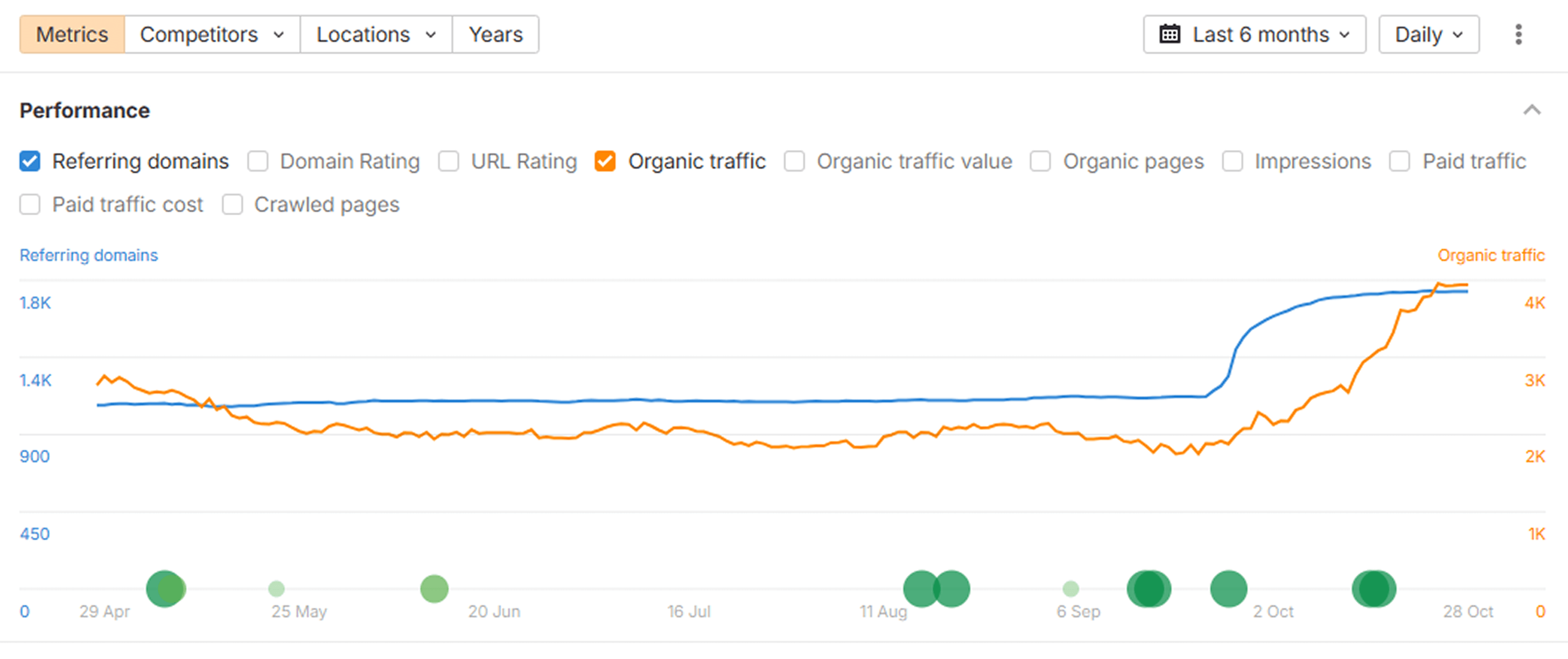
 Daniel LeeContent strategist at BrightScale Media
“Before Contentpen, writing and publishing a blog took us a full day. Now we handle topic research, writing, and publishing in under an hour. Our organic traffic has grown 40% since streamlining our content process.”
 Ayesha KhanMarketing lead at CloudNest Solutions
“Tried Contentpen’s SERP and gap analysis before our next content sprint and found topics we’d completely missed. Rankings started moving within weeks.”
 Priya MalhotraSEO manager, CloudStack
What research-first content does for traffic
Blogs published
Increase in organic clicks
Higher organic traffic
Faster content production
Frequently asked questions
Learn how Contentpen automates SERP and gap analysis. Help your team win AI and traditional search.
Pair your SERP research with the rest of your stack
You've found the gaps. The features below will help you pick the next keyword, get cited by AI, and keep the whole content cycle running.
Blog creation
Generate high-quality, SEO-optimized blog articles in minutes using AI trained for ranking content.
Keyword Research
Get high-intent keywords, search trends, and ranking opportunities tailored to your niche.
Organic traffic optimizer
Continuously analyze and optimize content to improve rankings and grow organic search traffic.
SEO scoring
Get audit scores and suggestions for keyword usage, readability, and ranking signals before publishing.
Content planning & scheduling
Build content calendars, automate workflows, and plan topics that drive organic growth.
Integration & publishing
Connect your CMS and publish content directly from Contentpen without switching tools.
Bulk content creation
Produce large volumes of consistent, SEO and GEO-optimized content at scale with batch generation.
Built-in media library
No more asset hunting, everything you need is built in.
AI linking assistant
Turn every article into a traffic network with AI-powered linking.
SEO opportunities
Automatically uncover quick wins, content decay, and CTR gaps, and turn insights into actions with one-click content refreshes.
Website analytics
Track clicks, impressions, CTR, and rankings directly from Google Search Console to understand what's driving your organic performance.
AI search optimization tool
Make your content AI-ready, structured, and easy to surface
Learn more about SERP and gap analysis with Contentpen
What is SERP analysis?
SERP analysis is the process of studying the pages that rank for a keyword to understand what Google, Bing, and other search engines reward for that query. You look at who ranks, which format wins, and which subtopics others cover.
The goal is to write content that matches the intent and beats the competitors on topical depth to gain better rankings and visibility.
How to do a SERP analysis in five steps
- Search your keyword in a private window set to your target country, so personal history doesn't skew the results.
- Note the SERP features that appear, such as AI Overviews, featured snippets, videos, or People Also Ask boxes.
- Sort the top results by intent and format, whether they are guides, listicles, product pages, or forum threads.
- List the subtopics and questions each page covers, and note where they overlap.
- Mark what none of them answer well. That is your gap and your angle to cover to gain the top spots in AI and traditional search.
Contentpen automatically extracts the competitors’ information every time you hit generate or refresh an article, and shows you all the findings in the content editor.
SERP analysis vs content gap analysis vs keyword gap analysis
These three terms get swapped around a lot, but each one answers a different question.
| Method | What it compares | The question it answers | Where it is found in Contentpen |
|---|---|---|---|
| SERP analysis | The pages ranking for one keyword | What does Google reward for this search? | Every article brief |
| Content gap analysis | Your article against other ranking pages | What is the post missing, content-wise? | SERP Knowledge for new drafts, Content Refresh option for published posts |
| Keyword gap analysis | Your whole site against competitor sites | Which subtopics or ideas do rivals cover that you haven't? | SEO opportunities tab |
Why page one shapes AI answers too
AI Overviews and assistants like ChatGPT and Perplexity often cite pages that already rank well. So, getting to page one also means improving your chances to get cited by AI systems.
Contentpen lets you set a target AI prompt for each article and scores every draft for SEO and GEO. Once you publish content, the AI visibility tool shows you whether those AI responses start mentioning your brand or not, without leaving the interface.
Show up everywhere your buyers search
Start free and put Contentpen on autopilot to turn search into your most reliable growth channel.




Trusted by 25,000+ marketers