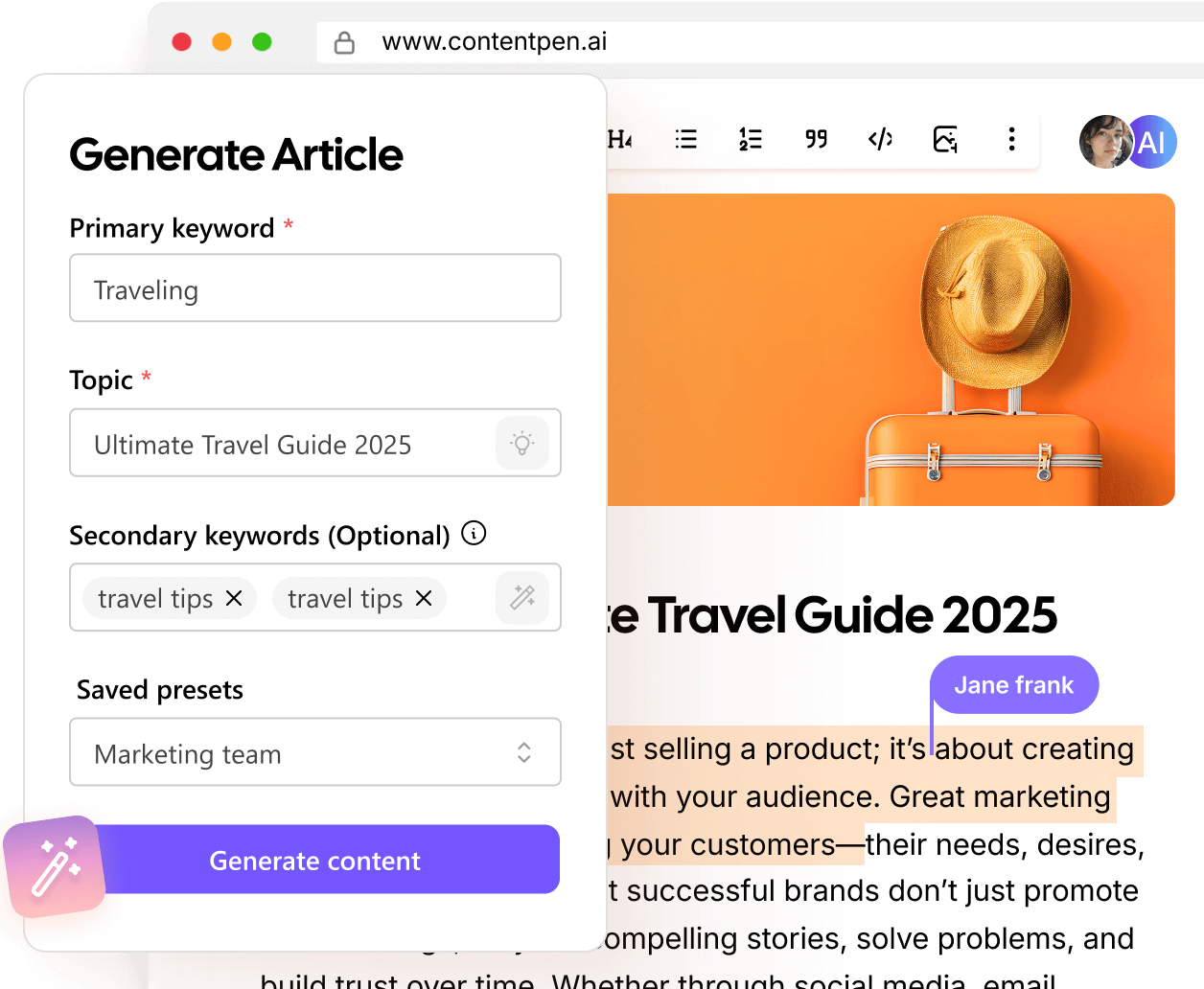
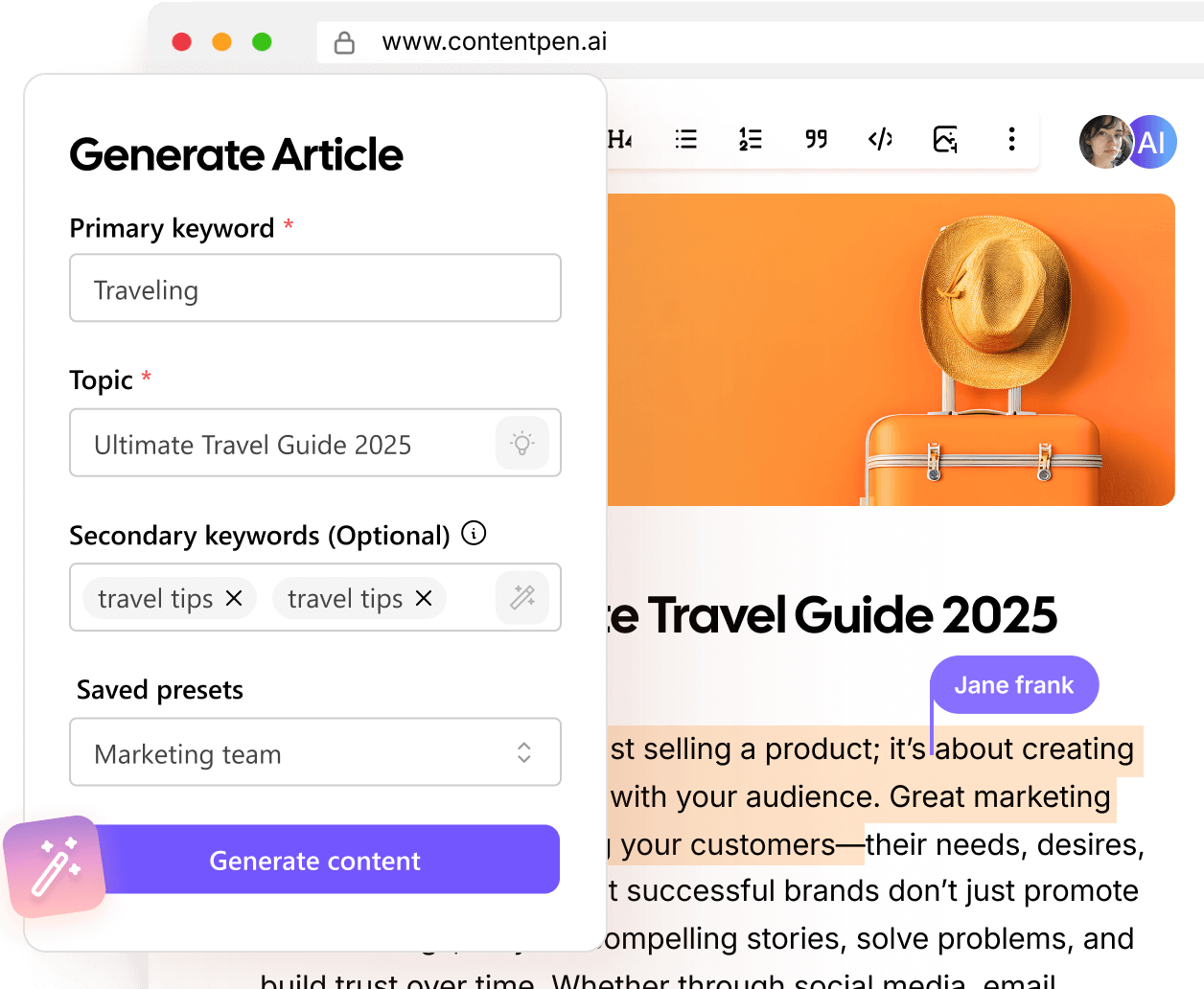
Keyword research tool

Find the keywords your audience is actually searching for
Contentpen suggests keywords based on your brand, complete with volume, intent, difficulty, and CPC, and turns them into topic clusters so you can go from research to published content without switching tools.





80K+ blogs generated
Turn keywords into growth
Keyword volume, intent & difficulty
Import or export your keywords
SEO-ready topic clusters
How to do keyword research with Contentpen
Enter your brand or niche, and Contentpen pulls up keyword suggestions with volume, intent, difficulty, and CPC. From there, you can pick and choose the ones you like, or search more, build topic clusters, and jump straight into content creation.
1. Find your keywords
Type in your brand name or a topic, and Contentpen suggests relevant keywords for your niche. You can also import your own keywords to check their metrics instantly.
2. Check the keyword metrics
Each keyword comes with search volume, intent, difficulty score, difficulty percentage, and CPC, so you know exactly which ones are worth targeting before you create a single piece of content.
3. Build clusters and create content
Group your keywords into topic clusters with one click and generate SEO-optimized content directly from them, no extra tools, no extra steps.
Compare the metrics that actually matter
Volume, difficulty, difficulty percentage, and CPC are all visible for every keyword in your dashboard. You can compare them side by side and make decisions based on data, not gut feelings.
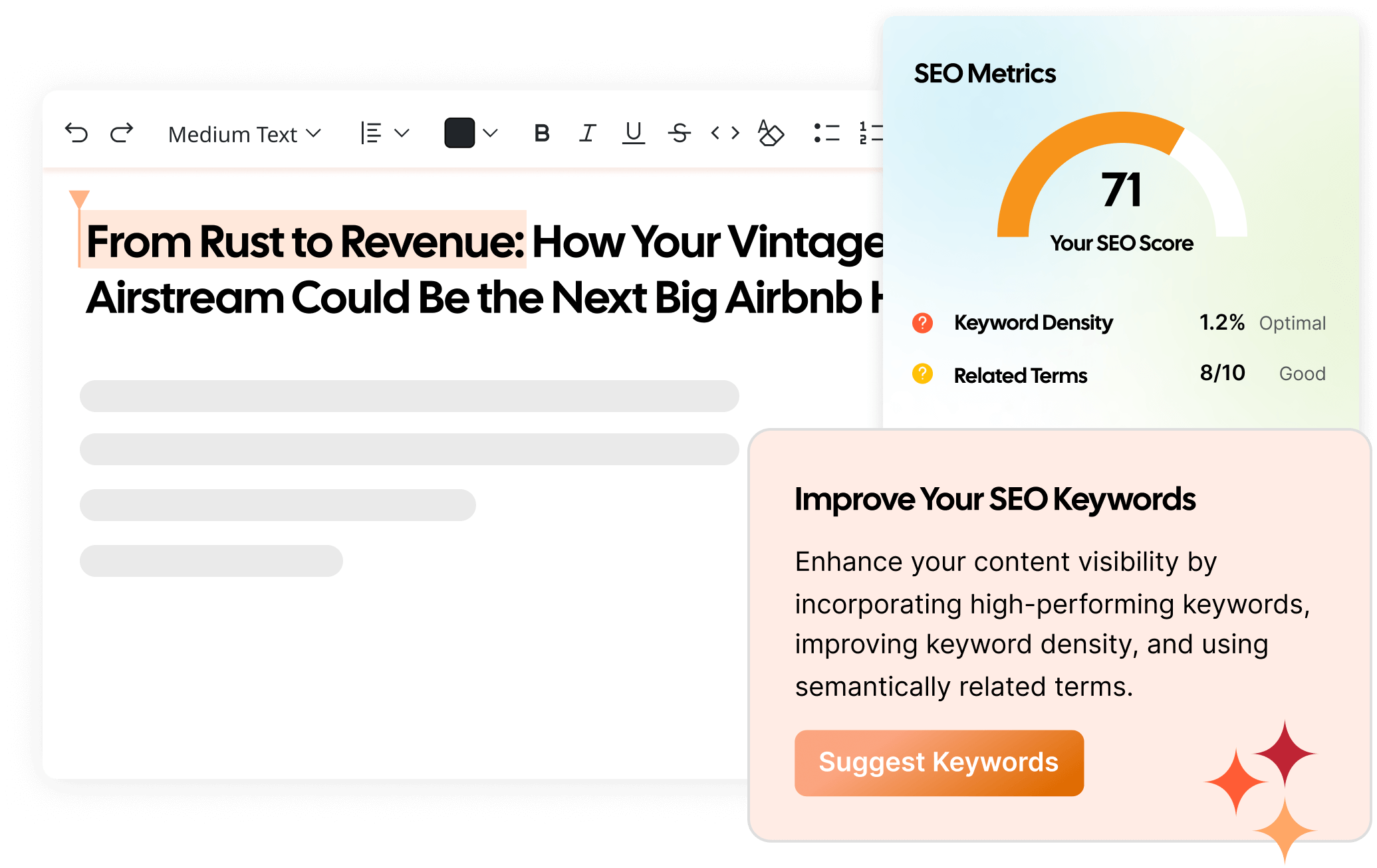
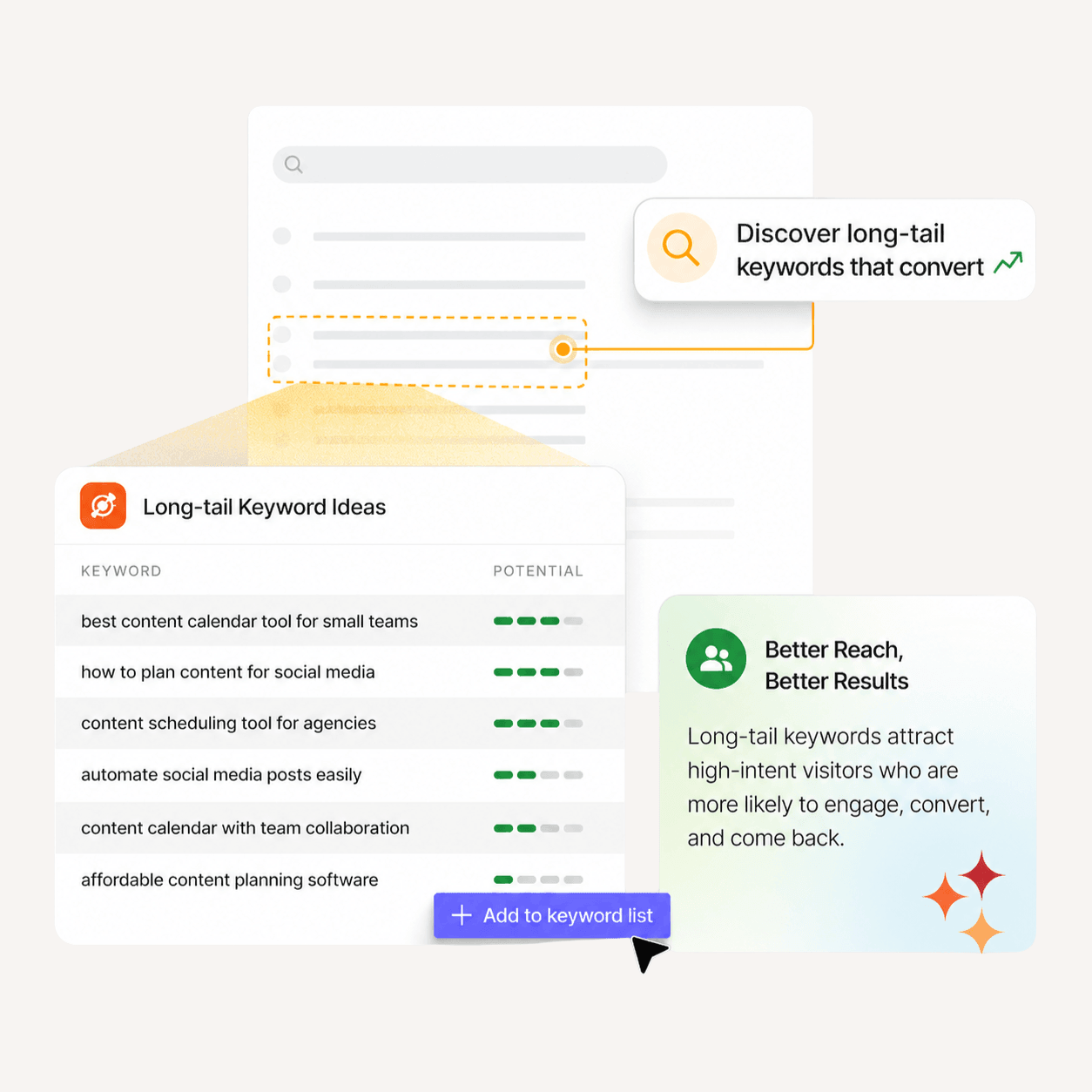
Find long-tail keywords worth targeting
Short keywords are competitive. Long-tail ones convert better and rank faster. Contentpen surfaces specific, intent-rich phrases your audience is searching for, so your content reaches the right people at the right moment.
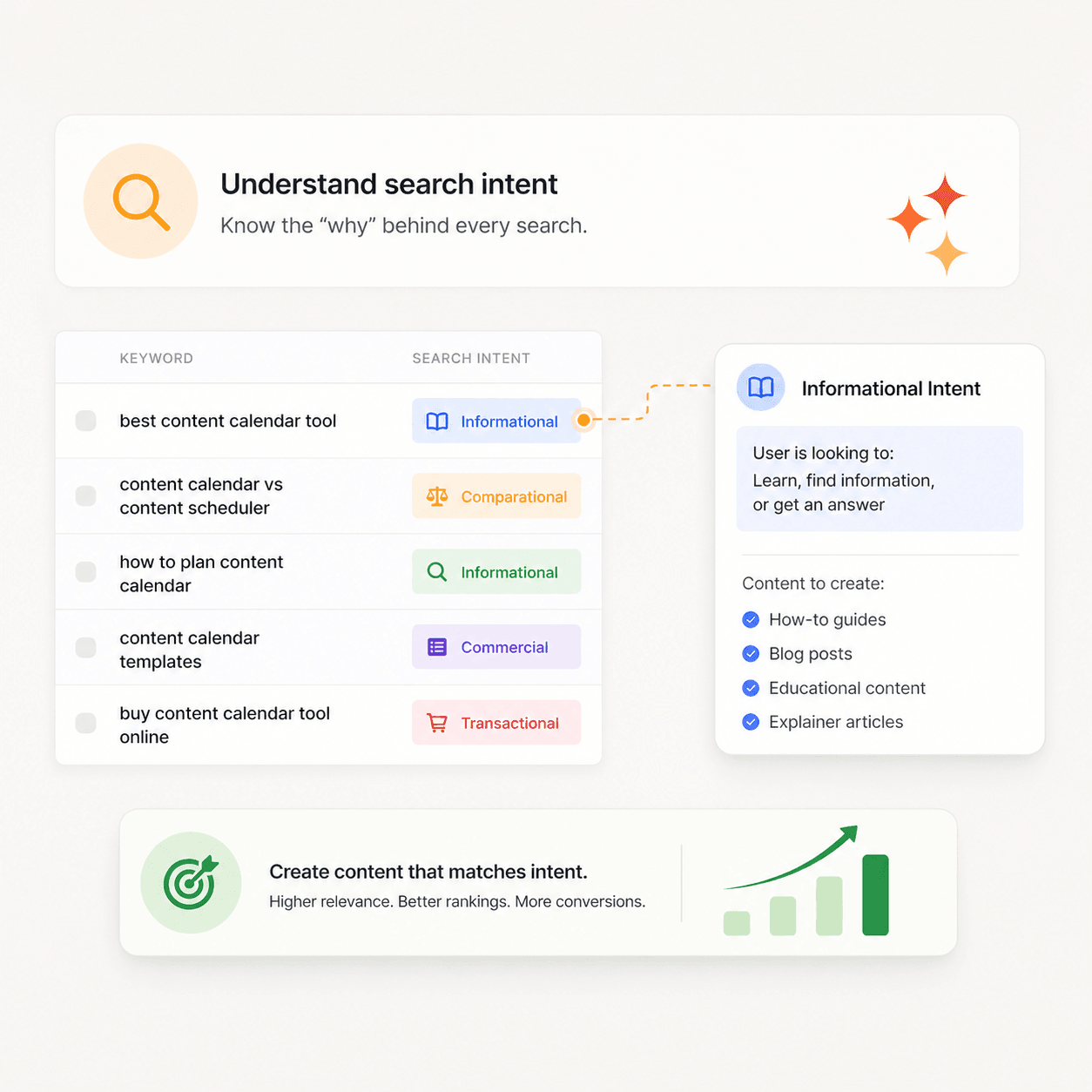
Understand why someone is searching
A keyword without intent context is just a word. Contentpen tags every keyword with its search intent so you know whether someone is researching, comparing, or ready to buy, and you can write content that matches exactly what they need.
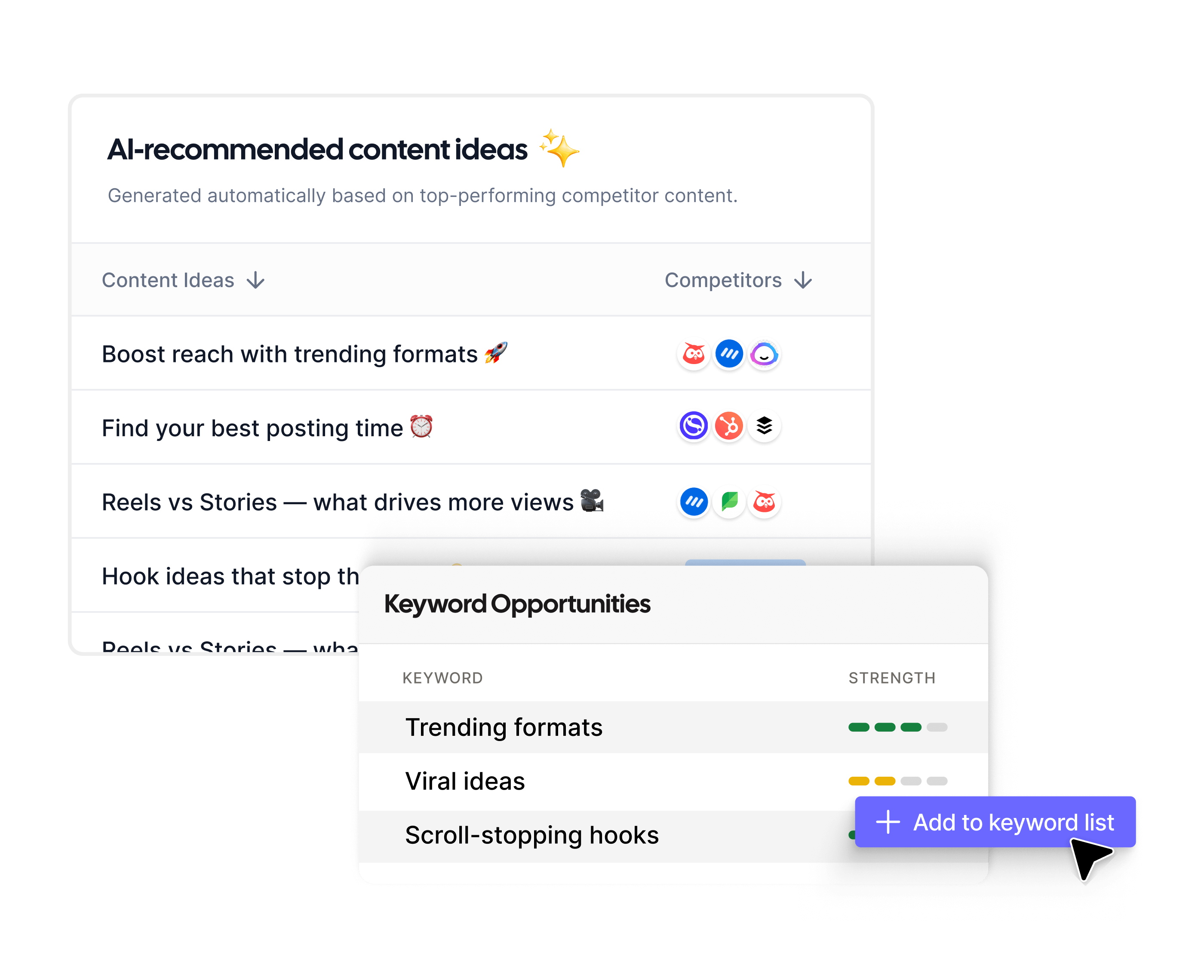
Get keyword ideas you hadn't thought of
Type in your brand or topic, and Contentpen generates a full list of related keyword suggestions. You'll regularly find angles you hadn't considered, which means more content opportunities and wider search coverage over time.
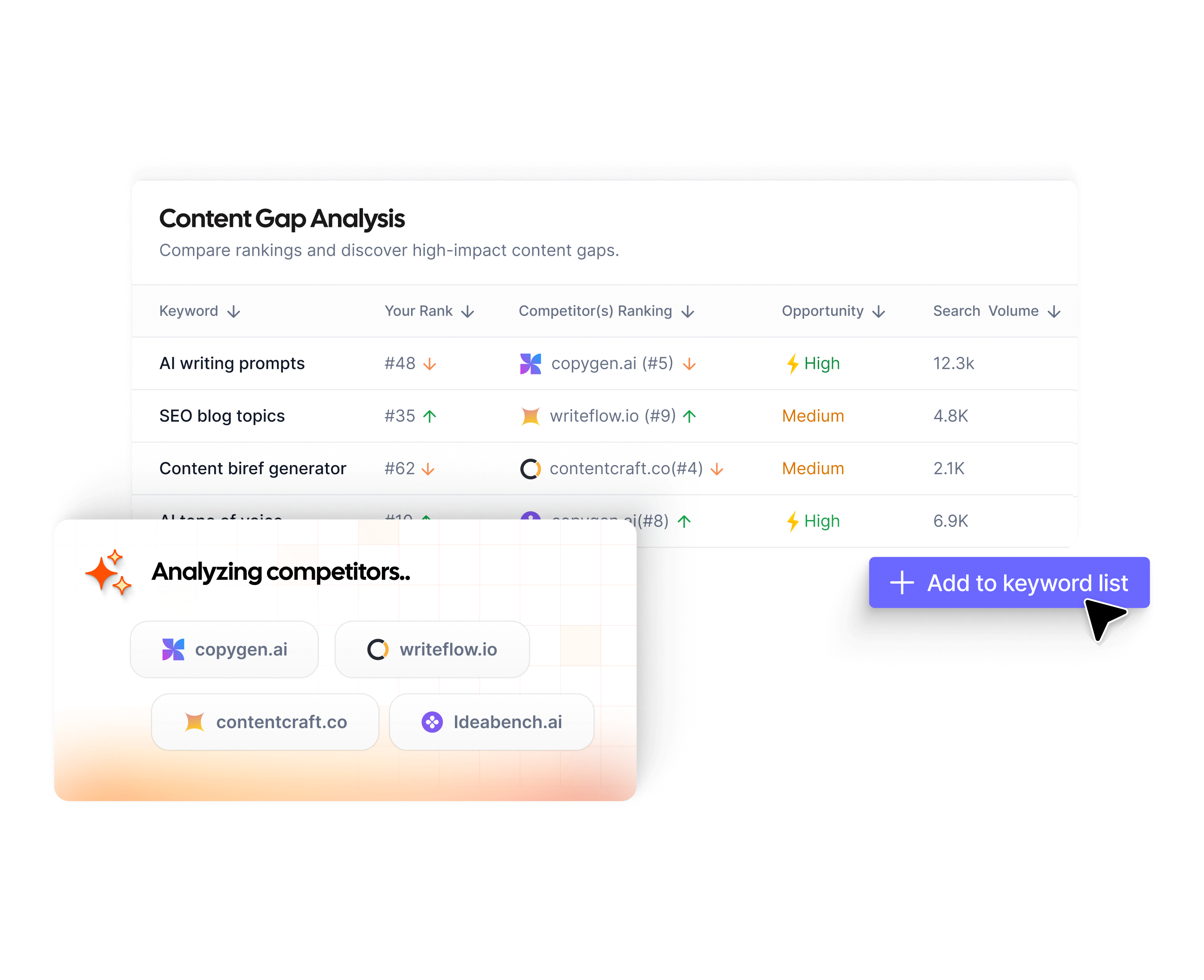
See what keywords your competitors rank for
Contentpen shows you which keywords are driving traffic for competing sites in your niche. You can use that to fill gaps in your own content strategy and target terms that already have proven demand.
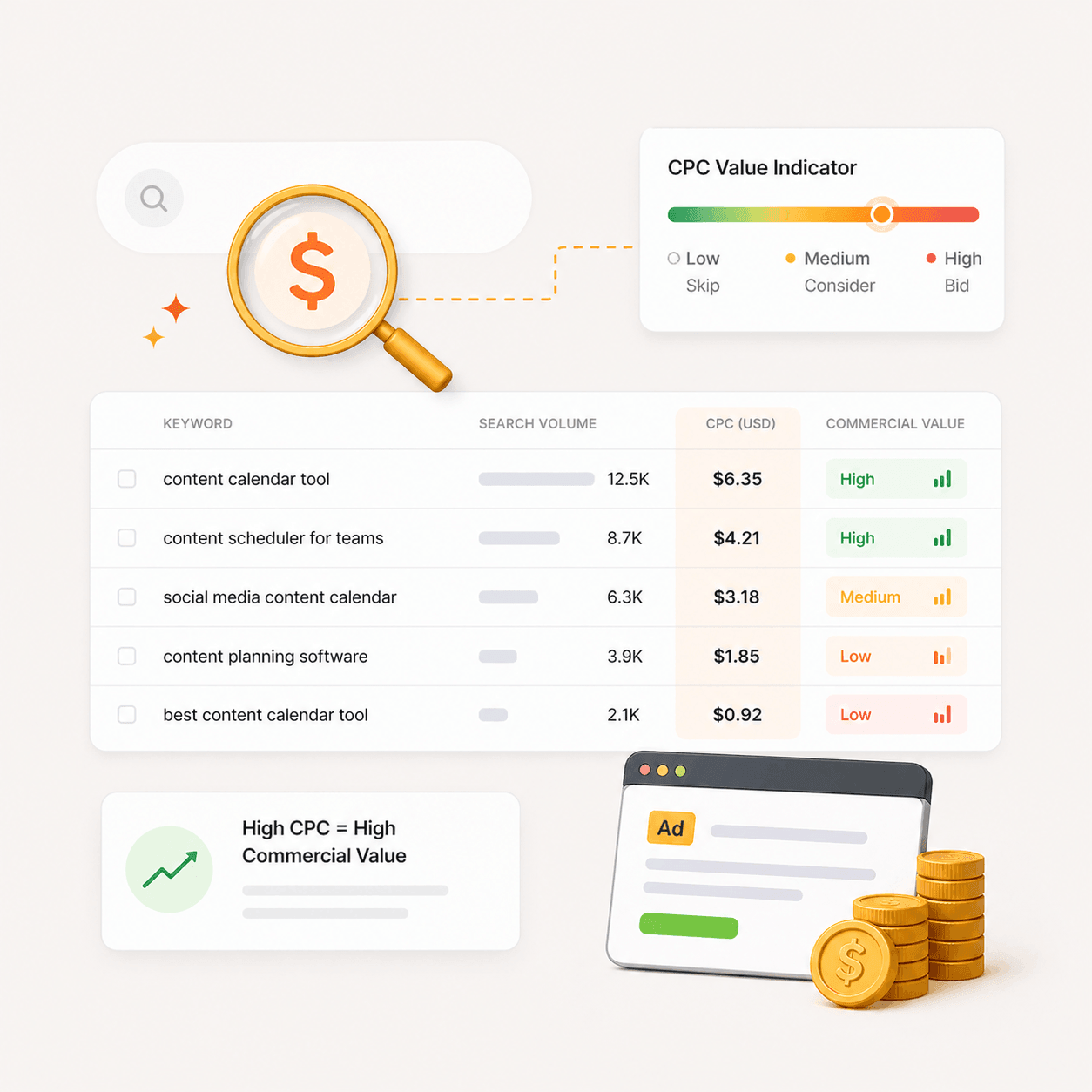
Find keywords worth bidding on
CPC data is included for every keyword, so if you run paid campaigns alongside your organic strategy, you already know which terms carry commercial value and which ones to skip.
Automated keyword-to-blog workflow
Let Contentpen research high-value keywords and generate fully optimized blog drafts that rank and drive traffic, no manual work required.
What happens when you research smarter
From finding the right keywords to watching rankings climb, here's what Contentpen users have to say.
“Using Contentpen, we generated over 35 high-ranking blogs in under two months. The tool prioritized keywords for us for our newly published content. ”
42%Traffic28%engagement Nikhil RaoHead of Marketing, EcoMart
“Tried Contentpen for keyword research and blog generation. It picked keywords and produced drafts. Feels like someone on the team actually did the work.”
 @LaraWritesFreelancer
“I wrote a blog post for one of my hospital clients using Contentpen. Once it got indexed, it started ranking at position 4 on the first page of Google. What's interesting is that I didn't build a single backlink.”
#4position0backlinks Ankit PrajapatiCEO at Consultant Ankit
“Contentpen helped us establish our presence both on SEO and AI search. Top-Quality content at the speed of thought.”
 Alban TaraireGeneral Manager at NETK5 Technology Group
“Contentpen delivers amazing quality blog posts and saves hours of research. It's fast, reliable, and perfect for efficient content creation.”
 Raj KandelMortgage Broker at Everest Home Loans
“I spend my time saved from blog writing and SEO tasks on building relationships with my clients, which actually benefits my business.”
$1000saved3-8h/weeksaved Keith HillPresident at Go Smart Mortgage
 AlaminMarketing content creator
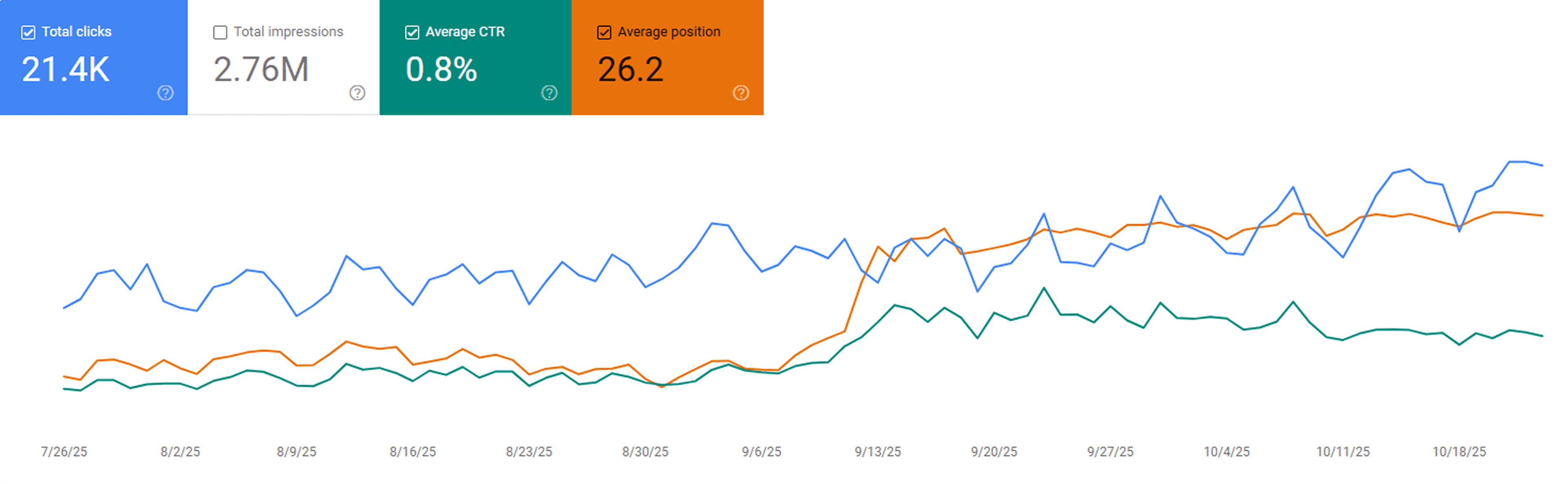
“After publishing our first 23 blogs through Contentpen, we noticed steady keyword growth in Google Search Console within three weeks. Impressions and clicks doubled, and a few articles started ranking on page one without paid promotion.”
 Sarah MalikSEO manager at GrowthHive
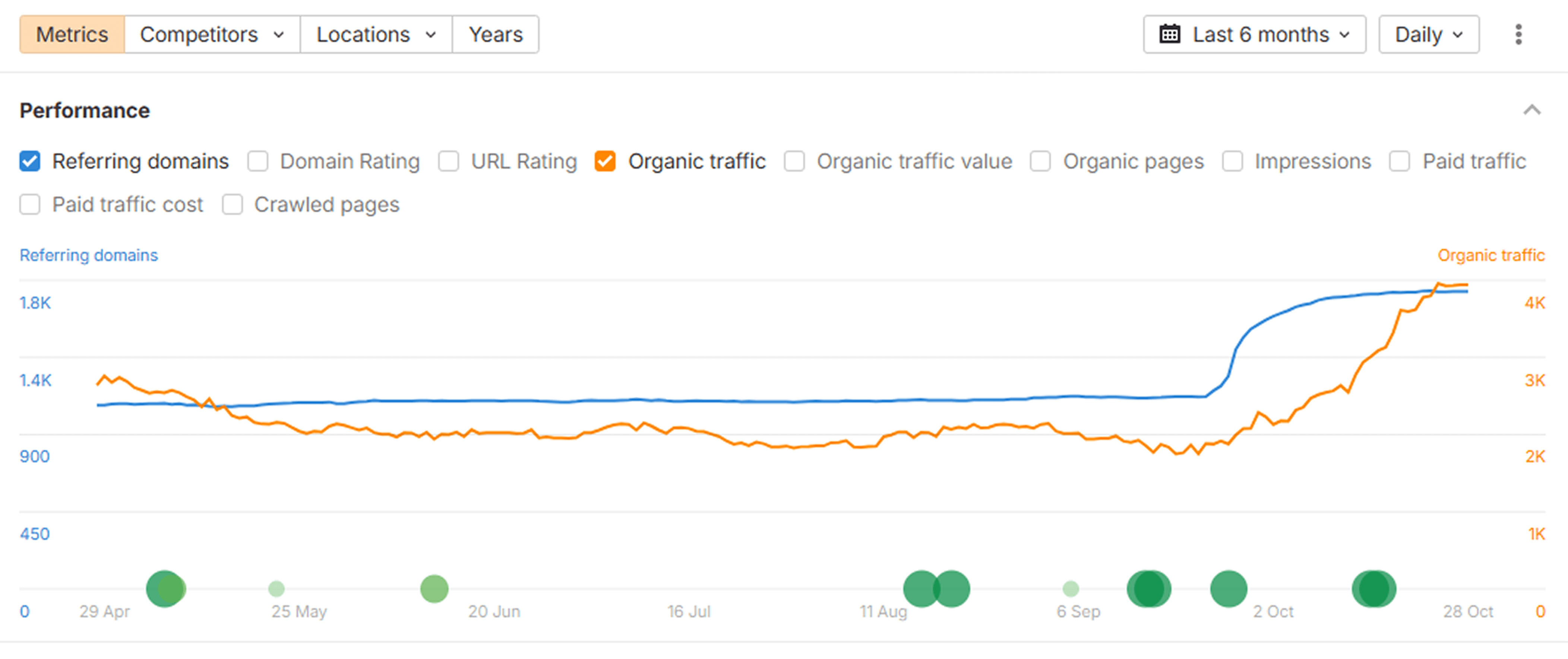
“We analyzed our new posts in Ahrefs and saw a clear lift in organic keywords and referring domains. The internal link suggestions from Contentpen helped us strengthen our site structure, which improved our overall domain visibility.”
 Daniel LeeContent strategist at BrightScale Media
“Before Contentpen, writing and publishing a blog took us a full day. Now we handle topic research, writing, and publishing in under an hour. Our organic traffic has grown 40% since streamlining our content process.”
 Ayesha KhanMarketing lead at CloudNest Solutions
Keyword research that turns into traffic, not just data
Contentpen users don't just find keywords, they rank for them. Here's what happens when keyword research is connected directly to content creation.
Higher organic traffic
Better keyword rankings
More keyword coverage
Faster content planning
One keyword research tool. A dozen ways to grow.
Not just for bloggers. Contentpen's keyword research fits every workflow, from SEO strategy to paid ads to AI search.
Build topical clusters for lasting authority
Contentpen groups your keywords into topic clusters automatically, mapping out pillar pages and supporting content so search engines recognize you as a go-to source in your niche.
Strengthen your AI search visibility
Find keywords that match topics AI platforms frequently surface in their responses. Targeting these helps your content get cited or referenced in AI-generated answers, not just traditional search results.
Improve your local SEO
Identify location-based keywords your audience uses to find businesses like yours. Target city, region, and "near me" phrases to show up in the searches that bring in local customers.
Expand into international SEO
Discover keyword opportunities across different countries and languages. Compare search volumes by region to plan an international content strategy that targets the right audience in the right market.
Go from keyword research to published content without switching tools
Once your keywords and clusters are ready, generate SEO-optimized blog drafts directly inside Contentpen. Research, plan, and publish, all in one place.
Frequently asked questions
Find clarity on how Contentpen selects the best keywords, maps them to content, and produces fully optimized blogs without manual effort.
Yes. All keywords and insights can be exported in CSV or PDF format for sharing with your team or integrating into your content plan.
Yes. Teams can access shared keyword research, review suggestions, and track which keywords have been used for content generation, keeping everyone aligned.
Contentpen. It suggests keywords based on your brand, scores them by difficulty and intent, builds topic clusters automatically, and lets you create content directly from your keywords. You don't need any prior SEO knowledge to get started, just a website URL.
Yes. Contentpen offers a free trial that gives you access to keyword suggestions, metrics, and topic cluster building so you can explore the tool before committing to a plan.
A good approach is to revisit your keyword strategy every quarter, or whenever you're planning a new content push. Contentpen keeps your keyword dashboard updated so you always have a current picture of what to target next.
The process is similar, but the goal is different. In keyword research for SEO, you're looking for keywords you can rank for organically over time, so difficulty and search volume matter most. For PPC, you're bidding for placement, so CPC and commercial intent become the priority.
Learn more about Keyword research and Topical clustering
What is keyword research?
Keyword research is the process of finding the words and phrases people type into search engines when they're looking for information, products, or services related to your business. It tells you what your audience is actually searching for, how often they search for it, how competitive those terms are, and what kind of content would satisfy their intent.
Done well, organic keywords are the foundation of any content or SEO strategy. It removes the guesswork from content planning and helps you create pages that search engines want to rank and users actually want to read.
Why keywords are the foundation of your content strategy
Search engines like Google connect users to content by matching search queries to relevant pages. If your content doesn't include the words and phrases your audience uses, it won't show up in those results, no matter how good it is.
Keyword research helps you understand demand before you invest time creating content. It tells you which topics have real search volume, which ones you can realistically compete for, and which ones are likely to bring in the kind of traffic that converts. Without it, you're essentially publishing content and hoping someone finds it.
The different types of keywords and when to use them
Not all keywords work the same way. Here are the main types of keywords and when to use them:
- Short-tail keywords are broad, high-volume terms usually made up of one or two words, like "keyword research" or "content marketing." They attract a lot of traffic but are highly competitive and often vague about what the searcher actually wants.
- Long-tail keywords are longer, more specific phrases like "how to do keyword research for a new blog." They have lower search volume but much higher intent, meaning the people searching for them know exactly what they want. They're easier to rank for and tend to convert better.
- Informational keywords signal that someone is looking to learn something. Think "what is keyword research" or "how does SEO work." These are ideal for blog posts, guides, and educational content.
- Commercial keywords suggest someone is researching before making a decision. Terms like "best keyword research tool" or "Contentpen vs Semrush" fall into this category. These are great for comparison pages and feature-focused content.
- Transactional keywords mean someone is ready to act. Phrases like "sign up for keyword research tool" or "buy SEO software" indicate high purchase intent and work best on landing pages and product pages.
- Navigational keywords are searches where someone is looking for a specific brand or website, like "Contentpen login" or "Semrush pricing." These are less about discovery and more about getting somewhere specific.
- LSI keywords, or Latent Semantic Indexing keywords, are terms that are thematically related to your main keyword without being exact matches. For example, an article about keyword research might naturally include terms like "search volume," "ranking," "SEO strategy," and "content planning." Search engines use these related terms to better understand what a page is actually about.
Understanding the metrics behind every keyword
When you do keyword research, every keyword comes with data points that help you decide whether it's worth targeting. Here's what each one tells you:
- Search volume is the average number of times a keyword gets searched per month. Higher volume means more potential traffic, but it also usually means more competition.
- Keyword difficulty is a score that tells you how hard it would be to rank for a keyword based on how strong the pages currently ranking for it are. Lower difficulty means it's more achievable, especially for newer sites.
- Difficulty percentage goes a step further and gives you a more precise picture of the competitive landscape for that specific keyword, helping you prioritize with more confidence.
- Search intent tells you the reason behind a search. Is someone trying to learn, compare, or buy? Matching your content type to the intent behind a keyword is one of the most important factors in whether your page actually ranks and satisfies the reader.
- CPC, or cost per click, is the average amount advertisers pay when someone clicks on an ad for that keyword. Even if you're focused on organic SEO, CPC is a useful signal. High CPC usually means the keyword has strong commercial value, which is worth knowing when you're prioritizing which content to create.
How to pick the right keywords for your site
With potentially hundreds of keyword suggestions in front of you, choosing the right ones comes down to a few practical steps.
- Start with relevance.
- Balance volume with difficulty.
- Use intent to match content type.
Informational keywords belong in blog posts and guides. Commercial keywords work well on comparison and feature pages. Transactional keywords belong on landing pages and sign-up flows. Putting the wrong content type behind a keyword is one of the most common reasons pages don't rank. - Pay attention to CPC as a value signal.
- Group related keywords together.
A keyword can have high volume and low difficulty, but if it doesn't match what your business offers or what your content is about, it won't bring in the right audience. Check what's currently ranking for a keyword before you commit to it.
The sweet spot is a keyword with decent search volume and a difficulty score your site can realistically compete with. Chasing high-volume keywords with a new or low-authority site often leads to content that never ranks.
If a keyword has a high CPC, advertisers are willing to pay for that traffic. That tells you the audience converting on those terms is worth something, which makes it a strong candidate for revenue-focused content.
Several similar keywords can often be targeted on a single well-structured page rather than creating separate pages for each one. This avoids keyword cannibalization and makes your content more comprehensive.
Follow our guide on how to do keyword research to learn more and perfect your content foundation.
Why topic clusters beat publishing random content
A topic cluster is a group of related content built around one central pillar page. The pillar page covers a broad topic at a high level, and supporting pages go deeper into specific subtopics, all linking back to the pillar.
Topic clusters matter because they help search engines understand that your site has real depth and authority on a subject. When your content is organized this way, it signals topical authority rather than isolated pages competing for random keywords. Sites with strong topical clusters consistently outrank sites that publish disconnected content, even when the individual articles are well-written.
Building topic clusters manually is time-consuming. Contentpen does it automatically by analyzing your keywords and grouping them into clusters based on intent, relevance, and your business context, so you can see the full picture of what to publish and how it all connects.
How Contentpen compares to other keyword research tools
Most keyword research tools give you data and leave you to figure out the rest. Here's how Contentpen stacks up against the tools your competitors are probably already using.
|
Feature |
Contentpen |
Google Keyword Planner |
Semrush |
Ahrefs |
|
Keyword suggestions by brand/niche |
✅ |
✅ |
✅ |
✅ |
|
Search volume |
✅ |
✅ |
✅ |
✅ |
|
Keyword difficulty score |
✅ |
❌ |
✅ |
✅ |
|
Difficulty percentage |
✅ |
❌ |
❌ |
✅ |
|
Search intent tagging |
✅ |
❌ |
✅ |
✅ |
|
CPC data |
✅ |
✅ |
✅ |
✅ |
|
Keywords import |
✅ |
✅ |
✅ |
✅ |
|
Keywords export |
✅ |
✅ |
✅ |
✅ |
|
Automatic topic clustering |
✅ |
❌ |
❌ |
❌ |
|
Generate content from keywords |
✅ |
❌ |
❌ |
❌ |
|
Built-in SEO content writer |
✅ |
❌ |
❌ |
❌ |
|
All-in-one research to publish workflow |
✅ |
❌ |
❌ |
❌ |
Ready to find keywords that actually rank?
You don't need to start from a blank page or spend hours in spreadsheets. Enter your brand name or a topic into Contentpen, and it pulls up keyword suggestions relevant to your niche, each with volume, intent, difficulty, difficulty percentage, and CPC already attached.
From there, you can import your own keywords to check their metrics, export your keyword list, build topic clusters around the keywords you want to target, and generate SEO-optimized content directly from those clusters, without switching to a separate tool. Finding high opportunity keywords with Contentpen is the easiest.
The best part?
The whole process, from finding keywords to publishing content built around them, happens in a single blog writing tool.
Build the rest of your content workflow
You've seen this part of the process, here are other features that help you research, plan, write, and improve content on autopilot.
Blog creation
Generate high-quality, SEO-optimized blog articles in minutes using AI trained for ranking content.
Organic traffic optimizer
Continuously analyze and optimize content to improve rankings and grow organic search traffic.
SERP & gap analysis
Identify ranking gaps and competitor opportunities to create content that outranks the competition.
SEO scoring
Get audit scores and suggestions for keyword usage, readability, and ranking signals before publishing.
Content planning & scheduling
Build content calendars, automate workflows, and plan topics that drive organic growth.
Integration & publishing
Connect your CMS and publish content directly from Contentpen without switching tools.
Bulk content creation
Produce large volumes of consistent, SEO and GEO-optimized content at scale with batch generation.
Built-in media library
No more asset hunting, everything you need is built in.
AI linking assistant
Turn every article into a traffic network with AI-powered linking.
SEO opportunities
Automatically uncover quick wins, content decay, and CTR gaps, and turn insights into actions with one-click content refreshes.
Website analytics
Track clicks, impressions, CTR, and rankings directly from Google Search Console to understand what's driving your organic performance.
AI search optimization tool
Make your content AI-ready, structured, and easy to surface