SEO glossary

ai

The SEO glossary that covers traditional and AI search

Search engine optimization is full of technical terms, metrics, and concepts that can be confusing for beginners and even experienced marketers. Each definition here is written to help you quickly understand how search engines work.

#

10x content

Coined by Rand Fishkin, this term means that the material for a given keyword or topic is 10 times better than the highest-ranking material for the query.

200 OK

An HTTP status code indicating that a page has been successfully found and delivered to the browser. It's the ideal response for all indexable pages.

301 redirect

A permanent redirect from one URL to another, passing nearly 100% of ranking power. It is the preferred redirect type for site migrations, permanent page moves, and consolidating duplicate content.

302 redirect

It is a temporary redirect used when a page is moved temporarily. Search engines typically keep the original URL indexed.

304 not modified

An HTTP status code telling the browser (or search engine crawler) that the page hasn't changed since it was last fetched, so the cached version can be used.

307 redirect

A temporary redirect that preserves the original HTTP method (GET, POST, etc.) when forwarding a request. Unlike a 302, it strictly follows HTTP standards.

404 error

A "Not Found" message indicates the server could not find the requested page.

410 gone

A more permanent version of a 404, telling search engines the page is gone and will not return.

403 forbidden

An HTTP status code meaning the server understood the request but is refusing to fulfill it, usually due to insufficient permissions. Search engines cannot crawl 403 pages, so they will be excluded from the index.

500 internal server error

A generic server-side error indicating something went wrong on the server, but the exact issue isn't specified. If Googlebot repeatedly encounters a 500 on important pages, it may reduce crawl frequency, and those pages may drop from the index.

502 bad gateway

An HTTP error is returned when a server acting as a gateway or proxy receives an invalid response from an upstream server. Like a 500, repeated 502s on critical pages can hurt crawlability and indexing.

A

A/B testing

It is the process of trying two different variations of a particular marketing campaign to determine which one performs better.

Above the fold

Above the fold refers to the portion of a webpage that is visible to users immediately after the page loads without scrolling. Content placed above the fold often receives the most attention, which is why many websites place key calls-to-action in this area to improve user engagement.

Absolute URL

A complete URL that includes the full path to a page, including the protocol and domain name (e.g., https://www.contentpen.ai/blog/seo-tips).

Accelerated Mobile Pages (AMP)

A lightweight HTML framework developed by Google to create fast-loading mobile pages.

ADA website compliance

Ensuring a website meets accessibility standards defined by the Americans with Disabilities Act so people with disabilities can access it.

Ad impressions

The number of times an advertisement is displayed on a webpage or search result.

AI chatbots

AI chatbots are tools that respond to a user's query and can communicate using Natural Language Processing (NLP) algorithms.

AI citation

A reference to a website or source that an AI search system uses when generating answers for a query.

AI content

Text, images, or media created with artificial intelligence tools.

AI content detection

Tools and techniques used to identify whether content was generated by AI systems or not.

AI overview

An AI-generated summary that is shown at the top of search results that answers a user's query using information from multiple online sources.

AI ranking signals

AI ranking signals refer to the machine-learning factors used by modern search engines to evaluate content quality and relevance. These signals help algorithms understand search intent, semantic relationships, and user behavior to deliver more accurate search results.

AI training data

It is the dataset used to train machine learning models and large language models so they can understand and generate human language. In the context of SEO and AI search, training data influences how AI systems interpret queries and generate answers.

Alt text

A written description of an image that helps search engines and screen readers understand the image content.

Anchor text

Anchor text is the clickable text of a hyperlink that helps search engines understand the topic of the linked page.

Answer Engine Optimization (AEO)

The process of optimizing content to appear in AI answers, featured snippets, and voice search responses.

API (Application Programming Interface)

API is a set of rules that allows software to communicate with each other or integrate with one another. In SEO, API is often used to connect tools (like Google Search Console) to custom dashboards.

Article spinning

It is the process of rewriting existing content using automated tools to create multiple versions of the same article. Publishing spun articles repeatedly to gain rankings is highly discouraged by Google and other search engines in modern digital marketing.

Article syndication

Republishing content on third-party websites to reach a broader audience.

Auto-generated content

Content created automatically using software or scripts.
B

B2C

Refers to the marketing efforts done to directly engage and convert the end user. So businesses can sell their products directly to consumers.

B2B

In B2B marketing, you sell your products or services to businesses, not the average user. Therefore, your strategy typically revolves around positioning your company as the industry leader and showcasing social proof to build trust.

Backlinks

Backlinks or SEO backlinks are links from external websites that point to your pages. They remain one of the strongest ranking signals as they provide a trust signal to the search engines that you are an authority in your niche.

Bad neighborhood

A bad neighborhood refers to a group of spammy or low-quality websites that are associated with manipulative SEO practices. Getting backlinks from these sites can harm a website's trust and negatively impact search rankings.

Bingbot

The web crawler used by Microsoft to discover and index pages for the Bing search engine.

Black hat SEO

SEO tactics that violate search engine guidelines to manipulate rankings. An example could be of article spinning that we learned earlier about.

Bot

A bot is also known as a "spider." It uses an algorithm to crawl and serve results on the web.

Bounce rate

Bounce rate is the percentage of sessions where users leave a page without meaningful interaction (such as clicking links, scrolling, or triggering events). In Google Analytics 4, actions like scrolling, clicking, or spending 10+ seconds on a page prevent a session from being counted as a bounce, making it a more accurate engagement metric than the older Universal Analytics definition.

Branded keywords

Search queries that contain a brand name are called branded keywords.

Brand mention

A brand mention occurs when a website, product, or company name is referenced online, even if no hyperlink is included. Search engines may use brand mentions as a signal of authority and credibility.

Brand SERP

A Brand SERP refers to the search engine results page that appears when someone searches specifically for a brand name. It typically includes the company's main website, sitelinks, social media profiles, knowledge panels, and other branded assets that represent the brand online.

Breadcrumb navigation

A secondary navigation system that shows users the path from the homepage to the current page.

Broken link

A link that points to a page that no longer exists.

C

Cached page

A stored snapshot of a webpage saved by search engines.

Canonical tag

An HTML tag that tells search engines which version of duplicate pages should be treated as the main version.

Canonical URL

The preferred or "master" version of a webpage that search engines should index when multiple URLs contain the same or very similar content. The canonical URL is specified using the rel="canonical" tag and helps consolidate ranking signals to a single page.

Citation flow

Citation Flow is an SEO metric developed by Majestic that measures the quantity of backlinks pointing to a website. A higher Citation Flow indicates a larger backlink profile but does not necessarily reflect link quality.

Click-through rate

Click-through rate, or CTR, is a ratio of the total clicks vs. the total impressions you receive for your pages. Higher CTR values show that people are consistently engaged with your content and vice versa.

Cloaking

Cloaking is showing different content to search engines than what users see to rank on specific keywords. This is again a black-hat technique as it deceives users and doesn't provide them the value they want.

Cluster content

A group of interlinked pages that dive deep into subtopics related to a main "pillar" page.

Co-citation

A concept where two websites or pages are mentioned together by a third party, even without a direct link between them.

Competitor analysis

Competitor analysis is a process to find out where your rivals are outsmarting you and where you are ahead to maximize your chances of winning a market.

Content decay

The natural decline in traffic and rankings for a piece of content as it becomes outdated.

Content Delivery Network (CDN)

CDN is a network of servers that are geographically distributed to deliver web content more quickly and efficiently to users.

Content gap analysis

Finding topics your competitors rank for but your website does not.

Content hub

A group of interlinked pages focused on a central topic.

Content marketing

Content marketing is the process of distributing valuable, relevant content to the targeted audience to engage and convert them for better ROIs.

Content pruning

Removing or updating low-performing content to improve overall site quality.

Content refresh

A content refresh is the process of updating an existing webpage to maintain its accuracy, relevance, and search performance. This may involve adding new information, improving examples, updating statistics, or optimizing the content for current search intent.

Conversion funnel

A conversion funnel represents the path users take from discovering a website to completing a desired action, typically moving through stages such as awareness, consideration, and conversion.

Conversion rate

Conversion rate is the percentage of visitors who complete a desired action on a website.

Cookies

Cookies are small text files that are saved on a user's local computer. They allow websites to remember your preferences, such as language settings or items in a cart, the next time you visit them.

Cornerstone content

Cornerstone content pieces are highly detailed articles on your platform that explain the foundational topics and represent the core of your business. These pages serve as the central hub for your internal links.

Core Web Vitals (CWVs)

Core Web Vitals are a set of user experience metrics introduced by Google that measure loading performance, responsiveness, and visual stability. The primary metrics include Largest Contentful Paint (LCP), Interaction to Next Paint (INP), and Cumulative Layout Shift (CLS).

CPM (Cost Per Mille)

CPM stands for Cost Per Mille, meaning the cost an advertiser pays for 1,000 ad impressions. It is commonly used in display advertising and programmatic advertising to measure the cost of reaching audiences.

Crawlability

The ease with which search engine bots can access and navigate a website's pages.

Crawler

A program used by search engines to discover and index webpages.

Crawl budget

The number of pages a search engine crawler is willing and able to crawl on a website within a given time period.

Crawl depth

The number of clicks required to reach a page from the homepage.

Crawl error

A crawl error happens when a search engine bot tries to access a page but fails. These errors can occur due to server issues, broken links, or incorrect redirects.

Crawl frequency

Crawl frequency refers to how often search engine bots revisit a webpage to check for updates. Pages that are updated frequently or receive many backlinks tend to be crawled more often.

Cumulative Layout Shift (CLS)

Cumulative Layout Shift (CLS) is a Core Web Vitals metric that measures how much the layout of a webpage unexpectedly moves while it is loading. A CLS score of less than 0.1 is considered good because it indicates a stable visual experience for users.

Customer Acquisition Cost (CAC)

Customer Acquisition Cost (CAC) refers to the total cost required to acquire a new customer. In SEO, CAC measures how much it costs to generate a customer through organic search traffic, including content production, SEO tools, and marketing resources.

D

Dead link

A dead link is a hyperlink that points to a page that no longer exists or returns an error, such as a 404 status.

De-indexing

The removal of a website or specific page from a search engine's database.

Deep link

A deep link is a hyperlink that points to a specific page within a website rather than the homepage. Deep links help search engines discover more content and improve the overall structure of internal linking.

Direct answer

A SERP feature where Google provides a definitive answer (like a weather report or math calculation) directly on the results page.

Disavow file

A disavow file is a list of backlinks that a website owner asks search engines to ignore when evaluating their site. This file is typically used to protect a website from harmful or spammy backlinks.

Dofollow link

These links transfer authority from one page to another. These are also known as "followed" links.

Domain age

The length of time a domain name has been registered and active on the internet.

Domain Authority (DA)

Domain Authority is a metric created by Moz that predicts how likely a website is to rank in search engines based on its backlink profile. Scores range from 1 to 100, with higher scores indicating stronger ranking potential.

Domain Rating (DR)

A metric created by Ahrefs that estimates the authority of a website's backlink profile.

Doorway page

A doorway page is a low-quality webpage created specifically to rank for certain keywords and redirect users to another page. These pages provide little value to users and are considered a manipulative practice that can lead to penalties from search engines.

Duplicate content

Content that appears on multiple URLs.

Dwell time

The amount of time a user spends on a page before returning to the search results pages (SERPs).

Dynamic URL

A URL generated dynamically by a website's database, often containing parameters.

E

Edge SEO

Edge SEO is the practice of implementing SEO improvements using edge computing or CDN platforms without modifying the main website codebase.

Editorial link

An editorial link is a backlink that a website earns naturally when another publisher references its content because it provides value, insight, or useful information. Editorial links are placed voluntarily by editors or writers, making them one of the most trusted signals of authority.

Ego bait

A content strategy that involves featuring, quoting, or mentioning influencers, experts, or well-known brands within a piece of content, with the expectation that they will share or link to it.

Engagement rate

Engagement rate measures how actively users interact with a webpage or website. Metrics such as clicks, scrolling, time on page, and interactions are often used to evaluate engagement.

Entity SEO

An SEO strategy focused on optimizing content around identifiable entities such as people, places, organizations, and concepts.

Evergreen content

Content that remains useful and relevant over a long period.

Exact Match Domain (EMD)

An exact match domain is a domain name that exactly matches a keyword or search query. While EMDs once had strong ranking advantages, search engines now focus more on content quality and authority.

External link

An external link is a link that points to a different domain.

E-E-A-T

EEAT stands for Experience, Expertise, Authoritativeness, and Trustworthiness. Experience reflects first-hand knowledge, Expertise reflects depth of understanding, Authoritativeness measures industry recognition, and Trustworthiness evaluates accuracy and transparency. E-E-A-T is especially critical for YMYL pages.

F

Faceted navigation

Faceted navigation allows users to filter and sort products or content using attributes such as price, size, or category.

Featured snippet

A highlighted search result that appears at the top of the search results and directly answers a query.

First Input Delay (FID)

A Core Web Vitals metric that measures the time between a user's first interaction and the browser's response. It has largely been replaced by INP.

Footer links

Links placed in the footer section of a website are often used for navigation or important pages.

Freshness

A ranking factor where search engines prioritize newer content for certain queries (like news or trends).

G

Gateway page

A low-quality page built specifically to rank for certain keywords and funnel users to another page or website.

Generative Engine Optimization (GEO)

The process of optimizing content to be cited by AI search engines and generative AI systems.

Generative search

Search technology that generates answers using large language models.

Googlebot

The web crawler used by Google to index webpages.

Google Ads

It is an advertising service offered by Google where you can pay the search engine to show your content to the targeted audience.

Google Analytics 4 (GA4)

Google Analytics 4 (GA4) tracks user interactions using an event-based data model. It helps website owners analyze traffic sources, user engagement, and conversion events across platforms.

Google autocomplete

These are search suggestions given by Google when entering a search.

Google Hummingbird

Introduced in 2013, the Hummingbird update from Google declared that the search engine would focus more on the full search query rather than single words.

Google My Business (GMB)

The GMB profile, now called the Google Business Profile, is crucial for local businesses to appear in local searches. It contains the essential name, address, and phone number (NAP) information for businesses, along with user reviews and other related information.

Google Panda

Google Panda was a major algorithm update introduced in 2011 that targeted low-quality or thin content. Its goal was to reward high-quality websites while reducing rankings for content farms and duplicate pages.

Google Penguin

Google Penguin, launched in 2012, penalizes websites using manipulative link-building practices such as buying links or participating in link schemes. Since 2016, it has been part of Google's core algorithm, operating in real time, so penalties and recoveries take effect as soon as affected pages are recrawled.

Google Pigeon

A Google algorithm update released in 2013 was designed to improve the relevance and accuracy of local search results. Pigeon strengthened the connection between local search algorithms and Google's core ranking signals.

Google Sandbox

An alleged filter applied by Google to new websites that temporarily limits their ability to rank in search results, regardless of content quality or backlinks.

Google Search Console (GSC)

A free tool from Google that helps webmasters monitor and maintain their site's presence in search results.

Grey hat SEO

Practices that fall between white and black hat SEO. These practices are technically legal but borderline manipulative.

Guest blogging

It is the practice of writing and publishing a blog on another person's platform or website.

H

Hallucination

An AI hallucination can occur with LLMs when they provide factually inaccurate information to the user without any doubts.

Header tags

Header tags are HTML elements such as H1, H2, H3, and H4 that structure the headings of a webpage. They help search engines understand the hierarchy and main topics of a page.

Holistic SEO

An approach to SEO that focuses on improving all aspects of a website simultaneously, including technical performance, content quality, user experience, and off-page authority.

Hreflang

Hreflang is an HTML attribute that tells search engines which language and regional version of a page to serve to users in different locations.

HTML sitemap

An HTML sitemap is a webpage that lists all important pages of a website in a structured format. It helps both users and search engines navigate the site more easily.

HTTP/HTTPS

HTTP is the protocol used to transfer data between a browser and a web server. HTTPS is the secure version that encrypts the connection using SSL/TLS. Google uses HTTPS as a lightweight ranking signal.

I

Image SEO

Image SEO refers to optimizing images so they can appear in search results. This includes using descriptive filenames, alt text, compression, and proper image formats.

Inbound link

A hyperlink on an external website that points to your site. Also called a backlink.

Indexability

The ability of a webpage to be crawled and added to a search engine's index.

Indexing

The process of storing and organizing webpages in a search engine database.

IndexNow

IndexNow is a web protocol that allows websites to instantly notify search engines when a page is created, updated, or deleted. Instead of waiting for crawlers to discover changes, websites send a direct signal so search engines can quickly crawl and index the updated content.

Index bloat

Index bloat occurs when a search engine indexes too many low-value or duplicate pages from a website. This can dilute ranking signals and waste crawl budget.

Index coverage

Index coverage refers to the status of pages indexed by search engines. SEO professionals monitor index coverage reports to identify pages that are indexed, excluded, or experiencing errors.

Information gain

A concept (and Google patent) that rewards content for providing new information that isn't already present in other top-ranking results.

Inline citation

An inline citation or in-text citation is a brief reference placed directly within the body of a text to credit a source material.

Interaction to Next Paint (INP)

A Core Web Vitals metric that measures a page's overall responsiveness to user interactions.

Internal link

An internal link is a link from one page on a website to another page on the same site.

Image alt attribute

The HTML attribute used to provide alternative text descriptions for images.

J

Jargon

A complicated word or term that degrades readability and hurts SEO, especially if it is not according to the audience's knowledge level or expectation.

JavaScript rendering

The process by which search engines execute JavaScript to display webpage content before indexing.

K

Keyword cannibalization

When multiple pages compete for the same keyword.

Keyword clustering

Grouping related keywords into clusters to create more comprehensive content.

Keyword density

The percentage of times a keyword appears on a page relative to the total word count.

Keyword Difficulty (KD)

An estimate of how hard it is to rank in the top 10 organic results for a specific keyword based on competition and backlink profiles.

Knowledge graph

A database used by Google to store entities and the relationships between them to provide more accurate search results. It is used in semantic SEO to contextually tie down topics with each other.

Keyword intent

Keyword intent refers to the underlying purpose behind a search query, categorized into four types: Informational (want to learn), Navigational (looking for a specific site), Commercial (researching before buying), and Transactional (ready to take action).

Keyword mapping

Keyword mapping is the process of assigning specific keywords to individual pages on a website. This ensures that each page targets a unique search intent and helps prevent keyword cannibalization.

Knowledge panel

A Knowledge Panel is an information box that appears on the right side of search results (desktop) and provides key details about an entity, such as a person, company, or place. The information typically comes from trusted sources like Wikipedia and Google's Knowledge Graph.

Keyword ranking

The position a specific webpage holds in organic search results for a target keyword.

Keyword stemming

The process of reducing a word to its root form so that search engines can recognize and match related variations. For example, "optimize," "optimizing," and "optimized" all stem from "optim," allowing search engines to understand their relationship.

Keyword stuffing

The practice of excessively repeating keywords on a page in an unnatural way to try to manipulate search rankings.

L

Largest Contentful Paint (LCP)

Largest Contentful Paint (LCP) is a Core Web Vitals metric that measures how long it takes for the main content element of a webpage to fully load and become visible to users. An LCP score of 2.5 seconds or less is considered good and indicates a fast loading experience.

Large Language Model (LLM)

An LLM is an AI system that is trained on an extensive dataset to understand and replicate human language in daily conversations.

Latent Semantic Indexing (LSI)

Latent Semantic Indexing is a mathematical method originally used in information retrieval to identify relationships between words and concepts in documents. In modern SEO, the term is often used informally to describe semantically related keywords.

Lazy loading

Lazy loading is a performance optimization technique that delays loading non-critical resources, such as images or videos, until they are needed. This improves page speed and user experience by reducing the initial load time of a webpage.

Lifetime value (LTV)

In SEO, LTV helps marketers evaluate the long-term value of customers acquired through organic search.

Linkable asset

A linkable asset is a high-value piece of content specifically designed to attract backlinks from other websites. Examples include original research, statistics pages, industry reports, infographics, and comprehensive guides.

Link audit

The process of analyzing all backlinks pointing to a website to evaluate quality and identify harmful links.

Link building

The process of acquiring backlinks from other websites.

Link diversity

Link diversity refers to the variety of sources, domains, link types, and anchor texts in a website's backlink profile. A diverse backlink profile appears more natural to search engines and helps reduce the risk of penalties associated with manipulative link-building patterns.

Link equity

Link equity is the "value" that is passed from one page to another via a link.

Link exchange

An arrangement where two websites agree to link to each other.

Link farm

A group of websites created solely to link to each other or to a target site in order to artificially inflate rankings. Link farms are a black hat SEO tactic and can result in a manual penalty from Google.

Link juice

It is a slang term used to describe how much authority or power a backlink passes onto the linked site.

Link placement

The location where a backlink appears on a webpage can affect its SEO value.

Link profile

A link profile is the complete collection of backlinks pointing to a website. A strong link profile usually contains high-quality links from authoritative and relevant websites.

Link reclamation

Link reclamation is the process of recovering lost or broken backlinks pointing to a website. This often involves fixing broken URLs or contacting website owners to restore missing links.

Link relevance

The topical similarity between the linking page and the linked page.

Link velocity

Link velocity refers to the speed at which a website gains new backlinks over time. Sudden unnatural spikes in link velocity may signal manipulative link building.

LLM optimization

LLM optimization refers to the practice of structuring and writing content so that large language models can easily understand, retrieve, and cite it when generating responses.

Local citation

Any online mention of a business's name, address, and phone number (NAP), typically found on directories, review platforms, and local listing sites.

Local inventory ads

Local Inventory Ads are a type of advertisement that shows nearby shoppers whether a product is in stock at a local store or not. These ads help businesses drive both online visibility and in-store visits.

Local SEO

The process of optimizing a website and online presence to rank higher in search results for location-based queries.

Local pack

The map-based result section that appears for local intent searches (e.g., "coffee shop near me").

Log file analysis

The process of examining server log files to understand how search engine crawlers interact with your website.

Long-tail keywords

Search queries with lower search volume but higher specificity.

M

Machine Learning (ML)

It is a subset of AI that learns through datasets to find patterns and make sensible, automated decisions.

Manual penalty

A ranking penalty applied by human reviewers at Google for violating webmaster guidelines.

Metadata

Metadata refers to information about a webpage that helps search engines understand its content. Examples include the title tag, meta description, and structured data.

Meta description

A short summary of a webpage shown in search results.

Meta robots tag

An HTML tag that controls how search engines crawl and index a page.

Minification

The process of minimizing the code and markup of your webpages to improve load speeds for users.

Mobile-first indexing

When search engines primarily use the mobile version of a website for ranking.

Mobile usability

Mobile usability measures how well a website functions on mobile devices. Search engines prioritize mobile-friendly websites due to mobile-first indexing.

Model Context Protocol (MCP)

Developed by Anthropic, MCP allows AI chatbots and models to easily connect with external data sources, software, and tool systems.

N

NAP consistency

Consistency of a business's Name, Address, and Phone number across the web is important for local SEO.

Natural links

Natural links are backlinks that are earned organically without manipulation. These links usually come from websites that genuinely find the content useful.

Negative keywords

Words or phrases added to a paid search campaign to prevent ads from showing for irrelevant searches. For example, a luxury hotel might add "cheap" as a negative keyword to avoid appearing in budget travel searches.

Negative SEO

Negative SEO refers to malicious attempts to harm a competitor's search rankings. This may involve spam backlinks, content scraping, or fake reviews.

Neural matching

Neural Matching is a machine learning system used by Google to better understand the relationship between search queries and web pages. It helps the search engine connect words with underlying concepts, even if the exact keywords do not appear on the page.

Niche website

A website is laser-focused on a specific topic or industry.

Nofollow link

A nofollow link is a hyperlink that contains the attribute rel="nofollow", which tells search engines not to pass ranking authority (link equity) to the linked page. No-follow links are commonly used for advertisements, sponsored content, or user-generated links.

Noindex

A directive that prevents search engines from indexing a page.

Noopener

An HTML link attribute (rel="noopener") added to links that open in a new browser tab.

Noreferrer

An HTML link attribute (rel="noreferrer") that prevents the destination website from seeing where the traffic came from.

O

Off-Page SEO

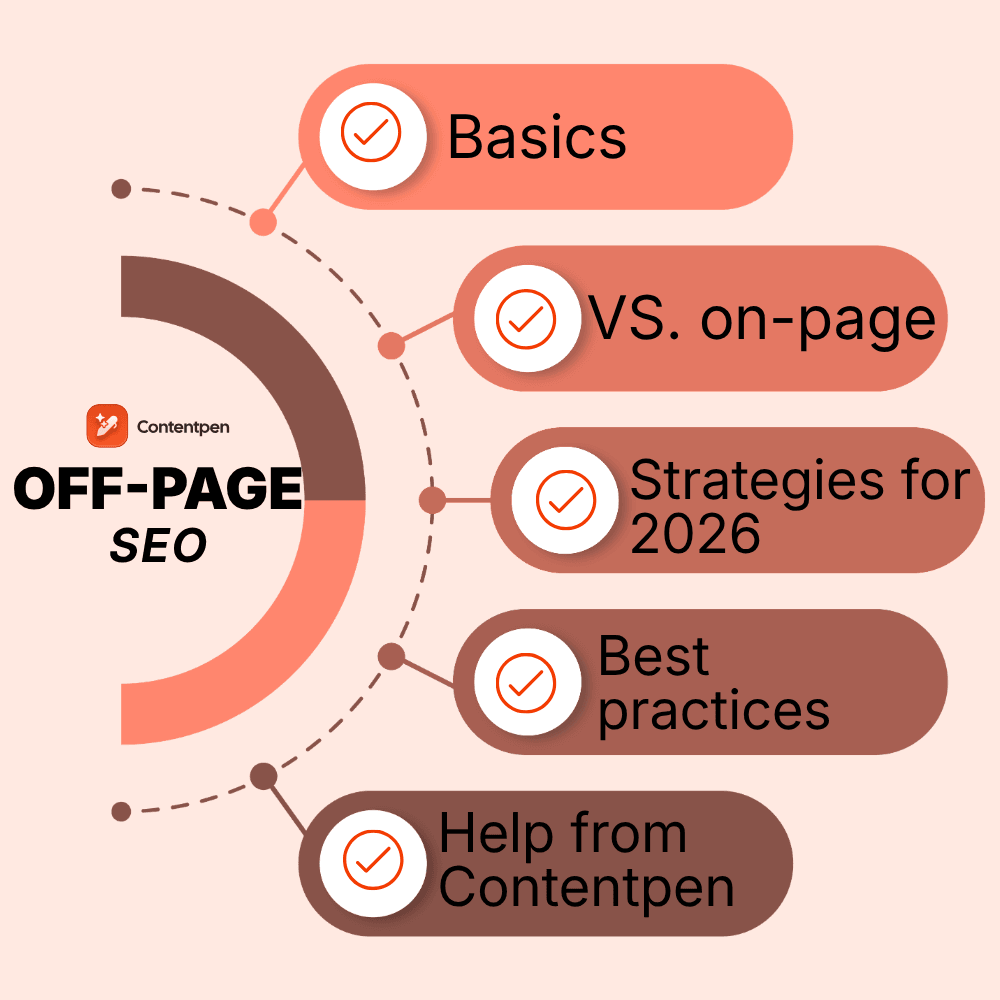
Off-page SEO is the optimization process performed outside a website to improve rankings. It includes backlinks, UGC, brand mentions on socials, and much more.

On-Page SEO

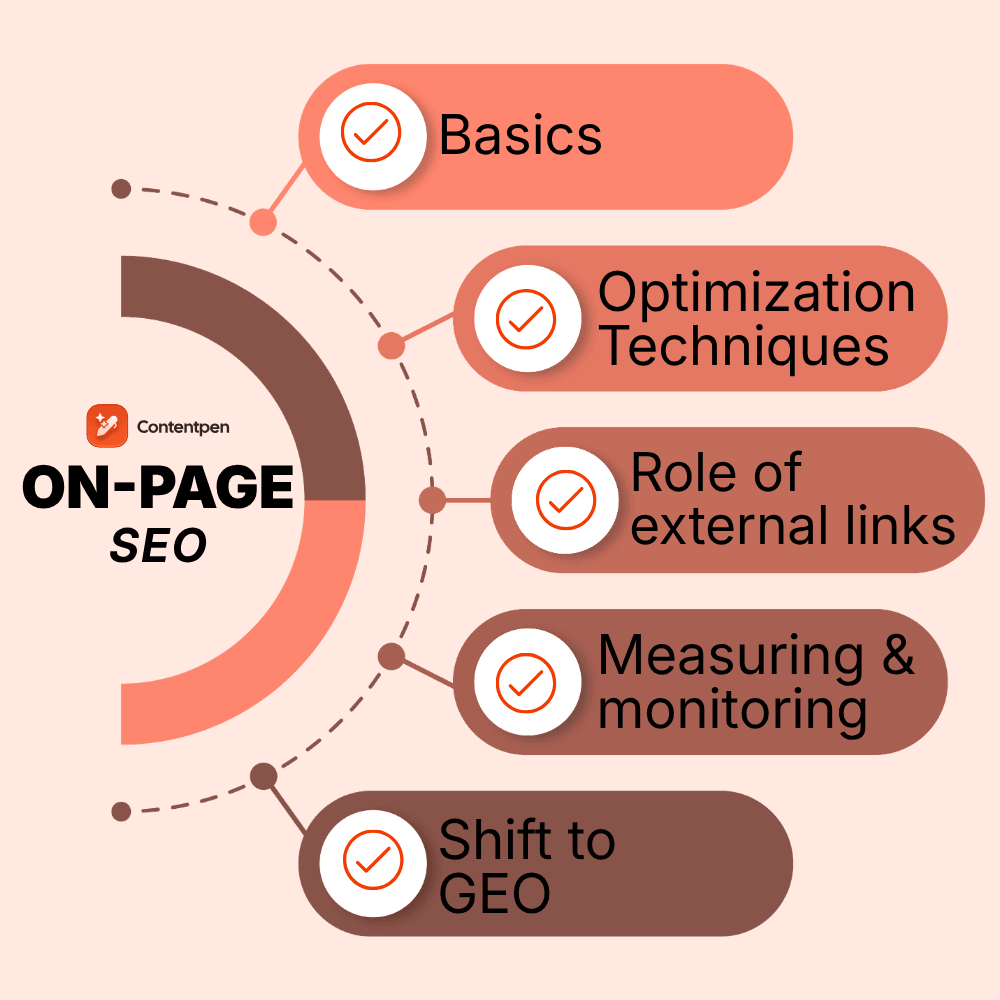
On-page SEO is the optimization of content, HTML elements, and internal links within a webpage to boost its ranking potential.

Open graph meta tags

HTML tags placed in a webpage's header control how the page appears when shared on social media platforms like Facebook and LinkedIn.

Organic CTR

Organic CTR is the percentage of users who click on a website result in organic search listings.

Organic keywords

Organic keywords are the words and phrases people type into search engines when they want particular information, products, or services. When a page on a site appears for those searches without any ad spend, it is ranking for organic keywords.

Organic ranking

It is the position of a webpage in unpaid search results.

Organic traffic

Organic traffic refers to visitors who reach a website through unpaid search engine results. It is one of the most valuable traffic sources because it reflects strong search visibility.

Orphan page

A page on a website that has no internal links pointing to it, making it hard for bots and users to find.

Outbound link

An outbound link is a hyperlink from your website to another external website. Linking to authoritative sources can improve credibility and help search engines understand your content context.

Outreach

Outreach is a proactive method of getting backlinks for your website by reaching out to other webmasters.

P

PageRank

PageRank is Google's original link analysis algorithm that evaluates the importance of webpages based on the quantity and quality of links pointing to them. Although modern ranking systems use many signals, PageRank remains a foundational concept in link-based ranking.

Pagination

Pagination is the process of splitting large sets of content into multiple pages. Proper pagination helps users navigate long lists such as blog archives or product catalogs.

Page authority

Page authority is a metric developed by Moz that predicts how well a specific page is likely to rank in search results.

Page experience

Signals used by search engines to measure how users interact with a page.

Page speed

Page speed measures how quickly a webpage loads for users. Faster pages improve user experience and are considered a ranking factor by search engines.

Page view

An event where a user views a webpage one time.

Paid traffic

Paid traffic comes from paid channels on your website. For instance, PPC campaigns, including ads.

Passage ranking

A system that allows search engines to rank specific sections of a page.

Pay-Per-Click (PPC)

An advertising model where you have to pay each time your advertisement is clicked on a search query. It is usually associated with Google Ads.

People Also Ask (PAA)

People also ask appears as a SERP feature displaying questions that users have related to a particular search query. Use PAA and answer these questions in your blogs to rank better.

Pillar page

A comprehensive, authoritative page that covers a broad topic in depth and serves as the central hub of a topic cluster.

Plagiarism checker

A tool that passes your content through the web to check similarities in it with other published online pieces. Highly plagiarized materials are discouraged by search engines as they weaken the authority of the content.

Pogo-sticking

The behavior of a user clicking on a search result, quickly returning to the search results page, and clicking on a different result.

Position zero

The featured snippet result that appears above the first organic listing.

Primary keyword

A primary keyword is the main search term a webpage is optimized to rank for. It typically appears in the title tag, headings, and main content.

Primary SERP features

Special search result elements such as featured snippets, knowledge panels, and image packs.

Private Blog Network (PBN)

A Private Blog Network (PBN) is a group of websites created primarily to build backlinks to another website to manipulate search rankings. Because these networks are designed to artificially inflate authority, they are considered a high-risk Black Hat SEO tactic.

Prompt engineering

It is the craft of designing prompts (inputs) to LLMs, such as ChatGPT, Claude, Gemini, etc., to extract the best possible outputs from the tools.

Programmatic SEO

A method of creating large numbers of high-quality, data-driven landing pages at scale to capture long-tail search volume.

Q

Query Deserves Freshness (QDF)

It is a concept used by search engines to prioritize and display fresh content to searchers.

Query Fan-Out

Query fan-out is a technique used by LLMs to break down complex prompts into multiple, distinct sub-queries for better comprehension and replies.

R

RankBrain

Introduced in 2015, it is a machine learning system used by Google to guess the meaning of new or unclear queries.

Rank tracking

Rank tracking is the process of monitoring how specific keywords perform in search engine results over time. SEO professionals use rank tracking tools to measure changes in keyword positions and evaluate the effectiveness of their optimization strategies.

Reconsideration request

A reconsideration request is a formal appeal submitted to Google after fixing issues that caused a manual action penalty.

Referral domain

A referral domain is a unique website that links to your site. Unlike total backlinks, which count every link, referral domains measure how many separate websites are linking to you.

Referral traffic

Referral traffic refers to visitors who arrive at a website by clicking links on other websites rather than through search engines or direct visits.

Relative URL

A URL that specifies the path to a page relative to the current page's location, without including the domain (e.g., /blog/seo-tips).

Retrieval Augmented Generation (RAG)

Retrieval Augmented Generation is an AI technique where language models retrieve external information before generating responses. This approach helps AI systems produce more accurate and reliable answers.

Rich snippet

A rich snippet is an enhanced search result that displays additional information, such as ratings, images, or FAQs using structured data.

Robots.txt

A file on your server that tells search engine crawlers which pages or sections of your site they should or should not visit.

S

Schema markup

It is the structured data added to HTML that helps search engines understand page content. We have different schemas to represent different content, for instance, How-To, Review, Product, Article (blog posts) schema, and many more.

Search demand curve

The search demand curve describes how search volume is distributed across different types of keywords. High-volume head keywords typically sit at the top, while long-tail keywords represent the large number of lower-volume searches that occur across niche queries.

Search Engine Marketing (SEM)

Search Engine Marketing (SEM) is a broader content marketing strategy that includes both paid search advertising and search engine optimization to increase visibility in SERPs.

Search intent

The purpose behind a user's search query.

Search operator

Search operators are special commands used in search engines to refine search results, such as 'site:' or 'intitle:'.

Search visibility

Search visibility is a metric that estimates how often a website appears in search results across a set of keywords.

Search volume

Refers to the number of users who are searching for a particular query. Search volume is one of the key motivators for SEO specialists to choose a keyword for covering a content piece.

Secondary keyword

A secondary keyword is a supporting search term related to the main keyword that helps expand the topic coverage of a page.

Seed keywords

The broad, foundational words or phrases used as the starting point in keyword research.

Semantic search

A search engine's ability to understand the meaning behind a query rather than just matching keywords.

SEO

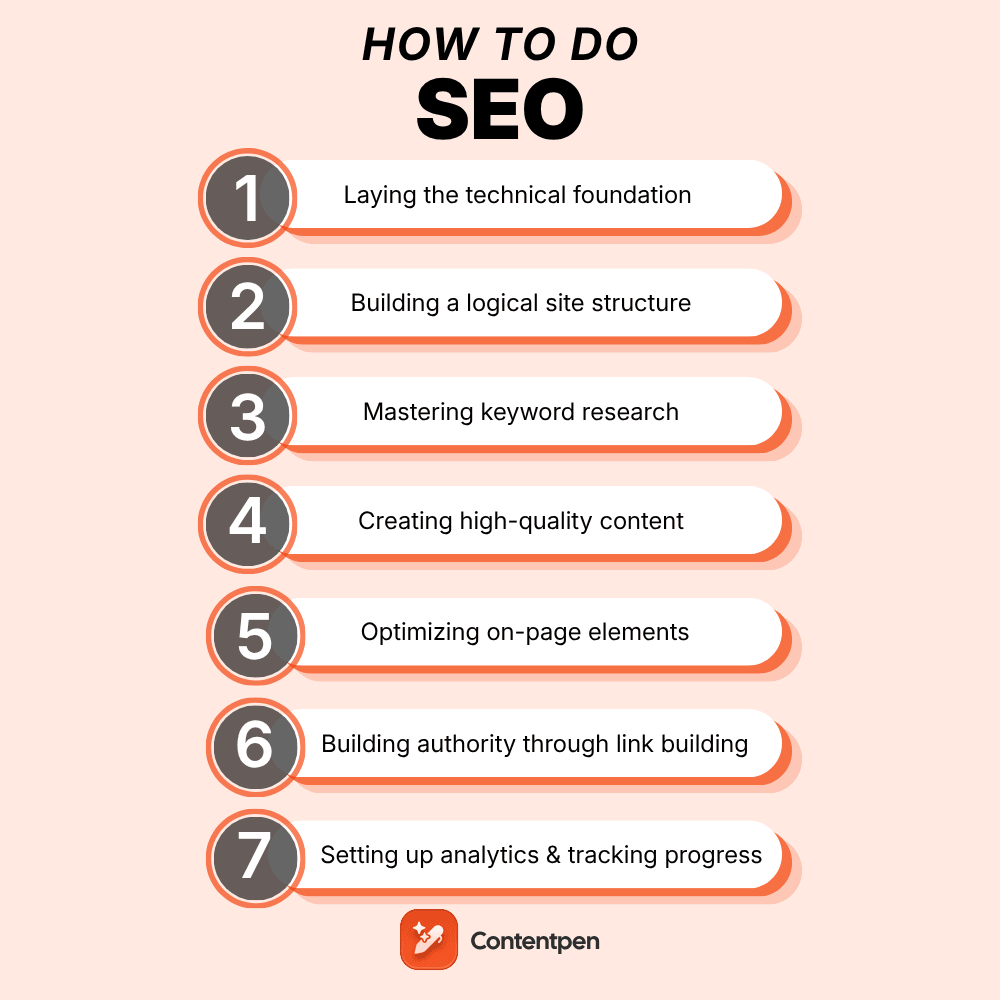
SEO is the process of optimizing content for better visibility and traffic in search engines. It combines technical, off-page, on-page, and local SEO aspects.

SEO analytics

SEO analytics is the practice of collecting, reading, and acting on data about a site's performance in search engines. Many SEO analytics tools are used to complete this process.

SEO audit

The process of evaluating your website to see how it performs in search engines.

SEO silo

It is a process of grouping topically similar webpages using internal links.

SERP

The page of results displayed after a search query.

SERP volatility

SERP volatility refers to how frequently search engine rankings change over time. High volatility usually indicates algorithm updates or ranking fluctuations, which are often tracked by SEO tools using ranking sensors.

Server-Side Rendering (SSR)

Server-Side Rendering (SSR) is a web development technique where a webpage's content is rendered on the server before being sent to the user's browser. This approach helps search engine bots crawl and index JavaScript-heavy websites more efficiently.

Share of voice

Share of voice is how much influence a brand has in a specific space or niche. It often depends on the SEO, media (PPC) campaigns, and your ability to provide value to the users and capture them.

Short-tail keywords

Broad, high-volume search queries that are typically one or two words long. While they attract large amounts of traffic, short-tail keywords are highly competitive and harder to rank for.

Sitelinks

Sitelinks are additional links that appear below a main search result, directing users to key pages within a website.

Sitemap

A sitemap is a file that lists all important pages on a website to help search engines discover and crawl them more efficiently.

Sitewide link

A link that appears on every page of a website, typically placed in the header, footer, or sidebar.

Skyscraper technique

The skyscraper technique is a link-building strategy where marketers identify popular content that has earned many backlinks, create a more comprehensive or improved version of it, and promote the updated resource to websites that previously linked to the original content.

Sponsored link

A sponsored link contains the rel="sponsored" attribute and indicates that the link was created as part of a paid advertisement, sponsorship, or affiliate relationship.

Stop words

Stop words are common words such as "a," "the," and "and." Earlier, search engines often ignored them to reduce processing load, but modern search engines analyze them when they are important for understanding search intent or phrase meaning.

SSL certificate

An SSL certificate encrypts the connection between a user's browser and a website, enabling secure HTTPS communication.

Subdomain

A section of a website hosted under the root domain but with its own distinct address, indicated by a prefix before the main domain. For example, blog.contentpen.ai is a subdomain of contentpen.ai.

T

Taxonomy

In SEO, taxonomy refers to the hierarchical structure used to organize website content into logical groups, such as categories. A clear taxonomy improves website navigation, helps search engines understand content relationships, and enhances crawl efficiency.

Technical SEO

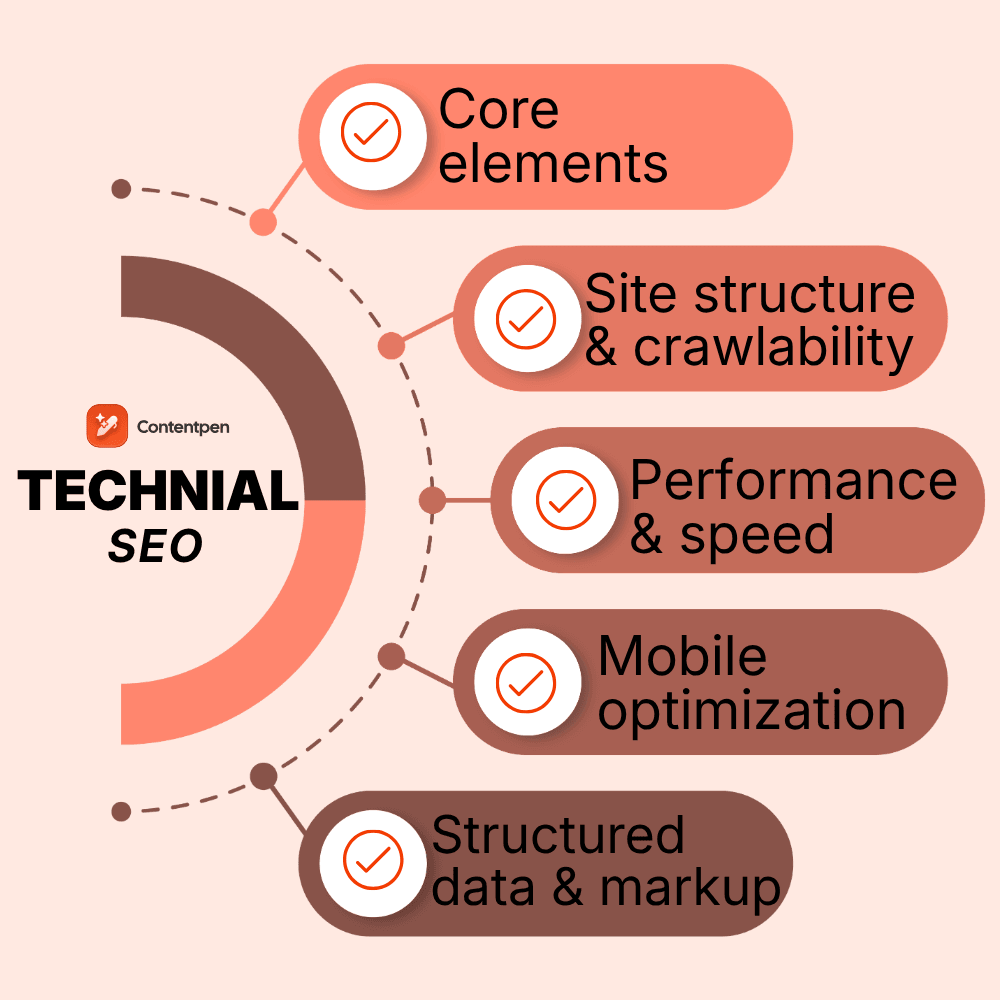
Technical SEO is optimizing the technical infrastructure of a website to improve crawling and indexing.

TF-IDF

TF-IDF stands for Term Frequency–Inverse Document Frequency. It is a statistical method used to evaluate how important a word is within a document relative to other documents.

Thin content

Content that provides little to no value to the user (e.g., duplicate pages, low-quality affiliate pages, etc.)

Time on page

The amount of time a visitor spends on a webpage before navigating elsewhere.

Time to First Byte (TTFB)

Time to First Byte measures how long it takes for a user's browser to receive the first byte of data from the web server after sending a request. A slow TTFB can indicate server performance issues and may negatively affect page speed and overall user experience.

Title tag

An HTML element that specifies the title of a web page. It is the clickable headline in a SERP.

Top-Level Domain (TLD)

The last segment of a domain name, such as .com, .org, or .net.

Topical authority

A measure of how comprehensively a website covers a subject.

Topic cluster

It is a content strategy organizing related pages around a pillar page to establish authority in a niche.

Traffic potential

Traffic potential estimates the total organic traffic a page can receive by ranking for its main keyword and related search queries.

TrustRank

An algorithm developed to help search engines distinguish between trustworthy and spammy websites by analyzing the quality of a site's link connections.

Trust flow

An SEO metric from Majestic that measures the quality of backlinks pointing to a website.

U

UGC links

UGC links are links created by users in forums, blog comments, or other user-generated content areas. They are typically marked with the rel="ugc" attribute.

URL normalization

URL normalization is the process of ensuring that multiple variations of a URL resolve to a single preferred version. For example, versions with or without www, trailing slashes, or different capitalization may be consolidated using redirects or canonical tags to avoid duplicate content.

URL parameter

URL parameters are additional elements added to a URL to pass information, often used for tracking, filtering, or sorting content.

URL slug

The part of a URL that identifies a specific page.

User Experience (UX)

UX is how a person feels when interacting with a website. Good UX is a critical, indirect ranking factor for your platforms.

V

Vector embedding

A numerical representation of content that captures the semantic meaning of the text to help AI understand the related information or context.

Vector search

A search method used by AI systems to find results based on meaning rather than exact keywords.

Visibility score

A metric used by SEO tools to estimate how visible a website is in search results.

Voice search

A search was performed using voice commands instead of typed queries. The surge of voice-enabled devices in the market has compelled SEO specialists to make their content more conversational, giving it a chance to rank in voice searches.

W

Webhooks

Webhooks are workflow automaters that send notifications on a trigger action to a specific target location. They help keep all sections of a pipeline visible to everyone for improved teamwork and collaboration.

Website

A collection of HTML documents that can be called up as individual pages through a URL.

Website architecture

The structural organization of webpages and internal links within a website.

Web accessibility

The practice of designing websites so they can be used by people with disabilities.

Web crawler

A web crawler is an automated program used by search engines to discover and index webpages across the internet.

Web index

The database of webpages stored by a search engine.

Web spam

Web spam refers to manipulative tactics used to artificially boost search rankings. Examples include keyword stuffing, cloaking, and spam backlinks.

White hat SEO

The practice of optimizing a website using strategies that focus on a human audience and follow search engine rules.

X

X-Robots-Tag

An HTTP header that controls how search engines crawl and index content.

Y

YMYL pages

YMYL stands for Your Money or Your Life. YMYL pages impact a person's health, finances, safety, or well-being, which is why Google applies high standards to the content covered on these pages. It especially focuses on EEAT principles to avoid the spread of misinformation.

Z

Zero-click search

A search result where the answer is displayed on the SERP, and the user does not need to click on any website to find what they need. For instance, '1 USD to GBP', etc.

Zero-volume keywords

Keywords that keyword research tools report as having "0" search volume, but often represent highly specific, high-intent queries that drive targeted traffic.