 22 minutes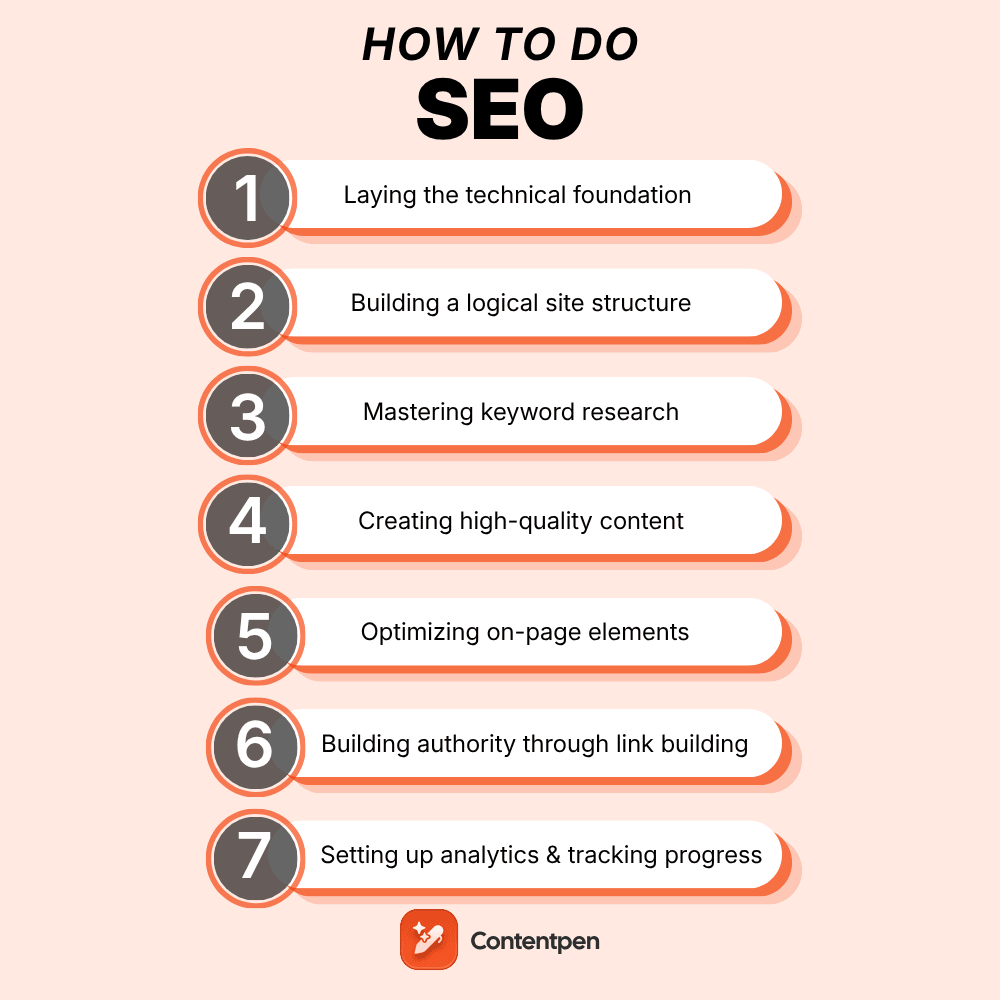
Typing a question into Google is almost a reflex now. For most people, that is how virtually every online visit begins.
However, the most challenging part for a business is landing the top positions for a topic and getting discovered by users. This is where SEO becomes essential.
Search engine optimization can look scary from the outside. There are strange terms, constant algorithm updates, and a lot of opinions. Many beginners bounce between articles and videos, still wondering how to do SEO for a website in a simple, concrete way.
The good news is that SEO is not about tricks. It is about clear, steady work that helps search engines understand your site and real people trust and enjoy your content.
This guide gives a practical, step‑by‑step path for SEO beginners. By the end, you will understand how to improve your website’s ranking with minimal effort and hassle.
So, let’s get started.
Table of contents
- What is SEO and why does it matter?
- 7 steps to do SEO for a website from scratch
- Key SEO metrics every beginner should monitor
- Setting realistic expectations for SEO timelines
- How AI tools like Contentpen streamline the SEO content process
- Staying current: How to keep up with SEO changes
- Summing it up
- Frequently asked questions
What is SEO and why does it matter?
Search Engine Optimization, or SEO, is the practice of improving your website so it shows up more often and in better positions in unpaid search results.
In simple terms, search engine basics are about helping the right people find you when they type relevant questions or problems into Google.
The main goal is to match real search needs with helpful content in a format search engines can understand. That means clear topics, strong on-page SEO, and a site that feels safe and easy to use.
From a business view, SEO supports several important goals:
- Brand awareness – Showing up often in search so people recognize your name.
- Lead generation – Bringing in visitors who are already interested in what you offer.
- Customer acquisition – Turning searchers into paying customers or clients.
Top organic results often get far more clicks than ads, and that traffic usually converts well because visitors are already interested in what you have to offer. Every optimized page becomes a long‑term asset that can support your goals for years.
7 steps to do SEO for a website from scratch
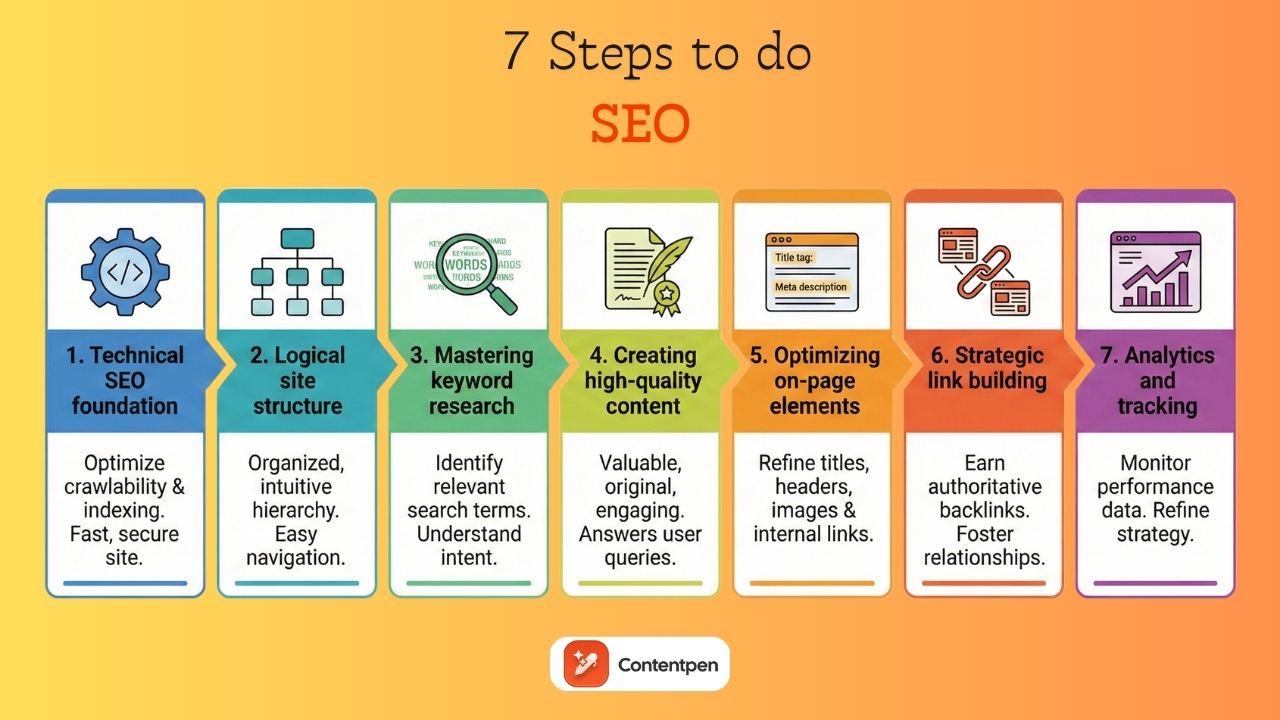
Below are the seven steps for SEO beginners to start ranking their platforms in the top-ranked positions.
- Laying the technical foundation for SEO success
- Building a logical site structure
- Mastering keyword research
- Creating high-quality content
- Optimizing on-page elements
- Building authority through strategic link building
- Setting up analytics and tracking progress
We will discuss these steps in further detail.
Step 1: Laying the technical foundation for SEO success
Technical SEO is the base that supports every other SEO effort. If this base is weak, the impact of your content and links will always be limited.
HTTPS and site security
People and search engines both care about safety. HTTPS encrypts data between your visitor’s browser and your server. That protects login details, payment data, and other sensitive information.
Many hosting providers offer free SSL certificates through services like Let’s Encrypt, and setup is often just a few clicks.
XML sitemap creation and submission
An XML sitemap file lists the main URLs you want search engines to see. It does not control which pages rank, but it helps crawlers discover content more quickly, especially on new or extensive sites.
Most modern platforms can automatically create this file. Once you have the sitemap, you can submit its URL in Google Search Console, so Google knows where to look.
Robots.txt file creation
The robots.txt file tells search engine crawlers which parts of your site they may access and which areas they should ignore. It acts as a basic set of instructions placed at the root of your domain.
For most beginners, the goal is simple: make sure important pages can be crawled and that unnecessary or sensitive areas stay out of search results. Common sections to block include admin panels, login pages, internal search results, or staging environments.
Fixing crawl errors and indexing issues
Google Search Console is your central place to monitor technical issues. The Coverage report shows pages with errors, such as 404 not found responses, server errors, or blocked resources.
Fix broken internal links so visitors and bots do not hit dead ends. If you remove content intentionally, use 301 redirects to redirect traffic to the most relevant alternative.
Mobile responsiveness and mobile-first indexing
Google uses mobile‑first indexing, which means it primarily uses the mobile version of your site to determine rankings.
If the mobile experience is poor, your rankings suffer even if the desktop version looks great.
Check your site on different phones and tablets, and also run it through Google’s Mobile‑Friendly Test. Menus should be easy to tap, text should be readable without zooming, and important content should not be hidden.
Site speed and Core Web Vitals
Page speed affects both users and rankings. When pages load slowly, people often hit the back button, which sends bad engagement signals. Google also focuses on speed through a set of metrics called Core Web Vitals that assess loading time, interactivity, and visual stability.
You can test your site with Google PageSpeed Insights. This tool shows scores along with straightforward suggestions you can follow to improve your chances of appearing in top results.
Step 2: Building a logical site structure and navigation
A well-structured site makes it easier for visitors to find what they need and for search engines to understand which topics you cover.
This area is often called information architecture. It shapes menus, categories, and URL paths. When your structure follows a clear logic, it also supports future content work.
Creating topical silos and content clusters
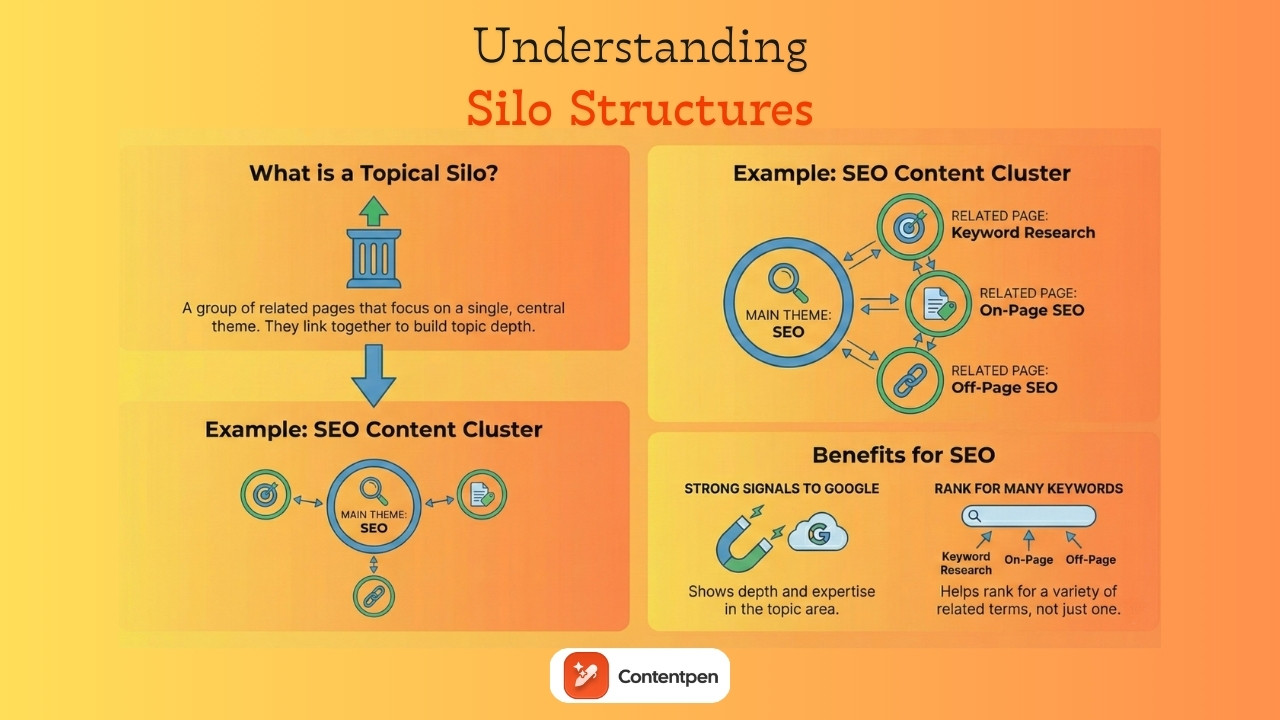
A topical silo is a group of related pages that focus on a single central theme. For instance, a silo about SEO could include pages on keyword research methods, on-page SEO, and off-page SEO strategies that all link together.
Creating content with this approach sends strong signals to Google that your site has depth in those areas. It can help you rank for many related keywords, not just one phrase.
This is the approach behind HubSpot’s blogging, which turned clusters into millions of monthly visits.
URL structure best practices
URLs are more than technical addresses. They appear in browser bars and, sometimes, in search results as simple breadcrumbs. A good URL tells people and search engines what to expect before they click.
Try to use short, descriptive paths like example.com/seo-keyword-research rather than codes such as example.com/p?id=8374652.
Use hyphens between words, avoid random numbers, and keep everything lowercase for consistency.
Plan your site to reflect your silos when possible. For example, an article about link building might live at example.com/seo/link-building-guide. That path helps show how the page fits into your overall topic map.
Internal linking strategy
Internal links connect one page on your site to another.
Contextual interlinking and structural interlinking are two core internal linking methods used in SEO:
- Contextual interlinking refers to links placed naturally within the main content of a page (usually within paragraphs). These links connect related topics using relevant anchor text, helping search engines understand content relationships.
- Structural interlinking: This involves links within a website’s layout or hierarchy, such as navigation menus, breadcrumbs, footer links, and category pages. Structural interlinking defines the site structure, making navigation easier for search engines and humans.
A strong internal linking strategy helps visitors move deeper into your content. It also passes link equity from strong pages to others.
Make sure your most important pages, such as key service pages or cornerstone guides, receive links from many relevant articles.
Managing duplicate content
Duplicate content happens when the same or very similar content appears under more than one URL. This is not usually a harsh penalty situation, but it can waste crawl budget and split ranking signals between versions.
Try to ensure each important page has one main URL. When you must keep multiple URLs that show similar content, use canonical tags.
Step 3: Mastering keyword research for your niche
Keyword research is the basis of your content plan. It tells you what your audience cares about and how they phrase those needs. Without it, you risk writing content no one is searching for or content that misses the language people actually use.
The goal is not only to list popular words. It is to understand your niche, search intent, and realistic ranking chances.
Understanding search intent
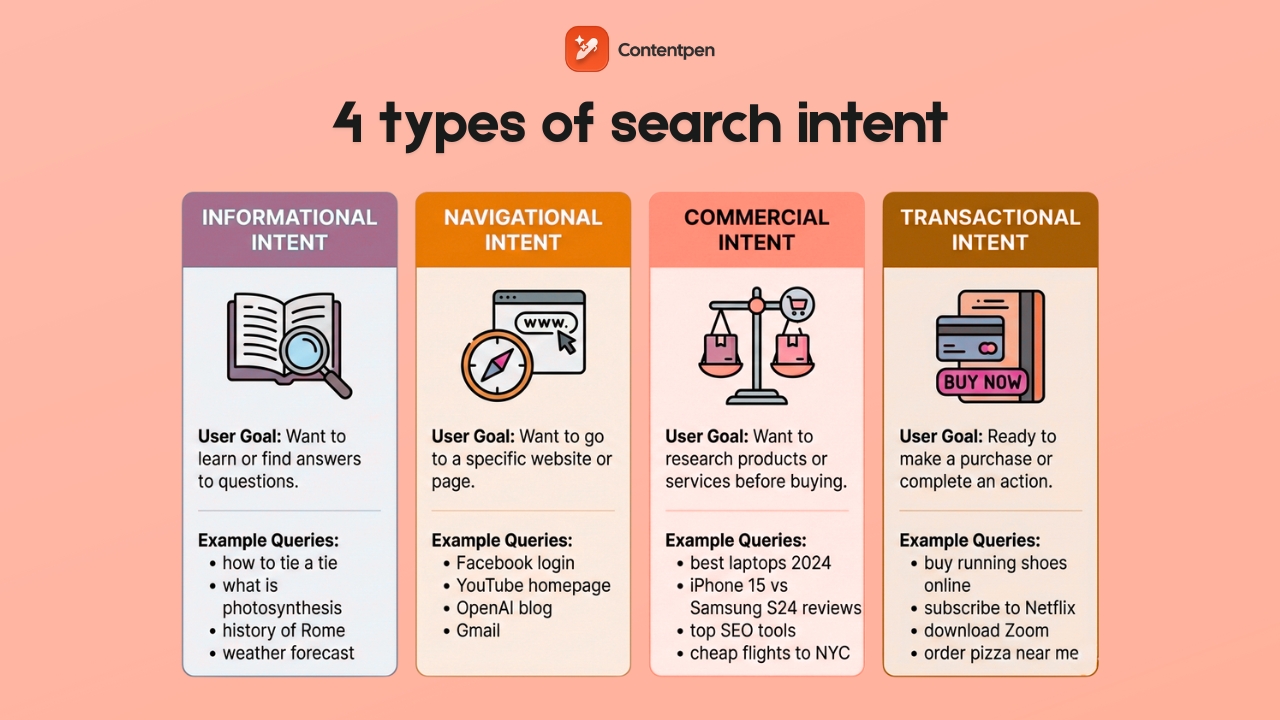
Search intent is the reason behind a query. For SEO beginners, it helps to group intent into four main types:
- Informational – The user wants to learn something (for example, “how to do SEO”).
- Navigational – They want a specific site (for example, “Contentpen login”).
- Transactional – They are ready to buy (for example, “buy SEO audit”).
- Commercial investigation – Users are comparing options before buying (for example, “best SEO tools”).
To match intent, look at the current top results for your target keyword. If they are mostly long guides, that tells you people and Google expect in‑depth content.
If they are product pages or comparison posts, adjust your format to line up with that pattern while still adding your own angle.
Finding primary and secondary keywords
A primary keyword is the main phrase a page is built around. Secondary keywords are related phrases and questions that support the primary topic. Together, they define what your page covers and help you show up for more searches.
Start with broad seed phrases or focus keywords related to your business. Then use tools like Google Keyword Planner to explore long-tail and secondary keyword options for each topic.
You can also explore Google Autocomplete suggestions and read the “People also ask” in related searches to come up with secondary keyword suggestions.
Pay attention to three things while you collect ideas:
- Search volume – How many people search for a phrase.
- Difficulty – How hard it might be to rank.
- Relevance – How closely a keyword connects to what you actually offer.
Favor phrases that line up well with your products or services, even if their volume is modest.
Analyzing keyword opportunity
Not every keyword is worth chasing right away. Many broad phrases are dominated by powerful sites with years of authority. Targeting those first can lead to frustration and little progress.
To find the right keyword opportunities, search each potential keyword and look at the first page of results. Notice who ranks there and what type of keywords they have used.
If you mostly see giant brands and government or university sites, that phrase may be too hard for now. If you see smaller blogs or sites similar to yours, you have a better shot at ranking.
Look for content gaps where current pages miss important angles or fail to answer key questions. That is where your content can stand out.
Balancing keyword optimization with natural writing
Once you have target keywords, the next task is to use them without harming the reading experience. Google is very good at language now.
Include your primary keyword in the title, at least one heading, the first paragraph, and a few times where it fits. Let secondary phrases appear naturally without stuffing as you explain ideas and answer related questions.
A helpful rhythm is to write first for humans in simple, clear language. Then do a light SEO pass, during which you can adjust keywords in content or a heading to reflect a common query.
SEO‑aware writing tools, like Contentpen, can help here by flagging gaps in your use of target phrases while keeping readability high for the users.
Step 4: Creating high-quality, SEO-optimized content
Content is where your research turns into real pages that can rank and convert. Many people focus on tricks, but over the long term, content quality is one of the strongest factors in SEO success.
When visitors find your pages helpful and reliable, they stay longer and share them, which supports both SEO and business results.
The E-E-A-T framework: experience, expertise, authoritativeness, trust
Google’s quality guidelines talk about E‑E‑A‑T, which stands for Experience, Expertise, Authoritativeness, and Trustworthiness. While this is not a single ranking score, it shapes how Google assesses content quality across many signals.
- Experience: Show first‑hand knowledge. You might include case studies, real results, or step‑by‑step screenshots from your own work with SEO.
- Expertise: Provide accurate explanations, correct use of terms, and clear teaching.
- Authoritativeness: Grows as your site becomes a go‑to resource in your topic area. Publishing consistent, in‑depth content and earning mentions or links from other respected sites both help.
- Trust: Secure pages with HTTPS and provide honest, transparent claims backed by cited sources.
When you write with these ideas in mind, you send positive signals to both users and search engines.
Content depth and comprehensiveness
There is no magic word count that guarantees rankings. What matters is whether your page fully answers the query and related questions. If readers have to click back and look for another result, your content did not satisfy them.
A practical way to gauge the required depth is to review the top results for your target keyword. Notice what subtopics they include and how detailed they are. Your goal is not to copy them but to match or exceed the helpful parts while adding your own strengths or newer data.
Cover the main topic, common follow‑up questions, and practical next steps. On more complex topics, consider a layout where beginners get straightforward basics first and more advanced readers can dig deeper into later sections.

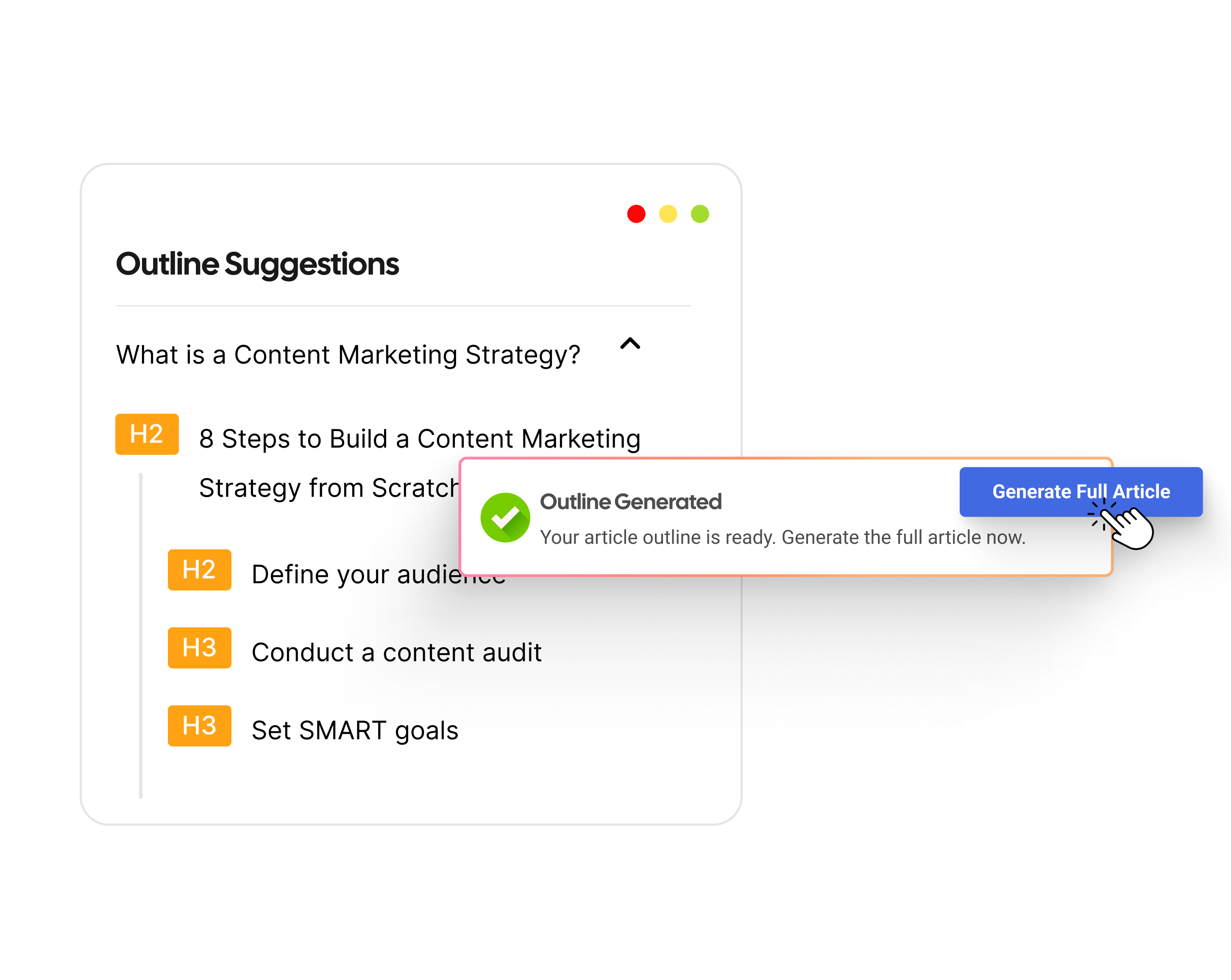
From outline to publish-ready content that fills them

Structured
Consistent
SEO-aligned
Fast
Writing scannable content
Most visitors skim before they decide to read closely. They look at headings, bold text, and early sentences to see if a page is worth their time.
Your writing style and layout should make scanning easy while still delivering strong information.
To make content easy to skim:
- Use short paragraphs with three or four sentences.
- Add descriptive subheadings every couple of hundred words.
- Utilize lists when you need to break down steps or options.
- Highlight a few important phrases in bold for fast reading.
Write in active voice and choose simple words over jargon when possible. Hook readers early by stating what they will learn and why it matters within the first few lines.
Smooth transitions between sections help keep people moving through the page instead of dropping off.
Maintaining originality and avoiding duplicate content
Copying or rewriting content from other sites is a quick way to lose trust with both users and search engines. It adds nothing new and can violate spam policies.
Build content from your own experience, data, and opinions. If you refer to other sources, quote only short parts, then add your analysis.
Explain what the information means for your reader and how they can apply it. This type of original angle turns a basic summary into a useful resource.
Updating and refreshing existing content
Even strong content can go stale.
Facts change, screenshots age, and recommendations shift over time. When that happens, rankings can slowly slide as fresher pages arrive. Treating content as living material keeps it working for you.
Set a review schedule for your main pages, such as once a year or when you notice traffic slowing. During a content refresh, update stats, replace old screenshots, fix broken external links, and add any new best practices. You can also expand thin sections with clearer steps or examples.
Contentpen can help you draft updated sections quickly while maintaining the tone and structure, so that you can focus on strategy and correctness.
Step 5: Optimizing on-page elements for maximum visibility
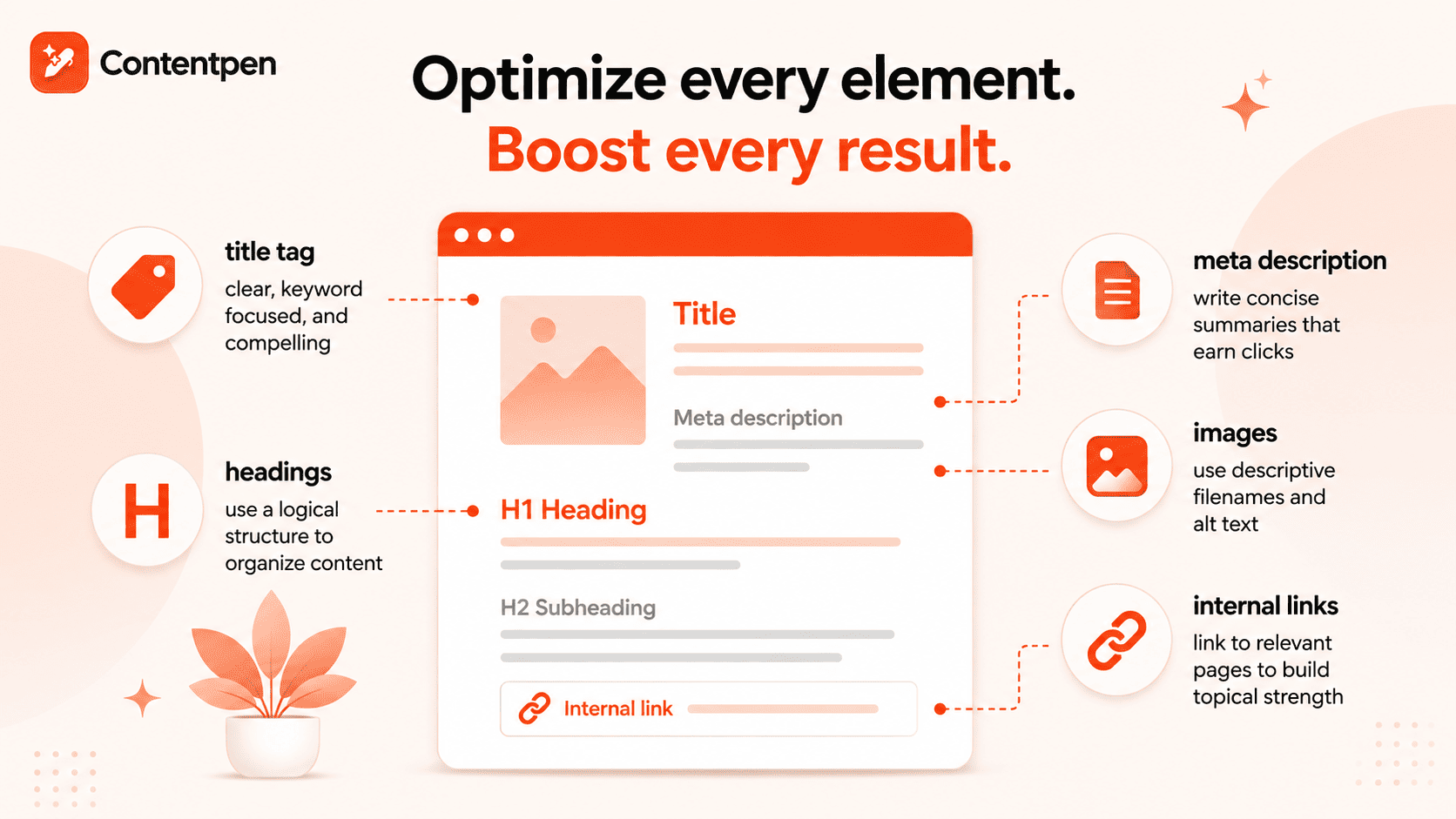
On‑page optimization is about sending clear signals to search engines about what each page covers. You have already seen how content quality matters. Now, focus on the HTML elements that wrap that content.
You can think of this step as labeling your content so both users and bots can understand it. When titles, descriptions, headings, images, and internal links all support the same topic, you build a strong case for relevance.
Crafting effective title tags
The title tag is an essential part of your seo checklist and one of the most powerful on‑page signals. It appears as the main clickable line in search results and, in a browser, usually as the tab label.
Good practices include:
- Put your primary keyword near the start of the title.
- Keep the whole thing under about 60 characters to avoid cut‑offs.
- Make the wording clear and specific so people know what they will get.
- Give each page a distinct title that does not repeat across the site.
You can also add a short brand reference at the end. An example would be “Keyword research for SEO – complete beginner guide | Contentpen.”
Avoid vague titles such as “Home” or titles stuffed with many repeated keywords, since both send weak or spammy signals.
Writing compelling meta descriptions
Meta descriptions do not directly affect rankings, but they strongly influence how many people click your result when it appears. This short snippet under the title is your chance to explain the page’s value quickly.
Aim for one or two short sentences, roughly 150–160 characters total. Summarize the main benefit or insight and where it fits; include your primary keyword naturally without sounding forced.
Using header tags effectively
Header tags (H1-H6) provide structure to your content. They break the page into logical chunks of topics and subtopics. This helps screen readers, human visitors, and search engines follow your arguments.
Use one H1 per page for the main title, and include your primary keyword there if it makes sense.
Use H2 headings for major sections and H3 headings for subsections. Try to make each heading descriptive so that someone skimming the page can understand the gist of your points just by reading it.
Question‑style headings such as “What is technical SEO?” or “How do I check my keyword ranking?” can also match common user queries and give you extra relevance.
Optimizing images with alt text and descriptive filenames
Images add context and make your pages easier to digest. They also give extra chances to explain your topic through alt text and file names. These small details support both accessibility and SEO.
Use clear, descriptive file names such as seo-keyword-research-steps.jpg instead of img_1234.jpg. Then write alt text that briefly explains what the image shows and how it relates to the page.
Strategic internal linking within content
Internal links inside your articles guide readers toward deeper content and help search engines understand which pages belong together. When you place these links thoughtfully, you help both engagement and rankings.
While writing, look for natural chances to point to related posts, guides, or service pages. Use anchor text that hints at the target topic instead of generic phrases.
Aim to include a few relevant internal links in each article, primarily pointing toward cornerstone content and key conversion pages.
You can keep a simple list of your main pages handy, or use Contentpen as a writing hub that automatically adds consistent internal links for your convenience.
Step 6: Building authority through strategic link building
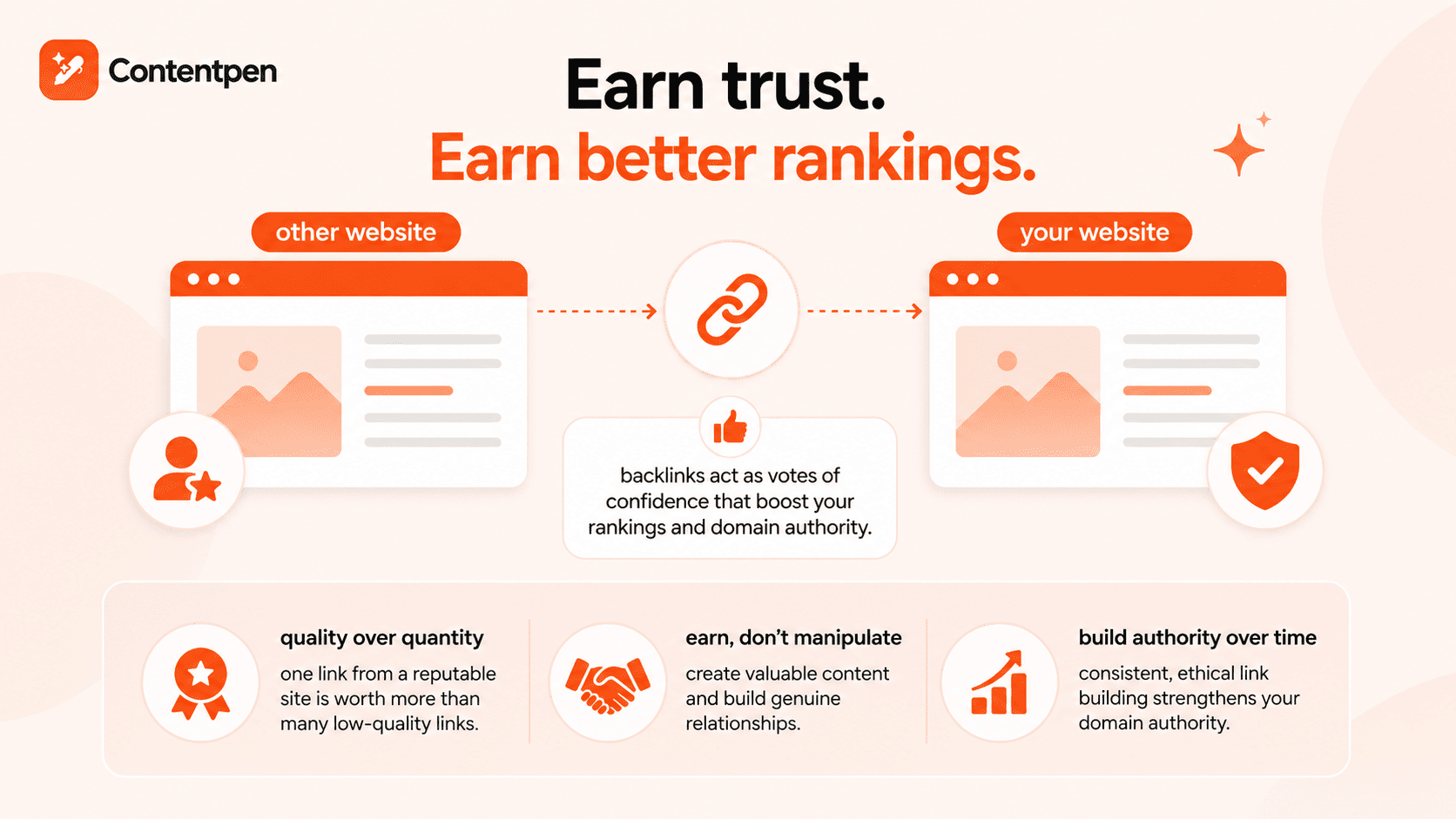
When another site links to you, it is like a public vote of confidence that your content deserves to rank. Google reads that as a sign that your page has value and should be considered for higher positions.
Many beginners feel nervous about link building because they hear stories about penalties. The key is to focus on earning links with high‑quality content and honest outreach rather than tricks. Over time, this kind of link profile supports strong domain authority.
Understanding link equity and domain authority
Link equity is the value passed through a hyperlink from one page to another. The best links come from relevant, reputable sites in your field and are placed within the main body of the content. A link from a weak or spammy page sends little or nothing and can even be risky.
Domain authority is a third‑party metric used by some tools to estimate a site’s likelihood of ranking. While Google does not use this exact number, it often reflects the strength and quality of the site’s backlink profile. Sites with many high‑value links tend to have higher scores.
White-hat link-building strategies that actually work
Ethical link building takes more patience, but it yields safer, more stable results. The base of all good link building is content that people actually want to reference. This can include original research, deep guides, tools, or useful templates.
Guest posts on related sites can be a healthy source of links when done with care. You write a valuable article for another site’s audience and include a relevant link back to your own related content. Both sides gain when the article is strong and on topic.
Other methods include reaching out to owners of resource pages that list helpful links in your niche, offering your content when it fills a gap.
Step 7: Setting up analytics and tracking your progress
SEO is not guesswork. To decide what to improve, you need data on what is working, what is stuck, and where new opportunities arise.
Setting up analytics tools is an integral part of doing your own SEO in a confident, planned way.
You do not have to become a data scientist. You just need to watch a handful of key numbers over time and look for patterns.
Essential tools to use
To set up analytics and track your SEO progress, we have two essential tools.
- Google Search Console: This tool shows how Google views your site in search. After you verify ownership of your domain, you can see which queries bring impressions and clicks, which pages receive those clicks, and how your average positions change.
- Google Analytics: GA4 can track where visitors come from, how long they stay, which pages they visit, and whether they complete the desired action.
As a better alternative to GA4, you can also use Usermaven for AI-driven insights and detailed web analytics for your platforms.
Key SEO metrics every beginner should monitor
A few core metrics give a clear overview of your SEO health. Watching these each month helps you see early wins, plateaus, or problems.
Here is a simple view of useful metrics:
| Metric | What does it tell you | Where to check |
| Organic traffic | How many visitors arrive from search, and whether that number is rising | Google Analytics, filter by organic search in Acquisition |
| Keyword rankings | How your pages appear for target queries and how positions change over time | Google Search Console, or paid rank tracking tools |
| Click‑through rate | How often do people click your result compared with how often it appears | Performance report in Google Search Console |
| Backlink growth | Whether more sites are linking to you, and how strong those sites appear | Links report in Search Console or external SEO tools |
| Core Web Vitals and speed | How your pages perform on loading, interactivity, and visual stability | PageSpeed Insights and Core Web Vitals reports |
| Conversions from organic | How well does search traffic turn into leads or customers | Google Analytics goals or events filtered by organic traffic |
By watching these numbers, you can answer questions like “How do I check my keyword ranking?” and “Is my SEO work bringing more leads?” with real data, not guesses.
Setting realistic expectations for SEO timelines
SEO takes patience. For new sites, it often takes three to six months to see clear gains from consistent work. Competitive niches can take even longer, especially for very broad terms.
Many factors shape your timeline:
- Age and history of your domain.
- Strength of your competitors.
- Quality and consistency of your content.
- Technical health and link profile of your site.
Focus on steady improvement rather than overnight success. Watch for minor signs of progress, like more impressions, a handful of new keywords, or one strong backlink.
Over time, these wins stack, and traffic growth tends to speed up as your authority grows. For a sense of what sustained effort compounds into, see these real SEO case studies.
How AI tools like Contentpen streamline the SEO content process
By now, it is clear that solid SEO has many moving parts. You need research, writing, on‑page optimization, updates, and tracking.
For solo marketers, small teams, and busy agencies, doing all this manually can feel impossible on a tight schedule.
AI‑powered platforms exist to reduce that load. They help you handle the most time‑intensive tasks faster, so you can focus on strategy and quality control.
Contentpen is one such platform, explicitly built around SEO content needs. It accelerates your content production to grow organic traffic and share of voice in your niche.
How Contentpen helps beginners implement SEO best practices
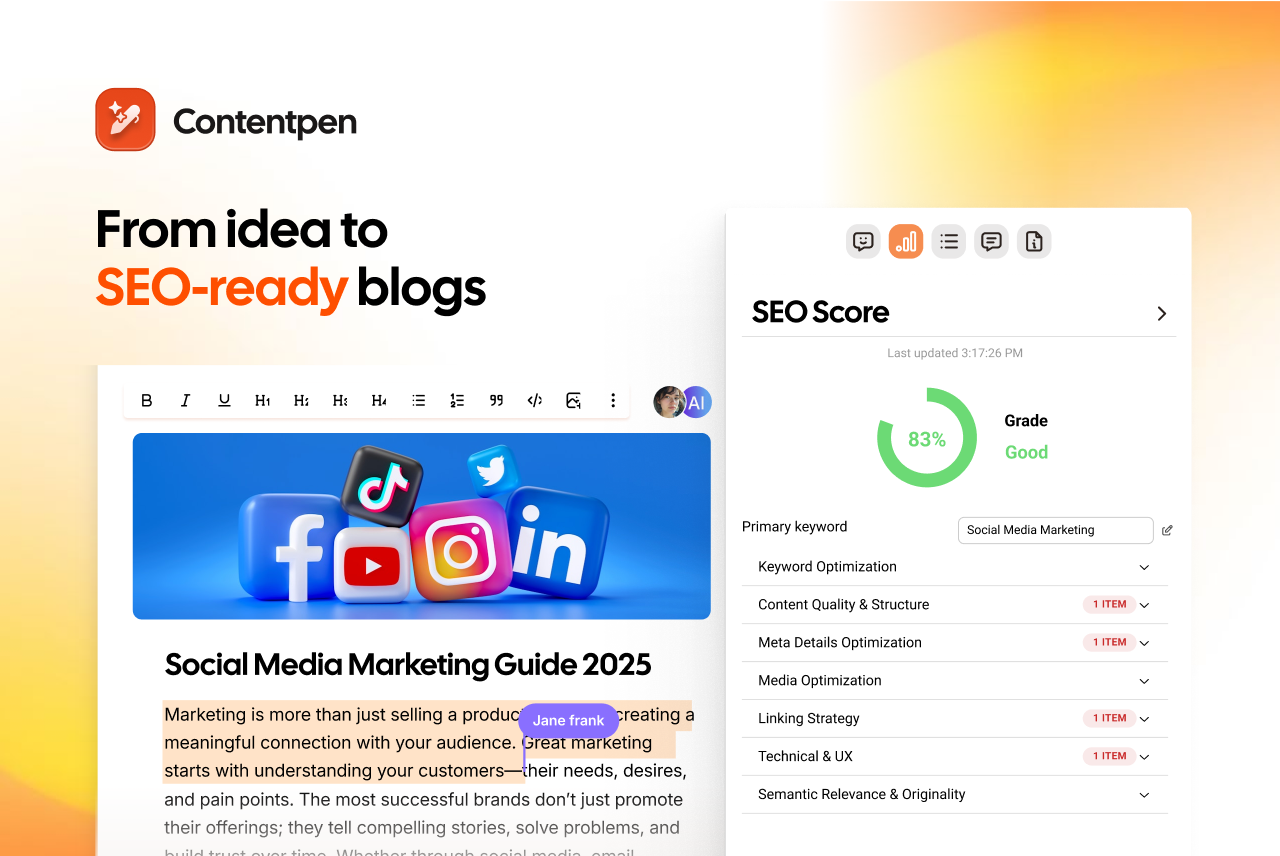
Our SEO platform brings several key Features into one workspace. It can help you:
- Generate long‑form blog drafts based on your chosen topics and target keywords.
- Structure articles in a way that supports strong SEO layouts.
- Spot fundamental gaps in headings, keyword coverage, and formatting.
While you write or refine text, SEO‑aware guidance in Contentpen highlights areas that may need a more transparent structure or better keyword use.
You can also keep your brand voice consistent by uploading your content guidelines into Contentpen and using it as a central place for drafts, outlines, and internal notes.
Reusing outlines and drafts makes it easier to publish content on a regular schedule without dropping quality.
Staying current: How to keep up with SEO changes
SEO does not stand still. Search systems release updates, new features appear in results, and best practices shift over time. With the popularity of AI search discovery, terms like GEO (Generative Engine Optimization) have also entered circulation.
For someone learning SEO, the constant change can seem overwhelming at first glance. However, the reassuring part is that core principles remain the same.
Helpful, honest content, fast and safe sites, and natural links have been wise goals for many years.
What changes more often are the finer tactics and the weight given to certain ranking factors. When you keep your focus on serving users well, you are already on the right side of most updates.
To stay informed without spending all day on the news, choose a small set of trusted sources. The Google Search Central blog and YouTube channel are good places for official guidance.
A few respected SEO blogs or newsletters can also help you understand what new updates mean in practice. You do not need to chase every rumor; watching clear trends is enough.
Summing it up
Learning SEO can feel like a big project, but breaking it into steps makes it manageable. You start by making sure search engines can find and crawl your site. Then you organize your structure, research the right keywords, and create content that genuinely helps people.
From there, you tune on‑page elements, build authority with good links, and track progress with data instead of guesses.
Along the way, you must avoid common mistakes, such as chasing impossible keywords or ignoring mobile users. This steady, thoughtful work leads to real improvements in website ranking over time.