 13 minutes
Backlinks remain one of Google’s most influential ranking factors, yet they’re also one of the most misunderstood concepts. While many site owners focus on publishing content, few know how backlinks actually work.
SEO backlinks are links on other platforms that point to your website. In terms of SEO, they’re like votes of credibility that help your visibility in SERPs (search engine results pages).
Earning high-quality SEO backlinks from reputable websites is easier said than done. It requires consistency in content creation and outreach efforts while following best practices to create an appealing overall user experience.
In this post, you will learn all about how backlinks help you grow your online platforms sustainably. You will also learn from some real-life content marketing strategy examples and see how Contentpen can assist you in this cause.
So, let’s get started.
The basics of SEO backlinks
Backlinks are part of off-page SEO. There are mentions of your site on other platforms, such as Reddit, Quora, Medium, etc., which are often recognized as a ranking factor.
Read more: SEO glossary for 2026.
SEO backlinks tell crawlers, such as Googlebot, how important a webpage is on the World Wide Web using the PageRank algorithm. This ranking mechanism indicates that the quality of backlinks matters more than their quantity.
For instance, 2 links to industry leaders in your niche might be more beneficial for your SEO than 20 scattered links over the Internet.
Where are SEO backlinks used?
You can use backlinks on your platform to:
- Provide a broader context to the reader
- Add authenticity to the content
- Recommend something (e.g., an item for purchase)
- Cite sources or statistical data
While there can be many purposes of SEO backlinks, they’re essentially used to build topical authority on a subject and boost rankings by linking to top sites.
Also read: Search engine basics: How they work and why they matter.
The difference between internal links and backlinks
Internal links and backlinks serve different purposes in SEO, even though both involve linking between pages.
Internal links connect pages within the same website. They help users navigate your site, distribute link equity across pages, and guide search engines toward your most important content.
Backlinks, on the other hand, come from external linking. They act as signals of trust and authority, helping search engines evaluate how credible and valuable your content is compared to others on the web.
Here’s a simple table to differentiate the two SEO linking strategies:
| Aspect | Internal Links | Backlinks |
| Source | Pages within the same website | External websites |
| Control | Fully controlled by the site owner | Earned, not controlled |
| SEO role | Improves site structure and crawlability | Builds authority and trust |
| Ranking impact | Indirect | Direct and strong |
| Risk | Low | Can be harmful if low-quality |
Both are essential for SEO, but they solve different problems. Internal links strengthen your site from within, while backlinks build your site’s reputation across the wider web.
How to create backlinks in SEO?
Backlinks are placed on the visible text of your copy, called anchor text. Anchor text helps search engines guess what the target page is about.
Common types of anchor text include:
- Branded anchors such as your company or product name
- Keyword-rich anchors that include your primary phrase, such as “what is on-page SEO”.
- Generic anchors such as “click here” or “this article.”
- Naked URLs, where the link text is simply the web address, such as https://contentpen.ai/.
A natural backlink profile contains a healthy mix of these different anchor text types.
One area where many people go wrong is the overuse of exact match keywords. If hundreds of your backlinks use the exact same keyword as anchor text, it can look like manipulation and leave a negative footprint on the World Wide Web.
Also read: 15 types of keywords: Complete SEO guide for 2026.
Google’s Penguin filter monitors these kinds of patterns and can help determine your pages’ rankings.
Why are backlinks important for SEO?
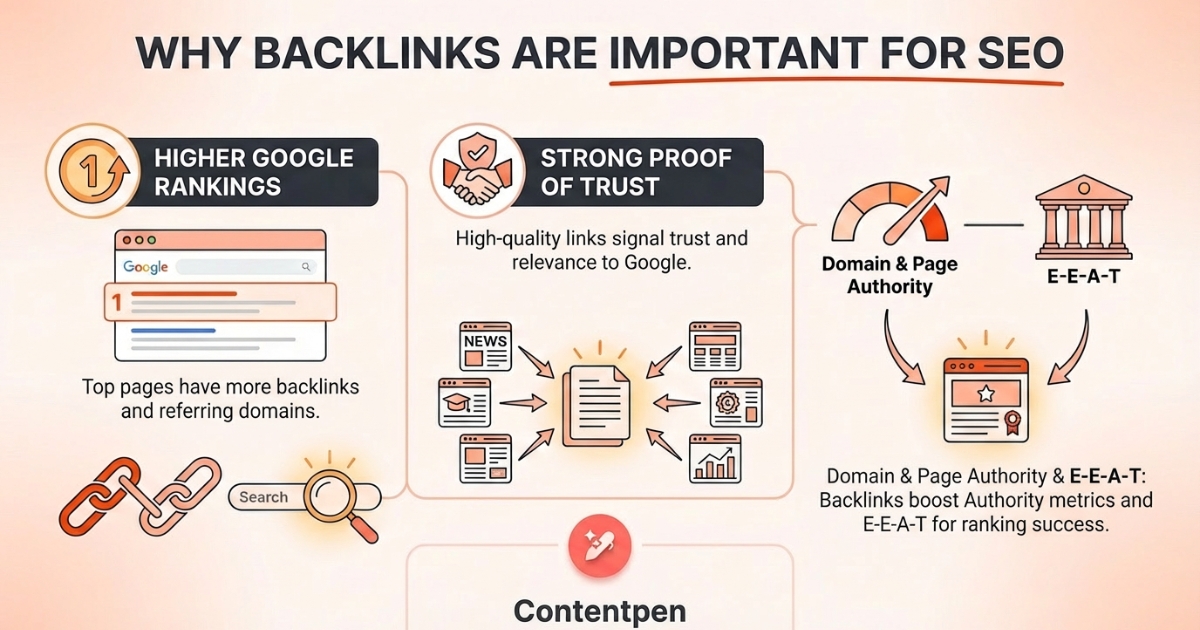
Many industry studies show that pages in the first position on Google usually have far more backlinks and more referring domains than the pages right below them.
The reason is simple.
When many high-quality sites link to a page, Google reads that as strong proof that people in that field trust and use that content.
Backlinks also power common SEO metrics like Domain Authority and Page Authority. These scores try to predict how likely a domain or page is to rank.
Sites with many high-quality backlinks from diverse referring domains tend to have higher authority scores. DA PA checker is used by SEO experts to evaluate these scores from time to time, so they can compare website authority growth with competing domains.
Outgoing links also affect E-E-A-T, which stands for Experience, Expertise, Authoritativeness, and Trustworthiness. When respected sites in your niche point to your content, Google sees that as proof you know the topic and that your information can be trusted.
Types of backlinks you should know
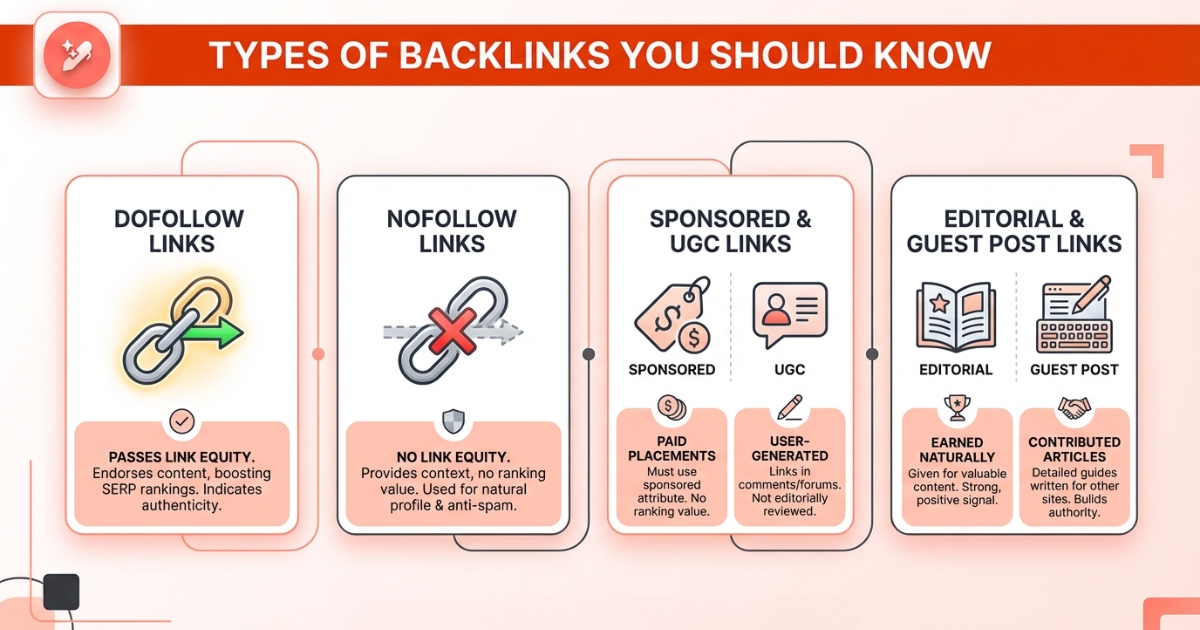
Mainly, there are 4 types of backlinks:
- Dofollow links
- Nofollow links
- Sponsored and UGC links
- Editorial and guest post links
Let’s review them one by one in more detail.
Dofollow vs nofollow backlinks
Dofollow links pass link equity, or link juice, to the linked website, boosting its ranking in SERPs. It is a reminder to the crawler that you endorse the product, content, or any service on the linked website, thereby showcasing its authenticity or reliability.
On the contrary, nofollow backlinks are used to provide readers with some reading context for the material you’ve covered. But you do not pass the link equity to the linked website.
Initially, nofollow links were used to combat online spam. Now, many SEO strategists use them to add contextual value to content and build a natural, more balanced backlink profile for their websites.
Sponsored and UGC links
Sponsored and UGC links are used for paid placements or ads.
When a blogger gets payment or a free product in exchange for a mention, that link should use the sponsored attribute so it does not pass the normal ranking value.
On the other hand, site owners use the user-generated content (UGC) tag on links that appear inside comments, forums, or other places where visitors can post. This tells search engines that the link was not reviewed or placed by the editor, so it should be treated with care.
These attributes give search engines a clearer picture of which links were earned and which were bought or posted by users.
Editorial and guest post links
Editorial backlinks are some of the best types of backlinks a site can earn. These links happen when a writer, editor, or site owner discovers your content and decides to link to it because it helps their readers.
No one pays anyone, no one trades favors, and the link is there simply because the content is valuable. Search engines treat this kind of backlink as a very strong positive sign.
Guest post backlinks come from articles you write for other sites. You might write a detailed guide for a partner blog in your niche and include one or two links back to your own site, either in the content or in your author bio.
Proven strategies to earn quality backlinks
Outreaching to web admins and site owners is helpful in earning quality backlinks through reliable white-label link building solutions, but only if what you have to offer is worthwhile.
Create linkable content assets
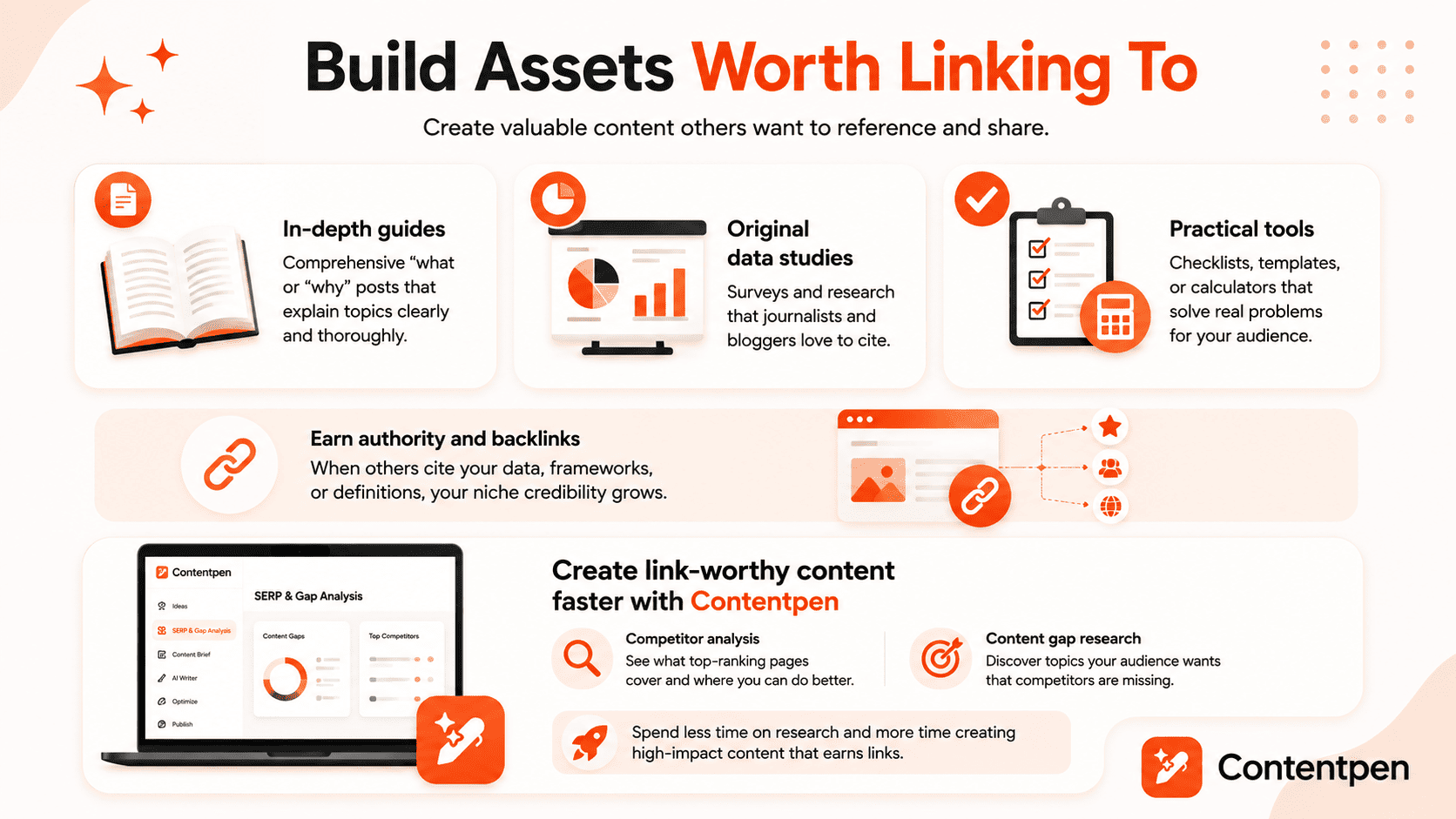
For a strong link-building strategy, you need helpful, detailed content that other sites would want to reference.
Think about content formats that tend to attract links:
- Comprehensive “what” or “why” posts, like clear guides that explain a topic in depth
- Original surveys or data studies, which journalists and bloggers can cite
- Practical checklists, templates, or calculators that solve a real problem
When people cite your data, frameworks, or definitions, you gain credibility in your niche.
That said, writing such content is no easy feat. It requires hours of manual research and writing, which can be tiring, especially for agencies that publish at scale.
This is where our AI SEO tool shines. Contentpen helps content teams turn ideas into well-structured, SEO-friendly posts with ease. It automatically performs competitor analysis and content gap research, so you can see where your content can stand out from the competition.

Write content that’s built to rank, not just read
Create search-optimized blogs aligned with SEO and GEO signals, so your content performs well across search and AI-driven discovery.
Try SEO Blogging FREE →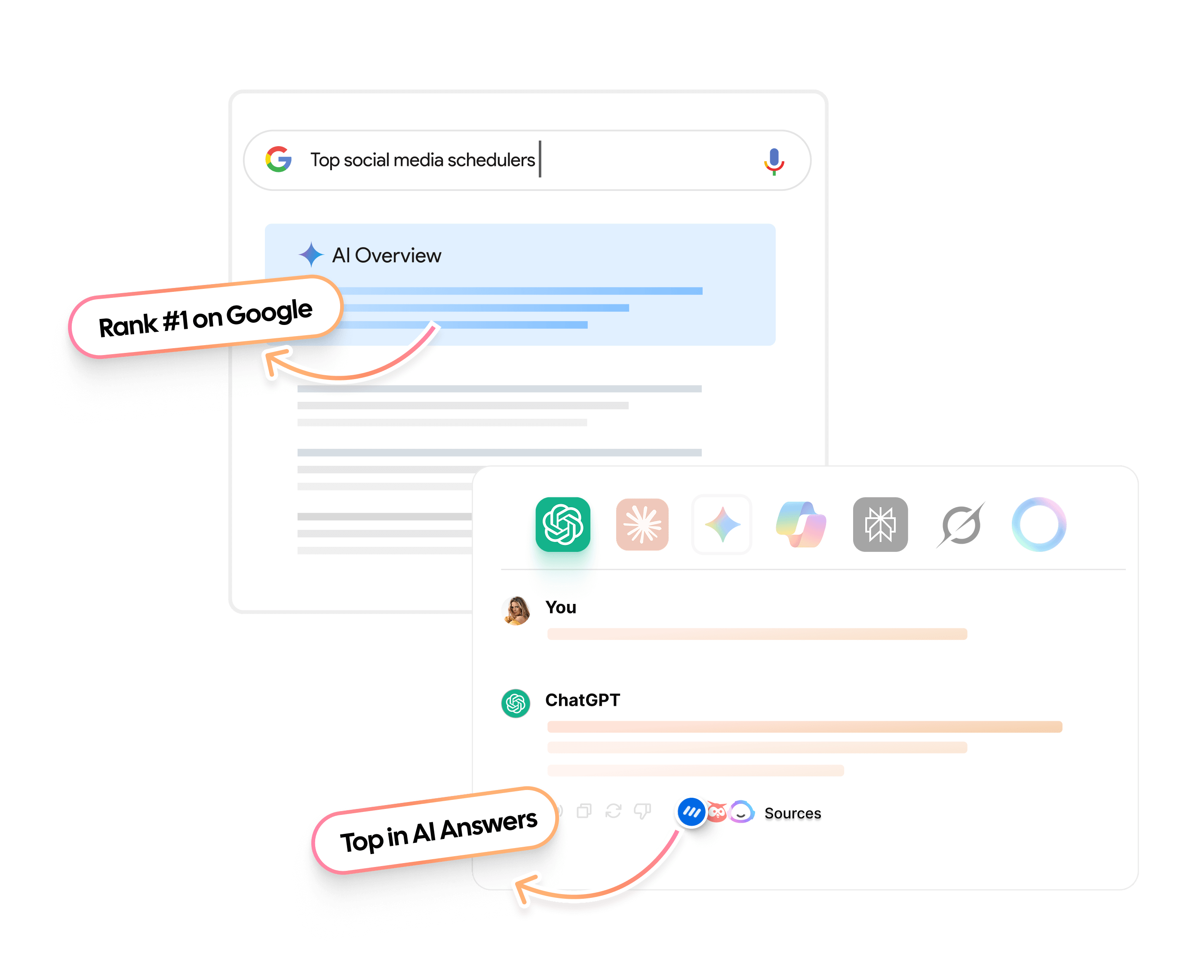
Use broken link building to your advantage
Instead of writing plain emails to request a backlink, try to replace the broken links on others’ websites with one of your own. This strategy, called broken link building, is highly effective for your organic growth.
The usual flow looks like this:
- Find resource pages or articles in your niche that link out to many external sources.
- Use a browser extension or SEO tool to scan those pages for links that lead to 404 error pages.
- When you find a few broken links that match topics you cover, reach out to the site owner with a short, friendly email.
- Point out the dead links and suggest your content as a better alternative.
Helping people fix broken links on their pages while pointing them to your resource is a win for everyone.
Pursue digital PR and media outreach
Digital PR takes link building into the world of news and media. The idea is to earn coverage and backlinks from journalists, bloggers, and large publications by offering helpful stories, data, or expert insights.
Platforms like Qwoted let journalists, PR professionals, and bloggers find sources quickly from industry experts.
Over time, this type of outreach positions you as a go-to voice in your niche. Each time you appear in an article with a backlink, you do more than gain SEO strength. You also put your brand in front of new readers who are already interested in your topic.
Utilize guest posting and partnerships
Guest posting remains one of the most reliable ways to earn backlinks when handled with care.
It means offering strong, original articles to relevant blogs, industry publications, and partners where your audience already spends time.
To find good guest post options, you can search Google for phrases such as your main keyword plus “write for us” or “contribute.” Study the sites you find to make sure they have real readers, clear editorial standards, and content that matches your field.
Since finding quality publishing opportunities can take significant time, many businesses choose to work with a trusted blogger outreach agency, which has established relationships with relevant publishers and follows editorial best practices to secure high-quality placements.
Partnerships also play a role. You might team up with another brand to run a joint webinar, co-author a white paper, or run a study. Each partner usually hosts content on their own site and links to the other.
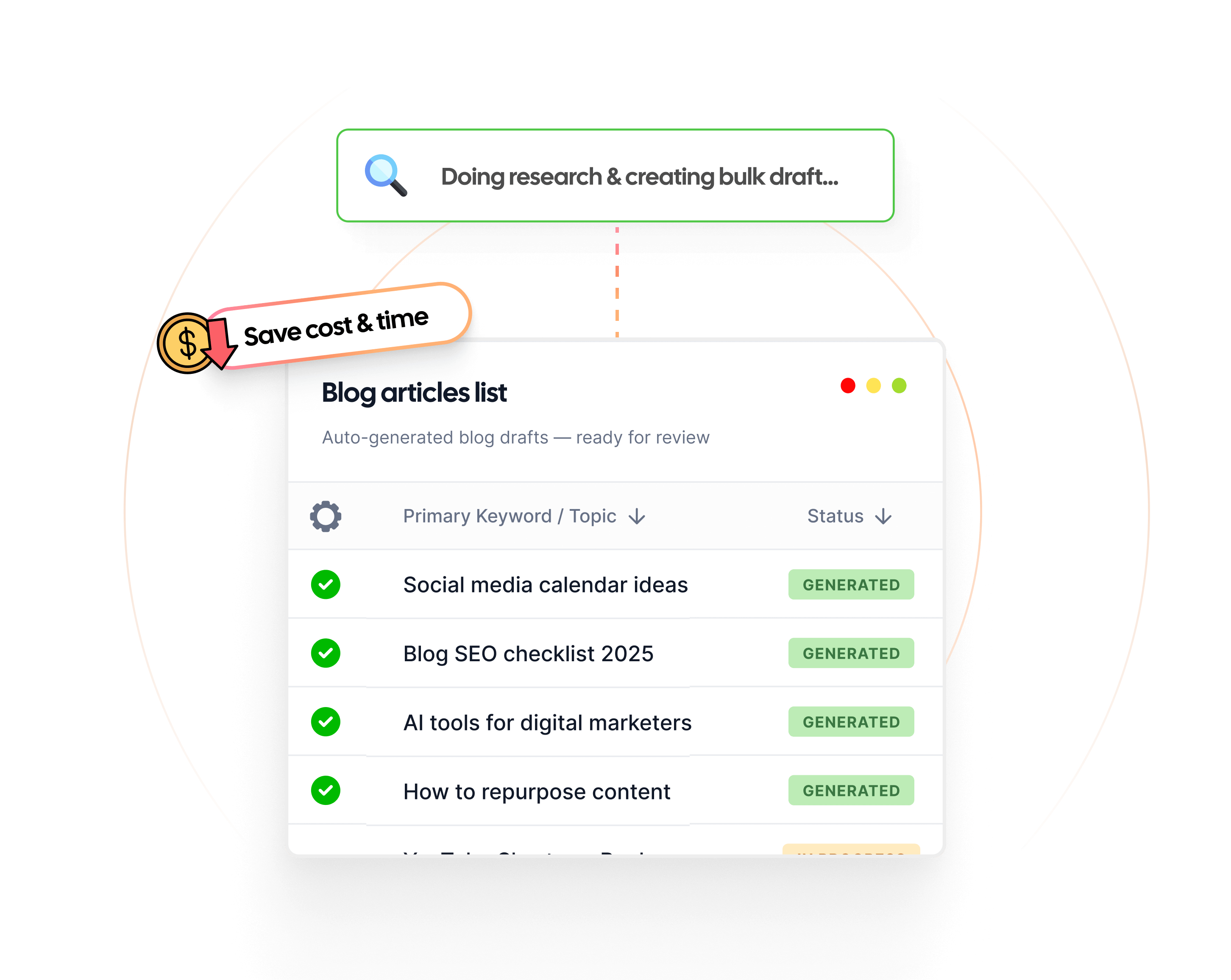
Create rank worthy content at scale

Faster
Consistent
SEO-ready
Efficient
How to analyze and manage your backlink profile
To properly analyze and manage your backlink profile, you must:
- Use online tools for backlink analysis
- Identify and disavow toxic links
- Fix broken links
Starting with the first one.
Use tools for backlink analysis
SEO tools such as Moz Link Explorer, Semrush Backlink Analytics, and Ahrefs let you enter your domain to see lists of backlinks and referring domains. You can check how many links you have, which pages attract the most traffic, and how strong the linking sites appear to be.
Read more: The complete SEO analytics guide.
These tools also show anchor text patterns and give you a breakdown of dofollow versus nofollow links. Many of them let you track new and lost backlinks over time, which shows whether your link-building efforts are working or not.
Identifying and disavowing toxic links
Not every backlink helps your SEO. Some links can hurt you, especially if they come from spammy sites, hacked sites, or private blog networks.
For this reason, many modern SEO competitor analysis tools include a spam score or toxicity score so you can spot risky backlinks. If you notice a specific domain with many spammy links, exclude it from your backlinking strategy.
To make this process a bit easier, you can use our tool to include and exclude domains automatically while writing the content.
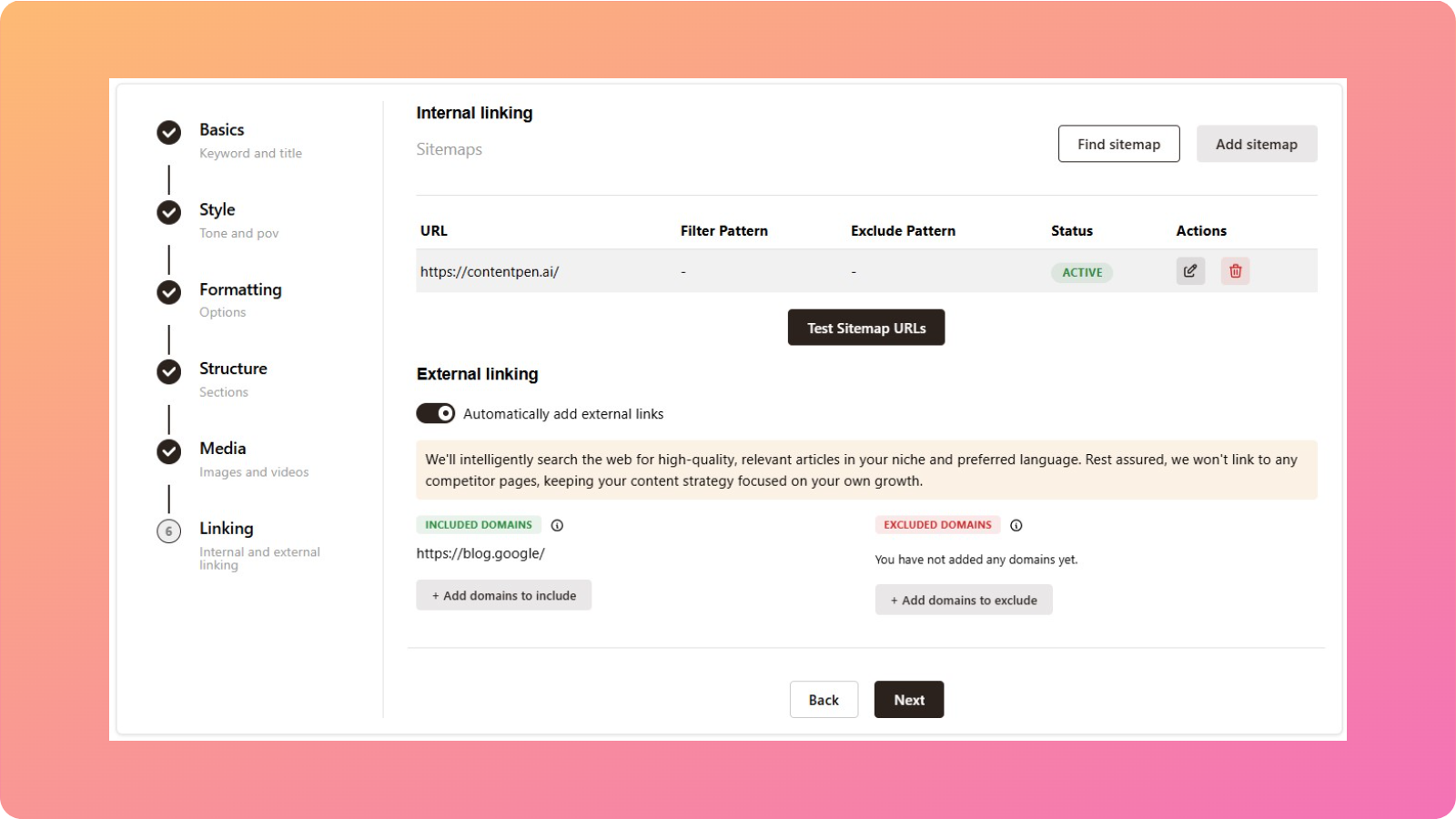
This will help you completely abandon toxic links, keeping your backlink profile healthy and ready for scaling.
Fixing broken links
Broken links usually appear over time as pages are moved, renamed, or removed. When a backlink points to one of these outdated URLs, you can encounter a 404 error page.
From an SEO perspective, this means wasted link equity. Any authority passed from external sites stops flowing, and valuable referral traffic is lost.
Left unchecked, broken links quietly weaken your backlink profile.
Also read: How to do SEO?
To ensure this doesn’t happen, you can detect broken backlinks using tools like Google Search Console. Once identified, map each broken URL to the most relevant live page on your site.
The primary fix is to set up 301 redirects from outdated URLs to active pages. This preserves the link value and ensures users and search engines land on useful content without interruption.
Regularly fixing broken links with SEO audits helps you retain the benefits of backlinks you’ve already earned, improve crawl efficiency, and maintain a clean, reliable website structure.
Final thoughts
SEO backlinks are more than just links pointing to your website. They’re signals of trust, relevance, and authority that help search engines decide where your content belongs in the results.
By understanding backlink types, placing links thoughtfully, and maintaining a clean backlink profile, you build a stronger foundation for sustainable SEO growth.
Whether you’re earning editorial mentions or fixing broken links, consistency matters. That’s why using Contentpen is vital to your backlinking strategy. With our tool, you can streamline research and content creation so that you can publish linkable assets without any hurdles.