 21 minutes
Competition gets to everyone, us included. The best way to deal with it is to keep tabs on your competitors to see what they’re doing better than you. This includes their ad placements, messaging, audience engagement, and much more.
But surface-level tracking isn’t any good for you. You need specialized tools to benchmark performance, identify gaps in your content strategy, and provide actionable insights. This is why you need SEO competitor analysis tools to simplify the process and help you win the market.
In this post, we tested and ranked the 12 best SEO competitor analysis tools in 2026 to help you outsmart your competition. In the end, we will also provide you with an easy framework to help you choose the right tool for your needs.
So, let’s get started.
Table of contents
- What is an SEO competitor analysis tool?
- How did we test these tools?
- Comparison table: SEO competitor analysis tools at a glance
- 1. Contentpen
- 2. Ahrefs
- 3. Semrush
- 4. TapClicks
- 5. SpyFu
- 6. Moz Pro
- 7. SE Ranking
- 8. Similarweb
- 9. BuzzSumo
- 10. Serpstat
- 11. Visualping
- 12. Whitespark
- Best free SEO competitor analysis tools (what Google offers)
- How to choose the right SEO competitor analysis tool for your needs
- Summing it up
- Frequently asked questions
What is an SEO competitor analysis tool?
SEO competitor analysis tools help you see what others in your niche are doing to win reach, audience attention, and customer retention.
More specifically, these tools analyze backlink profiles, keyword rankings, domain authority, and organic traffic of your competitors.
The insights the tools provide inform everything, from on-page SEO to content marketing strategy, enabling you to capture the market with ease.
Also read: Search engine basics: How they work and why they matter.
Why are SEO competitor analysis tools used? (Their purpose)
SEO competitor analysis tools help you understand why competitors rank higher, which strategies drive their traffic, and where you can outperform them using data-backed decisions.
They eliminate the need to perform manual SEO site audits. Therefore, the tools save time and resources, allowing you to actually implement strategies rather than wasting time on spreadsheets and numbers.
Also read: Best AI chatbots for professionals in 2026.
How did we test these tools?
We thoroughly researched all the tools with hands-on trials, user reviews, and feature analysis. Our criteria to select each tool depended upon:
- Data accuracy: How accurate is the data provided?
- User experience: Is the tool easy enough to use without training?
- Key features: What does the tool offer beyond the basics?
- Pricing: Does the tool justify its price tag?
- Customer support: Will you be able to get some support when things go wrong?
Comparison table: SEO competitor analysis tools at a glance
Let’s see our list of the best SEO competitor analysis tools while considering all the aspects we discussed above.
| Tool | Best For | Core Strength | Key Limitation | Starting Price |
| Contentpen | Content teams and agencies | AI-driven content gap analysis and bulk creation | Free trial only lasts 7 days | $27/month |
| Ahrefs | SEO professionals | Industry-leading backlink data | Expensive for small teams | $129/month |
| Semrush | All-in-one marketing teams | SEO, PPC, content, and social analysis | Backlink data is weaker than Ahrefs | $199/month |
| TapClicks | Agencies and enterprises | PPC competitor intelligence & reporting | Limited organic SEO features | Not disclosed |
| SpyFu | SMBs and consultants | Affordable keyword and PPC competitor research | Less accurate traffic data | $39/month |
| Moz Pro | SEO specialists | Domain Authority tracking and clean UI | Smaller link index | $49/month |
| SE Ranking | Agencies on a budget | White-label SEO competitor tracking | Learning curve | $65/month |
| Similarweb | Market analysts | Traffic analytics and audience insights | High pricing | $199/month |
| BuzzSumo | Content marketers | Viral content and influencer tracking | Limited keyword SEO data | $199/month |
| Serpstat | Growing businesses | Keyword clustering and topical dominance | Higher price for small teams | $199/month |
| Visualping | Competitive monitoring teams | Website change alerts in real time | No SEO metrics | From $10/month |
| Whitespark | Local SEO agencies | Citation tracking and local rankings | Not useful for global SEO efforts | From $1/location/month |
We’ve selected tools that support a wide range of use cases and industries, so pick whichever one you think suits you best.
1. Contentpen
Best for: Agencies, small businesses, and creators that prioritize content creation and SEO optimization at scale with up-to-date competitor data.
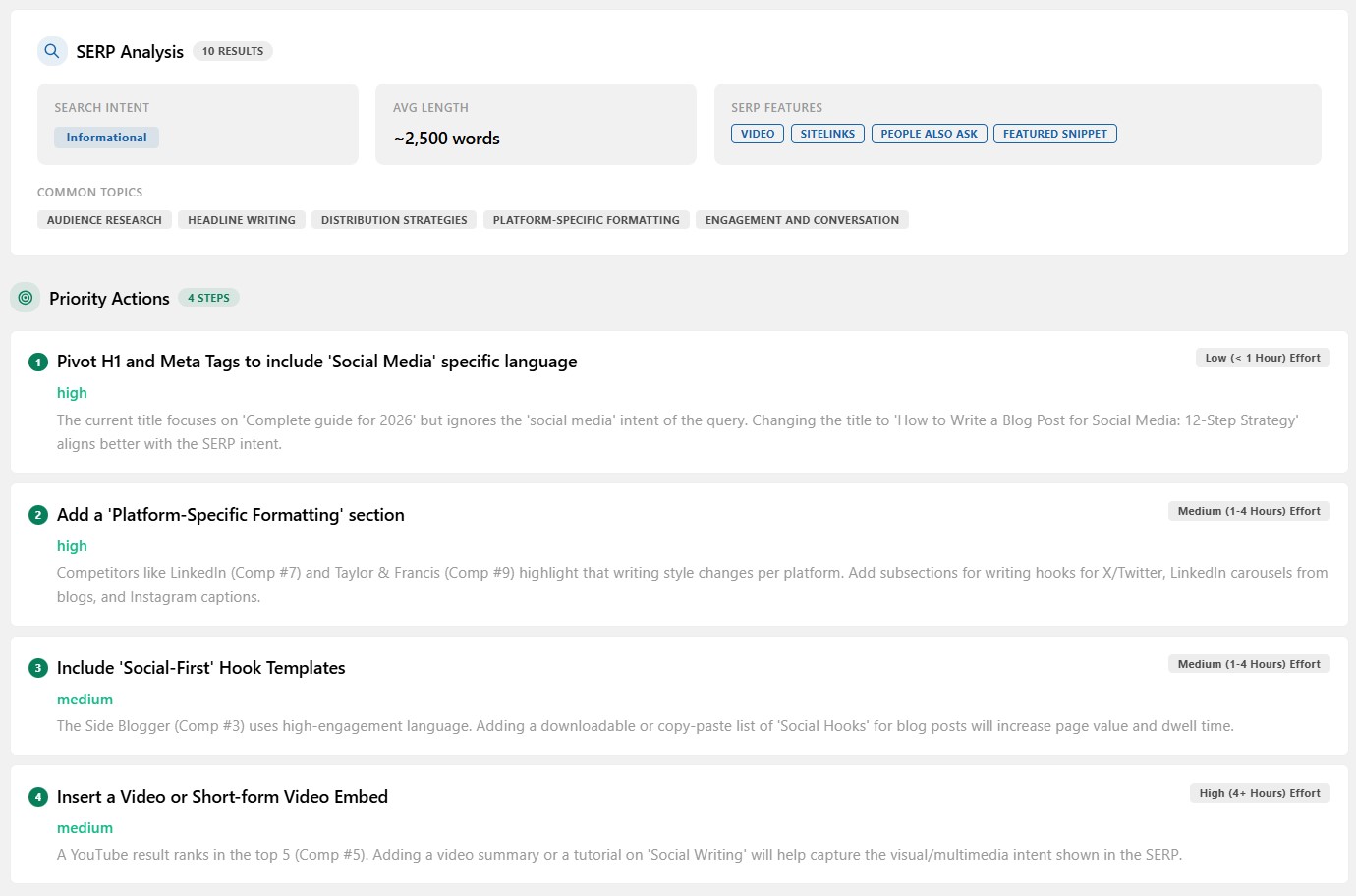
Contentpen is an all-in-one AI blogging platform that helps you identify content gaps and priority actions you can take right now to improve rankings and SERP visibility. It is like your personal writing assistant that allows you to outsmart your rivals with less manual work and hassle.
Key features
- SEO scoring
- AI search optimization tool
- SERP and gap analysis
- Organic traffic optimizer
- Keyword research
- AI visibility tool
Pros
- AI-powered insights provide quick wins and losses to save time while conducting competitor analysis.
- Bulk content creation enables small businesses and agencies to stand toe-to-toe with big industry names.
- A built-in media library helps users stand out from competitors with high-quality visuals.
- Integrations with leading CMS platforms, such as WordPress, Ghost, Wix, and Webflow, enable faster publishing to beat competitors on trending topics.
Cons
- No backlink analysis.
- Free trial only lasts 7 days.
Pricing
Paid plans start at $27/month.
2. Ahrefs
Best for: SEO professionals who need comprehensive backlink analysis and competitor tracking for effective off-page strategies with one of the largest link databases available.
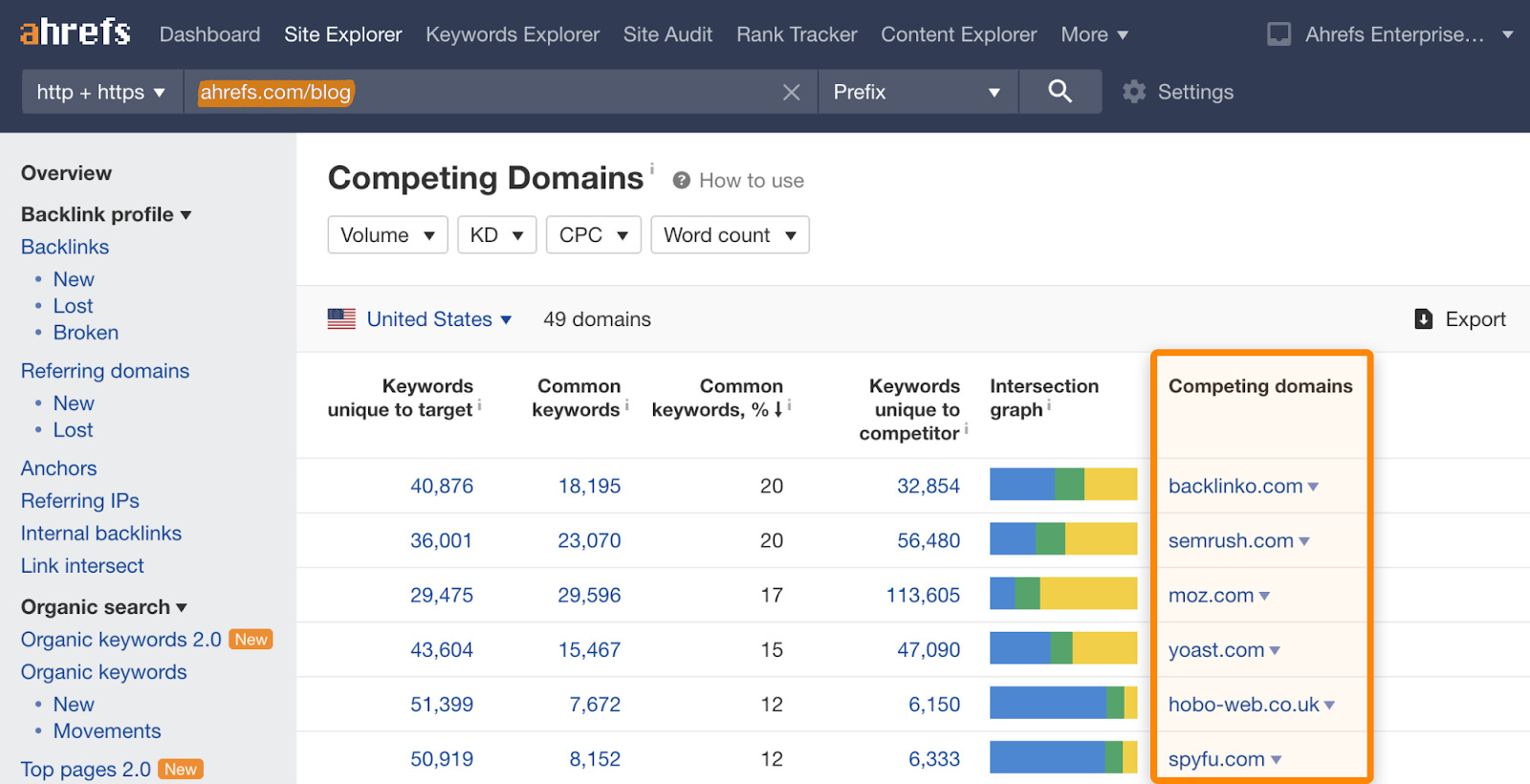
Ahrefs has earned its reputation as the go-to tool for understanding why a competitor outranks you. Its Site Explorer feature is unmatched for reverse-engineering a rival’s link-building strategy, helping you rank for competitive keywords and in niche markets.
Key features
- Up-to-date crawler data
- Content gap tool
- Rank tracker with SERP feature monitoring
- Site audit
Pros
- Keyword explorer provides accurate search volume and keyword difficulty scores.
- Historical data lets you track competitor trends over months or years.
- One of the most extensive and most frequently updated backlink indexes in the industry.
Cons
- Premium pricing puts it out of reach for solopreneurs and small teams.
- Reporting features feel less intuitive compared to SEMrush.
Pricing
Paid plans start at $129/month.
3. Semrush
Best for: Marketing teams that need an all-in-one platform covering SEO, PPC, content, and social media competitor analysis.
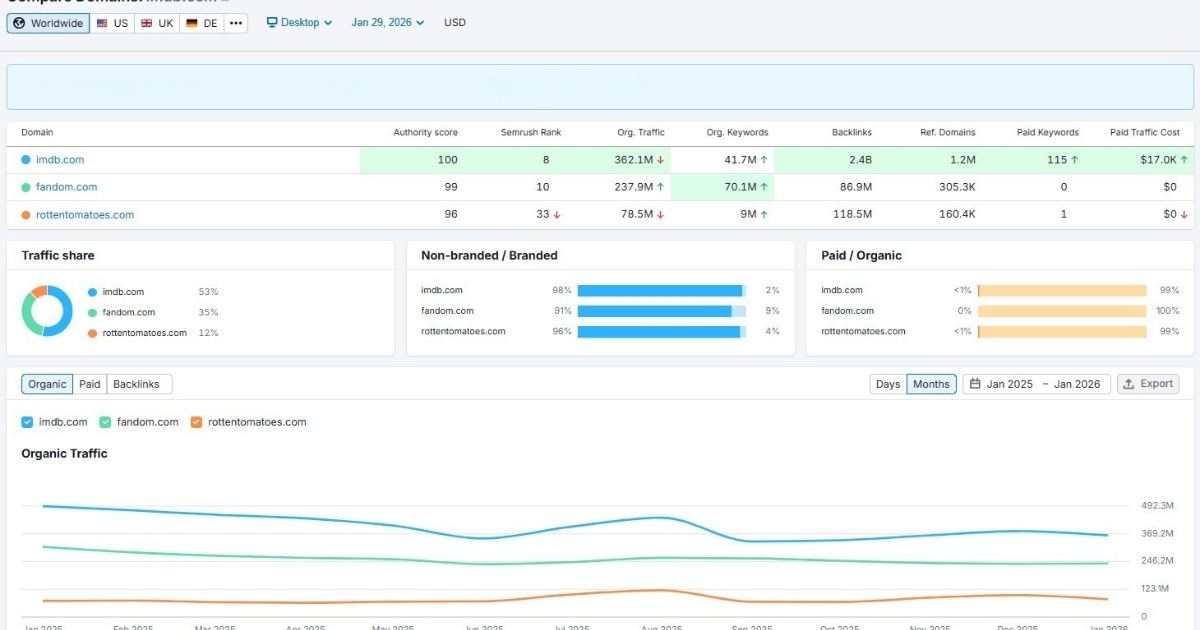
Semrush is known for its usefulness and adaptability when performing competitor analysis. It helps you uncover top SEO keywords and backlinks, and identify gaps in your content strategy. You can also use its AI-powered insights to secure and maintain top search positions.
Key features
- Competitor advertising research
- Keyword gap analysis
- Domain overview
- Topic research for content
Pros
- Combines SEO, PPC, content, and social media competitor analysis in one dashboard.
- Position tracking updates daily and can monitor local rankings across cities for comprehensive competitor analysis.
- The content analyzer compares your articles directly with top-ranking competitor pages.
Cons
- Report export limits on lower-tier plans can be frustrating for agencies.
- Backlink data isn’t as comprehensive as Ahrefs.
Pricing
Paid plans start at $199/month.
4. TapClicks
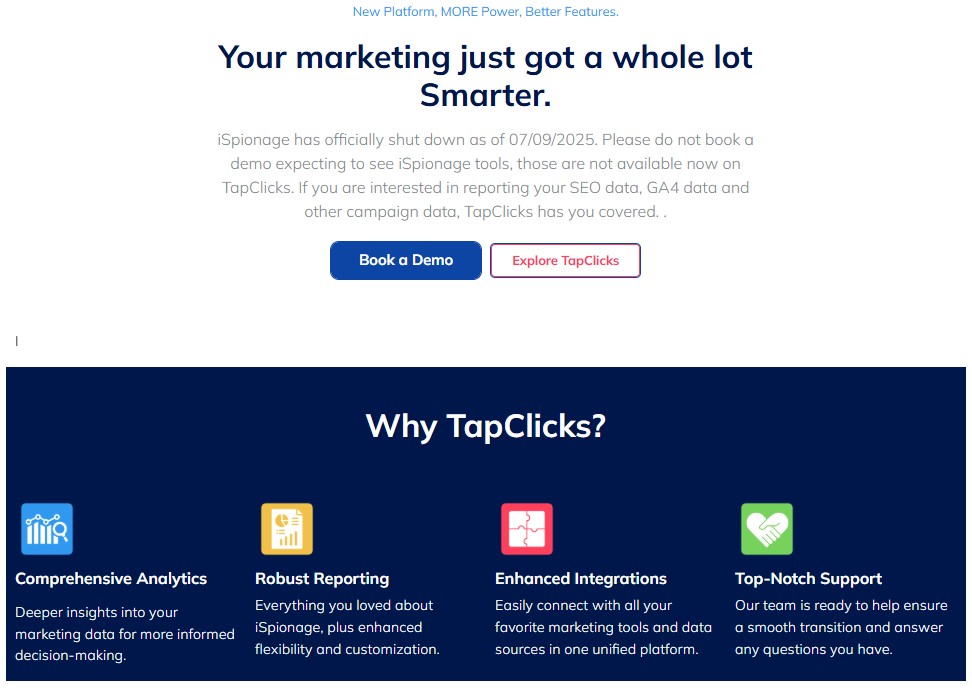
Best for: Marketing agencies and enterprise teams that need unified PPC competitor intelligence, reporting, and campaign management on a single platform.
TapClicks, formerly known as iSpionage, provides competitive PPC research, along with campaign management, client reporting, and performance analytics. You can research competitor ads, launch your own campaigns, and report on results without switching tools.
Key features
- Landing page monitoring
- Unified reporting dashboard
- Campaign management tools
- Keyword competition analysis
Pros
- Ad intelligence integrates directly with campaign execution and reporting.
- Historical ad data reveals seasonal patterns and long-term strategy shifts.
- Automated reporting saves hours every week for agency teams.
Cons
- The platform can feel complex with so many modules.
- Organic SEO features are less robust than dedicated tools like Ahrefs.
Pricing
Not disclosed on the official site.
5. SpyFu
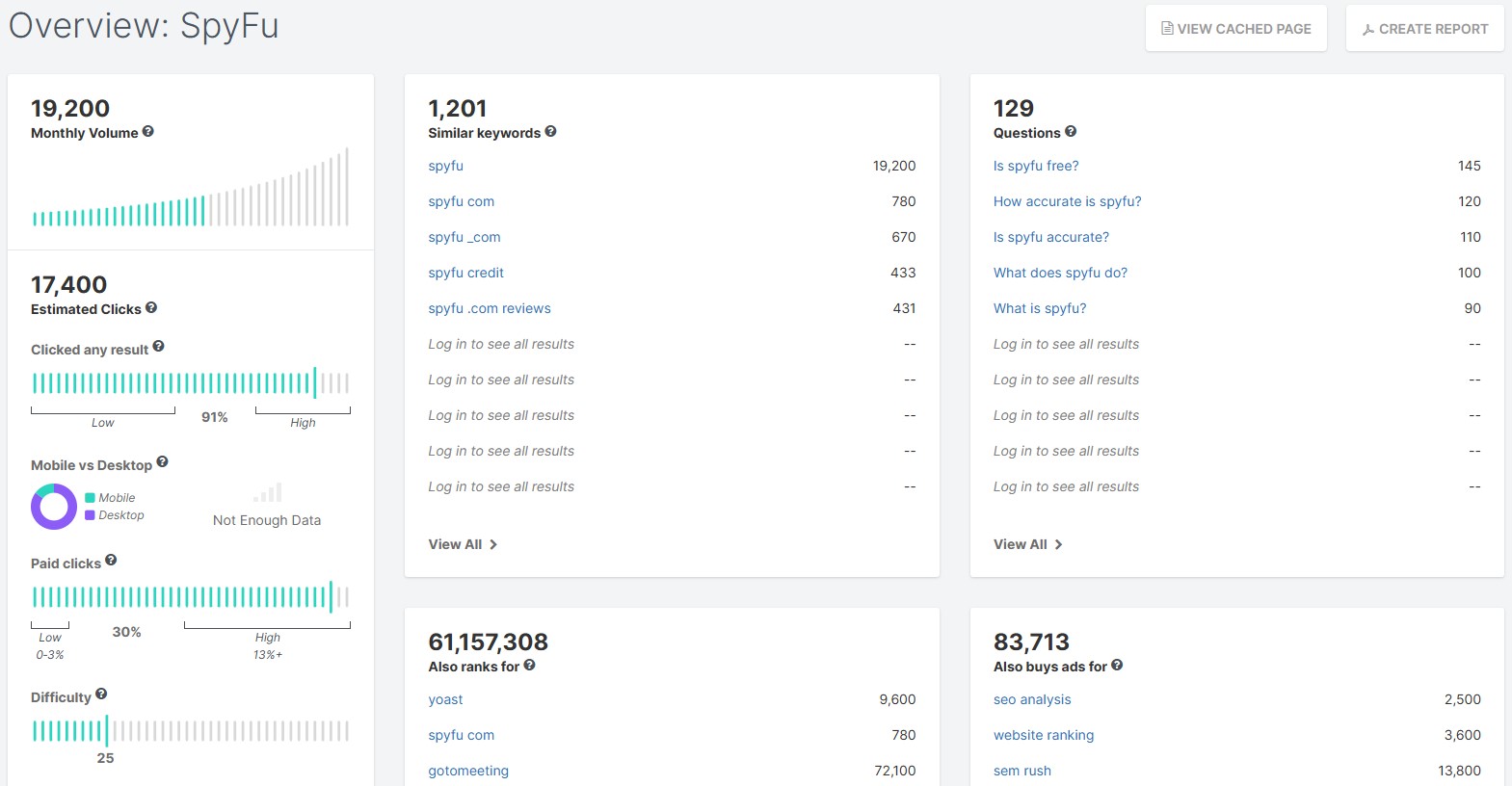
Best for: Small businesses and consultants who need an affordable, straightforward competitor keyword and PPC research tool.
Just like its name suggests, SpyFu looks through your competitors’ strategies and keeps you informed of all their moves. It doesn’t have the polished SEO competitor analysis capabilities of Semrush or the backlink depth of Ahrefs, but it’s surprisingly powerful for its price.
Key features
- Adwords advisor for PPC campaigns
- Link-building opportunities
- Kombat tool for competitor comparison
- Keyword research with historical data
Pros
- Unlimited search queries and data exports, even on lower-tier plans.
- Custom reporting templates save time for agencies managing multiple clients.
- Affordable entry point for freelancers, startups, and small businesses.
Cons
- Traffic estimates can be less accurate for smaller websites.
- Limited international data compared to Semrush.
Pricing
Paid plans start at $39/month.
6. Moz Pro
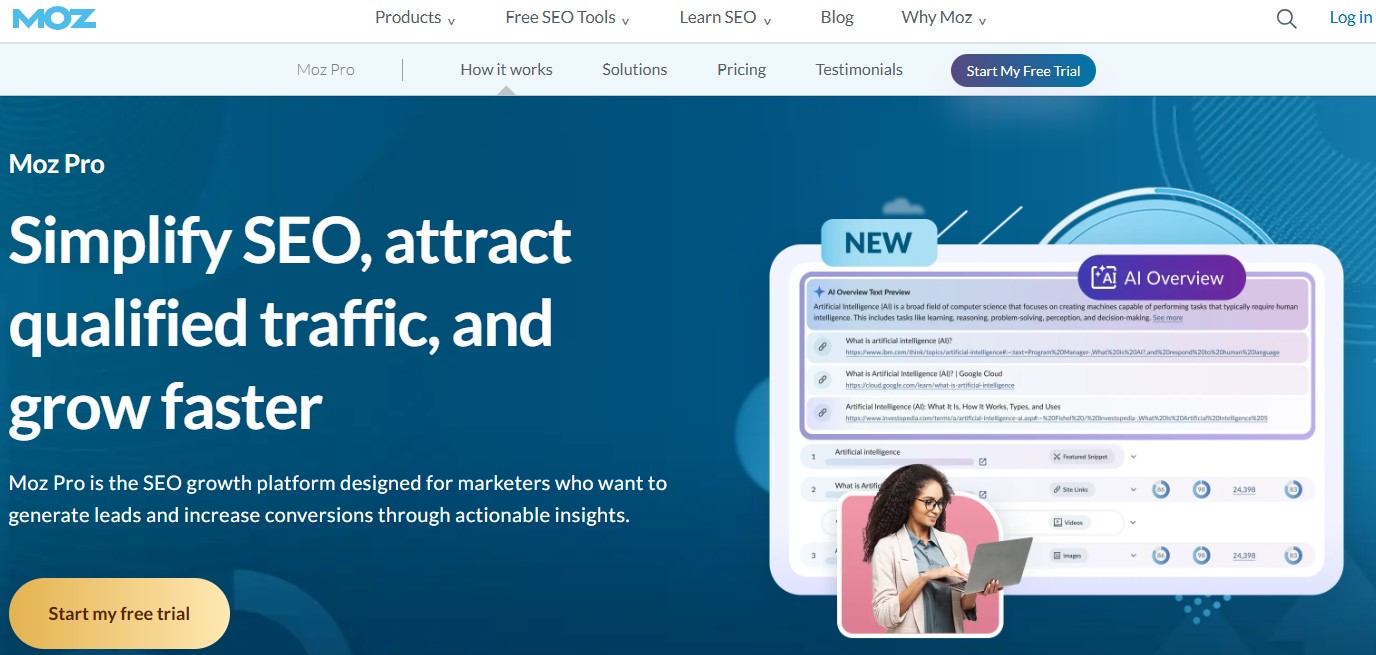
Best for: SEO specialists who value clean, user-friendly interfaces and prioritize domain authority tracking.
Moz Pro has been a staple in the SEO community for years, and for good reason. Its Domain Authority (DA) metric is still the industry standard for quickly assessing a competitor’s SEO strength, helping you inform your ranking strategies.
Key features
- Link explorer for backlink analysis
- Rank tracker with local SEO monitoring
- Page optimization recommendations
- Site crawl metrics
Pros
- A clean, intuitive interface makes onboarding new team members quick and easy.
- Custom reports can be white-labeled for agency use.
- SEO professionals can quickly find weak spots in their platforms to outrank rivals.
Cons
- Smaller link index compared to Ahrefs.
- The keyword database is smaller than Semrush.
Pricing
Paid plans start at $49/month.
7. SE Ranking
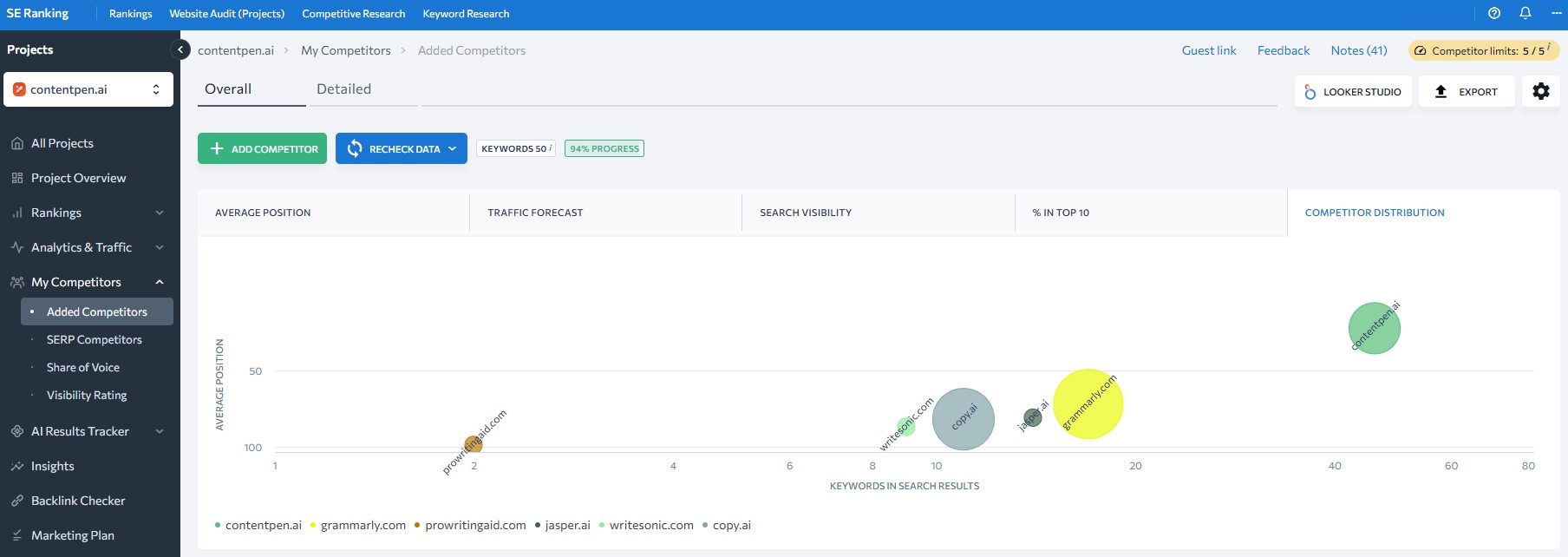
Best for: Teams that need a full SEO competitor analysis suite with white-label reporting at a mid-tier price point.
SE Ranking is a solid all-rounder with strong competitor tracking, keyword research, and AI-powered insights that agencies love. The platform punches above its weight class, especially given how much it costs compared to the big names.
Key features
- Visibility rating
- Share of voice with competitors
- SERP analysis
- Comparing multiple rivals at once
Pros
- Page changes monitor alerts you when competitors update key pages.
- Free to sign up without excessive screens or pop-ups.
- On-page SEO checker compares your content directly to top-ranking pages.
Cons
- No social media competitor tracking on the free plan.
- There is a slight learning curve compared to other tools, like SpyFu.
Pricing
Paid plans start at $65/month.
8. Similarweb
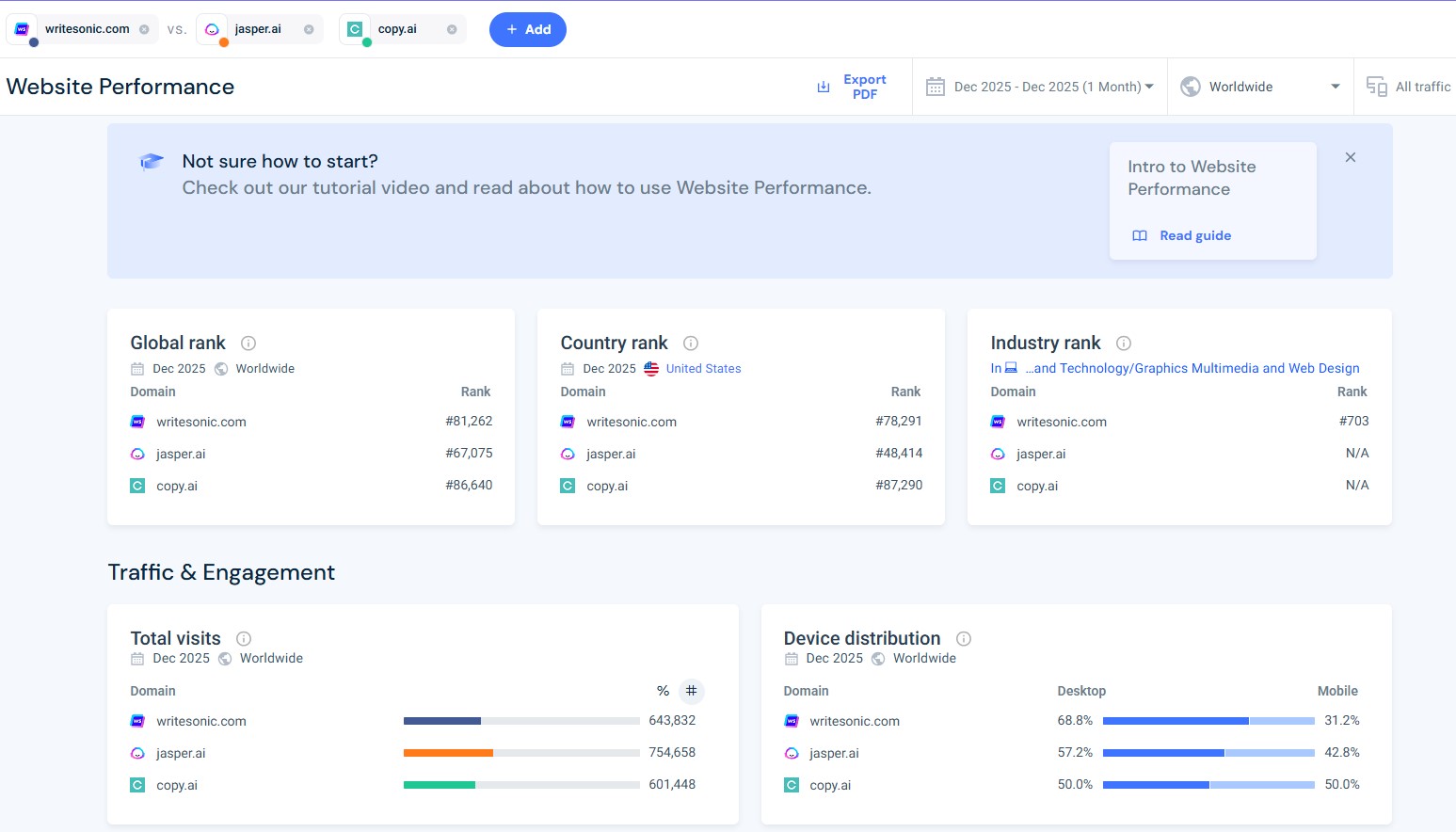
Best for: Analysts who need detailed traffic analytics and audience insights beyond traditional SEO metrics.
Similarweb is a handy SEO competitor intelligence tool that provides detailed traffic analytics to its users. You can see a rival’s top traffic sources, audience demographics, engagement metrics, and even which apps they’re investing in, allowing you to take the lead.
Key features
- Website analysis
- SEO backlinks analytics
- Extensive search tracking
- Gen AI intelligence
Pros
- Audience Insights reveal competitor demographics and interests.
- Market share reports help identify who’s winning in your niche and where.
- Traffic journey shows how users move between competitor sites.
Cons
- The price can be too high for small businesses and teams.
- Takes time to learn and implement.
Pricing
Paid plans start at $199/month.
9. BuzzSumo
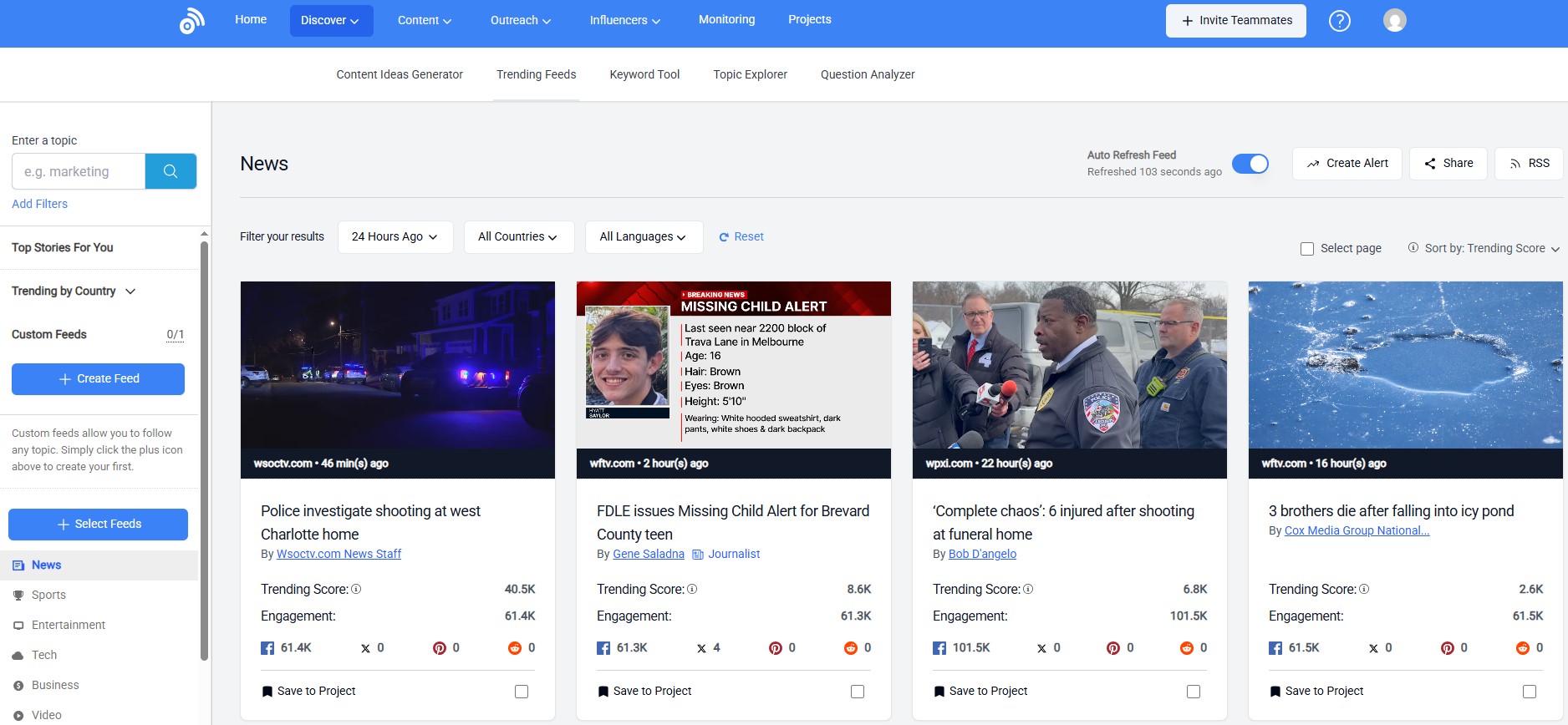
Best for: Content marketers and social media managers who need to track viral competitor content and influencer engagement.
BuzzSumo is the tool we turn to when we need to see which competitor articles are being shared, linked to, and discussed across social media. Instead of tracking ranking, BuzzSumo shows you what’s resonating with real audiences, helping you quickly and effectively.
Key features
- Content analyzer
- Influencer search
- Competitor alerts
- Question analyzer
Pros
- Social engagement metrics go beyond SEO to show real audience interest.
- Backlink data, when integrated with social shares, provides a full picture of content performance.
- Chrome extension lets you analyze any page on the go.
Cons
- Less focused on traditional SEO metrics like keyword rankings.
- Pricing scales quickly if you need more searches and alerts.
Pricing
Paid plans start at $199/month.
10. Serpstat
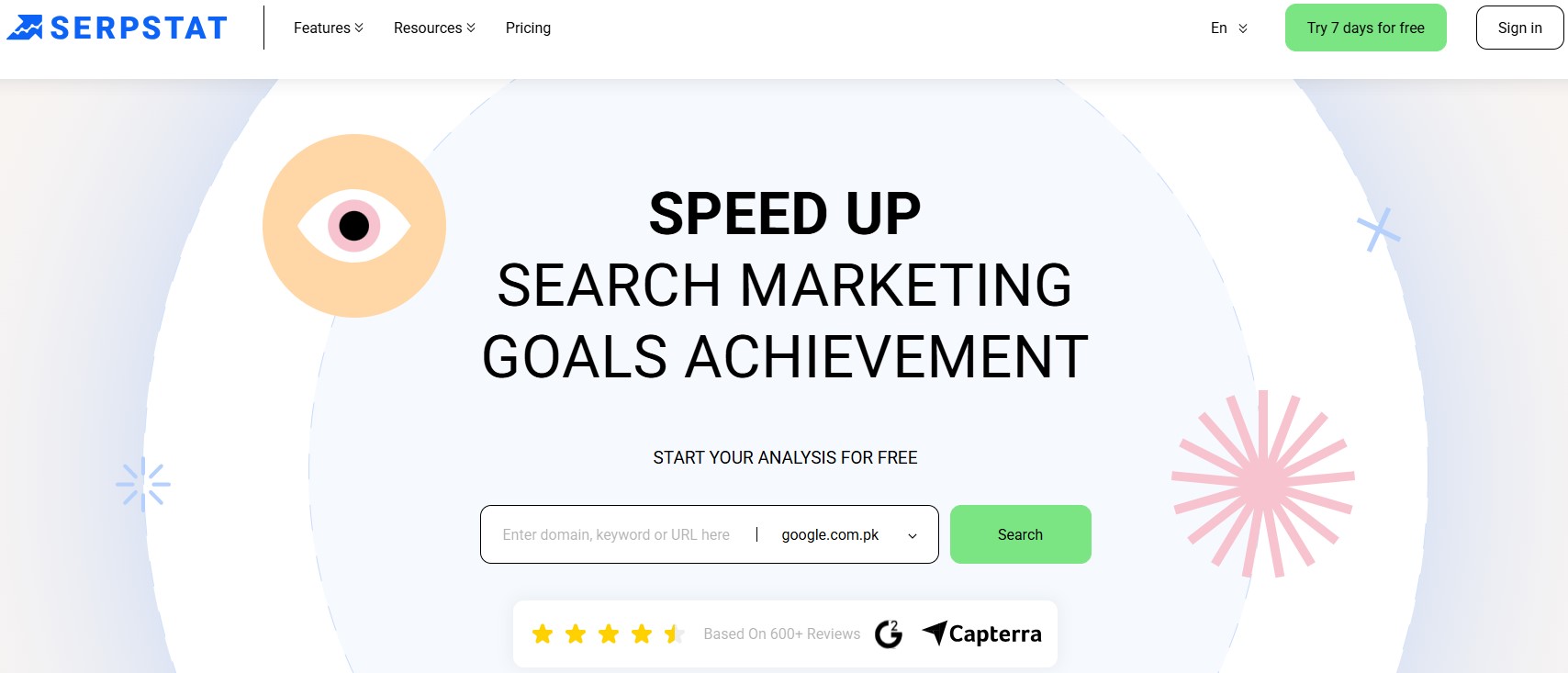
Best for: Growing businesses that need an affordable all-in-one SEO platform with strong keyword clustering features.
Serpstat is particularly useful for grouping related keywords into clusters, which makes content planning much more strategic. Serpstat helps you identify the broader topic areas where competitors dominate and provides the data to take them down, improving reach and visibility.
Key features
- Missing keywords to find gaps
- Batch analysis to compare up to 200 domains
- Text analytics to reverse-engineer top-ranking content
- Smart keyword profiles
Pros
- API access allows for custom integrations and automated reporting.
- Supports multiple countries and languages.
- Keyword clustering reduces content overlap and improves topical authority.
Cons
- Backlink data can be less current for smaller websites.
- The user interface feels less polished than that of premium competitors.
Pricing
Paid plans start at $199/month.
11. Visualping
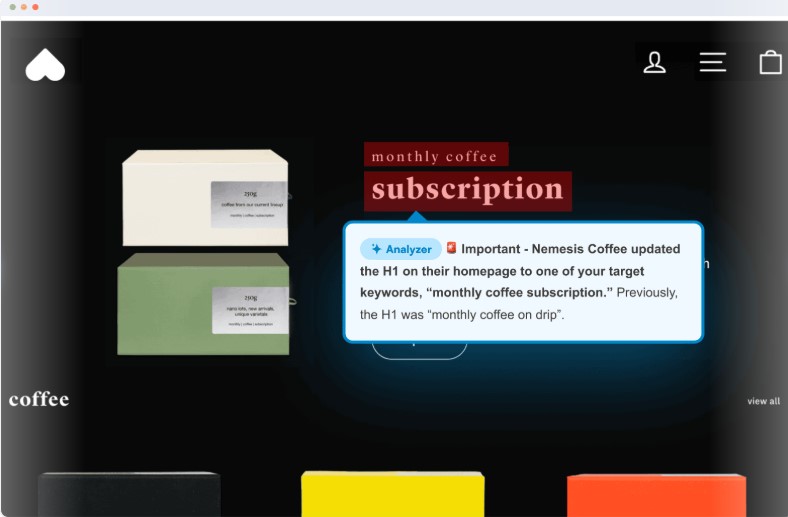
Best for: Marketers and competitive intelligence teams who need real-time alerts when competitors change their websites.
Visualping watches competitor websites like a hawk and alerts you the second something changes. We use it to monitor competitor pricing pages, product launches, and blog post updates to see how others in our space are modifying their web pages and strategies.
Key features
- Visual change detection
- Selective monitoring
- Scheduled checks
- Team collaboration
Pros
- Simple, focused tool that’s easy to set up and use immediately.
- Alerts can be customized by changing the threshold to reduce noise.
- API access for integrating alerts into your existing workflow.
- Works on any website, including password-protected and JavaScript-heavy pages.
Cons
- No SEO metrics or keyword tracking.
- Limited analysis features compared to full-suite platforms.
Pricing
Customizable payment plans, starting at $10/month and changing depending on the number of pages you scan.
12. Whitespark
Best for: Local SEO specialists and agencies focused on citation building and local search competitor tracking.
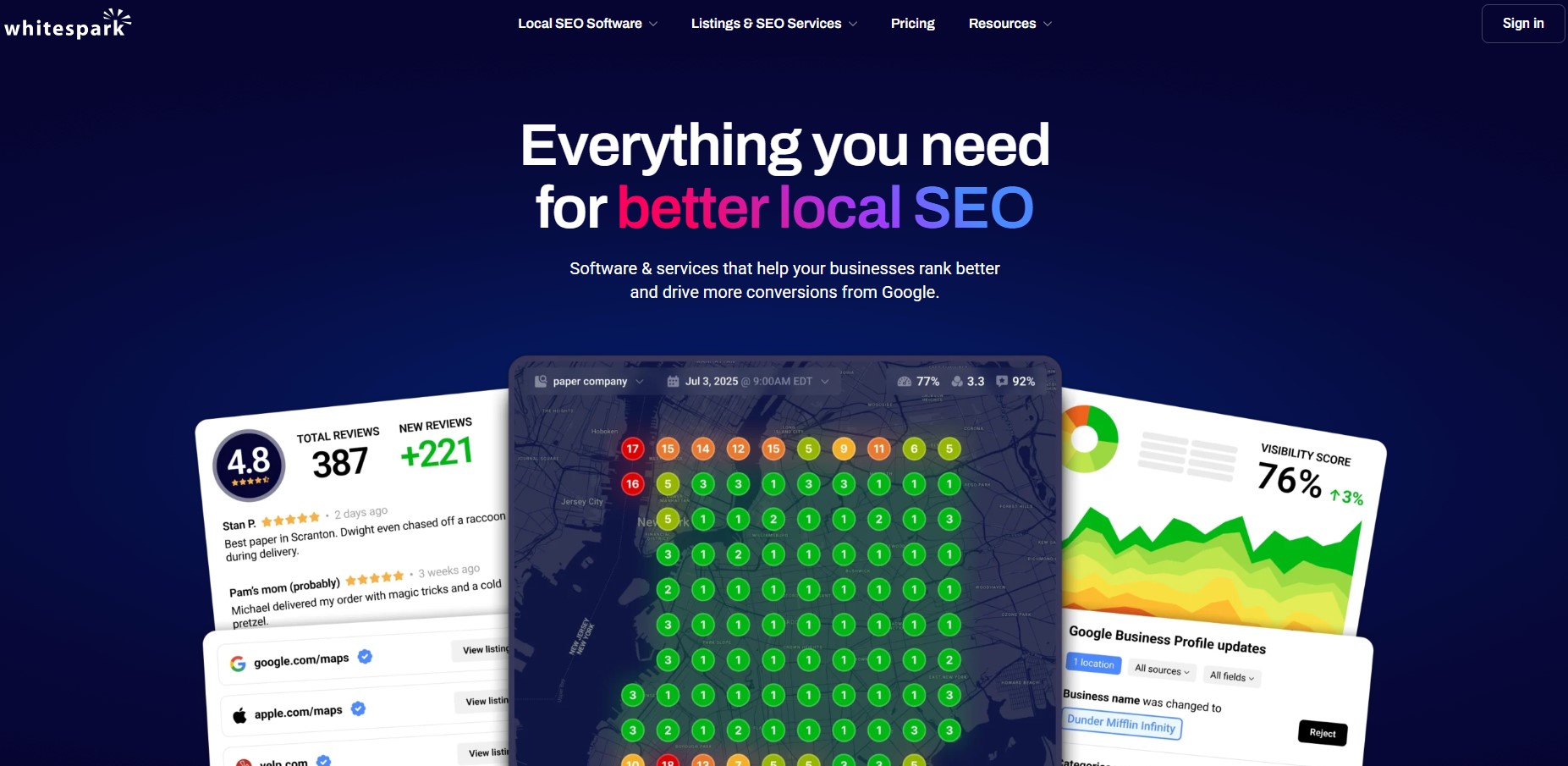
Whitespark is purpose-built for local SEO. If your business depends on local visibility, this tool is essential. It helps you see exactly where your competitors are listed online, which citations they’ve built, and how their local rankings stack up against yours.
Key features
- Local citation finder
- Google Business Profile rank tracker
- Reputation builder for reviews
- Local search audit
Pros
- Review monitoring shows how competitors manage their online reputation, enabling you to handle reviews as well.
- Built-in outreach tools streamline the citation-building process for your business.
- Edit locations in bulk to save time and effort while performing local SEO optimization.
Cons
- Narrowly focused on local SEO, so it won’t help with broader organic strategies.
- Pricing can add up quickly for agencies managing multiple locations.
Pricing
Customizable payment plans, starting at $1/location/month, and change depending on the number of locations you set up or optimize.
Best free SEO competitor analysis tools (what Google offers)
Not every team has the budget for premium platforms. The good news is that you can start competitor website analysis without spending a cent, especially if you know where to look within Google’s own ecosystem.
Google offers a surprising number of free competitor analysis tools that give you genuine insights, even if they lack the polish and depth of paid platforms.
Here’s what actually works:
Google Search
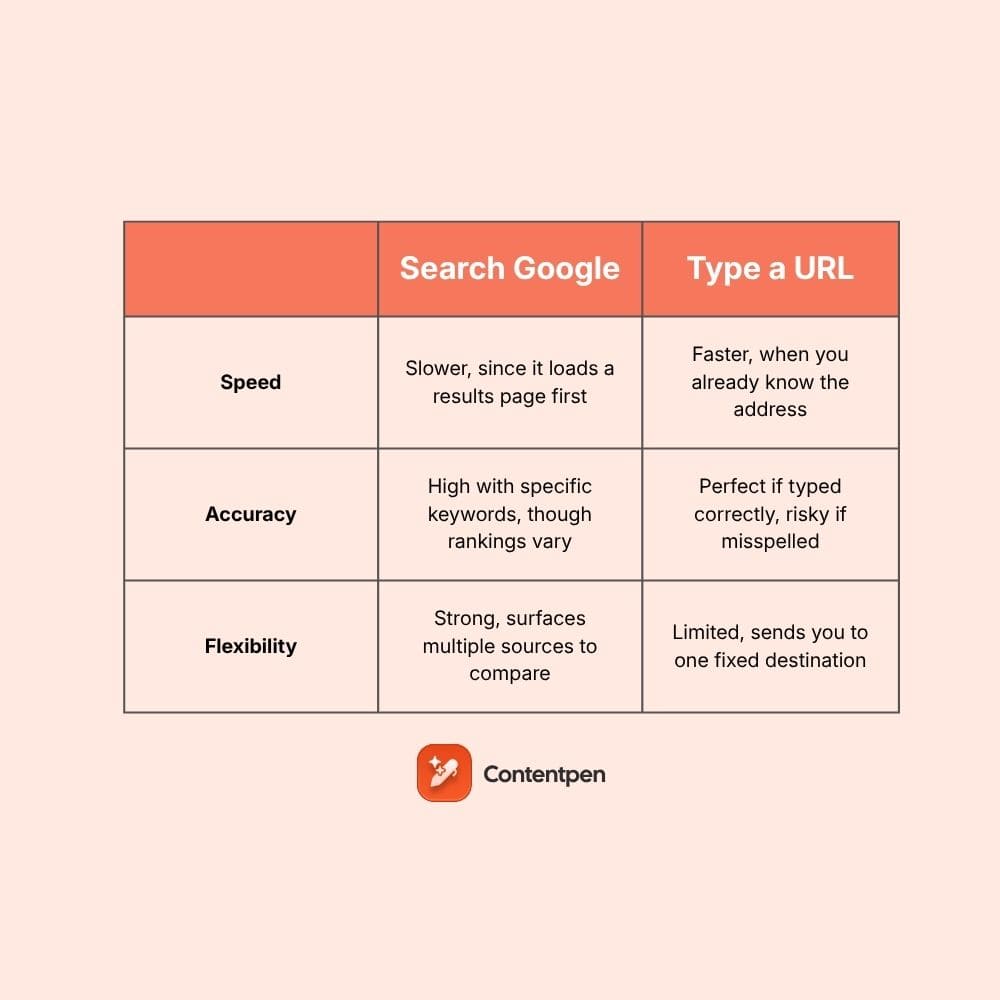
Don’t overlook the simplest Google competitor analysis tool of all: the search bar itself.
Run manual searches for your target keywords and study what ranks on page one.
Look at:
- Title tags and meta descriptions of SERP pages
- Content length and structure
- Multimedia elements (images, videos, infographics)
- External and internal links
This hands-on approach to competitor analysis isn’t scalable, but it’s free and fast, and it gives you a gut-level sense of what Google rewards in your niche.
Google Search Console
If you have access to a competitor’s domain (or you’re analyzing your own site against rivals), Google Search Console shows which queries drive impressions and clicks.
You can see:
- Which pages rank for specific keywords
- Average position in search results
- Click-through rates by query
While you won’t get direct competitor data, you can reverse-engineer their strategy by analyzing your own Search Console reports and comparing them to what you see ranking in the SERPs.
Also read: Google Gemini vs ChatGPT comparison.
Google Trends
Google Trends is one of the most underrated free competitor analysis tools. It shows:
- Which topics and queries are trending in your industry
- Seasonal patterns that affect search volume
- Regional interest in specific keywords
Use it to see what competitors are likely targeting based on rising trends, then validate those hunches with your own keyword research.
Google Analytics
If you’re running Google Ads, the Auction Insights report inside Google Analytics and Google Ads reveals how your ad performance stacks up against competitors bidding on the same keywords. You can see:
- Impression share
- Overlap rate (how often you appear alongside a competitor)
- Position above rate
This is especially useful for PPC competitor analysis when you’re trying to figure out who’s outbidding you and by how much.
Google Merchant Center
For e-commerce brands, Google Merchant Center offers two helpful reports:
- Price competitiveness report: Shows how your product pricing compares to competitors in Google Shopping.
- Best sellers list: Reveals which products in your category are performing best.
These reports help you adjust pricing and product positioning without needing a separate competitor website analysis tool.
Google News and Alerts
Set up Google Alerts to track when competitors publish new content, get mentioned in the press, or rank for priority keywords.
Alerts won’t give you traffic data or backlink profiles, but they keep you informed about competitor activity in real time. This is especially useful if you’re tracking content marketing moves from your rivals, trying to outsmart them quickly and for free.
How to choose the right SEO competitor analysis tool for your needs
Choosing a competitor analysis tool online isn’t about finding the “best” on the market. It is about finding the one that fits your team, your budget, and the type of competitor research you actually need to do.
Some tools are built for agencies running dozens of client campaigns. Others are designed for solo marketers who need quick wins without too much complexity.
Here is a simple framework to help you narrow down your options and pick the right tool for your needs:
Define what you need to track
Start by listing the competitor metrics that matter most to your SEO strategy:
- Organic keywords and rankings: Tools like Ahrefs, Semrush, and Contentpen excel in this area.
- Backlink profiles: You can use tools such as Ahrefs and Moz Pro to get up-to-date backlink data on your competitors and plan your next move accordingly.
- PPC and ad campaigns: For this purpose, you can utilize SEO competitor tools, such as TapClicks and SpyFu, which specialize in paid search intelligence.
- Content performance and social shares: BuzzSumo can be your go-to for monitoring competitor social shares and performance.
- Local SEO and citations: Tools like Whitespark can be used for local SEO and citation monitoring.
- Website changes and updates: Visualping is a solid choice for checking competitor site updates in real time, helping you develop new strategies to outsmart your rivals.
Narrowing down which competitive intelligence metrics you want greatly simplifies choosing the right tool.
After reviewing information, you can use AI meeting note-taking apps to capture topic priorities, decisions, and follow-up tasks, helping turn competitor research into a concrete content plan.
Also read: How to do SEO?
Consider your team size and skill level
Not every tool is built for every user. Some platforms assume you already know SEO inside and out. Others are designed to onboard beginners quickly. Therefore, it is crucial to keep your workforce in mind while choosing an SEO competitor analysis tool.
- Solo marketers and small teams: Look for simple, affordable tools like Visualping, SpyFu, or Contentpen that do not require much training and are highly affordable.
- Agencies managing multiple clients: At this level, you will want white-label reporting, API access, and bulk analysis features, especially if you’re running a SaaS web design agency. These features can be found in tools like SE Ranking, Semrush, or TapClicks.
- Enterprise teams: Platforms like Similarweb offer advanced data integrations and custom dashboards for larger teams. If your purpose is to create and optimize content, our AI writing assistant app also offers collaborative and integration capabilities.
As a general rule of thumb, if your team is small, choose a tool with a clean interface and strong support. Do not create extra hurdles in your workflow, as this will defeat the whole purpose of selecting a tool.
Also read: Best AI tool for writing SEO-rich blog content.
Set a realistic budget
As you’ve seen earlier with our list, SEO competitor analysis tools range from $10/month to well over $500/month. However, price does not always equal value, not for all teams, anyway.
Do not overpay for features you will not use. If you only need keyword research and rank tracking, a mid-tier plan from Contentpen or SE Ranking will serve you better than an expensive all-in-one SEO suite, such as Semrush or Ahrefs.
Test before you commit
Most competitor analysis tools online, like Contentpen, offer free trials. Use them.
Spend a week running real competitor website analysis on your actual rivals. Check how accurate the data feels, how easy the interface is to navigate, and whether the insights actually help you make the right decisions or not.
Pay attention to:
- Data freshness: Are keyword rankings and backlink profiles updated regularly?
- Export and reporting: Can you pull clean reports without hitting frustrating limits?
- Customer support: Will you get help when you can’t figure something out?
The best tool is the one you will actually use consistently, not the one with the longest feature list.
Think about workflow integration
If you already use tools for content creation, publishing, or project management, check whether your SEO competitor analysis tool integrates with them.
Contentpen, for example, connects directly to WordPress, Ghost, Wix, Shopify, and Webflow, so you can research, write, and publish without switching platforms. It also offers Webhook integrations so that you can make your own workflows without any hurdles.
Other tools, such as Semrush, integrate with Google Analytics, Google Search Console, and dozens of marketing apps. These integrations save time and reduce the risk of data falling through the cracks.
Prioritize actionable insights
Some tools give you mountains of data but no clear next steps. Others highlight exactly what to do next.
Look for platforms that surface quick wins and content gaps, rather than just showing you charts. Tools like Contentpen excel at this by turning competitor research into actionable items, such as writing an article on a particular keyword or optimizing a specific heading on a blog.
Also read: The ultimate guide to optimized content marketing for SEO success.
TL;DR: If a tool makes you feel smarter and more focused after using it, that is a good sign. If it leaves you overwhelmed and confused, keep looking.
Summing it up
SEO competitor analysis tools help you surface what your rivals are doing, how they’re doing it, and where you can take the lead. These tools power strategies and decision-making, defining the modern SEO framework.
Choosing a suitable tool for competitor analysis in 2026 can be tricky, especially with so many options on the market. We hope our guide helped you pick the right tool for your needs so you can excel without limits.
If you want to see real ranking keyword opportunities and detailed competitor insights for your content, sign up now at Contentpen.