 7 minutes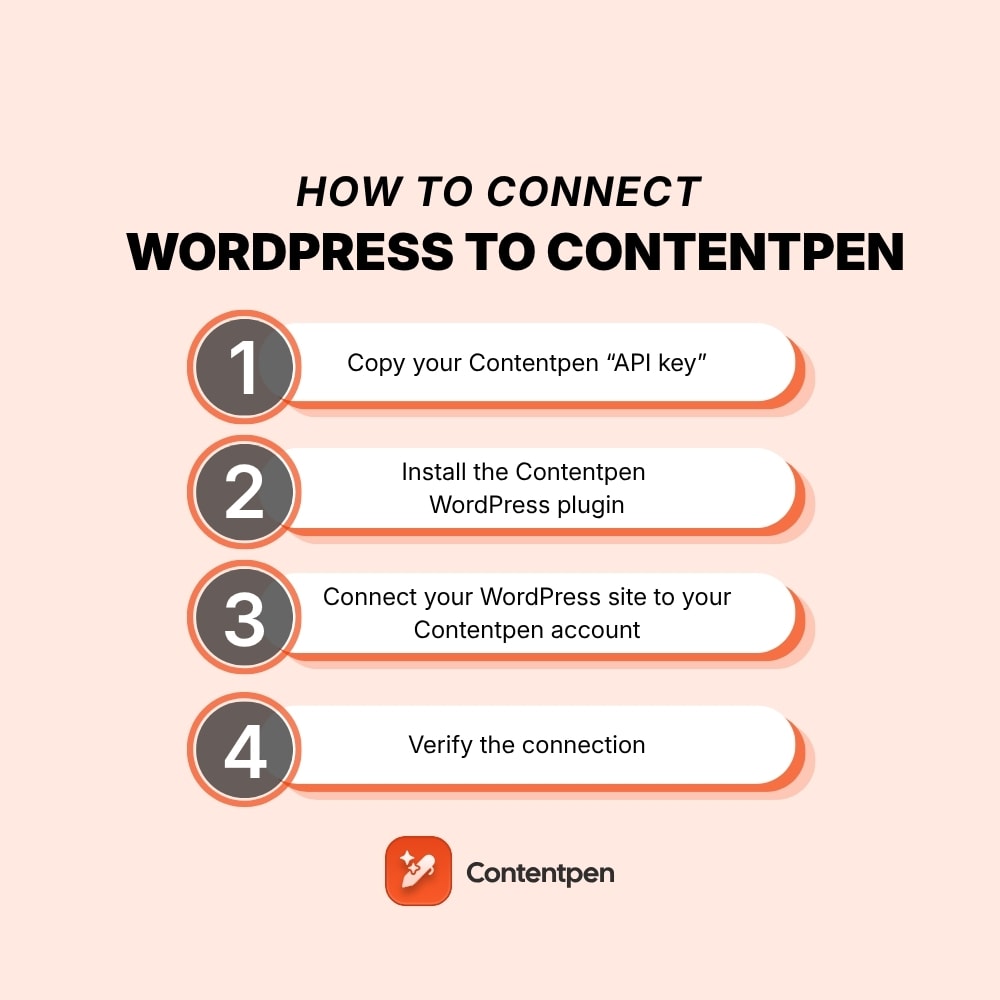
Connecting your WordPress site to Contentpen is quick and easy. This integration allows you to seamlessly manage, schedule, and publish content from Contentpen directly to your WP dashboard without any manual work.
With just a few clicks, you can connect your site, install the Contentpen plugin, and start pushing content live, all from one place.
So, let’s get started.
Table of contents
- Step 01: Copy your WordPress API key from Contentpen
- Step 02: Install the Contentpen WordPress plugin
- Step 03: Connect your WordPress site to your Contentpen account
- Step 04: Verify the connection in WordPress
- How to publish a blog directly from Contentpen to WordPress
- Final thoughts
- Frequently asked questions
Step 01: Copy your WordPress API key from Contentpen
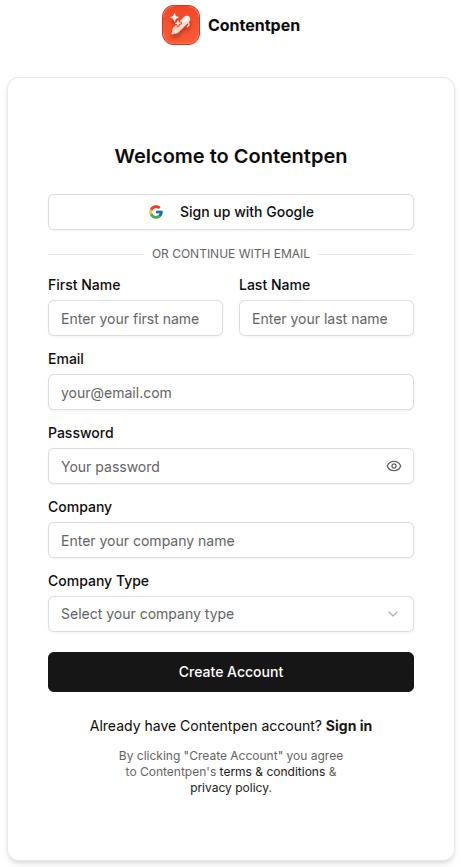
- Start by logging into your Contentpen account. If you don’t have one yet, sign up at Contentpen.
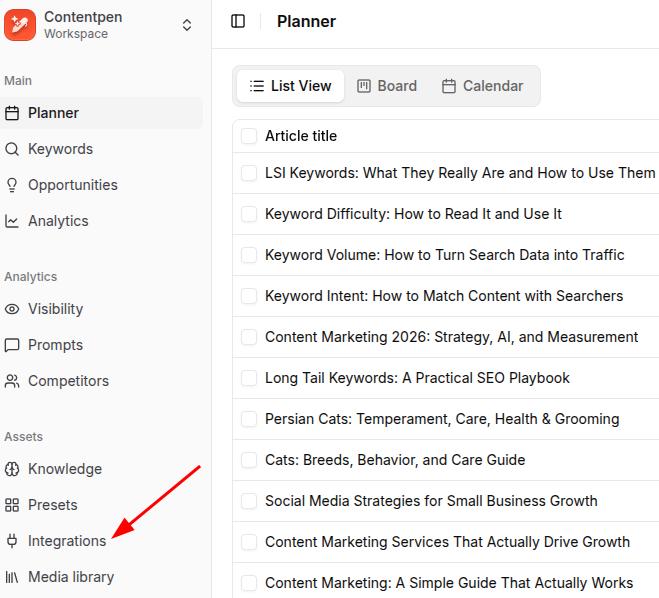
- Go to the “Integrations” tab in the left menu.
- Enter your WordPress site URL and click “Connect WordPress.”
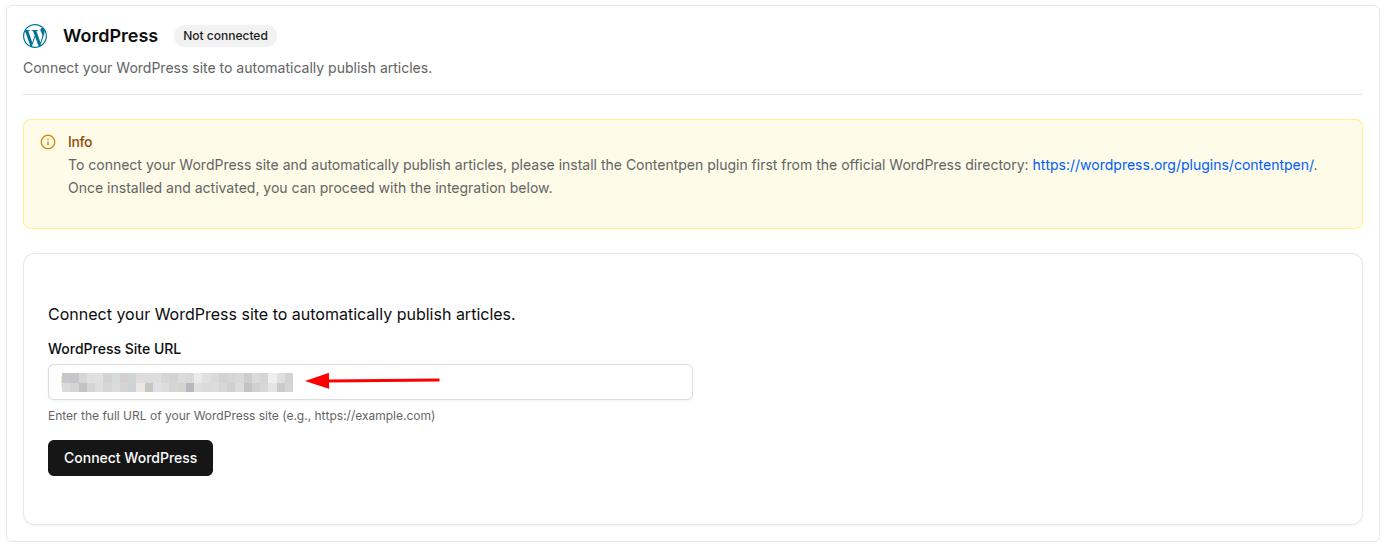
- Then, copy the API key that appears. This key is only for connecting WordPress. It’s separate from the Public API keys used for custom integrations, so don’t use one in place of the other.
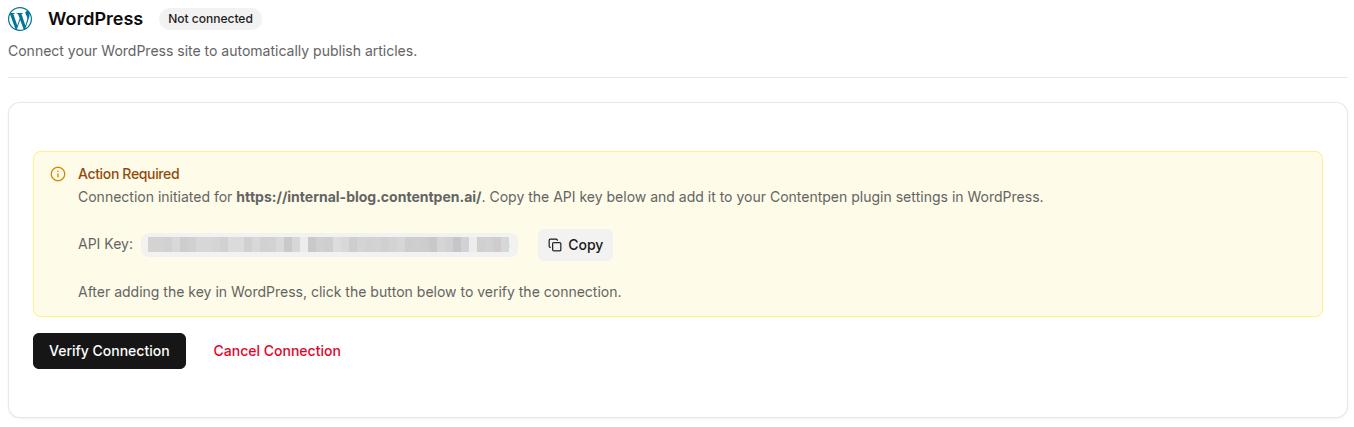
Once you’ve copied your WordPress API key, it’s time to install the Contentpen WordPress plugin.
Step 02: Install the Contentpen WordPress plugin
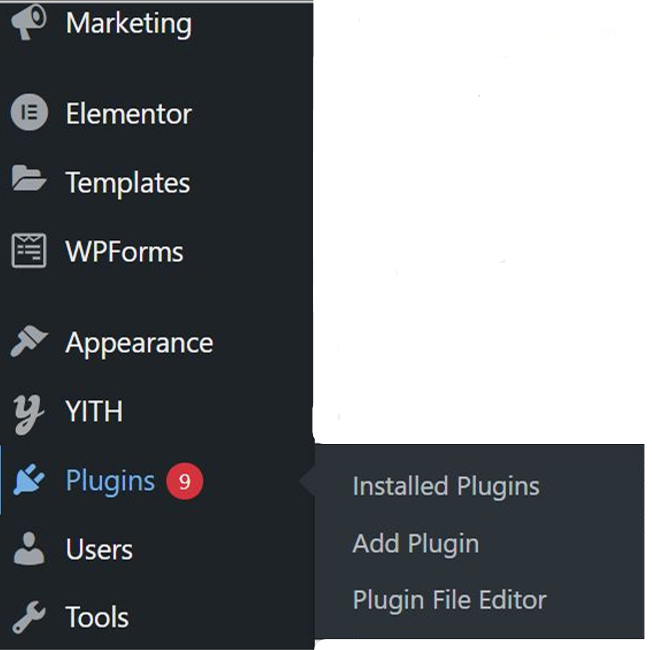
- Log in to your WordPress admin panel. In the left-hand sidebar menu, hover over “Plugins” and then click “Add Plugin.”
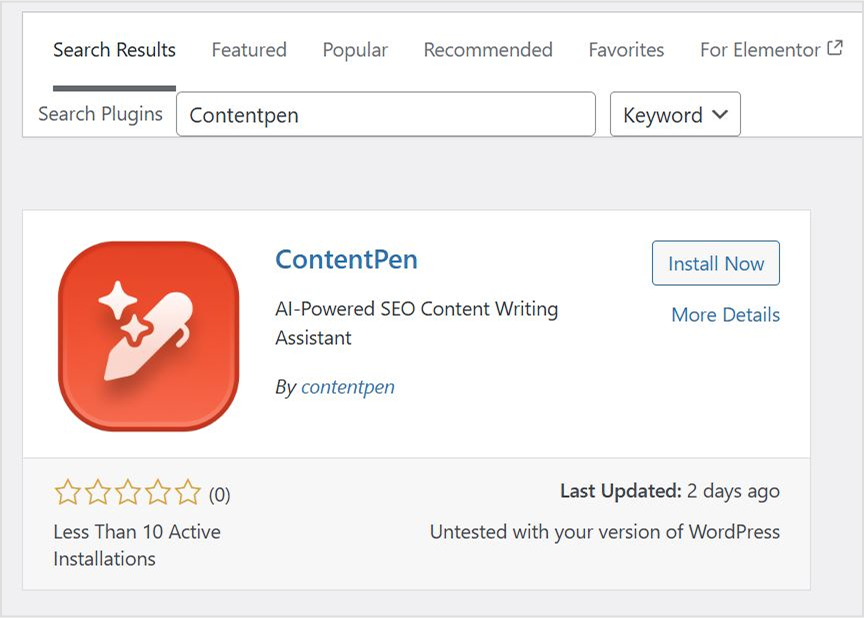
- In the search bar at the top right, type “Contentpen.” You should see the official Contentpen plugin in the search results. Look for a plugin with the Contentpen logo and a description.
- Once you’ve found the correct plugin, click the “Install Now” button next to it.
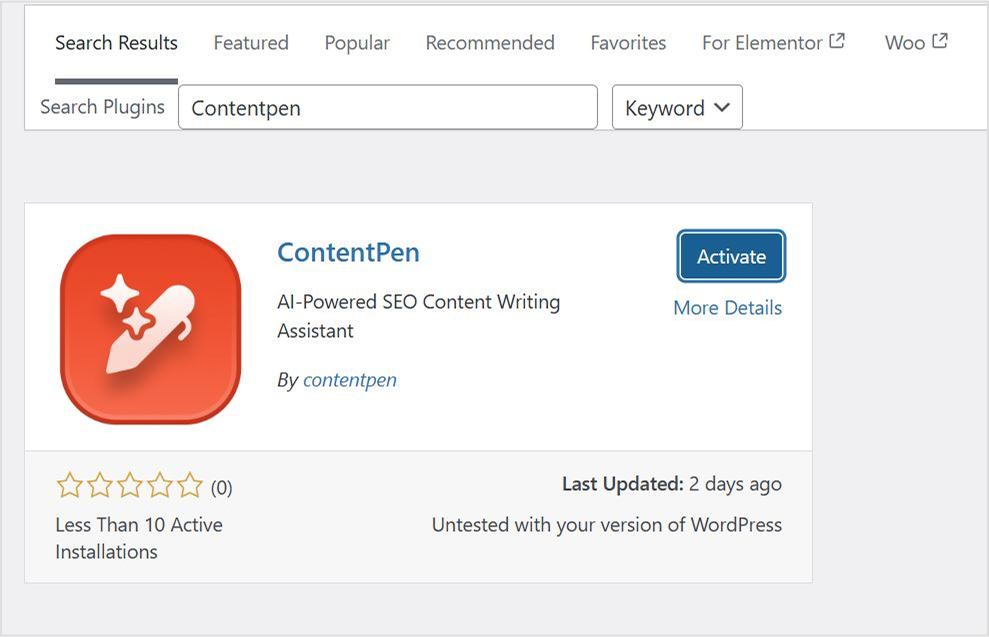
- After the plugin has been installed, the “Install Now” button will change to “Activate.” Click “Activate” to enable the plugin on your WordPress site.
Step 03: Connect your WordPress site to your Contentpen account
Once the plugin is activated, connect it to your Contentpen account.
- Next, find the Contentpen settings. After activation, a new “Contentpen” menu item appears in your WordPress sidebar.
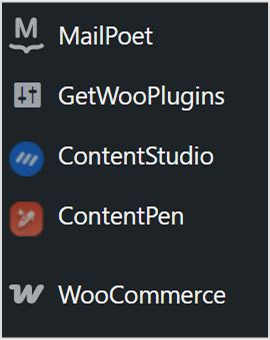
- Go into the ‘Contentpen’ settings and paste the WordPress API key you copied in Step 01 to link your site.
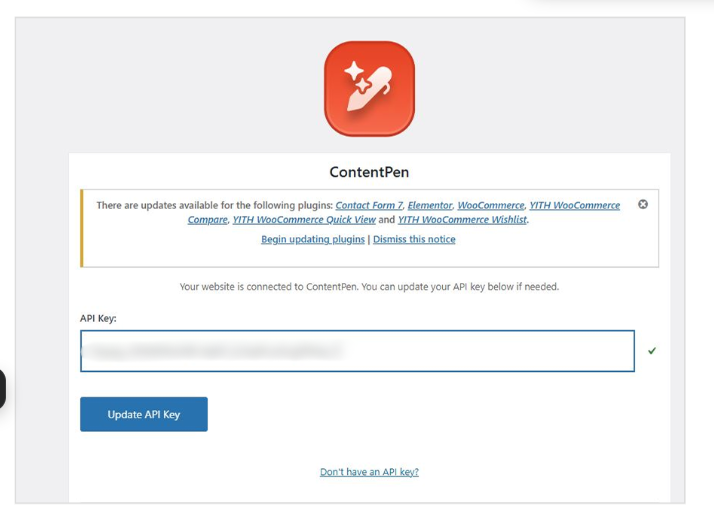
- Save or update the settings to confirm the connection between Contentpen and your WP account.
Step 04: Verify the connection in WordPress
Once you’ve connected WordPress, it is time to verify the connection from Contentpen.
- Back in Contentpen, click the ‘Verify Connection’ button in the WordPress integration settings and wait a few seconds.
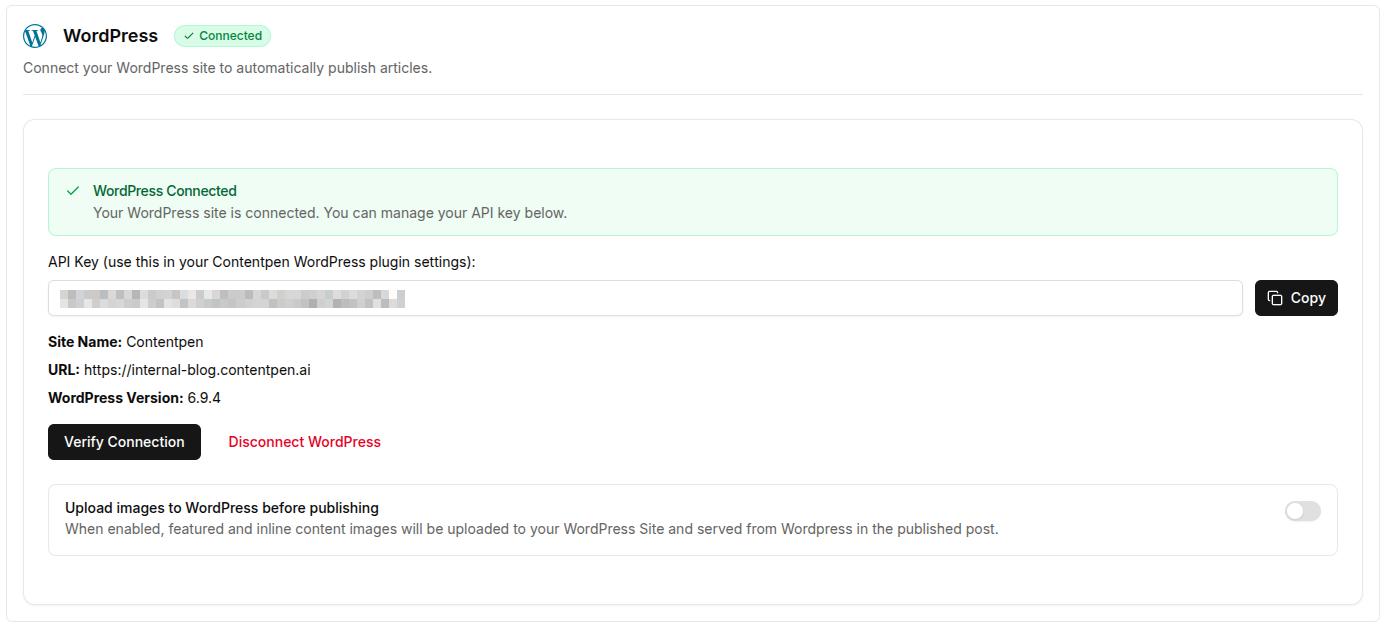
- You will get a notification pop-up confirming that you have a successful connection with WordPress.
You can also upload images that Contentpen generates directly to WordPress by using the slider at the bottom of the WP integration page.
How to publish a blog directly from Contentpen to WordPress
Let’s say you’ve just finalized a blog post draft in Contentpen. Instead of downloading and manually uploading it into WordPress, you can now:
Step 01: Click on the content piece you want to publish.
Step 02: Hit the “Publish” button in the top right corner.

Step 03: A pop-up will appear, allowing you to choose an author, assign categories, and add relevant tags for the post. You can also choose to send the content to your WP as a draft instead of publishing it directly.
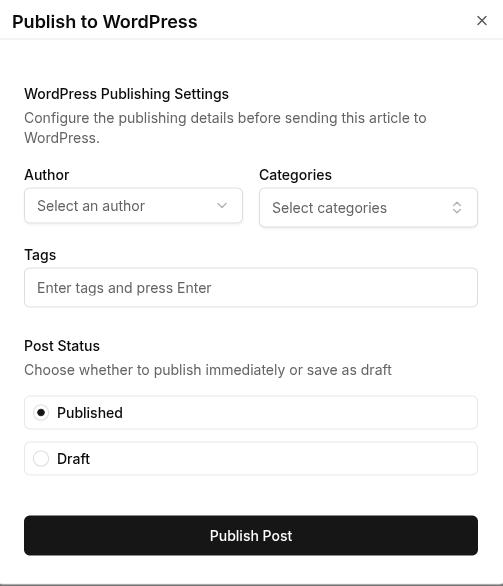
Step 04: When you’re ready, hit the “Publish Post” button, and your blog will go live on your website instantly.

Final thoughts
You’re all set! With Contentpen connected to WordPress, you can schedule, manage, and publish content without ever leaving the platform.
From here, you might want to explore scheduling posts in advance, enabling image uploads, or creating content directly from the SEO AEO tool. On the Growth plan and above, you can also turn on Autopilot to find topics, write articles in your brand voice, and publish them to WordPress on a schedule, with optional approval first.
Remember to keep the plugin updated to stay compatible with new features as they roll out. Not on WordPress? Contentpen also publishes directly to Webflow, Shopify, Ghost, Wix, and EmDash, and connects to other platforms through webhooks and the Public API. Check out the Contentpen blog for more guides on writing SEO- and GEO-optimized content.

From outline to publish-ready content that fills them

Structured
Consistent
SEO-aligned
Fast
Frequently asked questions
Once logged into Contentpen, go to the “Integration” tab in the left menu, enter your WordPress site URL, click “Connect WordPress,” and your API key will be generated there.
Not at all! The setup involves simple copy-paste steps and plugin installation with no coding required.
Yes, you can remove the plugin or reset the integration from your Contentpen account at any time.
Yes, your API key is unique to your account and securely links Contentpen with your site. However, never share it publicly or with untrusted users.
Try these quick fixes first:
– API key not working: Re-copy it fresh from the Integration tab and avoid any stray spaces in the link
– Plugin not visible after installation: Refresh the plugins page or reinstall the plugin from WordPress
– Connection still failing: Check that your WordPress site URL is entered correctly in Contentpen (include https://)
If none of these work, disconnect and reconnect from the Integration tab, or contact Contentpen support for help.
No. The WordPress API key only connects your WordPress site to Contentpen for publishing. Public API keys are separate and are used to build custom integrations. You can find the Public API documentation at api.contentpen.ai/docs.

Jawwad
Jawwad Ul Gohar is an SEO and GEO-focused content writer with 3+ years of experience helping SaaS brands grow through search-driven content. He has increased organic traffic for several products and platforms in the tech and AI niche. As an author at Contentpen.ai, he provides valuable insights on topics like SEO technicalities, content frameworks, integrations, and performance-driven blog strategies. Jawwad blends storytelling with data-driven content that ranks, converts, and delivers measurable growth.
View all posts by this author