 18 minutes
There are over 3.5 billion searches on Google every single day, and the reason why people are able to find your platform is through organic keywords. Even though finding the right organic keywords for SEO can take time and effort, the results are worth the hassle.
When a business earns strong positions for the right organic search terms, it establishes authority in a niche, which helps it gain recurrent traffic and qualified leads.
In this guide, we break down everything about organic keywords: what they mean, how to find them, and advanced tools you can use today. By the end, there will be a clear path for you to evaluate which keywords are worth chasing and the way to implement them in your content.
So, let’s get started.
Table of contents
Key takeaways
- Organic keywords are the phrases that earn your pages unpaid rankings in search results, and they drive steady traffic and qualified leads without ongoing ad spend.
- Grouping keywords into topic clusters and prioritizing them by relevance, difficulty, business value, and timeline keeps content focused on the terms most worth chasing.
- Ranking depends on matching search intent first, then placing keywords naturally in titles, headings, URLs, and body copy.
- Tracking performance with rank trackers like Contentpen turns SEO into a repeatable cycle of measuring, learning, and improving.
What are organic keywords?
Organic keywords are the words and phrases people type into search engines when they want particular information, products, or services. When a page on a site appears for those searches without any ad spend, it is ranking for organic keywords.
A simple organic search example helps here.
Picture someone typing “how to improve organic traffic” into Google. Then the phrase “organic traffic” is an organic keyword.
In 2026, finding organic keywords for your business or service is like helping the search engines connect your platform with the users. It is about being honest about what you offer to achieve a minimum bounce rate and a maximum dwell time for a chance to get better conversions.
Why organic keywords matter for SEO success
Organic search is one of the strongest marketing channels a business can tap into. Even though recent studies show that organic search traffic is down 2.5% year-over-year, once pages rank, they help build brand trust and share of voice in a subject.
Organic keywords also guide the entire content process. They help decide:
- Which topics deserve full guides and deep articles
- Which belong in the FAQ sections or support documentation
- Which should support bottom‑of‑funnel product or service pages
When done well, a single pillar article can rank for dozens of related organic search terms and bring in traffic from many different angles.
In the end, better visibility for important organic keywords usually leads to better business outcomes. Greater search visibility leads to more demos, consultations, sign‑ups, and sales. That is why SEO success almost always starts with getting organic keywords right.
Organic keywords vs. paid keywords
Organic keywords relate to unpaid rankings. Paid keywords are used in pay‑per‑click campaigns, where each click incurs a direct cost to the publishing company.
Paid keywords are used on platforms like Google Ads or Microsoft Advertising. Marketers choose phrases, set bids, and write ad copy. When users search those phrases, ads can appear above or below organic results. When someone clicks, the advertiser pays.
This approach can drive traffic within hours of launching a campaign; however, it can dry up as soon as the ad funding is cut.
Organic keywords work very differently. They generate free traffic when a page ranks in the main results through SEO.
Instead of bids, the “price” is the time and effort invested in keyword research, content, and internal plus external links. It often takes weeks or months for a new platform to stabilize its organic keyword rankings, but once it does, traffic can be very steady.
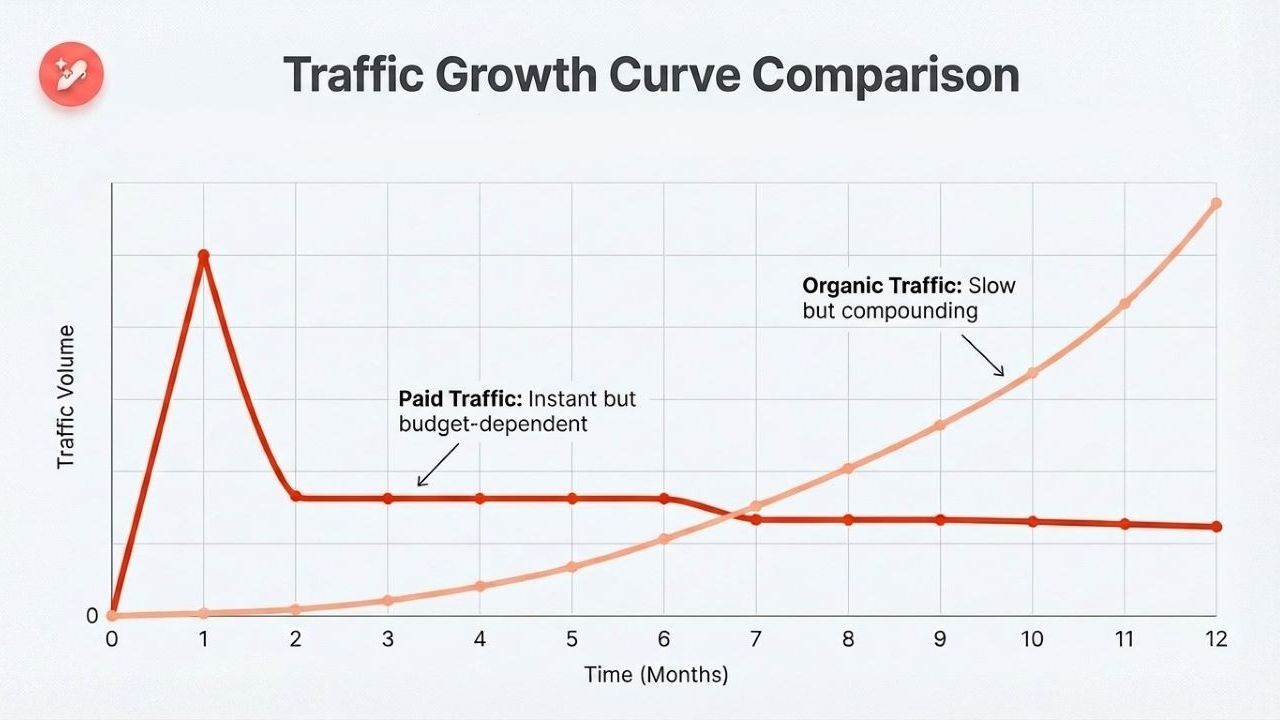
Read more: Organic traffic vs. Paid traffic.
For many small businesses and startups with limited budgets, leaning into organic keywords first is often the smarter path. Then, paid campaigns can support key launches or short windows while organic visibility grows.
4 best ways to find organic keywords in 2026
Finding strong organic keywords is not a one‑time task. It is an ongoing process of research, testing, and expansion. The best way to work is to combine several methods so that the keyword list covers both obvious topics and hidden gaps competitors may have missed.
Some methods rely on paid tools, while others use free data directly from Google.
#1: Using paid keyword research tools
Dedicated keyword tools are often the fastest way to build a broad view of any topic. These platforms gather billions of organic keywords and provide helpful metrics such as volume, difficulty, and keyword intent.
The common starting point is a “seed” keyword. This is a broad phrase that matches the niche, such as “content marketing,” “interior design,” etc.
After you’re comfortable with your seed keyword, enter it into one of the paid keyword research tools of your choice:
- Semrush
- Ahrefs
These are two widely used options for finding a wide array of SEO keywords relevant to your niche. For the sake of experimentation, we will use Semrush for now.
Open Semrush and toggle to SEO -> Keyword Magic Tool. Here, you enter your seed phrase, such as ‘gyming’, choose the location in which you want the organic keyword rankings, and press ‘Search’.
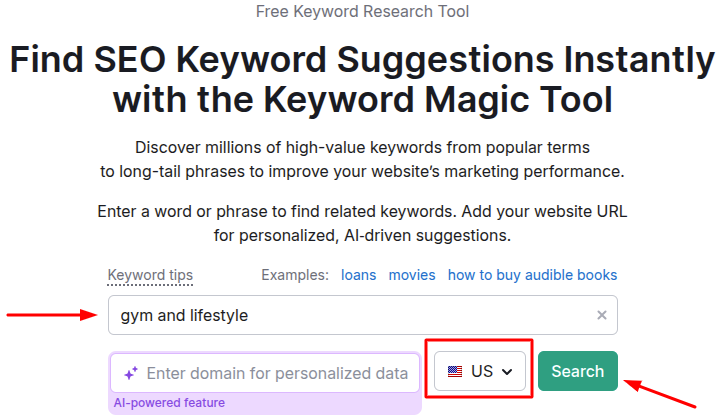
Once that seed is entered into the tool, the platform returns thousands of related phrases, questions, and long‑tail variations of the main keyword.
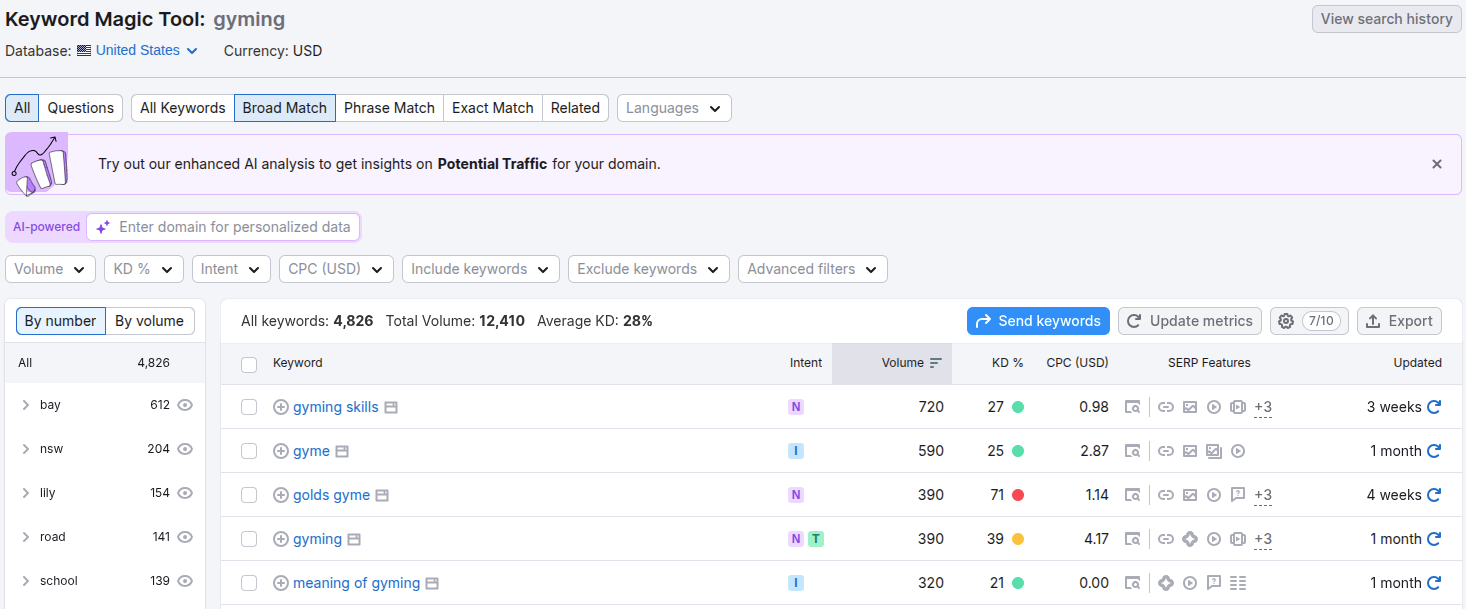
Now, you can select the keywords based on their CPC (in USD), keyword difficulty, and other metrics that you think are relevant to your business. Use these organic phrases throughout your site for a better chance of appearing at the top of SERPs and AI Overviews.
#2: Using Google Search Console
Google Search Console (GSC) is one of the most valuable free SEO tools. Unlike most platforms, it does not guess how a site performs. It shows actual Google data on which queries already lead to impressions and clicks.
After logging in to GSC and selecting a property, go to the Performance section and find the Search results report. This screen shows total clicks, impressions, average position, and click‑through rate for all the pages on your website:
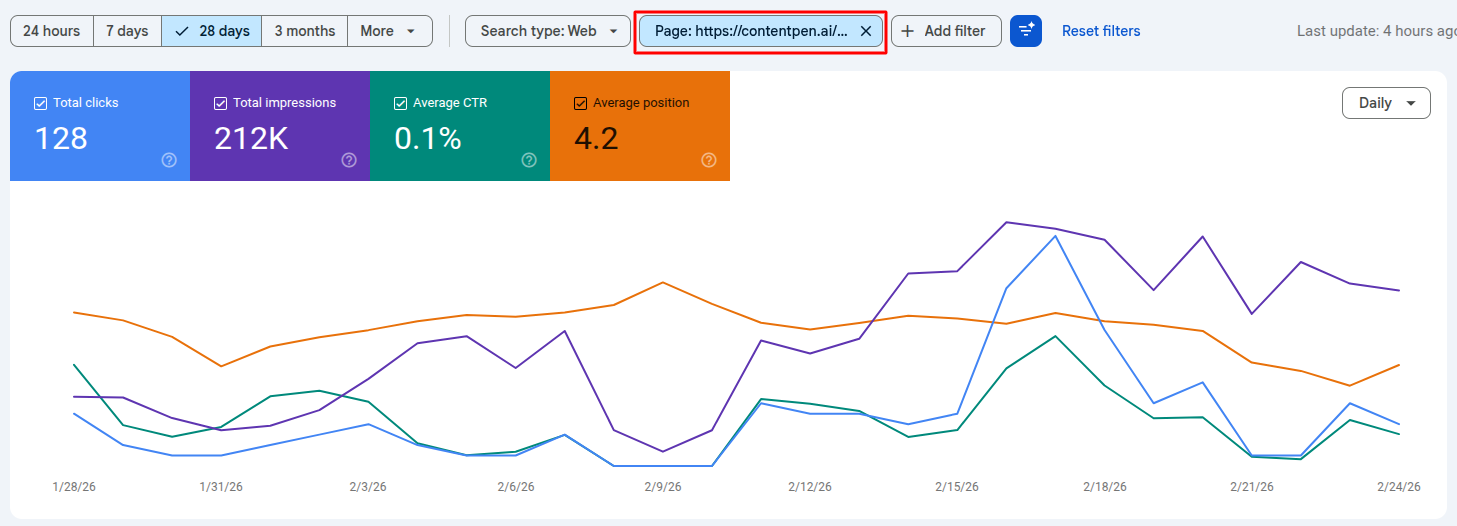
By default, your ‘Average CTR’ and ‘Average Position’ windows might not be selected, so go ahead and click them. Then, click on the Pages tab and select any single page for which you want the organic keywords.
Once that is done, scroll down and click the Queries tab to see your clicks, impressions, CTR, and position on SERPs for all the organic keywords for that page.
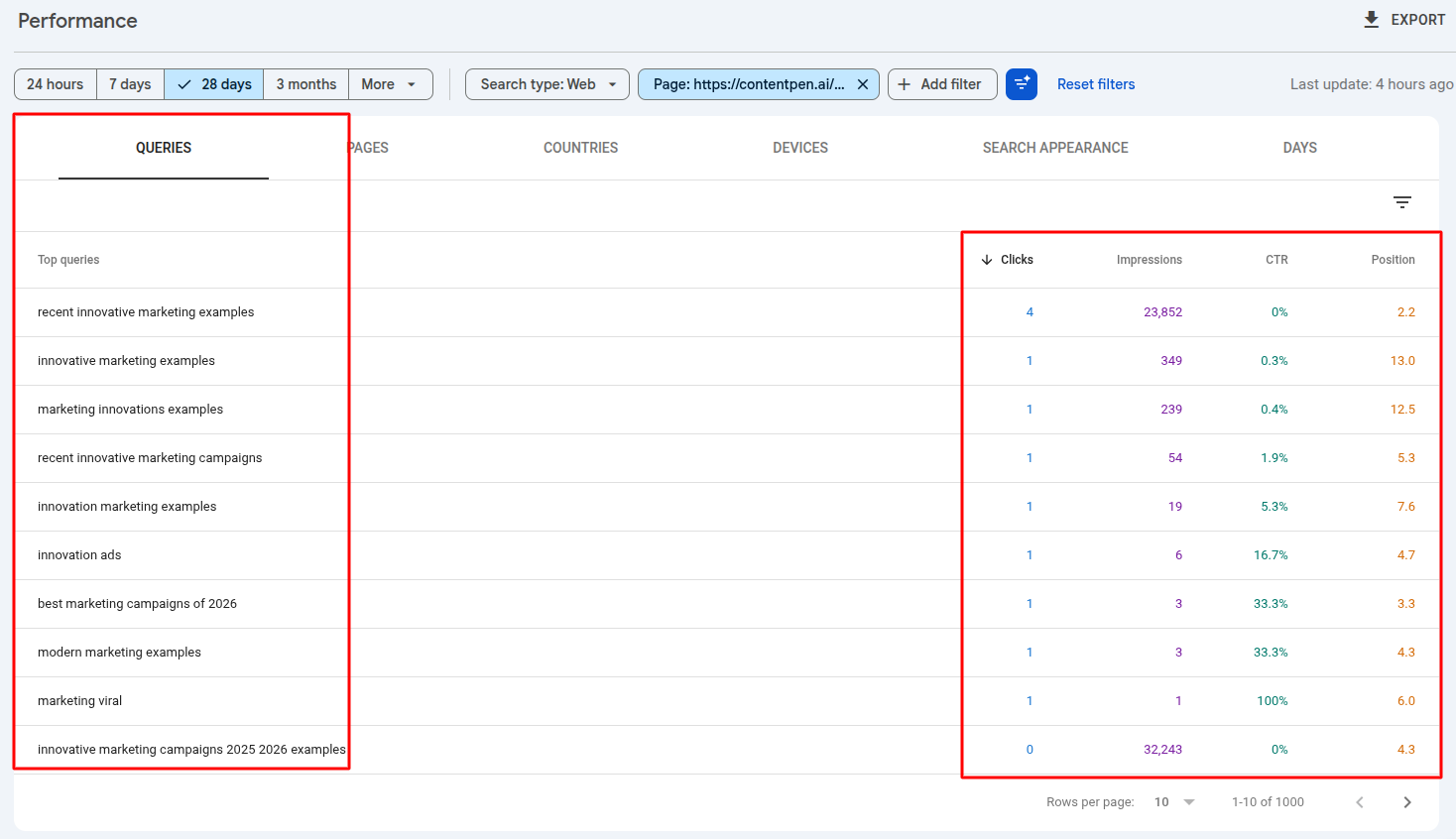
Analyze this data to identify which keywords drive the most traffic to that page. Now, start optimizing your website for these organic keywords to gain steady visitors, potential leads, and eventually, conversions.
#3: Through smart competitor analysis
Competitor analysis in the scope of organic keywords means looking at the phrases that actually drive traffic to other sites in your niche to redefine your SEO strategies.
The first task is to identify true SEO competitors. These are the domains that appear repeatedly when searching for the target ranking queries.
Once this list is ready, use Semrush organic research or Ahrefs competitor analysis to see the organic keywords your rivals are ranking for.
You should also consider Contentpen for this task. Our tool’s built-in SERP and gap analysis capabilities and its SEO opportunities features compare your content to others in the space to uncover quick wins to help you rank on Google.

Turn existing content into growth opportunities

Identify pages losing traffic or CTR
Find quick wins to improve clicks and rankings
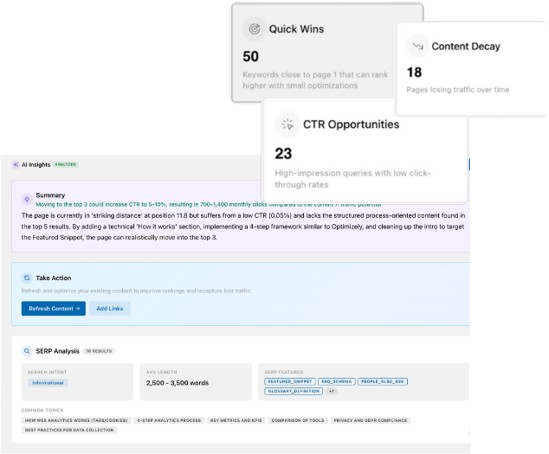
Our AI blog writer can also scan a domain and pull out a competitor’s top organic keywords for you to strategize your content. Unlike other tools, it also helps you draft content using the discovered organic keywords and publish it directly to CMS platforms in a single window.
#4: Exploring Google’s SERP features
The search results page (SERP) itself is a powerful free research tool. Even without any tool logins or subscriptions, it shows what people are searching for and how Google connects topics to websites.
Using Google Autocomplete
Typing a seed keyword into the search bar brings up Google Autocomplete suggestions. These are based on real search behavior and show how users finish common phrases.
Trying different letters or short words after the seed keyword can surface many ideas, especially long‑tail organic keywords people actually use to find something. You can use these variations in your content to rank high on SERPs.
Using People Also Ask
You can also use the People Also Ask boxes to find organic keywords. Each question in this box is a real query. Clicking one expands a short answer and often loads more related questions below.
Collecting these questions provides perfect prompts for subheadings or FAQ sections because they mirror what people type into Google.
Using People Also Search For
Finally, at the bottom of a search results page, you can see the People also search for section, which lists more queries closely related to the original one.
These often show synonyms and related topics that can closely match your organic keyword. They can also hint at future content ideas for cluster articles around a central, main theme.
Working through “Google Autocomplete”, “People also ask”, and “People also search for” reveals several organic keywords that you can use to create content and rank.
However, utilizing these keywords is a separate struggle. You have to consistently strive to make your content SEO- and GEO-friendly, but not anymore.
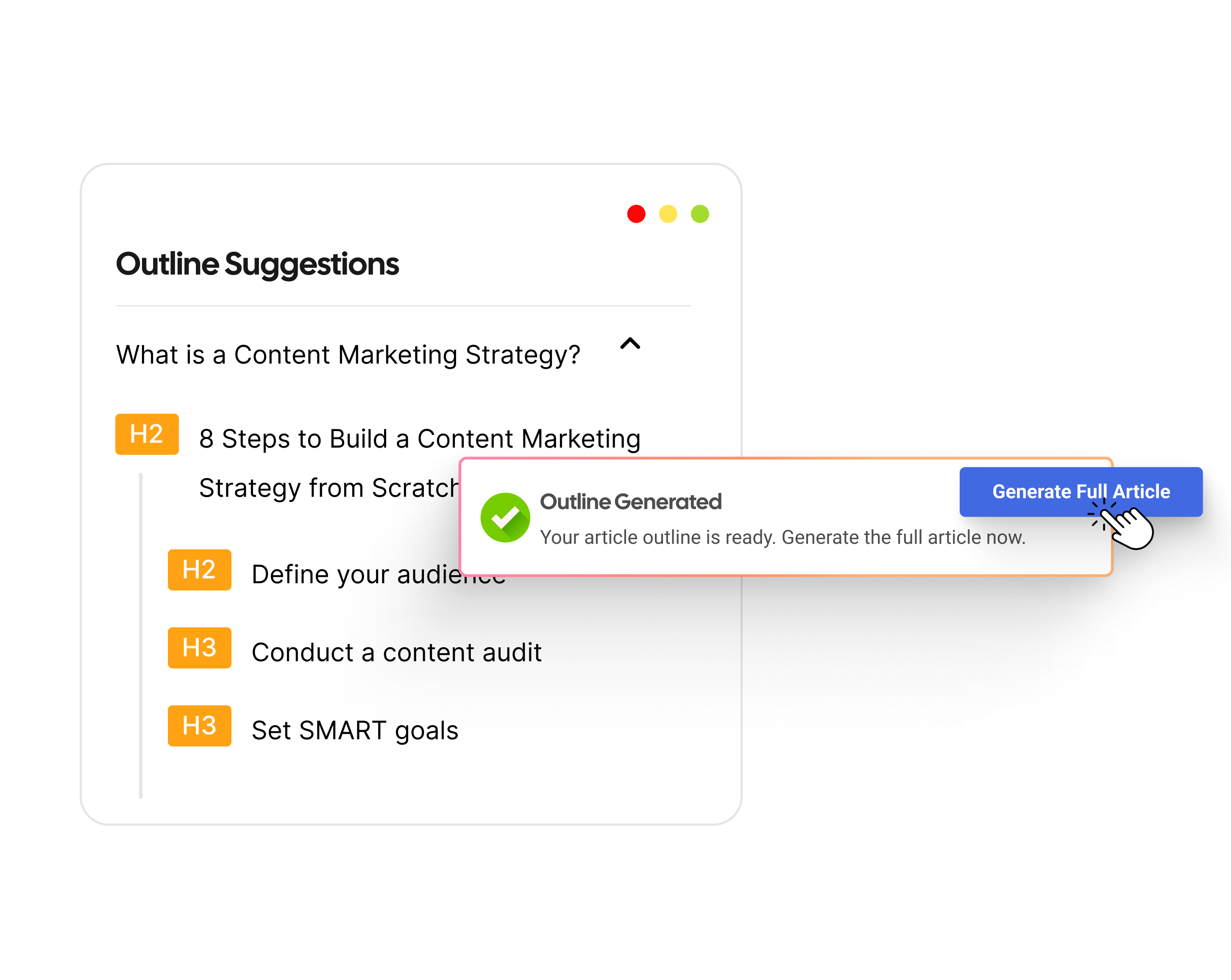
Contentpen handles all the writing, SEO scoring, and publishing for you. It removes friction in using organic keywords to rank by automating content tasks and supporting bulk content creation.
From outline to publish-ready content that fills them
Structured
Consistent
SEO-aligned
Fast
Organizing and prioritizing your keyword strategy
Once a big list of organic keywords exists, the real work begins. A pile of phrases without structure leads to random content and wasted effort. A clear plan groups related keywords, assigns them to specific pages, and decides which ones deserve attention first.
Good organization helps with both SEO and content operations. It keeps writers focused on key themes, avoids duplicate angles, and builds authority in the eyes of search engines. Instead of isolated posts, the site becomes a network of related pages that support each other.
Grouping keywords by topic clusters
The topic cluster model is a simple way to turn a messy keyword sheet into a clear content map. In this model, each big theme has a main pillar page and several supporting cluster pages. Internal links then tie everything together, so both users and search engines see the structure.
For visitors, topic clusters feel natural.
Someone can start with a high‑level guide and then click into detailed articles as their questions sharpen. That smooth path increases time on site, and the chances that readers move from learning to considering a product or service improve significantly.
Prioritization framework
Even with good clusters, most teams cannot cover every keyword right away. There needs to be a simple way to decide what to tackle first. A clear set of filters helps sort organic search terms into near‑term, mid‑term, and long‑term targets.
You can think about prioritization through four lenses:
- Relevance: A keyword should closely match what the business offers or what its audience expects from its content.
- Keyword difficulty and search volume: Lower difficulty, combined with modest volume, is often the best approach. Looking at these two numbers together avoids putting huge effort into pages that have little chance of ranking in the near future.
- Business value: Some keywords attract readers who love to learn but never buy. Others show clear buying or sign‑up intent. Prioritizing your efforts on commercial-intent organic keywords can be a wise decision if your business or service allows for it.
- Time span: Decide which phrases can bring near‑term wins and which are longer projects that build authority over months or years. Using Contentpen here can dispel any doubts and provide clarity on your SEO and content plans.
Many teams like to visualize this with an Impact vs. Effort grid. High‑impact, low‑effort keywords are in the top-priority box. These keywords are strongly relevant, easier to rank for, and have decent traffic potential.
High‑impact, high‑effort terms are worth planning for longer terms. Low‑impact, low‑effort terms can fill gaps if there is extra capacity in your content calendar, while low‑impact, high‑effort keywords are usually not worth chasing.
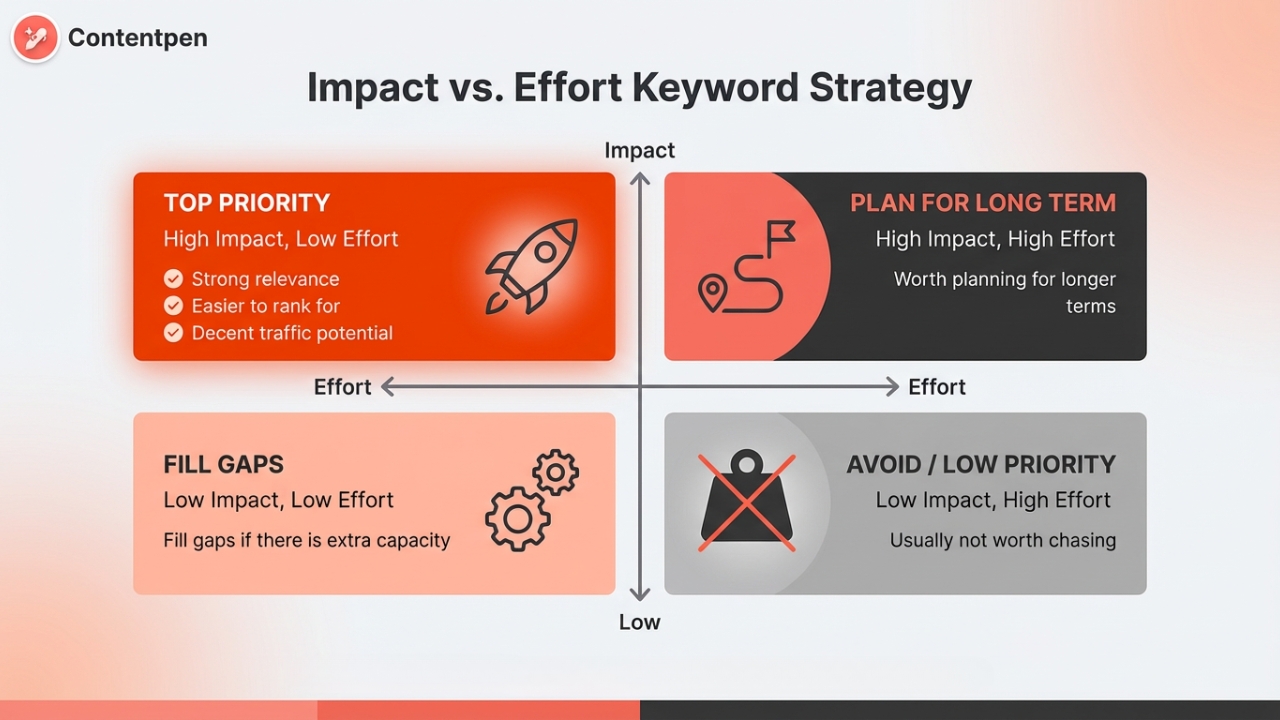
Creating a keyword roadmap like this keeps content efforts focused and helps utilize most of your resources for ranking.
How to optimize content for organic keywords
Finding strong organic keywords is only half of SEO. The next step is to shape content and on‑page elements so that search engines and users clearly understand what each page covers. This is where classic on‑page SEO comes in.
On‑page work signals why a page deserves to rank for a keyword. That includes titles, headings, body copy, images, URLs, and internal links.
None of this replaces the need for good content, but it does make sure that hard‑won articles have a fair shot at strong organic keyword rankings.
Aligning content with search intent
Before tweaking a single tag or heading, it is important to confirm that the page type aligns with the search intent. Many ranking problems trace back to this one mistake. If the page is the wrong kind of content, no amount of keyword placement will fix it.
A simple way to check is to search the target keyword and scan the first ten results. Ask:
- Are most top pages how‑to guides?
- Are they product or pricing pages?
- Are they comparison lists or review articles?
If almost all top pages are how‑to guides, then that keyword expects informational content. But if most results are product listings or pricing pages, the query leans transactional. If many results compare tools, it suggests a commercial intent.
Matching intent also includes depth. If all top results for a topic are long, detailed guides, a 500-word article will likely struggle to rank. In that case, the content should be expanded to cover the same level of detail, plus extra angles where possible.
Only after this alignment step is solid does it make sense to adjust keyword placement and other on‑page elements.
Strategic keyword placement
Once the content type and depth fit the keyword, it’s time for careful organic keyword placement.
Key areas to focus on include:
- Title tag: This acts as the main headline in search results. It should include the primary organic keyword near the start and stay under about 60 characters so it shows fully on most screens.
- Meta description: This heavily influences how many people click your page. A good description utilizes the main keyword naturally at the start and summarizes everything on the page. You can access many metadata variations with Contenpen by clicking the ‘bulb’ icon. Also, see the slug and SERP preview to know how your page looks before publishing.
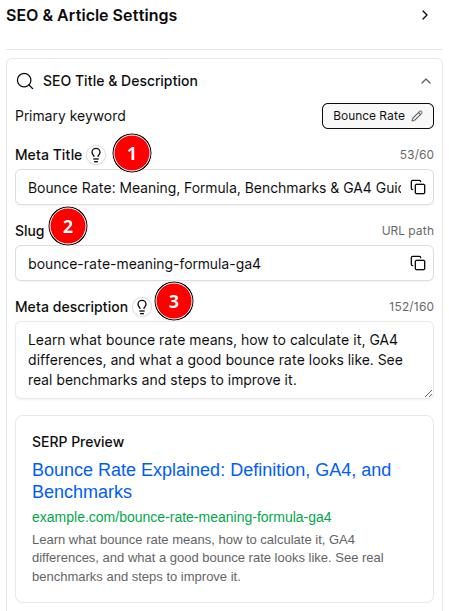
- URL slug: Short, descriptive slugs such as /organic-keywords-guide or /organic-keyword-research are easier for both users and search engines to understand than long strings of numbers or tracking parameters.
- H1 heading: The H1 heading should closely mirror the title and include the main keyword. Many templates use the blog title as the H1 by default, which is fine as long as the keyword appears naturally.
- H2 and H3 subheadings: Break content into sections and give more chances to include related keywords in each H2 and H3 subheading. Try to use more conversational headings to support voice-enabled search indexing and AI Overview visibility.
- First paragraph: Your opening paragraph should include the primary organic keyword in the opening 100-150 words, generally. Still, you must keep your sentences natural and easy to read.
- Body content: This is where you will place most of your organic keyword list in a natural way. Cover all the keyword variations possible without overloading users with buzzwords. Readers need value from the content as well [pro tips, cheat sheets, etc.]
- Images and alt text: Adding alt text that explains what is shown in a picture helps both accessibility and SEO. You should include organic secondary keywords or LSIs in the alt text to improve image SEO, or use Contentpen to automatically add a fitting description.
- Internal links: Connect related content and share authority across the site. When linking, use descriptive anchor text to help both search engines and human readers to understand how topics relate to one another.
Creating high-quality, comprehensive content
Technical tweaks matter only if the content itself truly helps the reader. Search engines have become better at judging depth, accuracy, and usefulness. Thin pages packed with keywords tend to fade, while detailed, reader‑friendly content wins.
High-quality content starts with complete coverage. A good article on a topic like SEO backlinks should explain:
- What backlinks are
- Why they matter for search engine rankings
- How to earn high-quality backlinks ethically
- How to evaluate backlink quality
- How to monitor and manage your backlink profile over time
It should answer follow-up questions a reader is likely to have, instead of leaving those gaps for competitors.
Original insight is just as important. Copying the structure or wording of top results rarely pays off. Adding fresh examples, clear examples, small case studies, or personal experience makes content stand out.
Avoiding keyword stuffing
Keyword stuffing no longer works and can even hurt performance for your online platforms.
From a reader’s point of view, stuffed content feels spammy. Sentences stop making sense, and paragraphs read like a list of slightly altered phrases. This leads to fast exits and poor engagement signals, which send the wrong message to search engines.
Modern SEO favors natural language. It is fine to mention a primary keyword several times and to include supporting phrases. The key is that each use should fit smoothly into the sentence and add some value to the reader.
Semantic SEO understanding also matters. Google can now recognize related ideas and synonyms. A page can rank for “organic keywords meaning” even if it sometimes uses phrases like “unpaid search phrases” or “natural search queries.”
This also means that the tactic of creating separate blogs for similar organic phrases, such as “natural search queries” and “unpaid search phrases,” probably doesn’t make sense in 2026.
Tracking organic keyword performance
SEO does not end at publication. Once content is live and optimized for a set of organic search terms, it is important to watch how those pages perform. Tracking turns SEO from guessing into a cycle of measure, learn, and improve.
Rank tracking means keeping a regular record of where a site appears in search results for specific keywords. Without this data, it is hard to know whether new content or optimizations are helping or whether rankings are sliding without notice.
Many SEO platforms include tracking modules. For example, Semrush offers Position Tracking, and Ahrefs has the Rank Tracker. The basic setup flows in a similar way across tools:
- Create a project for the domain.
- Add a set of target keywords, grouped by topic or intent.
- Choose the search engine, location, and device type to track.
- Schedule how often rankings should be checked (daily or weekly).
To show you the process, we’ll use Ahrefs as the organic keyword checker for now. At the main tool overview, toggle to Projects -> Rank Tracker.
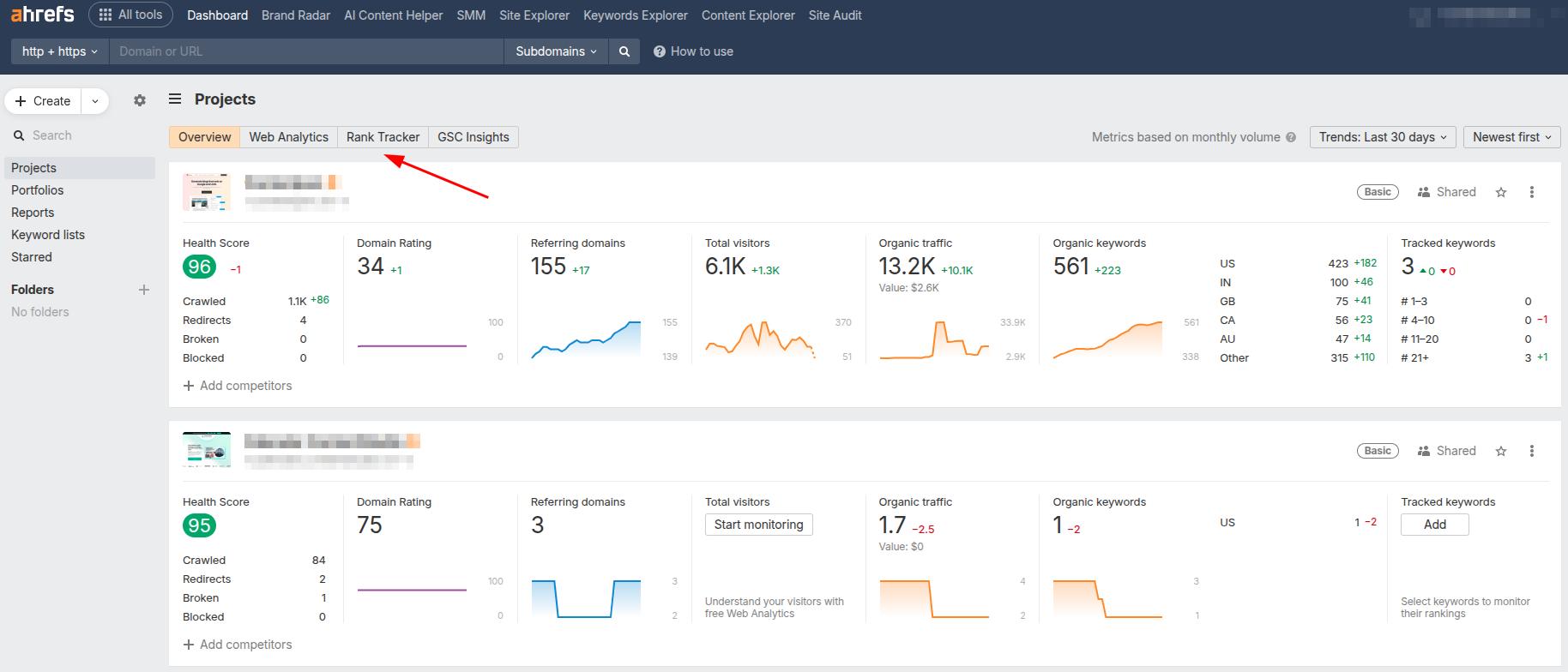
Here, click on the ‘keywords’ option to see how your organic keywords are currently ranking for different search and AI engines.
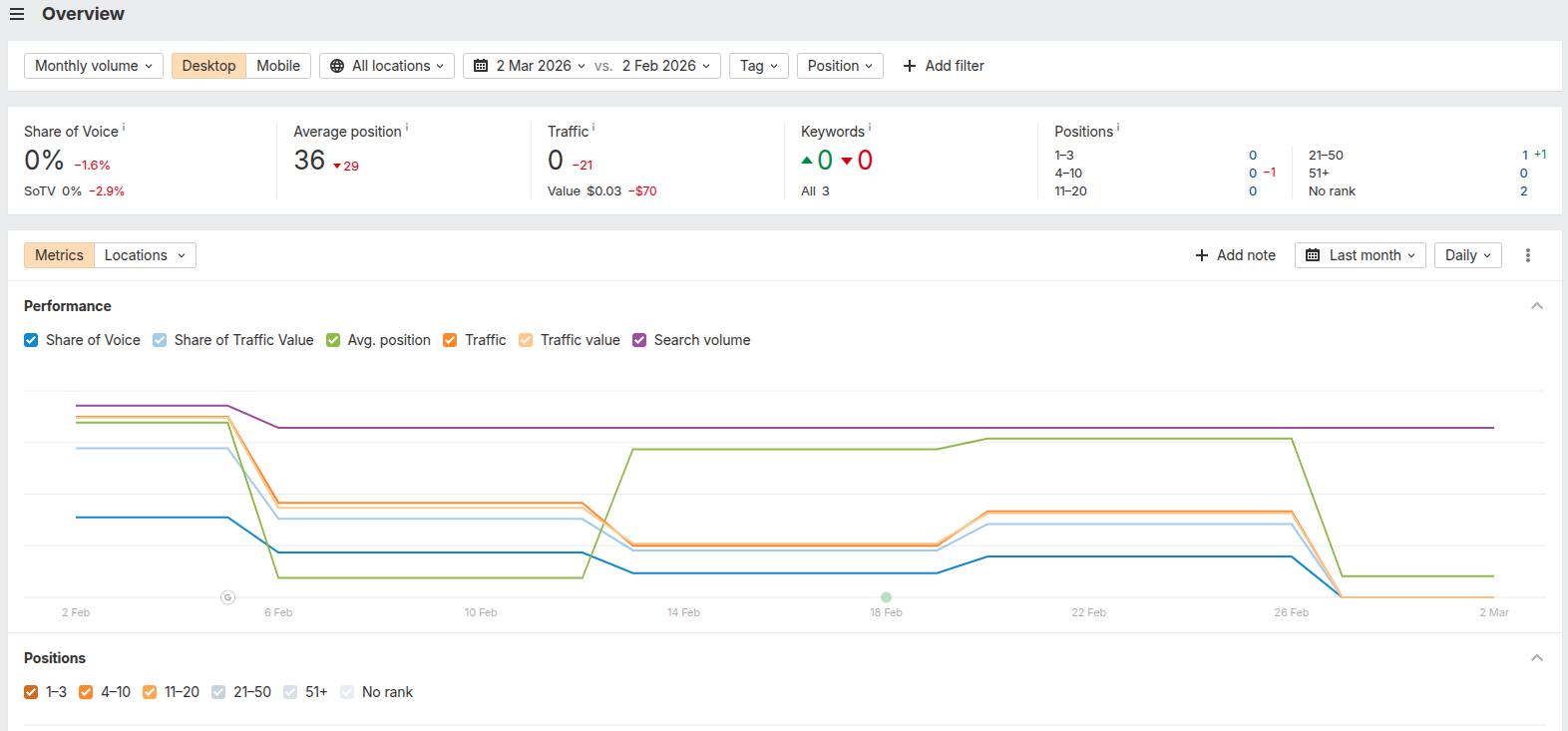
Finally, you can see the organic keywords ranking by position, traffic, and share of voice. If you want, you can change the viewing parameters, such as device type and location, to suit your business or service.
Data from Google Search Console can also help, although it is not a pure rank tracker. GSC shows average positions and changes over time for many searches, which is often enough for early‑stage projects.
Setting up tracking gives a clean baseline. Over the next few weeks and months, you can monitor trend lines to see whether a page is climbing, flattening, or falling, which guides future updates and link‑building efforts.
Summing it up
Organic keywords are the foundation of sustainable SEO growth. When you understand what they are, how to find them, and how to optimize content around them, you move from random publishing to strategic organic visibility.
The process is simple in theory: research with the right tools, prioritize keywords based on relevance and business value, create genuinely helpful content, and track performance over time.
When done consistently, organic keyword rankings compound, bringing steady traffic, stronger authority, and measurable business results.