 13 minutes
Imagine someone walks up to you in the street and asks, ‘Where’s the nearest fast-food restaurant?’ You’d instantly know what they want out of that exchange. Their “search intent” would be even clearer if they’d inquired about a specific brand of fast-food restaurant, like KFC or McDonald’s.
The online world works the same. Search engines judge your pages based on the type of intent you’ve covered for a topic to index and rank them properly for specific queries.
In this guide, we’ll explore all about keyword intent: what it is and how it works. We’ll also see ways to enhance user experience by satisfying the search intent, encouraging the right type of traffic to visit and convert.
So, let’s get started.
Table of contents
- What is keyword intent for SEO?
- What are the 4 types of keyword intent in SEO?
- How to identify keyword intent (without guessing)
- Mixed intent keywords: When one query has multiple goals
- How to optimize content for every common type of search intent
- How can Contentpen help you implement the right keyword intent?
- Keyword intent mistakes and how to avoid them
- What we’ve learned about keyword intents
- Frequently asked questions
What is keyword intent for SEO?
Keyword intent is the “why” behind a search query. It is the goal a user has in mind when they type something into Google.
Keyword intent and search intent are often used interchangeably. Both describe the purpose behind a user’s query, whether they want to learn, compare options, or take action.
For instance, “pumpkin seeds” naturally prompts an informational intent, meaning that the user is looking to know more details about it. This requires you to create your content according to that keyword intent.
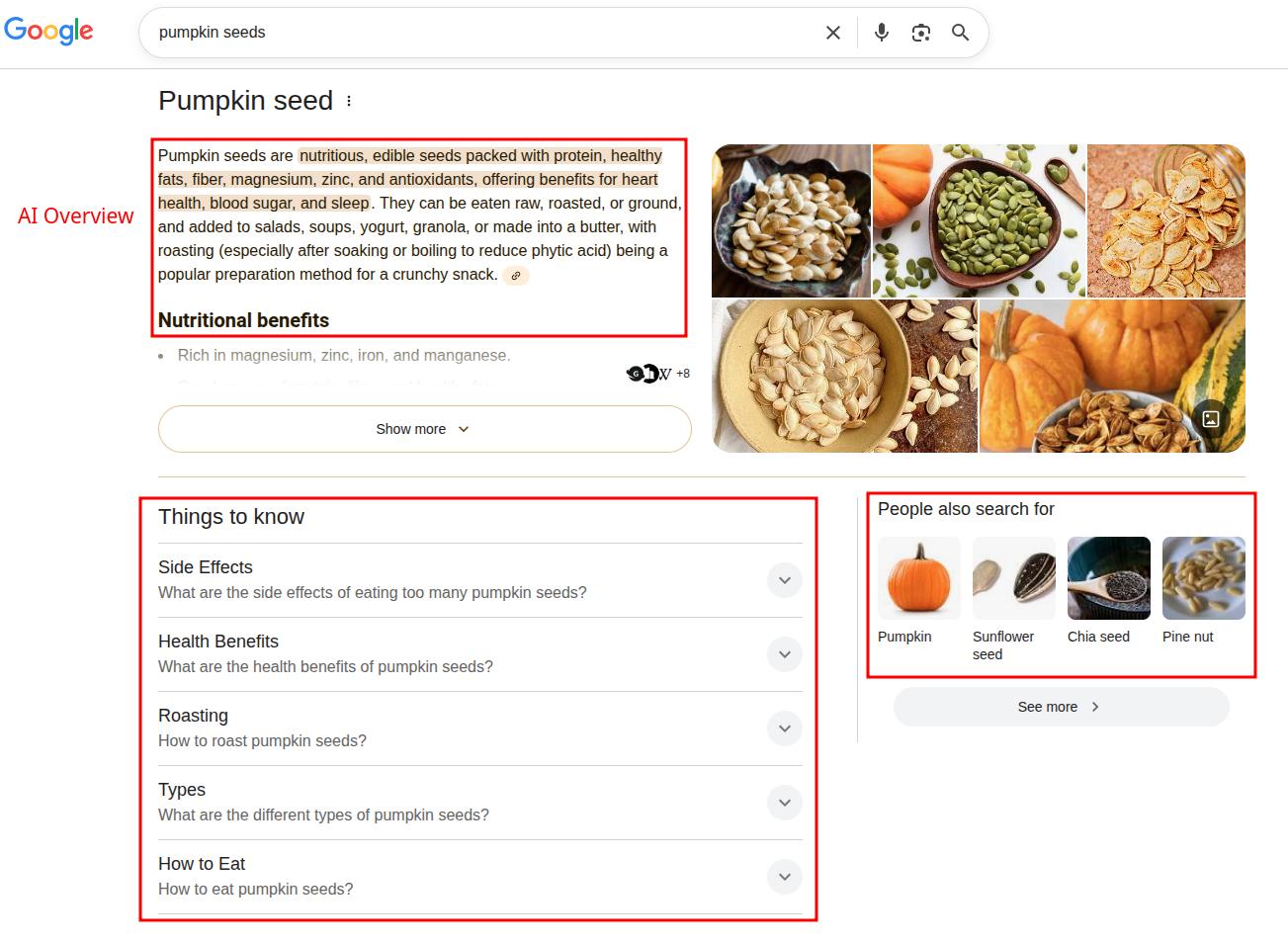
For this query, Google provides an AI Overview, a ‘People also search for’ box, and a ‘Things to know’ section, along with other pages, such as WebMD, covering its health benefits. The intent is clear.
Whereas, if we type “buy pumpkin seeds” into Google, we’ll mostly receive results that help us purchase the product, rather than knowing more about it.
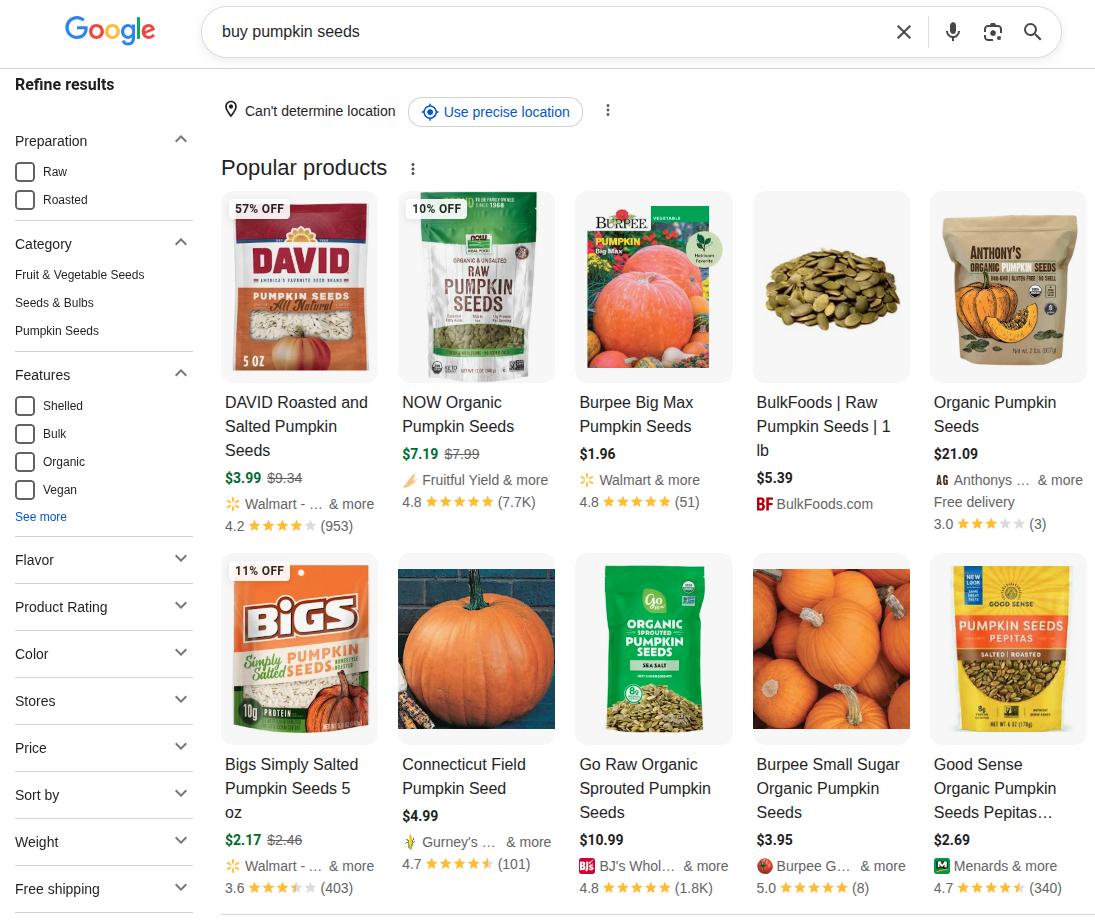
This result clearly shows transactional intent, which means the user already knows what pumpkin seeds are, and they’re ready to buy them after comparing some options.
What are the 4 types of keyword intent in SEO?
Writing your page content according to the keyword intent is the basis of search engine optimization. But this raises the question: how many types of keyword intent are possible?
Mainly, there are 4 types of search intent in SEO: informational, transactional, commercial, and navigational.
These can be fully understood with the buyer’s funnel in mind.
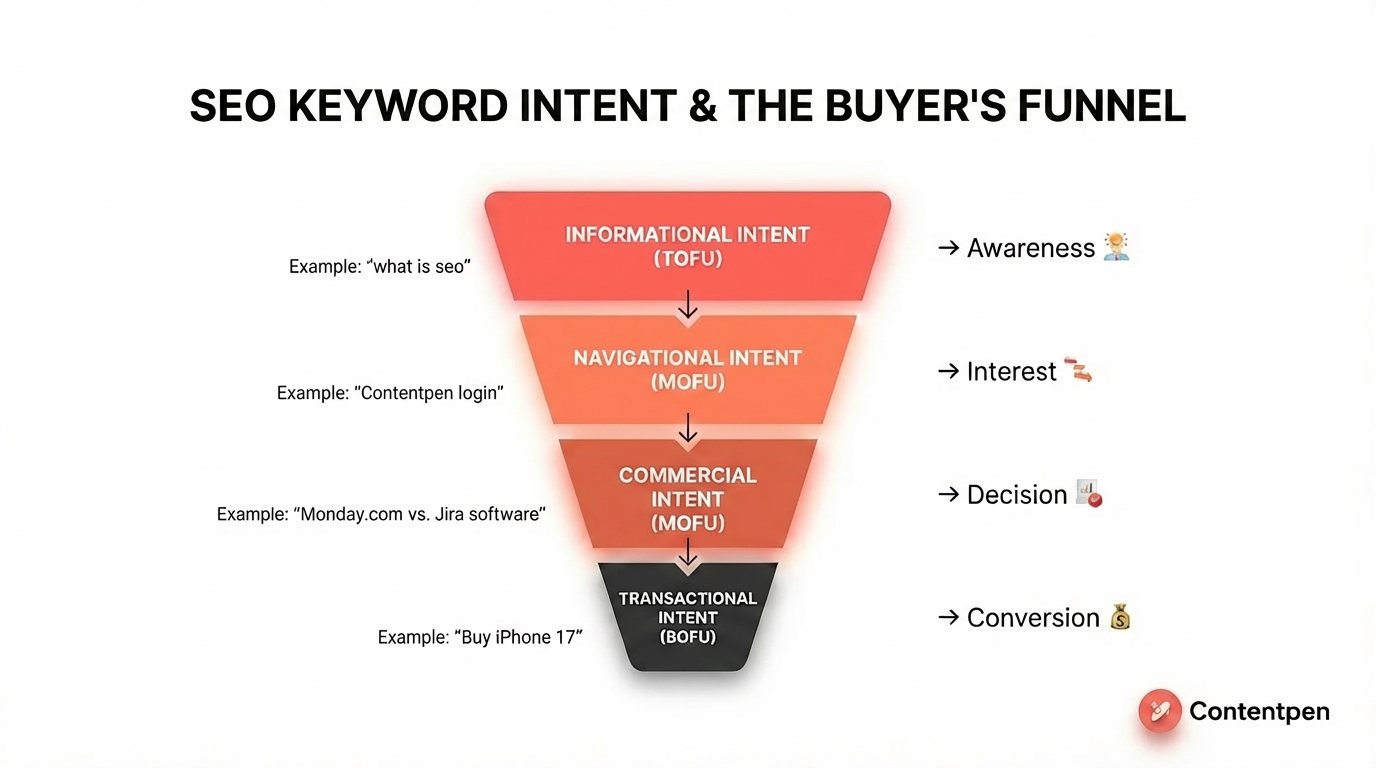
Informational intent represents TOFU or Top-of-the-funnel. The user’s search behavior here is learning about the product or service and how it can be helpful to them (no buying decision yet).
Then, we have navigational and commercial keyword intents as MOFU or Middle-of-the-funnel. At this stage of the buyer journey, the user is already aware of the basics of the product and is now comparing brand options to purchase. For instance, “Monday.com vs. Jira software”.
Finally, we have the transactional intent as BOFU, or bottom-of-the-funnel. The user has already made up a buying decision and is looking to act on it. They can search terms like ‘buy iPhone 17’ or ‘purchase health insurance.’
Below is all the information summarized for the main types of keyword intents possible in SEO:
| Intent type | What the user wants | Example keywords | Best content format | Buyer intent level |
| Informational | Learn or understand a topic | What are organic keywords? How to do keyword research, types of keywords | Blog posts, guides, tutorials, checklists, explainer videos | Low |
| Navigational | Reach a specific site, brand, or page | Contentpen SEO audit, Google Search Console, Semrush login | Homepage, login page, branded landing page, contact page | Low to medium |
| Commercial | Compare options before a decision | best AI SEO tools, Contentpen vs Frase, keyword research tool reviews | Comparison pages, review articles, “best” listicles | Medium to high |
| Transactional | Take action, such as buying, signing up, or booking a service | Buy a keyword research tool or Contentpen pricing | Product pages, service pages, pricing pages, signup forms | High |
Mostly, long-tail keywords work the best for bottom-of-funnel intent as they target a specific group of users ready to take an action.
How to identify keyword intent (without guessing)
Intent-based SEO starts with what Google already shows, then confirms your hunch with support from SEO tools.
How Google determines keyword intent
Google does not rely on keywords alone to understand intent. It analyzes patterns across the SERP, including the type of pages ranking, the format of content, and user interaction signals like organic clicks and dwell time.
If most top-ranking results follow a similar structure or content type, Google treats that as the expected intent for the query.
This is why analyzing the featured snippets is more reliable for matching user search intent than guessing based on keywords alone.
#1: Manual SERP analysis (your fastest signal)
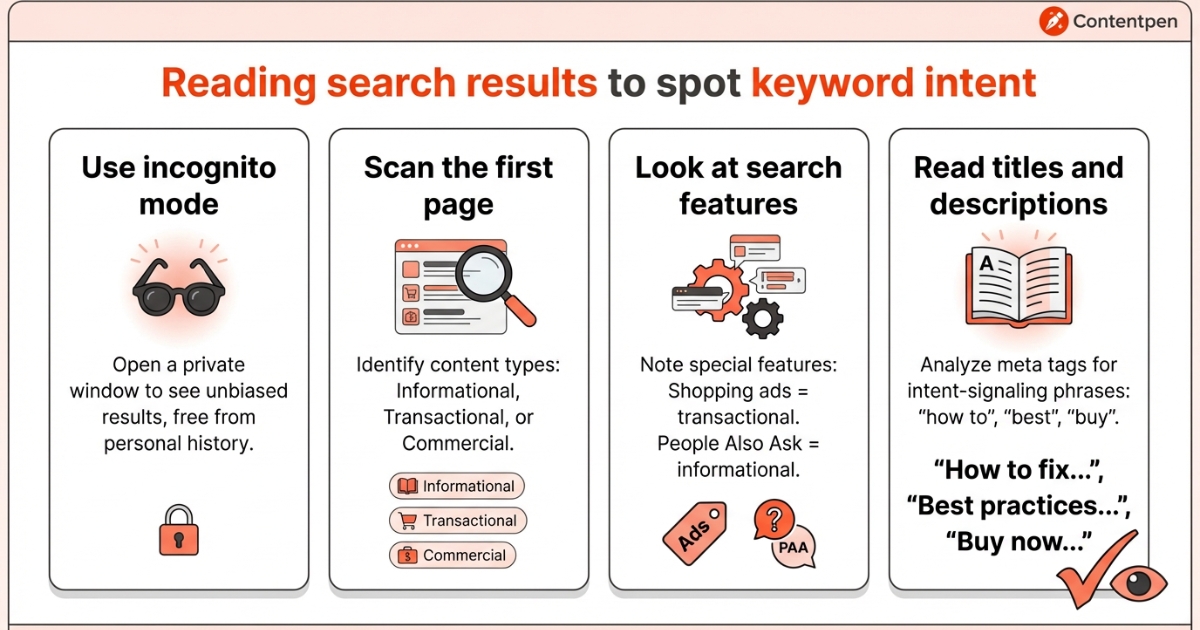
Begin by typing your target keyword into Google using an incognito or private window. This reduces the chance that your personal history or location skews the results and gives you a cleaner view of real SEO search intent.
Then work through this quick checklist:
- Scan the first page. If most results are blog posts and guides, you are looking at informational keywords. If you see store pages or checkout flows, that is transactional intent. Review roundups and “best X” pages show clear commercial intent.
- Look at the search features. Shopping ads or product carousels hint at transactional queries. “People also ask” boxes and short answer panels point to informational searches.
- Read titles and meta descriptions. Phrases like ‘how to,’ ‘best,’ and ‘buy’ give you sharp, fast keyword intent clues.
This kind of manual SERP analysis takes only a few minutes per keyword, but protects you from writing the wrong type of page.
#2: Looking at keyword modifier patterns
Many queries reveal their purpose through simple word patterns. Phrases that start with:
- ‘How to,’
- ‘What is,’
- ‘Why,’
- ‘Guide’
These power words usually signal informational intent.
Words, like
- ‘Best’
- ‘Top’
- ‘Review’
- ‘vs’
- ‘Alternatives’
All point to commercial research or commercial intent.
While terms such as:
- ‘Buy,’
- ‘Price,’
- ‘Order,’
- ‘Near me,’
- A city name or place
These often show transactional or local intent keywords.
Similarly, brand names with landing pages, such as:
These types of keywords hint at navigational intent.
#3: Utilizing modern SEO tools
Modern SEO tools use these patterns at scale and label intent for many terms at once.
Semrush’s Keyword Magic Tool
For instance, Semrush offers its Keyword Magic Tool that you can use to analyze keyword intent.
If we use the same ‘buy pumpkin seeds’ keyword and enter it in the Keyword Magic Tool, we will receive the following results:
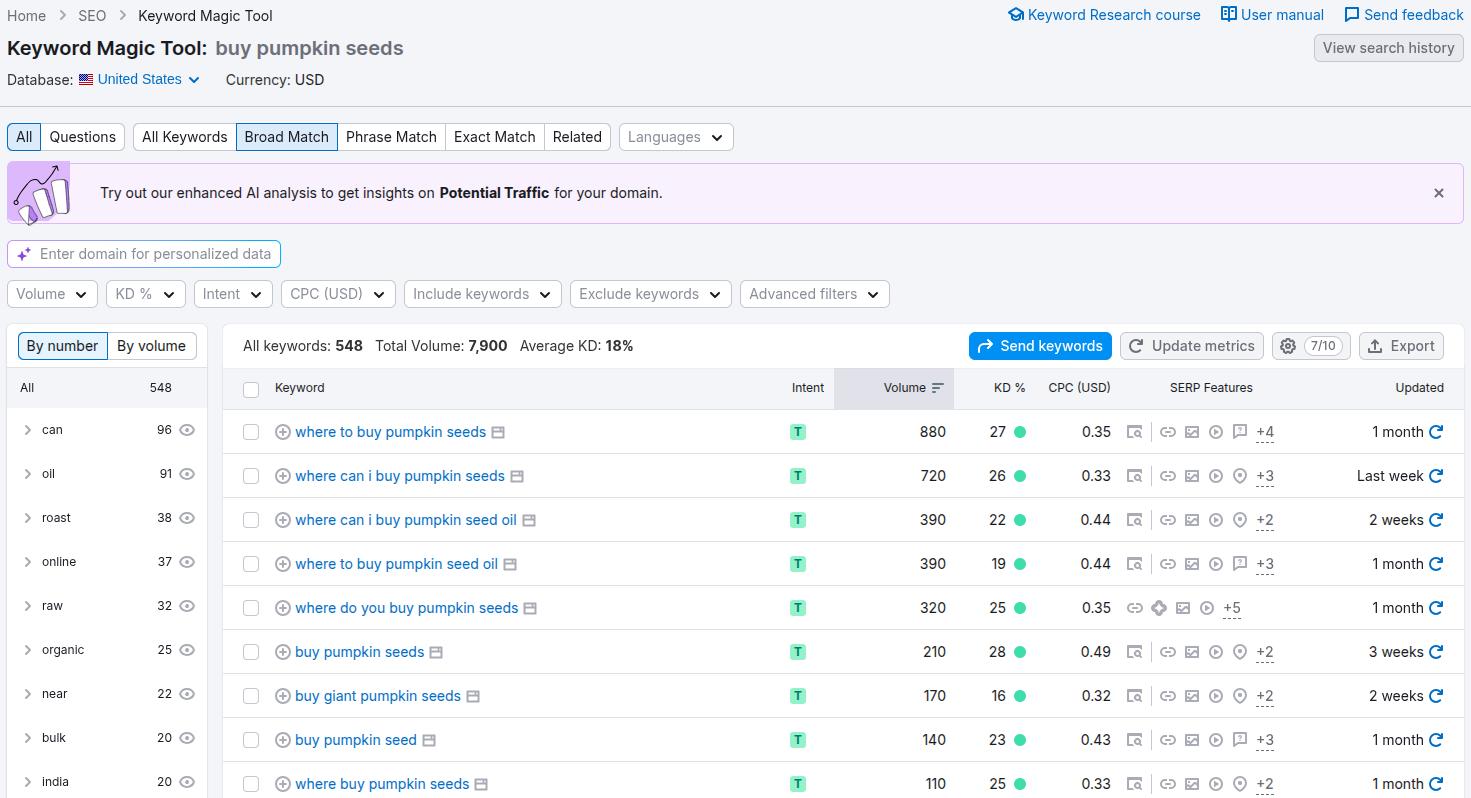
You can see the ‘Transactional’ intent (T) labelled with all the supporting keywords for our seed phrase. You can also see the search volume and cost-per-click (CPC) for the respective keywords.
Contentpen’s keyword researcher
Contentpen is a powerful AEO SEO tool that not only performs keyword research but also writes the content for it.

Automated keyword research
Work on keywords worth writing for
Get search terms with real ranking potential, not just high volume.
Try Keyword Research for FREE →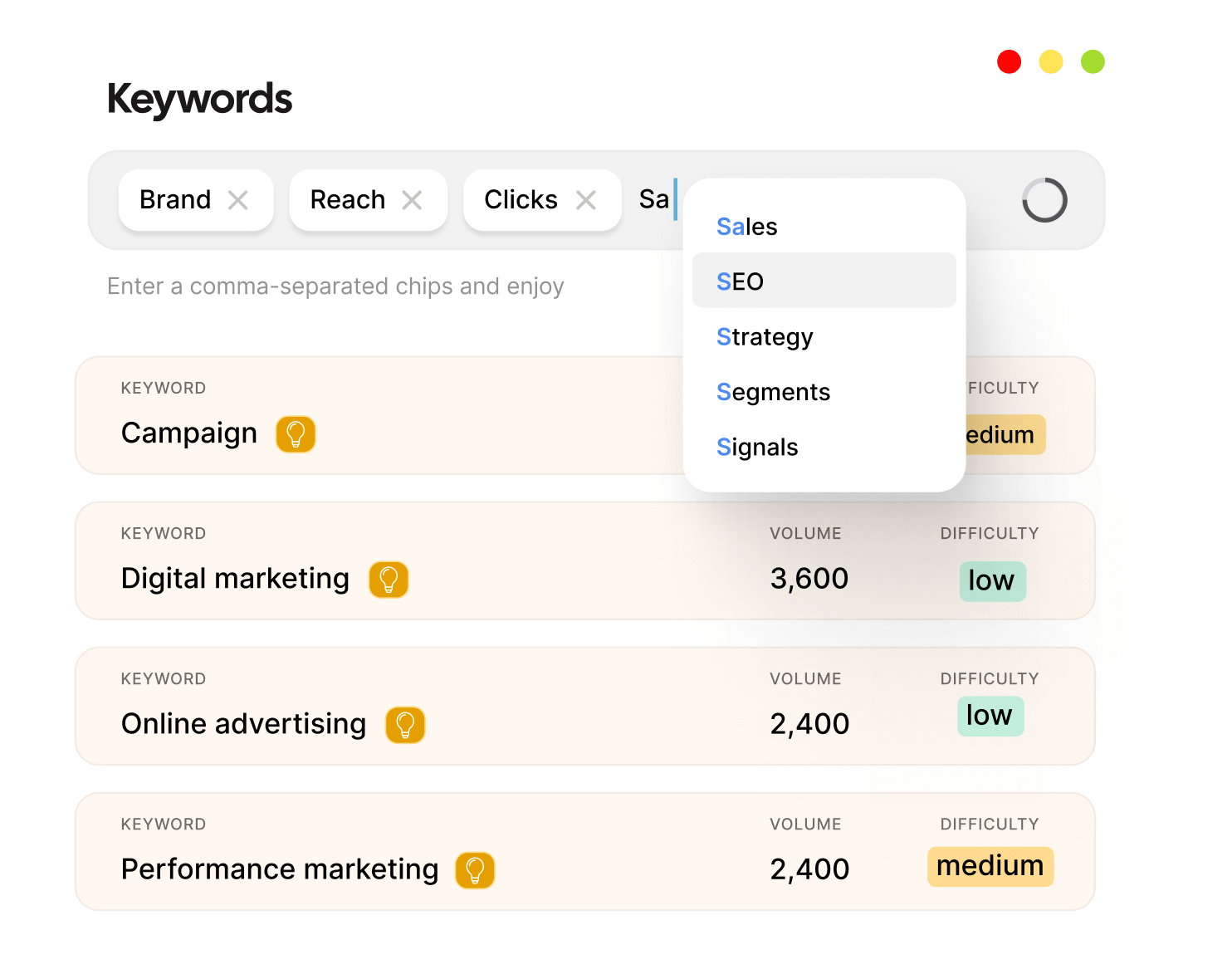
The tool satisfies the search intent for you by analyzing the competitors and top SERP results and making comprehensive pieces that rank and convert.
All you have to do is add your keywords, either manually, through Semrush or Ahrefs, or let AI create them using your content pillars.
Once your keywords are added, you can see their keyword intent, CPC, search volume, keyword difficulty, and difficulty score in a row format.
Then, you can use the ‘Generate Article’ button to instantly create content according to the keyword intent and attract the ideal visitors to your pages.
Related read: How to create a blog in less than 10 minutes using content presets.
Mixed intent keywords: When one query has multiple goals
Not every search fits neatly into a single intent category. Some queries show a mix of results, which means users may want different things at the same time.
For example, a keyword like “email marketing tools” can return comparison listicles, tool homepages, and even beginner guides in the same SERP. This is known as mixed or dual intent.
In such cases, Google is testing multiple content formats to see what satisfies users best.
To handle mixed intent keywords effectively:
- Identify the dominant intent by analyzing the top 5–10 results
- Look for patterns in content type (are most results listicles, tools, or guides?)
- Align your page with the majority intent, not the minority
If the SERP is evenly split, you can combine formats. For instance, a “best tools” article can include brief explanations for beginners while still focusing on tool comparisons.
Mixed-intent keywords are common in competitive niches, and handling them correctly can give you an edge over pages that target only one angle.
How to optimize content for every common type of search intent
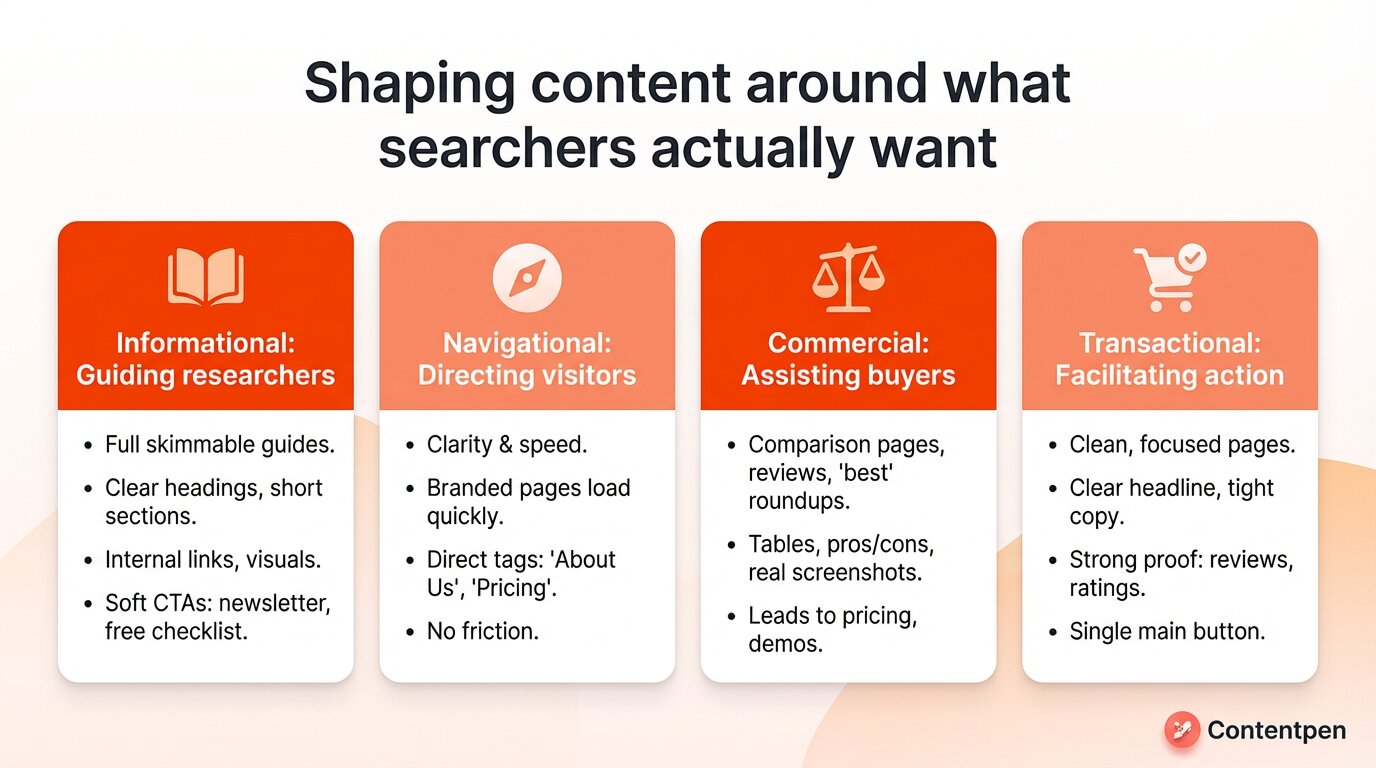
Keyword intent optimization is not just about adding the right phrase into a headline. It covers the full experience on the page: format, layout, depth, and the next step a user may ask for.
When you line these elements up with what the visitor wants, you increase your chances of decreasing bounce rates and improving conversions.
For each intent type, shape your content like this:
Informational
Create full, easy-to-skim guides that answer the main question fast and then go deeper.
Use clear headings, short sections, internal links, and visuals where they help. Calls to action should stay soft, such as a newsletter signup, a free checklist, or a gentle suggestion to read a related article.
Navigational
Focus on clarity and speed. Your branded pages should load quickly to avoid user frustration.
Use direct keyword intent tags like “About Us” or “Pricing” in content and match the wording people type into Google to help them arrive where they want. The job here is to get visitors to the right spot with no friction.
Commercial
For commercial intent, write comparison pages, reviews, and “best” roundups that feel honest and specific.
Tables, pros and cons, and real screenshots help people choose. Good calls to action lead to pricing, demos, or deeper product pages, not an instant hard sell. This B2B SaaS SEO case study shows intent-matched content lifting non-branded traffic and CTR.
Transactional
Lastly, for transactional intent, keep pages clean and focused. Use a clear headline, tight copy, strong proof like reviews or ratings, and a single main button for the action you want.
How can Contentpen help you implement the right keyword intent?
If you’ve already written a piece and are wondering, ‘Why aren’t the numbers coming in?’, it’s probably time to optimize with Contentpen.
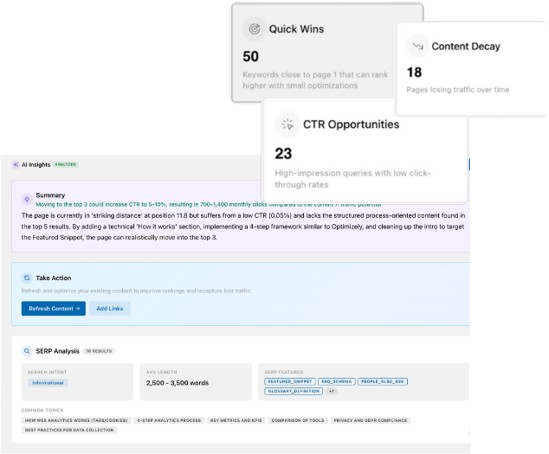
- Open up your dashboard and go to the ‘Opportunities’ tab. If you’ve already set up your Google Search Console, then you’ll see some article tiles displayed here.
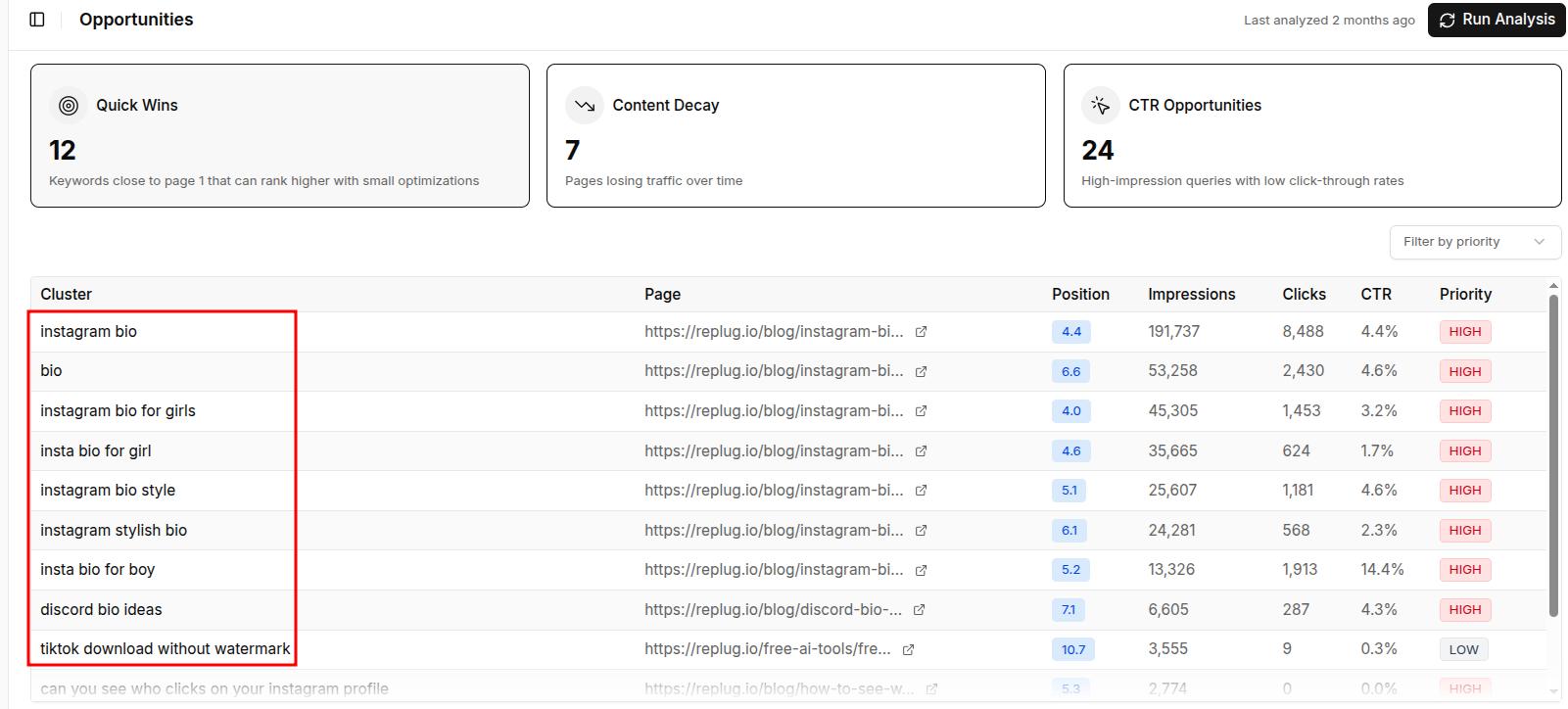
- Click any of the articles you wish to see the AI-powered insights for, and a new screen will open.
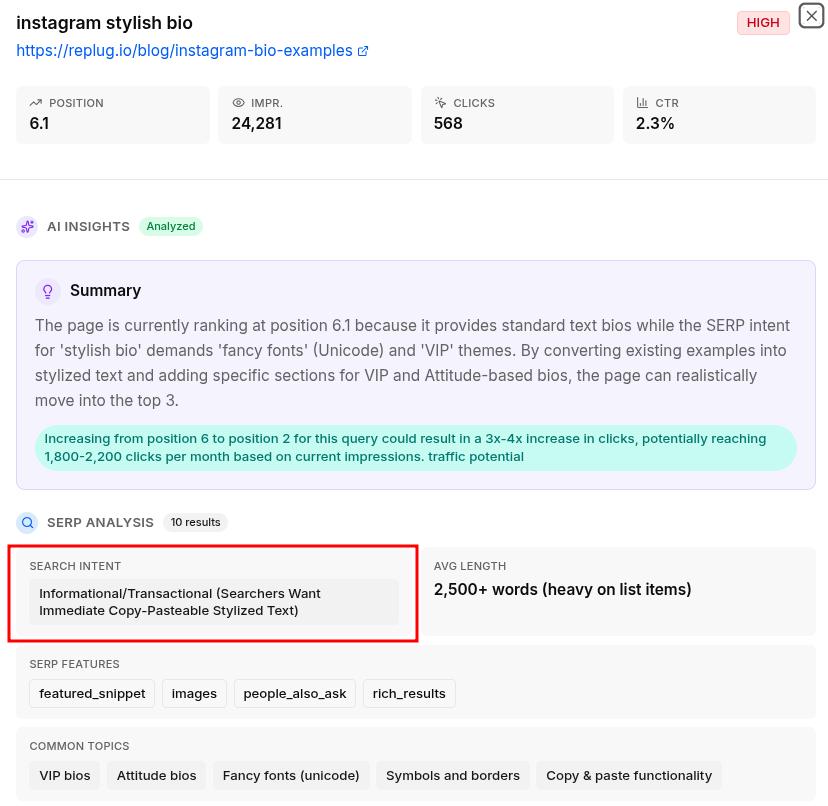
- Here, you can learn what’s not working for your page, including an intent mismatch, missing sections, aesthetic shortcomings, and more.
- Now, you can address those issues by refreshing an existing article in Contentpen or starting from scratch, building up the content using our ‘Ask AI’ assistant.
Remember to treat keyword intent types as a checklist each time you write or refresh a page.
Keyword intent mistakes and how to avoid them
Even when you understand keyword intent and know how to use SEO tools, you can still have small missteps that prevent your content from ranking or converting.
Here are some of the most common issues that we’ve found while analyzing pieces, mostly in the SaaS niche.
- Targeting the wrong intent: Writing a blog post for a keyword that clearly shows product pages in the SERP will make it hard to rank, no matter how good the content is.
- Ignoring SERP signals: Skipping manual SERP analysis and relying only on assumptions or only on tools often leads to mismatched content.
- Forcing conversions too early: Pushing a hard sell on informational pages can increase bounce rates and reduce trust. You can sandwich your CTAs smartly: provide some value to the user, then pitch in with your solution.
- Not updating content as intent shifts: Search intent can evolve over time. A keyword that once showed guides may later favor tools or product pages. So keep checking SERP results to stay updated.
Avoiding these mistakes helps ensure your content aligns with what users actually want, not just what the keyword suggests.
What we’ve learned about keyword intents
Keyword intent is the quiet factor that decides whether your content works.
When you match informational, navigational, commercial, and transactional intent with the right format, depth, and call to action, you serve searchers better and give Google clear reasons to rank you.
That same alignment improves audience engagement and makes it far more likely that visitors will buy, book, or subscribe to your content.
If you are not sure where your current pages stand, use Contentpen’s SEO opportunities to get a detailed analysis and write according to what’s required.
Turn existing content into growth opportunities

Identify pages losing traffic or CTR
Find quick wins to improve clicks and rankings