 17 minutes
Most marketing failures happen not because of bad ideas, but because teams skip the fundamentals. In 2026, that mistake costs more than ever.
Marketing isn’t just ads, social posts, and catchy slogans. In reality, it is a system built on research, clear positioning, testing, and continuous improvement.
While it is true that AI has made the work of digital marketers quite easy, you still need to learn the digital marketing fundamentals to be effective in selling.
Establishing the basics of digital marketing can also help you maintain a lasting connection with your audience, which increases long-term returns for your business.
This post covers the digital marketing essentials and introduces Contentpen as a tool to help with SEO-optimized content to improve outreach and visibility. By the end, you will have a clear, practical view of marketing fundamentals and a simple checklist to plan better campaigns.
So, let’s get started.
Table of contents
What is marketing?
Marketing is the process of identifying, attracting, engaging, and retaining customers by delivering value that meets their needs.
It is done to:
- Create brand awareness
- Drive revenue
- Generate leads
- Convert leads to buyers
- Establish customer loyalty
Many still think marketing is just paid advertising. However, it is about connecting with your audience’s pain points: understanding the problems they face and providing solutions through your offerings.
“Marketing is no longer about the stuff that you make, but about the stories you tell.” — Seth Godin
Digital marketing vs traditional marketing
Traditional marketing means reaching prospects through offline modes, such as billboards, print ads, and TV commercials.
Digital marketing focuses on reaching customers through digital channels, such as email, social media, and search engines.
The marketing mix: Understanding the 7 Ps of marketing
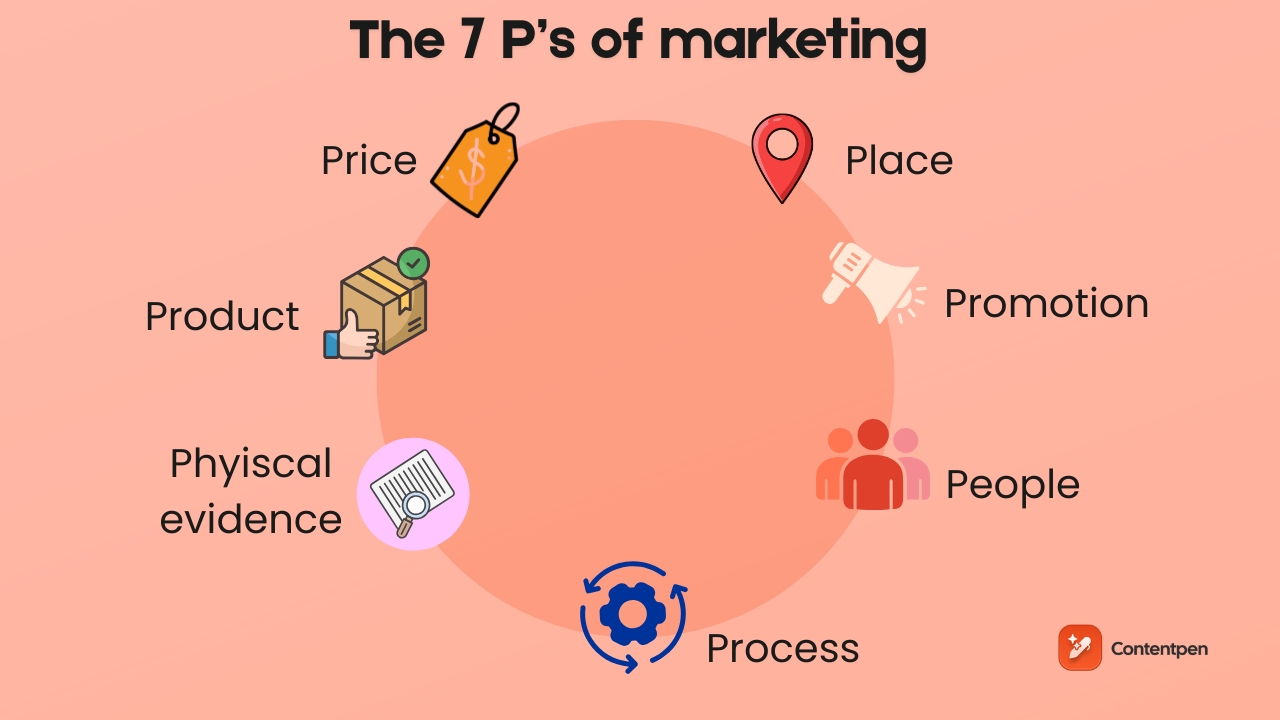
The marketing mix is a classic framework that helps beginners and even professionals think through every part of a marketing strategy.
It began as the 4 Ps of marketing, introduced by Professor Jeromy McCarthy in 1960. Now, the new, extended 7 P framework works well with new digital marketing tools and acts as a checklist for marketing teams and agencies.
When used well, the 7 Ps of marketing keep campaigns grounded in reality. They force clear answers to basic questions such as what is being offered, who it helps, how people get it, and what the buying experience feels like.
When any one of these areas is weak, even the greatest creative ideas and thoughts struggle to perform.
#1: Product
Product is the starting point for every plan. It covers what is being sold, what problem it solves, and why someone should care.
Strong content marketing fundamentals begin with a deep understanding of the product and not just its features. It focuses on the outcomes it creates for a specific group of people, even if the cost is high.
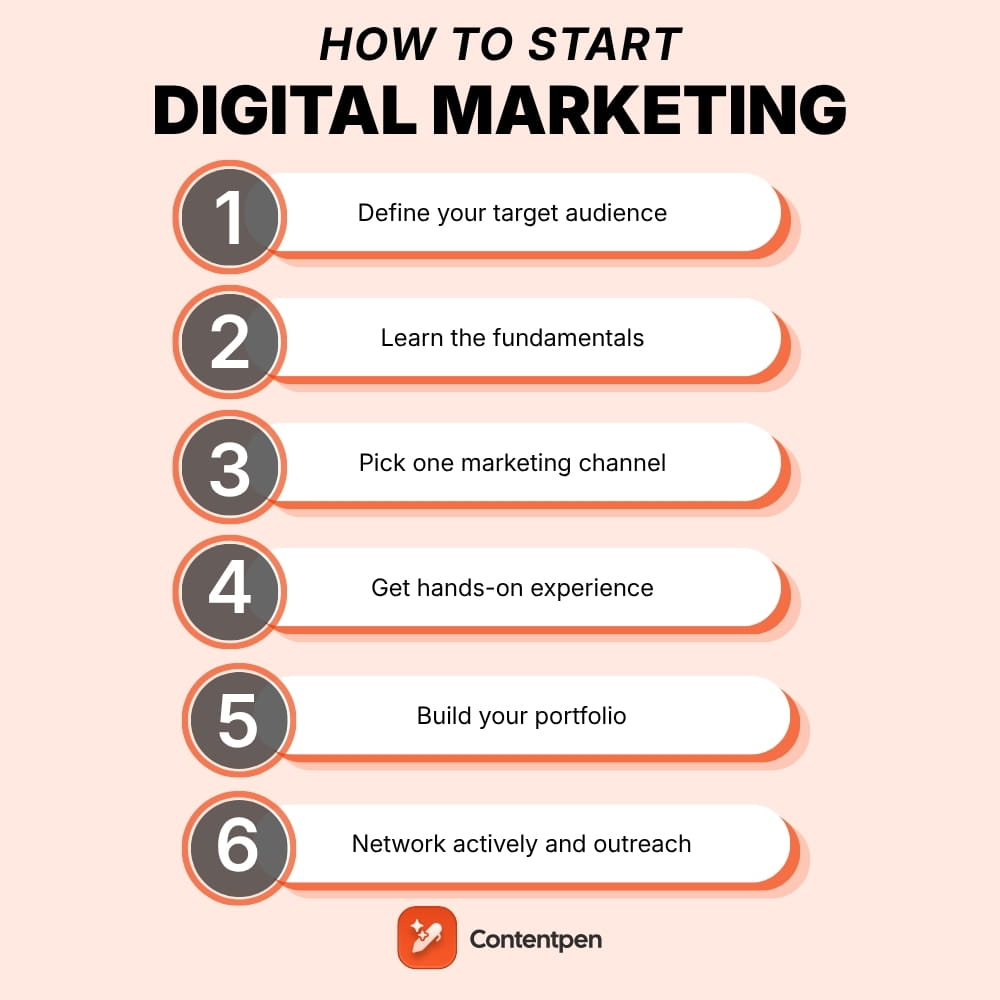
Also read: How to start digital marketing as a beginner.
#2: Price
Price sends a signal about quality and positioning. A premium price suggests high value, while a lower price suggests accessibility for the general public and affordability. Keen professionals look at perceived value, competitor pricing, and audience expectations before choosing a pricing model.
For example, a B2B tool might use a monthly subscription with tiers, while a consumer product might lean on simple flat pricing with occasional promotions that do not weaken long-term perceived value.
#3: Place
Place refers to where and how customers access the offer. That can mean a physical store, a website, a marketplace, or a mix of these.
The same product can feel completely different depending on where it appears. A product listed on a polished, fast site with clear copy seems trustworthy, while the same item on a clumsy site feels risky.
#4: Promotion
Promotion covers every way a brand communicates with its audience. That includes ads, social posts, blog articles, events, and emails such as welcome sequences and newsletters.
The key is that all promotional activities should align with the other Ps. If a product is positioned as high-end but promoted with low-effort messages, the signal becomes mixed, and results suffer.
#5: People
People include everyone involved in the customer experience. That ranges from sales teams and support reps to account managers and founders who post on social media.
One-off conversations, chat replies, and help desk emails all shape how a user “feels” about your brand. Once that feeling is associated, it’s hard to forget.
#6: Process
Process describes how the product gets into customers’ hands and what the experience feels like along the way. For an e-commerce shop, this might mean clicking an ad to check out and proceed to delivery. For a service-based business, it could mean onboarding users, providing updates, and promptly reporting to the stakeholders.
Clear, simple steps reduce friction and build trust for brands.
#7: Physical evidence
Physical evidence is the visible proof that a brand exists and is professional. For digital-first companies, this might be the design of their website, the quality of their content, or the way packaging looks when something arrives.
For physically active companies, this means showing up in neighborhoods through local SEO and creating outlets that attract buyers and encourage them to visit and come in.
Together, the 7 Ps of marketing shape the full experience a customer remembers and talks about to their inner circle, including friends and family. Over time, these experiences shape your brand image, which can either uplift or haunt you in the future.
Common types of marketing you should know
There are many ways to approach marketing, and no single method fits every case. Most effective plans combine several types at once.
B2C marketing
Business-to-consumer (B2C) marketing focuses on individuals buying for their own needs. These campaigns often aim for reach and emotional appeal. Messages highlight convenience, fun, status, or comfort, and the buying cycle is usually short.
A clothing brand, for example, might rely on visual social posts, simple offers, and influencer partnerships to drive sales.
B2B marketing
Business-to-business (B2B) marketing targets organizations instead of individuals. Here, purchases tend to be larger and slower, with multiple people involved in the decision.
In B2B marketing, messaging leans on logic, return on investment, risk reduction, and long-term support. Channels often include LinkedIn, webinars, case studies, and detailed guides that show expertise.
A useful way to compare B2C vs B2B marketing would be to look at these aspects:
| Aspect | B2C Marketing | B2B Marketing |
| Target audience | Individual consumers | Businesses and organizations |
| Buying motive | Emotion, lifestyle, and personal desire | Logic, ROI, performance, and risk reduction |
| Purchase value | Lower, individual purchases [focus on frequency] | Higher, bulk, or contract-based purchases [focus on maximizing value] |
| Decision process | Usually one person | Multiple stakeholders involved |
| Sales cycle | Short and fast | Longer and more complex |
| Message style | Simple, emotional, aspirational | Detailed, data-driven, evidence-based |
| Primary channels | Social media, ads, influencers, email | LinkedIn, webinars, case studies, whitepapers |
| Content focus | Entertainment, brand appeal, quick benefits | Expertise, long-term value, problem-solving |
| Relationship focus | Short-term conversions | Long-term partnerships and support |
For example, the same software product might be sold directly to consumers as a simple tool and to companies as a productivity gain with numbers to back it up.
Learn more: Types of digital marketing worth knowing in 2026.
Outbound marketing
Outbound marketing is the classic push style of marketing. A brand reaches out first through channels like display ads, TV, radio, direct mail, or cold outreach.
This approach can help build broad brand awareness and works well when speed is more important than precise audience or market targeting. The thing is that some people find outbound marketing clingy, which is why your message must be clear and concise so that you get the most out of your efforts.
Inbound marketing
Inbound marketing is a pull-style marketing approach where you generate leads by attracting people with valuable content and experiences they seek.
For inbound, you can include blogging, podcasting, video series, and search-friendly resources that answer real questions. Over time, this builds trust and turns strangers into subscribers and repeat customers of your brand.
In practice, it is not about inbound vs outbound marketing; it is about mixing both methods well for maximum return on investment:
- Use outbound to reach new audiences quickly.
- Use inbound to educate, build trust, and nurture those audiences until they are ready to buy.
Search engine marketing (SEM)
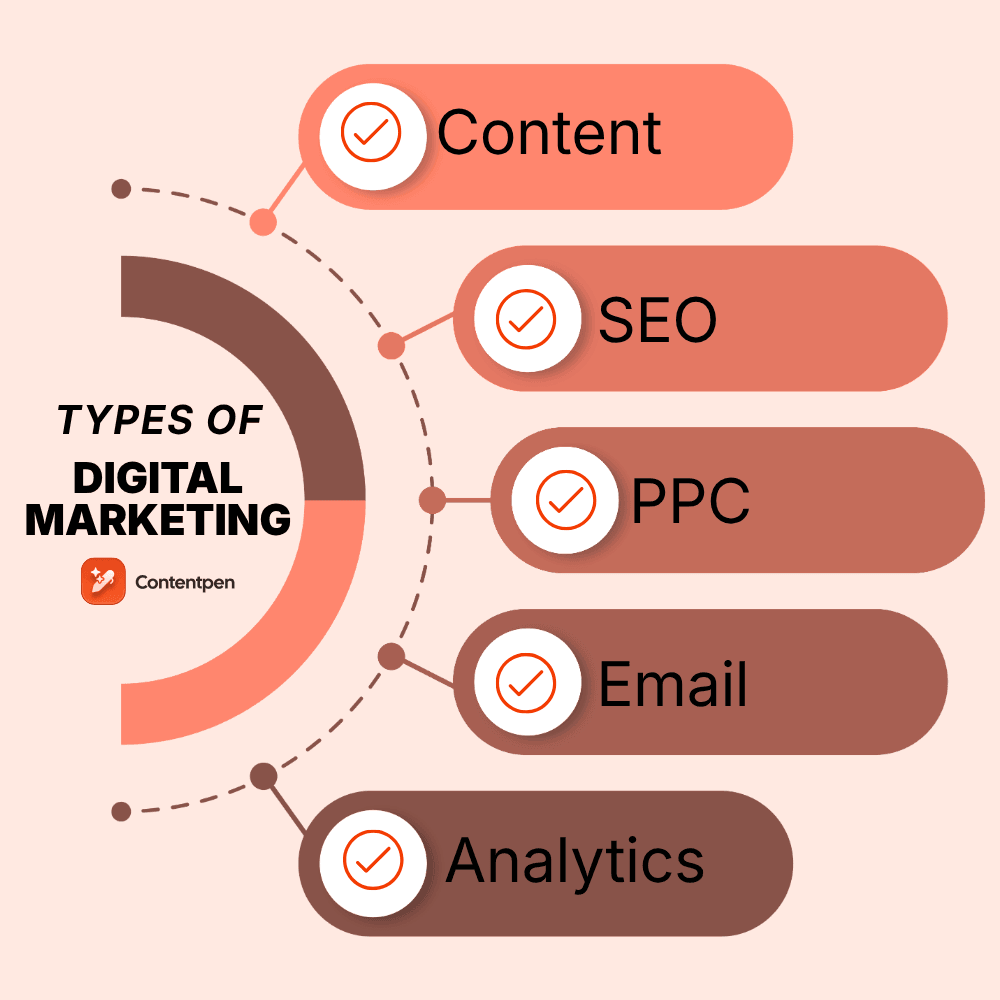
Search engine marketing (SEM) is the practice of driving website traffic from search engines through paid ads (PPC), organic search engine optimization (SEO), or both.
SEO includes using the right keywords in the right manner (headings, metadata, body content, anchor text, image alt text) throughout your website. It also includes using a fitting slug or URL for each page and setting up a proper site hierarchy through breadcrumbs and internal linking.
While organic SEO is slow and steady, PPC (pay-per-click) marketing can deliver immediate results through paid ads.
Here’s how both of these look in a real search result:
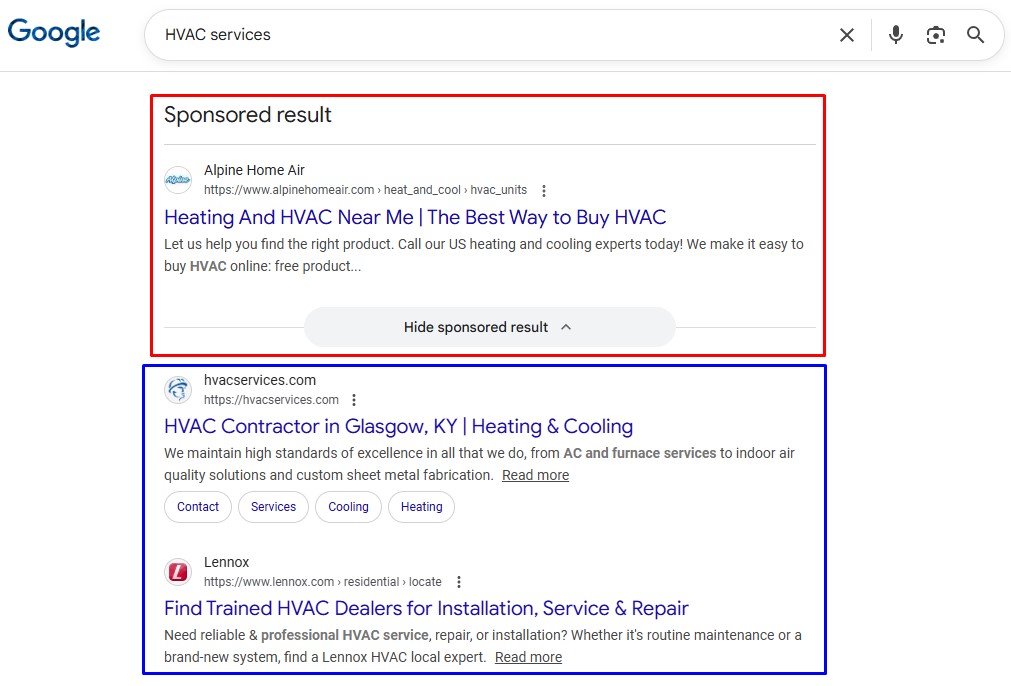
The results in the red box are sponsored (PPC), so regardless of their SEO, they will appear on top for a particular search query. Meanwhile, organic SEO can be a bit tricky and time-consuming to apply, but it does provide long-lasting results for your business.
Content marketing
Content marketing is one of the digital marketing essentials. It uses articles, guides, videos, and other formats to educate and support an audience.
Content marketing is all about being customer-centric. This means keeping the audience at the heart of the content and addressing their queries as they arise. According to Dr. Jeff Haddox, good content should include storytelling to engage and inform customers appropriately.
AI-powered platforms such as Contentpen make content marketing much easier by helping teams create SEO-friendly articles and campaign content at scale while maintaining a consistent brand voice.

Write content that’s built to rank, not just read
Create search-optimized blogs aligned with SEO and GEO signals, so your content performs well across search and AI-driven discovery.
Try SEO Blogging FREE →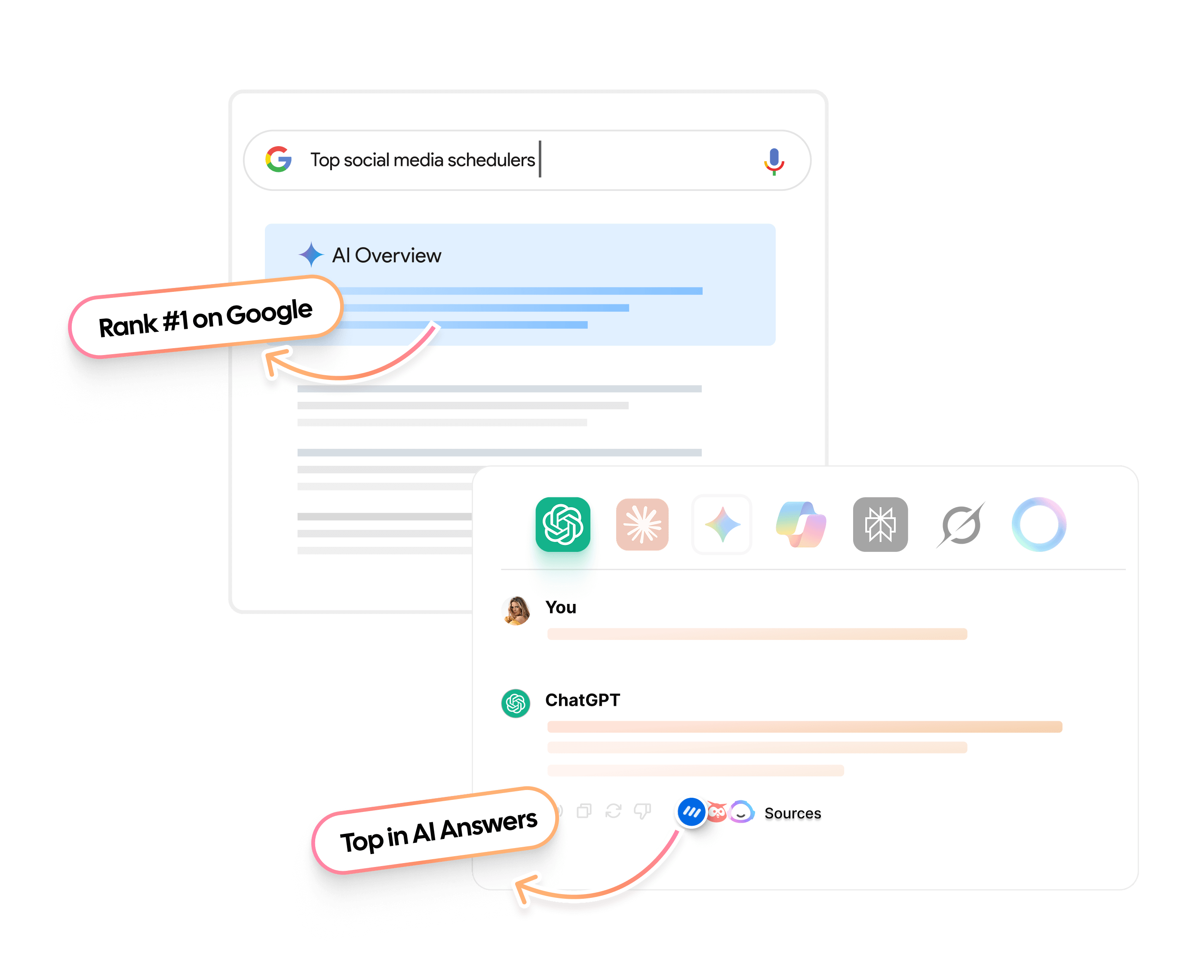
Email marketing
Email marketing connects directly with people who have already shown interest in your offerings in some manner.
With proper segmentation and personalization, emails can deliver the right message at the right time, such as onboarding tips, product updates, or special offers.
Here’s one example of how you do product updates right for better conversions:
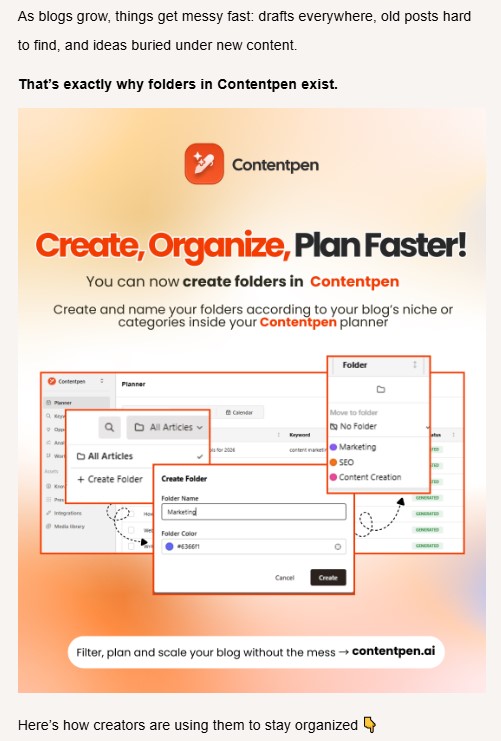
Emails encourage users to visit your website and make purchases. It remains a powerful marketing channel, with an estimated 4.73 billion users globally in 2026.
Utilizing affordable email marketing platforms allows businesses of all sizes to execute these tailored campaigns efficiently without stretching their budget.
Social media marketing
Social media marketing helps brands meet people where they already spend time. These include platforms such as TikTok, Facebook, Instagram, LinkedIn, and others.
This type of marketing uses both organic posts and paid promotion (for example, Meta Ads) to boost impressions and brand presence.
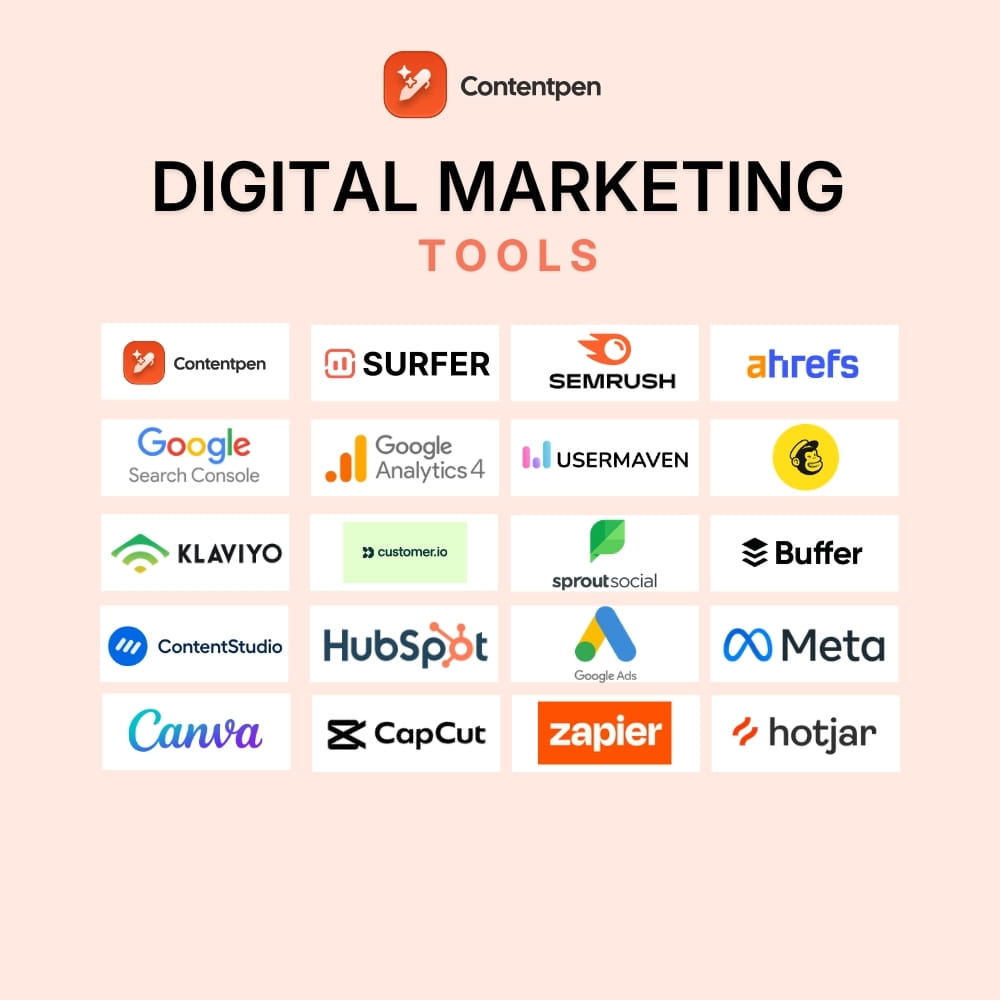
Today, you can find many tools for social media marketing to ease your workload; one we recommend is ContentStudio.
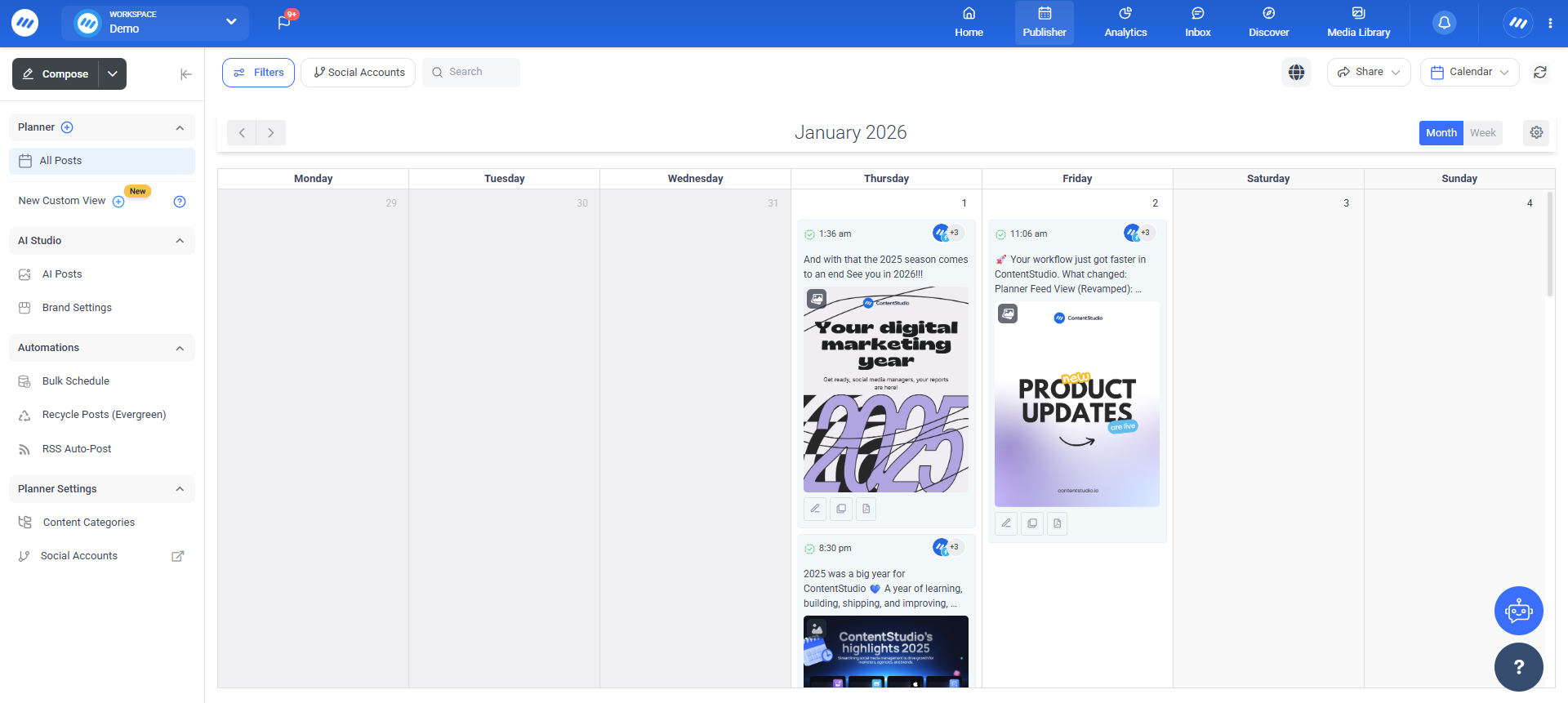
The tool provides smart scheduling and AI-powered content generation to grow your social channels without much hassle.
Affiliate marketing
Affiliate marketing extends reach by paying partners only when they drive traffic or sales. A famous example would be the Amazon affiliate program, which pays partners when a buyer makes a purchase through their link.
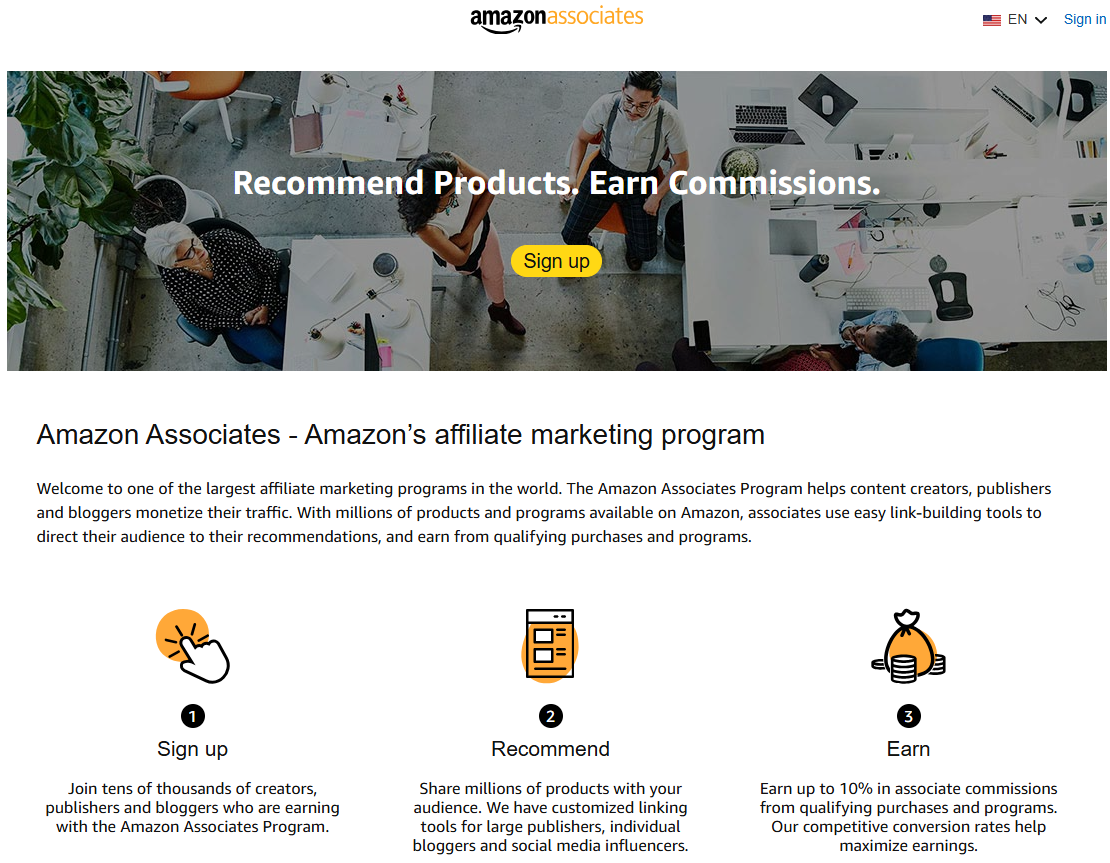
When these channels support each other, online marketing fundamentals become much easier to apply in daily work.
Building an effective marketing strategy: A step-by-step approach
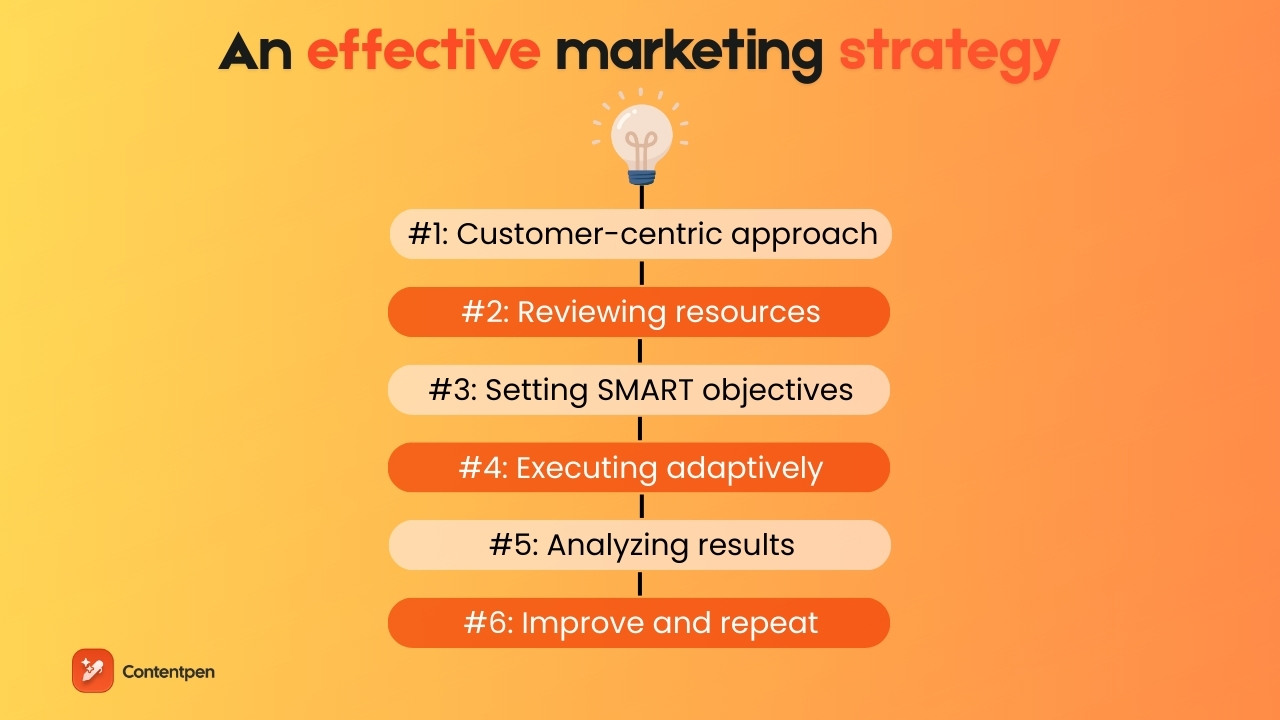
Even strong individual tactics fall flat without a clear plan. Digital marketing strategy turns marketing fundamentals into a structured path that guides teams on what to do first, what to measure, and how to adjust.
A good strategy is not a rigid document that never changes. It is a clear starting point that improves through testing and reflection.
A simple step-based approach helps any professional move from idea to action without getting stuck.
Step #1: Start with a customer-centric approach
Start with a customer-focused mindset. It is important to spend time learning who the audience is, what they care about, and what blocks them from progress.
You can use interviews, surveys, support tickets, and social comments to hear real voices from your customers. Turn these insights into short personas that guide messaging and offer design.
For instance, a fast-food chain specializing in beef burgers may receive customer feedback that the patties are often too thick or difficult to chew. They can address this feedback by making their burgers easier to swallow and by marketing with a tagline like “A juicy, tender burger that melts in your mouth.”
From this example, we can learn that getting into the customer’s mindset is important, but delivering the promised value is equally important.
Step #2: Review resources and wider environment
While providing value is essential, building a winning marketing strategy requires honesty about the budget, time, and skills required for the effort.
You may want to give the most tender burgers out there in the market, but if you don’t have the resources to do so, you can’t — not in the long run anyway.
Therefore, the goal is to pick battles that a team can realistically win instead of chasing every idea that pops into one’s head.
To review your current strengths, weaknesses, opportunities, and threats, you need to analyze your business in detail. Apply different techniques, such as the SWOT analysis, to help you out.
Through a SWOT analysis, you can also see how your competitors are winning and where you can take the lead, banking on what you do best.
Step #3: Set clear, measurable objectives
A winning marketing strategy is less about high aspirations and more about execution. This means that to achieve your objectives, you need a system you can always rely on to deliver sustainable results.
You can consider using the SMART (Specific, Measurable, Attainable, Realistic, Time-bound) framework. This means setting realistic goals you can achieve within a set time limit.
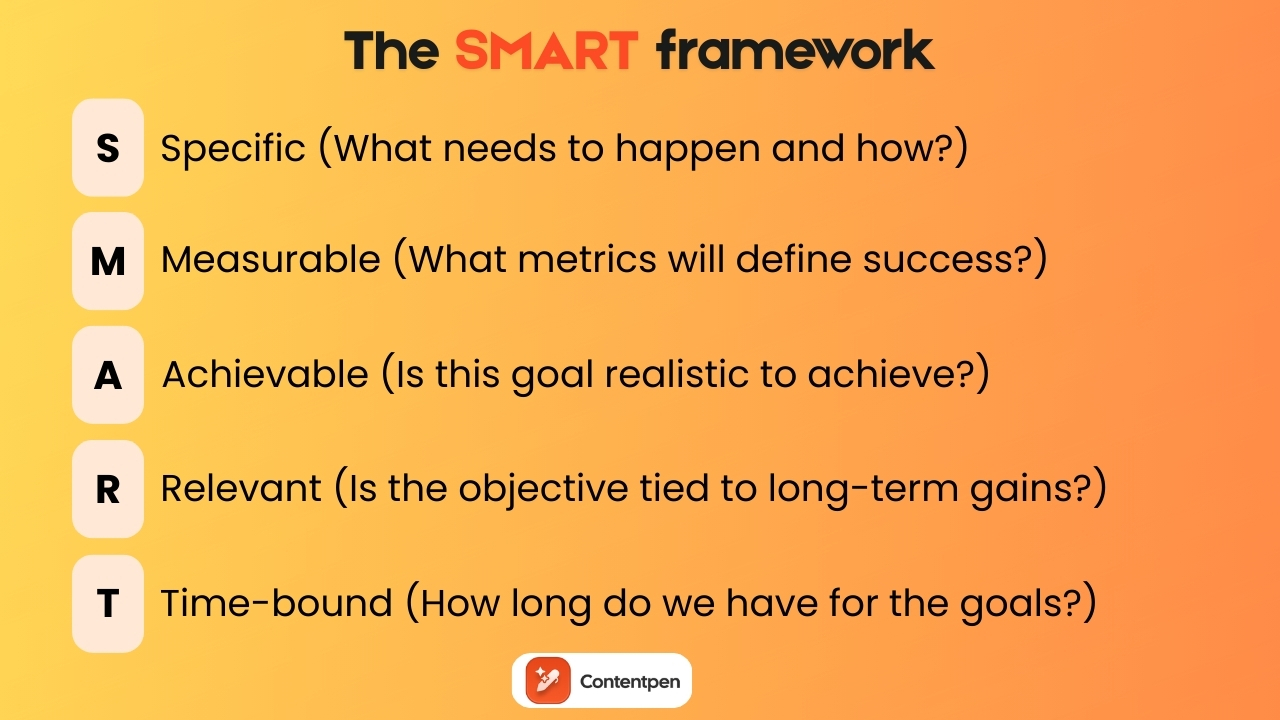
SMART dictates that rather than setting a goal of “get more leads,” a better approach can be to “add 100 qualified leads from organic search within 6 months.”
These kinds of targets make it easier to proceed with your digital marketing strategy and to assess later if a plan worked or not.
Step #4: Execute while staying ready to adapt
Once a plan is in motion, new data will appear. Teams should commit to a direction for long enough to see patterns, but not hold onto a plan that clearly fails. This fine line is difficult to tread, but not impossible.
A general rule of thumb during this stage is to do the ABCs correctly:
- Always make sure that the decision you’re making right now is aimed toward opportunity, not just defense.
- Be ready to shift gears and utilize any help you can get (consultants, peer advice, etc.)
- Catch underperforming factors or resources and try your best to replace or improve them.
While each business is unique, using guesswork is no longer an option, especially in 2026. You need data-backed decisions if you want to win the market.
This is where Contentpen comes in. With its ‘opportunities’ features, the tool helps identify decaying content pages and quick wins to help you move in the right direction with your content marketing strategies.
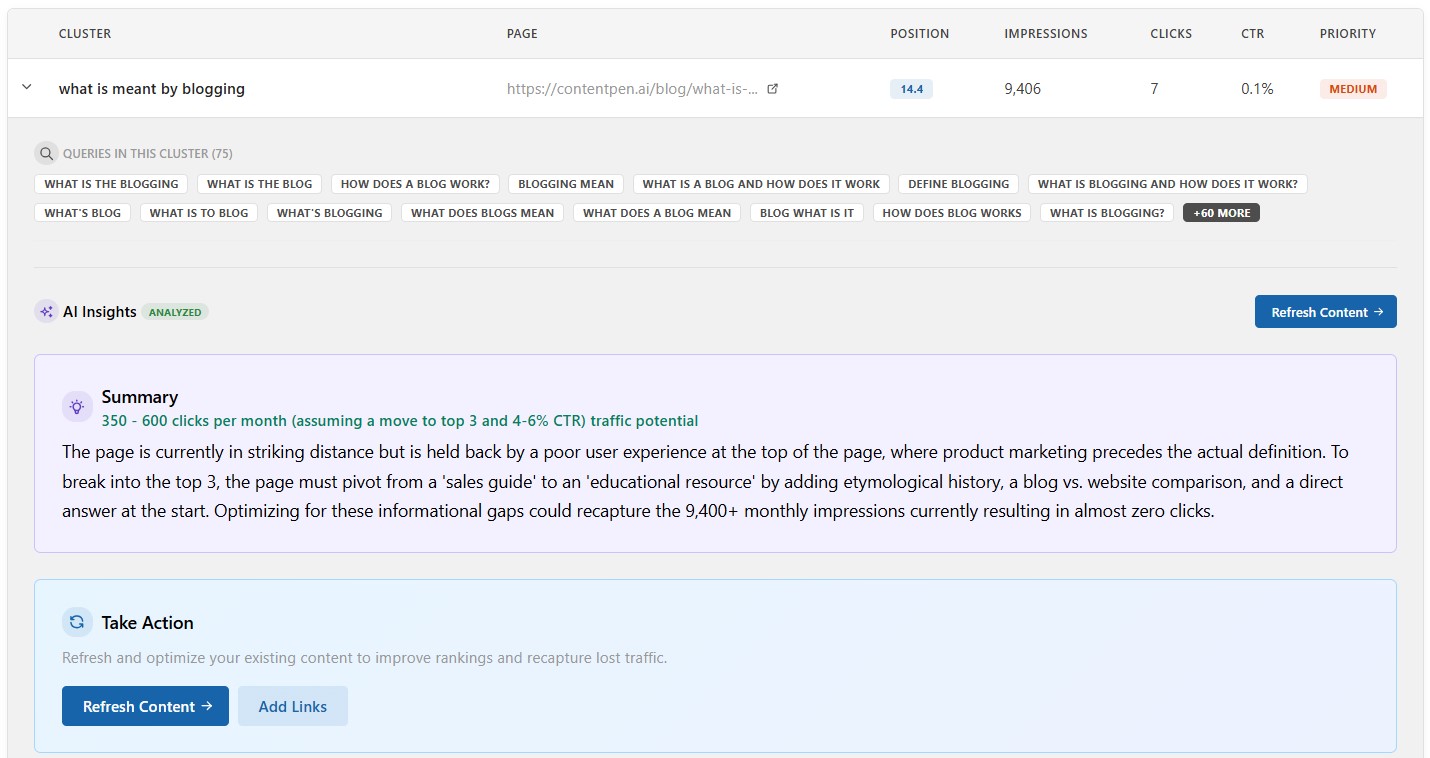
Since much of the content creation and SEO scoring is handled by the AI agents, you are free to adjust campaigns and not just wrestle with empty pages.
Step #5: Analyze results in a structured way
A marketing strategy is not effective if it’s not implemented properly. And that requires analyzing the results or the data in a proper way.
Start by checking analytics, attribution reports, and feedback. You can also hold regular review meetings to help teams see which channels and messages performed well and which still require more effort.
You can also use tools like Usermaven to view real-time analytics, user journeys, and visualize trends for building a better understanding of your data.
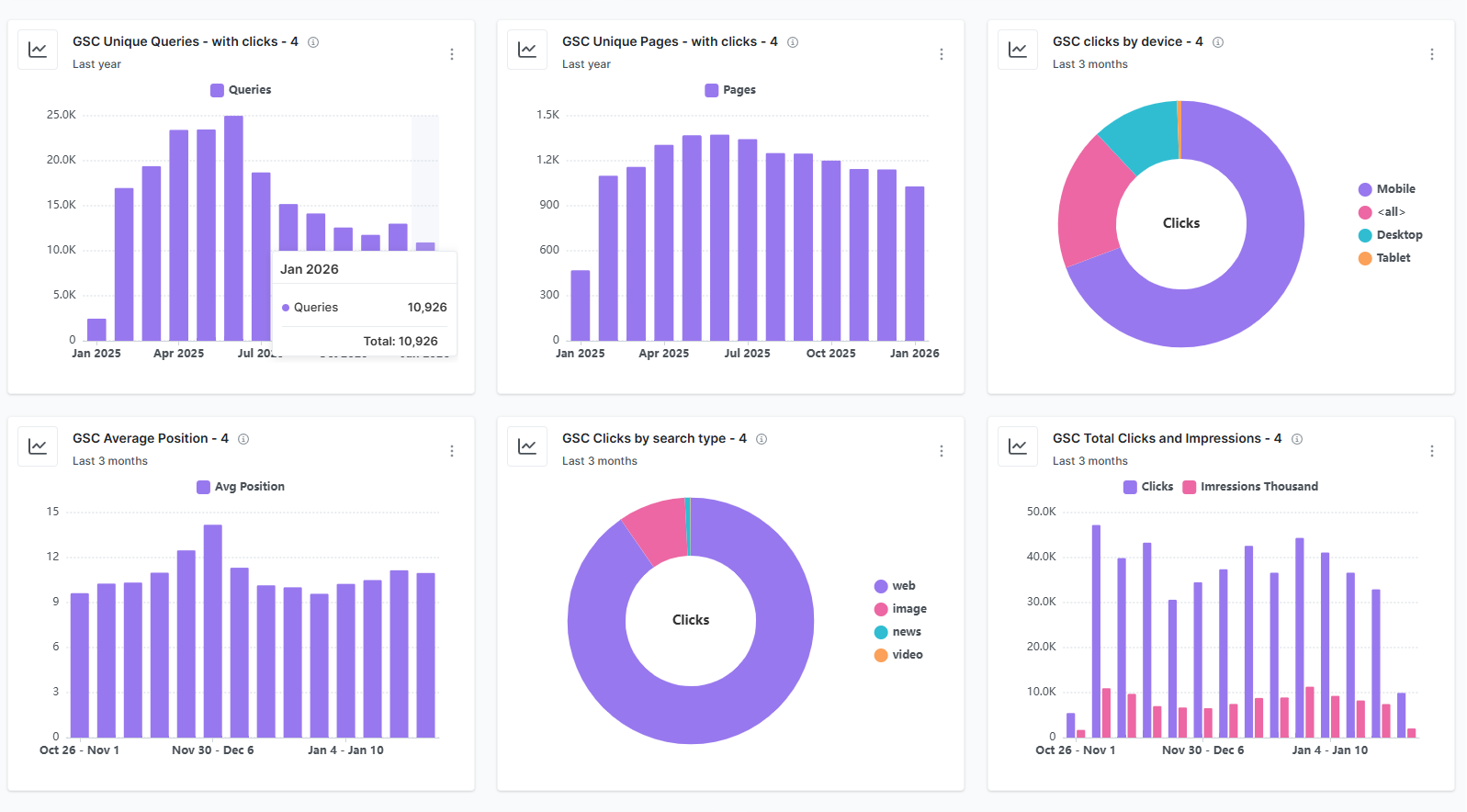
Such tools help you make better strategic decisions that pay off in the long run and support sustainable development goals for your business.
Step #6: Improve and repeat the cycle
Last but not least, keep improving your strategies and efforts, and make this a repeatable practice.
If nothing else is working, try A/B testing your content. A simple test, such as changing the subject line or call-to-action button, can reveal what people actually respond to.
Over time, this loop keeps marketing strategy fresh and helps counter the natural decline in performance that occurs when a single tactic is used for too long. This mindset keeps strategies flexible while still rooted in clear marketing fundamentals.
The future of marketing: Adapting to marketing trends and changes
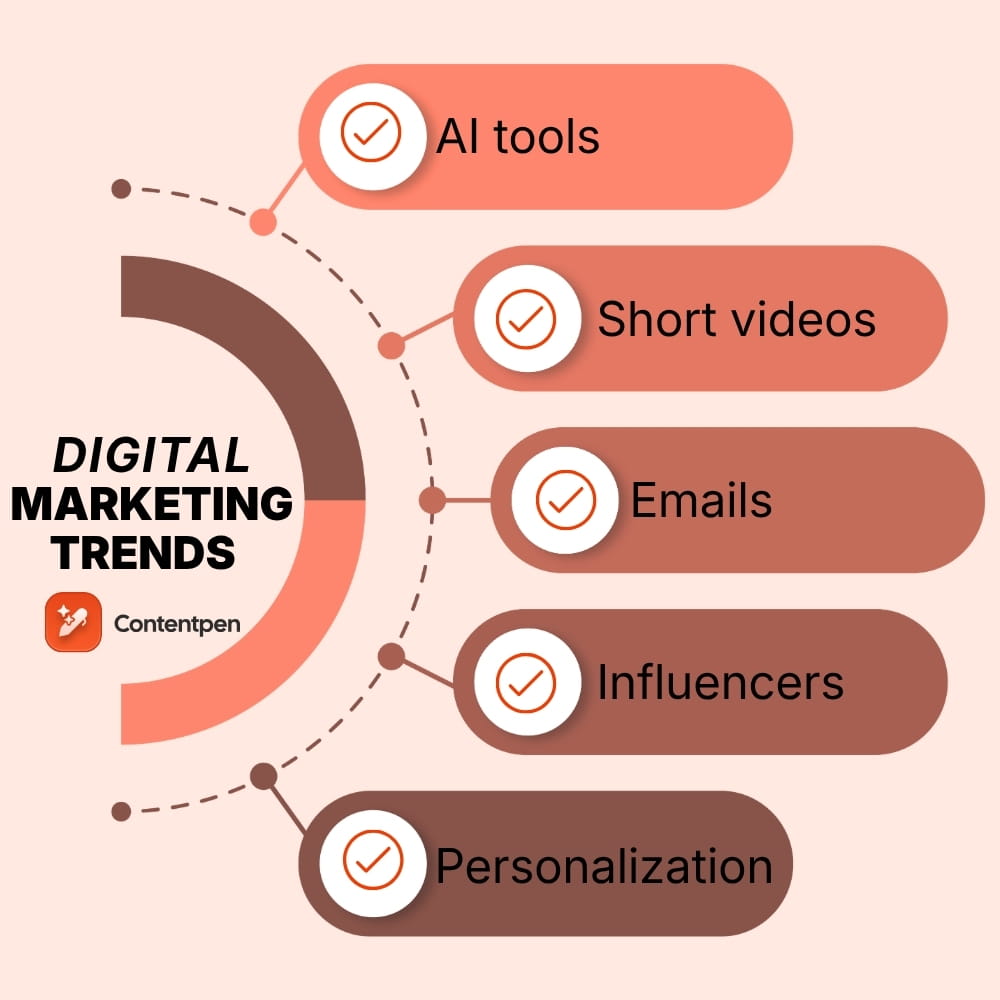
Marketing does not stand still for long. New channels emerge, audience expectations shift, and economic conditions fluctuate. In this era of hyper-personalization, professionals who hold onto strong marketing fundamentals while staying open to change tend to make better long-term decisions.
Related read: Emerging digital marketing trends 2026.
One important area is shifting demographics and culture. Younger generations may care more about social impact, transparency, and authenticity. Older groups might value stability, service, and clear guarantees.
Social movements and current events also shape how messages land. Marketers who pay attention to these changes can adjust their tone and topics, so campaigns feel timely rather than tone-deaf.
Technology is another constant source of change. Artificial intelligence, voice search, short-form video, and augmented reality (AR) are changing how people discover and interact with brands.
AI tools now support content planning, writing, image generation, and personalization at a scale that manual work cannot match.
Also read: What is a webhook?
However, marketers do not need to chase every new tool. Instead, they should understand how these shifts affect their audience and where they can gain an advantage.
Through all of this, a commitment to continuous learning keeps skills sharp. Reading current marketing fundamentals notes, taking an occasional marketing fundamentals course, and watching what top brands do build a habit of steady improvement. Over time, this becomes the difference between another casual attempt to win a niche and real success.
Final thoughts
Mastering marketing fundamentals is one of the best career investments you can make. These ideas explain why some campaigns feel smooth and effective while others burn time and budget without clear results.
With a solid grasp of customer insights, core marketing principles, and channel understanding, it becomes much easier to design content that serves both the audience and the business.
These fundamentals do not belong only to big brands or specialist teams. They guide everything from a solo creator’s email list to a large agency pitch deck.
The barrier to entry has never been lower. Books, articles, and courses make learning accessible, while an AI writing assistant online, such as Contentpen, helps turn strategy into consistent content with far less effort.