 16 minutes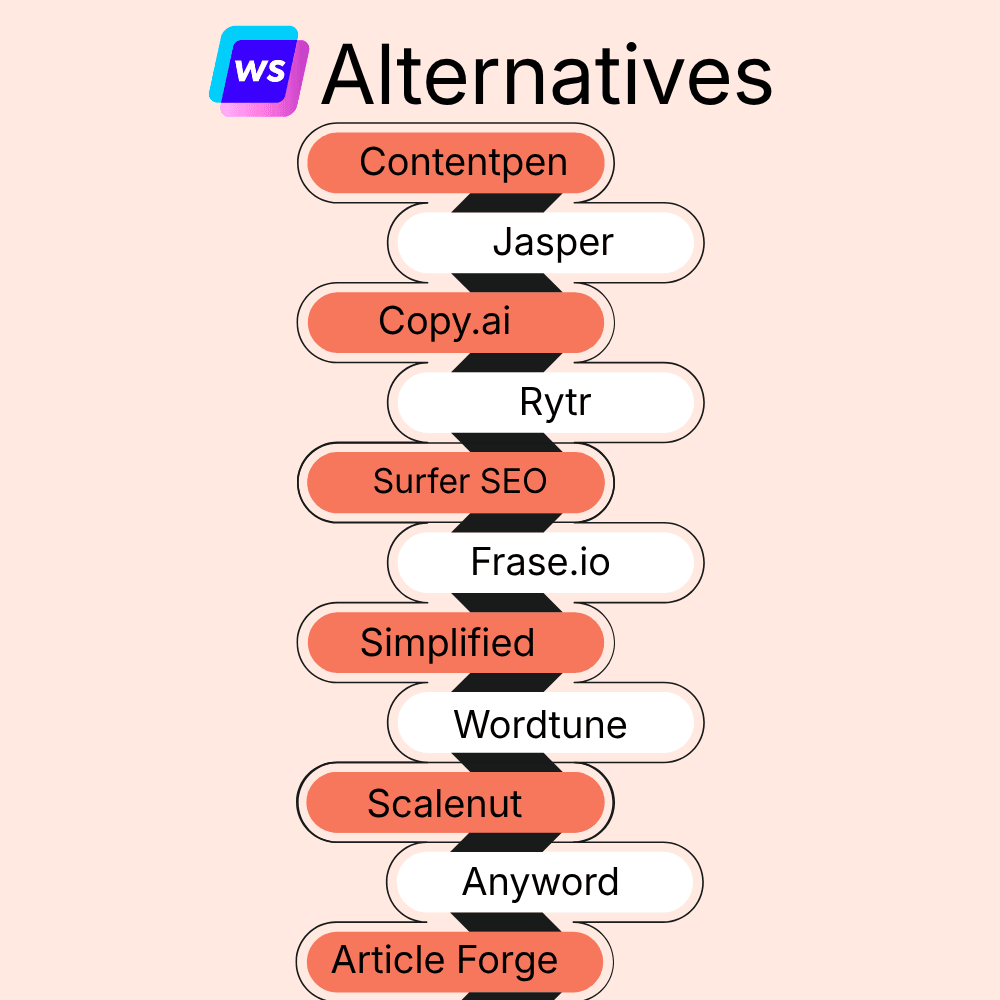
In 2026, creating content at scale is no longer optional; it’s a necessity. AI writing tools have become essential for businesses looking to produce more content quickly without compromising on quality.
While Writesonic is a popular choice, it’s not perfect. Its credit-based pricing can get expensive as needs grow, and some users report inconsistent quality with long-form content. Others feel its SEO tools fall short in ranking performance.
Fortunately, we have many more tools available today that can serve as the best Writesonic alternatives in 2026. In this guide, we’ll explore these options by comparing features, pricing, and use cases to help you find the right fit for your content goals.
So, let’s get started.
Writesonic alternatives at a glance
| Tool | Best For | Standout Feature vs Writesonic | Limitation | Starting Price (Annual) | G2 Rating |
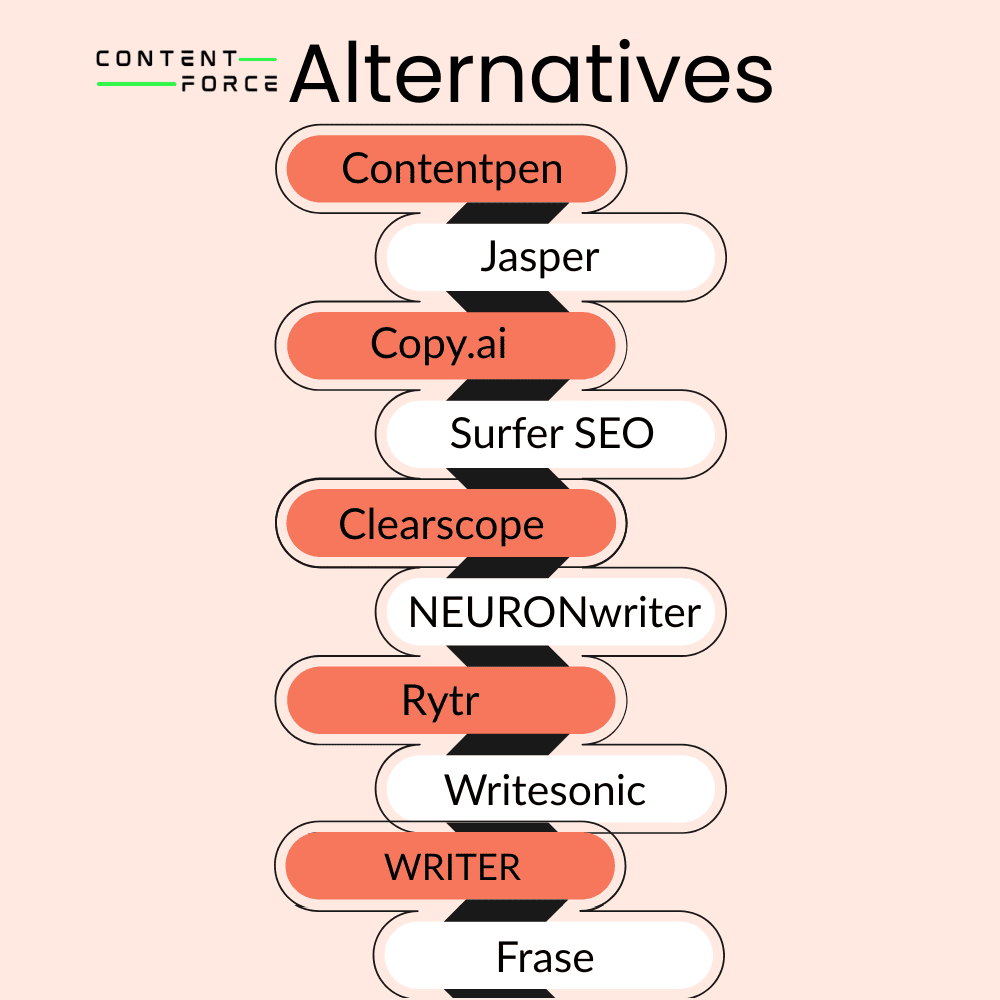
| Contentpen | SEO and GEO-optimized blogs | AI visibility tracking included in every plan, plus SEO opportunities | Blog-only focus | $39/mo | 4.9 ⭐ |
| Jasper AI | Brand-led campaigns | Advanced brand voice + extensive content templates | Expensive for SMBs | $59/seat/mo | 4.7 ⭐ |
| Copy.ai | Sales and outbound copy | Faster ad + email ideation | Weak SEO depth | $24/mo | 4.7 ⭐ |
| Rytr | Budget AI writing | Cheapest entry + simple UI | Thin long-form content | $7.50/mo | 4.7 ⭐ |
| Surfer SEO | Content optimization | NLP keyword + SERP scoring | Not a standalone AI writer | $99/mo | 4.8 ⭐ |
| Frase.io | SEO research + briefs | PAA mining + intent structuring | Occasional system lag | $39/mo | 4.8 ⭐ |
| Simplified | Comprehensive marketing workflows | Writing + design + video suite | Weak blog depth | $19/mo | 4.6 ⭐ |
| Wordtune | Rewriting & editing | Fluency + tone rewriting | Not suitable for long-form content | $9.99/mo | 4.6 ⭐ |
| Scalenut | SEO long-form | Cruise Mode + topical clustering | Complex UI | $30/mo | 4.7 ⭐ |
| Anyword | Paid ad performance | Predictive ROI scoring | Weak organic SEO features | $39/mo | 4.8 ⭐ |
| Article Forge | Full content automation | 1-click article generation | Low nuanced depth | $27/mo | 4.2 ⭐ |
Also explore: Best ChatGPT alternatives.
Why look for Writesonic alternatives?
The biggest problem with Writesonic right now is that it has started offering all the features in one place. It has an AI optimization engine, SEO audits, an AI article writer, and AI search visibility tracking.
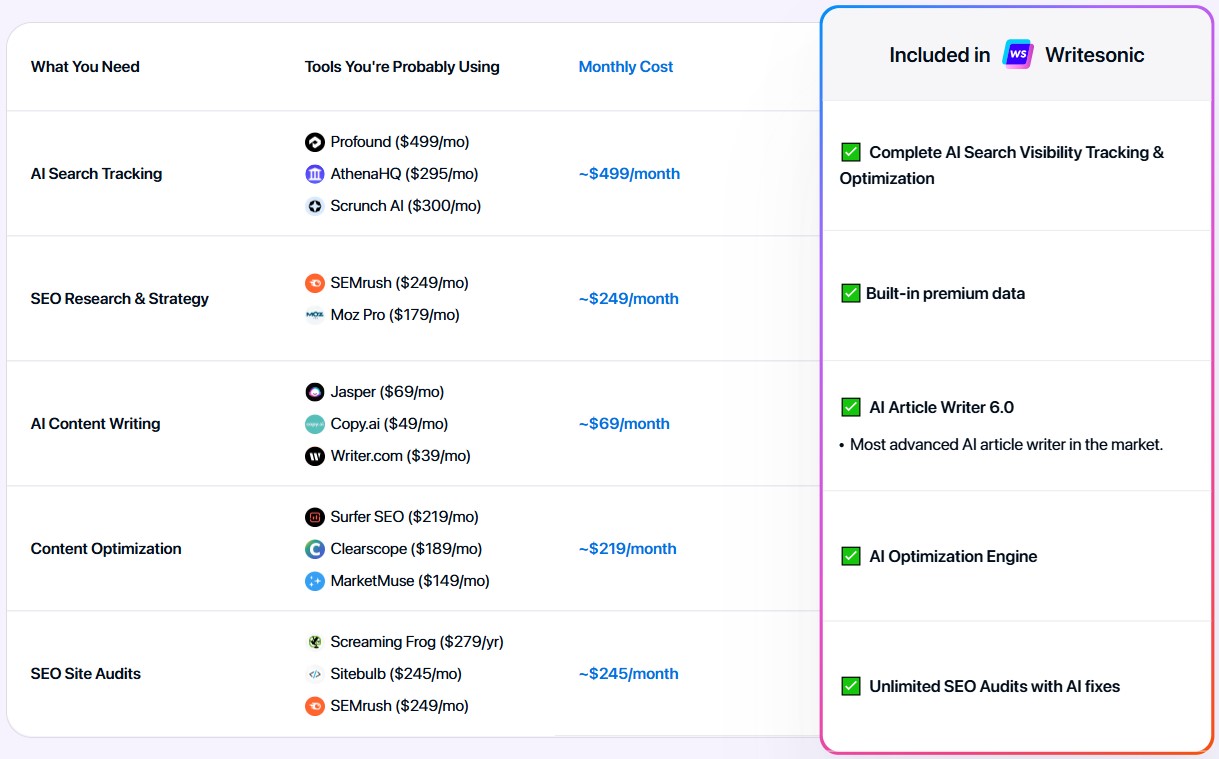
The problem is the specialization. Each aspect of SEO and GEO-optimized content is covered, but users feel that neither completely fulfils its purpose. This is why they consider Writesonic alternatives.
Other problems include cost, inconsistent quality, limited SEO, and collaboration features.
1. Cost scalability concerns
Writesonic’s credit-based pricing model can be very confusing for businesses. Also, as content requirements scale up, costs can increase dramatically, often exceeding initial budget projections.
The platform’s premium pricing for higher-quality outputs also forces uncomfortable tradeoffs between content quality and budget constraints. In such cases, the Writesonic free version is of no use.
2. Inconsistent content quality
The most frequently cited reason for seeking Writesonic alternatives is inconsistent output quality, particularly for longer-form content.
Users report that while the Writesonic article writer can produce acceptable short-form content, quality degrades noticeably as word count increases.
3. Limited advanced SEO capabilities
As search algorithms have grown more sophisticated in 2026, Writesonic’s relatively basic SEO features have fallen behind industry leaders. The platform lacks advanced capabilities for:
- Comprehensive search intent analysis
- Competitive content benchmarking and gap analysis
- Content structure optimization
- Internal linking strategy implementation
Even though Writesonic offers generative engine optimization (GEO), free users can’t access these features, at least not until they sign up to the platform.
4. Workflow and collaboration friction
Modern content production typically involves multiple collaborators, which WriteSonic lacks compared to its alternatives.
Teams report challenges with managing approval workflows, tracking content revisions, feedback implementation, and integrating with other tools.
11 alternatives to Writesonic that are worth considering in 2026
1. Contentpen
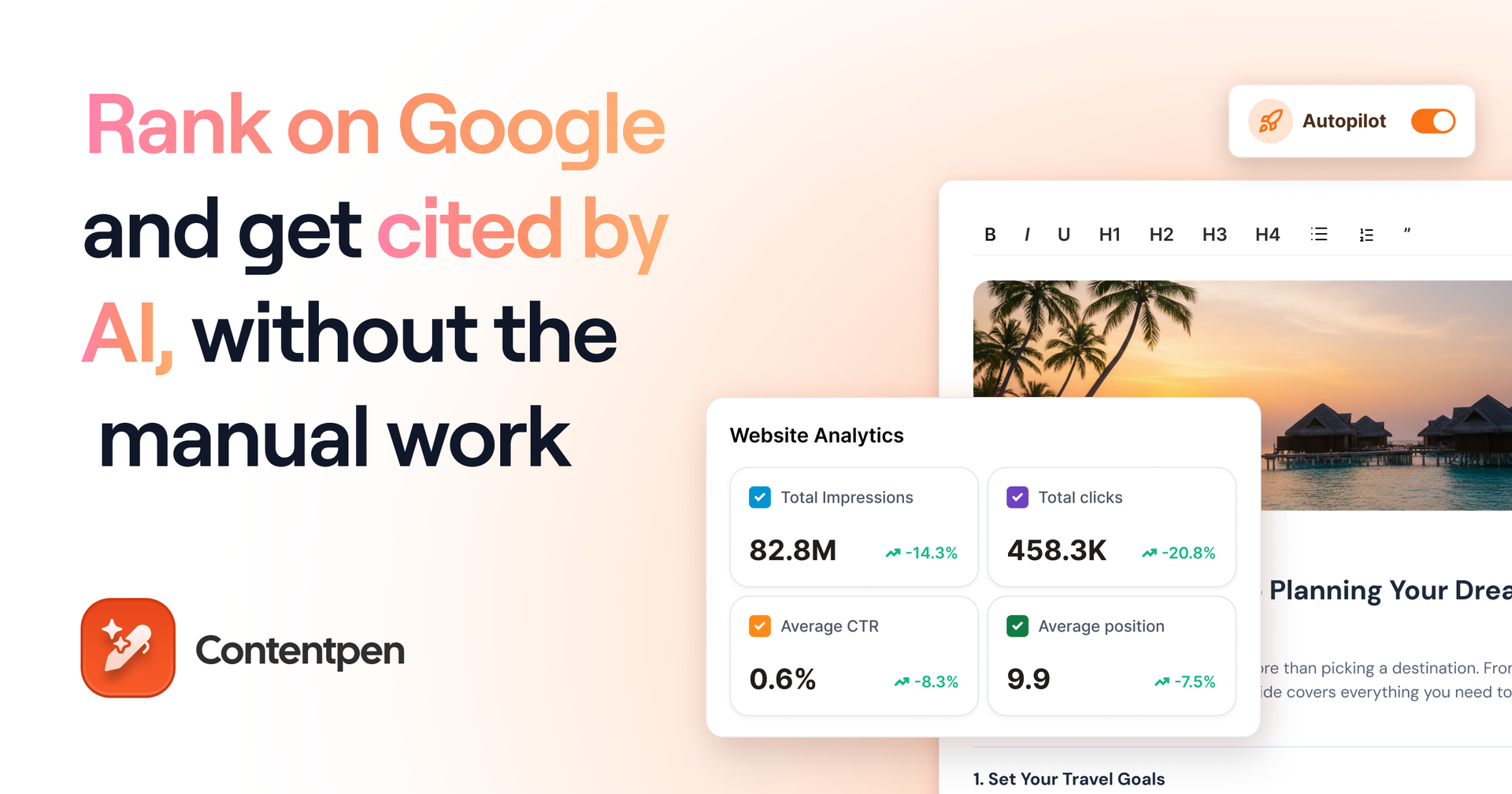
Best for: SEO and GEO-optimized blogs with AI-powered insights for better ranking opportunities.
Contentpen is a strong alternative to Writesonic in creating high-quality, SEO-optimized blog content that drives measurable traffic and conversions.
Unlike general-purpose AI writing tools, Contentpen was built from the ground up to focus on creating blog posts that rank in SERPs and AI Overviews. It also tracks your AI visibility in every plan, so you can measure whether that content gets cited.
Pros:
- Advanced SEO optimization: Contentpen aligns your content with search intent and conducts in-depth competitor analysis. It identifies content gaps and optimizes meta details, heading structure, and other on-page SEO elements for higher rankings.
- Intelligent linking: Unlike WriteSonic, Contentpen uses your sitemap for strategic internal linking based on semantic relevance, not just keywords. It maintains optimal link density and ensures natural use of anchor text.
- Diverse integrations: Contentpen integrates with top CMS platforms, including WordPress, Webflow, Shopify, Ghost, Wix, and EmDash, enabling one-click publishing after content is written.
- Automatic image generation: Contentpen generates contextually relevant, high-quality images for specific content sections. Contentpen’s in-article and feature images also come with suitable alt texts, helping you with image optimization as well.
- AI visibility tracking included: Every plan tracks how ChatGPT, Google AI, Gemini, Perplexity, Claude, and other AI engines mention and cite your brand, with share of voice, sentiment, and source gaps. Coverage goes up to seven engines depending on plan, and it’s included from the entry price rather than requiring a higher-priced tier.
- Predictable pricing: Plans are based on a set number of articles per month instead of Writesonic-style credits, so your costs don’t climb unexpectedly as you scale.
Cons:
- Limited trial period: The tool offers only a 7-day trial, which may be too short for many users to evaluate the AI blog writer’s performance.
- Learning curve: If you are new to content writing and creation, you may take a while to get used to the requirements to publish a rank-ready piece.
Pricing:
Pricing starts at $39/month billed annually ($49 monthly).
Also explore: WriteSonic vs Contentpen.
2. Jasper AI

Best for: Brand-led campaigns that require detailed tone and voice customization.
When we compare Jasper AI vs Writesonic in day-to-day production workflows, the biggest difference comes down to campaign depth vs article automation.
Writesonic is faster when generating standalone blog drafts. Jasper, on the other hand, is built to orchestrate entire marketing ecosystems: ads, landing pages, emails, and long-form assets under one brand voice.
Pros:
- Smarter brand voice training: Jasper has a stronger brand voice system that helps users keep their tone consistent across content using their custom brand knowledge.
- Unlimited generation on higher tiers: Writesonic’s credit model creates scaling anxiety for businesses. Jasper’s unlimited words model on paid tiers makes cost forecasting far more predictable as content production increases.
- Deeper template infrastructure: Jasper and Writesonic both offer a similar number of standard templates (50+). However, Jasper’s template output is much richer than Writesonic.
Cons:
- Requires structured prompting: The prompting part is extensive with Jasper, especially when producing long-form articles, blog posts, or case studies.
- Too expensive for SMBs: Jasper is not for startups and small businesses because it falls into the premium tier.
Pricing:
Pricing starts at $59/seat/month (billed annually).
3. Copy.ai
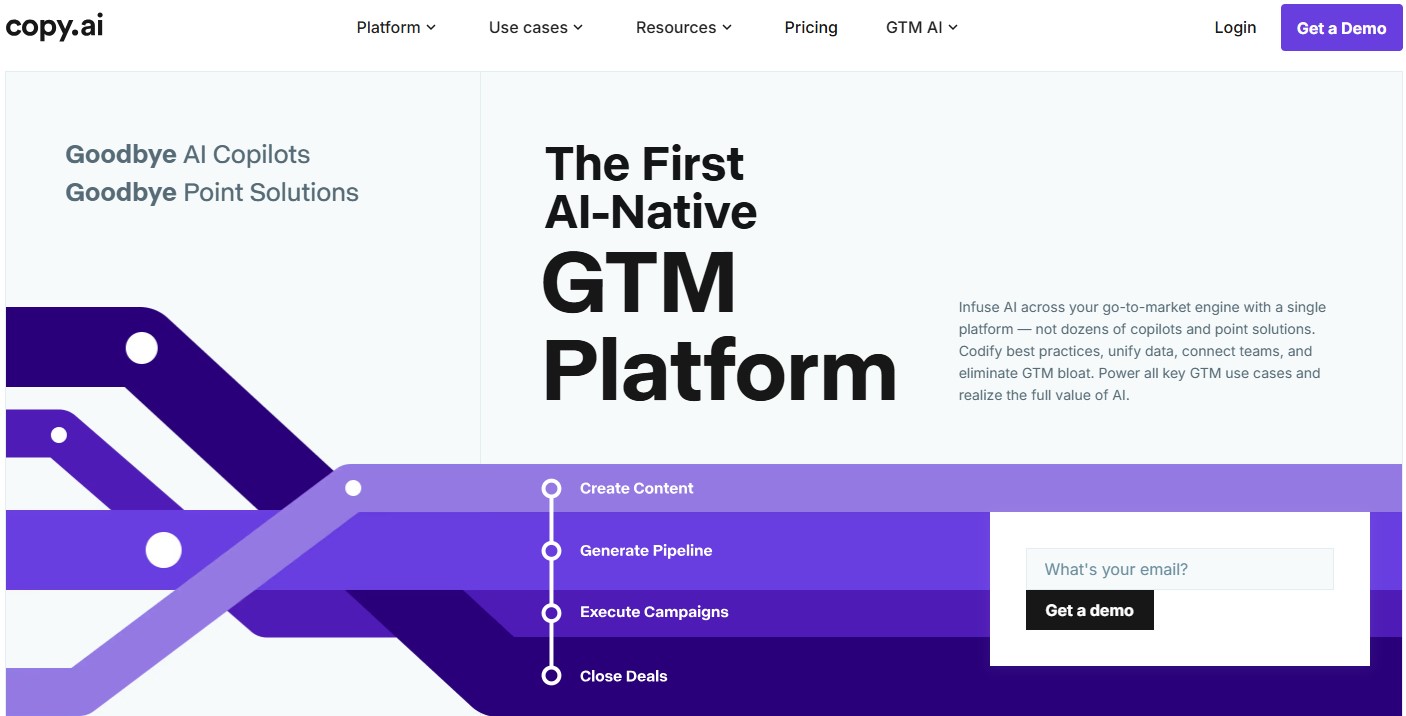
Best for: Sales and outbound copy generation.
Copy.ai excels at creating conversion-oriented content, with particular strength in sales copy, email sequences, and marketing materials that drive audience action.
Pros:
- Faster ideation cycle: When testing multiple ad angles, Copy.ai produces usable variations quicker than Writesonic.
- Stronger persuasive writing: In our testing, we found that Copy.ai’s writing feels far more persuasive, lively, and natural than Writesonic’s. Cold outreach, sales emails, ad hooks, and product messaging feel sharper and more conversion-aware.
Cons:
- Limited SERP optimization: Copy.ai falls short in SEO capabilities compared to Contentpen and other tools on the list.
- Less suited to organic traffic strategies: The tool performs better in paid acquisition workflows than in SEO ecosystems.
Pricing:
Price is $24/month (billed annually).
4. Rytr
Best for: Budget AI writing.
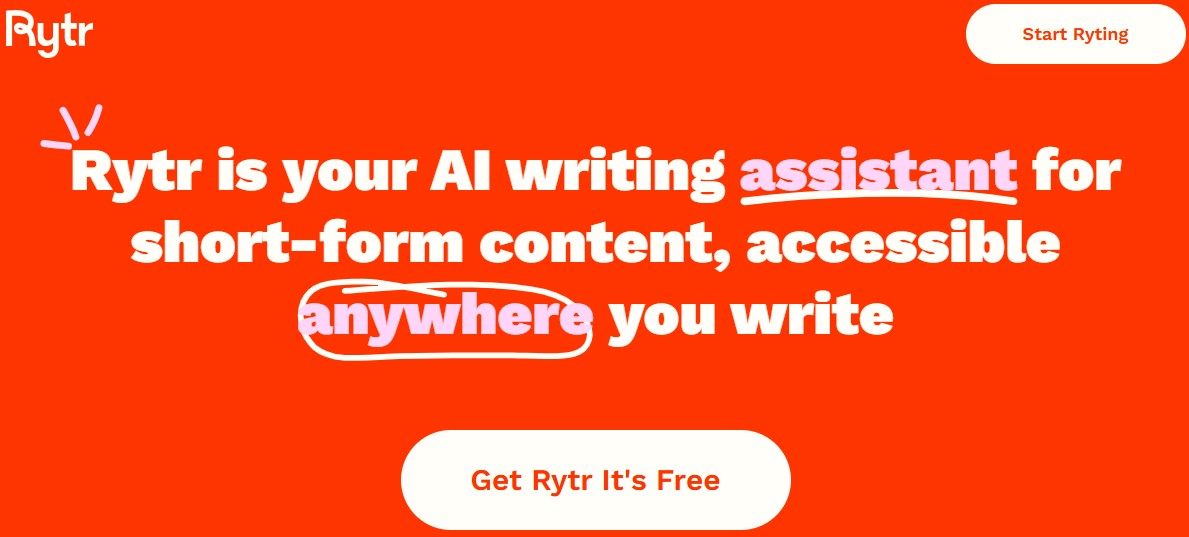
The Writesonic vs Rytr comparison comes up often, especially among users searching for Rytr writing tools or budget AI writers. Rytr offers accessible AI writing capabilities at an affordable price, making it particularly attractive to budget-conscious users and small businesses.
However, from our testing, the tradeoff is clear: cost vs depth. Writesonic delivers a stronger long-form structure, while Rytr wins on affordability and simplicity.
Pros:
- Faster short-form drafting: Rytr generates captions, emails, and blog drafts more quickly than Writesonic and with less prompting and effort.
- Simpler UI: The tool offers a simpler UI, making onboarding easier than Writesonic’s detailed feature suite.
- Support for 30+ languages: Rytr supports more languages than Writesonic, enabling users from different regions to create their content with ease.
Cons:
- Thinner long-form content: Longer content, such as articles, blogs, and guest posts, can appear to lack value. The same argument can be reworded to lengths, and no deep competitor analysis causes content to lose SERP value.
- Abrupt structural endings: Sometimes articles are cut mid-thought, requiring manual editing to complete.
Pricing:
Pricing starts at $7.50/month (billed annually).
5. Surfer SEO
Best for: SEO content optimization for better ranking and visibility.
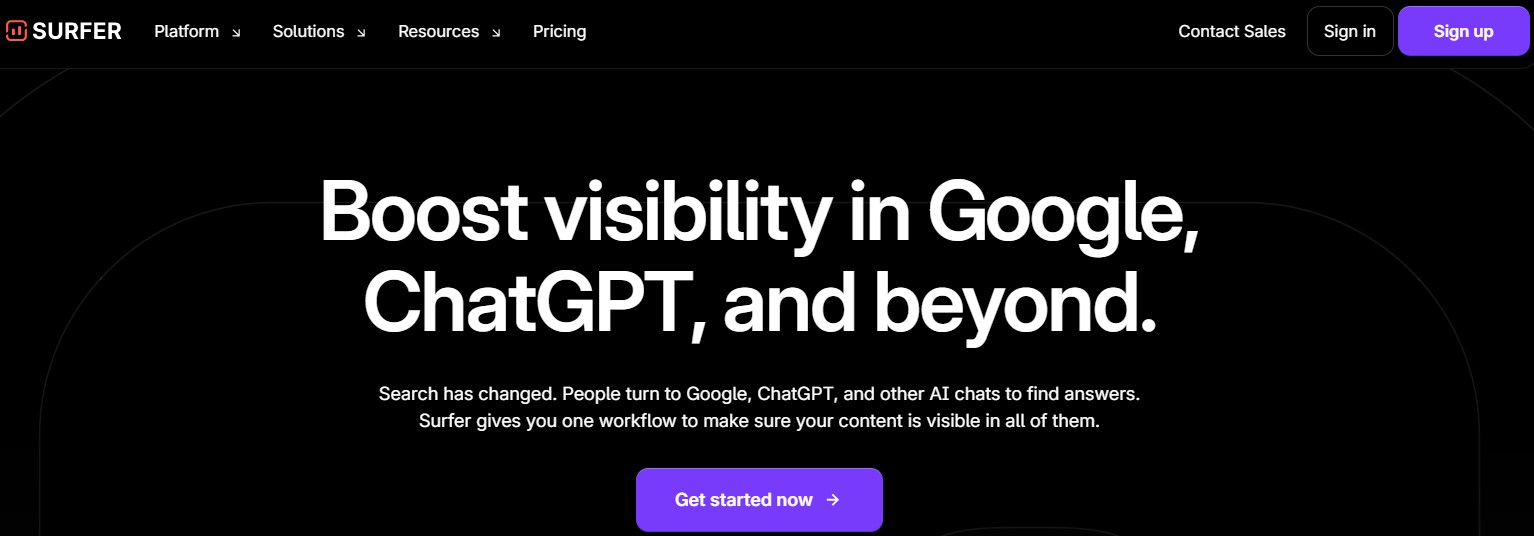
Surfer SEO is primarily an SEO-content optimizer first and an AI writer second. However, we’ve found it to be a good alternative to Writesonic, especially for bloggers who prefer improved CTR and conversion rates over other KPIs.
Pros:
- Strong NLP keyword mapping: The tool suggests semantically relevant keywords that Google is likely to rank for a particular query. Though WriteSonic does support AI search optimization, the keywords it provides aren’t as well-suited as those from Surfer SEO.
- SEO audit feature: Surfer audits your underperforming posts in detail and surfaces important actions to address.
- Built-in content scoring: Similar to Contentpen, Surfer SEO also provides built-in content scoring that forecasts your performance for AI overviews and SERPs.
Cons:
- Needs pairing with other tools: Surfer SEO may enhance your wording to improve search engine performance through rewriting or other methods. However, it is not an independent writing tool.
- Data overload: Beginners may find it difficult to navigate the interface because there are many SEO metrics displayed at once.
Pricing:
Pricing starts at $99/month (billed annually).
6. Frase.io
Best for: Generating comprehensive SEO content briefs.
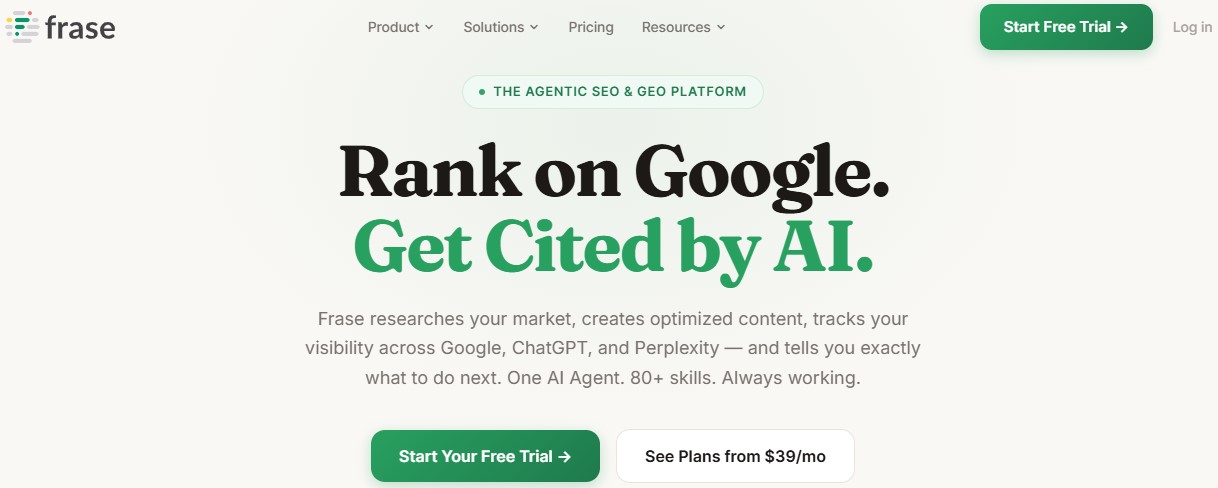
Frase is a powerful Writesonic alternative in all the ways imaginable. Just like Writesonic, Frase also conducts keyword research, tracks AI visibility, writes, and optimizes content in one window.
What sets Frase.io apart from Writesonic is its ability to write naturally smooth, readable content while providing comprehensive SERP analysis.
Pros:
- Question mining: Frase.io extracts questions from the People Also Ask (PAA) sections for a particular query and incorporates them into your content. Although Writesonic can generate FAQs, they’re not as comprehensive or as rank-worthy as Frase.
- SEO content briefs: The tool provides in-depth SEO briefs for bloggers, content marketers, and freelancers, allowing them to see all SERP gaps quickly and effectively.
- Answer engine and intent alignment: Frase specifically structures content for answer engines, such as AI Overviews. It also creates blog posts and articles based on the search intent.
Cons:
- Random system crashes: The website and competitor analyzer can sometimes crash unexpectedly, which can be frustrating when dealing with tight deadlines and jammed content pipelines.
- Interface takes time to learn: Frase.io requires time to master all its features and options, with some trial and error to create compelling content.
Pricing:
Pricing starts at $39/month (billed annually).
Also explore: Frase vs Contentpen.
7. Simplified

Best for: Combining multiple AI creation workflows in one place.
When we evaluate Simplified vs Writesonic, the difference becomes clear almost immediately. Writesonic is built primarily for content generation and SEO workflows, while Simplified positions itself as an all-in-one marketing creation suite.
Simplified offers a comprehensive creative ecosystem that extends beyond AI writing to include design, video, and social media management tools in a unified interface.
Pros:
- Stronger social media workflow: Simplified includes post schedulers, caption generators, hashtag suggestions, and platform formatting. Writesonic can generate captions, but Simplified helps you actually package and publish campaigns end-to-end.
- Built-in collaboration for creatives: With Simplified, you can assign designs, review visuals, and approve copy within shared workspaces, something Writesonic’s editorial collaboration layer doesn’t fully cover.
- AI asset creation: The tool covers a wide range of AI asset creation, including images and videos for reels, ad campaigns, and YouTube content. This becomes a major production advantage over writing-only tools like Writesonic.
Cons:
- Weaker long-form writing: Since Simplified is not a dedicated AI writer, it struggles to produce long-form content in terms of accuracy, coherence, and comprehensiveness.
- Limited SERP and SEO optimization: Simplified can improve readability for better SEO performance, but that’s about it. It does not have extended SERP, SEO, or GEO features like other tools on the list.
Pricing:
Pricing starts at $19/month (billed annually).
8. Wordtune
Best for: Rewriting and editing content for maximum readability and clarity.
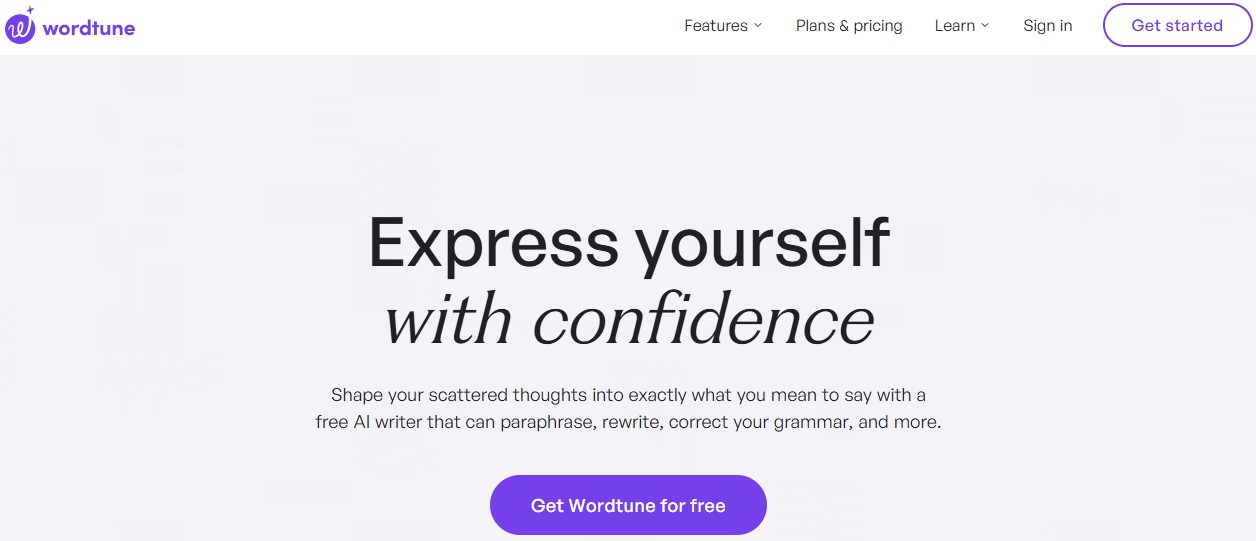
Wordtune takes a different approach by focusing primarily on improving and rewriting existing content rather than generating it from scratch, making it an excellent companion to other writing tools.
Pros:
- Powerful tonal consistency: Whether you’re continuing an existing thought or rewriting a complete paragraph, Wordtune ensures that the selected tone remains consistent.
- Strong grammar + fluency suggestions: Wordtune provides very reasonable grammar and fluency suggestions without over-optimizing the content. This makes your posts rank-worthy with minimal manual effort.
- Diverse integration: You can use Wordtune inside Google Docs, Gmail, and browsers using extensions. On the other hand, Writesonic’s integrations are quite limited, which diminishes any productivity gains.
Cons:
- Requires prompting for long-form content: You need to consistently provide prompts to Wordtune to generate pillar content or cornerstone blog posts. This makes it not so suitable for longer blog posts, articles, or case studies.
- No SEO optimization: Wordtune does not provide any SEO optimization features, so you’ll have to pair it with other SEO tools to extract the best results.
Pricing:
Pricing starts at $9.99/month (billed annually).
9. Scalenut

Best for: Creating long-form SEO content.
Scalenut competes more directly with Writesonic’s long-form and SEO optimization stack. It combines AI writing, SERP analysis, and content optimization, making it closer to Surfer + AI writer hybrids.
Pros:
- Cruise Mode for long-form SEO articles: Cruise Mode is a smart addition from Scalenut, helping users write human-first, AI-cited content for better growth.
- Topical clustering: Scalenut’s topical clustering is more comprehensive than Writesonic, especially for keywords with informational and commercial intent.
- Detailed backlink insights: This WriteSonic alternative offers backlink data, keyword planning, and social listening capabilities, making it a unique addition to our list.
Cons:
- Fewer marketing copy templates: Scalenut offers fewer marketing copy templates than Writesonic.
- Complex UI: The user interface is another challenge with Scalenut, especially for marketing beginners who are new to content creation.
Pricing:
Pricing starts at $30/month (billed annually).
10. Anyword
Best for: Monitoring paid ad performance and optimizing messaging.
Anyword differentiates itself with predictive performance scoring that forecasts content effectiveness before publication, helping marketers optimize messaging for maximum impact.
Pros:
- Ad copy optimization across paid channels: Writesonic leans toward blog posts and organic acquisition, while Anyword excels in paid ecosystems. Anyword provides stronger outputs for Meta ads, Google Ads, and display campaigns.
- Audience persona targeting: Anyword tailors messaging to specific audience segments, which makes it easier to produce funnel-specific copy. In comparison, Writesonic’s audience targeting feels broader and less effective for niche markets.
- Enterprise-grade campaign testing workflows: Anyword allows users to generate multiple ad variations and prioritize them based on predicted ROI. This reduces the time and resources wasted during A/B testing.
Cons:
- Expensive compared to other AI writers: Anyword falls into the premium pricing bracket. For businesses evaluating cost vs scale, Writesonic’s pricing model is more accessible.
- Not designed for organic traffic flows: There’s minimal keyword clustering, competitor benchmarking, or search intent mapping. This makes Anyword less suitable for organic traffic optimization or detailed ranking strategies.
Pricing:
Pricing starts at $39/month (billed annually).
11. Article Forge
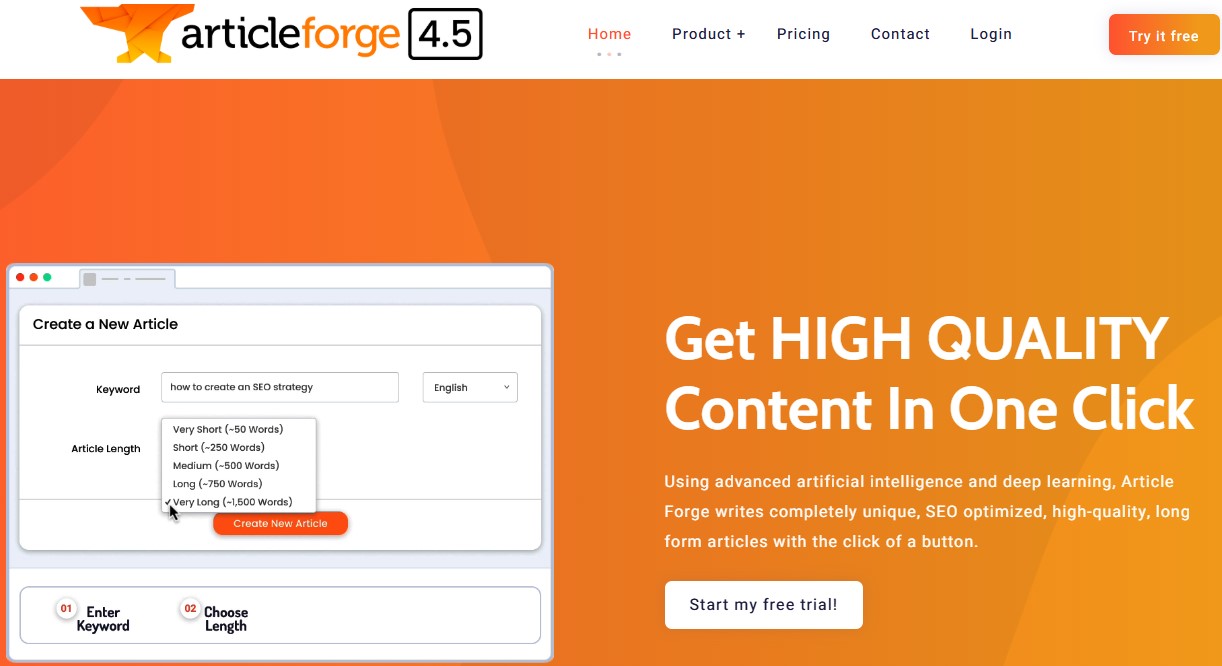
Best for: Content automation with minimal human input.
Article Forge takes content automation to the extreme by generating complete articles from minimal input, making it the fastest but least customizable option among Writesonic alternatives.
Pros:
- Built-in LSI keyword integration: The platform automatically includes semantically related terms, helping articles appear more contextually relevant without manual keyword mapping.
- Useful for low-competition content scaling: Article Forge’s main benefit is its content creation speed. It is ideal for filler blog posts and similar content that don’t require much depth.
- Minimal input requirement: Unlike Writesonic, which often benefits from structured prompts, outlines, or optimization settings, Article Forge requires very little human input, making it an ideal content-automation companion.
Cons:
- Weak brand voice control: There’s limited ability to train tone, messaging, or stylistic consistency, making it harder for brands to maintain identity across content channels.
- Minimal SEO optimization: Article Forge does not provide any in-depth competitor analysis, search intent mapping, or content scoring features, which costs it a point against Writesonic.
Pricing:
Pricing starts at $27/month/user (billed annually).
Ready to transform your content strategy?
After conducting a comprehensive analysis of the top Writesonic alternatives available in 2026, Contentpen clearly emerges as the superior choice for businesses serious about creating high-quality, SEO-optimized blog content.
While each alternative offers distinctive strengths, Contentpen’s specialized focus on AI content creation, combined with its advanced SEO capabilities, SEO analytics, and built-in AI visibility tracking, makes it the ideal solution.
Companies looking to drive sustainable traffic and conversions through content marketing should consider Contentpen as their daily driver.