 18 minutes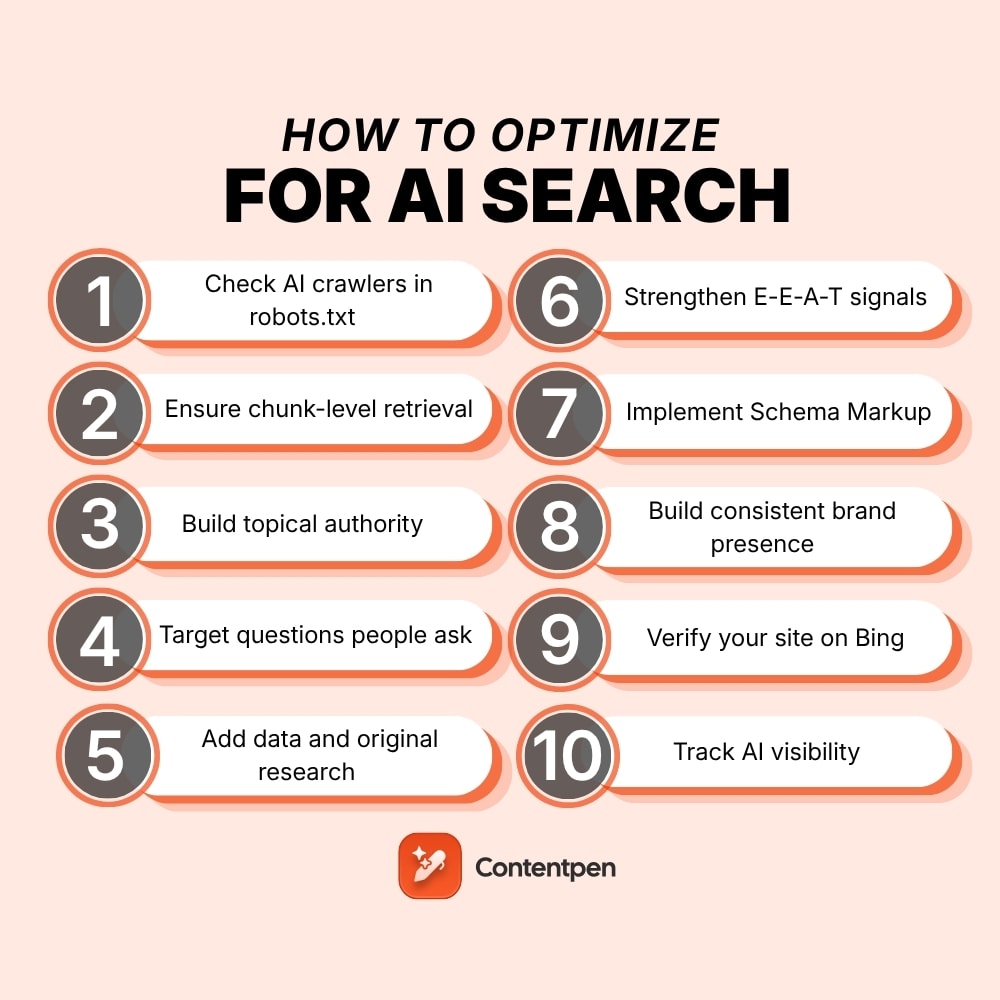
AI search is already deciding which brands get cited and which ones disappear before a user clicks anything. Due to this situation, AI search optimization is now essential.
For content teams, agencies, and small businesses, this shift can feel scary. Traffic jumps around, branded searches show AI answers on top, and it is hard to tell how much visibility comes from Google, ChatGPT, Gemini, or Perplexity.
The good news is that AI SEO optimization is not a new way to get better clicks and reach. It is the same core SEO done with more care.
In this guide, you will see how to optimize for AI search engines. You will get a simple playbook you can use on your next article or campaign to see better AI citations and discoverability.
So, let’s get started.
Table of contents
- What AI search optimization is NOT about
- Why AI search optimization matters more than most people realize
- How AI search engines actually find and use your content
- AI search optimization vs. traditional SEO: What actually changes
- How to optimize for AI search: What actually works
- AI search optimization examples: What good looks like
- Tools to help you rank in AI search results
- A quick AEO checklist before you go
- Final thoughts
- Frequently asked questions
What AI search optimization is NOT about
First, let’s clear up a few things about AI search optimization, because the space is full of noise.
AI search optimization is not about:
- Gaming prompts. There are no “magic phrases” that force AI to cite you. AI systems evaluate content quality, authority, and relevance the same way Google does, just applied differently (more on this later).
- It’s not separate from SEO. Many AI systems rely on search indexes to find content, so strong rankings make you far easier to find and cite.
- It’s not a one-time fix. AI citation sources rotate. Between 40 and 60% of cited sources change month-to-month across platforms like Google AI Mode and ChatGPT. This isn’t a set-and-forget strategy. It’s an ongoing content and authority-building effort.
- It’s not just about traffic. The visitors who do arrive from AI citations convert at significantly higher rates than typical organic traffic. Therefore, quality beats search volume here.
With these pointers in mind, let’s see why answer engine optimization is so important today.
Why AI search optimization matters more than most people realize
The numbers are hard to ignore. Over 800 million people now use ChatGPT weekly. Google AI Overviews appear on an estimated 15-25% of all searches, and nearly a third of the US population is projected to use generative AI search in 2026.
Your audience isn’t waiting around for this to “get big.” They’re already there.
And here’s the part that catches most brands off guard: around 60% of searches already end without a single click.
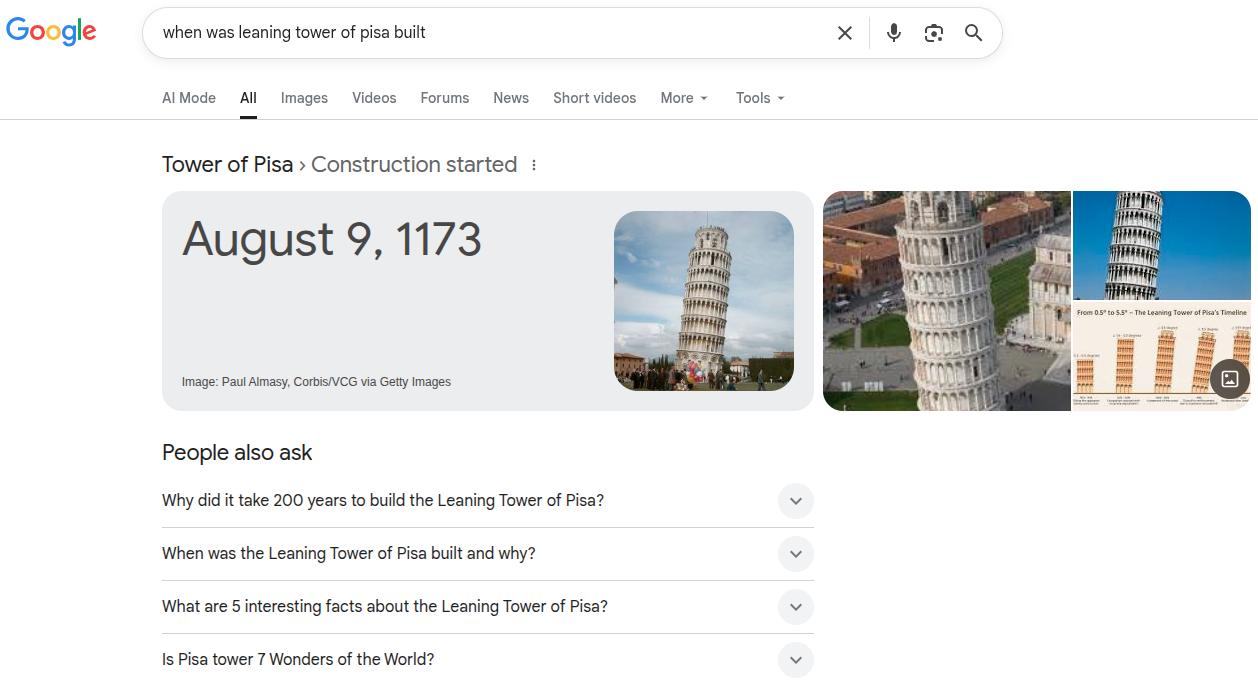
Like the ‘Leaning Tower of Pisa’ example above, AI answers satisfy the intent right there on the page. So if you’re measuring success purely by traffic or clicks, you’re going to see a gap between your visibility and your numbers.
Also read: How to turn off AI Overviews.
How AI search engines actually find and use your content
Before optimizing for AI search, you need to understand the mechanics of how these platforms work.
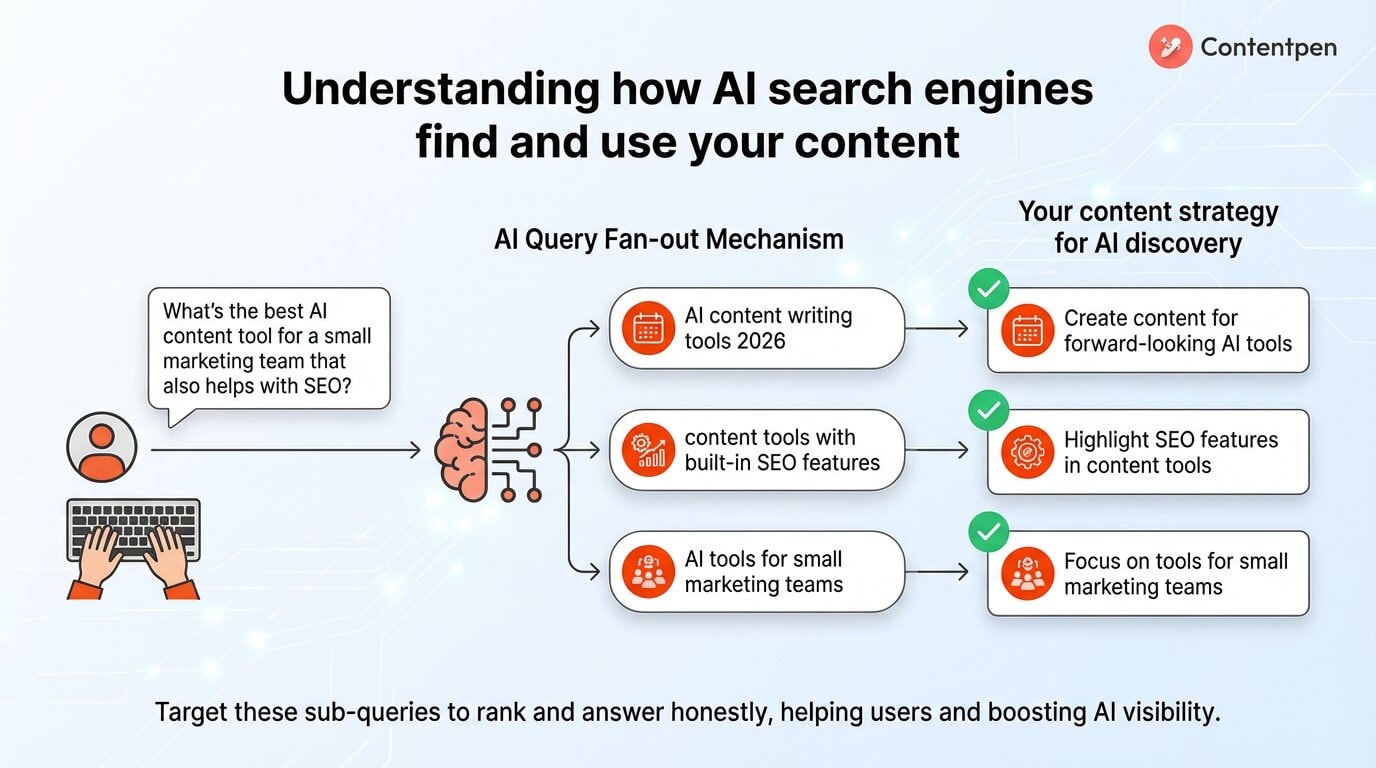
When someone asks Perplexity or ChatGPT a question, the AI doesn’t paste that question into a search engine verbatim. It breaks the query into smaller sub-searches, called “query fan-out.”
What that means for your strategy is that your content doesn’t need to match the exact question your audience types. It needs to rank for the sub-queries the AI extracts by addressing them properly in your content.
For example, a user can type a query, “What’s the best AI content tool for a small marketing team that also helps with SEO?”
AI engines will not use the exact wording to search for this query.
Instead, the AI platforms will break this query down into smaller sub-queries, such as “AI content writing tools 2026,” “content tools with built-in SEO features,” and “AI tools for small marketing teams.”
So, if you use these sub-queries in your content and answer them honestly to help your users, then AI discovery becomes a lot easier.
Where does each AI platform get its data?
Knowing which platform pulls data from where lets you prioritize your efforts accordingly. Below are some popular AI tools and their sources.
- ChatGPT combines its own crawler (OAI-SearchBot) with third-party search results, so strong rankings across search engines help your visibility there.
- Google AI Overviews and Gemini draw from Google’s own index.
- Perplexity crawls the web directly and cites authoritative sources in every response.
- Copilot runs on Bing’s search index, and Meta AI has also used Bing for web results.
Traditional SEO isn’t dead. It’s the foundation. If you’re not indexed and ranking, AI tools literally can’t find you. What changes is the layer on top, or the signals that make you citation-worthy vs. just rankable.
AI search optimization vs. traditional SEO: What actually changes
Before we dive deep into the comparison of SEO vs AEO, it is important to note that you don’t have to choose between the two. You do need to understand how they’re different.
The basics still remain the same: you do solid keyword research, optimize metadata, write in a structured way, and take care of your Schemas. Then, take a step forward toward GEO, which builds on traditional SEO.
Other key differences include:
- People write longer, conversational prompts in AI platforms and refine them with follow‑up questions.
- The same thread can cover the awareness, comparison, and action stages of a decision.
- When users finally click through, they already know the basics and come ready with a higher intent.
That is why AI search optimization focuses on depth, structure, and clear expertise more than quick tricks. You are trying to become the reference text that models feel safe quoting.
Read more: AI search optimization vs. traditional SEO.
How to optimize for AI search: What actually works
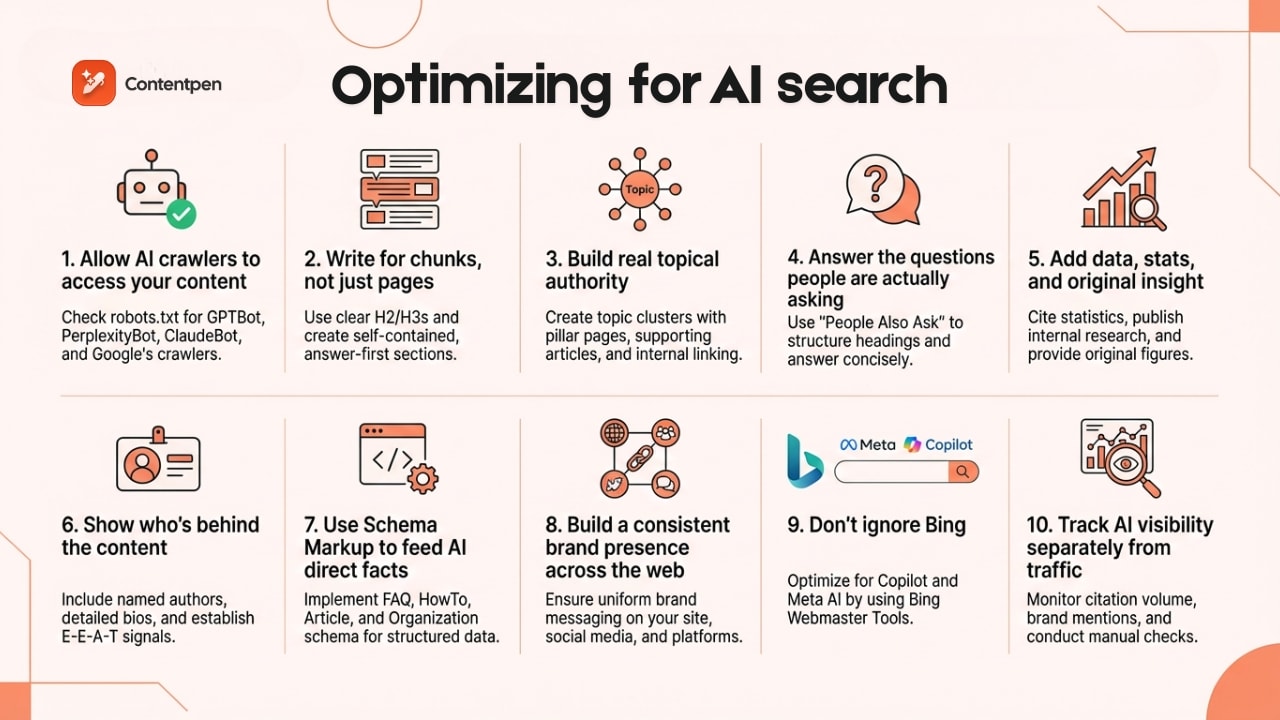
If you want to know how to rank in AI search, think in three layers:
- Write people‑first content that answers real questions better than anyone else to create strong EEAT signals for your content.
- Build topical strength and brand signals across the web.
- Make your site easy for both search bots and LLM crawlers to read.
These layers map directly to common SEO strategies for AI search engines. Apply the steps below, then watch how AI tools treat that content over the next few months. That feedback will tell you where to double down.
1. Make sure AI crawlers can read your content
This sounds obvious, but it’s the most skipped step.
If your content is buried behind client-side rendered JavaScript, login walls, or a robots.txt that blocks AI crawlers, none of the other work matters.
Therefore, check that major AI bots, such as GPTBot, OAI-SearchBot, PerplexityBot, ClaudeBot, and Google’s crawlers, are allowed in your robots.txt file.
2. Write for chunks, not just pages
AI systems don’t read your page the way a human does. They extract chunks, or individual sections, paragraphs, and sentences that can answer a specific sub-query.
To optimize for chunk-level retrieval, use clear H2s and H3s and ensure that every section on your page can stand alone as a self-contained answer.
Also, always prefer to start each section with a direct statement or definition and build on it with examples and case studies later on.
For example: “An AI content brief is a structured document that outlines the topic, target audience, keywords, and content goals before writing begins. It reduces back-and-forth between writers and editors by aligning expectations upfront.”
Don’t bury the answer in paragraph four. If someone only reads that one section, they should walk away informed.
Therefore, the core of optimizing content for AI-generated answers is to create self-contained, extract-ready, and semantically tight passages. In short, answer-first writing.
3. Build real topical authority
A single blog post on a topic won’t cut it. AI systems and Google’s algorithms favor brands that have covered a topic deeply across multiple pieces of content. They look for topical depth (going genuinely far and in-depth on specific subtopics).
Think about your content strategy as a topic cluster, not a collection of individual articles.
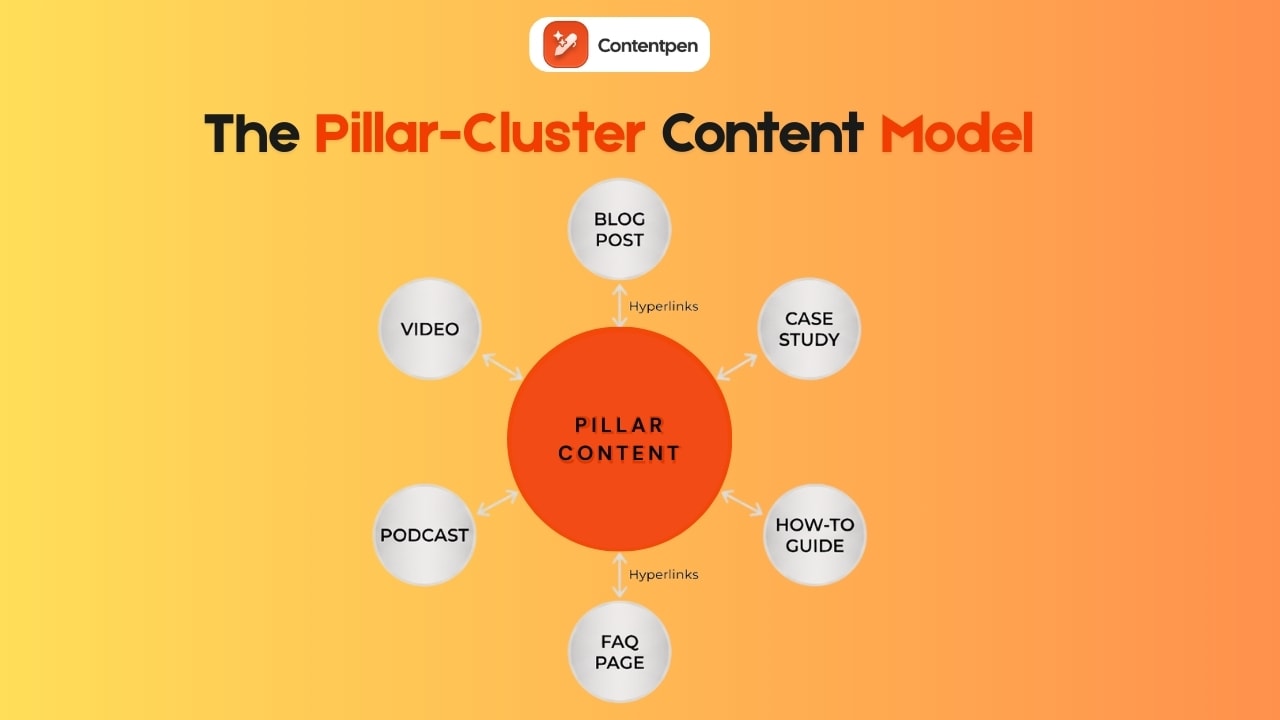
One pillar piece covering the full scope, specific supporting articles and pieces tackling narrower questions, and internal linking to connect them all. This is the structure that tells AI, ‘this site is actually authoritative for a particular topic’, helping you get more citations and discoverability.
4. Answer the questions people are actually asking
AI tools pull answers from content written in response to real questions. The more directly your content maps to how people actually phrase their queries, the more likely it is to be extracted.
Use Google’s “People Also Ask” and Autocomplete to find question formats for your topic. Build those questions into your headings. Then, answer them concisely right after each heading.
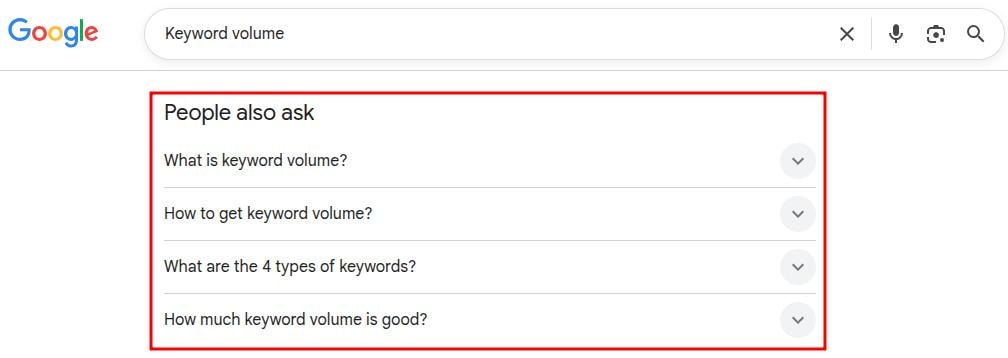
Remember that you’re not just optimizing for search engines here; you’re also giving AI a clear, pullable answer to show the users.
5. Add data, stats, and original insight
AI chatbots love citing figures, stats, and original data from your blogs or articles. This may include industry benchmarks, research, or survey results that you conducted internally.
Content that says “marketers report 34% higher engagement from AI-cited content” is more citation-worthy than content that says “many marketers see better engagement.”
Also, if you can publish original research, even a small internal study, do it. Other sites will cite it. And when your content is cited by authoritative sources, AI systems notice and use your data inside their answers.
6. Show who’s behind the content
E-E-A-T (Experience, Expertise, Authoritativeness, Trustworthiness) isn’t just a Google thing. AI systems are trained to avoid surfacing low-quality or anonymous content. Named authors, detailed bios, links to professional profiles, and demonstrated first-hand experience all strengthen your content’s credibility signals.
This matters especially for YMYL (Your Money, Your Life) topics, which include finance, health, legal, and anything with real-world consequences.
AI tools apply heightened scrutiny here, so you have to be very authoritative and knowledgeable on a topic to write and win.
7. Use Schema Markup to feed AI direct facts
Schema markup makes your content machine-readable in a way that plain text doesn’t.
FAQ schema, HowTo schema, Article schema, and Organization schema all help AI systems extract accurate, structured facts about your brand and content.
Think of it as handing AI the answer on a silver platter. The less it has to guess, the more confidently it can cite your brand.
8. Build a consistent brand presence across the web
AI systems build their understanding of your brand from everything they can find. This includes your site, third-party mentions, reviews, social profiles, forum discussions, and more.
Consistency matters a lot here. Your brand name, value proposition, and positioning should read the same way across every channel.
Reddit threads, LinkedIn posts, YouTube content, and podcast appearances all contribute to what’s called your “AI authority.”
It’s the aggregate signal that your brand gives off to AI systems, including ChatGPT, Perplexity, Gemini, and others. Over time, this improves your AI visibility, which means more relevant traffic to your platforms.
Also read: Best AI visibility tools in 2026.
9. Don’t ignore Bing
Most AI search conversations focus on Google. But Copilot and Meta AI (Facebook, Instagram, WhatsApp) all run through Bing. That’s a combined audience that you should surely cater to.
So, if you want to AI search optimize your content, then you should use Bing Webmaster Tools for audits (and it is free) If you get your site indexed and verified there, there’s a high chance of doing great in AI systems as well.
10. Track AI visibility separately from traffic
If you’re only measuring success by clicks, AI search will always look underwhelming.
Citation volume and brand mention frequency are the metrics that matter here.
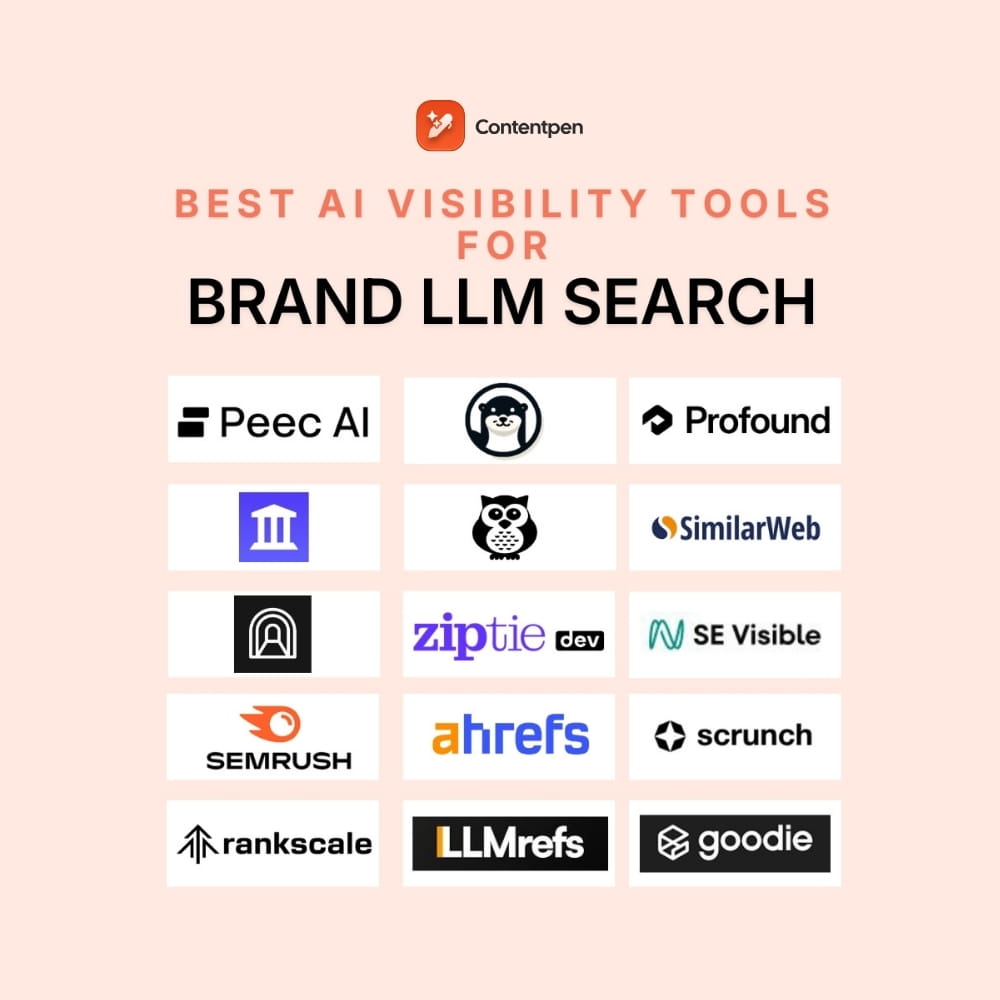
Tools like Semrush’s AI Toolkit, Profound, or Peec AI let you track your share of voice across AI platforms.
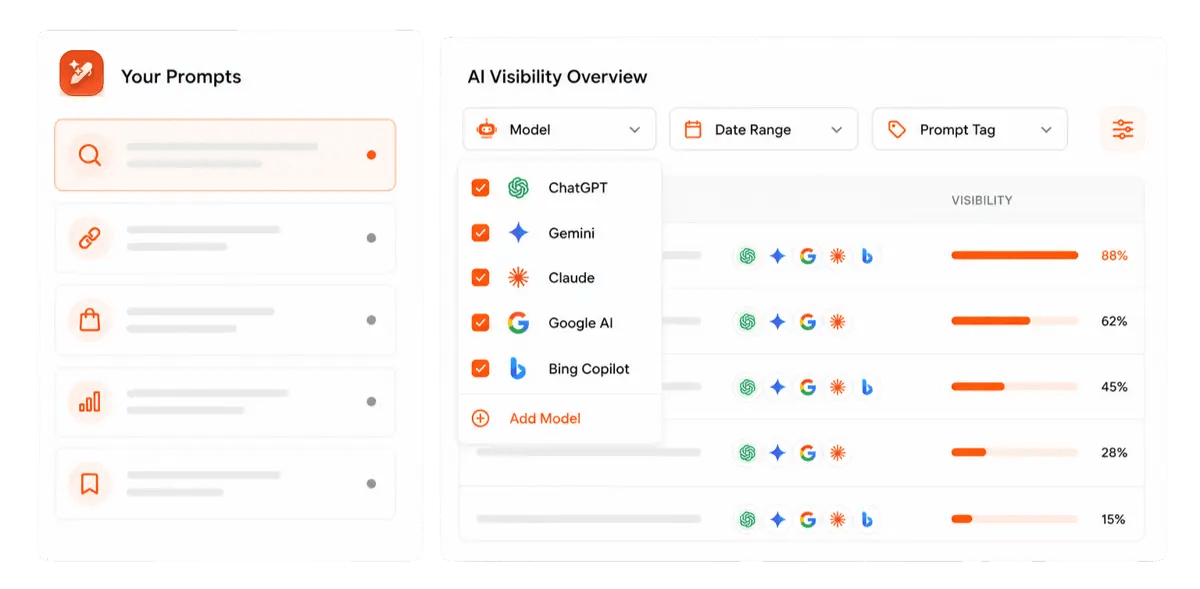
Contentpen goes a step further and provides its AI visibility tool right where you create content. You can see your AI share of voice, brand sentiment, top citation sources, and competitor data across up to seven AI engines in one place.
Find your brand in AI search

Track AI citations, share of voice, and brand sentiment
Find the top sources driving citations
Besides the tools, set up manual checks, too.
Query ChatGPT, Perplexity, and Gemini yourself with prompts your customers would use, and see whether you’re showing up in those or not.
This process may take a while, but it’s a good starting point for content marketers and individuals trying to learn their AI visibility hands-on.
AI search optimization examples: What good looks like
Concepts are helpful, but real patterns make them stick. Here are three simple AEO examples based on what tends to show up in AI answers.
Example 1 – Structured content that gets cited
Imagine a fintech blog that targets the question “What is compound interest?” plus related follow‑ups.
Take NerdWallet’s compound interest page as an example. It opens with a single plain-English definition: “Compound interest is the money your bank pays you on your balance, plus the money that interest earns over time.”
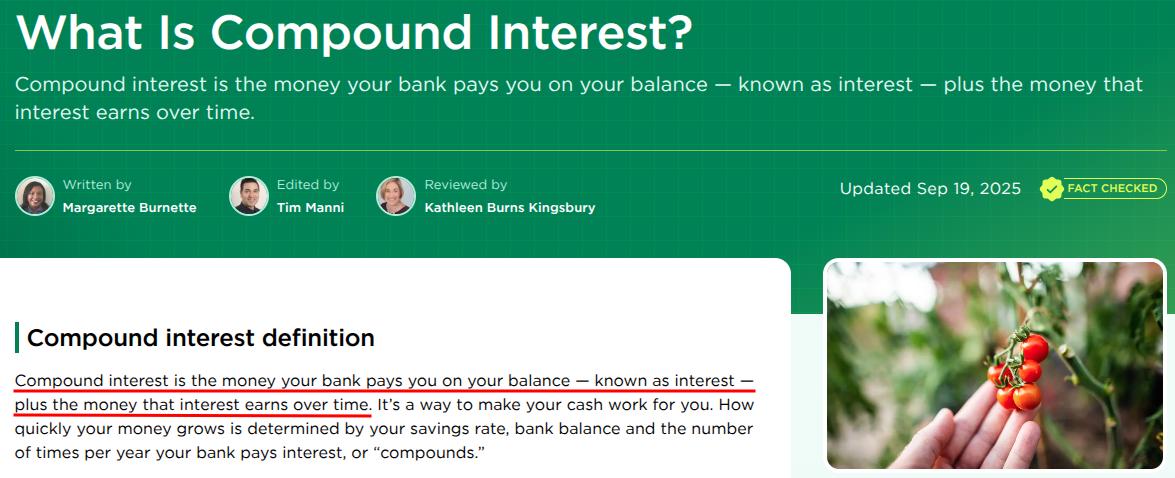
Then the page moves through the formula, examples, and explanations with no pop-ups or clutter.
When someone asks an AI chatbot what compound interest is, NerdWallet’s structure gives AI a clean, pullable quote for the summary and enough depth to trust and cite the source.
A Goodie analysis of AI citation patterns across ChatGPT, Gemini, Claude, and Perplexity found NerdWallet to be the most consistently cited finance domain across all four platforms.
Example 2 – Brand authority in action
A project management SaaS with $25M ARR (Annual Recurring Revenue) had solid Google rankings but was appearing in just 8% of AI buyer queries. While competitors dominated 65% of ChatGPT and Perplexity recommendations.
The fix wasn’t more blog posts. It was building a consistent brand presence. The brand applied the same brand positioning across platforms, such as Crunchbase, LinkedIn, and niche forum discussions.
Within 90 days, their AI citation rate tripled to 24%, and AI-referred leads converted at 2.8x the rate of traditional organic traffic.
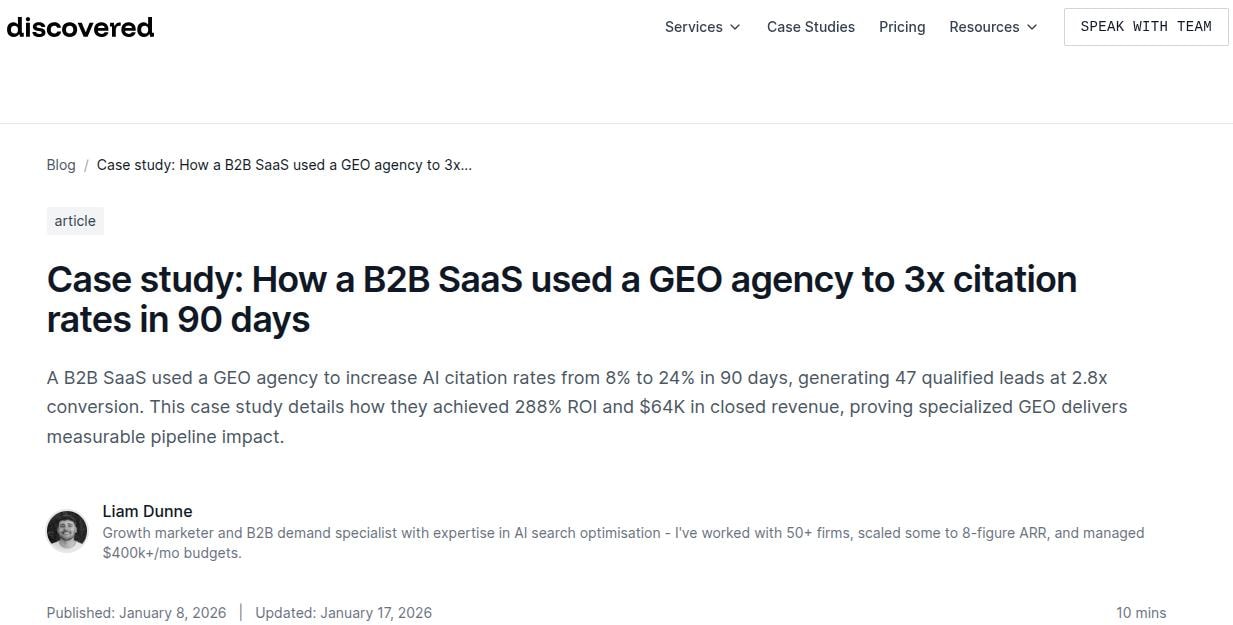
The lesson here is that AI tools build their picture of your brand from all web sources. Conflicting signals reduce confidence, while consistency builds it.
Example 3 – Multimodal optimization in practice
Think about an e‑commerce store with rich product pages. Each item has:
- A detailed copy that anticipates common buyer questions,
- Clear photos with descriptive alt text,
- An embedded demo video and transcript,
- Up‑to‑date merchant feeds and a complete Google Business Profile.
When someone is researching products or uploading a picture of a similar product and asking Google for details, AI Mode can tie the visual data to that well‑labeled page.
Google confirmed this capability in its official Search blog. Retailers like Spocket, Etsy, and Wayfair are already integrated into the checkout experience inside AI Mode, as they have invested heavily in AI search optimization.
For ecommerce brands, this makes every product image an AI-readable asset, not just a visual for human shoppers.
Tools to help you rank in AI search results
Think about AI search optimization tools in three buckets: content creation, monitoring, and analytics.
On the creation side, AI SEO tools can speed up outlines, drafts, and briefs while you keep control of quality. For monitoring, new platforms track brand mentions inside AI responses. Analytics tools then show how visits from AI sources behave, so you can measure real value.
The key is to let tools assist your AI with SEO strategy instead of driving it. You still decide which questions to target, what angle to take, and how your brand should sound.
1. Contentpen
Contentpen is an end‑to‑end AEO tool made for marketing teams, agencies, and solo creators. It plans and writes long-form articles that read clearly and match what both users and AI engines look for.
As you write, SEO scoring and GEO scoring show how well each draft is optimized for search rankings and AI citations, and Fix with AI resolves issues in both. Contentpen also automates internal and external linking, so your topic clusters send a clear structure to crawlers.
Once you publish, AI visibility tracking shows whether AI engines are citing you, so you can close the loop between writing and results. When you want consistent, audience-centric articles with regular publishing, this AI search optimization tool helps you streamline workflows and boost productivity.
Write content that’s built to rank, not just read
Create search-optimized blogs aligned with SEO and GEO signals, so your content performs well across search and AI-driven discovery.
Try SEO Blogging FREE →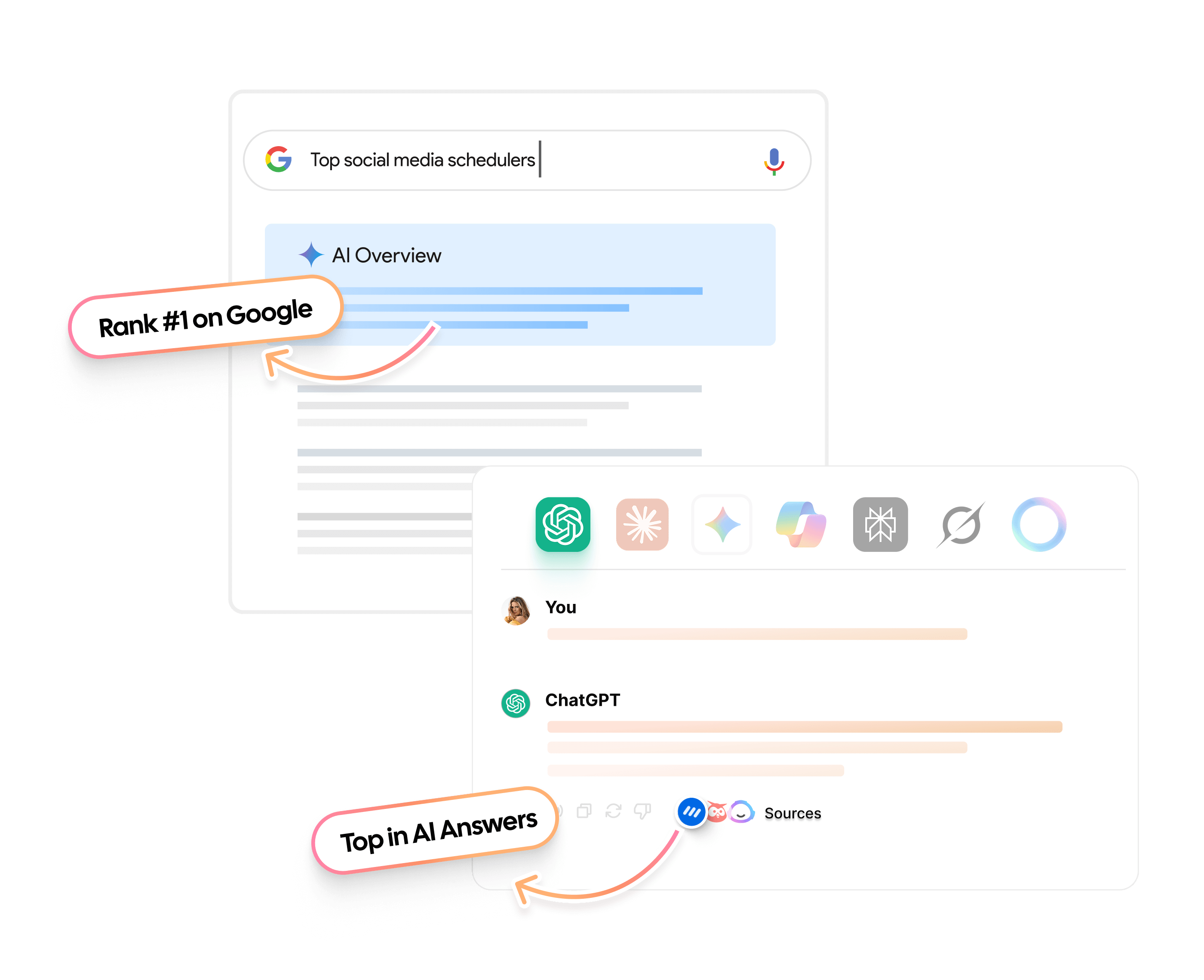
2. Monitoring tools for AI visibility
Once your content is live, you need to conduct AI visibility audits. Use relevant tools to track your presence inside chatbot answers and AI summaries across several engines.
Here are a few options you can explore:
| Tool | What it does |
| Contentpen | Tracks your share of voice, sentiment, and citations across up to 7 AI engines, and shows the sources that cite competitors but not you |
| Peec AI | Watches prompts across several models and shows when your brand shows up as a cited source. |
| Similarweb | Identifies the most popular AI search platforms referring traffic to competitors. |
| Otterly | Follows how often specific prompts return your pages, so you can spot gains or drops over time. |
| Profound | Breaks down which sites AI tools cite alongside you, helping you understand your real content competitors. |
| AmIOnAI | Checks if your brand appears at all for chosen topics and flags the gaps you might want to fill. |
| Mangools AI Grader | Reviews pages and scores how ready they are for AI search, based on structure, clarity, and topic coverage. |
For the next steps, pick one tool, set up 5-10 prompts that match your core topics, and review the data biweekly or monthly. That steady view will keep your AI search optimization efforts grounded in reality while guiding your upcoming campaigns.
Measuring success in AI search beyond clicks
AI Overviews and chat answers can trim raw click counts for some queries. That hurts if you only watch traffic charts.
When a user reads an AI summary first, they already understand the basics. The links inside that box point to sources chosen as helpful and safe. So someone who still clicks through is usually deeper in the decision process.
Kevin Indig’s discussion on Similarweb’s data shows that these visits often last longer and involve more actions.
That is why AI search ranking success in 2026 is less about sheer volume and more about the value behind each session.
To track this, look beyond pageviews. Use your analytics tool to watch these metrics for AI-referred visitors:
- Time on page and scroll depth – Do AI‑referred visitors actually read?
- Session duration and pages per session – Do they explore more than one page?
- Key conversions – Email signups, demo requests, downloads, or direct sales.
- Micro‑conversions – People looking up your address, tapping your phone number, or sharing your content.
In analytics, give AI sources their own segment, so visits from perplexity.ai, chat.openai.com, and similar hosts do not blend into the same bucket as organic search.
For a cleaner view of this, you need an analytics tool that separates AI-referred sessions from everything else and tracks what those visitors actually do.
You can use Usermaven for this task as well, which is a solid attribution and analytics tool that tracks user behavior to guide your funneling efforts.
Over time, treat this as an iterative loop:
- Measure how your AI‑referred traffic behaves.
- See which cited pages perform best.
- Adjust structure, copy, and calls‑to‑action accordingly
- Check again after the search and model updates.
That steady feedback is how you stay aligned with AI overview optimization patterns as they shift.
A quick AEO checklist before you go
Use this AI search optimization checklist as your starting point in 2026 to get more AI citations and improve discoverability:
☑ AI crawlers are allowed in robots.txt (GPTBot, PerplexityBot, ClaudeBot, Googlebot)
☑ Each page section starts with a direct, standalone answer
☑ H2s are phrased as questions or clear topic statements
☑ Content includes specific data points, stats, or original research
☑ Author bio includes name, credentials, and external links
☑ FAQ schema, Article schema, or HowTo schema implemented where relevant
☑ Brand presence is consistent across the site, social, and third-party profiles
☑ Site is indexed and verified in Bing Webmaster Tools
☑ The topic is covered in depth across a cluster of related content
☑ Content is updated regularly for statistical and data accuracy
☑ AI visibility is being tracked with a dedicated tool
If you have ticked off all these items, then congratulations! You have significantly improved your AI citation chances. Now, it is all about sticking to the plan and doing regular audits moving forward.
Final thoughts
AI has changed how people search, but the core of AI search optimization is still simple. Do classic SEO well, write for humans first, and make your site easy for both search engines and AI models to trust.
You saw how people‑first content, clear topic clusters, brand mentions, and sound technical habits all feed into SEO for AI‑generated answers. You also saw that success is not just about top rankings. It is being cited as a source and turning those visits into real outcomes.
The search scene will keep moving, but these basics are steady. Start small. Pick one key page, tighten the content, clean up the technical SEO aspect, and watch how AI tools respond.
If you want help publishing that level of content at scale, try building your next article in Contentpen while staying in charge of your strategy.
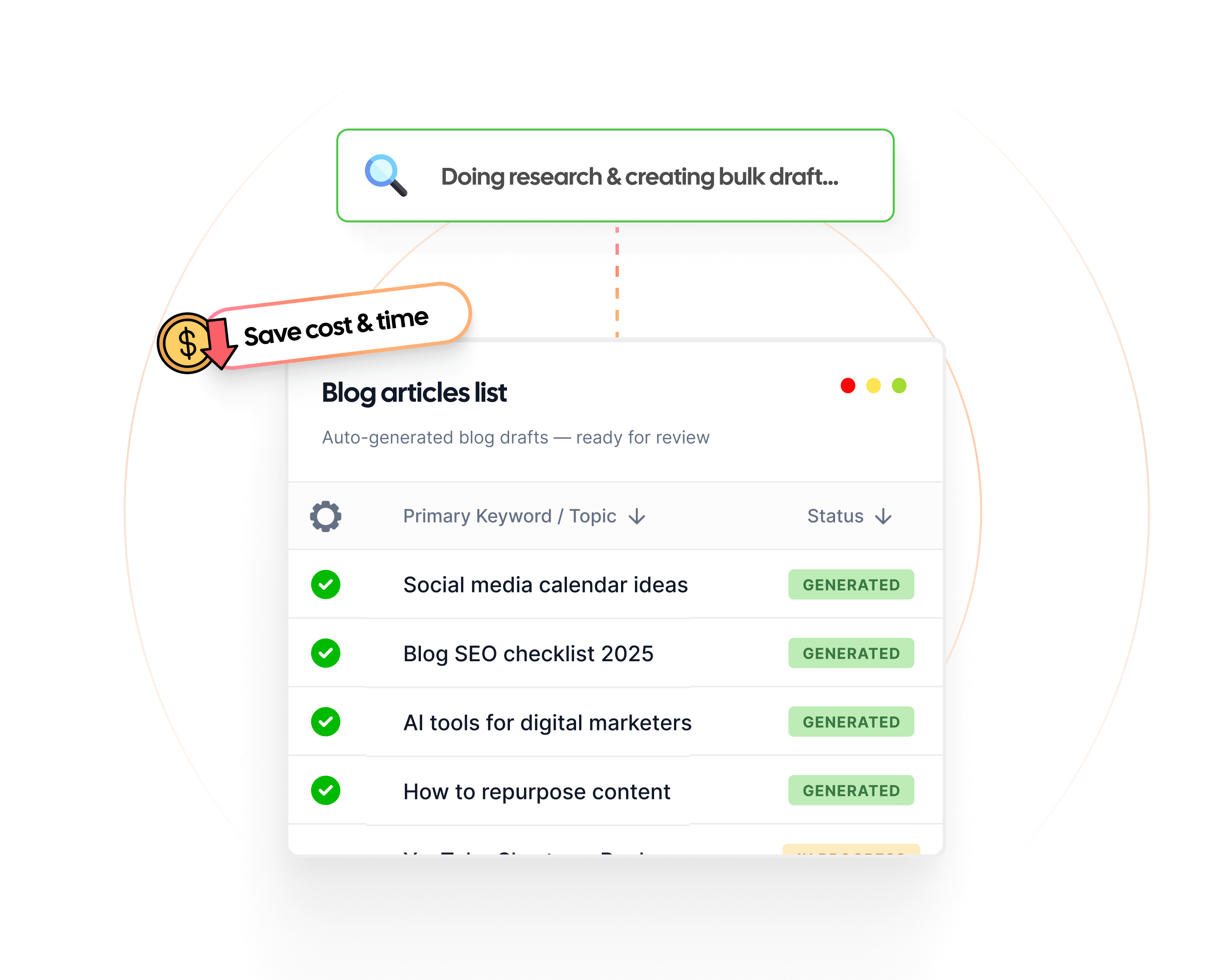
Create rank worthy content at scale
Faster
Consistent
SEO-ready
Efficient
Frequently asked questions
Yes. You can use AI to speed up keyword research, outlines, draft ideas, and internal link suggestions. Just keep a human in charge of strategy, examples, and final editing so the content stays accurate and on brand.
Answer Engine Optimization (AEO) focuses on getting your content extracted as a direct answer. Generative Engine Optimization (GEO) focuses on being one of the sources an AI draws from when synthesizing a longer response. In practice, the same content tactics serve both.
Start with a strong performance in a normal Google search for the query. Then structure each page around clear questions and answers, keep technical issues clean, and avoid preview rules that block snippets. This mix gives you the best shot at being pulled into an AI overview.
Research suggests that incorporating statistics, citations, and authoritative references into your content can increase its likelihood of being cited by AI systems by roughly 30%. The takeaway: data-backed content earns more AI citations than vague, unsupported claims.
Yes, arguably more so. AI citation carries an implied endorsement, which levels the playing field for brands. A well-structured, authoritative page from a small business can get cited ahead of a large brand’s thin, generic content. Quality and clarity win here, not domain age alone.

Jawwad
Jawwad Ul Gohar is an SEO and GEO-focused content writer with 3+ years of experience helping SaaS brands grow through search-driven content. He has increased organic traffic for several products and platforms in the tech and AI niche. As an author at Contentpen.ai, he provides valuable insights on topics like SEO technicalities, content frameworks, integrations, and performance-driven blog strategies. Jawwad blends storytelling with data-driven content that ranks, converts, and delivers measurable growth.
View all posts by this author