 9 minutes
Most small business owners and solo consultants believe one thing about SEO. You cannot rank on Google without backlinks.
That belief pushes lean teams toward expensive outreach campaigns they can barely afford. Months of pitching often produce little to show for the effort.
One real case tells a different story. Independent SEO consultant Ankit Prajapati ranked a hospital client’s blog post at position #4 on Google’s first page using content gap analysis and search intent alone, with zero backlinks built.
This article breaks down how an SEO consultant ranked #4 on Google with zero backlinks. It also covers what replaces link building in a modern ranking strategy, and how a platform like Contentpen, an AI blog creation tool built for search visibility, helps any content team repeat this same approach.
Let’s start with the myth that got us here.
Key takeaways
Backlinks carry less weight as a ranking factor today, based on Google’s own public statements about search quality.
Ankit Prajapati ranked a client’s blog post at #4 on Google using content gap analysis and zero backlinks.
Matching real search intent beats copying what already ranks on page one.
Technical health and on-page SEO matter more when a page has no link profile to lean on.
Tools like Contentpen help any team run this same gap-focused process without added headcount.
Do you really need backlinks to rank on Google?
You don’t need backlinks to rank on Google, a finding echoed in research on zero-click search and content visibility, though they can still help in some cases.
Google’s own statements, paired with real consultant results, show that content quality and search intent now outweigh raw link volume.
For years, the SEO industry split its work into two buckets: on-page optimization and off-page link building. Many agencies built entire business models around the second bucket.
A widely cited Moz study from December 2020 found a strong correlation between authoritative backlinks and higher rankings. That correlation got repeated so often it hardened into an assumption that no backlinks means no rankings.
But correlation isn’t causation. A page loaded with links might rank well because of its content depth or domain history, not the links themselves.
Consultants can check this for their own pages inside Google Search Console’s links report.
The numbers often come back lower than expected, sometimes just one or two low-authority links on a page sitting on page one.
Google has walked back the old narrative itself. During SEO Office Hours in November 2022, Google representatives said backlinks matter less as a ranking signal than they used to. Google also warns businesses hiring an SEO consultant to stay skeptical of anyone who guarantees a #1 ranking or claims a special relationship with Google.
What Google actually says about backlinks

Google lays out its stance on backlinks through four consistent themes in its Search Central documentation.
These themes explain why a zero-backlink ranking is possible rather than a fluke.
Quality over quantity matters most, since a handful of relevant, authoritative links carries more weight than a large pile of weak ones pointing to the same page.
User experience and helpful content come first, since Google’s stated goal is serving the most useful result rather than rewarding link tactics.
Links should be earned naturally, from content people genuinely want to reference, not manufactured through outreach campaigns or link schemes.
Manipulative link building, like buying links or joining exchanges, can get a site penalized instead of rewarded for it.
How Ankit Prajapati ranked a hospital blog at #4 with zero backlinks
Independent SEO consultant Ankit Prajapati ranked a hospital client’s blog post at position #4 on Google’s first page without building a single backlink.
He rebuilt his content process around content gaps and search intent instead of outreach.
As a solo consultant managing several clients, Ankit ran into a problem many independent practitioners recognize.
Producing well-optimized blog posts meant either briefing freelance writers through multiple rounds of revisions, or spending hours himself on keyword research and competitor analysis. Neither option scaled well. The content pipeline moved slowly, costs added up quickly, and explaining strategy to outside writers often turned into a frustrating back and forth.
The deeper issue was quality. Generic content wasn’t moving rankings for his clients, regardless of how many freelancers he hired.
Ankit needed posts that covered real gaps left by competing pages, answering what searchers actually wanted rather than repeating what already ranked. He began using Contentpen to run his entire content workflow, from keyword research and opportunity discovery through to a finished, optimized article.
Instead of reverse-engineering what top-ranking pages already did, he could see exactly what those pages were missing.
The Content and SEO Opportunities feature became central to that process, surfacing gaps in existing coverage he could turn into more useful posts.
Paired with automated internal and external linking, each article connected strategically without the manual work that used to eat into his week.
The result: page-one ranking, zero backlinks, hours saved

The hospital blog post landed at position #4 on Google’s first page shortly after indexing, with zero backlinks built.
Ankit says the ranking came entirely from the strength of the content itself.
Beyond the ranking, he estimates the shift saves him between 3 and 8 hours per week that used to go into research, briefing, and revisions.
That efficiency also cut costs, since he previously spent $100 to $300 per month on outsourced writing.
The win didn’t come from gaming any algorithm. It came from covering gaps other top-ranking pages missed and answering the questions real readers had.
What replaces backlinks in a modern ranking strategy

When a page has no link profile to lean on, every other ranking factor has to work harder.
Four controllable levers fill that gap, and they work best together as a system:
Keyword targeting
Content quality
Technical health
On-page optimization
Target content gaps and lower-competition keywords
Targeting content gaps means finding what searchers want that existing top-ranking pages fail to deliver, rather than copying competitors. This starts by studying current page-one results for a query and noting where they’re generic, outdated, or thin.
Long-tail keywords with narrow, specific intent are naturally easier to rank for without a heavy backlink profile. Fewer pages compete for these terms, and many of them are backed by weak content despite a high difficulty score in keyword tools.
That’s because keyword difficulty scores mostly reflect competitor backlink strength, not content strength.
A hard keyword by that metric isn’t out of reach if the ranking content is thin or misaligned with intent.
Prioritize content quality and genuine helpfulness
Google’s helpful content guidance rewards pages that serve real user needs over pages built purely to check SEO boxes.
Content that fully answers a query, shows real expertise, and uses clear structure tends to earn stronger engagement.
Metrics like time on page and lower bounce rates signal relevance back to search engines.
Across nearly every zero-backlink ranking case, this is the one factor that shows up every time: the content itself has to be strong enough to stand on its own.
Fix technical SEO and nail on-page fundamentals

Technical health becomes non-negotiable when there’s no backlink equity to cover for site problems.
A full audit checking crawlability, site speed, mobile usability, and redirect chains removes friction that could suppress rankings regardless of content quality.
Free tools like Google Search Console can surface many of these fixes quickly, sometimes producing ranking gains without any new content at all.
Individual pages also need their own on-page pass, separate from site-wide technical work.
| Technical checklist | On-page checklist |
|---|---|
| Crawlability and indexability | Precise, keyword-aligned title tags |
| Site speed and page performance | Clear header structure across H1, H2, H3 |
| Mobile usability | Descriptive image alt text |
| Redirect chains and error pages | Page structure that matches search intent |
Build topic clusters and keep content fresh
Grouping related posts into topic clusters, connected through deliberate internal linking, helps Google understand the depth of a site’s coverage even without external validation from backlinks.
Internal links also prevent orphan pages, ones with no internal links pointing to them, which are harder to crawl and rank.
Ranking without backlinks isn’t a publish-and-forget action either.
Regularly refreshing stats, expanding thin sections, and adding new keyword variants found in Search Console keeps pages competitive against rivals that are actively building links elsewhere.
How Contentpen makes this process repeatable

The real challenge in repeating a zero-backlink ranking win isn’t secret knowledge, it’s execution capacity.
Running content gap analysis, matching search intent precisely, and maintaining on-page structure takes real time, especially for solo consultants without a dedicated SEO team.
Contentpen is an end-to-end AI blog creation platform built to compress that exact workflow, similar in spirit to documented approaches where a new author entity became AI-visible within days through structured, intent-driven publishing.
Its Content and SEO Opportunities feature surfaces real gaps in existing coverage instead of simply replicating competitors, paired with keyword research based on genuine search intent rather than guesswork.
The platform also covers the rest of the workflow in one place:
Planning
Writing
Optimizing
Publishing, with automated internal and external linking built in
For consultants and small teams facing the same constraints Ankit worked around, limited time, no link-building budget, and pressure to show results, this makes a gap-focused, intent-driven strategy repeatable at scale rather than a one-off story.
The takeaway
Backlinks remain part of Google’s algorithm, but they’re one signal among hundreds, not a strict requirement for page-one visibility.
Consultants and small teams get better returns from mastering keyword targeting, content quality, technical health, and on-page SEO than from chasing outreach that takes weeks to pay off.
Ankit Prajapati’s #4 ranking with zero backlinks proves this in practice, not just in theory.
If you’re a consultant or small team facing similar time and budget limits, a tool like Contentpen can help you run this same gap-focused, intent-driven process without adding headcount.
Frequently asked questions
Question: How long does it take to rank without backlinks?
Timelines vary by competition and niche. In Ankit Prajapati’s case, the hospital blog post reached position #4 shortly after Google indexed it, since it targeted a low-competition, intent-specific query. More competitive terms can take several weeks as Google evaluates content quality and user signals.
Question: Can every website skip backlinks entirely?
Not every site can skip backlinks and still compete. Zero-backlink success is far more achievable for long-tail, specific-intent queries than for competitive head terms dominated by major brands with strong domain authority.
Question: Do social shares count as backlinks?
No, social shares aren’t a direct Google ranking factor. Promoting content on social channels still extends reach, and over time, people who discover it there sometimes link to it naturally without any outreach involved.
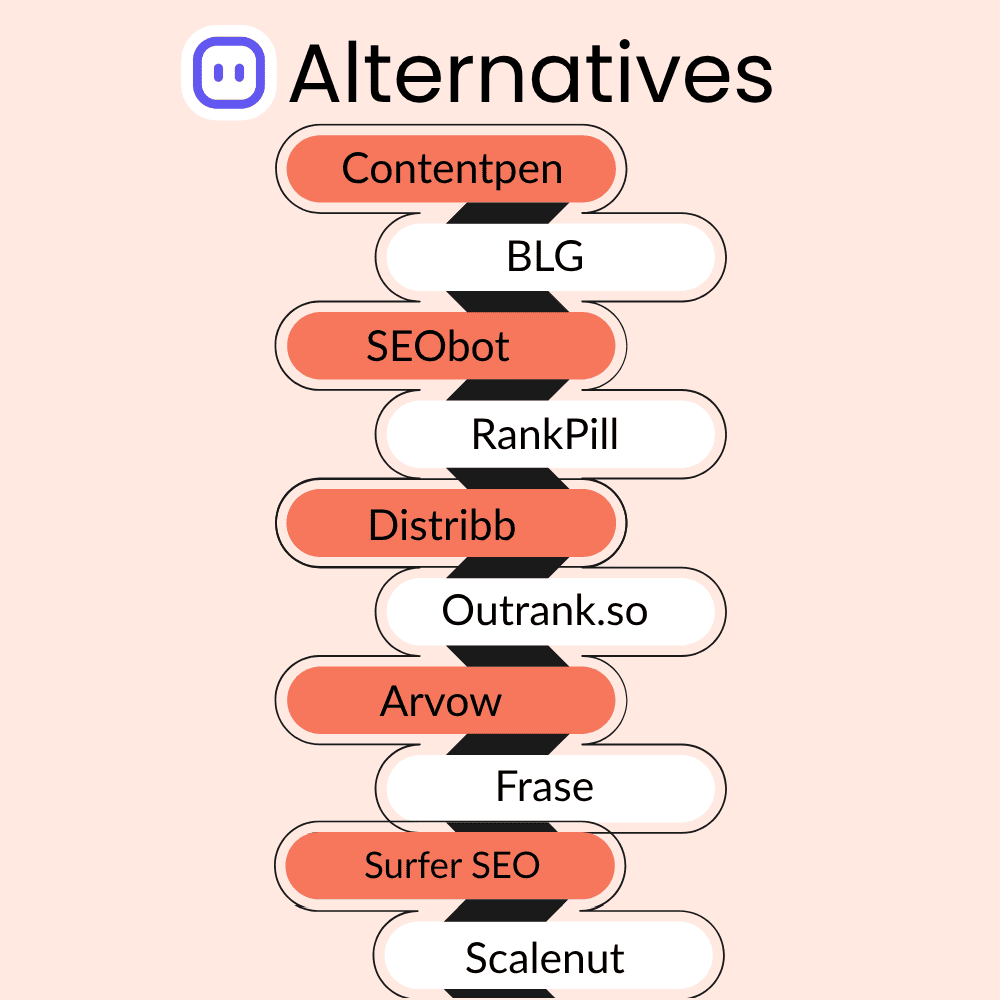
Question: What tools help find content gaps besides Contentpen?
Google Search Console performance data and manual competitor SERP analysis both work, though they take more time. Reviewing what current top-ranking pages leave out, then checking which queries already drive impressions, uncovers similar opportunities manually.
Question: Should I still build backlinks at all?
Backlinks still offer some value, so they shouldn’t be dismissed entirely. Once content fundamentals are solid, a light hybrid approach, like digital PR or earned media placements, is reasonable rather than aggressive manual link building.
Question: How do I know if my keyword difficulty score is misleading?
Most difficulty scores weigh competitor backlink strength heavily rather than content quality. A keyword marked hard may still be winnable if the ranking pages are thin, outdated, or don’t match what searchers are actually looking for.