 19 minutes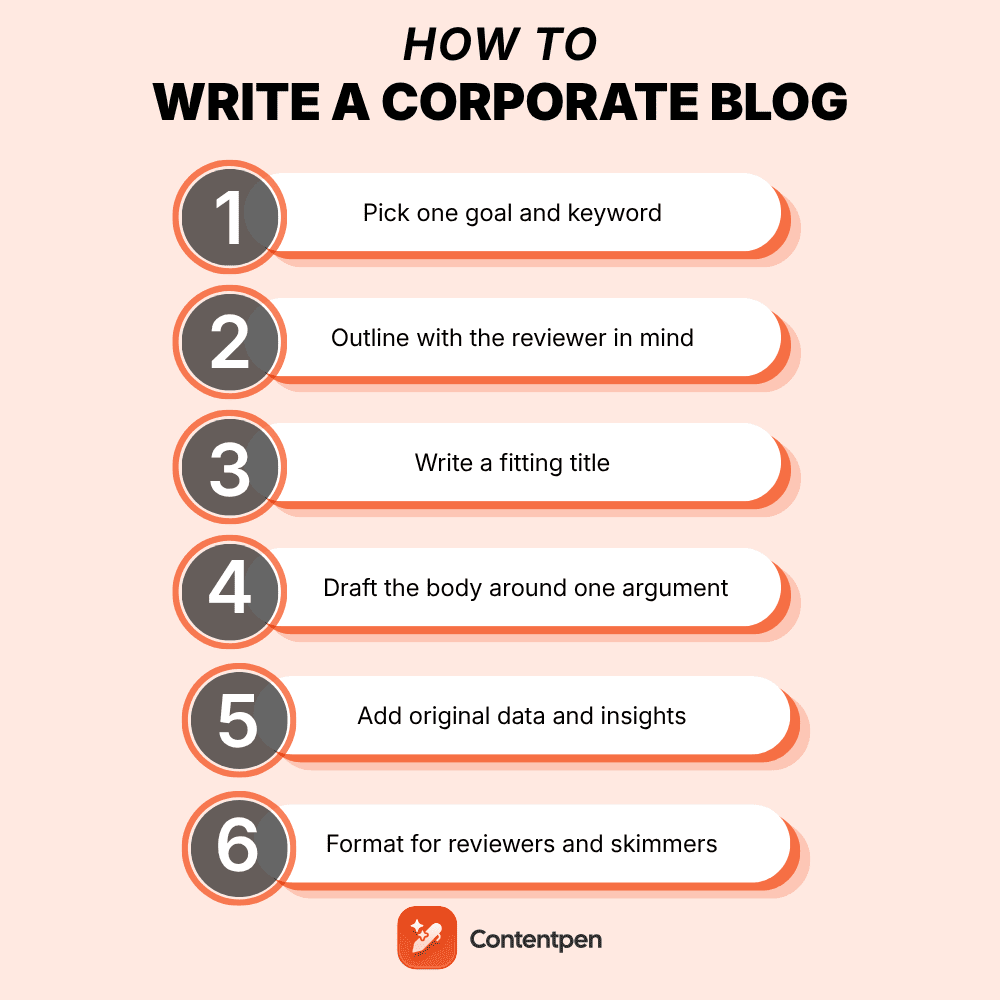
Most corporate blogs fail for the same reason. Too many people touch the draft before it goes live, and by the time all stakeholders have made their edits, the post reads like nobody in particular wrote it.
Writing a corporate blog means setting goals tied to the business, building a repeatable structure for every post, and getting approvals without losing the point of the article.
This guide walks through each of those steps, plus a framework for getting corporate content through legal and brand review without watering it down. You’ll also see where a platform like Contentpen fits into the workflow.
So, let’s get started.
Table of contents
- Key takeaways
- What is a corporate blog?
- How do you set goals and structure for a corporate blog?
- How do you write a corporate blog post step by step?
- How do you write corporate content that doesn’t read like a press release?
- The ACES framework: Getting corporate blog content approved without killing it
- Corporate blog examples worth studying
- How can AI tools like Contentpen help teams run a corporate blog?
- What happens after you publish?
- Final thoughts
- Frequently asked questions
Key takeaways
- A corporate blog is written for and reviewed by a company, so it needs a repeatable structure and should follow a specific voice guideline.
- Build a content mix across thought leadership, product education, customer proof, and company culture, so the blog doesn’t turn into one long product pitch.
- Use an approval framework like ACES to move drafts through legal, brand, and leadership review without losing the writer’s original point of view.
- Study a handful of strong corporate blogs for structure and tone, then adapt what works to your own industry.
What is a corporate blog?
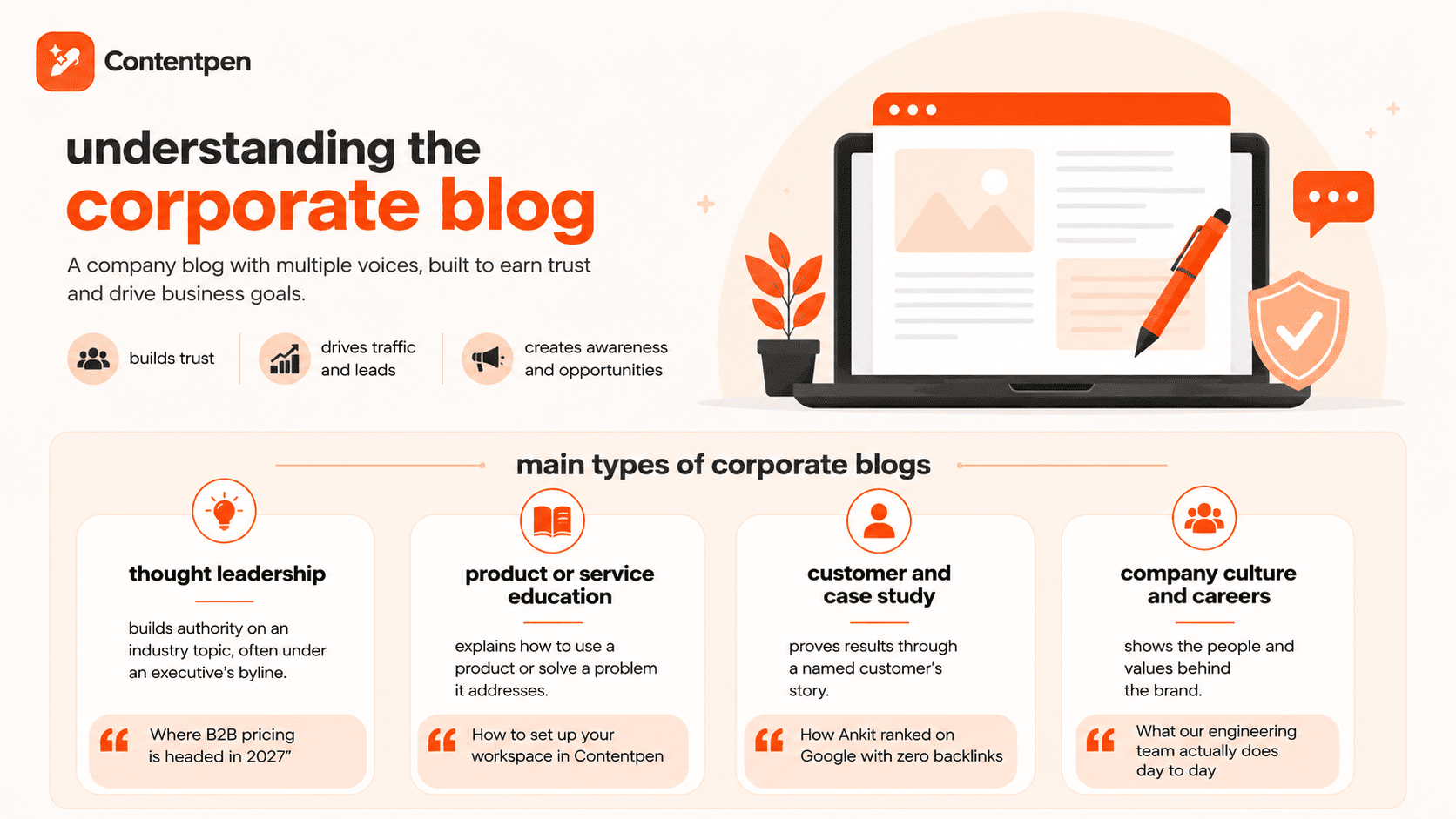
A corporate blog is a blog published by a company, usually with multiple contributors, that’s written to build trust with an audience. It also supports a business goal like gaining organic traffic, leads, or spreading awareness about open positions for hiring.
That sounds close to any other blog, and structurally it is. The differences show up in who writes it, who approves it, and what it’s allowed to say.
A blog about yourself or a niche blog like a travel blog answers to one voice and one set of opinions. A corporate blog answers to a brand. Every post has to sound tonally consistent, and every claim has to survive a legal or compliance read before it goes live.
The main types of corporate blogs
Most corporate blogs fall into one of four main categories, and knowing which one you’re writing helps you set the right tone before you draft anything.
| Blog type | What it does | Example topic |
| Thought leadership | Builds authority on an industry topic, often under an executive’s byline | “Where B2B pricing is headed in 2027” |
| Product or service education | Explains how to use a product or solve a problem it addresses | “How to set up your workspace in Contentpen“ |
| Customer and case study | Proves results through a named customer’s story | “How Ankit ranked on Google with zero backlinks“ |
| Company culture and careers | Shows the people and values behind the brand | “What our engineering team actually does day to day” |
A healthy corporate blog usually runs a mix of all four rather than leaning entirely on one. A blog that’s only product education starts to feel like a help center. A blog that’s only thought leadership starts to feel disconnected from what the company actually sells.
How do you set goals and structure for a corporate blog?
Setting goals for a corporate blog means defining what the business wants from it before anyone writes a single post. Then, you build your content plan backward from that goal.
Use the ROOT framework to define what the blog is actually for
Many companies have vague goals like “grow brand awareness”, which are hard to plan content around and impossible to report on later.
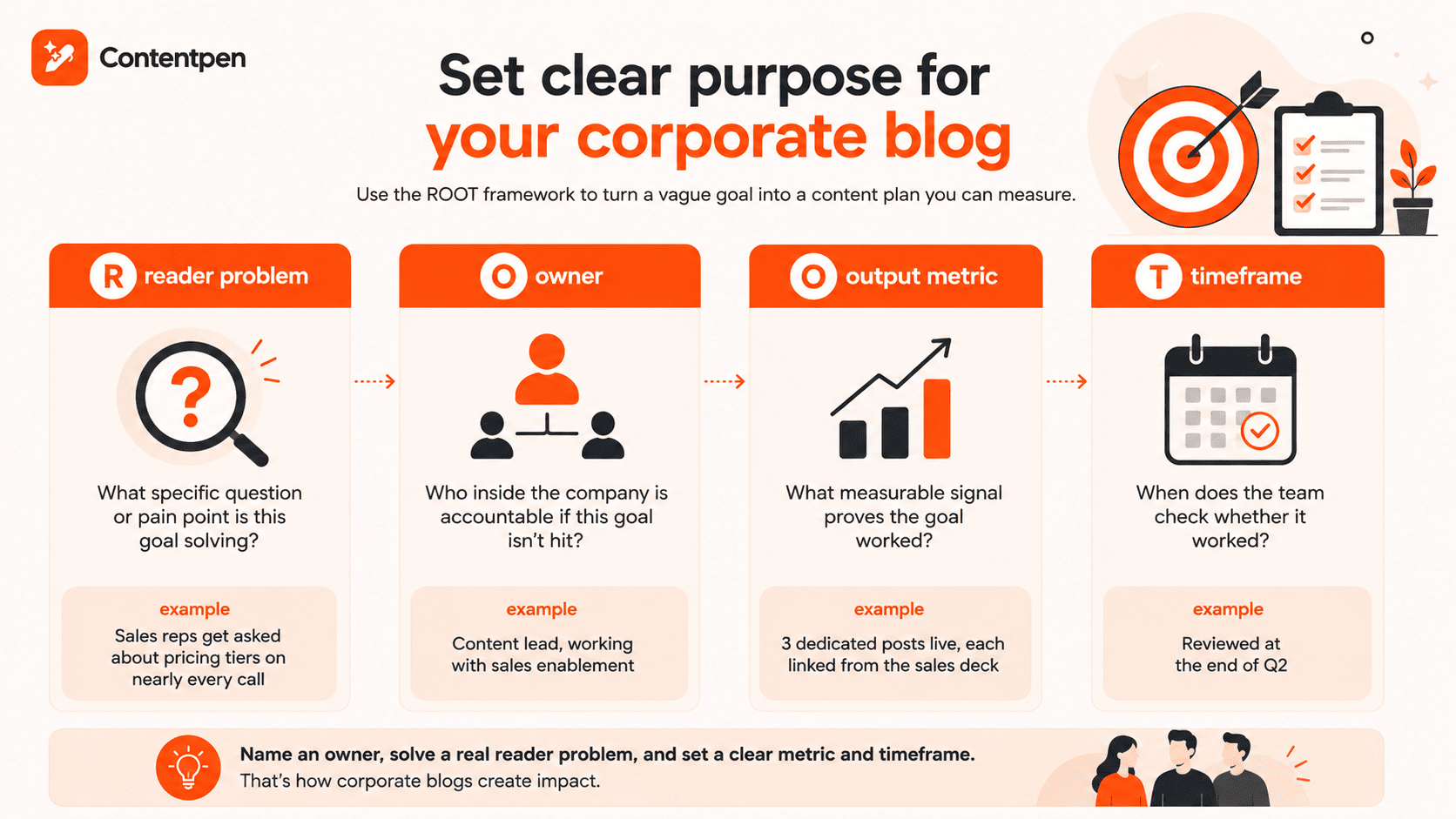
The ROOT framework covers that gap. It asks four questions before a single post gets written: Reader’s problem, owner of the content, output metric, and timeframe.
Let’s understand it in more detail below:
| ROOT element | What it answers | Example |
| Reader problem | What specific question or pain point is this goal solving | “Sales reps get asked about pricing tiers on nearly every call” |
| Owner | Who inside the company is accountable if this goal isn’t hit | “Content lead, working with sales enablement” |
| Output metric | What measurable signal proves the goal worked | “3 dedicated posts live, each linked from the sales deck” |
| Timeframe | When the team actually checks whether it worked | “Reviewed at the end of Q2” |
The owner column is what most goal-setting advice skips, and it’s the one that matters most for a corporate blog specifically.
A goal with no named owner tends to survive the first round of edits and quietly disappear by the third, since nobody’s job depends on the post actually shipping.
Once the goal has a reader problem attached, the content mix from the table above becomes easier to plan.
For example, a blog built to support sales needs more product education and customer proof. Similarly, a blog built to support hiring and PR efforts leans harder on culture and thought leadership.
Build personas around the departments the blog serves
A corporate blog usually has more than one reader to satisfy. A prospect researching your product, a journalist looking for a quote, and a candidate deciding whether to apply to your company are all reading the same blog for different reasons.
Instead of one broad persona, map 2-3 reader types to the departments that care about the blog’s success, such as sales, PR, and talent.
Ask each department what question they wish the blog answered, and you’ll have a running list of post ideas that ties directly to a business need instead of a guess.
How do you write a corporate blog post step by step?
Writing a corporate blog post well comes down to the same core mechanics as any SEO-friendly post, applied with a bit more discipline before it goes live.
#1: Pick one goal and one keyword per post
Before you outline anything, decide what this specific post is for. Once the goal is clear, pick one primary keyword and do a quick pass of keyword research to confirm real people are searching for it.
Corporate blogs often skip this step and write about whatever the executive team wants to say that week, which is how you end up with posts nobody ever finds.
You can use many different strategies to complete this step. For instance, search for terms trending right now in Google Trends for your niche. This tool will help you get a piece of content that quickly climbs rankings, even if only temporarily.
For instance, if you are a touring company in Arizona, you may create an awareness guide about the Grand Canyon floods (trending as of writing this post).
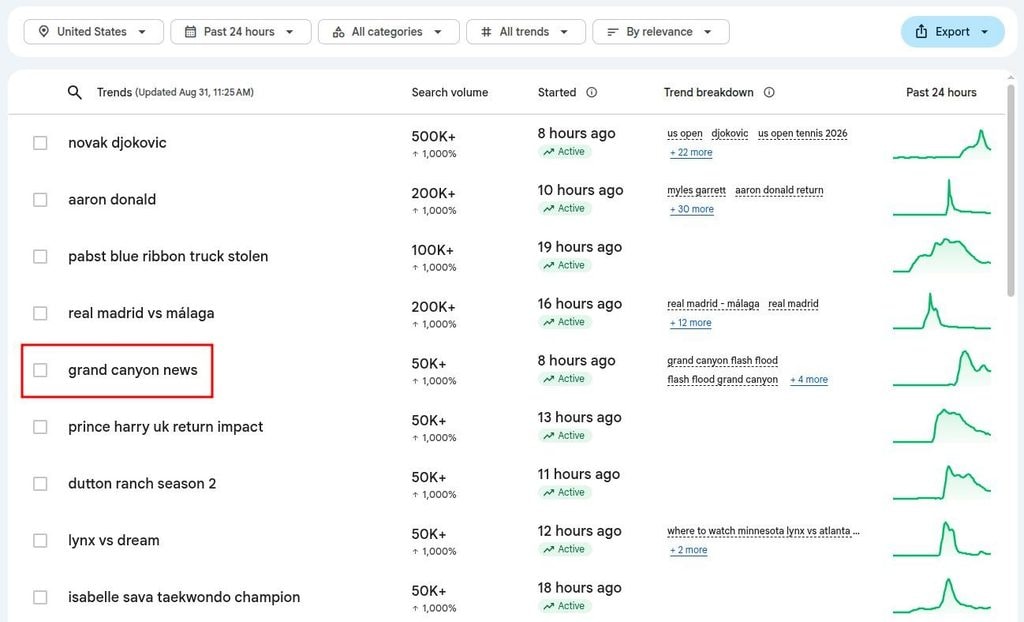
Why? Because it is already a trending topic, and if you tell people about this news, you might also build trust with them that you actually care about their safe travels. Win-win.
Mix trending pieces with evergreen content, such as ‘HowTo guides’, ‘What is [X]’ articles, and other learning blogs that keep bringing in valuable traffic for your business over time.
For instance, as a B2B consulting agency, you can search for head terms, such as “B2B content marketing”, “B2B sales”, etc., on a dedicated keyword research tool like Ahrefs.

Immediately, you can see that keywords like “what is B2B sales” show promising keyword volume, less KD, and higher traffic potential.
Later, you can plan your content around either of the topical clusters mentioned earlier, or use Contentpen to make your topic keyword into a complete, SEO- and GEO-optimized blog.
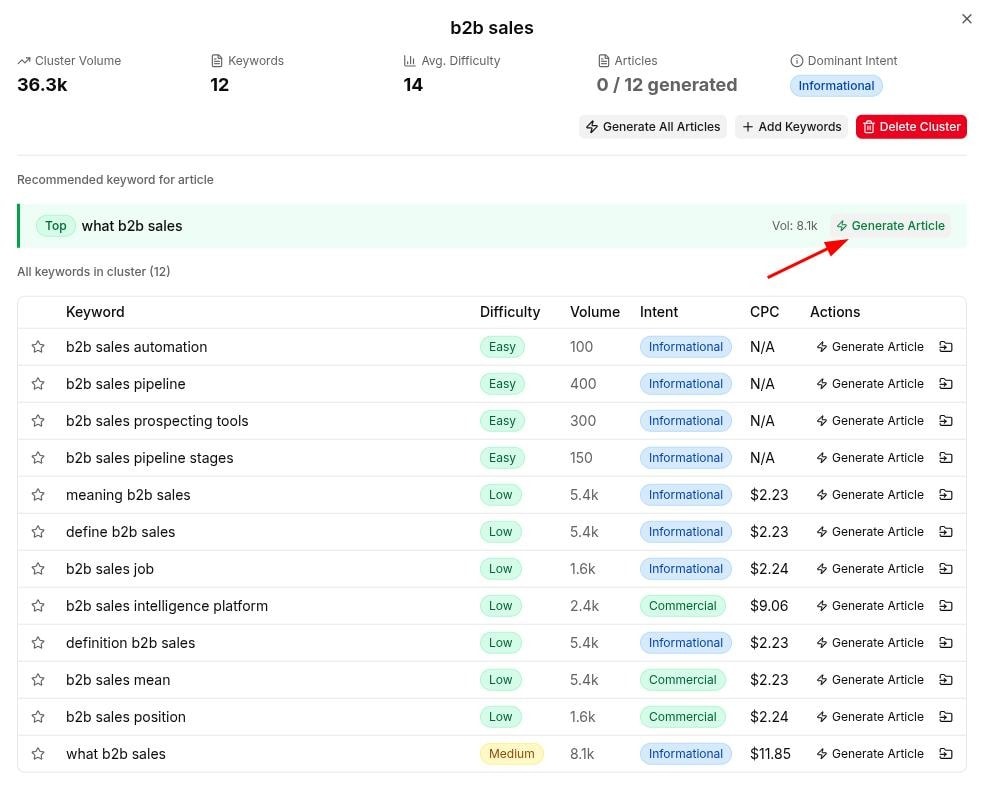
From there on, generate outlines and blog content directly with a click of the ‘Generate Article’ button.
#2: Outline with the reviewer in mind
A corporate blog outline needs one extra column that a personal blog outline doesn’t: who has to approve this section.
Some of the aspects of your corporate blog that need attention:
- Title and keyword intent
- H2 and H3 headings, with any sections that need a legal, brand, or subject-matter-expert review flagged early
- Internal links, data points, and any claim that will need a source
- The one CTA this post is building toward
Flagging the sensitive sections in the outline, not after the draft is written, saves the most time. If legal is going to want to soften a claim about a competitor or a specific number, better to know that before a writer spends three hours drafting around it.
#3: Write a title that survives brand review
A strong corporate blog title includes the primary keyword, makes a real promise, and stays under 60 characters so it doesn’t get cut off in search results.
Brand teams tend to push corporate titles toward something safe and generic. The way to keep a title sharp is to make the promise specific instead of vague.
For instance, “how to cut onboarding time in half” instead of “improving your onboarding process.” Specific claims are also easier for legal to fact-check quickly, which speeds up the approval process instead of slowing it down.
#4: Draft the body around one clear argument
Every strong corporate blog post makes one main argument and supports it, followed by a list of supporting arguments, all backed up with clear data points.
Open with a real problem the reader actually has. State the primary keyword naturally within the first 100 words, then let the argument unfold through headings that mirror how someone would search for the answer.
Here, it is also important to understand the “query-fan-out” process that AI answer engines use to understand and cite content.
As a hypothetical example, consider the blog title “how to write a corporate blog that converts.” This can be broken down into three important parts: A) how to write a blog, B) understanding the corporate part of a blog, and C) conversion optimization.
You can use tools like AnswerThePublic to grasp all variations and subquestions a user will search for given a topic.
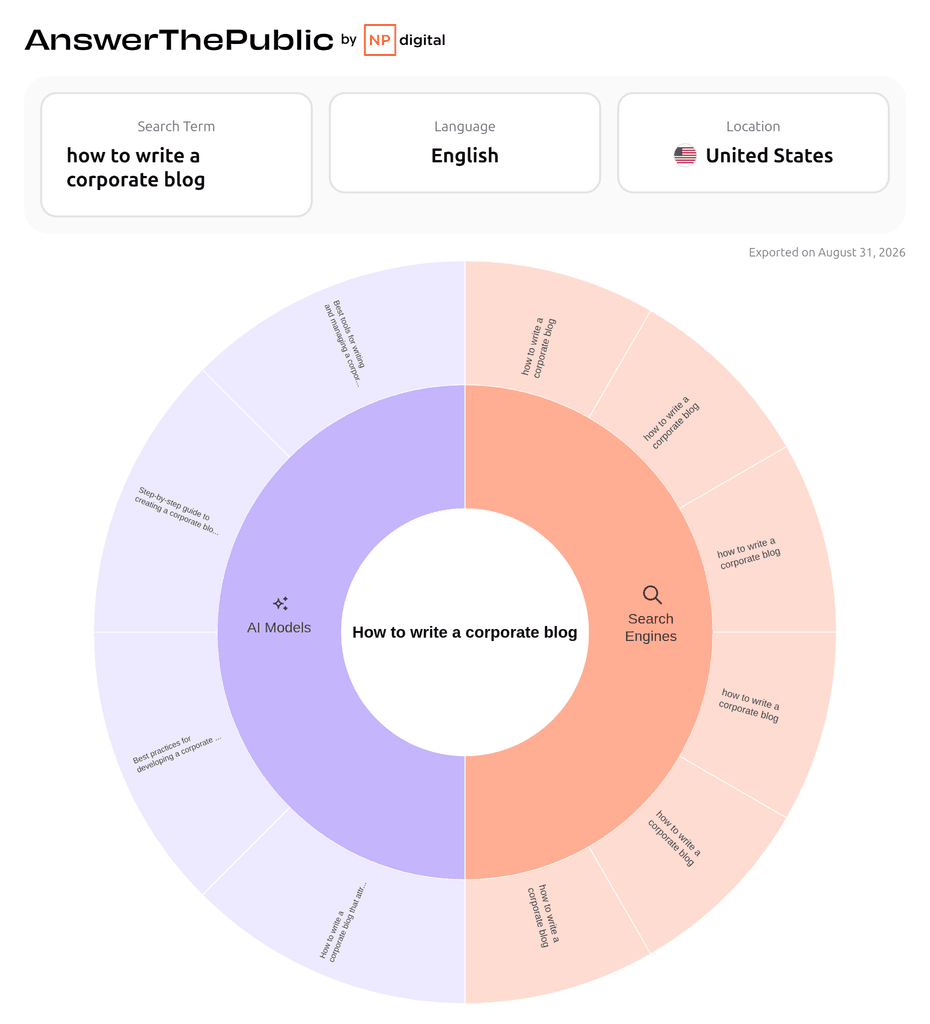
If you want to skip using tools, you can directly search your topic in a Google search. Look for “People Also Ask” search boxes and autocomplete queries to learn about subqueries you need to target for one clear argument in your post.
Where the company’s product genuinely solves part of the problem, say so plainly and once. Readers and reviewers trust a post more when the pitch shows up in one clear place instead of being sprinkled through every paragraph.
#5: Add proof a competitor’s post skipped
The posts that outperform in this category almost always include something a generic AI-written explainer can’t: A real number from the business, a quote from an actual employee, or a specific customer example.
If your company has performance data, a survey result, or even an internal benchmark that isn’t confidential, that’s worth more than another paragraph of general advice.
It’s also the detail that tends to get pulled into AI Overviews and other answer engines, since those systems favor content with something unique and specific to cite.
#6: Format for reviewers and skimmers at once
Corporate blog posts get read twice, once by the audience and once by everyone who has to approve it.
Therefore, it is important to use short paragraphs, clear subheadings, and a bolded takeaway to make both of those readers move faster through the content.
Break up long sections with a table, a short list, or a quote from a subject-matter expert (SME).
It’s the same on-page readability advice that applies to any blog post. But it matters more here because stakeholders can easily skim past important claims in the text if it isn’t formatted properly.
How do you write corporate content that doesn’t read like a press release?
Writing corporate content that doesn’t sound corporate means writing like the specific person who knows this topic best, then editing for clarity later.
Most companies follow the instinct of “softening” every sentence until nothing can be misread.
That instinct is what turns a useful post into something that reads like a professional blog post written by a committee instead of a person.
Write the first draft with one named voice in mind
Before a writer starts drafting, pick one real person at the company who actually knows this topic, and write the post in their voice and opinions.
The reason this matters comes down to what happens in review. A generic post is easy for a reviewer to edit further into blandness, since there’s no specific person’s judgment being overwritten.
However, a post that clearly reflects one expert’s actual POV is harder to soften, because doing so means contradicting a named person’s stated opinion.
Compare these two openings for the same section:
Generic company voice: “Our team believes that customer onboarding is a critical part of the user journey and should be given careful consideration.”
One named voice: “Our head of customer success has run onboarding for over 200 accounts, and her take is blunt: most companies over-explain the product in week one and under-explain it in week three, right when people actually start hitting friction.”
The second version has a specific claim, from a specific person, that a reviewer would have to actively argue to cut. The first version has nothing to defend, so it gets cut the quickest.
Cut the words that only exist to sound safe
Phrases like “leading provider,” “best-in-class,” and “innovative solution” don’t tell a reader anything, and they’re usually the first thing an editor would cut from the draft.
Replace a vague claim with a specific one wherever you can. For instance, “we cut support tickets by a third with our XYZ system” says more than “we significantly improved customer satisfaction.”
Specific claims are also easier to fact-check for both reviewers and audiences, which improves your TAT (turnaround time) for blogs and instills trust with the audience.
Let the company’s real opinion show up somewhere
A corporate blog post doesn’t have to be neutral on every topic.
If your company has a genuine point of view on where the industry is headed, or disagrees with a common piece of advice, that opinion is often the most shareable part of the post.
It shows that the corporate blog has real “spine” to stand out from the pack, given that the advice given or the disagreement isn’t entirely on false grounds.
For example, disagreeing on the fact that page speed affects rankings is indefensible, since it’s a known fact for a long time now, as confirmed by Google.
But one could argue about the statement “gated content converts better”, since it is a debatable topic, especially as its interpretation changes from niche to niche.
Either way, neutral, safe content rarely seems to earn its place. It barely gets any backlinks, quotations, leads, or conversions. Meanwhile, a clear, defensible opinion does stir things up and can help you build a trusted following online and establish yourself as an authority.
The ACES framework: Getting corporate blog content approved without killing it
The step that’s unique to corporate blogging is getting a draft through everyone who has a stake in it without losing its original voice or meaning.
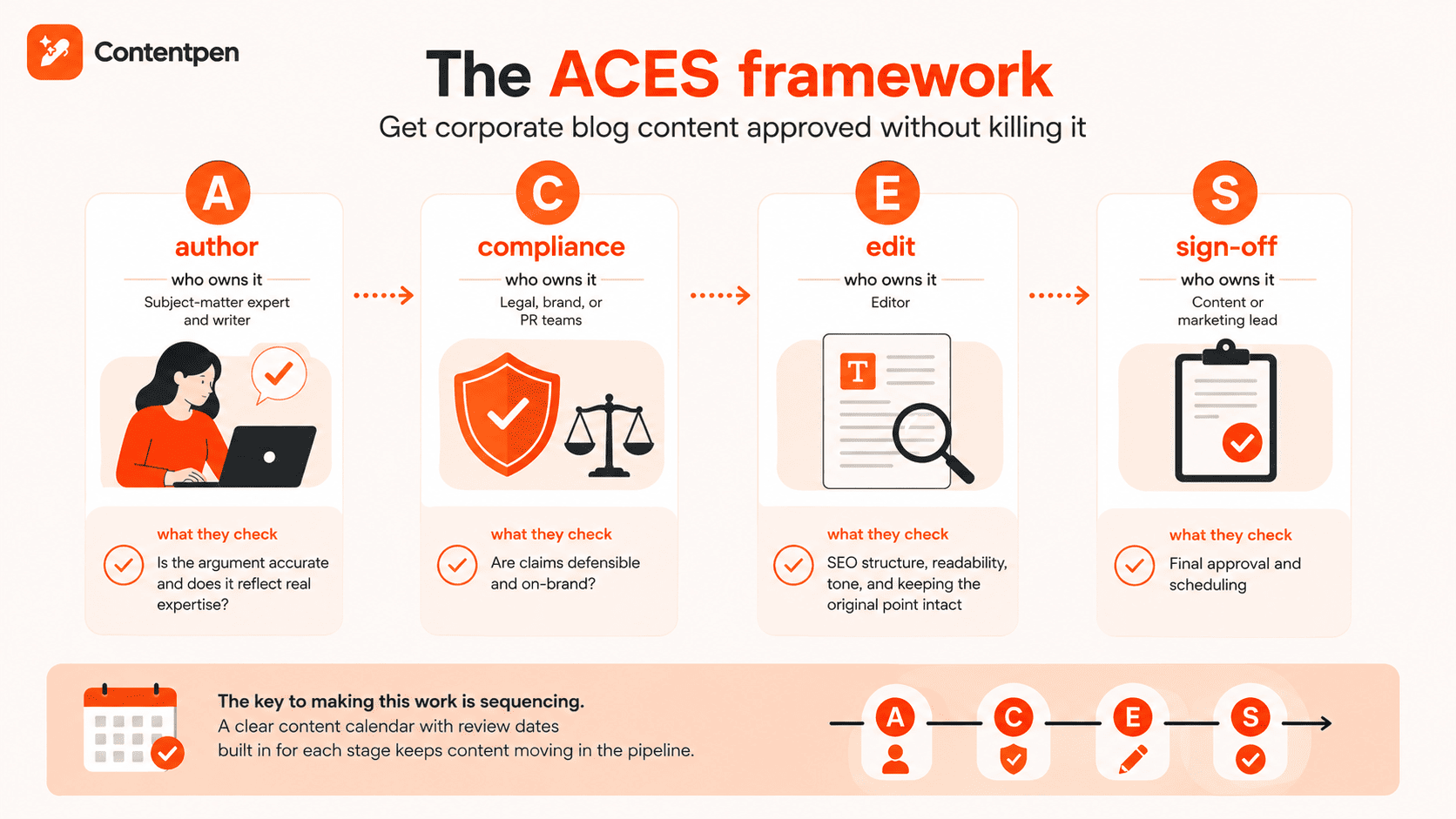
The ACES framework breaks that process into four main stages:
| Stage | Who owns it | What they check |
| Author | Subject-matter expert and writer | Is the argument accurate and does it reflect real expertise? |
| Compliance | Legal, brand, or PR teams | Are claims defensible and on-brand? |
| Edit | Editor | SEO structure, readability, tone, and keeping the original point intact |
| Sign-off | Content or marketing lead | Final approval and scheduling |
The key to making this work is sequencing. Giving each stage one owner also helps avoid the problem of all stakeholders editing the same document at once, which helps simplify the writing workflow.
A clear content calendar with review dates built in for each stage keeps content moving in the pipeline.
Corporate blog examples worth studying
Good corporate blog examples share a few habits worth borrowing regardless of your industry.
#1: HubSpot blog

HubSpot’s blog stays organized around clear reader problems instead of company news. They offer many learning resources and free templates for their users on their blog for social media scheduling, email writing, etc.
#2: Basecamp blog
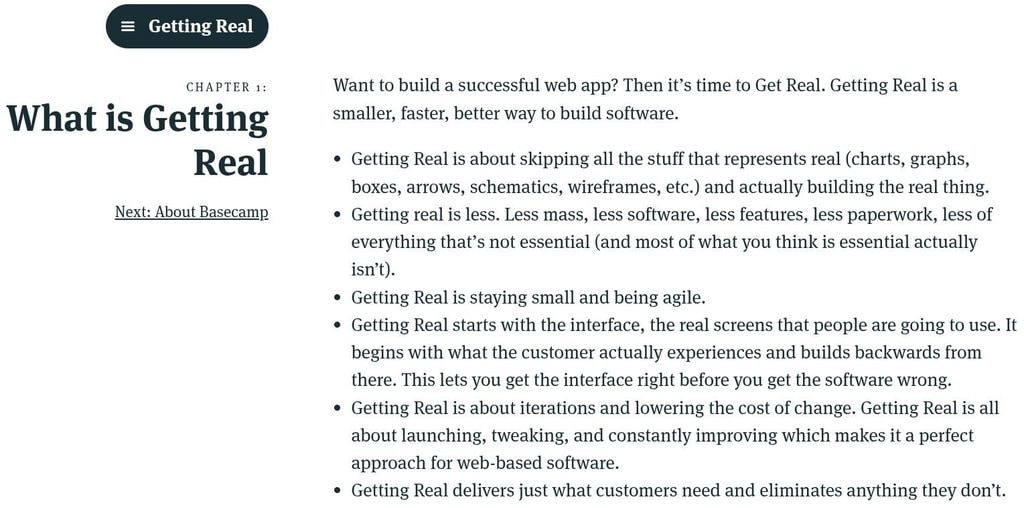
Basecamp’s blog leans on strong, specific opinions from its founders rather than neutral advice. They share unique frameworks, like “Getting real”, and playbooks that software developers, marketers, and sales professionals can use to sell better and more efficiently.
#3: Slack blog
Slack’s blog mixes product education with genuine workplace culture writing that doesn’t feel like a pitch.

None of these blogs read like they were written by committee, even though every post almost certainly went through a review process.
The posts that hold up are the ones where a real opinion or a real detail survived that process instead of getting edited out.
If you want a broader set of formats to study beyond corporate blogs, our roundup of strong blog examples covers a wider range of marketing and content blogs across industries.
How can AI tools like Contentpen help teams run a corporate blog?
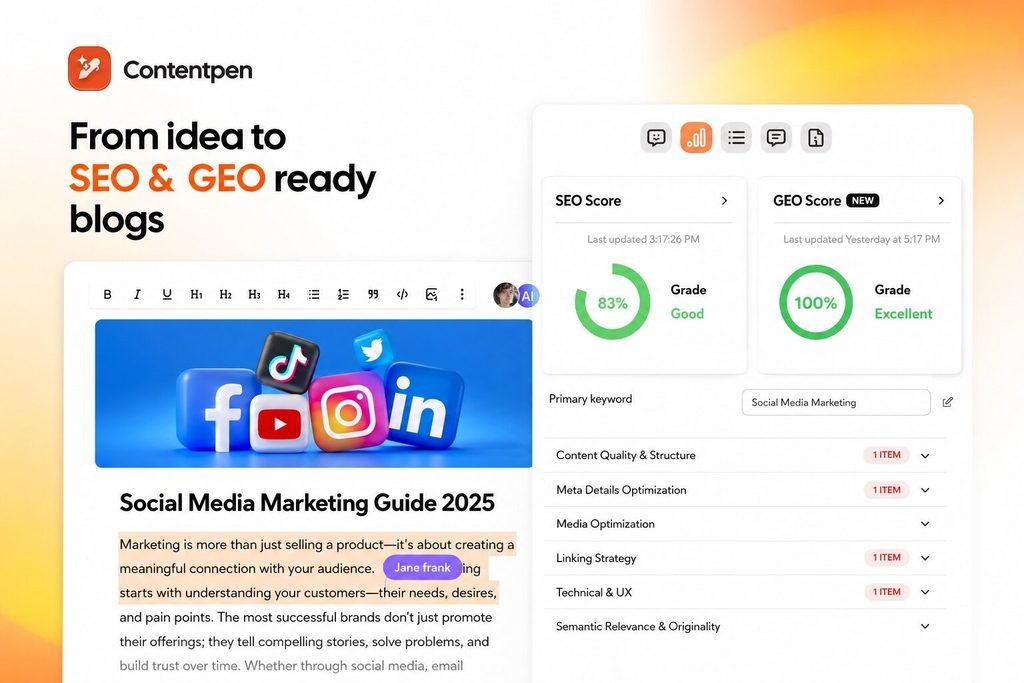
AI tools help corporate blogging teams the most in the parts of the process that don’t need a human opinion, research, outlining, and formatting. They help you spend your time on the parts that do matter, like the SME’s actual argument and the review process.
This is where Contentpen fits in. It is an AI-powered blogging platform that owns the entire keyword research to content creation, optimization, and publishing pipeline.
Workflows and content planning
It also offers editorial and approval-based workflows to keep everyone in the loop and a content calendar that helps you plan and publish posts regularly.
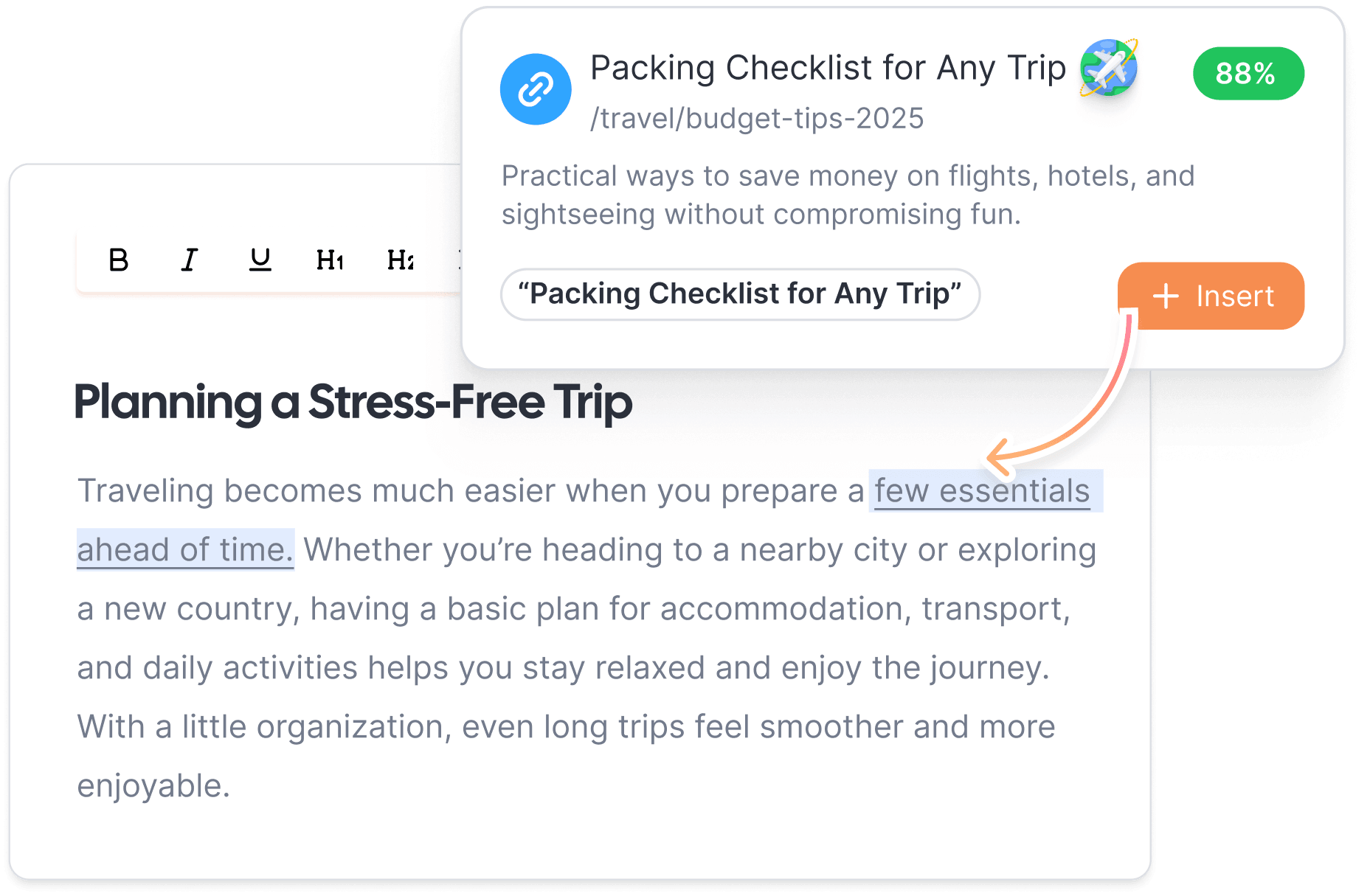
Automated interlinking
Once a draft is written, the built-in AI linking assistant connects new posts to existing product pages, use case pages, and past articles automatically. This helps a growing corporate blog stay connected internally without any disjoints.

Improve SEO with automated linking that fills them

Adds context-aware internal and external links automatically
Uses relevant anchor text to improve SEO and content flow
SEO opportunities to fix rankings
Find what blogs are losing rankings, clicks, and engagement with the SEO opportunities feature. Fix decaying posts with one click instead of a full rewrite.
Turn existing content into growth opportunities
Identify pages losing traffic or CTR
Find quick wins to improve clicks and rankings
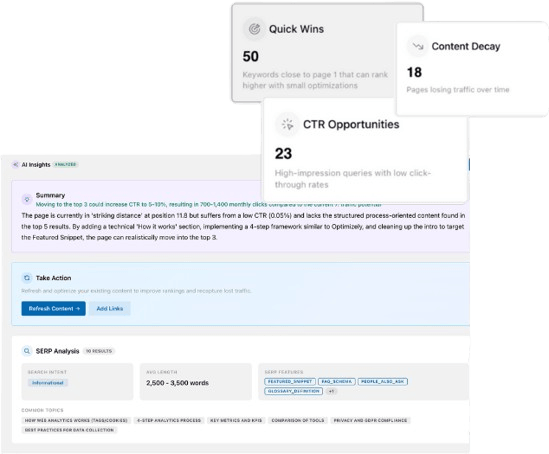
SEO opportunities also surface cannibalization issues, competitor gaps, and pages that need slight editing to regain top search positions.
Bulk content creation for enterprises
Larger teams and enterprises managing content across multiple departments also get more out of bulk content creation for producing several posts at once without disrupting brand voice.
AEO dashboards for PR and brand teams
PR and brand teams tracking how the company shows up across AI search results can use Contentpen’s AI visibility tool. They can see their brand sentiment, share of voice in the niche, and source gaps against rivals within one dashboard.
None of this replaces the ACES review process above. It just removes the busywork around it so the review process has more time to focus on the one thing that actually matters, whether the argument in the post is any good or not.
What happens after you publish?
Publishing a corporate blog post is the start of the work, not the end of it. Most teams promote and distribute a new post externally and stop there. But the sales, PR, and customer success teams inside your own company are often the fastest way to get it in front of the right people.
Share the post internally so sales can use it in outreach and customer success can link it in support conversations.
Once the post is live, share it the same way you’d share any other blog post, on social, in email, and in relevant communities. If the post is driving real results, consider putting paid budget behind it too.
Corporate blogs also go stale faster than personal blogs. Product details, pricing, and quotes from executives change more often than general advice does.
Set a simple review cadence, so your team catches outdated claims before a customer or journalist does.
Final thoughts
A corporate blog isn’t just a personal blog with a bigger budget. It’s a company asset, and it has real stakeholders who expect it to be treated that way.
Set goals with something like the ROOT framework and build a content mix that serves more than one department. Use a clear approval process like ACES so review strengthens a post instead of flattening it.
For the next step, start with one post, run it through this process end to end, and adjust the framework to fit how your team actually works.
If you want help managing the research, structure, and scheduling side of that process, a platform like Contentpen is ideal to handle the repetitive parts of that pipeline.
So your team’s time goes toward strategizing, writing, and reviewing the posts, instead of mundane tasks.
Frequently asked questions
A corporate blog and a company newsletter are two different terms. A newsletter is an email usually sent directly to an existing contact list on a schedule. While a corporate blog lives on the website and is built to attract new readers through search and AI answer engines over time.
Beyond the examples covered earlier, you can follow Zendesk, Mailchimp, Notion, and Ahrefs corporate blogs. For example, Ahrefs provides original data-backed posts that provide valuable insights to marketers and SEO professionals. Studying a mix of these examples across different industries tends to surface usable blog ideas.
No fixed word count guarantees rankings. But most corporate blog posts that perform well in competitive B2B categories run somewhere between 1,500 and 3,000 words. They are long enough to cover the topic fully and short enough to stay tightly argued.
The strongest corporate blogs usually combine all three rather than choosing one. Subject-matter experts inside the company supply the insight and opinions, and a writer (in-house or agency) shapes that into an SEO-friendly post. AI tools handle research, outlining, and formatting to speed up the parts that don’t require a human perspective.

Jawwad
Jawwad Ul Gohar is an SEO and GEO-focused content writer with 3+ years of experience helping SaaS brands grow through search-driven content. He has increased organic traffic for several products and platforms in the tech and AI niche. As an author at Contentpen.ai, he provides valuable insights on topics like SEO technicalities, content frameworks, integrations, and performance-driven blog strategies. Jawwad blends storytelling with data-driven content that ranks, converts, and delivers measurable growth.
View all posts by this author