 15 minutes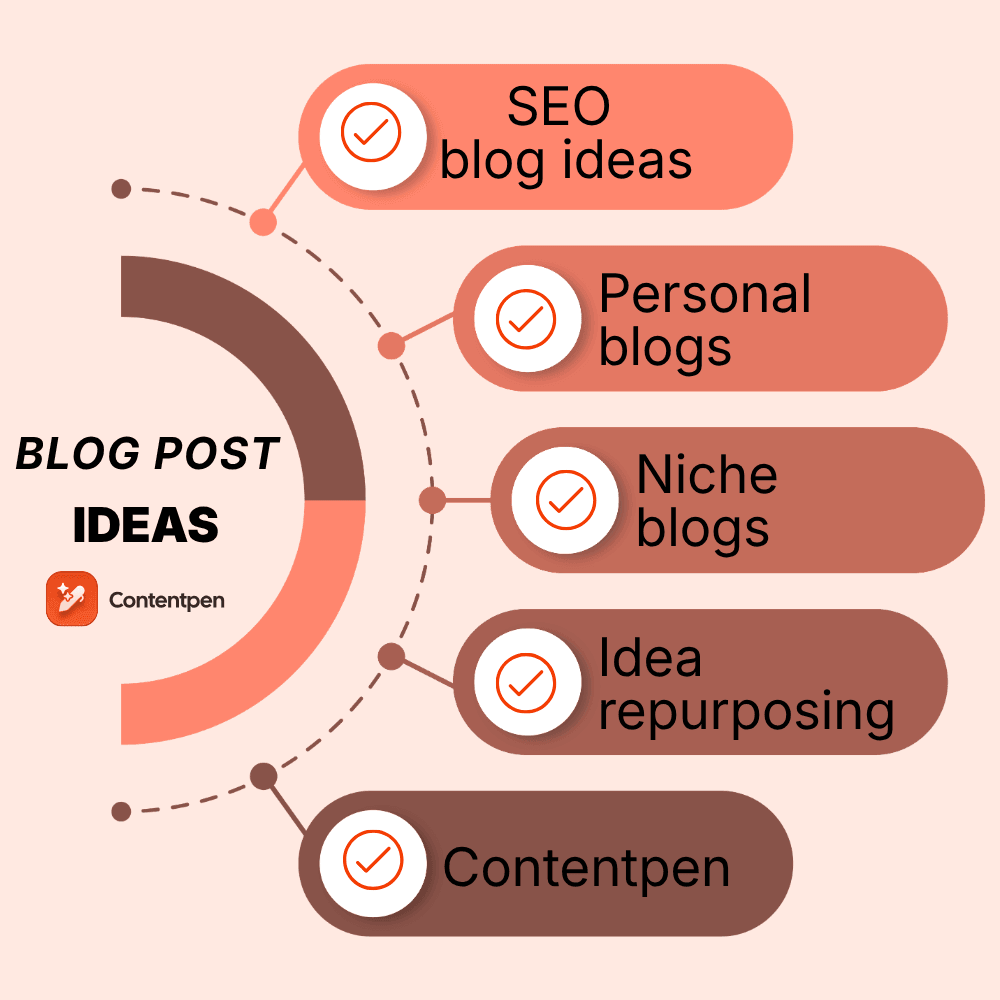
Blog post ideas are ways to start, polish, or end a copy without spending time staring at a blank screen.
The real problem usually isn’t a shortage of things to say. It’s not knowing which topic actually deserves the next hour of your writing time.
This guide fixes that fast. Below you’ll find 120 blog post ideas sorted into categories built around real goals, including driving traffic, building trust, connecting with readers, and growing a business.
Each list gives you short, adaptable ideas that you can bend to fit your own niche in minutes, with no guesswork required.
So, let’s get started.
Key takeaways
- Writer’s block usually comes from unclear direction, not an actual lack of ideas.
- SEO, trust-building, personal, and business-focused ideas each serve a different purpose, so match the idea to your goal.
- Pick one idea from the list of 120 others, adapt it to your niche, and start writing today instead of waiting for the perfect topic.
- AI tools like Contentpen can help turn any idea on this list into a full blog post in minutes to help you save time and effort while drafting content.
Why do bloggers run out of ideas?
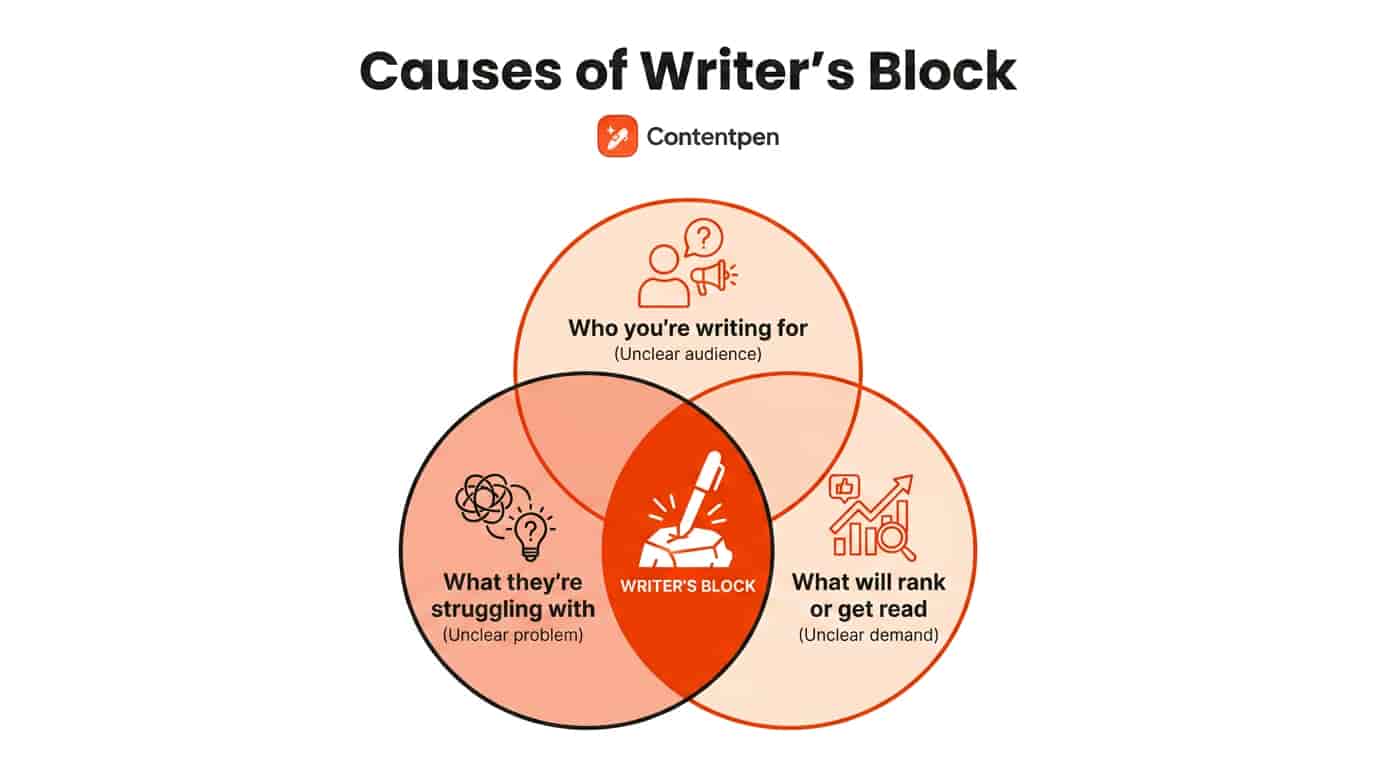
Bloggers run out of ideas when they lose sight of what their audience actually wants to read, not because inspiration has dried up. They might mix up the topics that they want to write on versus what is actually demanded by their audience.
In some cases, bloggers also run dry of ideas to write about a particular pillar topic when they’ve been focusing on an entirely different niche, audience, or product for too long.
Also read: 23 product blog examples to inspire your own in 2026.
How should you deal with the shortage of blog post ideas?
The fastest fix in these situations is to stop chasing generic inspiration and start with the questions your readers already keep asking you.
To find those questions, check your email, DMs on social media, and other sources, and write content to address those exact queries.
You can even share something from your own experience or pick something up from a conversation you once had with a person of interest and talk about it.
There are multiple ways to get rid of writer’s block, but the best way is to simply “write.”
We know this sounds a bit odd, but writer’s block is actually just a self-induced state of mind where a person might think, “I am not good enough for XYZ audience, or I won’t get ranked for this topic, etc.”
The best way out is to write, write, and write without any worries about editing or polishing the content. You can edit the draft later.
Once you’re writing, you may even get more blog ideas that you can use for related subposts later.
Remember, the best blog is the one that’s written.
120 blog post ideas to beat writer’s block
With that out of the way, let’s explore 120 blog post ideas, grouped by a specific goal, so you can jump straight to the category that fits whatever you’re trying to achieve this week.
SEO and traffic-focused blog ideas
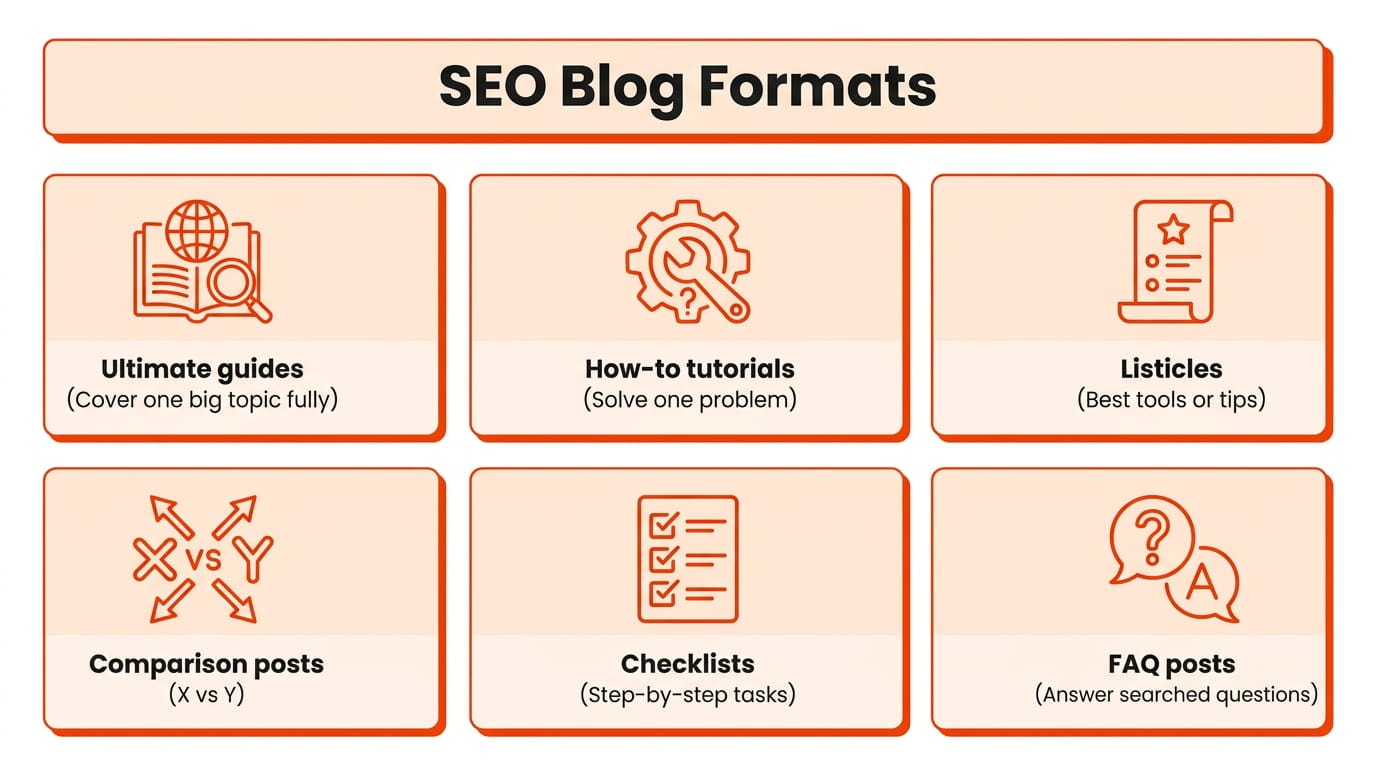
These blog post ideas work best when they’re tied to a real, searchable question your audience is already typing into Google.
- Ultimate guides covering everything readers need to know about one big topic. For instance, “What is blogging?”
- How-to tutorials that solve one specific, searchable problem. For example, “How to turn your blog into a profitable online business.”
- Listicles rounding up the best tools, resources, or tips in your niche. Example: “14 best AI blog writers in 2026.”
- Comparison or “X vs Y” posts that help readers choose between two options, for instance “Webhook vs. API.”
- Checklists that turn a process into an easy step-by-step task. Take our blog “How to write a blog post” as an example.
- FAQ posts answering the exact questions people type into Google.
- Glossary posts defining confusing industry terms in plain language.
- Seasonal or trending posts tied to a specific time of year.
- Roundup posts featuring expert tips or product picks for your niche.
- Beginner’s guides breaking a complex process into simple steps. For example, “How to start a blog in 8 simple steps.”
- Data-driven posts sharing fresh statistics relevant to your industry.
- Best-of lists for tools, services, or resources in your space.
The next step is to build the most complete, useful piece of content available online that answers all users’ questions. This approach consistently draws organic traffic because it matches actual search intent rather than assumptions about what readers might want.
Trust and authority-building blog ideas
Trust-building blog ideas work well for freelancers, consultants, and small businesses that need to prove real expertise before a reader becomes a client.
- Behind-the-scenes posts showing your actual process or methodology.
- Case studies and customer testimonials walking through a real project and its results.
- Common mistakes people make in your industry, and how to avoid them.
- Myth-busting posts correcting misconceptions in your field.
- Tool or service comparisons that position you as the trusted pick. Example: “The best Jasper AI alternative in 2026.”
- FAQ roundups answering the questions clients ask most often.
- Opinion pieces taking a clear stance on a debated industry topic.
- “What not to do” posts for a common process in your field.
- Explainer posts breaking a complex topic into plain language. For instance, “What is AEO? Explained for beginners.”
- Reviews of a product, course, or tool your audience relies on. Example: “Surfer SEO review in 2026.”
These post ideas show your process and thinking instead of just stating that you’re qualified, which builds far more credibility than a simple about-us claim ever could.
Personal storytelling and lifestyle blog ideas
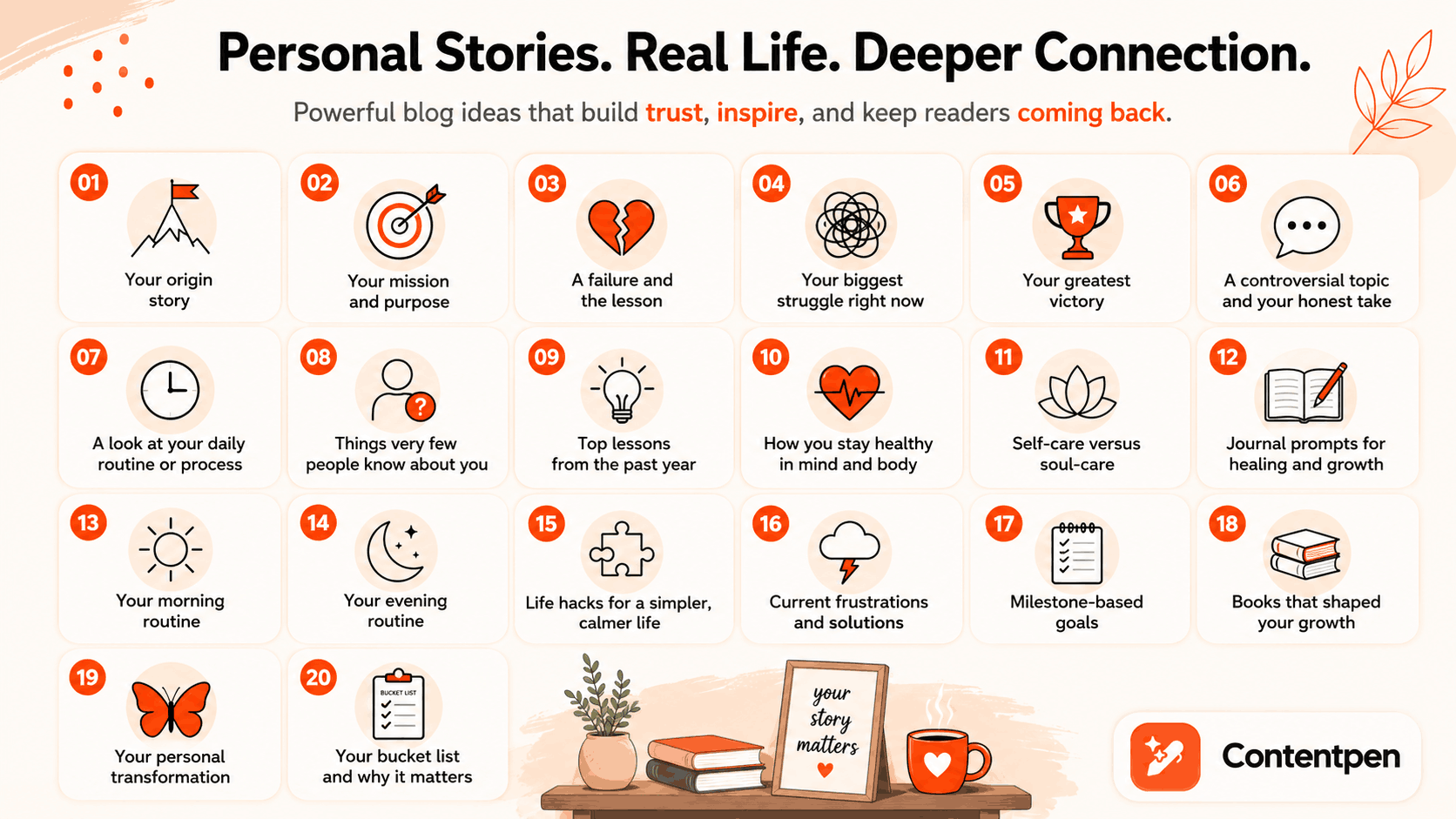
This category works especially well for solo bloggers, creative professionals, and lifestyle brands that want their audience to feel like they actually know them.
- Your blog’s or business’s origin story, including how you actually started.
- A mission statement describing what your blog stands for.
- A personal failure or setback and the lesson you took from it.
- Your biggest struggle right now, discussed honestly.
- Your greatest victory to date, with real detail.
- A controversial topic in your niche, paired with your honest opinion.
- A genuine, unfiltered look at your daily routine or work process.
- Things very few people know about you.
- Top lessons you learned over the past year.
- How you personally stay healthy, mentally and physically.
- The difference between self-care and deeper “soul-care” habits.
- Journal prompts built around a specific theme or struggle.
- Your morning and evening routines, described in detail.
- Life hacks that support a simpler, calmer lifestyle.
- Current frustrations you’re facing and the solutions you’ve found.
- Milestone-based goals, such as a “30 by 30” style list.
- Book recommendations tied to personal growth or simple living.
- A personal transformation story your audience can relate to.
- Your bucket list, and why those specific items matter to you.
- What a mental health break genuinely looks like for you.
Personal storytelling and lifestyle blog ideas build genuine connection because readers respond to honesty far more than polished, generic advice.
Blog post ideas for students
Student-run and education-focused blogs need ideas that speak to a very specific stage of life, where tight budgets and first-time independence matter more than polish.
- How to build a study schedule that actually sticks.
- Budget-friendly meal ideas for dorm life or a first apartment.
- What no one tells you about picking a college major.
- A breakdown of scholarships or grants you wish you’d known about sooner.
- How to balance a part-time job with a full course load.
- Study techniques that worked for you, and ones that didn’t.
- A guide to surviving finals week without burning out.
- What your first internship actually taught you.
- How to network in a new city as a student with zero contacts.
- The real cost of textbooks, and cheaper alternatives that work.
- A roommate survival guide based on real experience.
- How to build a resume with little to no work history.
- What changed for you between freshman year and now.
- A comparison of note-taking apps built for student use.
- How to prep for a career fair as a first-time attendee.
These ideas and blog post examples for students work well for education blogs, campus publications, and newsletters because they mirror the questions students ask their peers, not their professors.
Business growth blog ideas
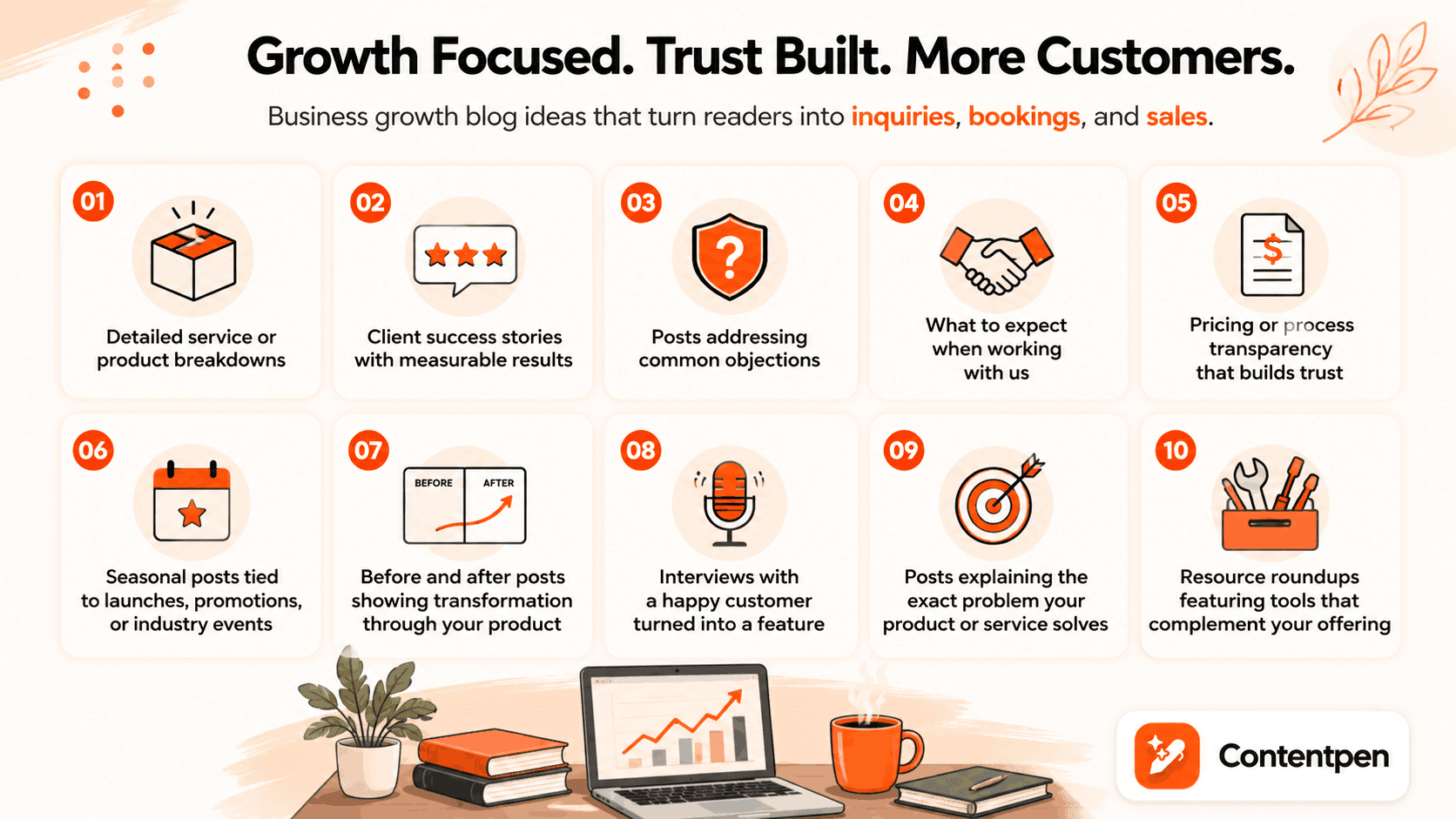
Business blog posts are used to move readers further down the sales funnel instead of just building general awareness. Some ideas include:
- Detailed service or product breakdowns explaining exactly what you offer.
- Client success stories framed as narrative case studies that spotlight one specific, measurable result a prospect can expect.
- Posts addressing common objections potential customers raise before buying.
- “What to expect when working with us” style posts.
- Pricing or process transparency posts that build early trust.
- Seasonal posts tied to a launch, promotion, or industry event. For instance, “Google Preferred Sources update in 2026.”
- Before-and-after posts showing transformation through your product.
- Interviews with a happy customer, turned into a feature post.
- Posts explaining the exact problem your product or service solves.
- Resource roundups featuring tools that complement your own offering.
These posts work best for startups and small businesses that need blog content to directly support inquiries, bookings, or sales rather than traffic alone.
Blog post ideas for beginners
A strong first blog post works as both a filter and a magnet, attracting the right readers while signaling exactly what your blog is about.
Skip the generic “Hi, I’m here” introduction and treat your first post more like a mission statement instead. Use these ideas to get started.
- A clear description of your target audience and why you’re writing for them.
- Your content roadmap: What topics you’ll cover in the next six months and why.
- The practical decisions behind launching your blog.
- What almost stopped you from starting your blog, and how you pushed past it.
- An explanation of why you chose this specific niche.
- Lessons you’ve already learned from blogging so far.
- A roundup of favorite creators or blogs in your niche.
- Basic SEO tips written specifically for brand-new bloggers.
- A list of free or low-cost tools built specifically for someone just starting out in blogging.
- Your “10 commandments” or guiding principles for the blog.
You may target smaller sub-angles and aspects of a niche as well. For instance, “how to format a blog post” or “how to improve your blogs for engagement” if you’re focused purely on blogging.
Blog post ideas for professional writers
Writers who blog about different niches and publish professionally need ideas that go beyond generic tips, since most of their audience has already read the basics elsewhere. These are some of the ideas that can help you get started with your next post.
- A breakdown of your actual writing process, start to finish.
- The book or author that changed how you write.
- A specific writing habit you had to unlearn.
- How you handle rejection from a publisher, editor, or client.
- A comparison of outlining methods for long-form writing.
- What a realistic writing income looks like at your stage.
- How you find and vet freelance writing clients.
- A breakdown of your editing checklist before submitting any draft.
- The difference between writing for SEO and writing for readers.
- How you build a writing portfolio with limited samples.
- A look at your favorite writing tools and why you use them.
- What burnout looks like for a writer, and how you recover.
- How you set and actually stick to a daily word count.
- A guide to pitching your first byline to a publication.
- The biggest myth about writing for a living, debunked.
Posts like these work because they speak to other writers as peers, sharing real friction points instead of repeating advice found in every “how to write better” guide.
Industry and niche-specific blog post ideas
Some blog post ideas work best when tailored to a specific industry, since a general format like a listicle or FAQ still needs a niche angle to feel genuinely useful.
- A day in the life of a professional in your industry.
- The biggest regulatory or compliance change affecting your field this year.
- A breakdown of certifications or credentials worth pursuing in your industry.
- How your industry has changed in the past five years.
- A realistic salary or income breakdown for your field.
- The tools or software your industry runs on, explained for outsiders.
- A beginner’s guide to breaking into your industry with no experience.
- A ‘translate the jargon’ post walking through the five terms clients ask about most.
- A roundup of conferences or events worth attending in your niche.
- What clients or customers misunderstand most about your industry.
- A prediction post on where your industry is heading next year.
- How AI automation is changing day-to-day work in your field.
- A comparison of career paths within the same industry.
- The ethical gray areas your industry doesn’t talk about enough.
- A checklist for vetting vendors or partners in your space.
- What a typical project timeline looks like in your industry.
- How smaller players in your industry compete with bigger names.
- A guide to industry-specific compliance for freelancers or solopreneurs.
- The most outdated practice your industry still clings to.
- A look at how your industry differs across regions or countries.
These ideas work across almost any profession, from healthcare to real estate to skilled trades, because they lean on true industry knowledge instead of generic advice that could apply to any blog.
Content repurposing ideas to save time
Content repurposing turns material you’ve already created into new blog post ideas without starting from a blank page every time.
- Turning a popular social media thread into a full-length article.
- Expanding a webinar, podcast episode, or video transcript into a post.
- Refreshing an older post with fresh data and statistics.
- Turning frequent customer questions into a dedicated FAQ post.
- Compiling several related short posts into one definitive guide.
- Converting an internal training document into public-facing content.
- Breaking one long guide into a short series of digestible posts.
- Transcribing a video and adapting it into written blog format.
Repurposing content saves real time for lean SEO teams and freelancers, and it can even strengthen search rankings with the least effort and hassle.
How can you beat writer’s block for good?
Beating writer’s block for good means building a repeatable system where you write content without distractions, not waiting around for a burst of inspiration to strike.
A simple weekly habit of picking one idea, matching it to a current goal, and writing keeps a content calendar full all year without the panic of a blank page.
Build a repeatable idea-to-draft system
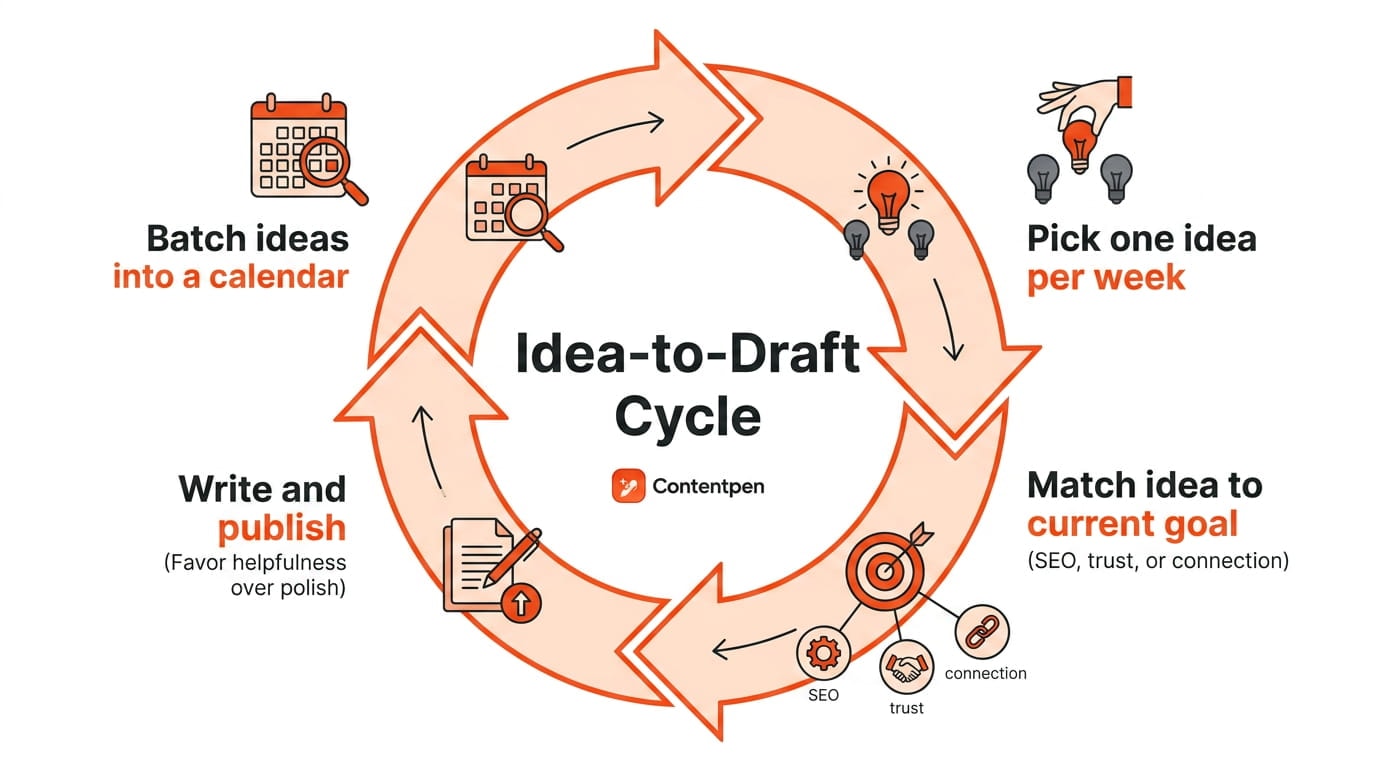
Start by batching ideas from our blog topics list into a running document or content calendar. Then commit to using just one idea per week, and match each idea to your current goal rather than picking randomly.
Choose SEO-focused blog topics when traffic matters most, trust-building posts when you need more leads, and personal stories when you want stronger reader connection.
Favor helpfulness over polish when deciding what to write first, since a genuinely useful post always outperforms an overly refined one that says very little.
Let AI turn your idea into a finished post fast
Once you’ve picked unique blog post ideas, AI tools can move them from concept to published draft far faster than manually.
Contentpen’s keyword research surfaces topics based on real search intent, so you’re building on validated demand instead of a guess. From there, the tool generates an outline and content for it that satisfies the demands of search engines and AI answer engines for citability.

From outline to publish-ready content that fills them

Structured
Consistent
SEO-aligned
Fast
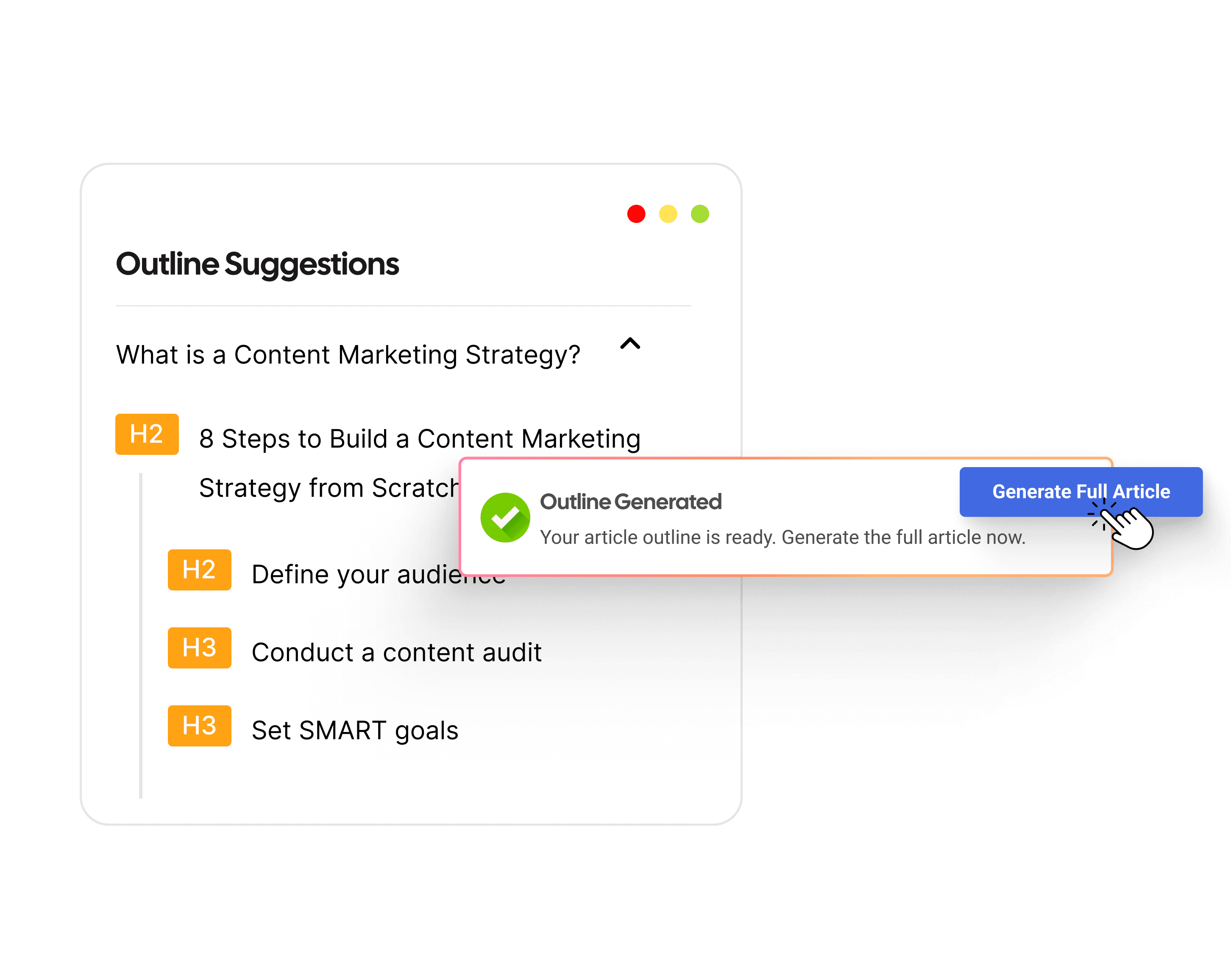
Built-in scheduling and one-click publishing in the AI writer keeps your momentum going long after that first idea turns into a live post.
The takeaway
Writer’s block is a direction problem, not an inspiration problem, and the 120 blog post ideas are built to solve exactly that.
Every category, from SEO guides to personal storytelling to business growth posts, gives you a starting point that’s already proven to work for creators in similar situations.
Pick one idea today, match it to whatever goal matters most right now, and start writing before you talk yourself out of it.
If you want to go straight from an idea to a final draft, a platform like Contentpen can carry that chosen topic through research, outlining, writing, and publishing from a single workspace.