 21 minutes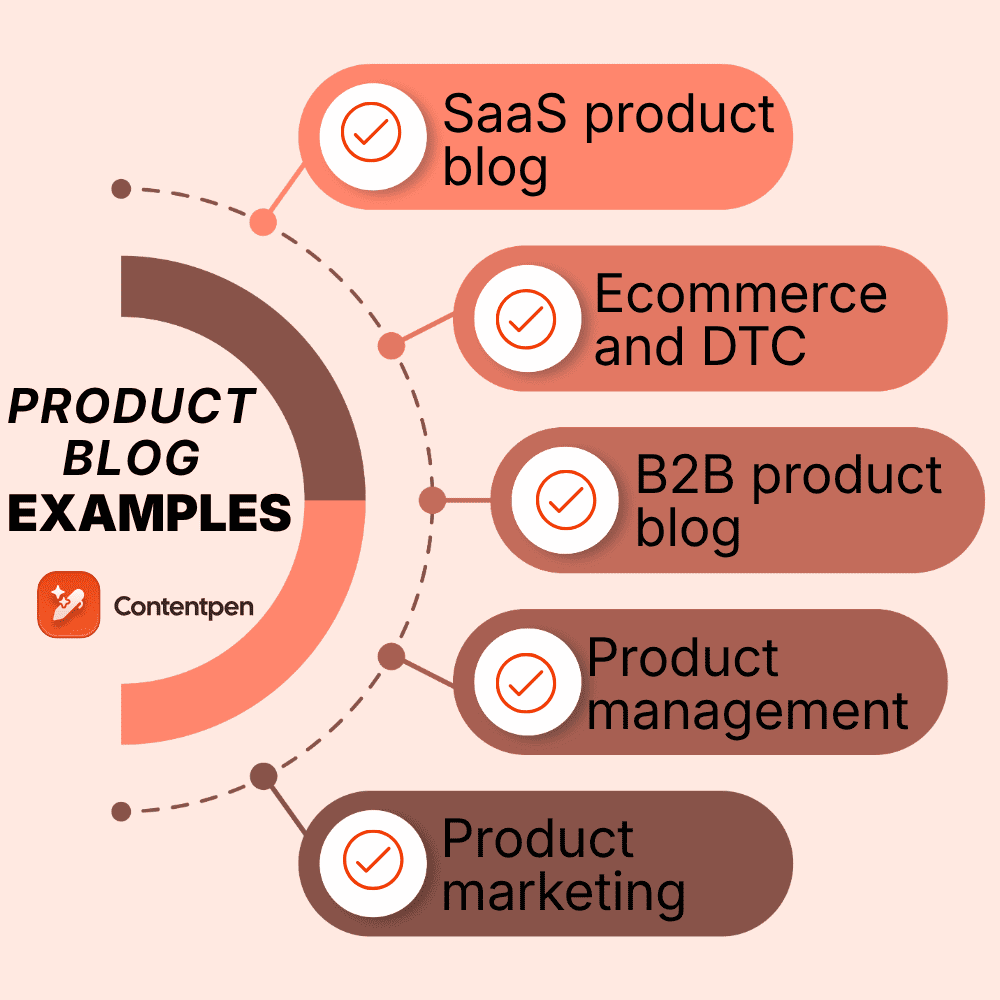
Most product blogs quietly lose money. They publish on a schedule, almost nobody reads them, and six months later someone in a meeting asks why “content” never worked.
The blogs that actually pull their weight look nothing like a corporate newsroom. They read like a resource the customer genuinely wanted to find.
Below you will find 23 blog examples grouped by type, a short breakdown of what each one does well, and the exact patterns you can copy for your own success.
Stick around for the framework and the product blog-building steps at the end.
Table of contents
- What is a product blog?
- How we chose these product blog examples
- Product blog examples at a glance
- SaaS product blog examples
- Ecommerce and DTC product blog examples
- B2B product blog examples
- Product management blog examples
- Product marketing blog examples
- Types of product blogs
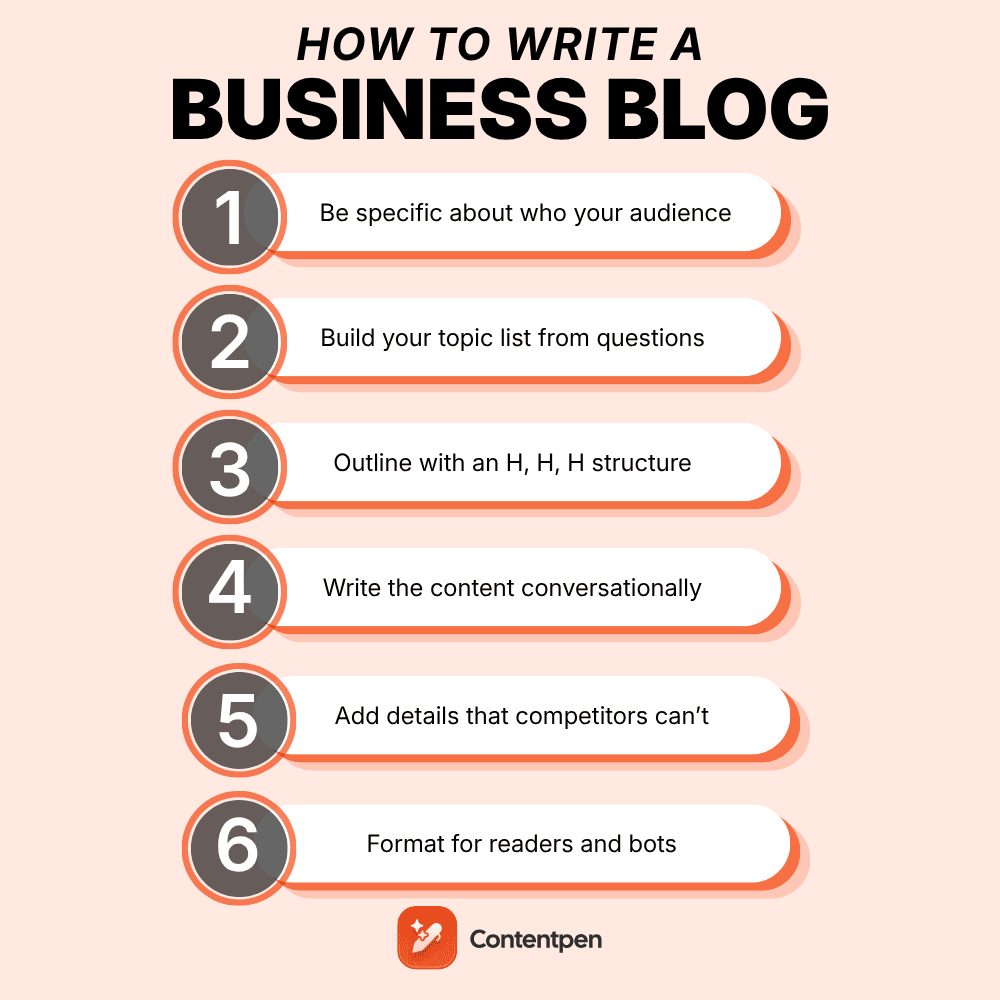
- How to start your own product blog
- Product blog post examples you can create with Contentpen
- Summing it up
- Frequently asked questions
What is a product blog?
A product blog is a blog run by a company to support a product, usually to attract the right audience, educate potential buyers, and move them toward a purchase or signup.
It sits on the brand’s own domain and blends helpful, search-friendly content with subtle product tie-ins. Basically, it grows organic traffic while quietly building trust in what the company sells.
That definition covers a wide range in practice.
- A SaaS product blog might publish long how-to guides that rank on Google.
- An e-commerce product blog might publish buying guides and brand stories that lead readers toward the shop.
- A product team’s blog might publish frameworks and lessons that build a following among practitioners.
All three are product blogs. They just serve different products and audiences.
How we chose these product blog examples
Not every high-traffic blog is worth copying, and not every beautiful blog earns its keep. To make this list, a blog had to do at least three of the following things well:
- Serve a clearly defined audience rather than “everyone”
- Publish content people actually search for or want to share
- Tie content back to the product without turning every post into a sales pitch
- Show a repeatable format the team can produce consistently
- Drive a measurable business result, such as organic traffic, signups, or sales
With that filter in place, here are the examples, grouped by the kind of product each blog supports.
Product blog examples at a glance
Below are all the types of product blogs we’ve picked for you in 2026.
| Blog | Category | Best known for |
| HubSpot | SaaS | Segmented topic clusters and templates |
| Ahrefs | SaaS | Product-led SEO tutorials |
| Intercom | SaaS | Opinionated product and support content |
| Hotjar | SaaS | Data-backed UX and CRO content |
| Mixpanel (The Signal) | SaaS | Single, data-focused editorial thesis |
| Userpilot | SaaS | Onboarding content plus a video hub |
| Monday.com | SaaS | Long-form SEO and topical authority |
| SparkToro | SaaS | Founder-led whiteboard video |
| Paddle (ProfitWell) | SaaS | Pricing teardowns |
| Dropbox | SaaS | Productivity thought leadership |
| Peach & Lily | E-commerce | Educational skincare with soft CTAs |
| Care/of | E-commerce | Medically reviewed wellness content |
| Floyd (Stay Floyd) | E-commerce | Real Airbnb product showcases |
| Beavertown Brewery | E-commerce | Niche guides with product links |
| Brooklinen | E-commerce | Shoppable visual listicles |
| Petlibro | E-commerce | Fast organic growth from a late start |
| Rotabull | B2B | Owning a hyper-specific niche |
| Everlywell | B2B | Relatable topics for a niche product |
| Wynter | B2B | Practitioner-written GTM content |
| Lenny’s Newsletter | Product management | Research plus operator interviews |
| Product Talk | Product management | Continuous discovery frameworks |
| SVPG | Product management | Long-term product leadership authority |
| Product Marketing Alliance | Product marketing | A hub of articles, video, and events |
Now, let’s review the blogs in detail, sorted by category.
SaaS product blog examples
Software companies live or die by content, since a large share of their organic traffic and signups can come from the blog. These are the SaaS product blogs worth studying.
1. HubSpot blog

HubSpot is the reference point most marketers reach for, and for good reason. The company runs several blogs (marketing, sales, service, and more), and much of that content is available to non-customers.
The strength is breadth plus depth: templates, ultimate guides, how-tos, and original research, all neatly segmented by audience so a reader lands exactly where they need to be.
- What to copy: Build topic clusters around your buyer’s real questions, then package the best posts with downloadable templates that capture emails.
2. Ahrefs blog

Ahrefs turned its blog into one of the clearest examples of product-led content. Posts teach SEO using the tool itself, so readers learn a skill and see the product in action at the same time.
The company reportedly grew to tens of millions in annual recurring revenue with very little paid acquisition, in large part because of this content approach.
- What to copy: Weave your product into the tutorial as the natural way to complete the task, rather than bolting a call to action onto the end.
3. Intercom blog

Intercom’s blog pairs practical support and product content with strong, opinionated points of view on how software should be built and how customers should be served. That mix of tactics and opinion is what keeps people subscribing rather than reading one post and leaving.
- What to copy: Publish a real perspective, not just neutral how-tos. A clear opinion gives readers a reason to come back and a reason to share.
4. Hotjar blog

Hotjar sells heatmaps and behavior analytics, and its blog reflects that DNA. Posts on user research, conversion, and UX are packed with data, examples, and resources, which makes the content useful whether or not you use the product.
- What to copy: Lead with data and concrete examples. Content that shows evidence outperforms content that only asserts.
5. Mixpanel (Signals & Stories)

Mixpanel’s blog, Signals & Stories, is built around a single promise: using data to build better products. That editorial focus keeps the content coherent, so readers always know what they will get and why it connects to the product.
- What to copy: Give your blog one clear editorial thesis that mirrors what your product helps people do.
6. Userpilot blog

Userpilot’s blog is a strong resource on onboarding, product adoption, and retention. Beyond written guides, it runs a hub of video content for readers who would rather watch than read, which widens its reach across formats.
- What to copy: Repurpose your best posts into video or short clips so the same idea can travel across more channels.
7. Monday.com blog

Monday.com built serious topical authority through long-form SEO content. Its comprehensive guides rank for competitive terms and pull in steady organic traffic through strategic internal linking and deep coverage of a topic rather than thin, scattered posts.
- What to copy: Pick a handful of high-value topics and cover them more thoroughly than anyone else, then interlink them into a cluster.
8. SparkToro blog
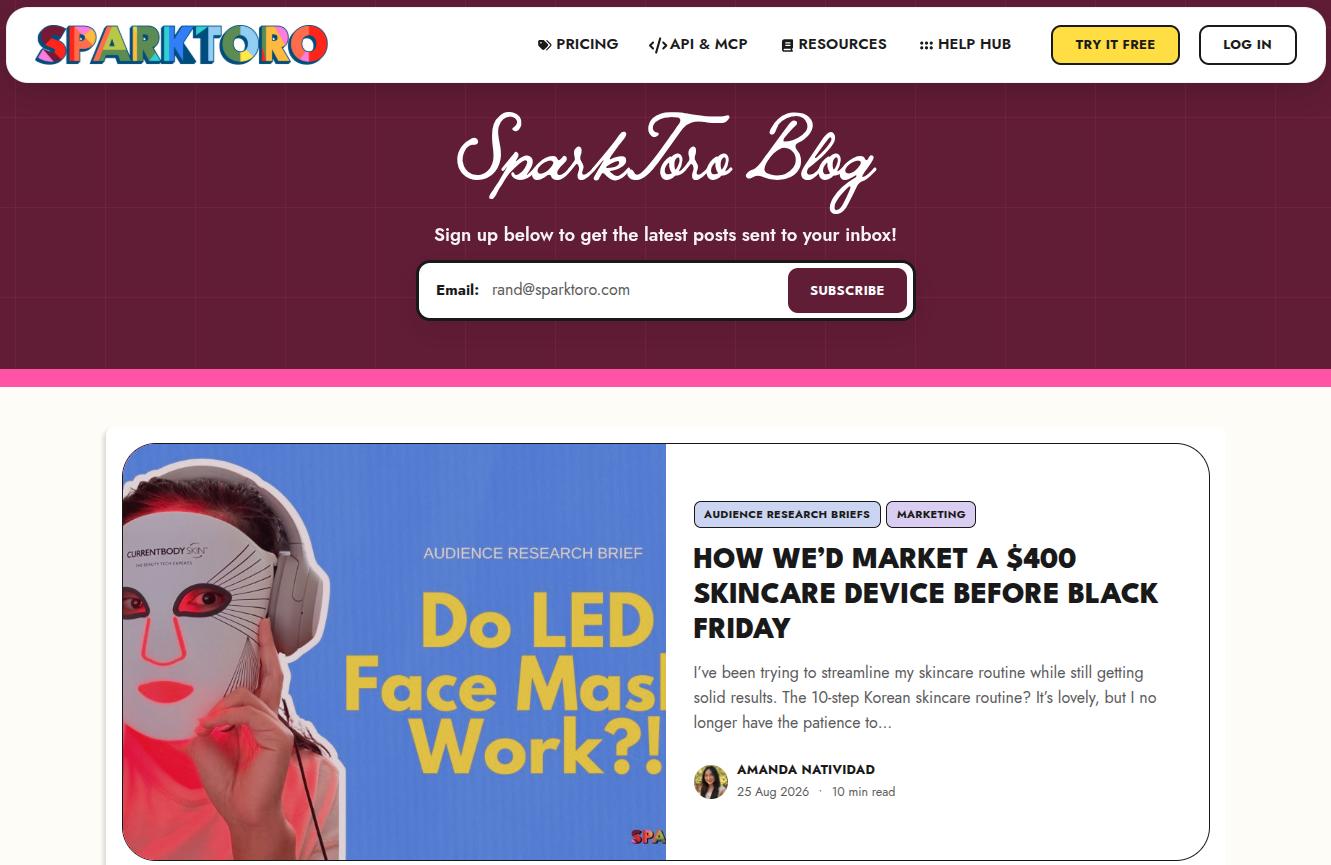
SparkToro, led by Rand Fishkin, leans on founder-led educational video. Short whiteboard-style clips explain marketing concepts, product trends, and how-tos, and they double as blog content and social fuel.
- What to copy: Put a credible human face on the content. Founder-led and expert-led posts build trust faster than a faceless brand voice.
9. Paddle (formerly ProfitWell) blog
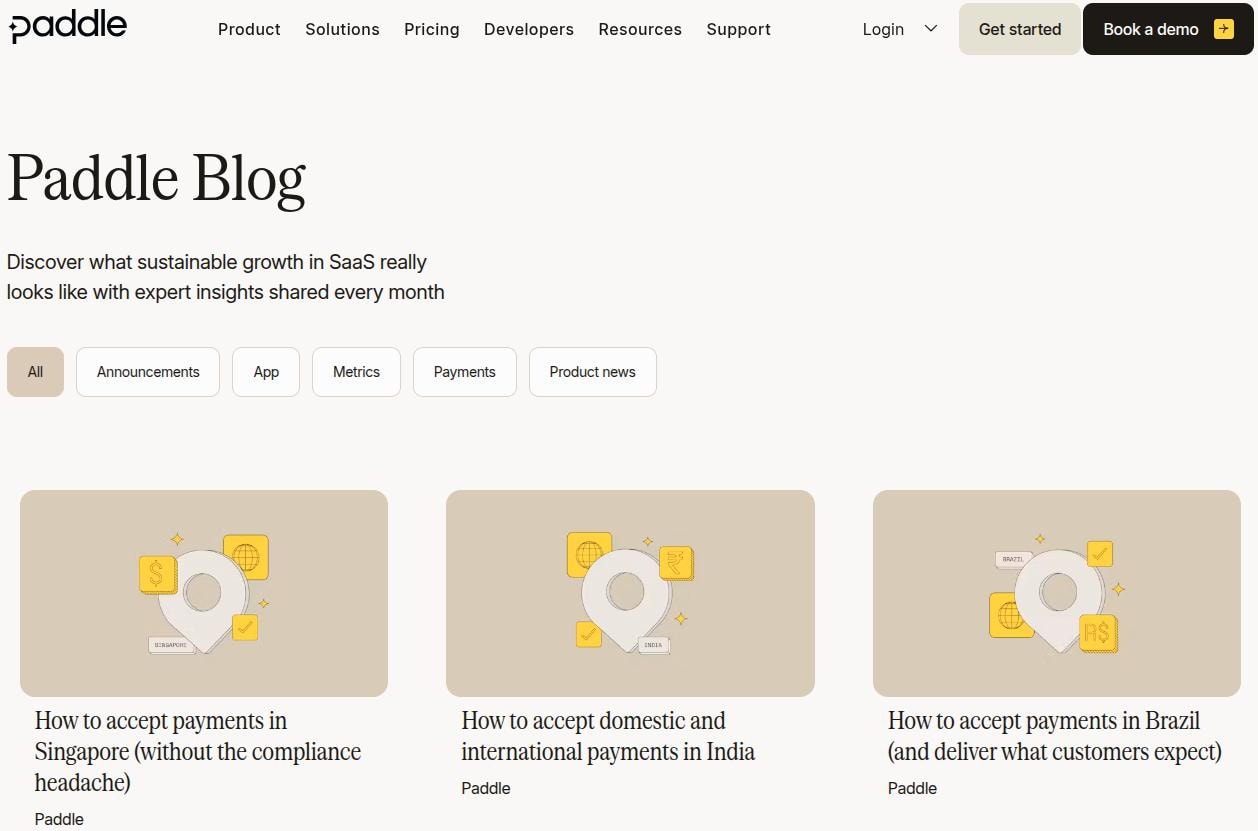
The ProfitWell blog, now part of Paddle, became known for pricing teardowns and subscription strategy, content aimed squarely at the exact people who buy the product. The teardown format is memorable, repeatable, and genuinely useful.
- What to copy: Invent a signature format (a teardown, a scorecard, a recurring series) that becomes associated with your brand.
10. Dropbox blog
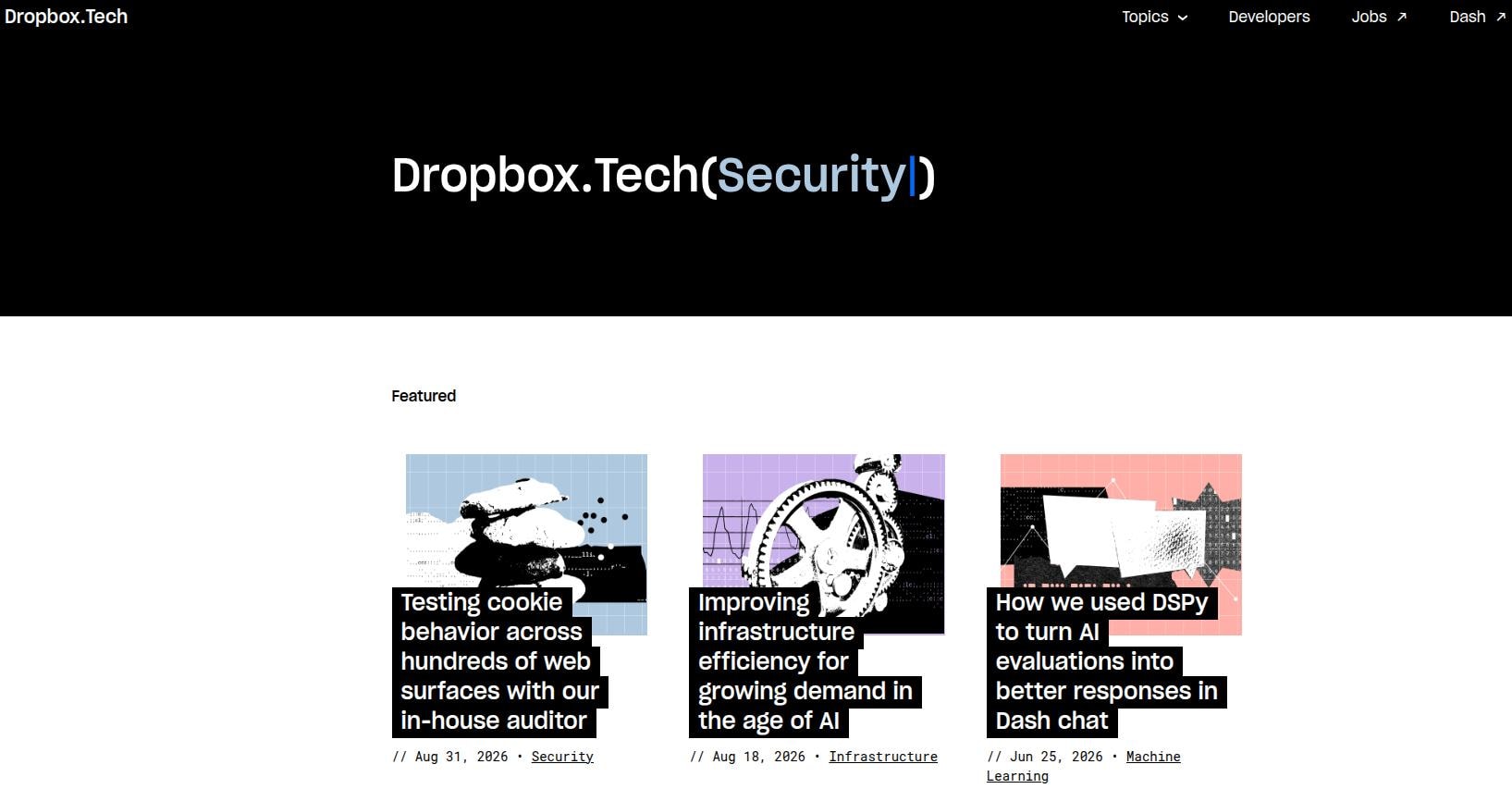
Dropbox has two blogs: Work in Progress (general) and a tech blog (Dropbox Tech).
Dropbox.tech blends thought leadership with practical productivity and collaboration advice, along with tips for developers and security professionals.
It is organized into clear categories that reflect how people actually work and shows that even a very large brand can keep a blog focused and readable.
- What to copy: Organize content and keep the blogs easy to understand, even for technical topics.

Write better blogs in less time, without sacrificing quality.
Let AI handle structure, clarity, and flow while you stay in control of the message.
Try AI blog writing →
Ecommerce and DTC product blog examples
E-commerce blogs face a harder road than they used to, with AI overviews and marketplace giants competing for attention. The brands that still win treat the blog as brand building and organic discovery, not just a coupon delivery system.
11. Peach & Lily

DTC skincare brand Peach & Lily runs an educational blog. Nearly every post teaches something, such as the difference between retinol and retinoid, before connecting naturally to a relevant product.
A first-purchase discount offer on the blog gives readers a low-friction reason to convert.
- What to copy: Educate first, sell second, and place one clear, gentle incentive where an engaged reader can act on it.
12. Hims & Hers

Hims & Hers, the DTC health brand for men’s and women’s health, runs its blog on a visible credibility system. Every piece goes through a medical research and review process, where content is checked by board-licensed physicians, specialists, and healthcare professionals.
- What to copy: In any space where trust is fragile, add reviews, citations, and expert sign-off to your content.
13. Floyd (Stay Floyd)

Furniture brand Floyd built a genuinely original blog concept with Stay Floyd, which showcases real Airbnb spaces furnished with Floyd products. Instead of chasing search traffic like everyone else, the brand created showroom-style experiences without owning a single physical showroom.
- What to copy: If the whole category is fighting over the same keywords, invent a content angle no competitor can easily copy.
14. Beavertown Brewery
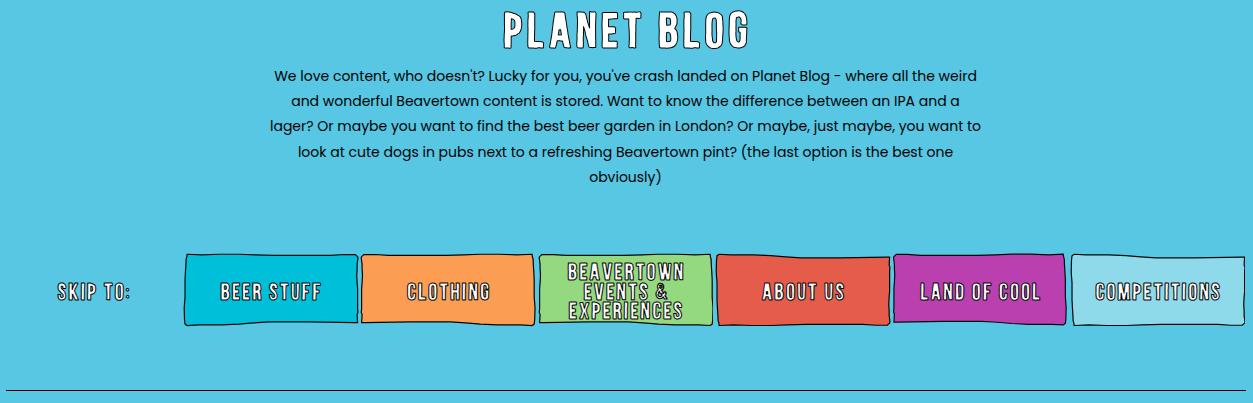
Beavertown pairs a bold, colorful visual identity with niche content its audience loves, such as an in-depth beer guide that links directly to the relevant products at the bottom of the page. The brand knows exactly who it is talking to.
- What to copy: Match your blog’s look and voice to your brand identity, then link products contextually inside genuinely useful posts.
15. Brooklinen
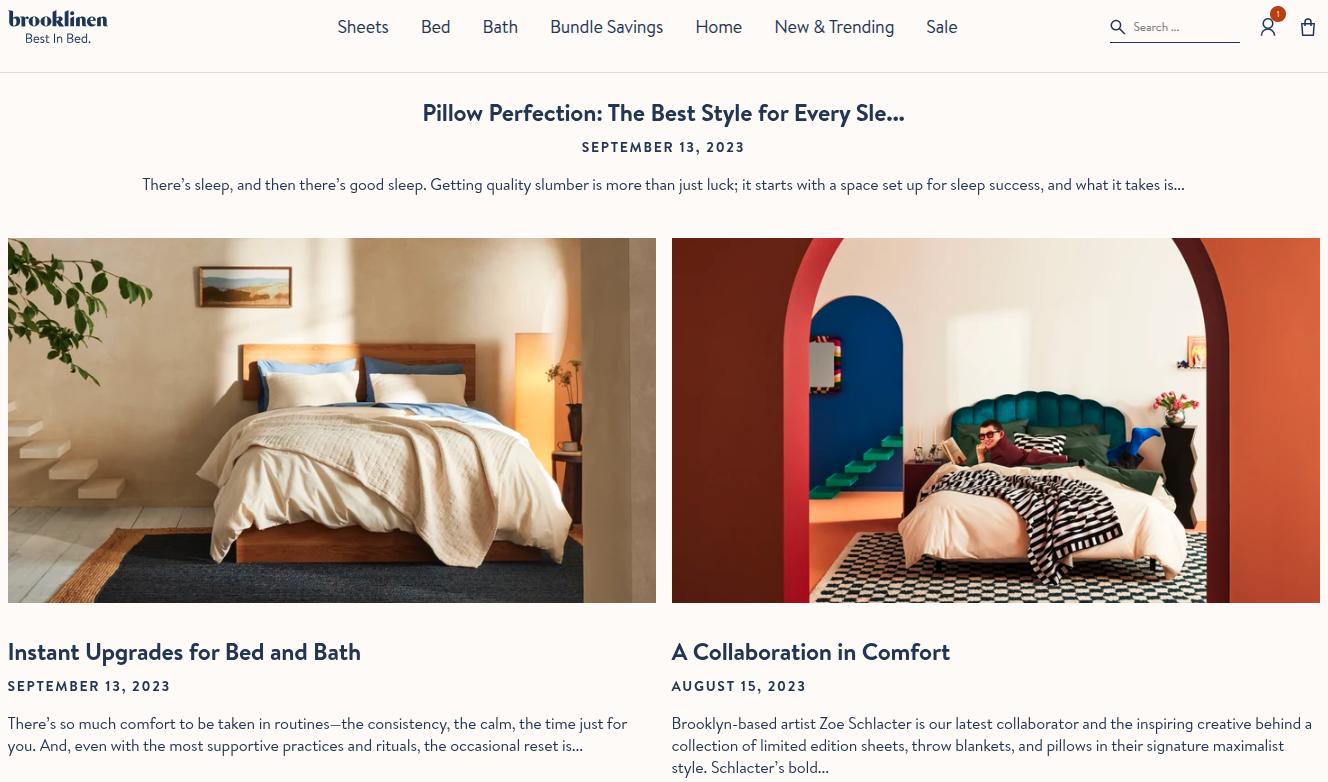
Home goods brand Brooklinen publishes relevant listicles and guides on its ‘Brookliving‘ blog with beautiful photography and click-through-to-product content. It is a clean model of turning informational posts into a smooth path to the shop.
- What to copy: Give visual products visual content, and make the jump from reading to buying effortless.
16. Petlibro
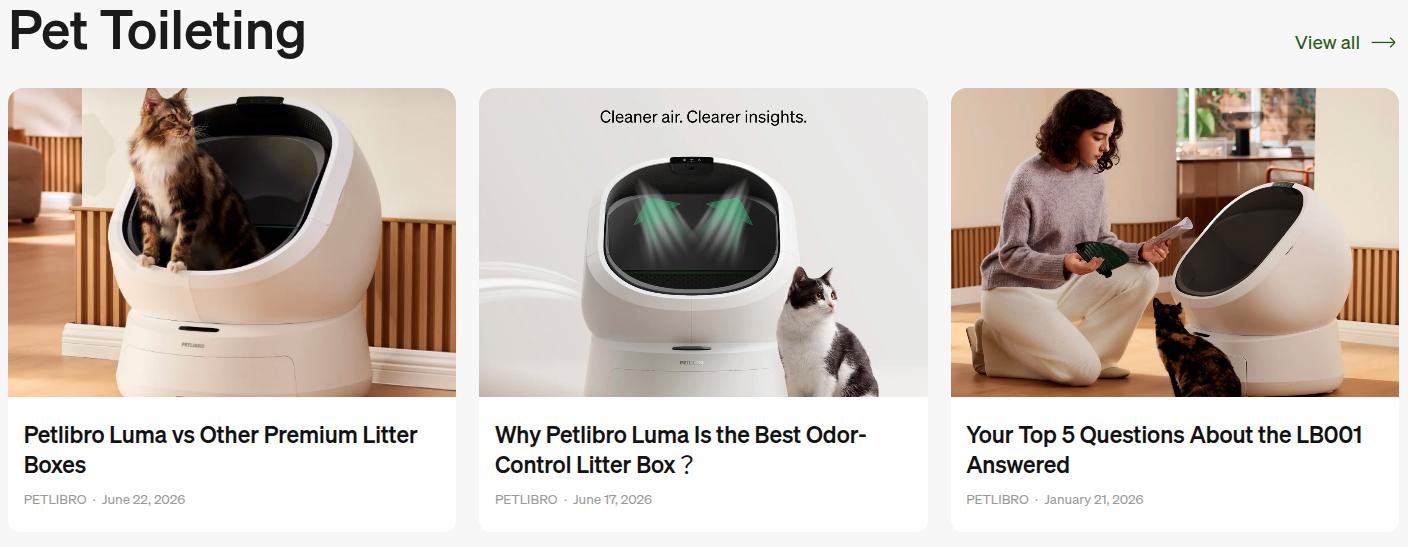
Pet care brand Petlibro is proof that it is not too late to start. The company launched in 2020 but did not begin blogging until 2022.
Its organic keywords have since grown substantially, from 2,200 in January 2022 to 23,000 in August 2024, according to Semrush data.

- What to copy: Consistency compounds. A blog started today can still build meaningful organic traffic within a couple of years.
B2B product blog examples
B2B product blogs succeed by embracing a narrow audience instead of trying to appeal to the average consumer.
17. Rotabull
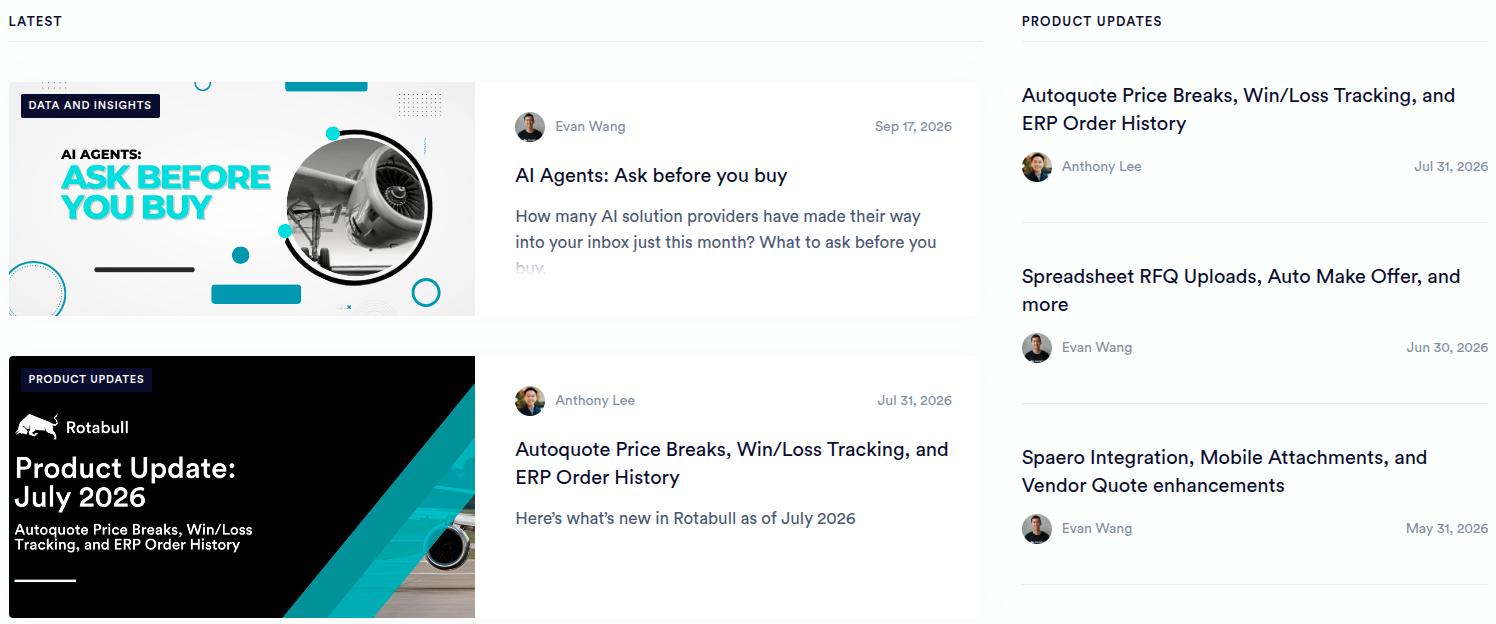
Rotabull sells aviation parts, a topic irrelevant to almost everyone. Rather than forcing a connection to everyday life, its blog leans fully into the aviation niche and speaks directly to the people who actually buy.
- What to copy: Do not dilute your content trying to be relatable to outsiders. Serve your niche and own it.
18. Everlywell
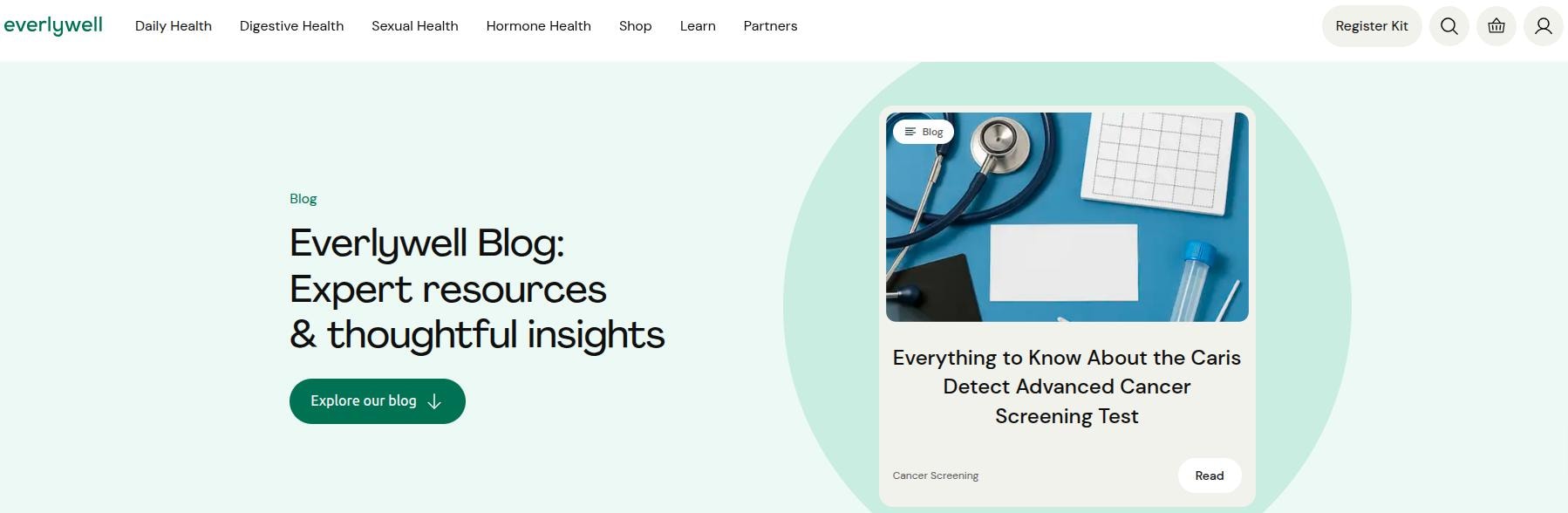
Everlywell sells at-home health tests, a specific product with a niche audience. Its blog manages to feel both relatable to a general reader and specific to the brand’s authority, which widens the top of the funnel without losing focus.
- What to copy: Curate topics that sit at the overlap of what your audience searches for and what your product uniquely qualifies you to say.
19. Wynter
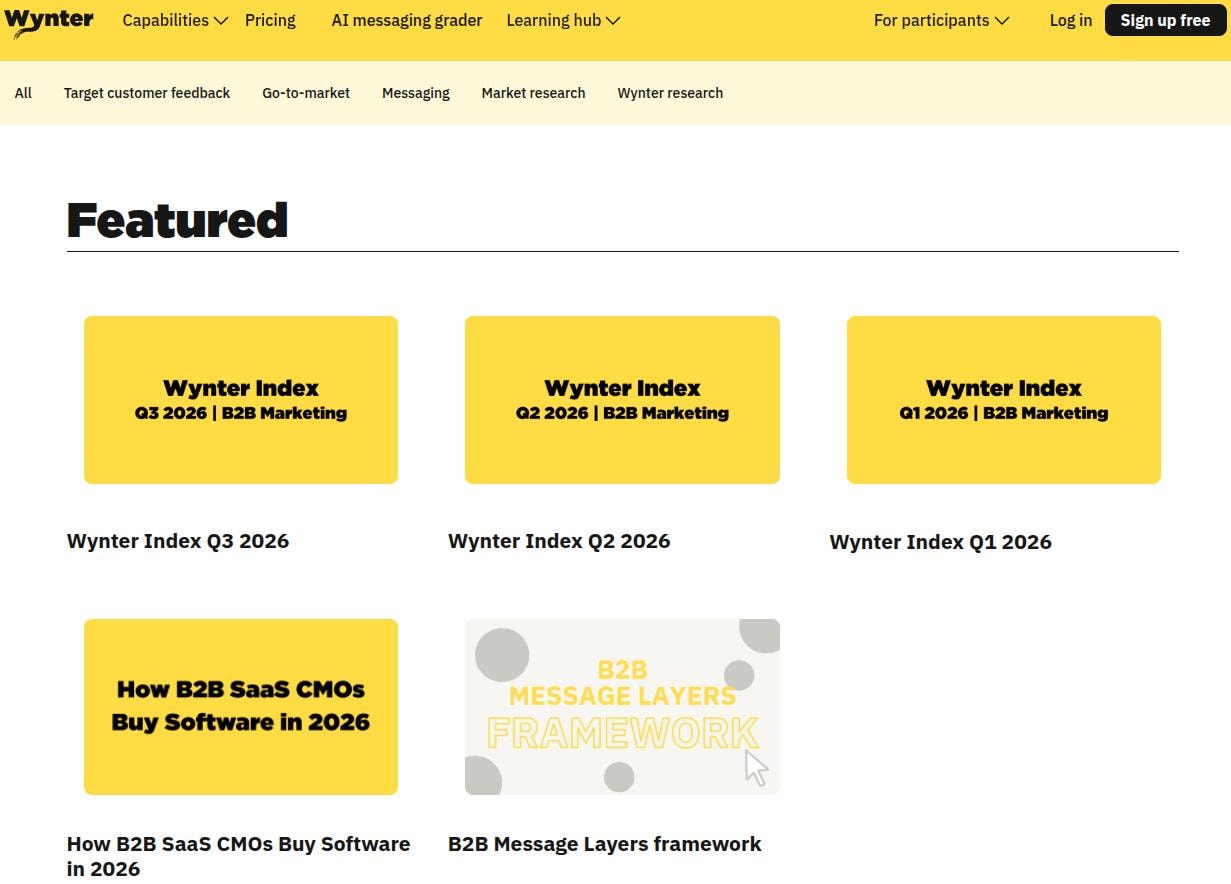
Wynter, a messaging and content analytics tool, runs a wide-ranging blog worth reading even if you never become a customer. Its posts are written by practicing marketers, which keeps them practical, and guest authors add variety and thought leadership.
- What to copy: Bring in credible guest practitioners to add range and authority your in-house team cannot cover alone.
Product management blog examples
These blogs support the discipline of building products, and they are the model to study if your “product” is expertise, a community, or a career-focused audience.
20. Lenny’s Newsletter

Lenny Rachitsky’s newsletter and blog stand out for research-driven product insight, mixing data, personal anecdotes, and interviews with operators. It has become a consistent must-read on retention, prioritization, growth, and real-world frameworks.
- What to copy: Combine original research with practitioner interviews so each post offers something readers cannot get elsewhere.
21. Product Talk
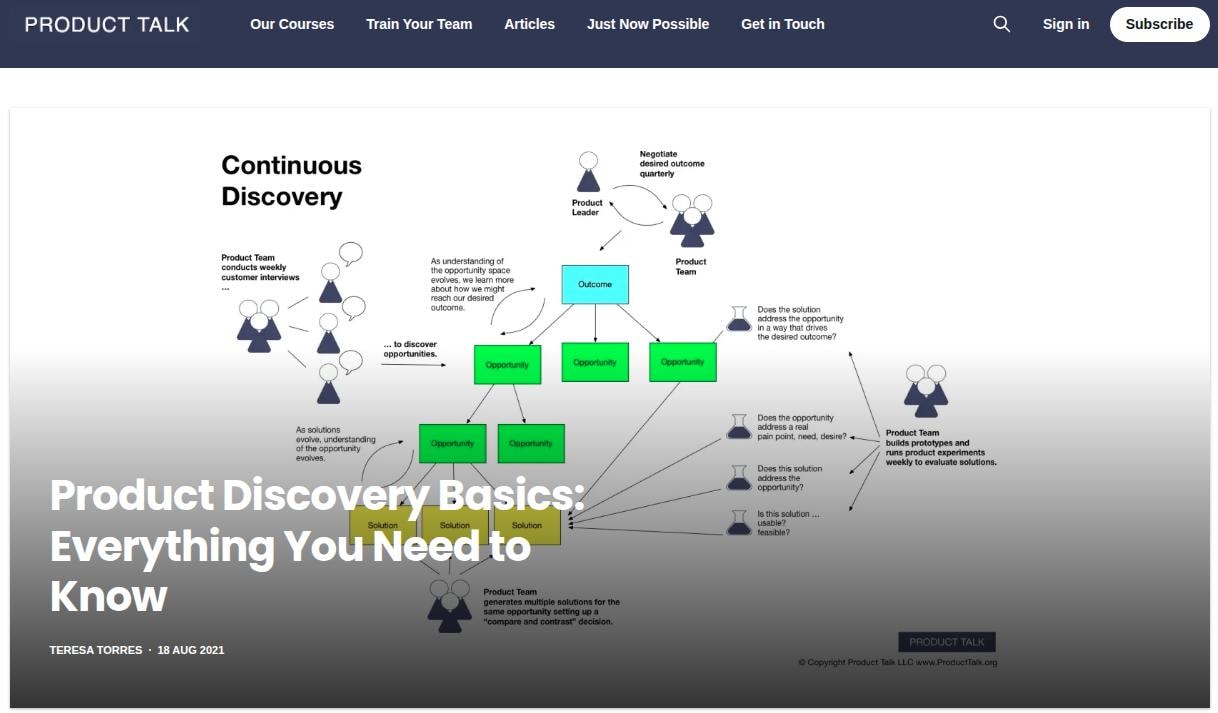
Teresa Torres’s Product Talk focuses on continuous product discovery and building products that deliver real value. The evidence-based approach, paired with workshops, podcasts, and templates, gives readers something to do, not just something to read.
- What to copy: Attach a tool, template, or workshop to your ideas so readers can put them into practice immediately.
22. SVPG insights
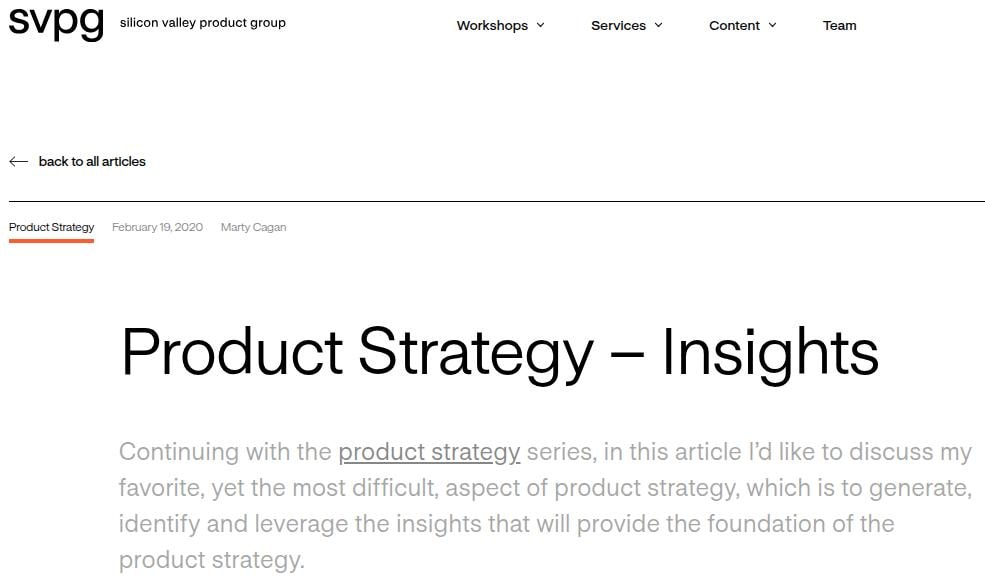
The Silicon Valley Product Group blog, led by Marty Cagan, is a cornerstone resource on product leadership, discovery, and scaling. It shows the long-term authority a blog can build when it stays consistent with a clear philosophy for years.
- What to copy: Pick a philosophy and defend it consistently over time. Authority is cumulative.
Product marketing blog examples
If your product touches positioning, launches, or go-to-market, these product marketing blogs are the ones to learn from.
23. Product Marketing Alliance

The Product Marketing Alliance grew from a community into an “everything you need to know” resource, combining articles, webinars, white papers, and podcasts, with topics cross-referenced so readers can move from one idea to the next without hitting a dead end.
What to copy: Turn a blog into a hub by connecting related content and formats, so one visit becomes several.
Two more product marketing blogs worth bookmarking:
- Casey Winters (Casey Accidental) publishes deep, formula-driven pieces on scaling and growth.
- Ravi Mehta shares frameworks like his product manager competency map that readers save and reuse.
Both prove that a personal blog with a strong point of view can outperform a polished corporate one.
Types of product blogs
Once you have seen enough blog examples, the categories start to repeat. Most product blogs fall into one of these types, and many blend a few:
- Educational or how-to blogs that teach a skill and show the product as the natural tool for the job, like Ahrefs and Hotjar
- Buying-guide and comparison blogs that help shoppers decide, common in e-commerce and DTC
- Thought-leadership blogs that build authority through opinion and original research, like Lenny’s Newsletter and SVPG
- Brand-story and behind-the-scenes blogs that humanize the company and build loyalty, like Floyd
- Product-update and changelog blogs that keep existing users informed and engaged
- Community and hub blogs that pull together articles, video, and events, like Product Marketing Alliance
Picking a primary type keeps your blog focused. Trying to be all six at once is how blogs turn into noise.
Also read: Travel blog examples in 2026.
How to start your own product blog
You do not need a huge team or budget to apply what these examples teach. Here is a practical sequence to follow.
- Define one audience and one job
Write down exactly who you are serving and the single job your blog helps them do. Specific beats broad every time.
- Choose your primary blog type
Decide whether you are leading with education, buying guides, thought leadership, or brand storytelling, then let that shape your calendar.
- Do keyword and question research
List the terms and questions your audience actually searches, and prioritize topics where you can be genuinely more useful than what already ranks. Here is a guide to help you do keyword research.
- Build topic clusters, not one-off posts
Group related articles around a core theme and interlink them, the way Monday.com built topical authority. This is a core element of semantic SEO.
- Create a signature format
Pick one repeatable content type or blog format your team can produce well and often, so your blog builds a recognizable identity.
- Weave the product in naturally
Show your product as the obvious way to act on the advice, rather than tacking on a hard sell.
- Add one clear next step to every post
A relevant template, a discount, a demo, or a subscribe box gives engaged readers somewhere to go.
- Publish consistently and update older posts
A steady cadence plus refreshing your best content is what compounds into organic traffic over time.
- Measure what matters
Track organic traffic, signups, and revenue influenced by content, not just raw pageviews, and double down on what moves the business.
Also read: Student blog examples to learn from in 2026.
Product blog post examples you can create with Contentpen
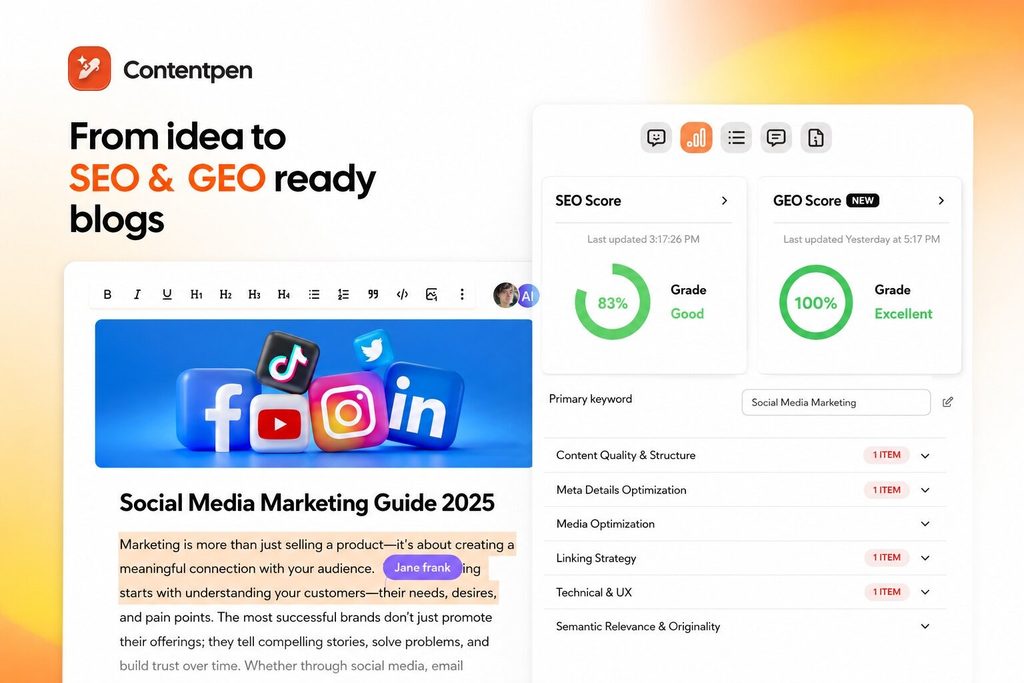
Knowing which blogs to admire is one thing. Knowing which posts to actually write is another.
Below are seven product blog post formats that reliably earn traffic and conversions, and every one of them is quick to research, draft, optimize, and publish with Contentpen.
Product review blog post
- What it is: An honest, detailed review of a product, either your own or a related one in your space, covering features, pros and cons, pricing, and who it is best for.
- Sample: Contentpen Review: Is This AI Writer Worth It?
- Why it works: Review keywords attract high-intent readers who are close to buying, and a balanced, credible review builds the trust that pushes them to a decision.
Product launch blog post
- What it is: An announcement that introduces a new product or feature, explains the problem it solves, and shows readers exactly how to get started.
- Sample: Introducing Bulk Generation: Draft a Week of Posts in Minutes.
- Why it works: Launch posts turn a release into a story, give your audience a reason to act now, and can earn backlinks and shares when the launch is genuinely useful.
Educational product blog post
- What it is: A teaching-first post that helps readers solve a real problem, with your product woven in as the natural way to get it done.
- Sample: How to automate internal and external linking.
- Why it works: Educational content pulls in top-of-funnel search traffic and, like Ahrefs and Hotjar, demonstrates your product’s value instead of just claiming it.
Product comparison blog post
- What it is: A side-by-side comparison of two or more options, such as “[your product] vs [competitor]” or “best alternatives to [tool].”
- Sample: Contentpen vs Jasper: Which Fits Solo Creators vs Teams?
- Why it works: Comparison searches signal strong buying intent, and owning the comparison lets you frame the decision fairly while showing where you genuinely win.
How-to or tutorial blog post
- What it is: A practical, step-by-step walkthrough of using your product to complete a specific task.
- Sample: How to create articles in bulk using Contentpen?
- Why it works: Tutorials serve existing users and prospects at the same time, cut down on support requests, and rank for long-tail terms that competitors often ignore.
Product roundup or listicle blog post
- What it is: A curated “best of” list, such as “best [category] tools for [audience],” with your product included and honestly positioned.
- Sample: Best SEO Tools for 2026: Free and Paid Compared.
- Why it works: Listicles are highly shareable, rank well for popular category terms, and let you appear right alongside the names your audience already trusts. This very article is an example of the format.
Product case study or customer success story
- What it is: The story of how a real customer used your product to reach a specific result, with concrete numbers wherever possible.
- Sample: How an SEO Consultant Ranked #4 on Google With Zero Backlinks.
- Why it works: Case studies are bottom-of-funnel proof that turns interested readers into buyers by showing the outcome is real and repeatable.
Contentpen can handle the keyword research, drafting, and publishing for each one, so the bottleneck becomes your ideas rather than your production.
Write content that’s built to rank, not just read
Create search-optimized blogs aligned with SEO and GEO signals, so your content performs well across search and AI-driven discovery.
Try SEO Blogging FREE →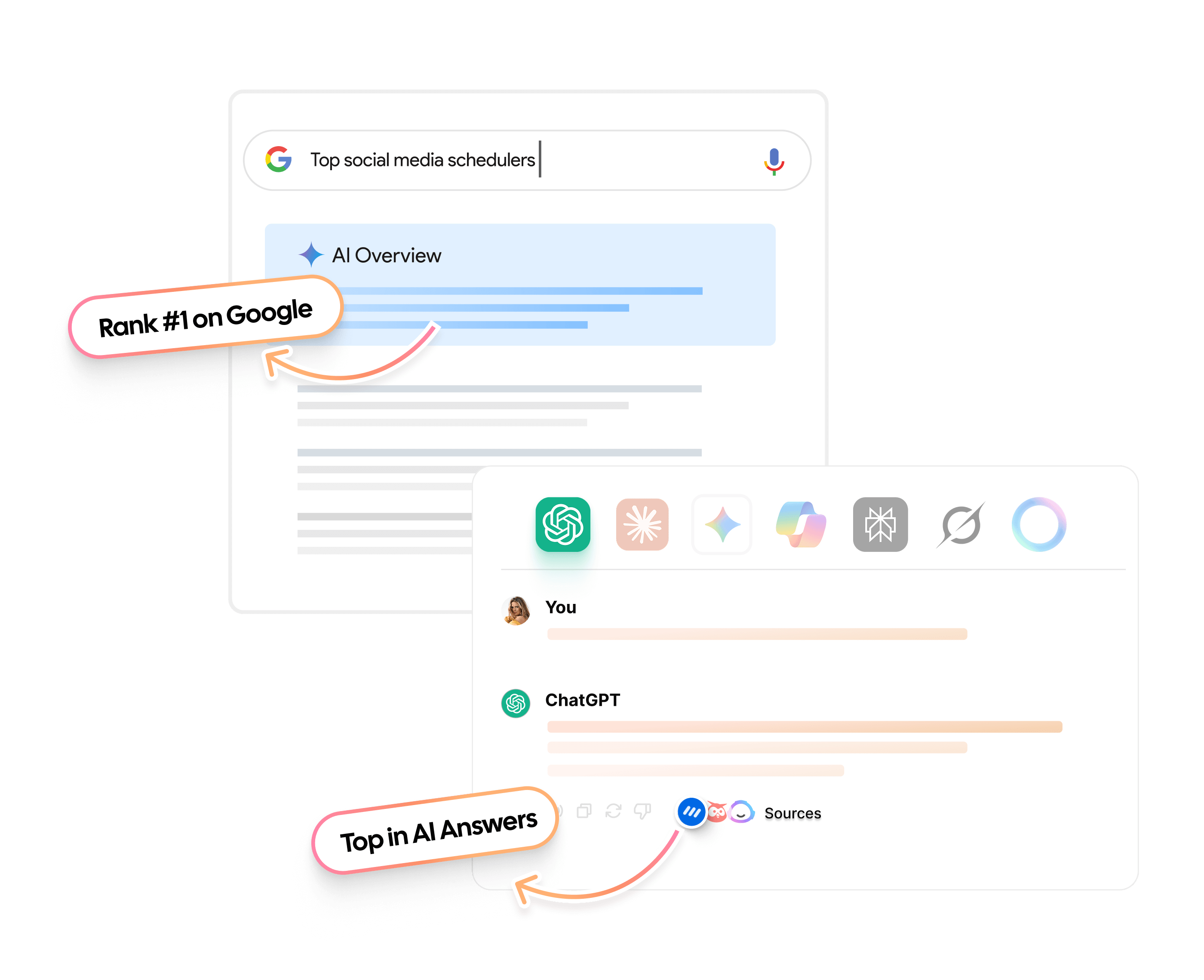
Summing it up
The through-line across all 23 of these product blog examples is simple: they stopped treating the blog as a place to talk about themselves and started treating it as a resource their audience wanted.
Pick the two or three examples closest to your own product, borrow the pattern, and give it enough consistent time to compound. That is the entire game.