 29 minutes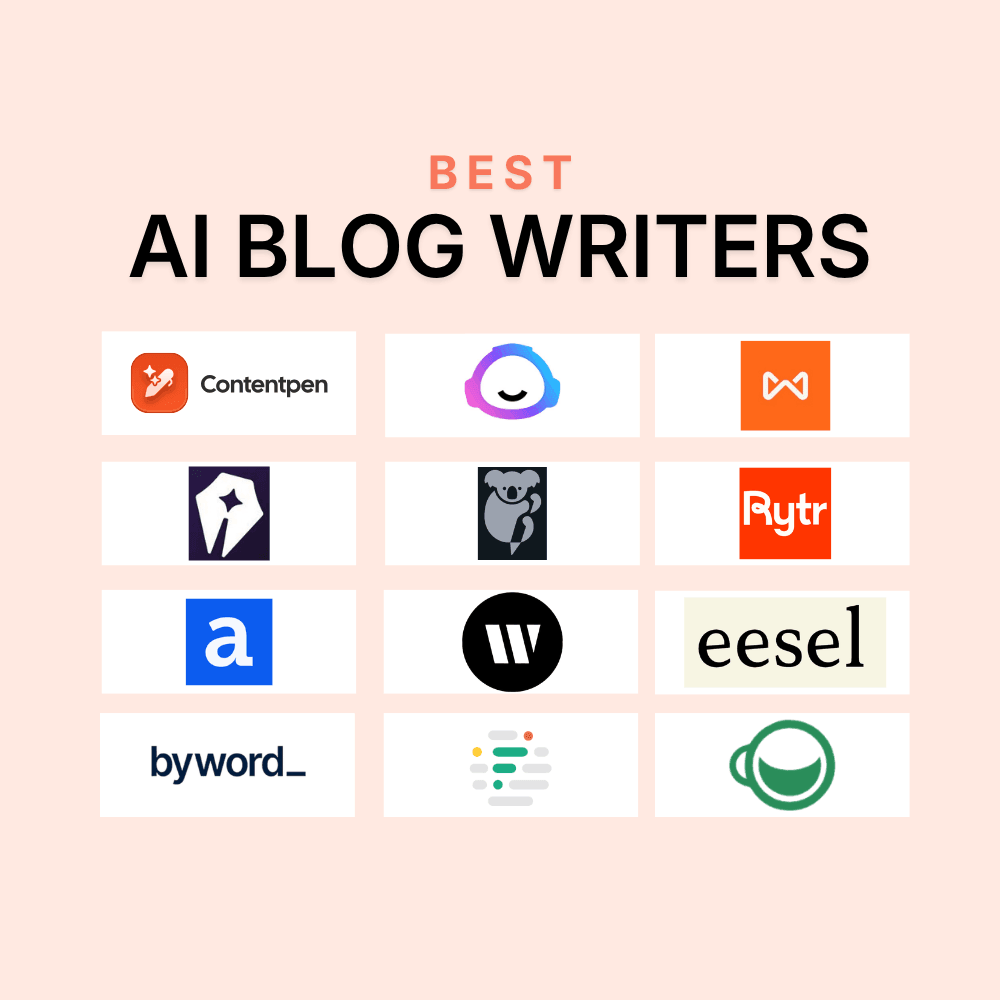
A few years ago, choosing an AI blog writer was a simple question: does it write good content with reasonable SEO? That’s no longer enough.
People aren’t just Googling information anymore. They’re asking ChatGPT, Gemini, and Perplexity for recommendations, and Google’s own AI Overviews are answering questions that used to send clicks to your blog.
A tool that only drafts paragraphs still leaves you to handle keyword research, SEO scoring, and AI visibility tracking on your own. That’s the gap we ensured to fill for you with this list.
We tested and ranked 14 of the best AI blog writers on the market right now, from full-stack platforms to specialized content drafting tools. You’ll see what each one actually does well, where it falls short, and how much it costs.
Table of contents
- Key takeaways
- What are AI blog writers, and why do you need one in 2026?
- How we tested and ranked these AI blog writers
- Comparison table: Best AI blog writers in 2026 at a glance
- 1. Contentpen
- 2. Jasper
- 3. Writesonic
- 4. Surfer AI
- 5. Copy.ai
- 6. Rytr
- 7. Anyword
- 8. WRITER
- 9. eesel AI
- 10. KoalaWriter
- 11. Byword.ai
- 12. Frase
- 13. RightBlogger
- 14. Cuppa AI
- Editor’s picks
- Final thoughts
- Frequently asked questions
Key takeaways
- Contentpen ranks as the best AI blog writer because it’s the only tool that combines keyword research, SEO scoring, GEO scoring, and AI visibility tracking across up to 7 AI platforms in one workflow, with AI visibility included in every plan.
- We tested every tool hands-on by generating real articles from a keyword
- The list spans full-stack platforms (Contentpen, Jasper, Writesonic), an autonomous agent (eesel AI), budget SEO tools (KoalaWriter, Rytr), and specialized tools (Surfer AI, Anyword, Byword, WRITER, Cuppa AI, RightBlogger).
- No AI blog writer replaces editing. Every tool on this list still needs a human pass for accuracy, tone, and E-E-A-T signals before publishing.
What are AI blog writers, and why do you need one in 2026?
An AI blog writer is a tool that uses a large language model (LLM) to help you plan, draft, and publish blog content, usually with some layer of SEO built in.
The category ranges from simple AI text generators to full platforms that handle keyword research, outlining, drafting, on-page scoring, and publishing in one pass.
The bar for what counts as “good” has moved. A few years ago, an AI blog writer just needed to produce readable text fast.
Now, your content needs to be SEO and GEO-optimized to help you appear on top of SERP results as well as get cited by AI answer engines.
In 2026, more people are asking AI chatbots for recommendations instead of typing a query into classic search. If your blog content isn’t structured to be cited by these systems, a growing share of your audience never sees your brand at all.
This is why the best AI blog writing tools in 2026 do more than write.
They should research keyword intent, build outlines around what’s already ranking, score content for SEO, structure for AI citations, and track whether that citation is actually happening.
Free AI tools for content writing and basic AI blog post generators still have a place for quick drafts, but that’s about it.
How we tested and ranked these AI blog writers
To test these tools, we used every platform to generate real articles from a keyword, and we evaluated the process from research to publish-ready draft.
Our testing covered a few consistent criteria:
- Research depth: Does the tool pull real SERP data, competitor structure, and search intent, or does it just expand a prompt?
- Output structure: Are headings, FAQs, and intros built to be answer-first and easy for both readers and AI systems to parse?
- SEO and GEO scoring: Does the tool score content for classic search and for AI answer engine readiness?
- AI visibility tracking: Can the platform tell you whether your content is actually getting cited in ChatGPT, Gemini, Perplexity, or other AI tools after it’s published?
- Editing and control: Can you adjust the outline, tone, and structure before generation, or are you stuck with the first draft?
- Publishing and integrations: Does the tool connect to WordPress, Shopify, Webflow, or other CMS platforms, or do you have to copy and paste content manually?
- Pricing and value: What do you actually get at the entry tier, and where do the real costs start?
We also weighed how each tool handled long-form content specifically, since blog writing has different demands than short-form copy like ad headlines or social captions.
Comparison table: Best AI blog writers in 2026 at a glance
Below are all the tools we picked, along with their best use case scenario, starting price, and free trial availability status.
| Tool | Best for | Starting price | Free plan or trial |
| Contentpen | End-to-end SEO and GEO-optimized blog creation | $49/month | Yes, 7-day free trial |
| Jasper | Enterprise brand voice and marketing teams | $69/seat/month | Yes, 7-day free trial |
| Writesonic | Writing content backed by live search visibility data | $99/month | Limited free trial |
| Surfer AI | Pairing AI drafts with on-page SEO scoring | $119/month | Yes, 7-day free trial |
| Copy.ai | GTM workflows and repurposing blog content | $29/month | No |
| Rytr | Free AI content for short-form drafts and outlines | $9/month | Yes, free forever plan |
| Anyword | Predictive, performance-driven content | $49/month | Yes, 7-day free trial |
| WRITER | Enterprise governance and security | $39/user/month | Yes, 14-day free trial |
| eesel AI | Autonomous, done-for-you blog generation | $100 for 25 posts | Yes, $50 free usage credit |
| KoalaWriter | Budget SEO content for niche and affiliate sites | $9/month | Yes, limited free words |
| Byword.ai | Programmatic and bulk SEO content at scale | $99/month | Yes, 5 free article credits |
| Frase | Fast SEO and GEO briefs backed by live SERP research. | $49/month | Yes, 7-day free trial |
| RightBlogger | Solo bloggers running autoblogging workflows | $59/month | Yes, 7-day free trial |
| Cuppa AI | Hands-on editing with a built-in SERP sidebar | $119/month | Yes, 7-day free trial |
Now, let’s see all these tools one-by-one in more detail.
1. Contentpen
Best for: SEO and GEO scoring built into one blog writing platform.
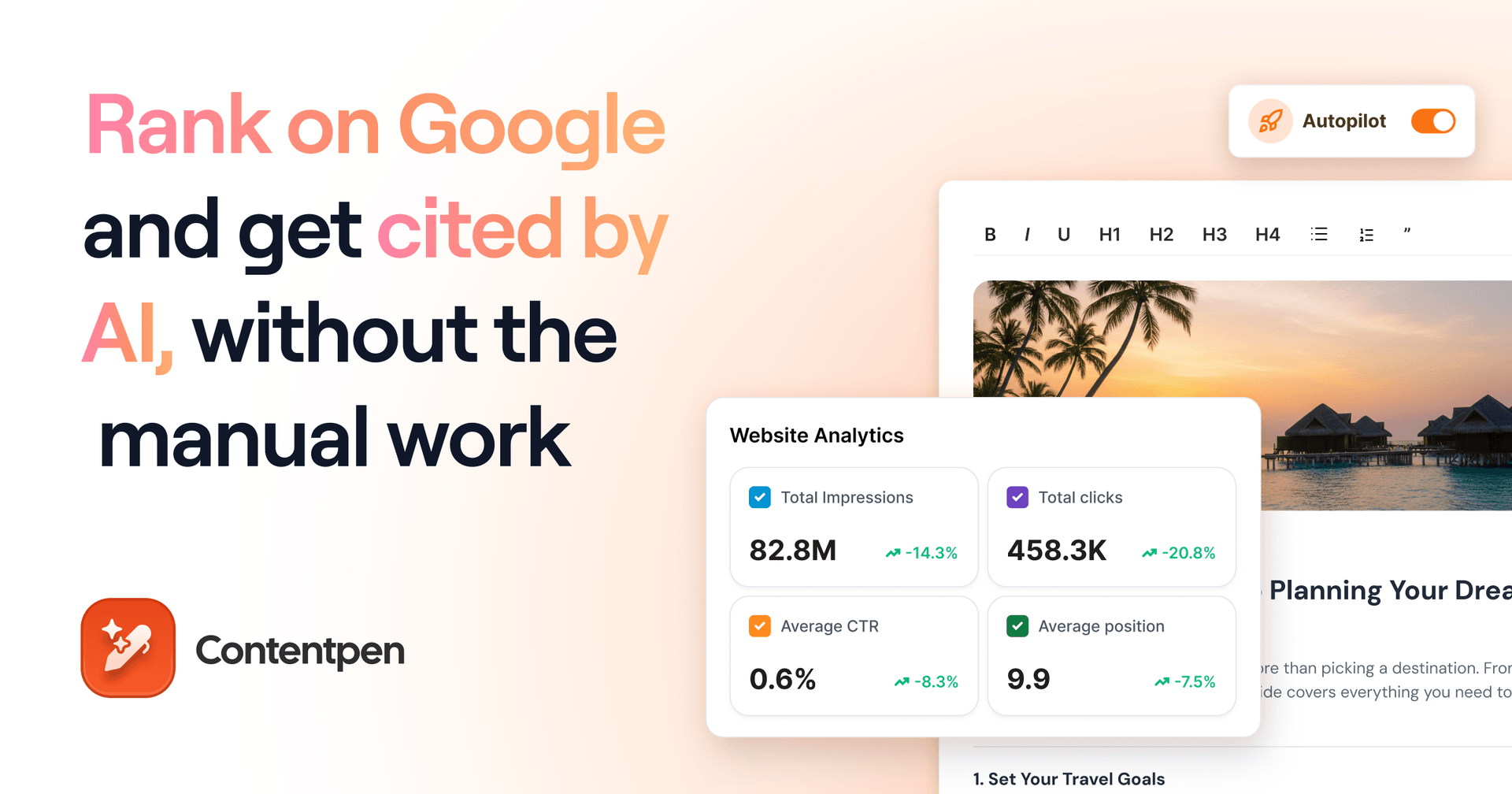
Contentpen is an end-to-end SEO and AEO platform that takes care of keyword research, SERP analysis, SEO scoring, GEO optimization, content scheduling, publishing, and post-publish monitoring in one place.
Besides these features, Contentpen also offers brand visual control, allowing you to publish blogs with infographics, images, and visual assets that follow your style.
The tool also monitors your brand’s sentiment, share of voice, and average position inside AI answer engines, covering up to seven (ChatGPT, Google AI, Copilot, Gemini, Perplexity, Grok, and Claude).
Standout features
- Keyword research and SERP and gap analysis built into the drafting workflow, not a bolt-on
- Topical clustering so new posts reinforce your existing content instead of competing with it
- Automated internal and external linking tied to your site’s existing content
- One-click publishing to WordPress, Webflow, Shopify, Ghost, Wix, and EmDash, with ContentStudio integration for social sharing
- Autopilot that finds topics, writes in your brand voice, and publishes on a schedule
Pros
- Only tool on this list that combines keyword research, SEO scoring, GEO scoring, and AI visibility tracking in one workflow
- Live SEO and GEO scoring shown side by side as you write
- Tracks brand mentions and citations across 7 AI platforms, more than most dedicated visibility tools cover
- Web analytics that show all your important SEO metrics from Google Search Console in one dashboard
- SEO opportunities to detect decaying pages, CTR gaps, and easy wins after publishing to optimize existing content properly
Cons
- The range of features means new users may take a while to learn the full workflow
- Autopilot, SEO opportunities, and broader AI engine coverage start on the Growth plan, so Starter users get a lighter version of the platform
Pricing
Every Contentpen plan includes both SEO content creation and AI visibility tracking. Plans start at $49/month, or $39/month billed annually, for 12 articles, 75 AI images, auto linking, direct CMS publishing, and 25 tracked prompts across 2 AI engines. Growth ($99/month, or $79 billed annually) adds Autopilot, SEO opportunities, 40 articles, and 4 AI engines.
2. Jasper

Best for: Brand voice consistency across marketing teams.
Jasper is built for a different job than most tools on this list. Instead of optimizing purely for search rankings, it’s designed to keep tone and messaging consistent across every piece of content a marketing team ships, blog posts included.
The platform’s brand voice and knowledge asset features let you upload style guides, product information, and past content so every new post pulls from the same context.
For agencies or in-house teams managing content across multiple writers, that consistency layer solves a real coordination problem that pure drafting tools don’t touch.
During our testing, the Canvas editor felt closer to a collaborative document than a generation box. This makes it easier for editors and writers to work on the same draft together.
The tradeoff is that SEO scoring isn’t native. You need a separate Surfer SEO subscription for real on-page optimization work.
Standout features
- Brand voice training that keeps tone consistent across multiple writers and a large content library
- Canvas editor built for collaborative, team-based editing rather than solo drafting
- Knowledge assets that let the AI reference your product details, style guides, and past content
- Marketing-specific templates for campaigns, emails, and social posts alongside blog content
Pros
- Best-in-class brand voice consistency for teams with multiple writers or client brands
- Canvas editor supports real collaborative editing, not just single-user generation
- Wide template library covers blog content plus campaigns, ads, and social copy
- Strong integrations with Surfer SEO and Grammarly for teams already using those tools
Cons
- No native SEO scoring
- Pricing sits noticeably higher than most tools on this list for a single seat
- Overkill for solo bloggers who only need one voice and no collaboration features
Pricing
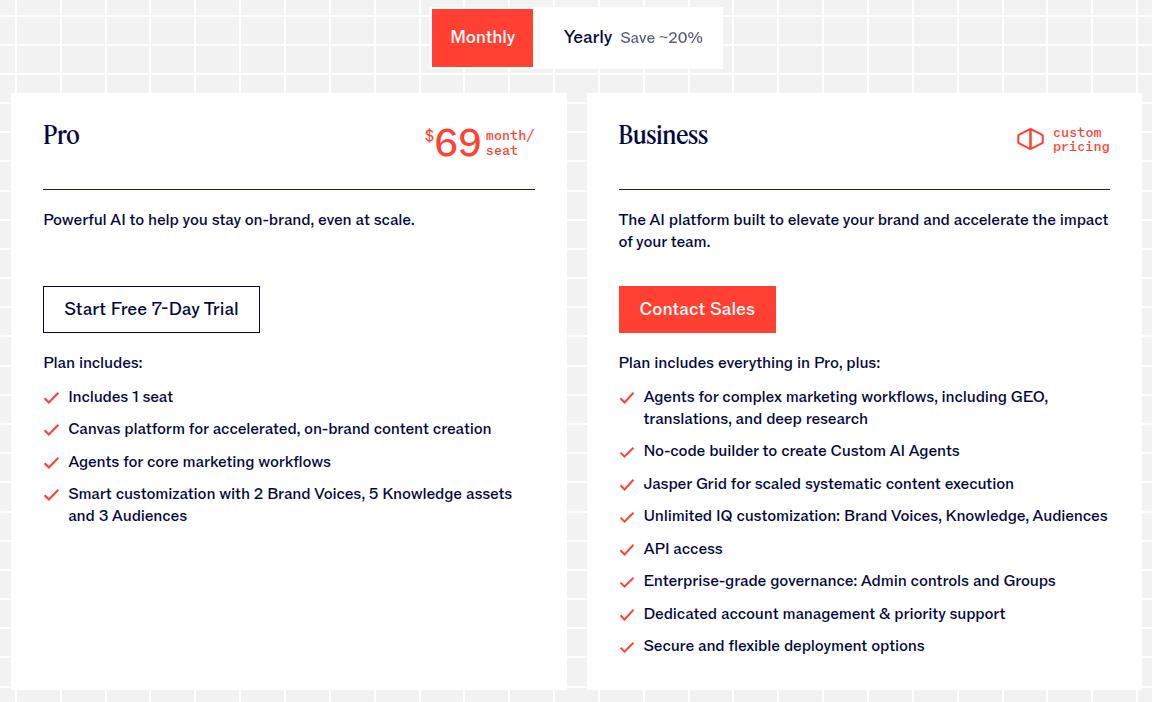
The Pro plan for Jasper AI starts at $69/seat/month, and a custom plan is also available for businesses. You can avail the 7-day free trial, but with a credit card.
Also read: Best Jasper AI alternative in 2026.
3. Writesonic
Best for: Writing backed by live SEO and AI search visibility data.
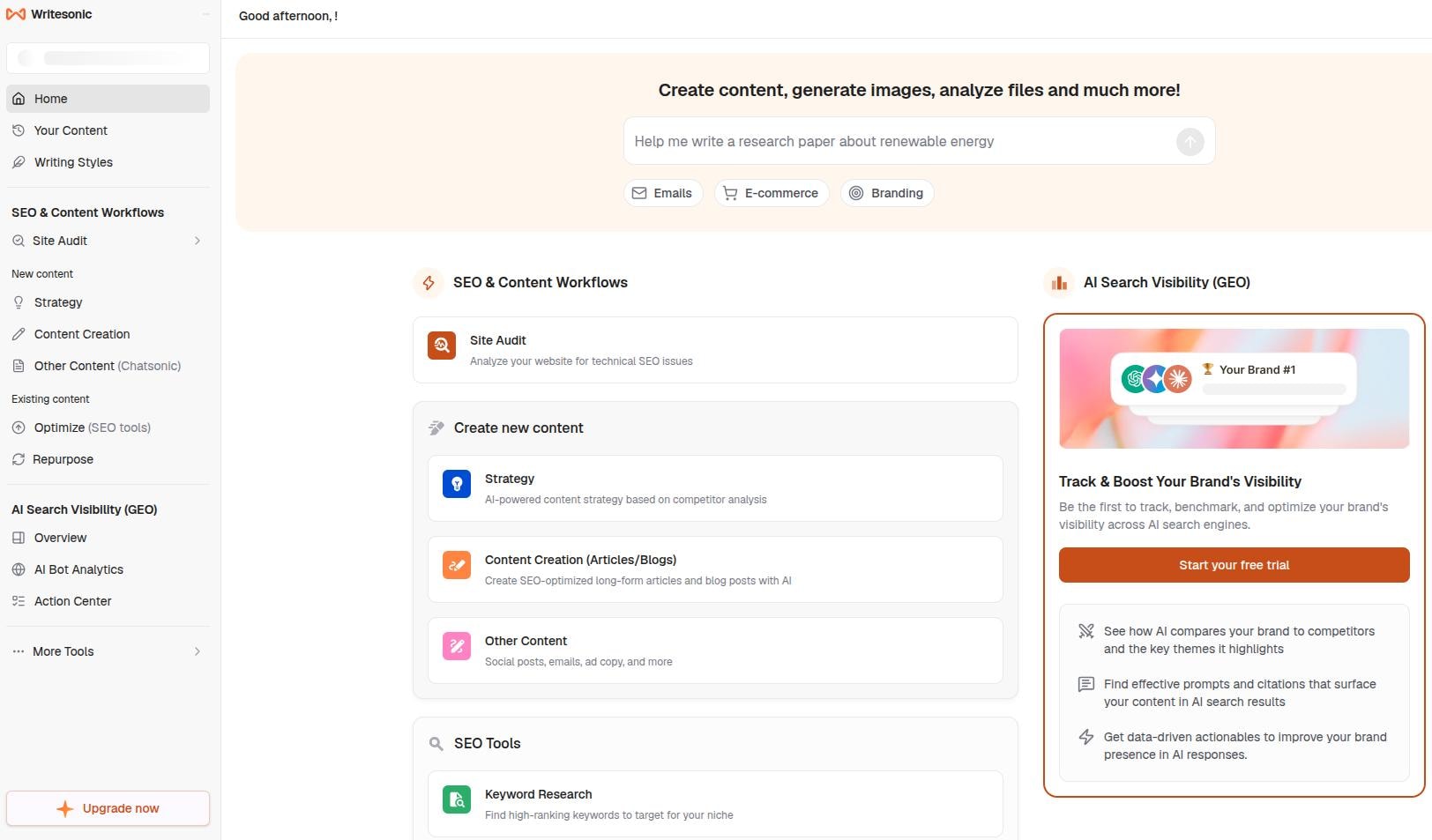
Writesonic leans on its Chatsonic agent to pull live data from sources like Semrush, Ahrefs, and Google Search Console while drafting. This makes it one of the more data-aware AI blog writers for teams that already track SEO metrics closely.
The structured, step-by-step article builder walks you through picking audience, tone, and competitors before generating content, which gives you more upfront control than a single-prompt tool.
Writesonic has also leaned into AI search visibility features recently, layering in some tracking of how content performs in AI-generated answers alongside classic SEO data.
Standout features
- Ability to upload internal brand guidelines as PDFs to keep drafts on-brand
- Powerful AI-assisted chatbot included to help with content creation
- One-click WordPress publishing with built-in fact-checking and citations
Pros
- Live SEO data integrations set it apart from prompt-only AI writers
- Built-in fact-checking with citations helps reduce hallucinated claims
- Growing AI search visibility features alongside classic SEO tracking
Cons
- Advertised entry price doesn’t reflect what most teams will actually need to pay
- SEO data integrations and GEO features are gated behind higher-tier plans
- Learning the full article builder workflow takes longer than simpler drafting tools
Pricing
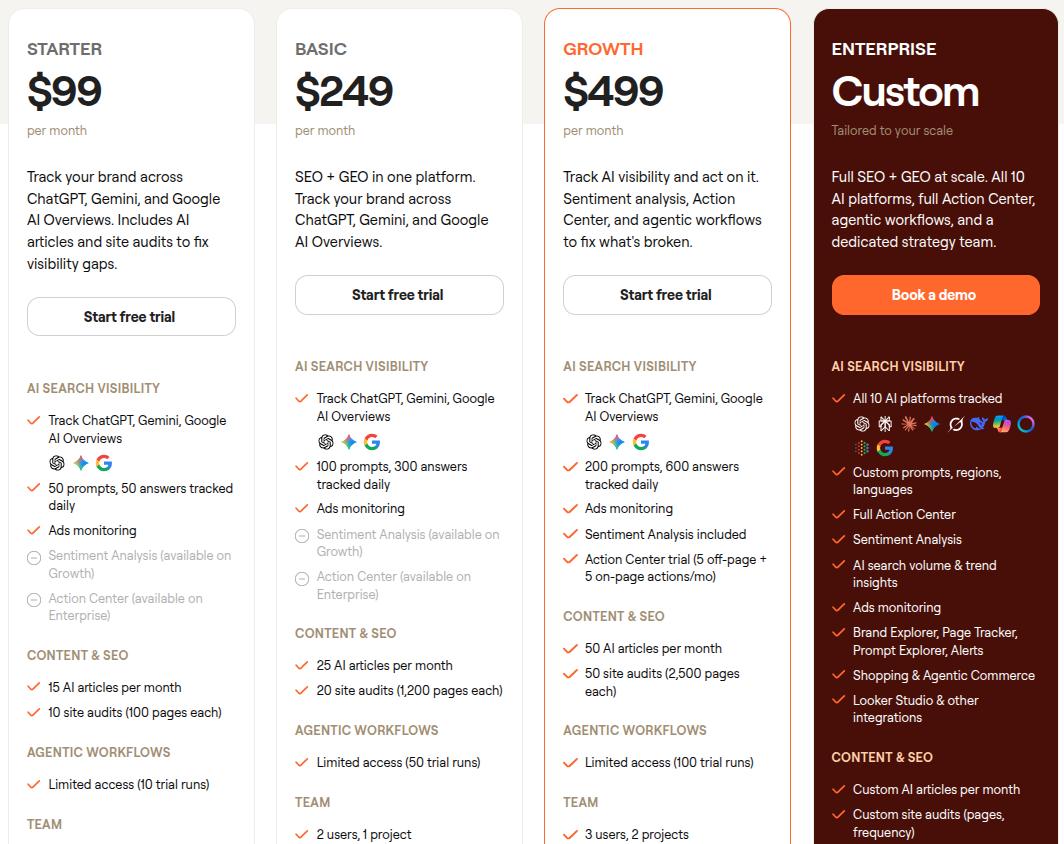
Writesonic pricing starts at $99/month, with the Growth plan reaching $499/month for the SEO, AEO, data integrations, and deeper features most content teams need.
4. Surfer AI

Best for: Pairing AI drafts with on-page SEO scoring.
Surfer built its name on content scoring before it added AI drafting, and that order still shows in how the tool works. Surfer AI generates a draft, then scores it in real time against the specific terms, structure, and length that top-ranking pages for your keyword already use.
The scoring model is genuinely granular, down to how many times a specific term should appear and which headings competitors consistently include.
As we were testing the platform, we noticed that the AI drafting felt secondary to the scoring engine itself.
Teams that want an editor that tells them exactly what to fix get real value here. But users looking for a more autonomous, hands-off blog writer will find themselves doing more manual tuning than with agent-style tools.
Standout features
- Real-time content score that updates as you edit, based on top-ranking competitor pages
- AI drafting generated directly against the scoring model’s recommendations
- Term and structure suggestions down to heading-level detail
- Content audit tools for scoring and refreshing existing published posts
Pros
- Highly detailed, competitor-based scoring model most tools don’t match
- Useful for auditing and refreshing older content, not just new drafts
- Tight feedback loop between AI drafting and the scoring engine
Cons
- Higher price point for what’s still largely a scoring-plus-draft tool, not a full platform
- Not suitable for users that are getting started with on-page SEO
Pricing
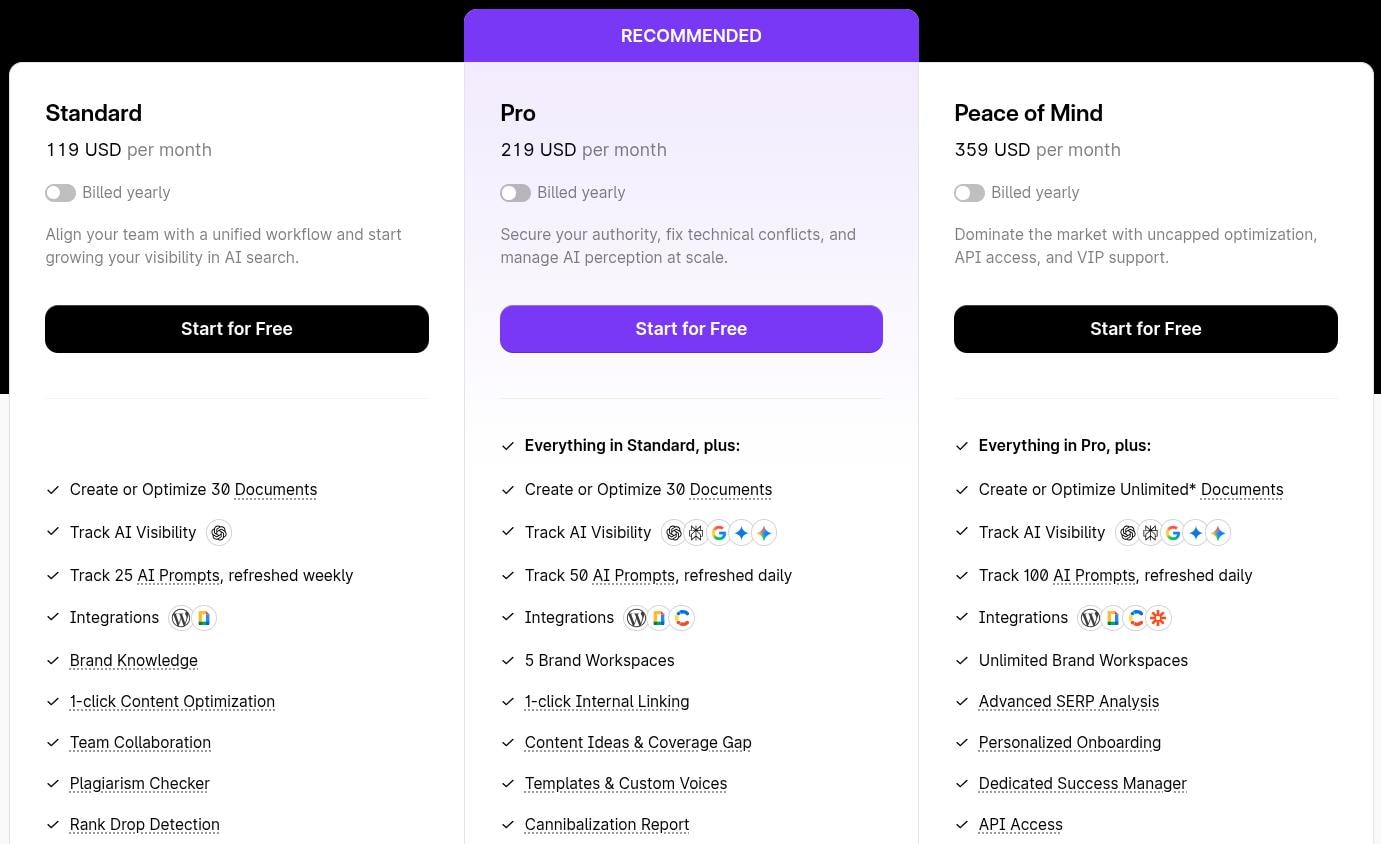
Surfer SEO pricing plans start at $119/month, which includes 30 AI articles, tracking 25 AI prompts, and team collaboration features.
Also read: The best Surfer SEO alternative in 2026.
5. Copy.ai
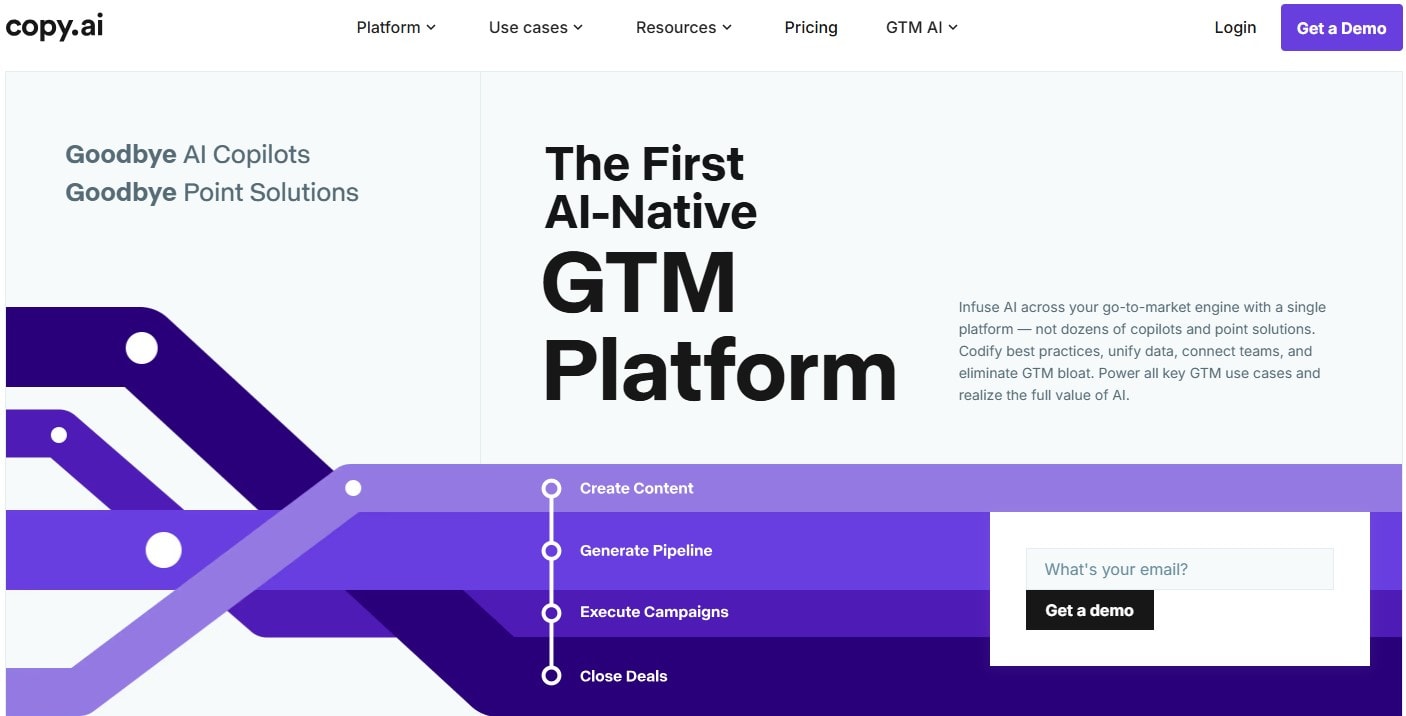
Best for: GTM workflows and repurposing blog content.
Copy.ai started as a short-form copywriting tool and has grown into a broader workflow platform aimed at go-to-market teams. Blog writing is one of its capabilities, but the tool really shines when it comes to repurposing long-form content for paid campaigns and socials.
The workflow builder lets you chain steps together, so a blog draft can automatically trigger a set of social posts or an email summary once it’s generated. That’s a meaningfully different use case than a standalone blog writer and the reason why it’s so popular for GTM campaigns.
In testing, the blog drafting itself was competent but not the platform’s clear strength. We would say that it’s more useful for short-form content like ad copies, landing pages, etc.
Standout features
- Workflow builder that chains blog drafts into social, email, and ad copy automatically
- Brand voice training to keep content consistent across formats
- Broad template library spanning long-form and short-form content types
- Team collaboration features for GTM and marketing operations
Pros
- Strong repurposing workflows that extend blog content into other channels automatically
- Useful for GTM and marketing ops teams running multi-channel campaigns
Cons
- Blog-specific SEO features are lighter than dedicated content platforms
- No built-in GEO or AI visibility tracking
- Higher-tier plans are needed to unlock the full workflow automation features
Pricing
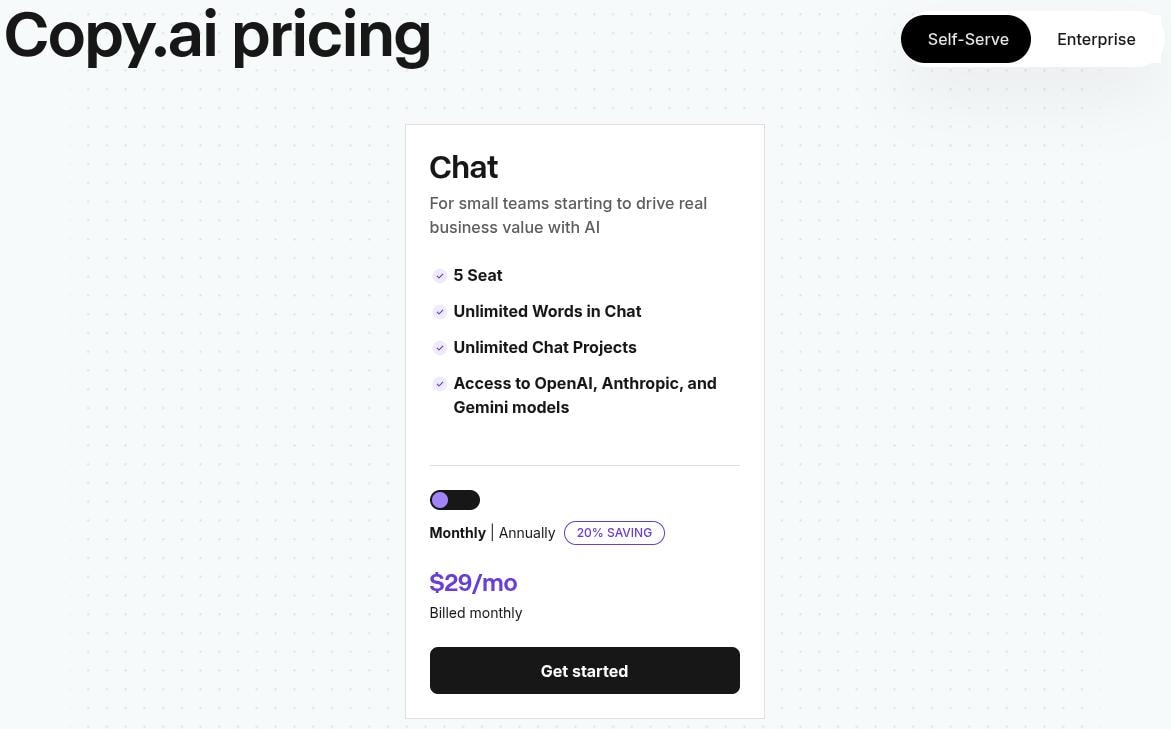
Paid plans start around $29/month, with unlimited words in chat and access to OpenAI, Anthropic, and Gemini models. Enterprise plans are available at a custom quote.
6. Rytr
Best for: Free AI content for short drafts and blog outlines.
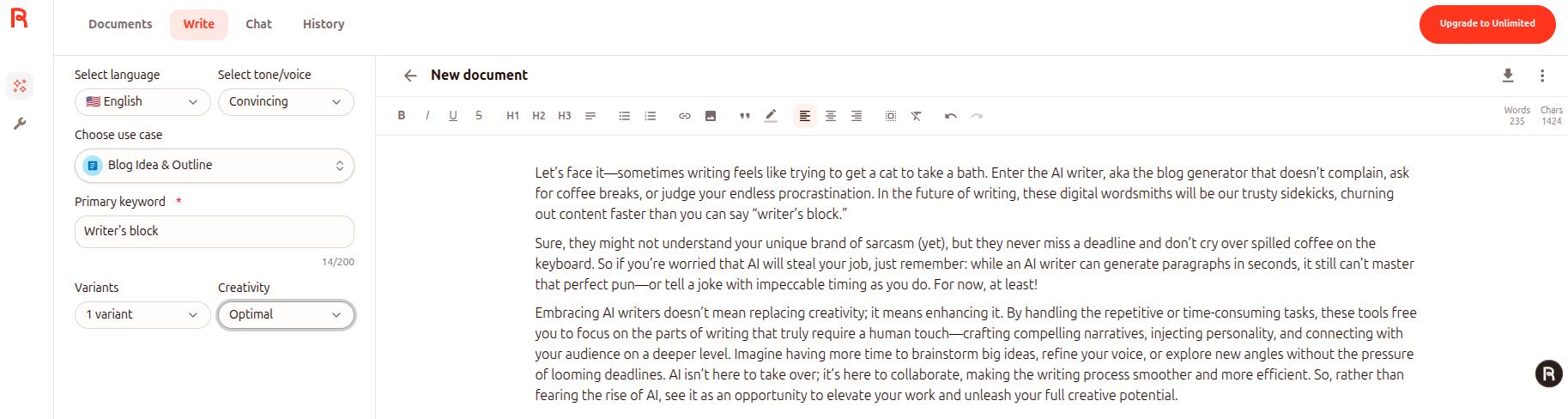
Rytr is built to be the most accessible AI writer in this category, not the most powerful one. Its free plan actually works, giving you 10,000 characters a month across 40+ content templates, which makes it a reasonable option to test AI writing before paying anything.
The template-based system covers blog ideas, intros, and outlines well, but it wasn’t built to build a full 1,500-word article in one go.
During our testing, the output from the tool stayed strong through short sections and started to feel repetitive once we pushed it into longer, continuous drafting.
Rytr is a good choice for freelancers and small businesses looking for the best free AI blog writer or an AI tool on a budget. Nothing more.
Standout features
- Genuine free-forever plan with no credit card required
- 40+ use case templates for landing pages, blogs, emails, and social posts
- Support for 35+ global languages and 20+ tone presets
- Chrome extension for writing help outside the main editor
Pros
- Easy to use and access
- Fast for short-form tasks like blog intros, outlines, and social captions
- Ability to create custom use cases (for premium users)
Cons
- Not built for full long-form blog posts
- No native CMS integrations, so publishing requires manual copy-paste
- No SEO scoring or AI visibility tracking of any kind
Pricing
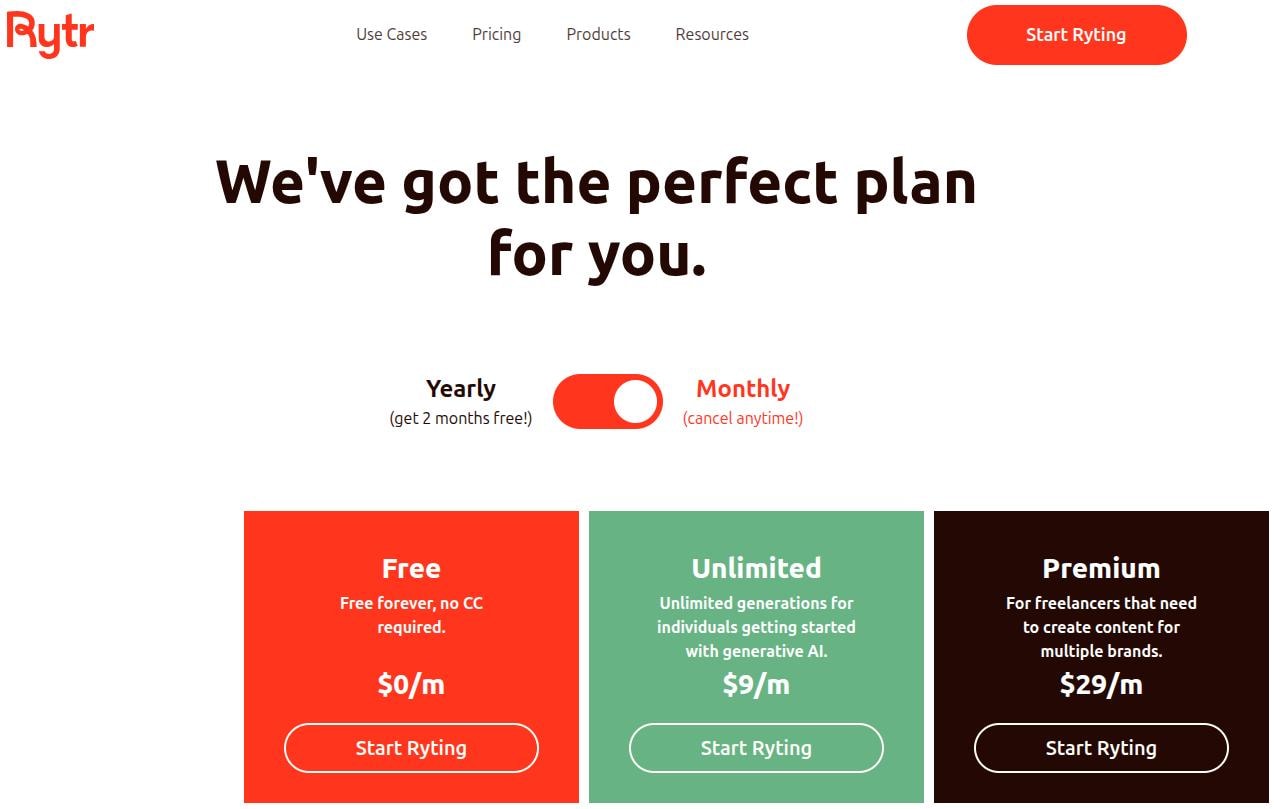
Rytr provides a free plan with 10,000 characters per month. The Unlimited plan is $9/month, and the Premium plan is $29/month for expanded language support.
Also read: 12 best Rytr alternatives for smarter AI writing
7. Anyword
Best for: Predictive, performance-driven content.
Anyword takes a different angle than every other tool on this list. Instead of SEO scoring, it predicts how a headline, intro, or meta description is likely to perform, using a model trained on real marketing and ad performance data.
The tool can also generate a few different versions of the same headline so you can compare their scores and pick the strongest one instead of guessing.
Overall, we felt that the content drafting experience is solid, but noticeably lighter on SEO depth than other dedicated content platforms.
Standout features
- Predictive performance score that forecasts click-through-rate and conversion likelihood before publishing for each draft
- Tone-targeted copy generation trained on marketing and advertising performance data
- Brand voice and messaging features to ensure consistent tone in content
Pros
- Strong fit for teams whose primary metric is conversion rather than just search ranking or AI visibility
- Built-in headline and meta description variant testing speeds up on-page optimization
- Solid brand voice controls for teams managing multiple writers
Cons
- SEO and GEO features are noticeably thinner than other top AI blog writers
- More suited for short-form content rather than full long-form articles
Pricing
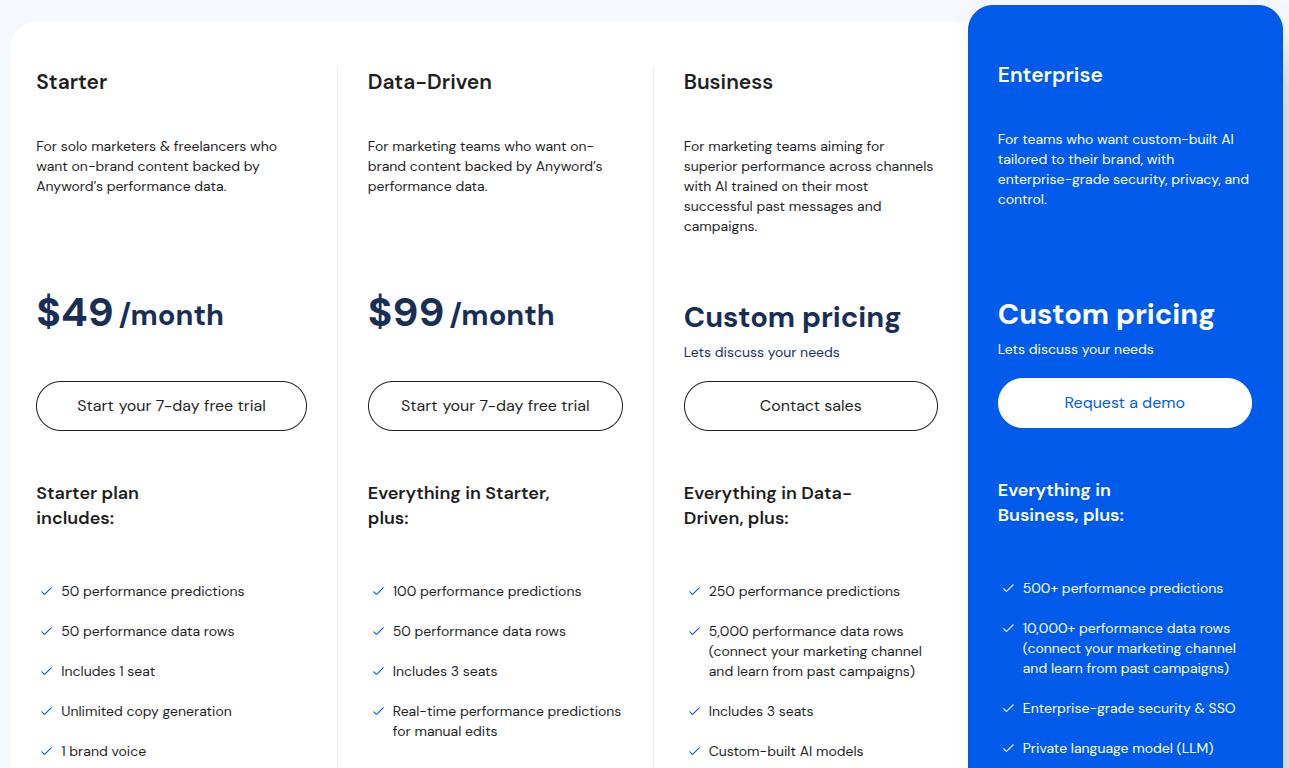
Anyword pricing starts at $49/month, with 50 performance predictions, 100+ marketing templates, and a Google Chrome Extension. You can also try the tool using the 7-day free trial.
8. WRITER
Best for: Enterprise content with governance and security.
WRITER is built for large organizations that operate in highly regulated industries that require compliant, on-brand content. Its core differentiator is training custom models on your own style guide and content library, rather than relying purely on general-purpose models.
The platform automatically flags language that doesn’t match your approved style guide. Combined with SOC Type II compliance, SSO, and role-based permissions, it’s built to satisfy security and legal teams as much as content teams.
In testing, the appeal here wasn’t speed or SEO depth, since WRITER doesn’t compete on either. It was watching the style guide enforcement catch off-brand phrasing automatically across different writers, which is a genuinely hard problem to solve manually at enterprise scale.
Standout features
- Custom-trained models built on your own style guide and content library
- Enterprise governance including SOC Type II compliance, SSO, and role-based permissions
- Automated style guide enforcement that flags off-brand language as it’s written
- API access for embedding content generation into internal tools and workflows
Pros
- Strongest governance and compliance layer of any tool on this list
- Scales cleanly across large teams with many writers and approval steps
- Custom model training reflects your own content library, not generic web data
Cons
- Enterprise pricing and a sales-led process make it a poor fit for solo bloggers or small teams
- SEO and GEO scoring are lighter than platforms built specifically around search or AI visibility
Pricing
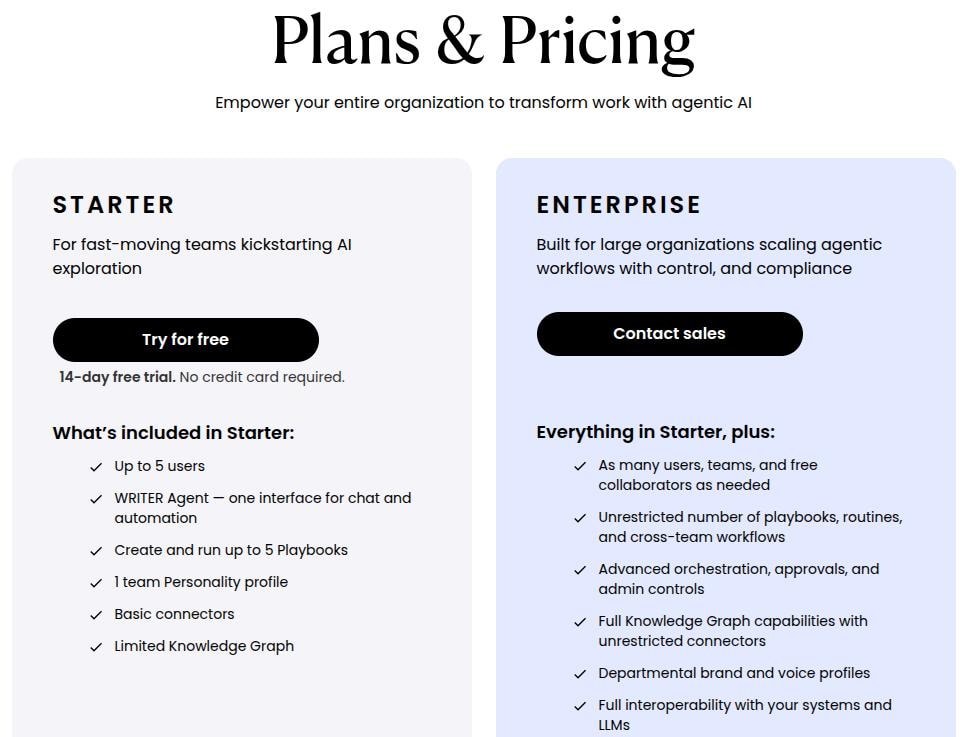
WRITER pricing starts at $39/user/month (from Capterra) with custom pricing available. You can also avail the 14-day free trial to test the platform before buying.
9. eesel AI
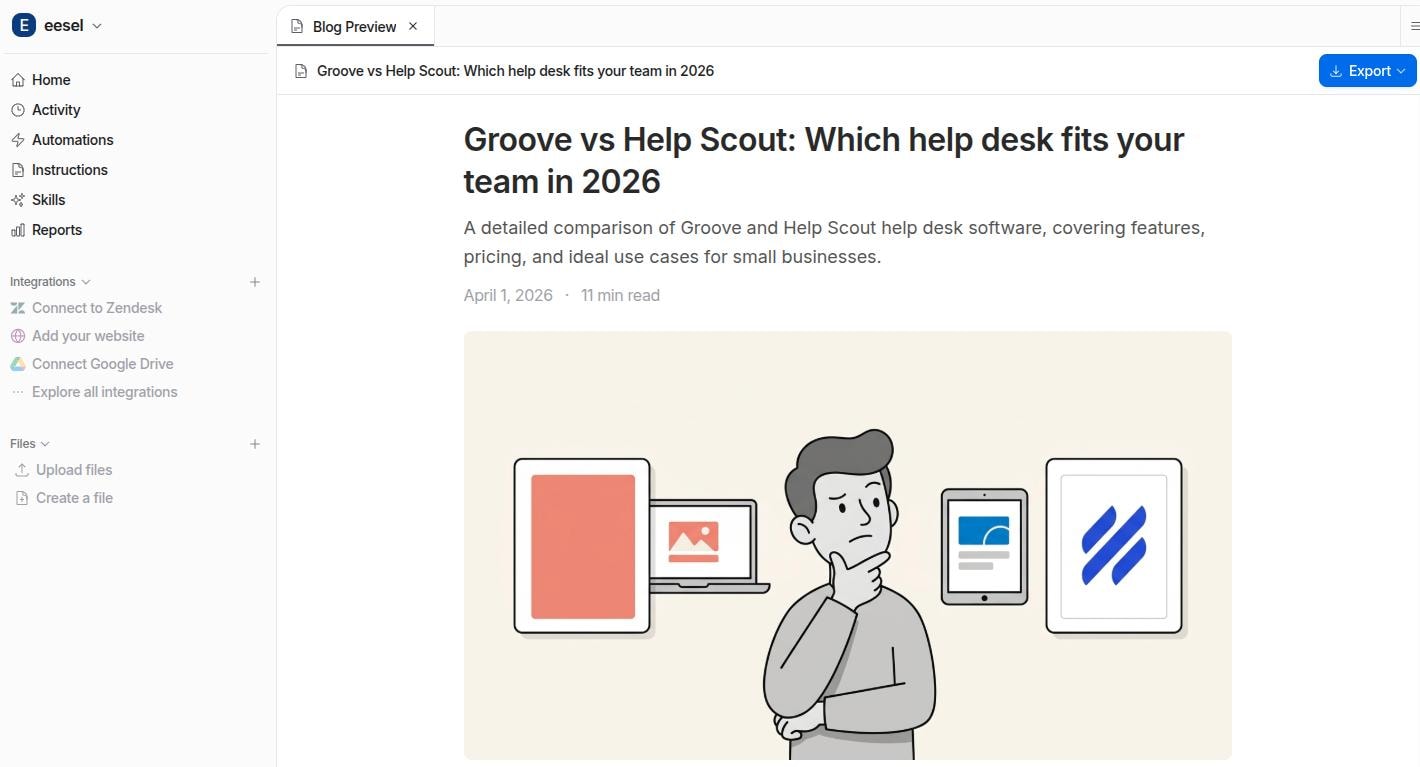
Best for: Autonomous, done-for-you blog generation.
eesel AI is an agentic blog writer tool that gives you a keyword, researches, drafts, and assembles a complete, publish-ready post on its own.
The output includes AI-generated images, data tables, and even real quotes pulled from Reddit and forum discussions for social proof, all put together automatically.
Pricing is output-based rather than seat-based, so you pay per finished post instead of a flat monthly fee regardless of how much you actually publish.
The context-aware research feature stood out for us. Feed it a comparison keyword, and it automatically looks for pricing data. Feed it a product review keyword, and it goes looking for specs instead. That intent-matching happens without any manual prompting.
Standout features
- Autonomous agent that researches, drafts, and formats a complete post from a single keyword
- Automatic AI images, infographics, and data tables generated with the article
- Real quotes and citations pulled from Reddit and other forums that help improve E-E-A-T signals
Pros
- Genuinely autonomous, end-to-end generation with minimal manual work required
- Assets like images and tables are included automatically, cutting out separate design tools
- Strong context-aware research that adapts to the type of article you’re generating
Cons
- Less suited to teams that want to closely direct tone and structure section by section
- Newer tool compared to other established platforms, so the integration ecosystem and customer reviews are still growing
Pricing
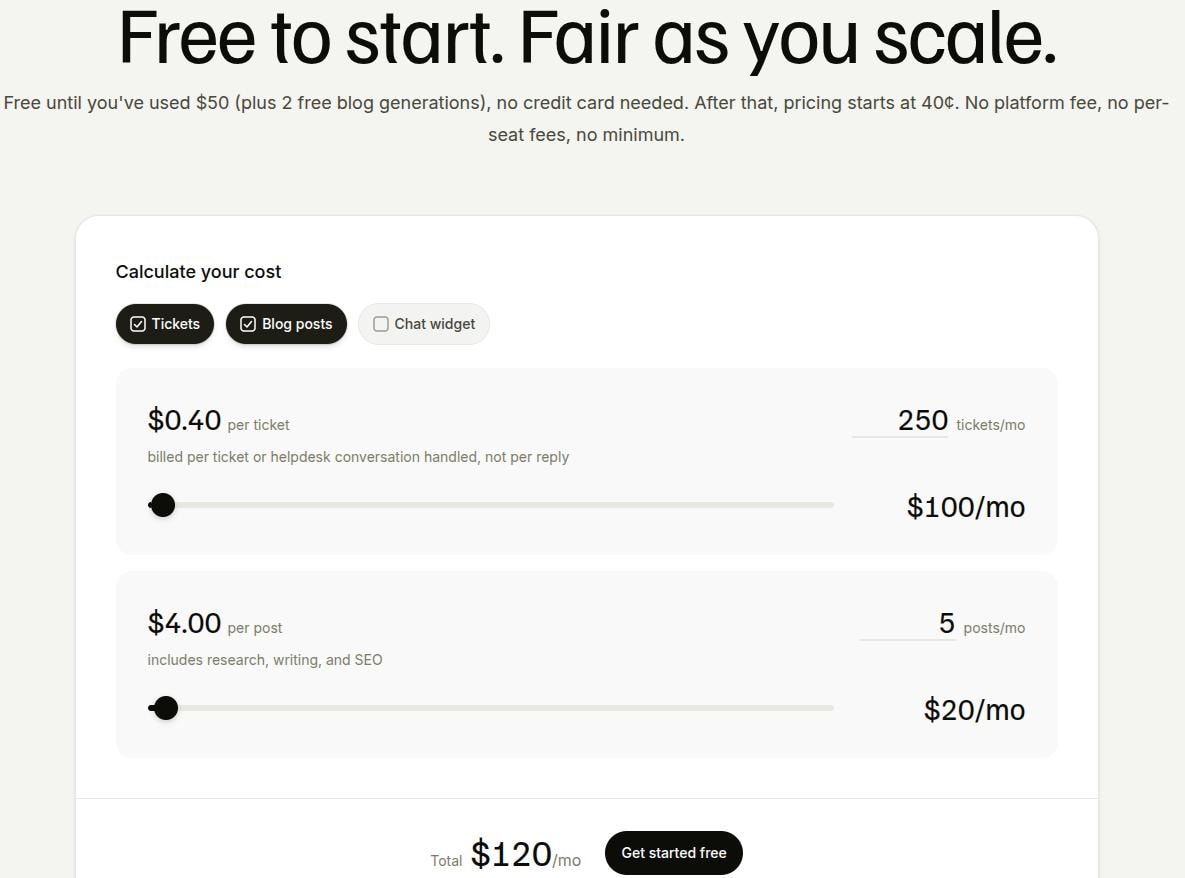
The platform offers a $100 package of 25 complete blog posts, which works out to be $4 per publish-ready article. A free trial is available with $50 in free usage plus 2 blog generations, no credit card required.
10. KoalaWriter
Best for: Budget SEO content writing for niche and affiliate sites.
KoalaWriter is a solid AI blog writer for affiliate sites. Before writing a word, it analyzes the current top-ranking pages for your keyword and pulls out the terms Google expects to see, then works them into the draft.
Its Amazon Product Roundup mode is a genuinely specialized feature. Feed it a list of products or a search term, and it pulls live pricing, ratings, and specs directly from Amazon to build a formatted comparison post with your affiliate tags in place.
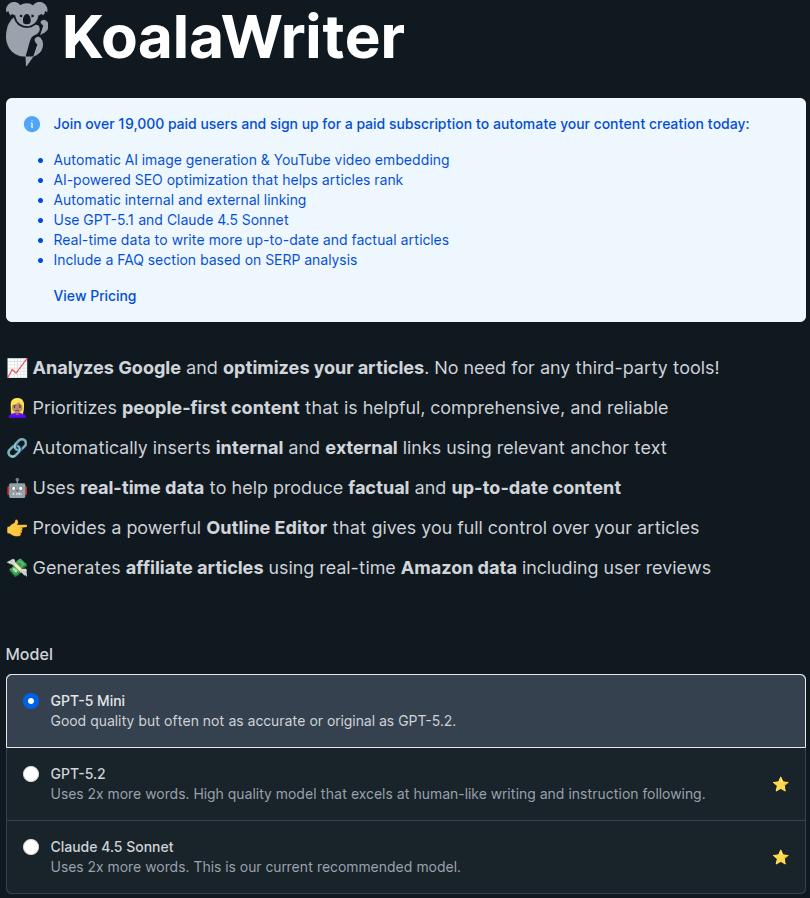
The SERP-first writing approach is something that most budget tools skip entirely. That said, premium models like GPT-5 and Claude in the tool consume credits at double the standard rate, so the advertised word counts shrink quite fast.
Standout features
- Live SERP analysis that pulls entities and keywords from top-ranking competitors before drafting content
- Amazon Product Roundup mode with live pricing and specs for affiliate content
- KoalaLinks feature that suggests internal links automatically
- One-click publishing to WordPress, Shopify, Webflow, and Ghost
Pros
- Lowest entry price of any dedicated SEO blog writer on this list
- Real-time SERP analysis genuinely informs the outline instead of just generating from a prompt
- Bundle includes chat, image generation, and internal linking tools in one subscription
Cons
- Output often needs a solid editing pass, especially for accuracy on YMYL topics
- Weaker brand voice consistency tools compared to platforms built for teams
Pricing
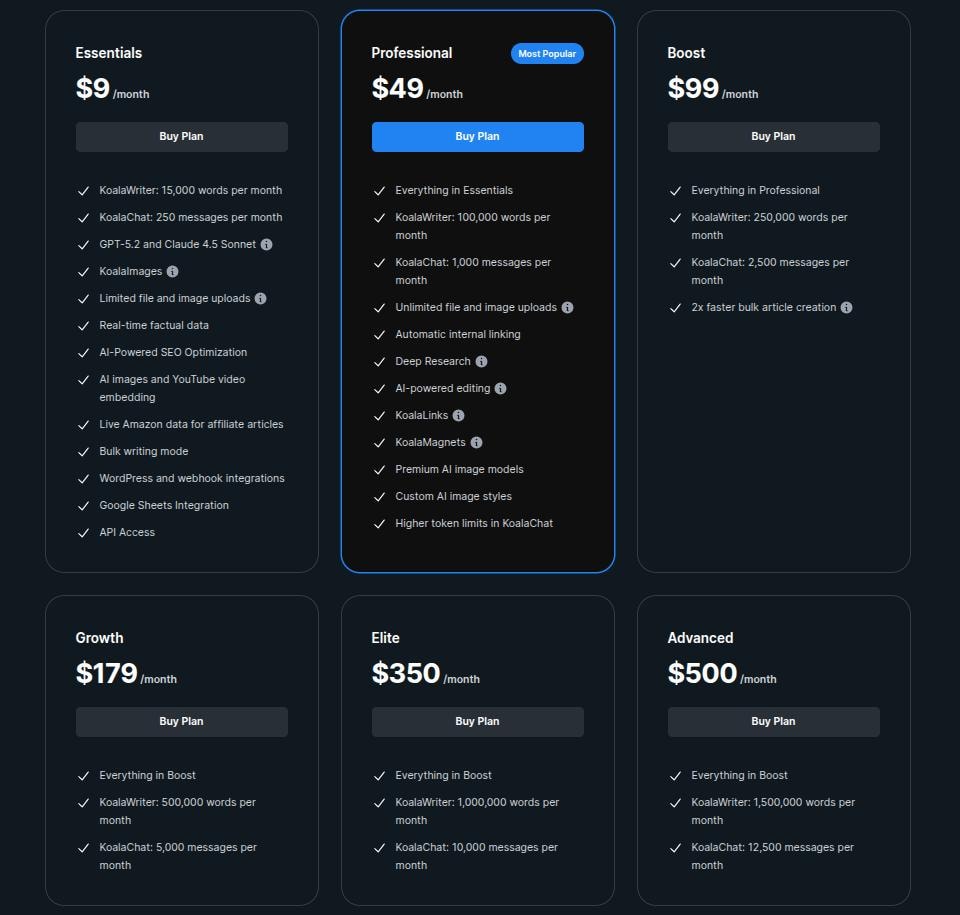
Starts at $9/month for the Essentials plan with 15,000 words for KoalaWriter. Plans scale up to Professional at $49/month for 100,000 words, with higher tiers available for agencies. A free trial with 5,000 words and 25 chat messages is also available.
11. Byword.ai
Best for: Programmatic and bulk SEO content at scale.
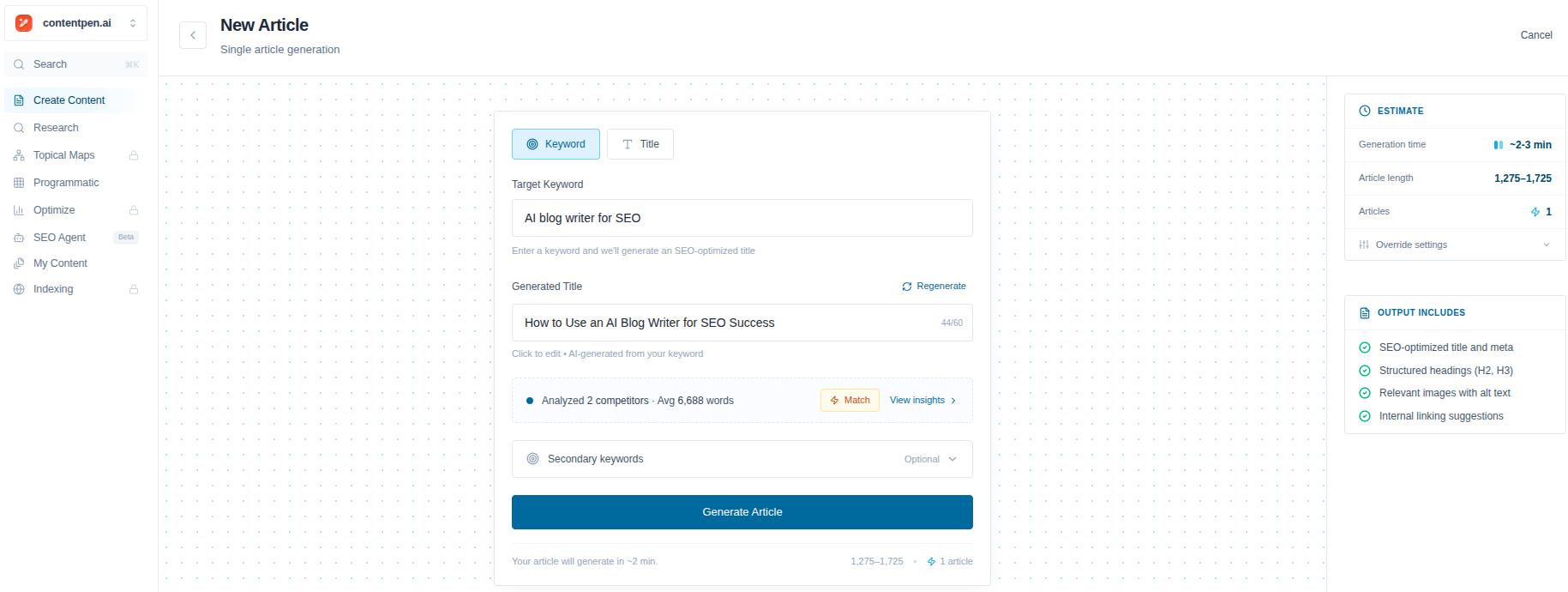
Byword is built for creating bulk content with slight keyword variations. Its Programmatic SEO builder scans your existing site to find topical gaps, then generates matching articles from a shared template across an entire keyword list.
Before drafting, its Research Intelligence feature analyzes the SERP for each keyword to understand search intent. Then, articles are produced in a batch queue, with automatic internal linking and support for 40+ languages.
In testing, the batch workflow was the clear differentiator. Feeding it a spreadsheet-style list of keywords and getting back a queued set of drafts is a meaningfully different experience than the one-article-at-a-time editors.
That said, the output still needs a human optimization pass before publishing, as you’d expect from a bulk content generation tool.
Standout features
- Research Intelligence that analyzes SERPs and identifies ranking opportunities before content generation
- Programmatic SEO builder that fills numerous keyword variations from a single article template
- Automatic internal linking based on your existing site content
- Integrations with Zapier, Make, Airtable, Notion, and Slack for workflow automation
Pros
- Clean, distraction-free interface that we liked using
- Broad integration ecosystem for automating the content pipeline into other tools
- Multi-language support for global content operations
Cons
- Built around queue-based batch generation rather than interactive editing, so it favors throughput over per-article polish
- Lacks in-app editing tools for content
Pricing
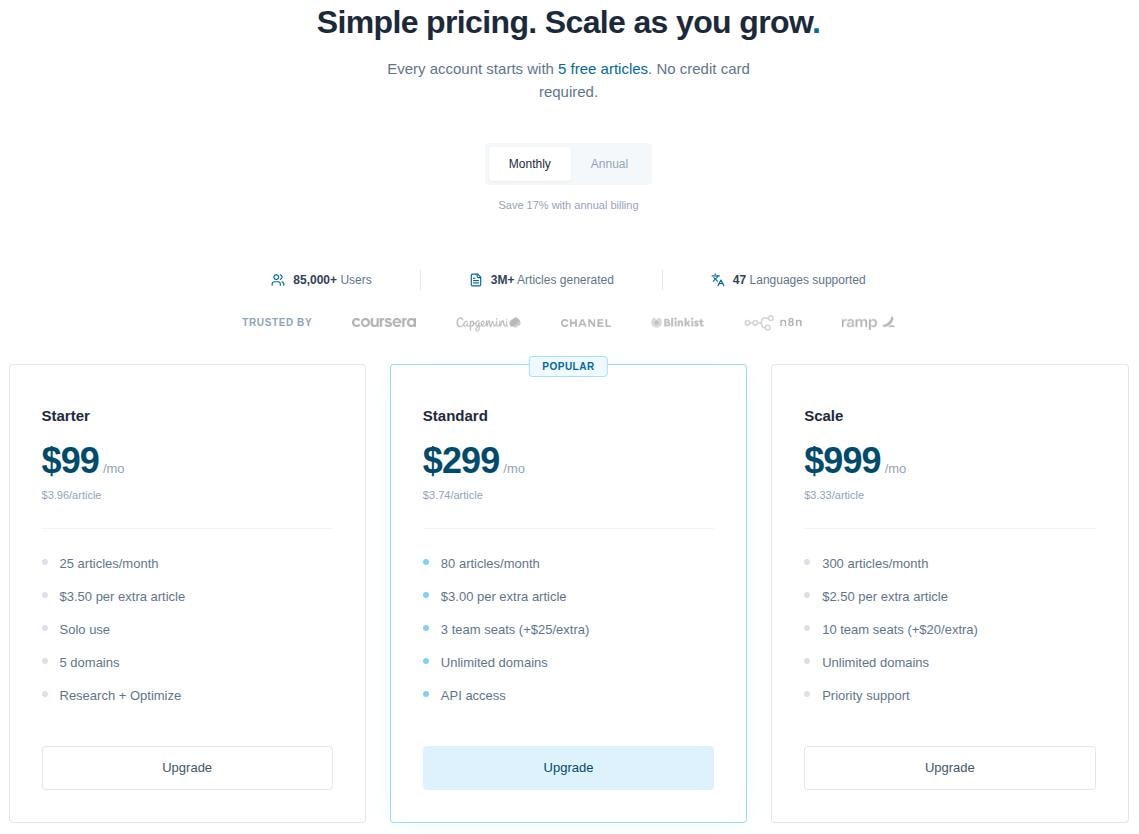
Paid plans start at $99/month. You can also avail a free trial that provides you with 5 free article credits.
12. Frase
Best for: Fast SEO and GEO briefs backed by live SERP research.
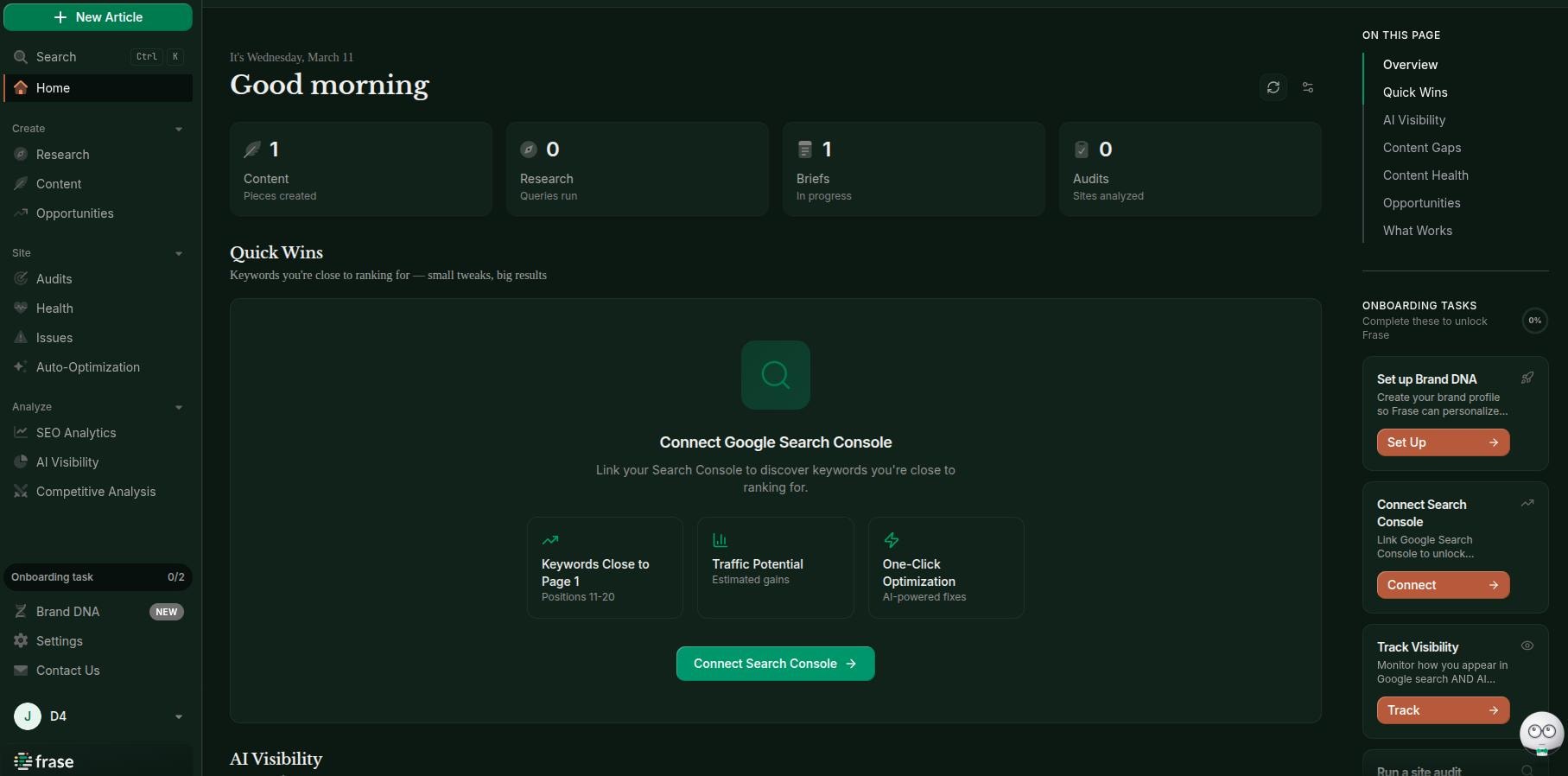
Frase is a tool made for creating SEO and GEO-optimized content. The platform also offers AI visibility and site audit functionalities to help you find and fix technical SEO gaps on your site.
The Research Panel is genuinely useful for spotting content gaps, since it highlights questions competitors answer and the ones they miss. For solo creators or small teams trying AI SEO tools for the first time, that low-friction research-to-draft loop is a real advantage.
In testing, Frase felt strongest as a research and outlining tool rather than a full drafting engine. It trades depth for speed, which is the right tradeoff for teams that need briefs fast but plan to write or heavily edit the final draft themselves.
Standout features
- Automated brief creation pulled from live SERP results for your target keyword
- Built-in AI writer for first drafts and section rewrites
- AI image generator to generate blog visuals inside the same workflow
Pros
- Strong SEO and GEO-optimization features to help you rank on Google and get cited by AI engines
- Content gap analysis surfaces angles competitors have missed
- AI search visibility tracking for ChatGPT, Perplexity, Claude, and Gemini
Cons
- Image generation is included, but without the same brand imagery controls that other platforms like Contentpen offer
- Best suited to teams willing to do real editing rather than publish-as-is
Pricing
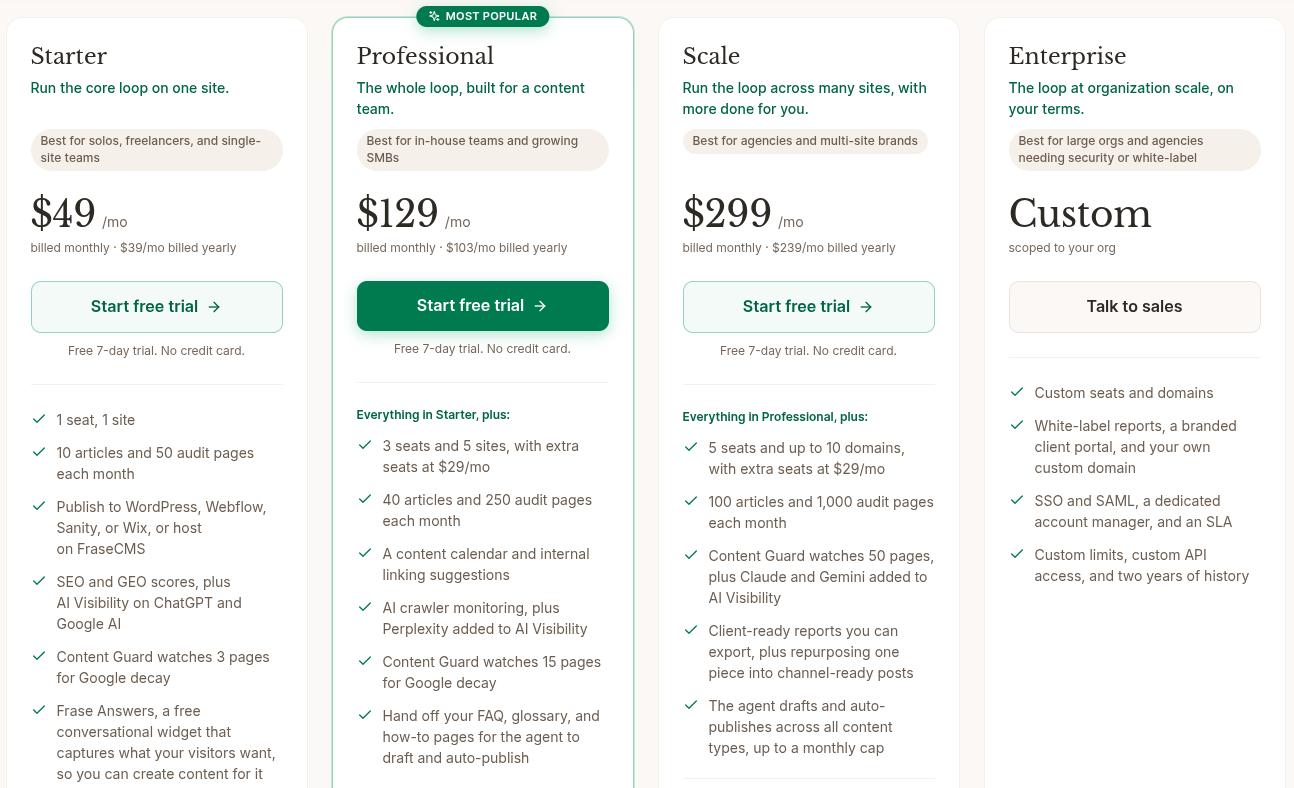
Paid plans start at $49/month, including 10 AI-optimized articles and 50 SEO audits per month. A 7-day free trial is available.
13. RightBlogger
Best for: Solo bloggers running autoblogging workflows
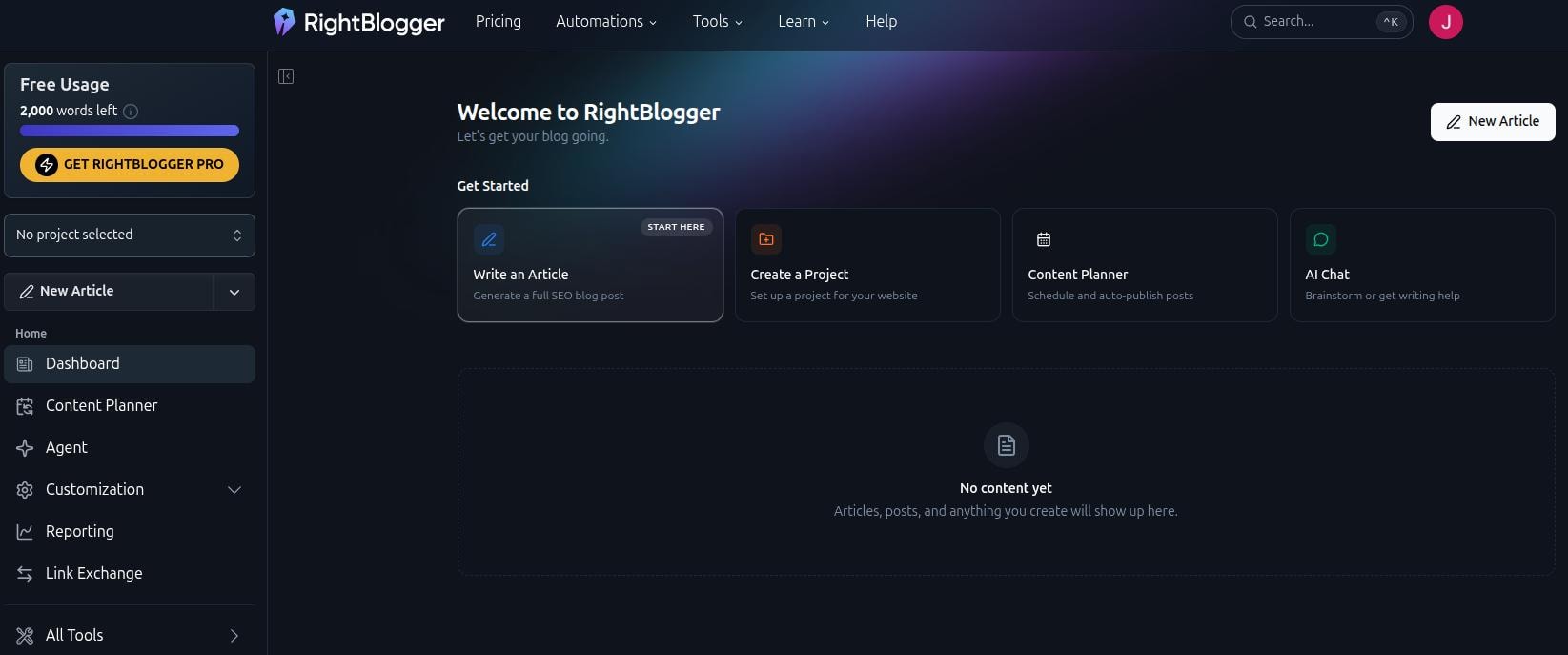
RightBlogger is built for solo bloggers who want to run content production closer to autopilot. Its autoblogging feature lets you set topics or categories and a publishing schedule, then generates and publishes posts on that schedule without daily input from you.
Besides that, RightBlogger offers an AI SEO agent to automate on-page SEO tasks. You can also get backlinks for your content automatically using the Backlink Exchange feature.
During our testing, we found the autoblogging setup to be quite straightforward. You have to define your topics, set a cadence, and the queue handles the rest.
The tradeoff is that unattended publishing carries real quality risk. So the tool works best as a starting point for a new site rather than a set-and-forget solution for an established one.
Standout features
- Autoblogging mode that generates and publishes posts on a set schedule without daily input
- Direct WordPress, Ghost, Wix, Webflow, Shopify, and Duda integrations for content publishing
- Bulk post generation for quickly populating a new blog
Pros
- Purpose-built for solo bloggers who want to run a blog closer to autopilot
- Straightforward setup with a minimal learning curve
- Branded white-label SEO reports available for agencies to share data with clients
Cons
- Autoblogging without oversight carries real quality risk if left fully unattended
- Lacks the SEO and GEO scoring depth of other dedicated content platforms on the list
- Less suited to teams needing brand voice consistency across multiple writers
Pricing
RightBlogger pricing starts at $59/month, with a free 7-day trial available for users.
14. Cuppa AI
Best for: Hands-on content editing with a built-in SERP sidebar.
Cuppa takes a bring-your-own-key (BYOK) approach, and a content editor that makes it stand out from others.
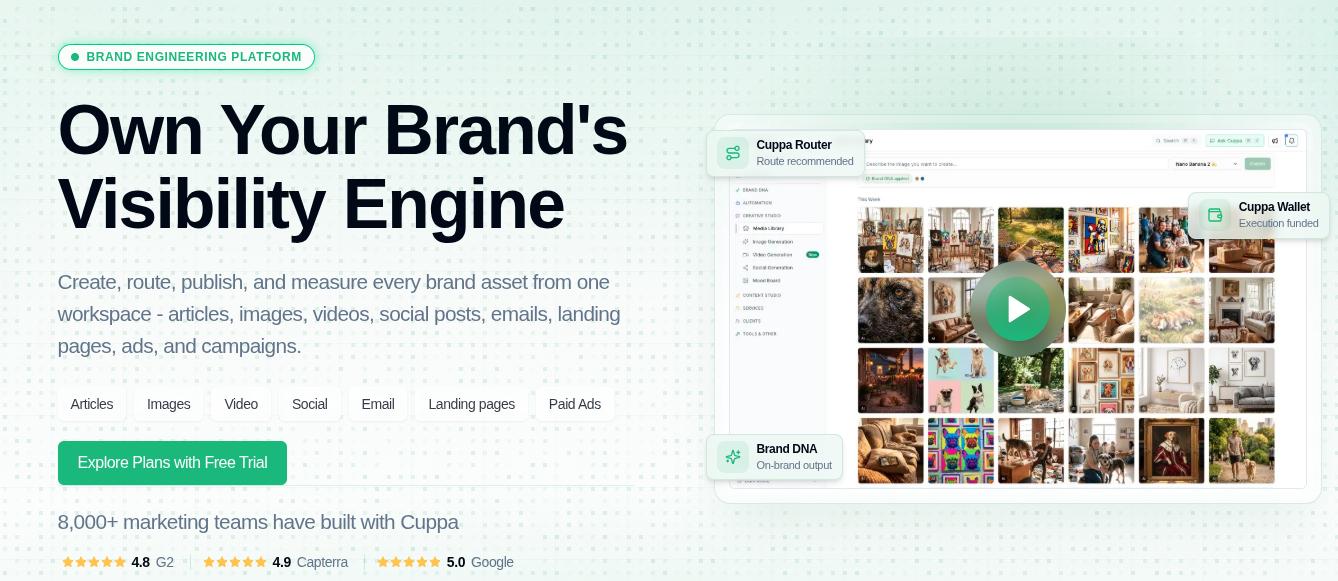
The tool provides a SERP sidebar that sits next to your draft, showing headings from competing pages, “PAA” questions, and an inline chat lets you refine content with AI.
The content type selector goes beyond a generic blog post template, covering listicles, reviews, how-to guides, recipe articles, and even local service pages.
A programmatic keywords feature also lets you define a template with variables for bulk generation, similar in spirit to Byword’s approach.
Cuppa felt like the tool built for people who want to edit and optimize content rather than accept a full autogenerated draft. If your workflow is mostly writer-led with AI as a research and drafting assistant, the editor experience here is more comfortable than most autopilot-style tools.
Standout features
- SERP sidebar showing competitor headings and structure while you write
- One-click insertion of “People Also Ask” questions directly into your draft
- Inline AI chat for rewriting selected text without leaving the editor
- Programmatic keyword templates for structured bulk generation
Pros
- Most polished content editing experience among BYOK content tools
- Built-in image and video generators that help generate on-brand visuals for your content
- Content type selector covers formats like local service pages and recipes that most competitors skip
Cons
- BYOK model means managing a separate AI provider bill on top of the subscriptions you already have
- Newer platform with smaller user community and social proofs
- Not suitable for individual users or smaller teams with the breadth of features available
Pricing
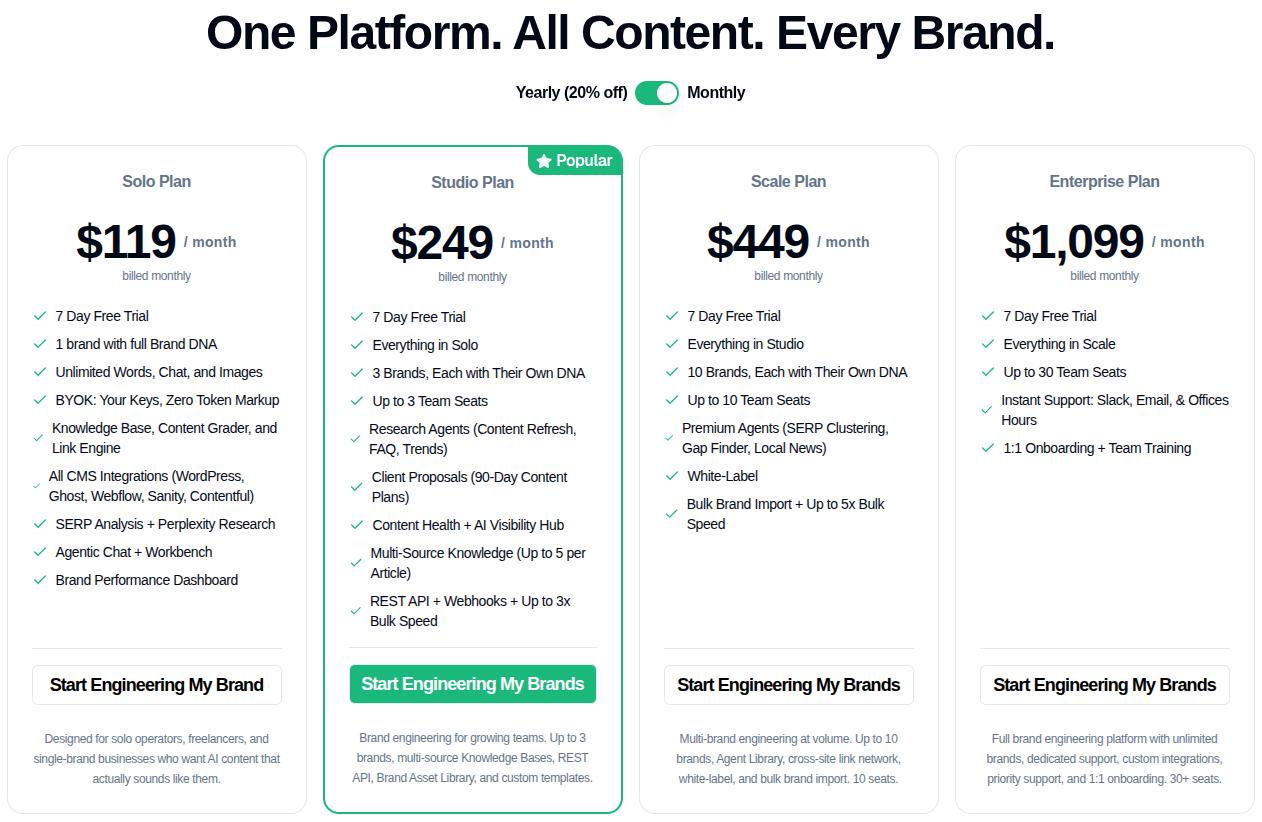
Pricing for Cuppa AI starts at $119/month, which includes Brand DNA features, performance dashboard, and unlimited words.
Editor’s picks
After testing all these AI blog writers one-by-one, we can confidently pick these tools that are worth your time in 2026. This is based on their writing depth, relevance, and the feature set they provide to boost your organic growth and AI search visibility.
- Contentpen – Best AI blog writing tool. It is the only option that combines SEO scoring, AI search optimization, web analytics, image generation, topical clustering, automated linking, bulk generation, and AI visibility tracking in one platform.
- Eesel AI – Best if you want to hand off blog production entirely. Its agent researches, drafts, and formats a post from a single keyword with minimal input.
- Jasper – Best for teams that need brand voice consistency across multiple writers or client brands.
- Writesonic – Best if you want drafting backed by live SEO data instead of a single prompt.
- Surfer AI – Best if your team already thinks in content scores and wants AI drafting wrapped around that model.
Besides these mentions, we would also like to include tools such as KoalaWriter as our pick for the best budget SEO content writer.
Final thoughts
The best AI blog post writer for you depends on what you’re actually trying to fix, whether it’s research time, SEO scoring, brand consistency, or AI search visibility. You need to find a friction point in your current workflow to choose the best possible tool for your needs.
If the goal is to find a single platform that handles all the SEO and GEO tasks in one place, then Contentpen is the right choice. Not only does it write “good content”, but it also keeps track of what’s working and what isn’t to provide you with maximum clarity for your campaigns.

Write content that’s built to rank, not just read
Create search-optimized blogs aligned with SEO and GEO signals, so your content performs well across search and AI-driven discovery.
Try SEO Blogging FREE →
In the end, we would suggest you pick a tool that supports your goals instead of one that just produces more words. Because in 2026, focused content is much better than noise.
Frequently asked questions
Contentpen is the best overall pick for 2026 because it combines keyword research, SEO scoring, GEO scoring, and AI visibility tracking in one platform.
Yes. Most businesses and bloggers already use AI to draft some or all of their blog content. The tools in this guide handle research, drafting, and SEO optimization, but you still need humans to edit and review AI content for accuracy, brand voice consistency, and flow.
Not inherently. Google’s guidance focuses on whether content is helpful and people-first, not on how it was produced. Therefore, AI-generated content that’s well-researched, structured, and edited for accuracy performs similarly on SERPs as human-written content in that regard.
Popularity varies by use case. Jasper has one of the largest user bases among marketing teams for brand-consistent content. However, for teams that need SEO and AI visibility combined, Contentpen has become a standard recommendation.
Rytr offers a genuine free-forever plan with 10,000 characters per month and no credit card required. However, it’s built for short-form content like outlines, blog intros, and section-by-section rewrites rather than for long-form posts.
It depends on the type of content. For long-form, SEO-optimized blog posts with AI visibility tracking, Contentpen is the strongest all-around option. For short-form copy like ads and captions, Copy.ai is the best pick.
General-purpose AI chatbots can draft blog content when prompted well, but they aren’t purpose-built blog writers. They work best as a drafting assistant inside a broader content workflow, not as a replacement for it.

Jawwad
Jawwad Ul Gohar is an SEO and GEO-focused content writer with 3+ years of experience helping SaaS brands grow through search-driven content. He has increased organic traffic for several products and platforms in the tech and AI niche. As an author at Contentpen.ai, he provides valuable insights on topics like SEO technicalities, content frameworks, integrations, and performance-driven blog strategies. Jawwad blends storytelling with data-driven content that ranks, converts, and delivers measurable growth.
View all posts by this author