 13 minutes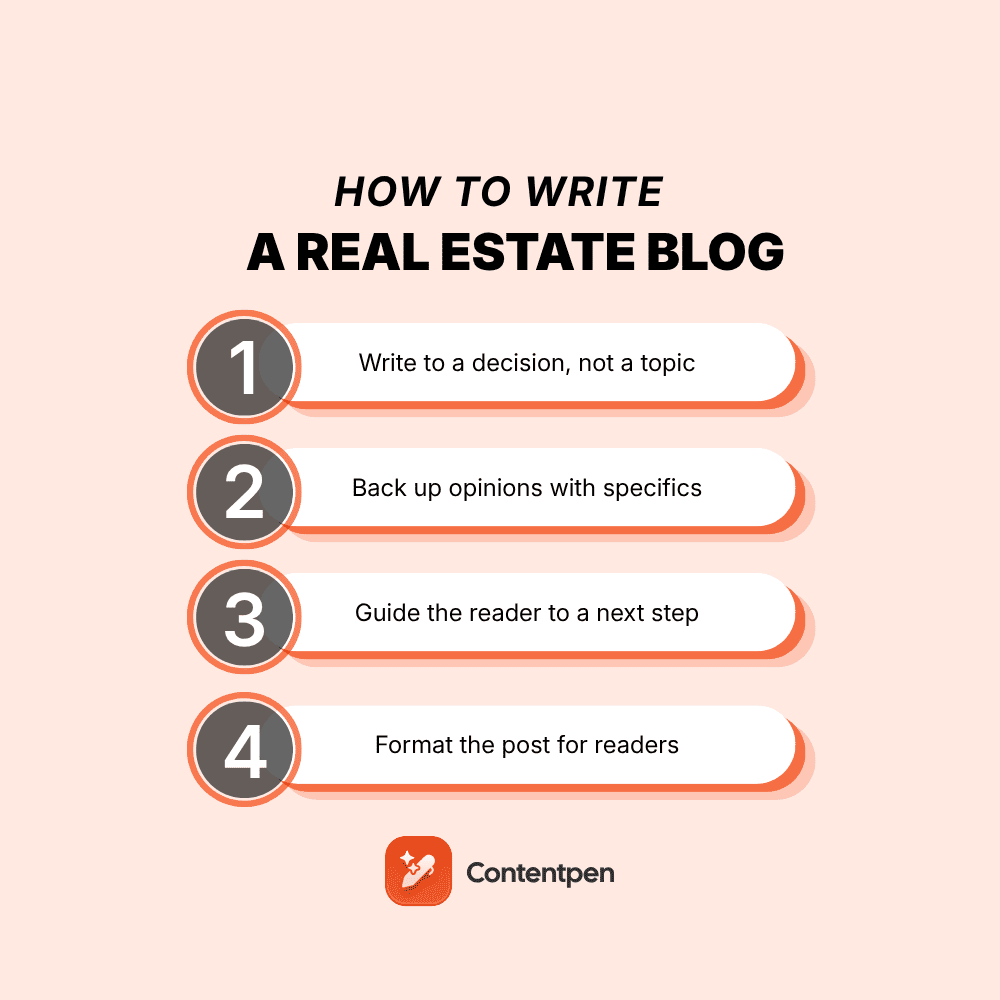
Learning how to write a real estate blog is the best business investment you can make in 2026. Blogs are great for SEO and online visibility, which may directly result in more clients and conversions.
Writing a real estate blog today comes down to picking a niche, choosing a platform to publish, building a realistic posting schedule, and writing SEO-optimized posts using automated tools.
This guide walks through each of those steps in simple terms. It also shows you how a tool like Contentpen can help you draft, optimize, and publish posts without losing your personal voice.
So, let’s start with the basics.
Table of contents
Key takeaways
- Pick one real estate blog niche and post on a steady schedule rather than in occasional bursts.
- Write listing descriptions and agent bios that sell a feeling, not just a floor plan.
- Lean on proven formats like FAQs, checklists, and neighborhood guides instead of guessing what to write.
- Promote every post through search optimization, social sharing, and email so that your content doesn’t go to waste.
- Treat AI tools as a co-writer that speeds up drafts while your local knowledge and stories do the closing.
What is a real estate blog and why does it matter?
A real estate blog is a content section on your website where you regularly publish articles about buying, selling, and living in different types of properties.
It works like a digital storefront, where every new post is a fresh chance to appear in search when someone looks up home prices, moving tips, or a specific neighborhood. Over time, that steady output builds search visibility that paid ads alone can’t buy.
When you answer the same questions your clients ask every week, readers start to see you as the go-to expert long before they call. That trust often leads to a closing, even before you’ve met the client in real life.
How to start a real estate blog step by step
Getting a real estate blog off the ground is mostly a series of small, practical decisions made in the right order. None of these steps require technical skill or a big budget, just a bit of your time.
Step 1: Pick your real estate blog niche
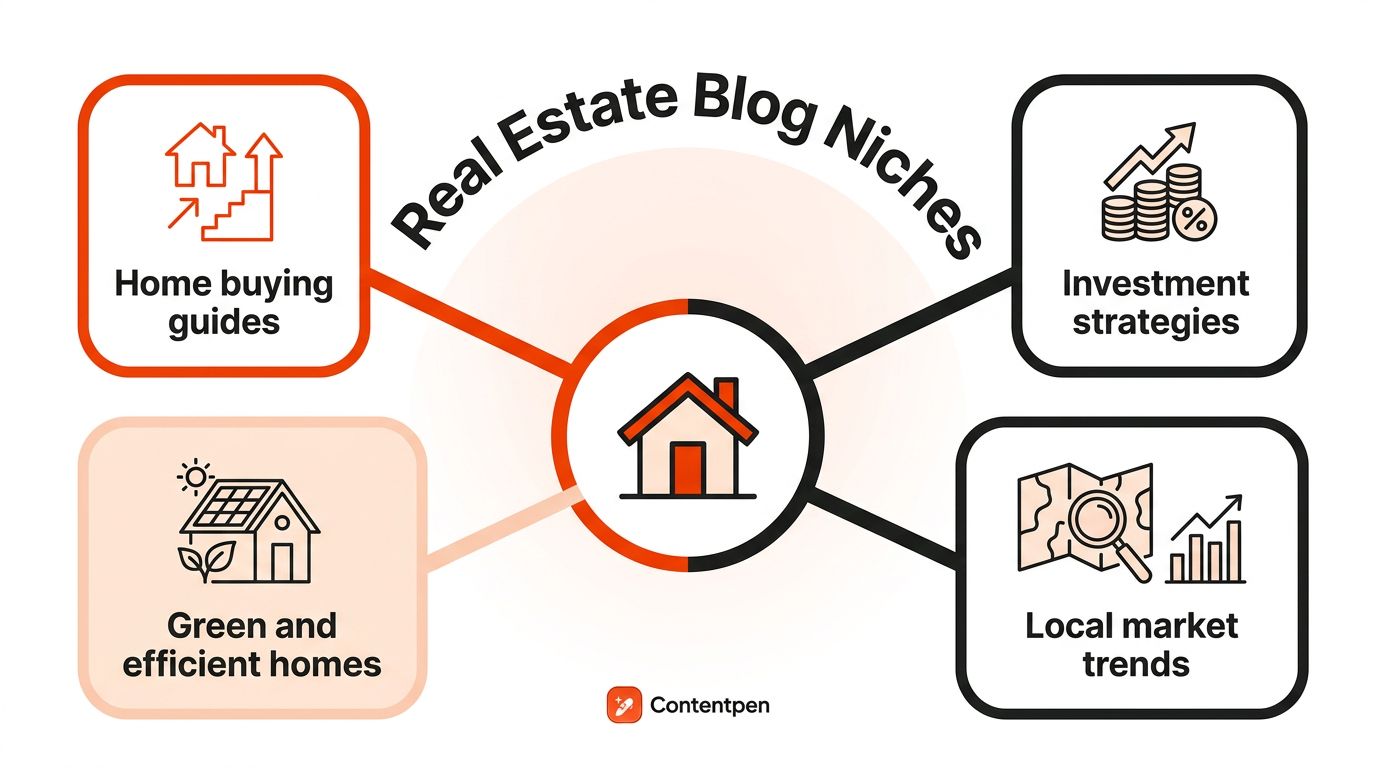
Choosing a focus makes your blog easier to remember than trying to cover every real estate topic at once. Popular niches include:
- Home buying guides, such as “10 steps for first-time homebuyers”
- Investment strategies, such as “rental property ROI explained”
- Green and energy-efficient homes, such as “the benefits of solar-powered houses”
- Local market trend reports for your city
A niche is a starting identity, not a permanent limit, so you can always branch into other topics later.
Step 2: Choose your blogging platform and domain
Your blogging platform should offer reliable hosting, built-in security, and templates built for real estate so you’re not stuck fighting with code or to display your content properly.
The actual workflow you should follow to set up your real estate blog is:
- Go to a hosting provider: Visit a web hosting provider like Bluehost or GoDaddy.
- Pick a plan: Choose a “Managed WordPress” or “WordPress Hosting” plan.
- Register your domain: During checkout, the host will ask you to choose a domain name (e.g., YourNameRealEstate.com). Keep it short, easy to spell, and tied to your niche or personal brand.
- Install WordPress: Click the “Install WordPress” button in your host’s dashboard.
- Log in to your blog: Secure your login credentials to access your actual blogging dashboard (usually ‘https://www.yourdomain.com’).
We recommend choosing a self-hosted service like WordPress.org because it provides you with total control and ownership over your website.
Once your blogging platform is finalized, look for mobile-friendly designs for your pages. Your site needs to be mobile-responsive, since 51% of web traffic now comes from mobile users and Google also considers this an important ranking signal.
Free themes are fine to start, but paid themes from Elegant Themes or ThemeForest can help you get that aesthetic look for your blog.
An example could be Everest Home Loans. A simple, classy website in the real estate industry with the name immediately telling the focus of the business to the audience.
Step 3: Set up your real estate website for success
Writing content that turns readers into leads comes down to nailing four specific sections on your website:
- The listing descriptions (if applicable)
- The agent bio
- Your blogs
- Other on-page content (service and landing pages)
For building credibility, it is important to spend time defining who the real estate agent is, past achievements, and what makes them qualified and trusted enough in the industry.
Write proper About Us and Contact Us sections, along with listing descriptions that invite the most high-intent traffic to your site. Then move to writing service pages that clearly explain your offerings to the reader.
Once all of this content is done, you move to defining your blog section.
Generally, your first blogs should be introductory pieces, telling the world about who you are, why you’ve started this blog, and what they can expect in the future.
Then, meet their expectations by providing them with the value they were promised in the previous posts.
This pattern helps you first establish yourself in the industry so that your later content is easily referenced by AI systems and Google search bots.
Step 4: Build a simple content calendar

A content calendar solves the “what do I post today” problem for you. It gives you a proper strategy to post and scale with time without getting into any sort of roadblocks.
Start with one or two posts a month if you’re new, scaling up to one blog a week. Keep the pace manageable and rotate between seasonal tips, neighborhood spotlights, and market updates.
A sample quarter might look like a January post on design trends, a February post on prepping for spring sellers, and a March neighborhood guide.
Once you start gaining traction online, you can go ahead and increase the blogging output, but don’t push it too much. We still need to prioritize quality over quantity.
Remember, consistency beats volume every time, as search engines and readers both reward steady activity.
This is also where a platform like Contentpen helps. Its built-in content calendar lets you plan and schedule posts around upcoming listings and market shifts so you’re never scrambling for a post.
How to write real estate content that actually sells
A blog post can rank well and still do nothing for your business if it reads like a generic explainer instead of something written by a real agent in a real market. The posts that convert readers into calls share a few habits that have nothing to do with how long or keyword-heavy they are.
#1: Write to a decision, not a topic
Every strong real estate post answers a question the reader is asking right before they make a move.
For example, “Home prices in [your city]” is a very lucrative topic. You can talk about how the prices have been fluctuating in the past and when the best time is to invest.
Another decision-based topic example could be “Should you wait until spring to sell a house in [your city]?” This version of your topic can pull in someone closer to acting, because it mirrors the exact conversation they’re already having in their head.
Before you draft a post, ask what decision the reader is trying to make and build the whole piece around helping them make it.
#2: Back up opinions with specifics from your own market
Generic real estate advice is easy to find anywhere, so the posts that build trust are the ones that include a detail only a working local agent would know.
For instance, you can add data like:
- Streets seeing multiple offers right now
- A specific school redistricting affecting nearby land prices
- How long homes in a particular neighborhood have actually been sitting idle
You don’t need a research team for this. A few lines pulled from your own recent listings and client conversations will outperform a post stitched together from national, generic statistics.
#3: Guide the reader to a next step, don’t just inform them
Every post should leave the reader with something to do next, whether that’s booking a call, downloading a checklist, or getting a home evaluation.
The trick is placing that ask where it actually fits the reader’s mindset.
Someone halfway through a post about staging isn’t ready to book a listing appointment yet, but they might want a free staging checklist.
On the other hand, someone finishing a post about your local market update is often warm enough for a direct “see what your home could sell for” prompt.
Always match the ask to how far along the reader is, not just where the post happens to end. This will help you convert the most visitors with ease.
#4: Let the format do some of the persuading
Readers skim before they commit. Therefore, a post broken into short sections with clear subheadings, bolded takeaways, and the occasional table or checklist will hold attention longer than a wall of paragraphs.
This isn’t just a readability preference either, since search engines and AI-driven search tools tend to favor content that’s easy to scan and lift specific answers from.
Once you’re writing content that speaks to real decisions instead of generic topics, the next challenge is knowing what to actually write about each week without running out of ideas.
Real estate blog topics and post ideas for beginners
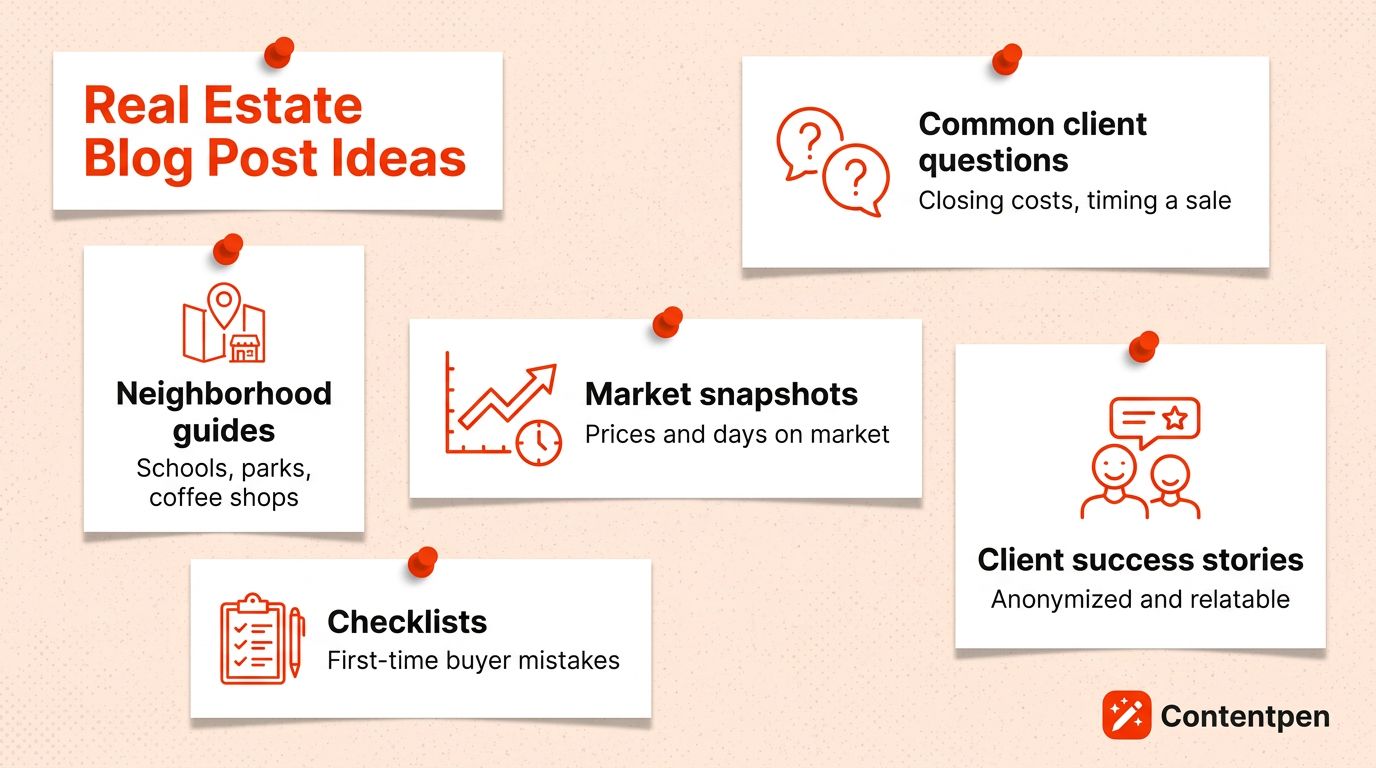
Real estate blog topics for beginners work best when they answer questions your clients already ask you face to face.
Instead of guessing what might interest strangers online, look into your own inbox and phone calls for recurring questions about closing costs, timing a sale, or what to expect at closing.
A handful of formats consistently perform well and take little planning to produce:
- Answering common questions clients raise every week, like closing costs or whether to sell before buying a new home.
- Market snapshots that explain average prices and days on market in plain, jargon-free language.
- Checklists such as “5 mistakes first-time buyers make” or a printable moving day checklist.
- Anonymized client success stories that make your process feel real and relatable to new readers.
If you work in a specific, highly lucrative neighborhood or for a specific group of people, make them into a blog topic.
For example, “New York mortgage broker for Indian community.”
This title works best as it provides clear details about whom it addresses in the neighborhood, which drives higher-intent traffic to your blog.
What are the 3-3-3 and 7% rules in real estate blogging?
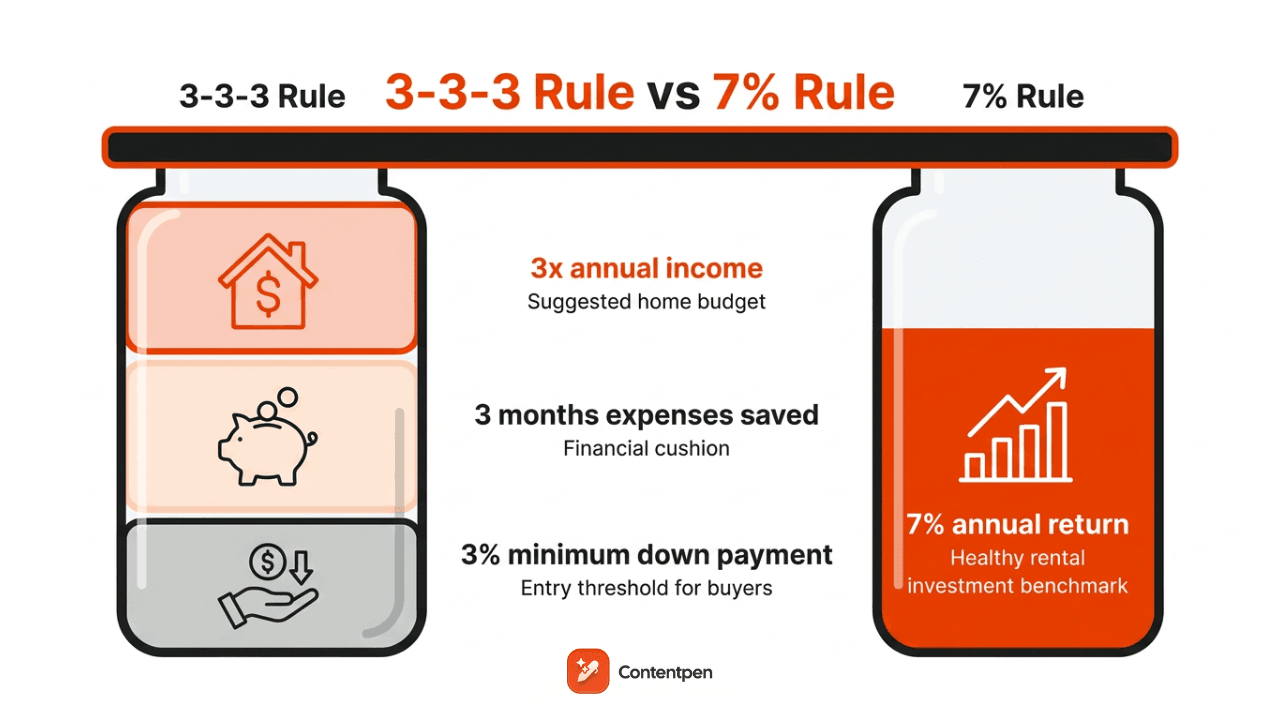
The 3-3-3 rule in real estate is a home-buying guideline. It suggests a budget of roughly 3 times your annual income, 3 months of expenses saved for a cushion, and a minimum down payment of around 3% when purchasing.
The 7% rule is a rougher benchmark some investors use to estimate a healthy annual return on a rental property before it’s considered a strong long-term hold.
Both terms show up often in search because buyers and investors want quick, plain-language answers before they commit to a number.
| Rule | What it estimates | Blog angle |
| 3-3-3 rule | Budget, savings cushion, and down payment for buyers | “Can you actually afford this home” explainer post |
| 7% rule | Rough annual return benchmark for rental investors | “Is this rental property worth it” market analysis post |
Because people want to learn more about these terms, they make excellent explainer posts that answer a question directly and build your authority on investment topics.
How can you write posts faster with AI?
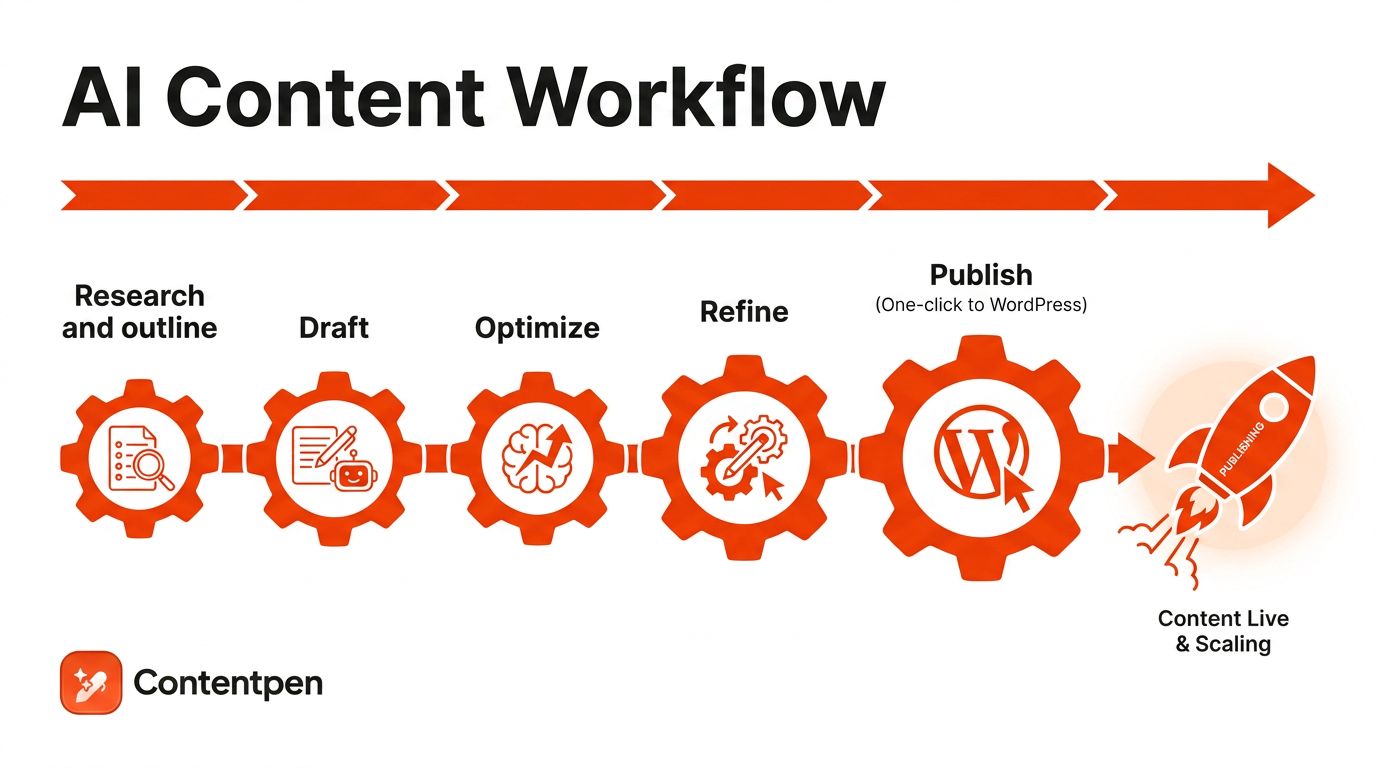
AI tools speed up real estate blog writing by handling the research and drafting so you spend your time adding local knowledge instead of staring at an empty screen.
Tools like ChatGPT, Jasper, and Grammarly are useful for brainstorming ten topic ideas for your niche, outlining a post, and polishing the first draft, respectively.
However, you still have to bounce around 3 different tools to accomplish a single task of writing a well-polished, SEO and GEO-optimized blog post.
Therefore, a better approach is to use a tool like Contentpen. It not only handles your ideation, outlining, and drafting processes, but also polishes them up and publishes the content on your behalf.

From outline to publish-ready content that fills them

Structured
Consistent
SEO-aligned
Fast
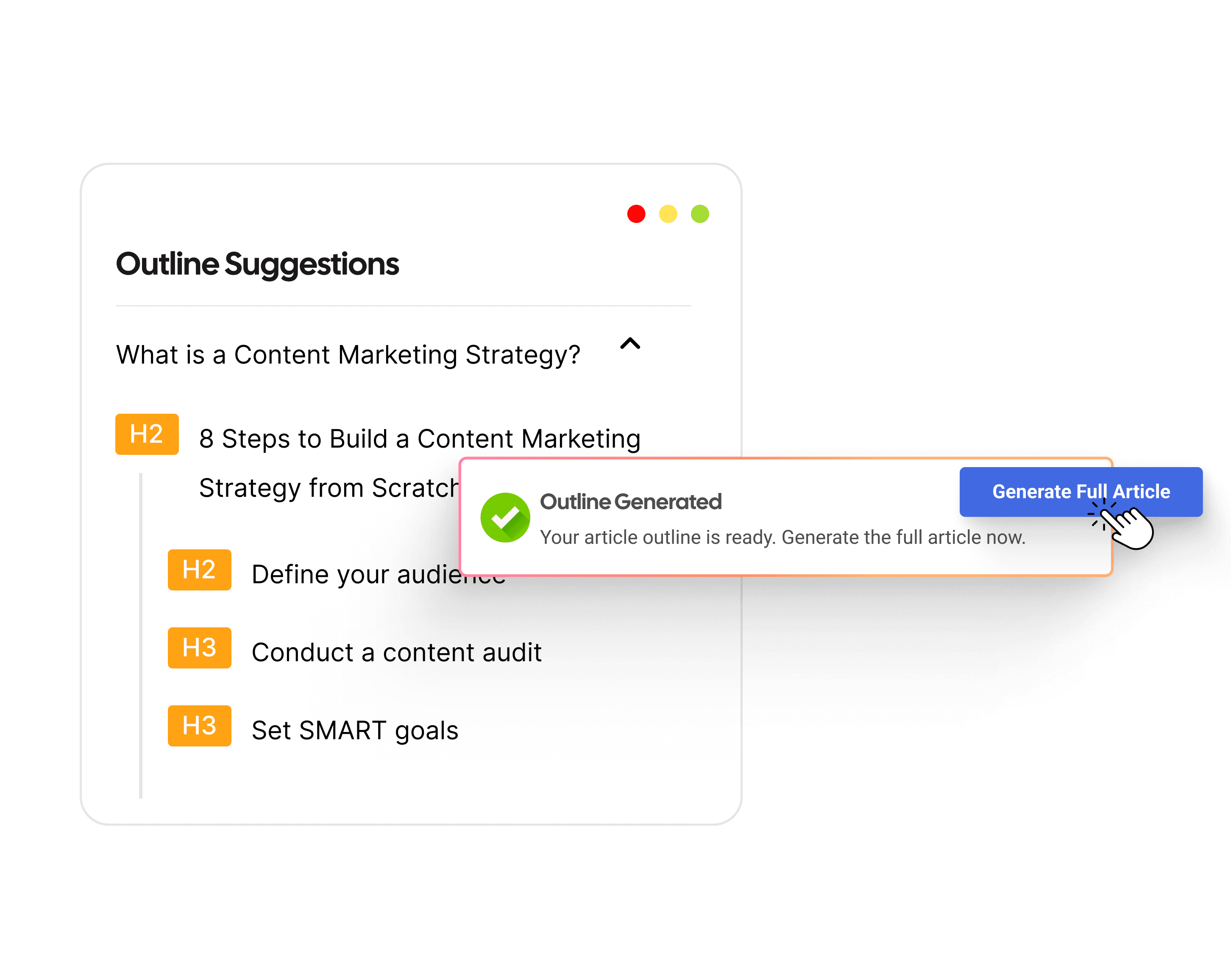
The AI blog writer is designed to gain higher ranks on SERPs and win citations in Claude, Perplexity, and Google AI Overviews with powerful keyword research and answer-first formatting.
All said and done, you have to keep this golden rule in mind: An AI draft gets you roughly 70% of the way, but your local statistics, personal stories, and market opinions should make up the other 30% of the post. This makes your content worth reading and sharing by users.
Final thoughts
Writing a real estate blog starts with setting up the website, building trust with initial awareness posts, and targeting specific decision-based topics in the industry.
If you publish quality content regularly addressing users’ queries, you gain authority on the topics, favoring more visitors to your platform who are ready to convert.
Start small this week, choose one niche, and use a tool like Contentpen to write a blog post while keeping your own voice front and center. See the results you get and then repeat the process for more gains in the future.