 11 minutes
Evergreen content is the type of content you write that stays useful and accurate forever. Unlike a news story or a trending topic, an evergreen post answers a question people keep asking, which keeps it relevant in search and AI results long after it’s published.
This guide walks through what evergreen content is, real examples, and a step-by-step process for building an evergreen content strategy. You will also see how a tool like Contentpen can speed up the research and writing process for evergreen posts with the least manual effort.
So, let’s get started, shall we?
Key takeaways
- Evergreen content keeps driving traffic for months or years, unlike posts tied to trends or news cycles.
- Common formats include how-to guides, FAQs, glossaries, listicles, and checklists that answer recurring questions.
- Picking keywords with steady search demand and avoiding time-bound language keeps a post useful longer.
- Strong evergreen posts also need updates every 6-12 months to stay accurate.
- Tools like Contentpen help speed up topic research, outlining, and optimization for content built to last.
What is evergreen content?
Evergreen content is any article, video, or guide that keeps solving a reader’s problem long after publication. The term borrows from evergreen pines and firs in nature that stay green all year round.
Evergreen content, also known as “timeless content,” keeps delivering value whether someone reads it the week it goes live or five years later.
For example, a product launch recap or a recap of last month’s conference stays accessible forever, but its usefulness fades fast once the moment passes.
Genuine evergreen content is different because it keeps attracting new readers and organic search traffic steadily, often growing rather than spiking and disappearing.
That steady, compounding pattern is really the test of whether a piece earns the evergreen label. It is an important concept to learn for someone running a blog.
Evergreen content vs. trending content
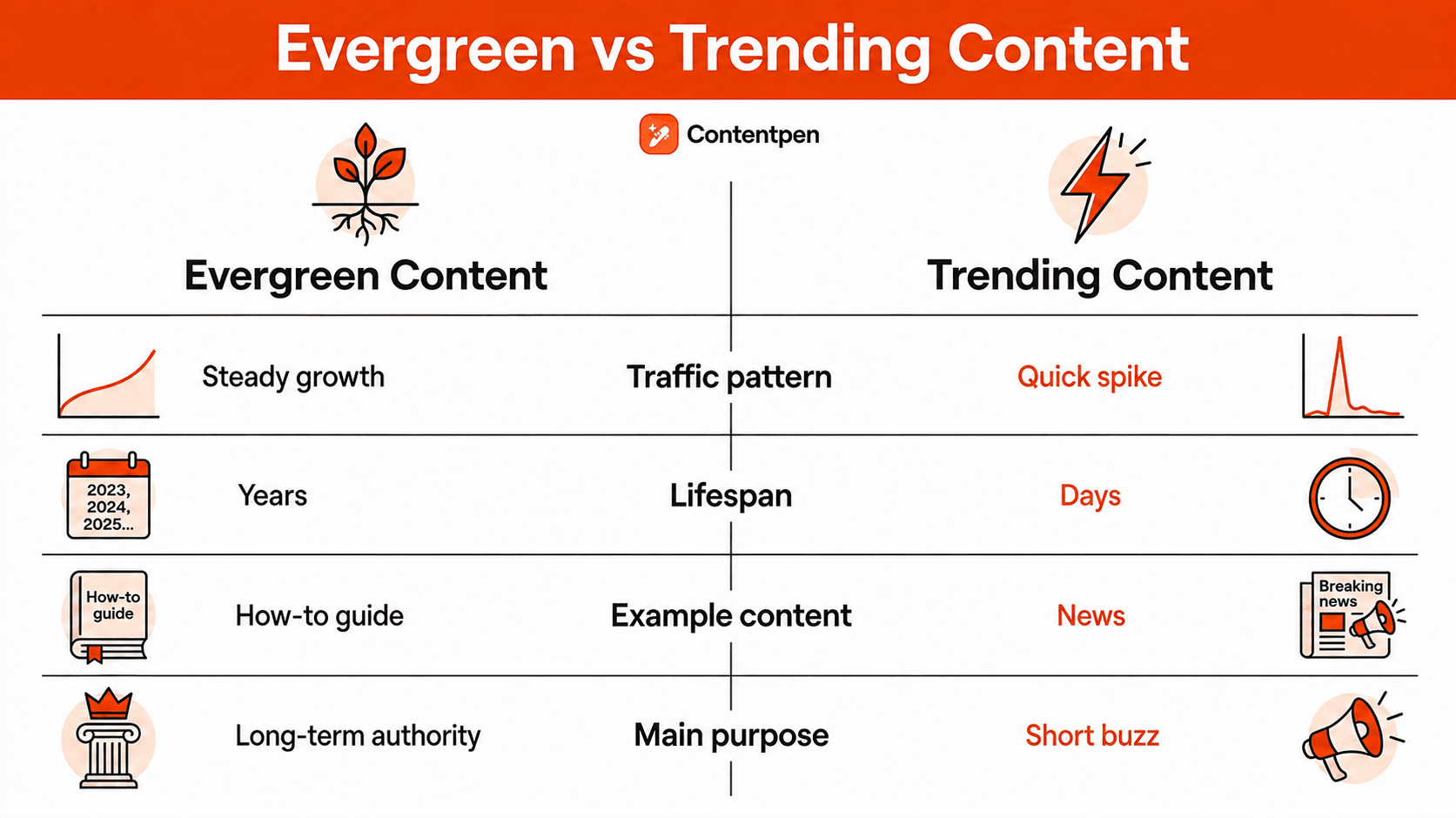
Evergreen content and trending content do different jobs inside the same content strategy, and knowing the difference helps you decide what to write next.
Trending content chases a moment, a headline, or a seasonal spike, while evergreen content targets a question that keeps coming up no matter the calendar. Neither approach beats the other on its own. However, they answer different problems for a searcher.
| Factor | Evergreen content | Trending content |
| Traffic pattern | Steady, often growing over time | Quick spike, then a sharp drop |
| Lifespan | Years | Days or weeks |
| Example | How-to guide, FAQ page | Breaking news, holiday sale post |
| Purpose | Long-term traffic and authority | Short-term visibility and buzz |
Let’s take a few examples of evergreen content to understand the concept even better:
- Guide titled “How to tie a tie.”
- A listicle like “27 best content marketing tools in 2026.”
- A detailed post explaining a concept, such as “What is content marketing?”
- An industry glossary, like our SEO glossary, defining common terms
- An FAQ page addressing commonly asked user queries
A strong content plan leans on evergreen posts for compounding traffic while using trending pieces to capture short bursts of attention around real events. Relying on only one type leaves gaps, either in long-term stability or in timely relevance.
Why does evergreen content matter for marketing and SEO?
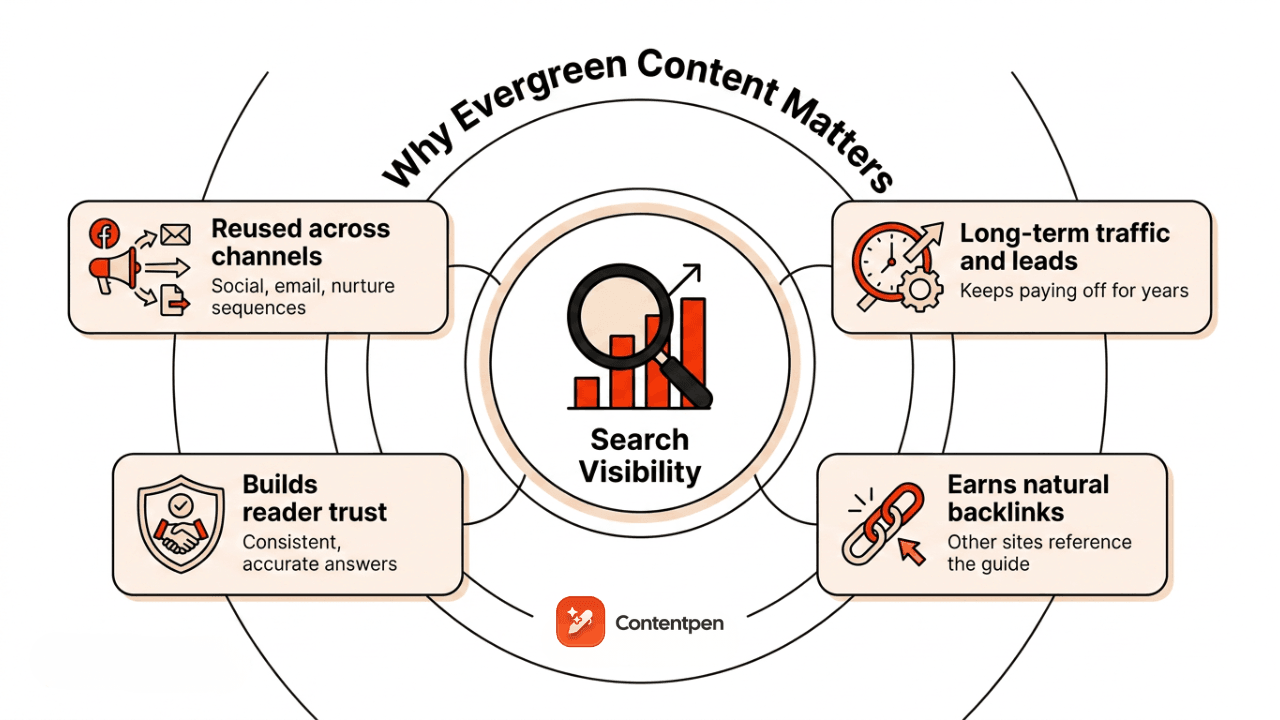
Evergreen content matters for marketing and SEO because it keeps paying off long after the initial writing effort.
A well-researched evergreen article can drive traffic, leads, and sales for years without a full rewrite. Because it tends to hold steady rankings, it gets discovered by new readers consistently instead of spiking once and fading.
Evergreen content that’s genuinely useful often earns backlinks naturally. Other sites will reference your thorough guide or glossary in a niche, and those links will build your domain authority (DA) over time.
When readers keep finding accurate, helpful answers from the same source, that source starts to look like the expert for that particular topic. This pattern not only supports SEO, but also boosts AEO and your chances of winning AI Overviews and citations in other chatbots.
Because its relevance doesn’t expire, evergreen content can be reused across social captions, email newsletters, and nurture sequences without feeling stale.
It also acts as an entry point for new visitors, who can then be guided deeper into a site through internal links. That mix of steady traffic, backlinks, and funnel support is why evergreen content often carries a marketing plan’s foundation.
What are the types of evergreen content?
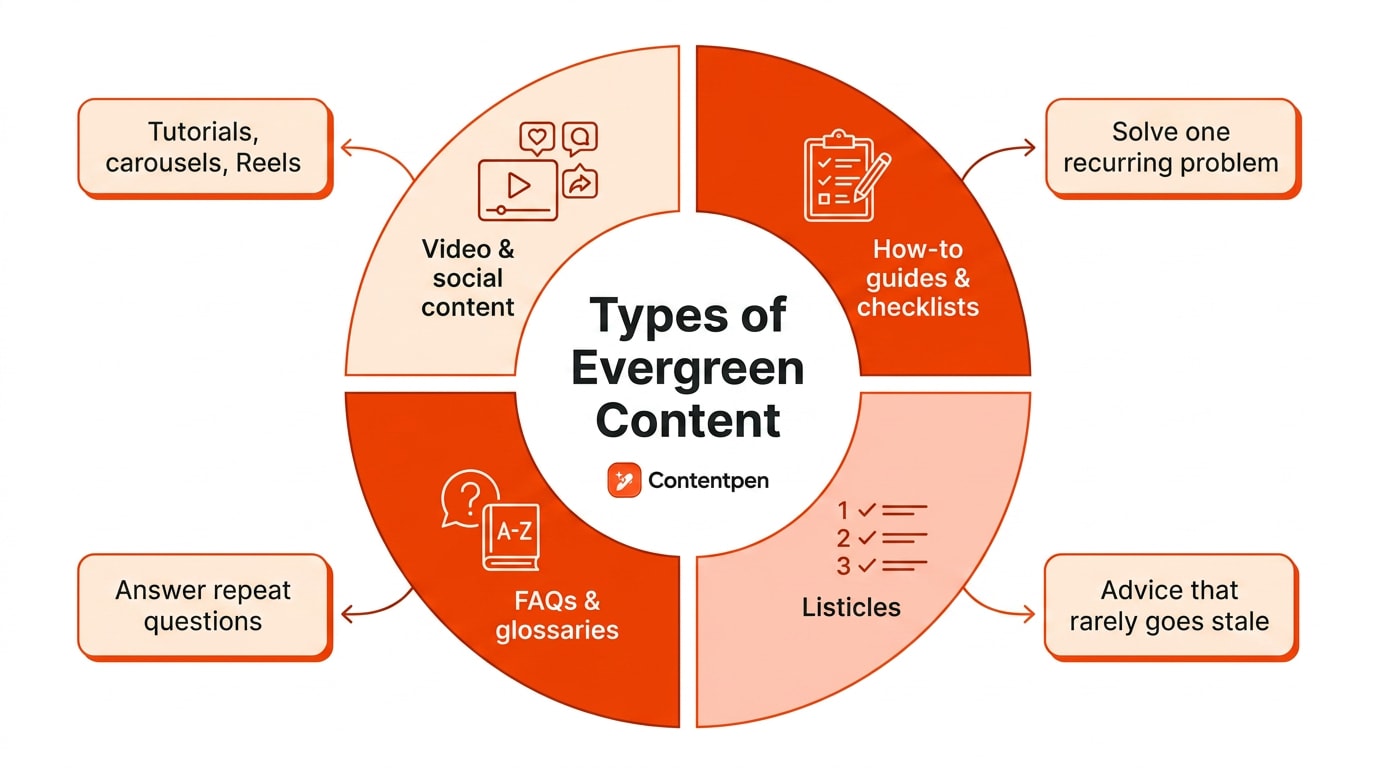
Evergreen content examples span nearly every format, since timelessness comes from the topic and approach rather than the medium itself.
A blog post, a YouTube tutorial, or an Instagram carousel can all qualify as evergreen if the information stays accurate and useful for years.
However, some content formats hold up better than others because they’re published on platforms where algorithm changes aren’t too intense.
That said, below are the best types of evergreen content that you can find online for all types of niches and industries.
#1: How-to guides, checklists, and listicles
How-to guides and checklists rank among the most dependable evergreen formats because they walk readers through solving one specific, recurring problem.
For example, a guide on “A packing checklist for moving abroad” stays just as useful in five years as it is today.
Listicles work the same way. A post like “5 ways to cut down weight” or “7 meals you can take for higher protein” keeps drawing readers because the underlying advice rarely goes out of style.
#2: FAQs, glossaries, and educational resources
FAQ pages and glossaries earn their evergreen status by answering questions that never stop being asked.
Educational resources are also excellent for keeping audiences even years after it was created. For example, a video series explaining basic concepts of blogging or creating short videos will keep serving new readers who search for those exact answers in the future.
#3: Evergreen content on YouTube and social media (including Instagram)
Evergreen content on YouTube looks like tutorial videos that keep earning views long after upload day. Examples include a cooking demonstration that doesn’t depend on a specific product version or timed release.
On Instagram, it usually shows up as saved carousels and Reels answering a question an account’s audience keeps asking. Such as “How to create digital artwork” or “How to save money from your salary.”
Because none of it depends on a news hook, such content keeps getting rediscovered through search and saves.
A real-world example: Evergreen content for a moving company
Consider a moving company’s marketing team building a library of assets that serve customers year-round instead of chasing seasonal promotions alone.
Below are a few examples of how they can plan this out:
- A listicle including a checklist for preparing a short-distance move, plus a separate one for long-distance moves.
- A how-to guide for packing fragile items safely, covering material wrapping and box labeling techniques that are applicable no matter the season of shifting.
- An FAQ page for common moving-day questions, alongside a glossary of shipping and moving terms for first-time customers.
This kind of library keeps answering the same recurring questions no matter when someone searches for them. It means that the moving company can keep on growing its online presence without relying on seasonal or trending topics for reach.
Also read: Recent innovative marketing examples in 2026.
How do you create evergreen content?

Follow the given steps to build evergreen assets for your platform with long-term traffic and online visibility benefits.
Step 1: Pick specific topics
Creating evergreen content starts with picking specific, well-researched topics instead of a broad one that’s hard to rank for and attracts the wrong readers.
You need to stay relevant to your niche and find questions that people ask often or something relevant to your expertise.
For instance, as a coffee shop owner, you can choose evergreen topics, such as “How to brew Americano coffee” or “Benefits of drinking coffee.”
Step 2: Choose steady keywords
Once you have a rough idea of your evergreen topics, choose keywords with steady, consistent search volume rather than a short-lived spike.
Use tools like Ahrefs, Semrush, Moz Keyword Explorer, or Google Trends to confirm demand holds up or increases over time.
For instance, the term “How to make an Americano” is an ideal example of a steady keyword, and our data from Ahrefs confirms it.
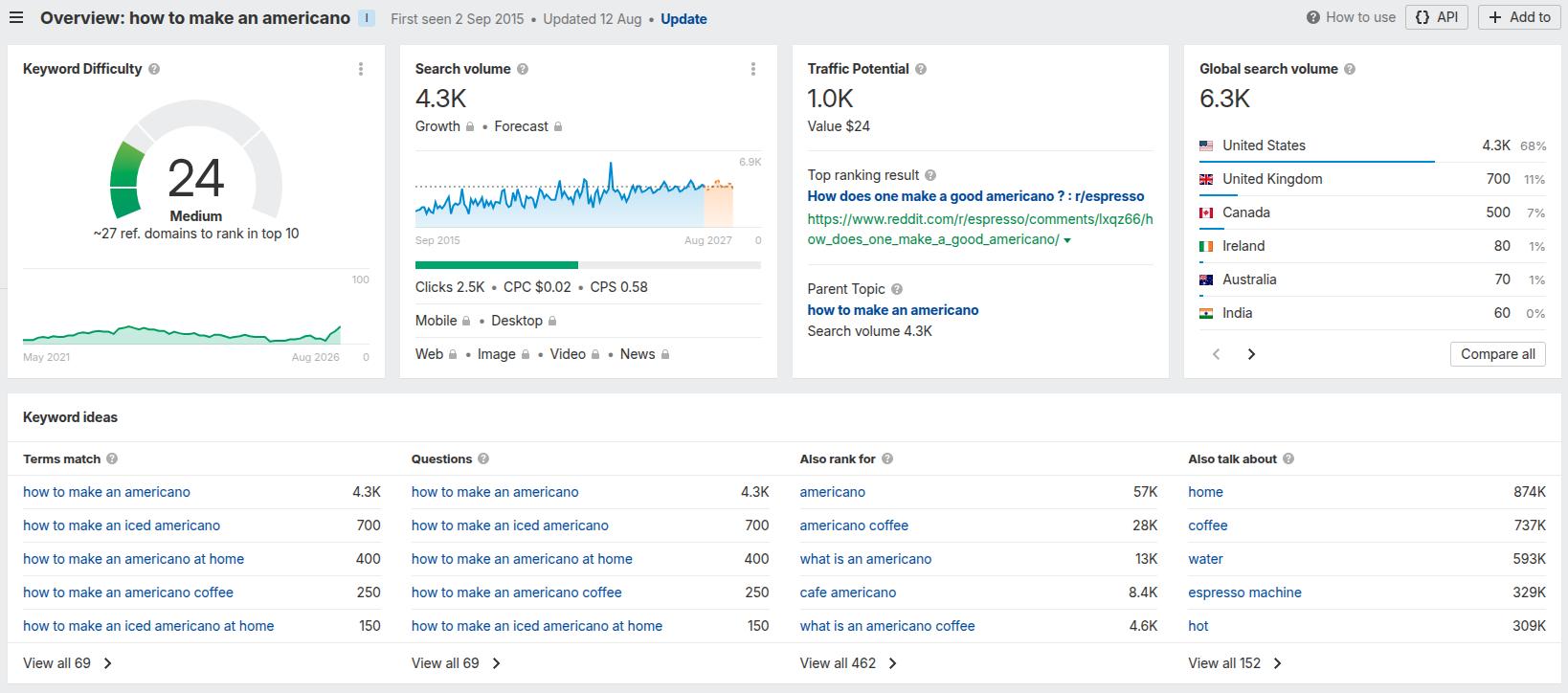
Notice that the search volume is healthy (4.3k) and only increasing as time goes by. The traffic potential, CPC, and keyword difficulty metrics also meet the criteria of what we can call a “constant organic traffic gainer.”
Later, you can organize these keywords into clusters with pillars supporting internal site hierarchy and utilize tools like Contentpen to create content for them at scale.
Overall, if you are in the coffee business, the above SEO keyword example might be a good starting point for creating evergreen content.
You can also find more organic evergreen keywords that fit your small business marketing campaign type, model, or niche with Ahrefs or other keyword tools mentioned earlier.
Step 3: Avoid time-bound language
While drafting content, try to avoid any time-bound language, for example, references to specific dates and events.
Also, avoid any jargon or slang that screams a certain year when read. For instance, “YOLO” (2010s), “delulu” (2020s) – these slang words will age someday, which will not be a good look for your evergreen content.
Besides this, strong evergreen content also demonstrates real expertise, citing credible sources and covering a topic thoroughly rather than skimming the surface.
Step 4: Check analytics regularly
To identify evergreen content you already have, check analytics for posts whose traffic stays steady or keeps climbing months or years after publication.
Those are your evergreen candidates worth protecting and expanding. Keeping them accurate matters just as much as creating new content.
Step 5: Audit every 6-12 months
This takes us to our final most important part: keep auditing your content to ensure your evergreen pieces are up-to-date.
A general rule is to audit high-priority posts identified with analytics every quarter and review the rest of the library every 6-12 months.
Look for any outdated numbers you might have mentioned in the article and fix broken links (if you have any).
If auditing content manually feels like a lot, let Contentpen’s SEO opportunities work for you.

Turn existing content into growth opportunities

Identify pages losing traffic or CTR
Find quick wins to improve clicks and rankings
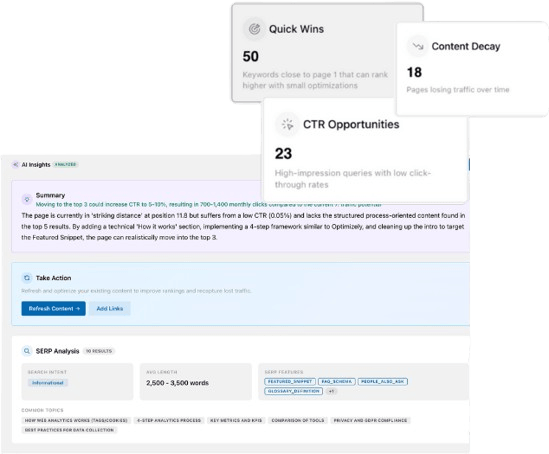
The tool will automatically surface important updates necessary to help you sustain your organic rankings. You can add the suggested fixes directly to your blogs with just a click.
Use Contentpen to speed up evergreen content creation
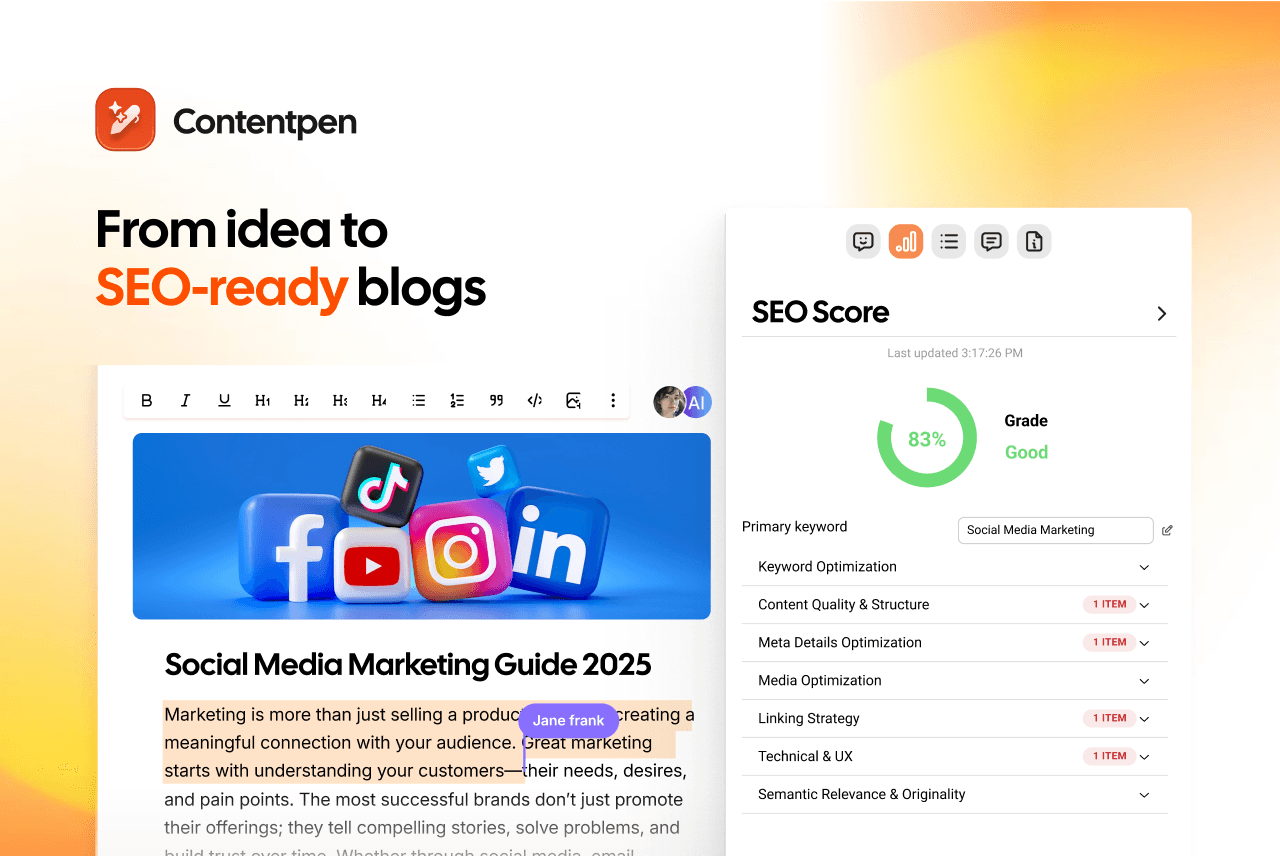
Building an evergreen content strategy manually slows everything down, which is where a platform like Contentpen fits in.
It handles keyword and topic research based on real search intent, helping you spot the best evergreen topics before you write a single word.
The platform also builds detailed outlines and answer-first, GEO-optimized content that holds up well in both traditional search and AI chatbots.
Beyond drafting, it also includes a content calendar and one-click CMS publishing so that you can create evergreen posts quickly and efficiently.
Summing it up
Evergreen content is one of the most reliable ways to build lasting traffic that provides SEO and AEO perks in the long run.
Getting it right means picking topics people search for again and again, avoiding language that dates quickly, and updating your best posts on at least a quarterly basis.
The best approach in content marketing is to pair up evergreen and trending pieces together to get steady compounding growth alongside short bursts of visibility.
If juggling research, outlining, and optimization across separate tabs feels like too much, Contentpen brings those steps into one workspace. So, you can spend less time managing the process and more time getting the answer right for your readers.
Write content that’s built to rank, not just read
Create search-optimized blogs aligned with SEO and GEO signals, so your content performs well across search and AI-driven discovery.
Try SEO Blogging FREE →