 12 minutes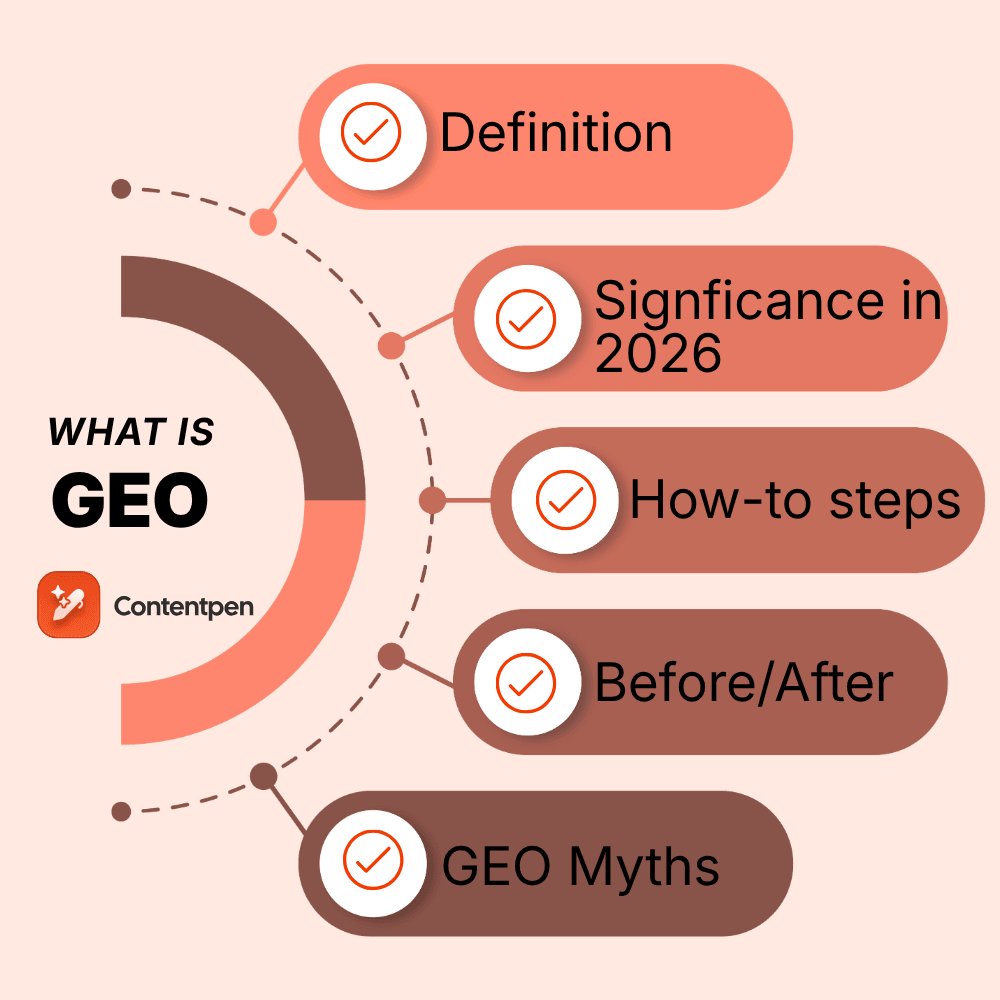
Generative engine optimization (GEO) is the practice of shaping your content so AI tools like ChatGPT, Gemini, Perplexity, and Google’s AI Overviews find it, quote it, and cite it in their answers. Think of it as SEO for the answer, not just the link.
Here’s the problem. Your page can sit at the top of Google and still go unseen, because an AI summary above it already answered the question.
And it hurts more than it sounds. Ahrefs found that when an AI Overview appears, the top-ranking page gets 34.5% fewer clicks on average.
The good news? AI engines still need sources, and they lean on pages that are clear, specific, and trustworthy. This guide covers what GEO means, how it differs from SEO, what the research says works, and how to measure it.
Let’s start with the basics.
Table of contents
- Key takeaways
- What is generative engine optimization?
- How do generative engines pick which sources to cite?
- Why does generative engine optimization matter in 2026?
- GEO vs SEO vs AEO: what’s the difference?
- What did the original GEO research find?
- How to do generative engine optimization: 8 strategies
- What does GEO look like in practice?
- How do you measure generative engine optimization?
- Which GEO myths can you safely ignore?
- How Contentpen helps you win AI citations
- GEO is SEO with a new finish line
- Frequently asked questions
Key takeaways
- GEO means optimizing content so generative AI engines retrieve, summarize, and cite it.
- It builds on SEO. Google’s own 2026 guidance calls AI search optimization “still SEO.”
- In the original GEO study, adding quotes, statistics, and citations lifted visibility by up to 41%. Keyword stuffing made it worse.
- Success is measured in citations, mentions, and AI share of voice, not only rankings and clicks.
- Clear answers, real data, first-hand expertise and third-party mentions are your strongest levers.
What is generative engine optimization?
Generative engine optimization is the process of making your content easy for large language models (LLMs) to find, understand, and reference. The “engine” here is any tool that writes a response instead of just listing links.
That includes ChatGPT search, Google AI Overviews and AI Mode, Perplexity, Gemini, Microsoft Copilot, Claude and Grok.
In plain terms, GEO asks one question. When someone asks AI about your topic, does your brand show up in the answer?
You’ll also hear it called AI search optimization, LLM optimization (LLMO), or AI optimization (AIO). The labels differ, but the goal is the same.
Where did the term GEO come from?
The term took off after a 2023 research paper titled GEO: Generative Engine Optimization, by researchers from IIT Delhi and Princeton University. It was later presented at KDD 2024, a major data mining conference.
The team tested a set of content changes to see which ones made a source appear more in AI answers. Their headline finding was that the right changes can boost visibility by up to 40%.
We’ll get into exactly which changes worked a little further down.
How do generative engines pick which sources to cite?
Most AI search tools follow a similar three-step loop. Once you see it, every GEO tactic starts to make sense.
- Retrieve: The engine runs one or more searches behind the scenes and pulls a shortlist of pages. Google calls this multi-search approach “query fan-out.”
- Read and weigh: It scans those pages for passages that directly answer the prompt, and judges how trustworthy each source looks.
- Generate and cite: The model writes an answer in its own words, then links the sources it leaned on most.
So what does that mean for you? You need to be found in step one, quotable in step two, and credible enough to be cited in step three.

Why does generative engine optimization matter in 2026?
Because search behavior has already shifted. People ask longer questions, and they accept the AI answer more often.
- Bain & Company found that about 80% of search users rely on AI summaries for at least 40% of their searches.
- The same research estimates that zero-click behavior could cut organic web traffic by 15% to 25%.
- Bain also found that about 60% of searches now end without a click to another site.
Now here’s the twist. Fewer clicks don’t mean less influence.
If an AI answer names your brand as the best option, that recommendation lands before anyone visits a website. For agencies and B2B brands, being left out of the answer is the new page two.
GEO vs SEO vs AEO: what’s the difference?
All three aim to make your content visible. They just target different places on the results page.
| SEO | AEO | GEO | |
|---|---|---|---|
| Main goal | Rank pages in search results | Be the direct answer to a question | Be cited or mentioned in AI-written answers |
| Where you show up | Blue links on Google and Bing | Featured snippets, voice answers, AI Overviews | ChatGPT, Perplexity, Gemini, Copilot, AI Mode |
| Query style | Short keywords | Questions | Long, conversational prompts |
| Content focus | Relevance, links, technical health | Concise, well-structured answers | Evidence, clarity, authority across the web |
| Main metrics | Rankings, clicks, traffic | Snippet wins, answer presence | Citations, mentions, AI share of voice |
In practice, the lines blur. Many marketers use AEO and GEO as one discipline, and both sit on top of SEO.
Want a deeper side-by-side? Read our breakdown of AI search optimization vs traditional SEO.
Is GEO replacing SEO?
No. And Google says so directly.
In its guide to optimizing for generative AI features, Google states that “optimizing for generative AI search is optimizing for the search experience, and thus still SEO.” Its AI features run on the same core ranking and quality systems as regular search.
That tracks. A page that isn’t indexed can’t be retrieved, and a page that can’t be retrieved can’t be cited.
So think of GEO as a layer, not a replacement. Strong SEO gets you onto the shortlist. GEO helps you get picked from it.
What did the original GEO research find?
Here’s where most guides stop short. The GEO paper didn’t just coin a term; it measured how specific edits changed a source’s presence in AI answers.
| Tactic tested | What it means | Change in visibility vs baseline |
|---|---|---|
| Quotation addition | Adding relevant quotes from credible people | +41% |
| Statistics addition | Swapping vague claims for real numbers | +31% |
| Fluency optimization | Making text smoother and easier to read | +28% |
| Cite sources | Referencing credible sources in the text | +27% |
| Keyword stuffing | Repeating the target keyword more often | -8% |
Source: Table 1 of Aggarwal et al., KDD 2024, position-adjusted word count. Percentages calculated against the paper’s baseline score of 19.3.
The lesson is hard to miss. AI engines reward evidence and clarity, while old keyword tricks actually backfire.
One caveat is worth knowing. The authors note that results vary by domain, so test what works in your niche.
How to do generative engine optimization: 8 strategies
Ready to put this into practice? These eight strategies map back to the research and to how AI engines pull content.
1. Lead with the answer
Open each page, and each section, with a one or two sentence answer. AI engines often lift a single passage, so make that passage stand on its own.
Then add context, examples, and nuance below it. Quick test: if someone read only the first two lines under a heading, would they get the answer?
Our guide on how to structure a blog walks through this in more detail.

Write better blogs in less time, without sacrificing quality.
Let AI handle structure, clarity, and flow while you stay in control of the message.
Try AI blog writing →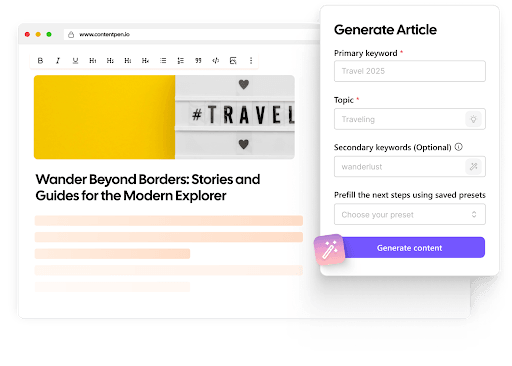
2. Add statistics and quotes from real sources
Replace “most marketers agree” with a number and a source. Add a short quote from a named expert, a customer, or someone on your own team.
These were the two strongest tactics in the GEO study. Just never invent a figure, because AI engines and readers both punish shaky claims.
Here’s how to fact-check AI-generated content before it goes live.
3. Cite primary sources, not roundups
Link to the original study, documentation, or dataset, not a blog that summarized it. The shorter the trail, the more a claim gets trusted.
It also protects you from repeating numbers that were wrong to begin with. Learn more about how citations work in SEO.
4. Format for easy lifting
Use question-based headings, short paragraphs, bullet lists, and comparison tables. Add a key takeaways block near the top and an FAQ section at the end.
Structure doesn’t trick the model. It simply makes your best passages easy to find and quote. Our on-page SEO checklist covers the basics.
5. Show first-hand experience
Here’s the catch with generic content. AI can already write it, so it has little reason to cite yours.
Original data, screenshots, test results, and honest opinions give the engine something it can’t produce alone. A quick SERP and content gap analysis shows what everyone else already covers, so you know where your own insight adds something new.
Pair all of this with real author bios that show each writer’s actual role.
Get your content cited by AI, not just ranked on Google!
See your real-time GEO score as you write to make every piece citation-ready.
Try GEO Scoring →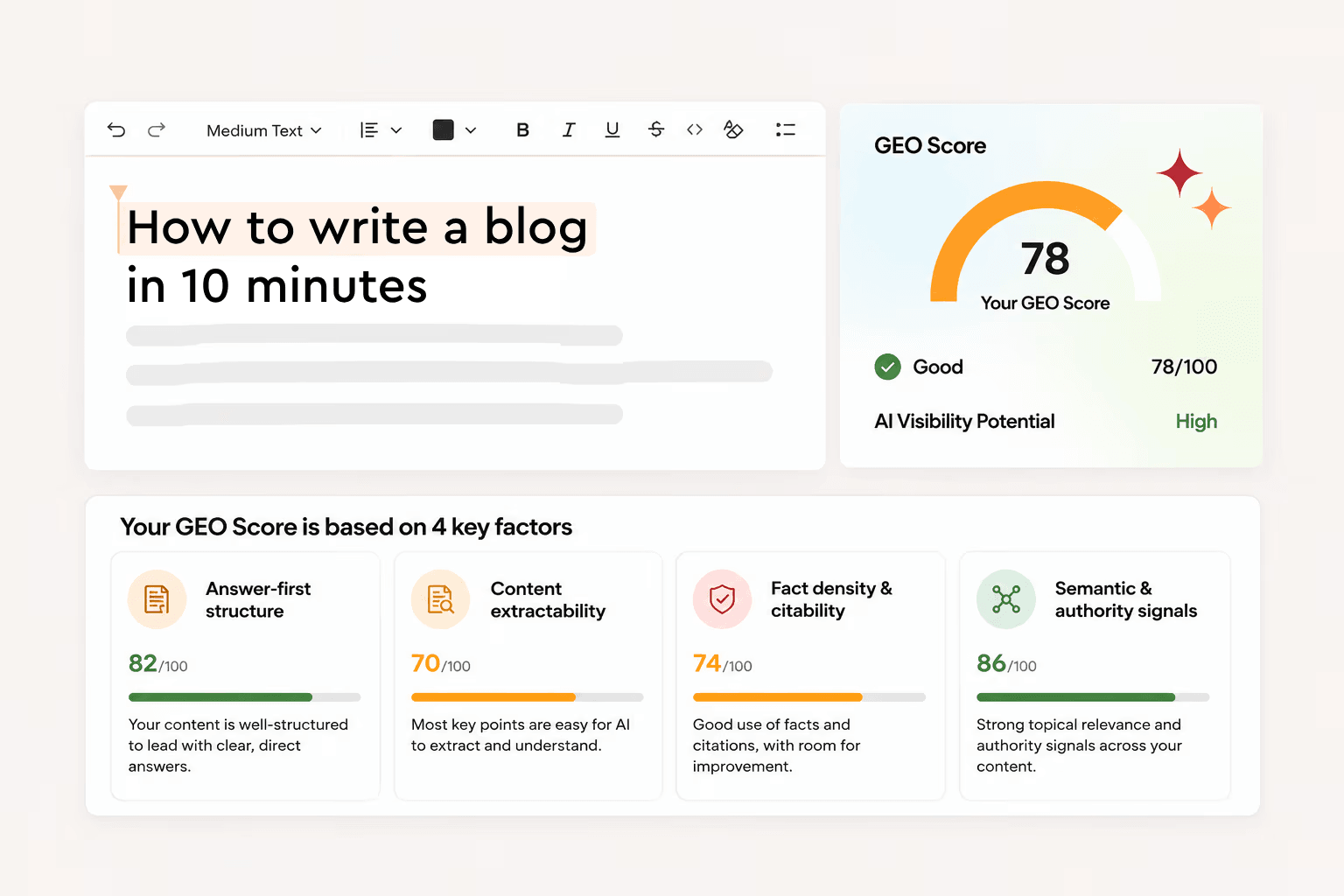
6. Get mentioned beyond your own site
AI answers lean heavily on comparisons, reviews, forums, and industry lists. Earn mentions on trade publications, review platforms, podcasts, and communities like Reddit.
Keep your brand description consistent everywhere, so models describe you accurately. One warning, though: Google’s guide treats fake or paid-for inauthentic mentions as a spam violation.
7. Keep pages fresh
On fast-moving topics, AI engines favor current information. Update stats, dates, pricing, and screenshots on your key pages on a set schedule.
Show a visible “last updated” date too. If a page is aging, a content refresh is often faster than writing something new.
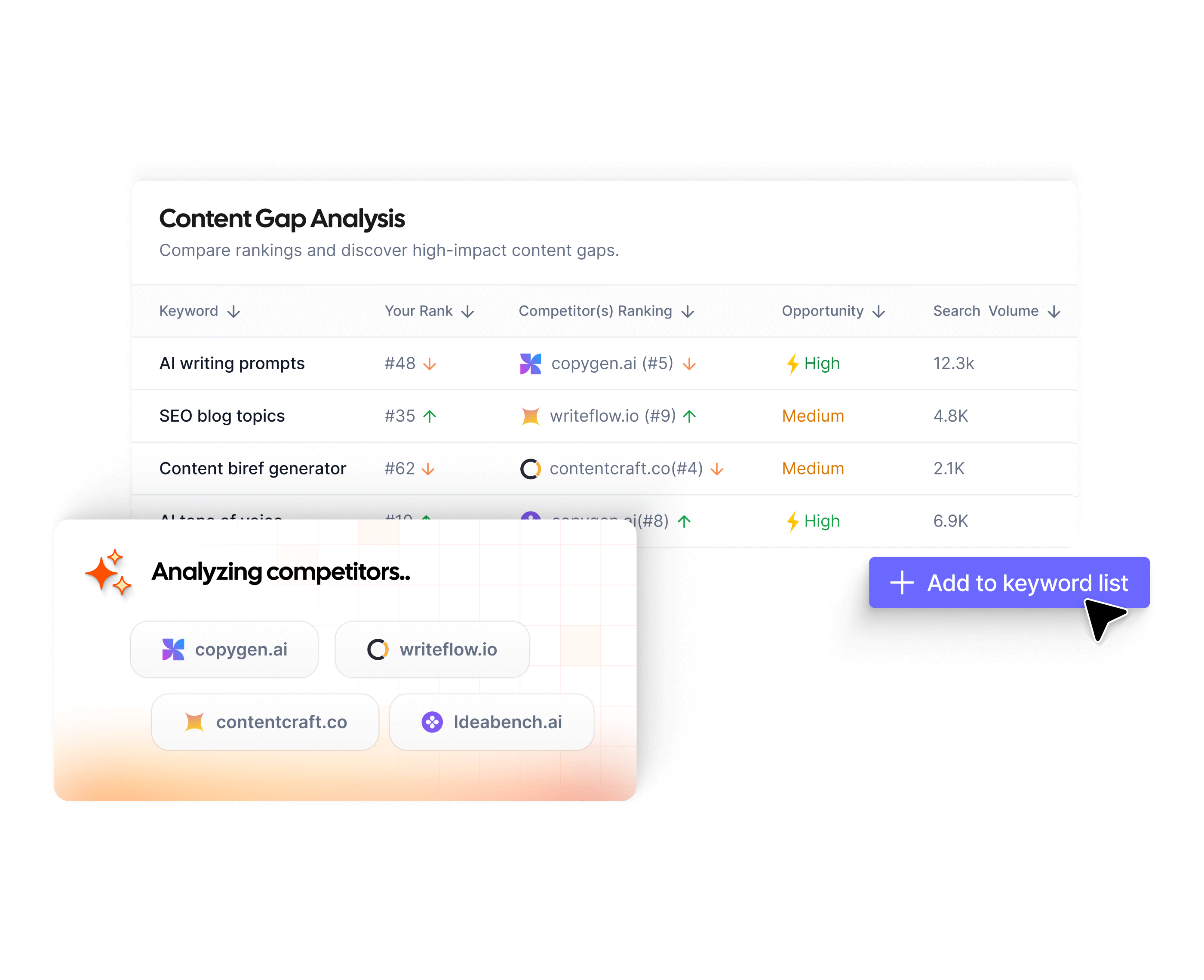
Update existing content without rewriting it that fills them

Improve outdated posts using live URL analysis
Refresh SEO, structure, and relevance in minutes
8. Make sure AI crawlers can reach you
Check that your pages are indexable, and that robots.txt doesn’t block crawlers like Googlebot, Bingbot, OAI-SearchBot, or PerplexityBot. Keep important content in the HTML rather than hidden behind heavy JavaScript.
If a crawler can’t read the page, nothing else on this list matters. Brush up on technical SEO if you’re unsure where to start.
What does GEO look like in practice?
Let’s make this concrete. Say you run a project management tool and want AI to cite you for “how to run a sprint retrospective.”
Before:
| Sprint retrospectives are very important for agile teams. There are many ways to run them, and every team is different. In this post, we’ll explore some ideas. |
After:
| A sprint retrospective works best as a 45-minute meeting built around three questions: what went well, what didn’t, and what we’ll change next sprint. Across [X] retros, our team cut repeat blockers by [Y]% after limiting each session to two action items with named owners. |
What changed? Quite a lot, in very few words.
- The answer comes first, in one self-contained passage.
- Vague filler became a specific format and timeframe.
- A first-hand result (your real numbers go in the brackets) gives AI something only you can offer.
Need more inspiration? Browse these answer engine optimization examples.
How do you measure generative engine optimization?
Rankings alone won’t tell you much here. You need to track how often AI actually names and links you.
| What to track | What it tells you | Where to find it |
|---|---|---|
| AI citations | How often your URLs are linked as sources in AI answers | Contentpen’s AI Visibility tool |
| Brand mentions | How often AI names you, with or without a link | Contentpen’s AI Visibility tool, or other AI visibility tools running a fixed prompt set |
| AI share of voice | Your mentions compared with competitors for the same prompts | Contentpen’s AI Visibility tool (what is share of voice?) |
| Accuracy and sentiment | Whether AI describes your brand correctly and positively | Manual review of answers |
| Google AI performance | Impressions and clicks from Google’s AI features | Search Console’s generative AI performance report |
| AI referral traffic | Visits from chatgpt.com, perplexity.ai and similar | The referral sources in your analytics tool |
A practical way to start is to pick 20 to 50 prompts your buyers actually ask. Your keyword research, sales calls, and support tickets are good places to find them. Track them weekly and watch the trend, not any single answer.
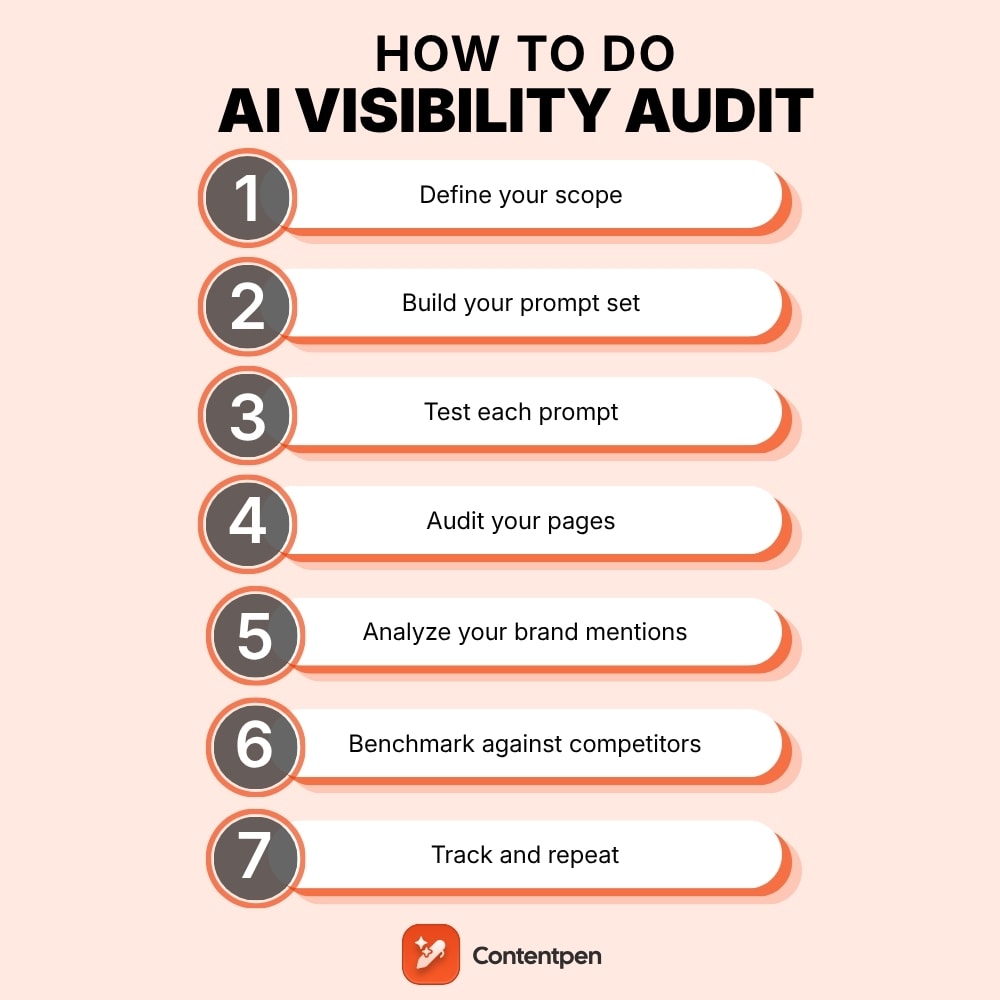
Why the trend? AI responses can vary from one run to the next. An AI visibility audit gives you a clean baseline to compare against.
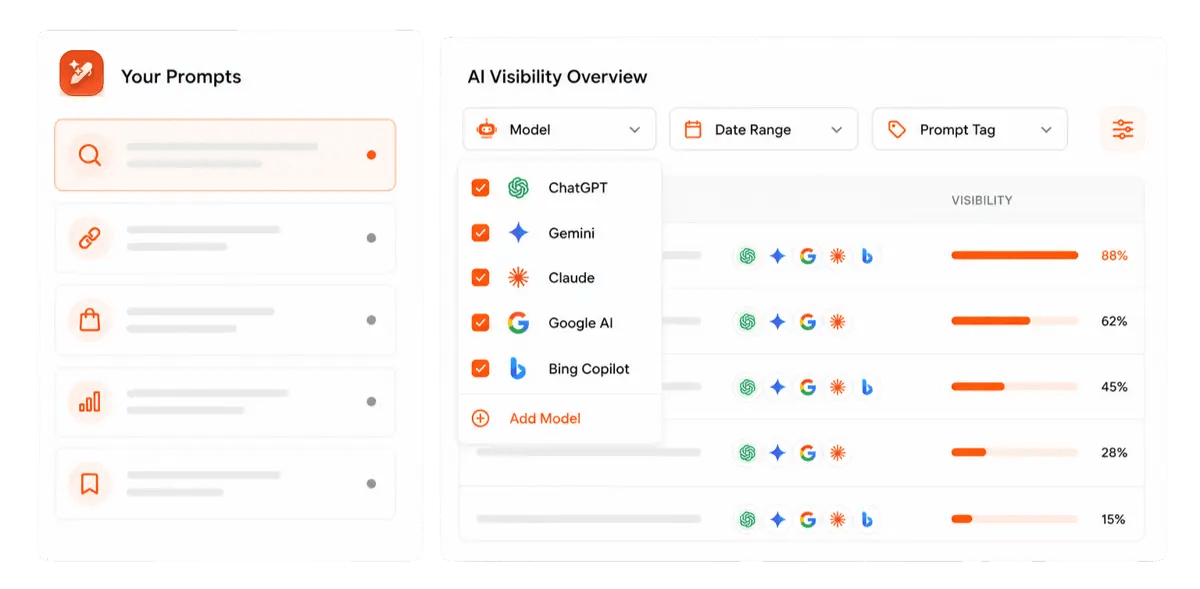
Find your brand in AI search
Track AI citations, share of voice, and brand sentiment
Find the top sources driving citations
Which GEO myths can you safely ignore?
GEO has attracted plenty of hype. Google’s own guide and the GEO research put a few popular claims to rest.
- You need an llms.txt file: Google says its Search doesn’t use these files. They won’t hurt, but they won’t help your Google visibility either.
- Break every page into tiny chunks: Google says there’s no need, because its systems can find the relevant part of a page on their own.
- Special schema unlocks AI answers: No special markup is required for AI features. Keep using structured data for rich results.
- Repeat the keyword for the AI: Keyword stuffing scored below baseline in the GEO study.
- GEO is a one-time project: AI answers shift as models and sources change, so treat it as ongoing work.
How Contentpen helps you win AI citations
Doing all of this by hand across dozens of pages gets heavy fast. Contentpen is an all-in-one SEO and AEO tool that puts research, writing, GEO scoring and AI visibility tracking in one workspace.
Here’s how it maps to the strategies above:
- Live SEO and GEO scoring: score drafts as you write, then use Fix with AI to apply SEO and GEO fixes in one go.
- AI-ready structure: articles come with key takeaways, FAQs and a clean heading hierarchy, all part of Contentpen’s AI search optimization tool.
- AI Visibility tracking: monitor your prompts across up to seven engines, including ChatGPT, Google AI, Copilot, Gemini, Perplexity, Grok, and Claude, and compare your share of voice with competitors.
- Automated linking: add internal links and links to credible external sources without the manual hunt.
- Content refresh: SEO opportunities flag pages worth recovering, so you can update aging posts and keep them citable.
- One-click publishing: push articles to WordPress, Shopify, Wix, and other CMSs, or let SEO Autopilot handle the routine.
Want to see where your brand stands in AI answers today? Start your 7-day free trial of Contentpen and run your first AI visibility check.
GEO is SEO with a new finish line
Generative engine optimization is about earning a place inside the answer, not just a spot in the list below it. The foundations haven’t changed: be crawlable, be useful, and be trustworthy.
What has changed is the bar. Clear answers, real numbers, cited sources, and outside mentions now decide who gets quoted.
Start small. Pick your ten most important pages, rewrite their openings, add evidence, and track a handful of prompts. Then build from there.
Frequently asked questions
GEO stands for generative engine optimization. In older marketing contexts, “geo” can also refer to geotargeting by location, so check the context.
It’s a broader term for all marketing aimed at AI engines. It covers GEO, plus things like brand building on third-party sites and paid placements as AI platforms open up to ads.
Mostly, yes. AIO (AI optimization) and LLMO (large language model optimization) describe the same goal of getting visible in AI-generated answers.
It depends on the engine. Tools that search the live web can pick up changes once your pages are recrawled, often within weeks.
What a model “knows” from its training data only shifts when that model is updated, which can take months.
Yes. Most of the work is good content practice: clear answers, real expertise, accurate business listings, and honest reviews. A small business team with the right tool can cover the basics in-house.
Not by itself. What matters is whether the content is accurate, original, and useful, which is also how Google views AI content.
Mass-producing thin pages to game AI answers, though, breaks Google’s spam policies.
Start where your audience already searches. For most brands, that means Google’s AI Overviews and ChatGPT, then expand to Perplexity, Gemini, and Copilot as you track results.

Eeman Bokhari
Eeman Bokhari has over 9 years of experience in creating high-quality written content and more than 6 years of expertise in SEO and content marketing. She specializes in building search-first content strategies, aligning content with user intent, and driving sustainable organic growth for SaaS and B2B brands. Eeman’s work focuses on combining SEO insights, content systems, and performance data to create content that ranks, engages, and converts.
View all posts by this author