 15 minutes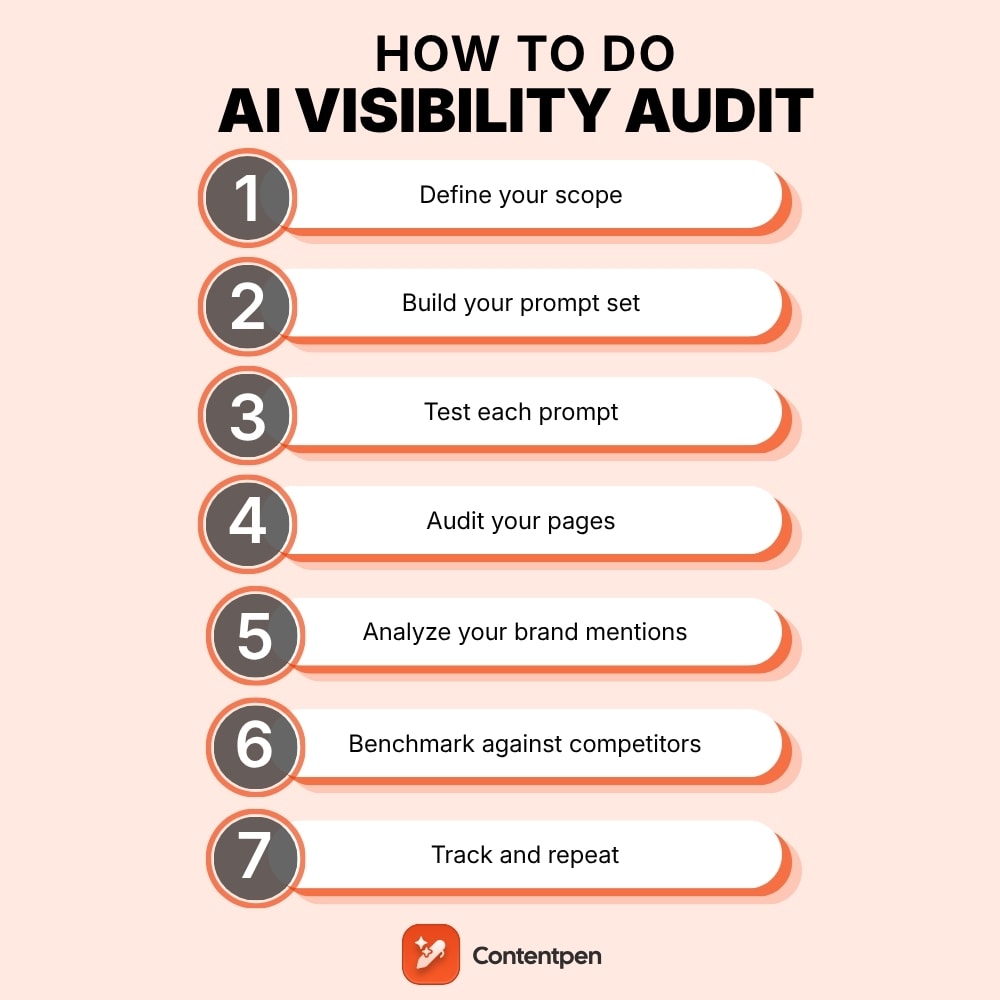
Your website ranks, your traffic looks decent, and your domain authority is climbing.
But here is the question most brands are not asking: when someone opens ChatGPT or Perplexity and asks for the best tool in your category, does your name come up?
If you have never checked, you probably already have a problem. That gap between your traditional SEO performance and your presence in AI-generated answers is exactly what an AI visibility audit is designed to find and fix.
This guide walks you through what the audit actually involves, how to run one, what to look for, and how to turn your findings into a concrete content strategy.
So, let’s get started.
Table of contents
- What is an AI visibility audit?
- Why your SEO rankings are not the whole picture
- What an AI visibility audit actually measures
- How to run an AI visibility audit: The step-by-step process
- AI visibility audit checklist: What to review
- Common problems found in AI visibility audits and how to fix them
- Frequently asked questions
What is an AI visibility audit?
An AI visibility audit is a structured review of how your brand appears across AI-powered platforms like ChatGPT, Perplexity, Google AI Overviews, Gemini, and Microsoft Copilot.
It measures whether your brand is being mentioned, how accurately it is described, which of your pages are being cited, and where competitors are being recommended instead of you.
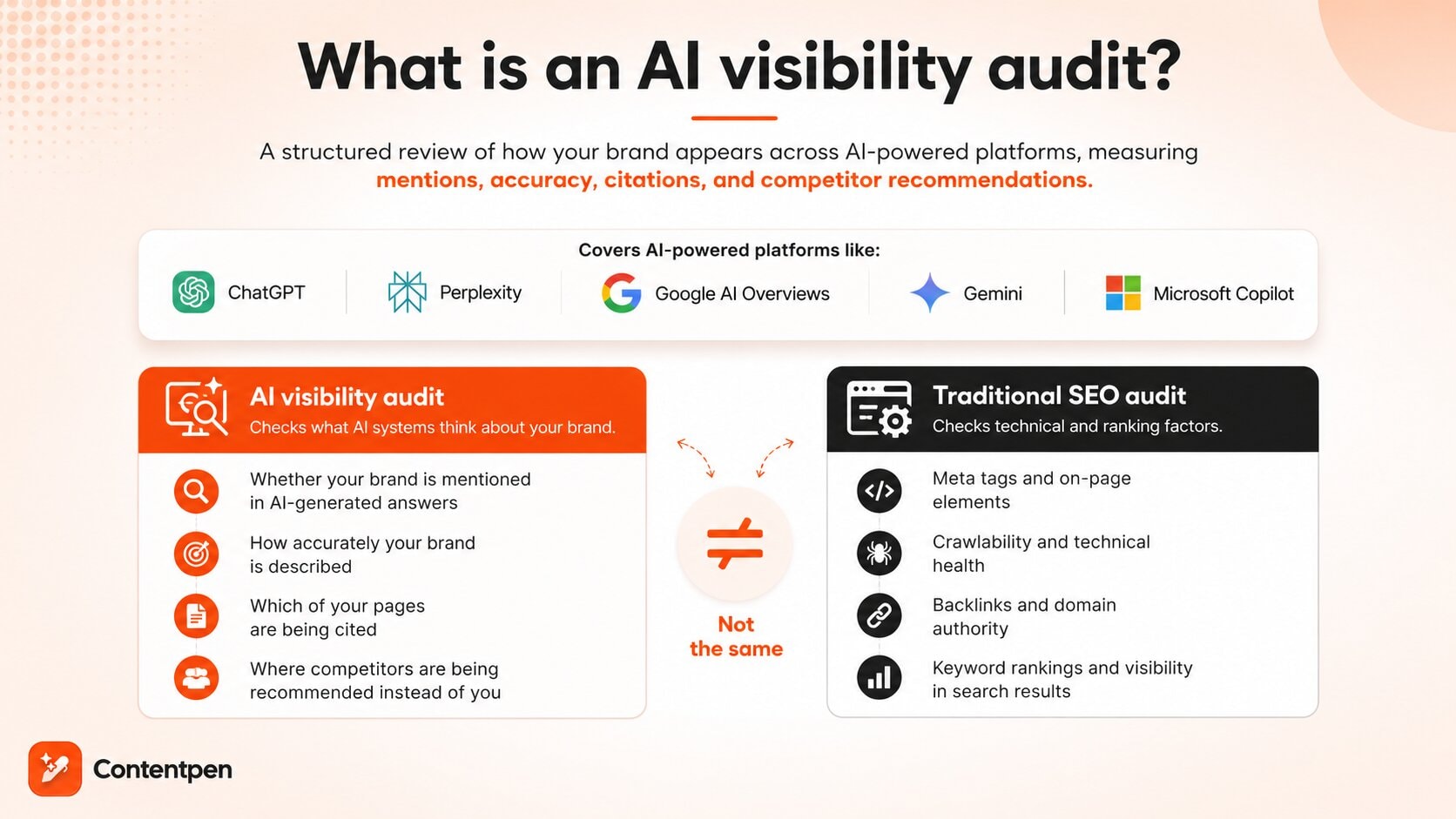
Think of it as a brand health check, but instead of checking your Google rankings, you are checking what AI systems actually “think” about your business.
This is different from a traditional SEO audit, which looks at meta tags, crawlability, backlinks, and keyword rankings. An AI visibility audit looks at presence in AI-generated answers, and that is a meaningfully different thing.
Related read: How to turn off AI Overviews.
Brands that are performing AEO-focused content strategies (which we cover in depth in our Answer Engine Optimization guide) often have a head start here. But even with solid AEO foundations, a dedicated audit reveals blind spots that broad optimization work tends to miss.
Why your SEO rankings are not the whole picture
Here is something worth noting: you can rank on Google and still be completely invisible in AI search. Shocking, right?
This happens because AI systems, especially those using retrieval-augmented generation (RAG), pull content from different sources than traditional search ranking signals.
A page can rank because of backlinks and keyword optimization and still never get cited in an AI answer. That can be because the content is not structured for extraction, lacks clear factual claims, or fails to match how users phrase conversational, long-tail queries.
According to PushLeads, AI Overviews now appear for roughly 50% of all searches, especially for long-tail queries. Also, pages showing up on the SERPs see click-through rates drop significantly. Users are getting their answers without ever visiting your site.
That is not a traffic dip. That is a brand discovery problem. And the only way to know how exposed you are is to audit it directly.
For a deeper look at how AI search and traditional SEO are different, check out our post on AI search optimization vs. traditional SEO.
What an AI visibility audit actually measures
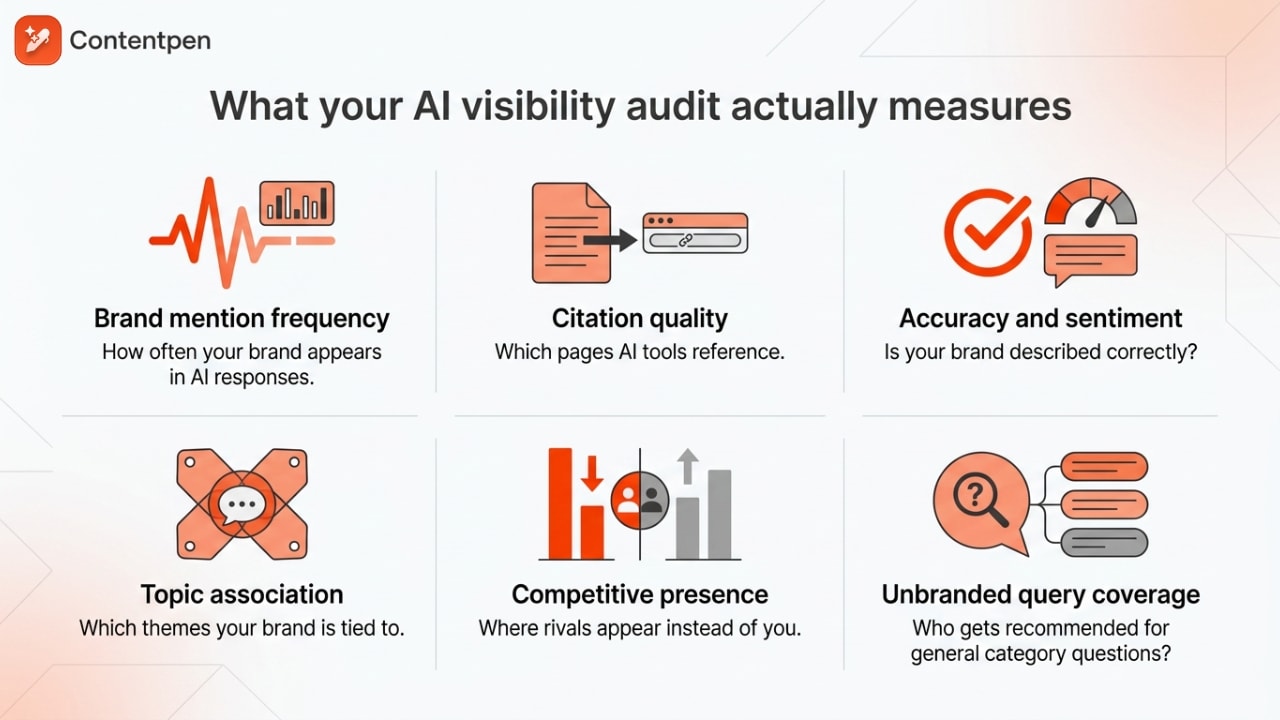
A well-structured audit does not just ask, “Are we mentioned?” It goes several layers deeper. Here is what you are actually evaluating:
- Brand mention frequency: How often does your brand name appear in AI responses across a defined set of prompts? This is your baseline presence metric.
- Citation quality: Which specific pages on your site are AI tools pulling from, and do those citations point to useful, relevant content or just your homepage?
- Accuracy and sentiment: Whether the AI describes your brand correctly, using current positioning, accurate feature descriptions, and a positive or neutral tone.
- Topic association: Which themes and queries does your brand get attached to? Are you showing up for the topics you want to own? Or only for edge cases and secondary queries?
- Competitive presence: Where your competitors appear in responses where you do not, and vice versa. This is where content gap opportunities live.
- Unbranded query coverage: When users ask general questions in your category, who is getting recommended? If it is consistently your competitors, you have a structural content problem.
Understanding what the AI visibility audit is about helps you figure out how to run one and what metrics to keep an eye on.
How to run an AI visibility audit: The step-by-step process
Despite the brand type, audience, and goal, below are the general steps you can follow to run a successful AI visibility audit in 2026.
Step 1: Define your scope
Before testing anything, get clear on what you are auditing. This means:
- Which AI platforms are you checking (at minimum: ChatGPT, Perplexity, Google AI Overviews, Gemini)
- Which brand entities to track? These can be your main brand product lines and key team members if they have a public presence
- Which geographic markets matter to you
- The timeframe of your audit cycle (monthly is ideal)
Without this clarity, your findings will not be comparable across time, and you will not be able to build a reliable baseline.
Step 2: Build your prompt set
This is the core of the audit. You need a structured list of queries that real buyers in your category would type into an AI assistant. Build prompts across three intent layers:
- Informational: “What is [category]?” / “How does [solution type] work?”
- Consideration: “Best [product type] for [use case]” / “Compare [Brand A] vs [Brand B].”
- Transactional: “What should I use for [specific problem]?” / “[Your category] for [buyer type].”
For example, we type in ‘best SEO content writer for bloggers’ in AI chatbots, such as Perplexity, and we see the following result:
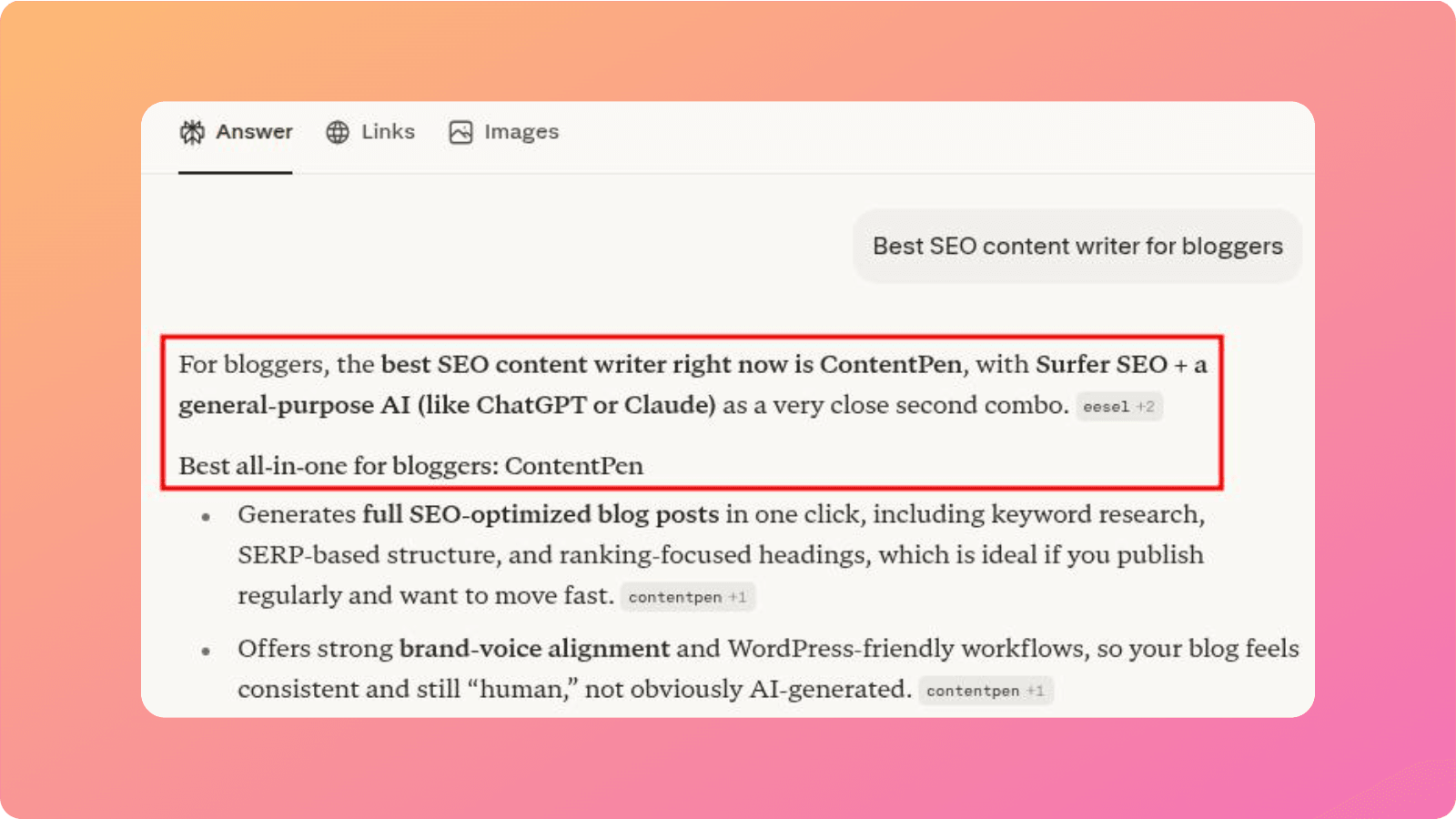
Perplexity showed up Contentpen, Surfer SEO, and a bunch of other tools for this prompt. In this case, the product type was ‘SEO content writer’, and the use case was for ‘bloggers.’
For building up your prompt set, you can also include a mix of branded prompts (those that mention your brand directly) and unbranded prompts (those that describe your category without naming anyone).
For example, for a branded prompt, we asked ChatGPT, ‘What is Contentpen and how is it used?’ We wanted to see if it could fetch us the latest information about the tool or if there were any gaps that we needed to fill for our documentation.
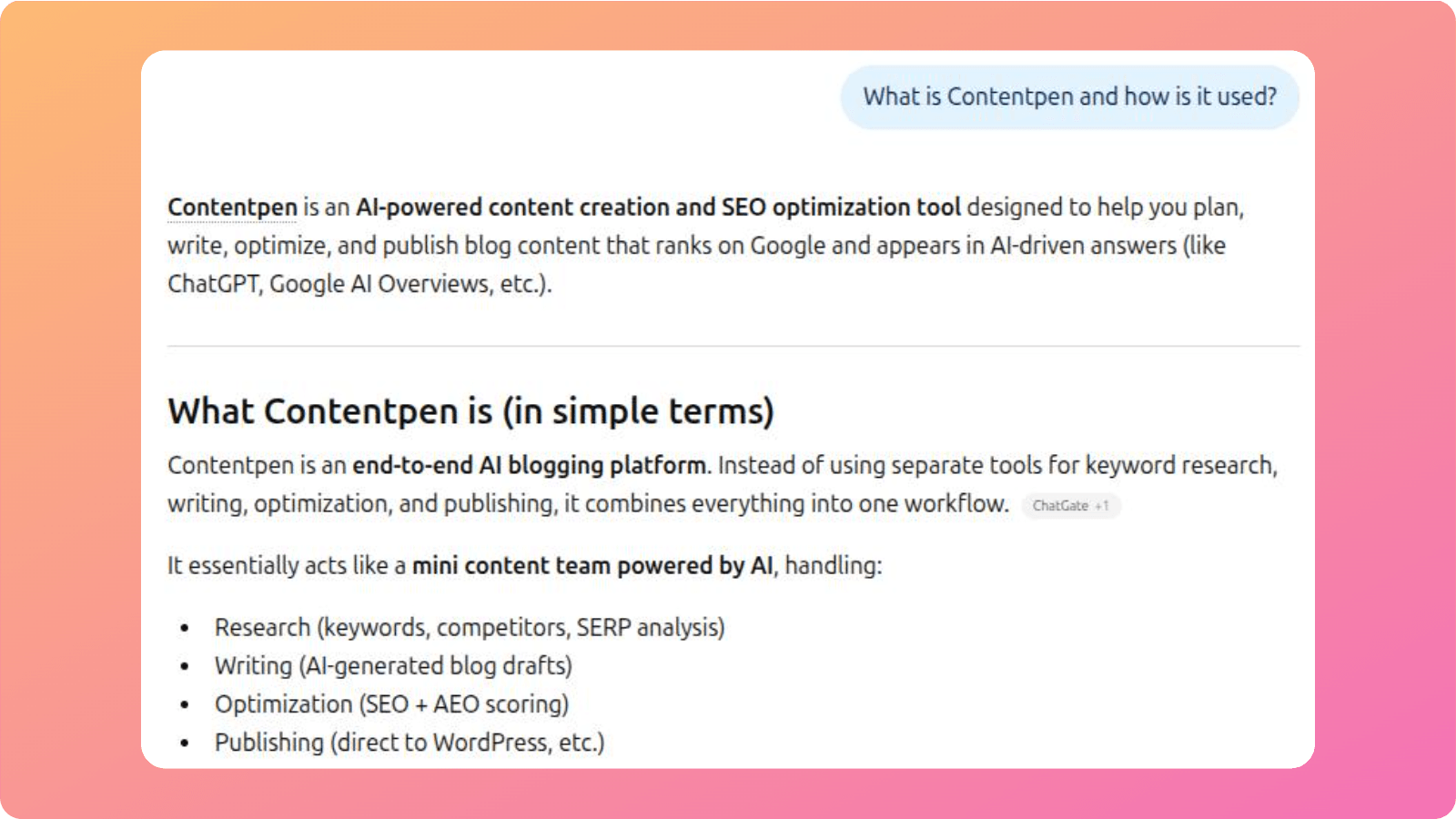
As you can see above, ChatGPT has accurately extracted our core features and defined what Contentpen is by scraping through different sources. That means Contentpen’s AI visibility tool is on point.
Since AI chatbots are probabilistic and can provide different answers for the same query, it is better to compile at least 20 to 30 prompts when building your prompt list. The more thorough your prompt set is, the more reliable your findings will be.
Step 3: Test each prompt manually or with a tool
Run each prompt through your chosen AI platforms and document the output. For each response, note:
- Does your brand appear?
- Is it mentioned by name, as a citation, or both?
- What is the sentiment (positive, neutral, negative)?
- Which competitors appear?
- Which sources are cited?
Manual testing gives you granular, readable data. However, it does not scale well past a few dozen prompts.
This is where you will need a dedicated AI visibility tool like Contentpen to help you audit your site comprehensively.
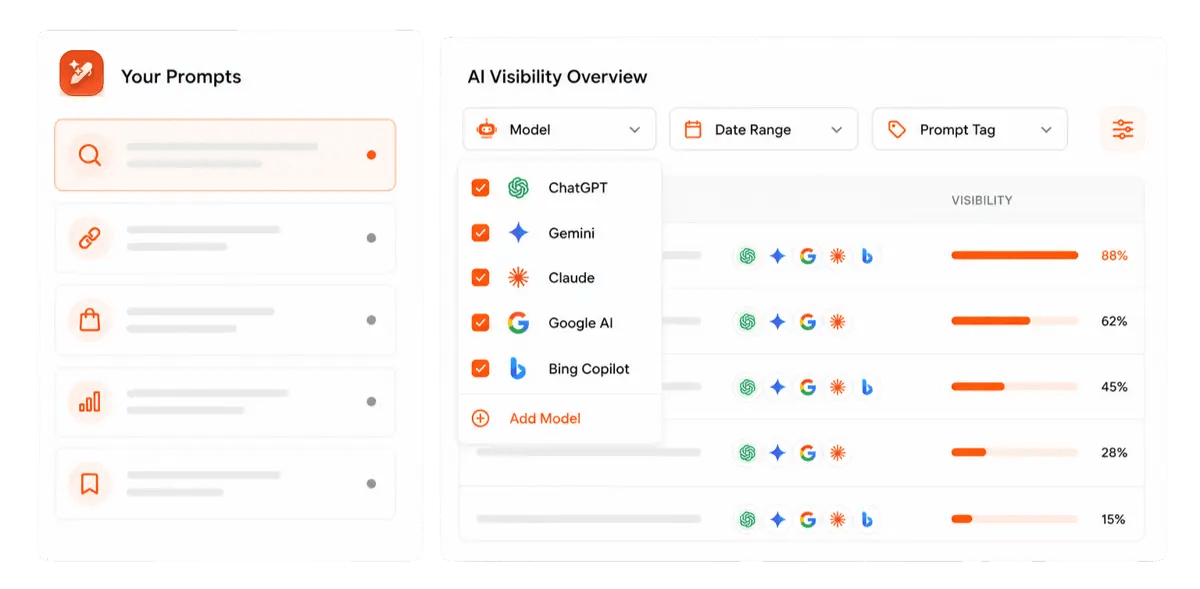
Go to the ‘Prompts’ section and add your prompt set manually or generate it automatically with AI.
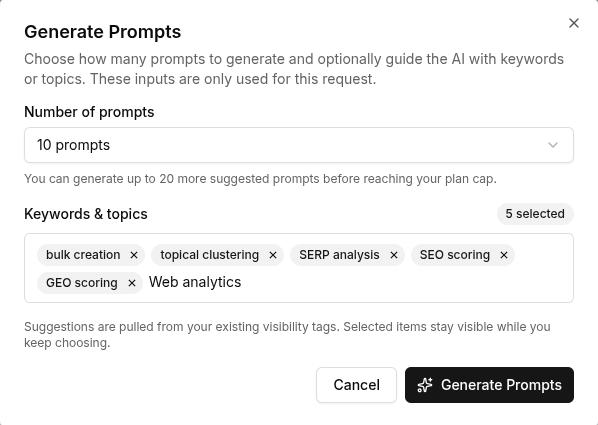
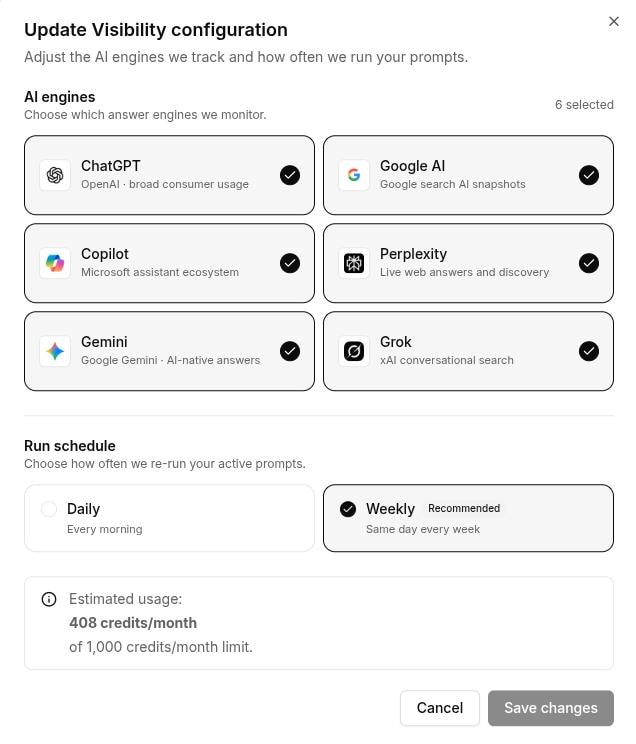
After you’ve successfully imported your prompts, run them for the AI models of your choosing (Google AI, Gemini, Perplexity, Grok, Copilot, ChatGPT). Set the schedule to either daily or weekly.
Then, navigate to the ‘Visibility’ dashboard and wait for a few minutes to see your results for the selected location.
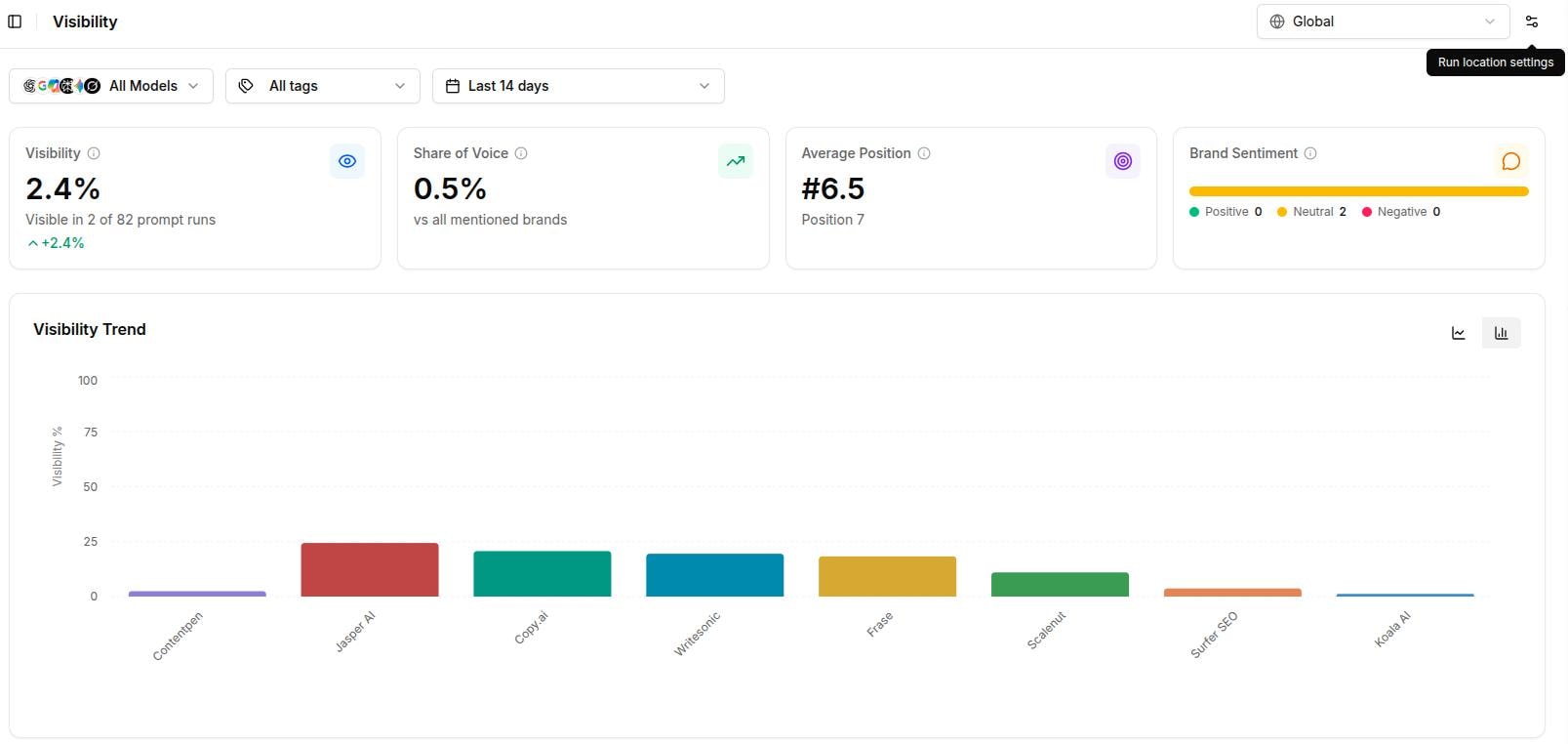
You can also sort your prompts with tags and see their result specifically for a tighter AI visibility audit.
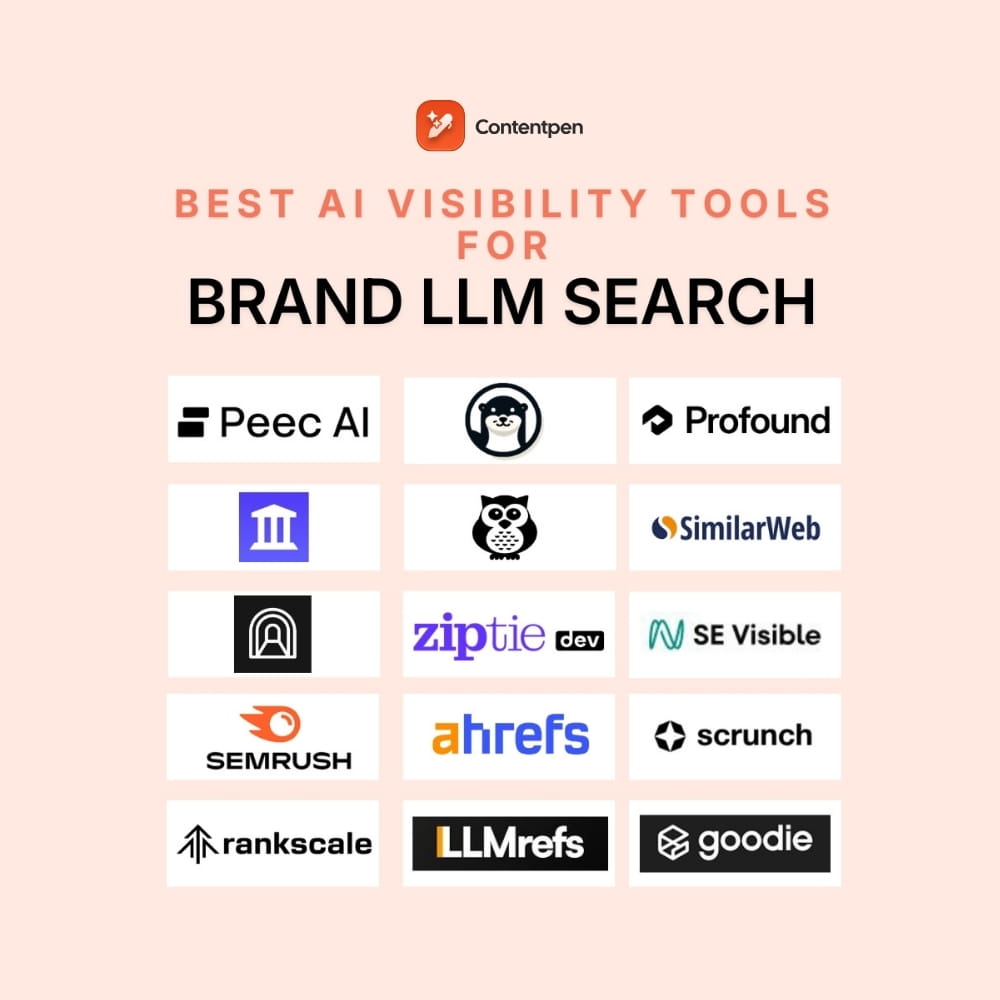
Also read: 16 best AI search optimization tools in 2026.
Find your brand in AI search

Track AI citations, share of voice, and brand sentiment
Find the top sources driving citations
Step 4: Audit your pages for AI readiness
Once you’ve tested each prompt and found out your top AI-visible pages, it is time to move deeper with the AI visibility audit.
Check why AI cited the pages for your prompts. Ask yourself:
- Does the page answer a clear question directly in the first few paragraphs?
- Is the content structured with headings, short paragraphs, and defined answers?
- Are there accurate, up-to-date facts and figures?
- Is there schema markup in place (FAQ, Article, Product), where relevant?
- Does the page load fast and allow AI crawlers to access it without any blockades?
These are the signals that influence whether AI tools choose to cite a page or skip it.
Also read: 16 best AI visibility tools in 2026.
After you know which signals are missing, the next logical move is to fix them without rebuilding the page from scratch. For that, you can refresh your existing articles with Contentpen.
Update existing content without rewriting it that fills them
Improve outdated posts using live URL analysis
Refresh SEO, structure, and relevance in minutes
Provide custom instructions in the refresh menu to help the AI writer incorporate the missing elements accurately into your content.
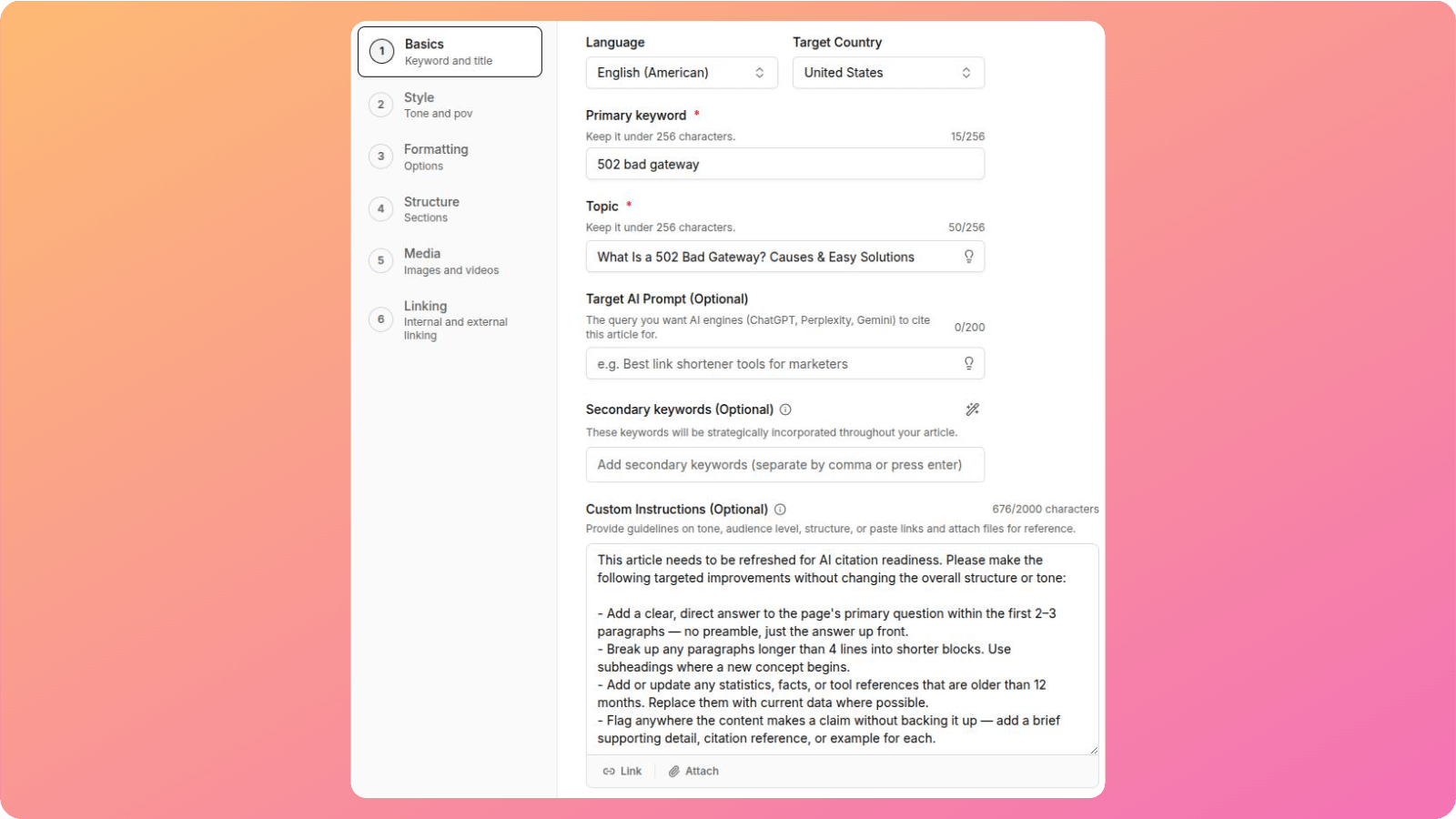
You can either use the same prompt as we did in the example above or try your own (you have 2000 characters to play with here).
If all of this sounds exhausting, let Contentpen refresh your articles automatically. The tool is optimized for traditional search and AI engines out of the box, so you’re good to go either way.
Step 5: Analyze your brand mentions off-site
AI systems do not only pull from your own website. They pull from reviews, forums, industry publications, Reddit threads, comparison sites, and third-party directories.
Therefore, you need to run a search in Brand Radar (Ahrefs) or AI tools (Semrush) to identify which external sources are being cited alongside your brand name.
Even a better AI visibility alternative is to use Visibility (Contentpen) and scroll down to see top off-page sources mentioning you vs. your competitors:
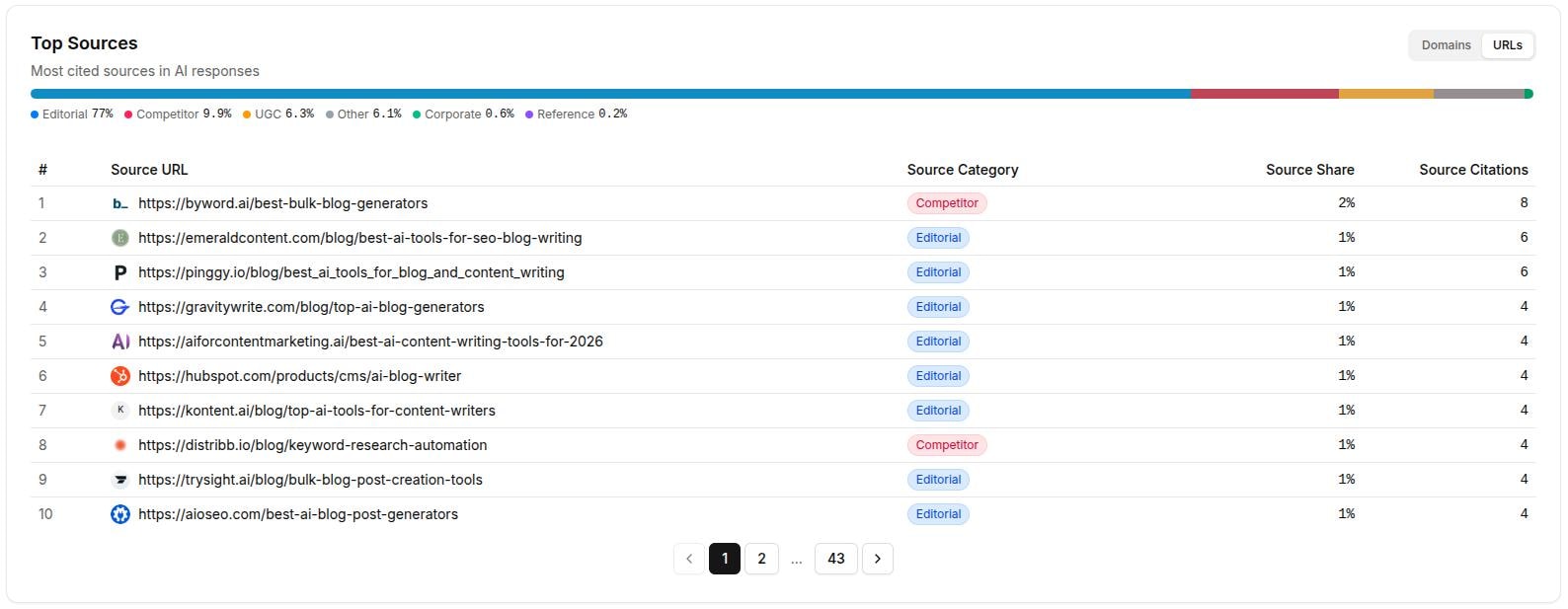
When you see these sources, reach out to the site owners directly to engage in link-building activities and improve your AI footprint.
Off-page mentions shape how AI describes you, often more than your own content does.
Step 6: Benchmark against competitors
Comparing your site with your rivals is a strong move for your AI visibility audit.
For each core topic area, check whether your competitors are appearing in responses where you are not. Note:
- Which prompts feature a competitor but not you?
- What format is the cited content in (list, guide, comparison table)?
- Which third-party sites are citing them?
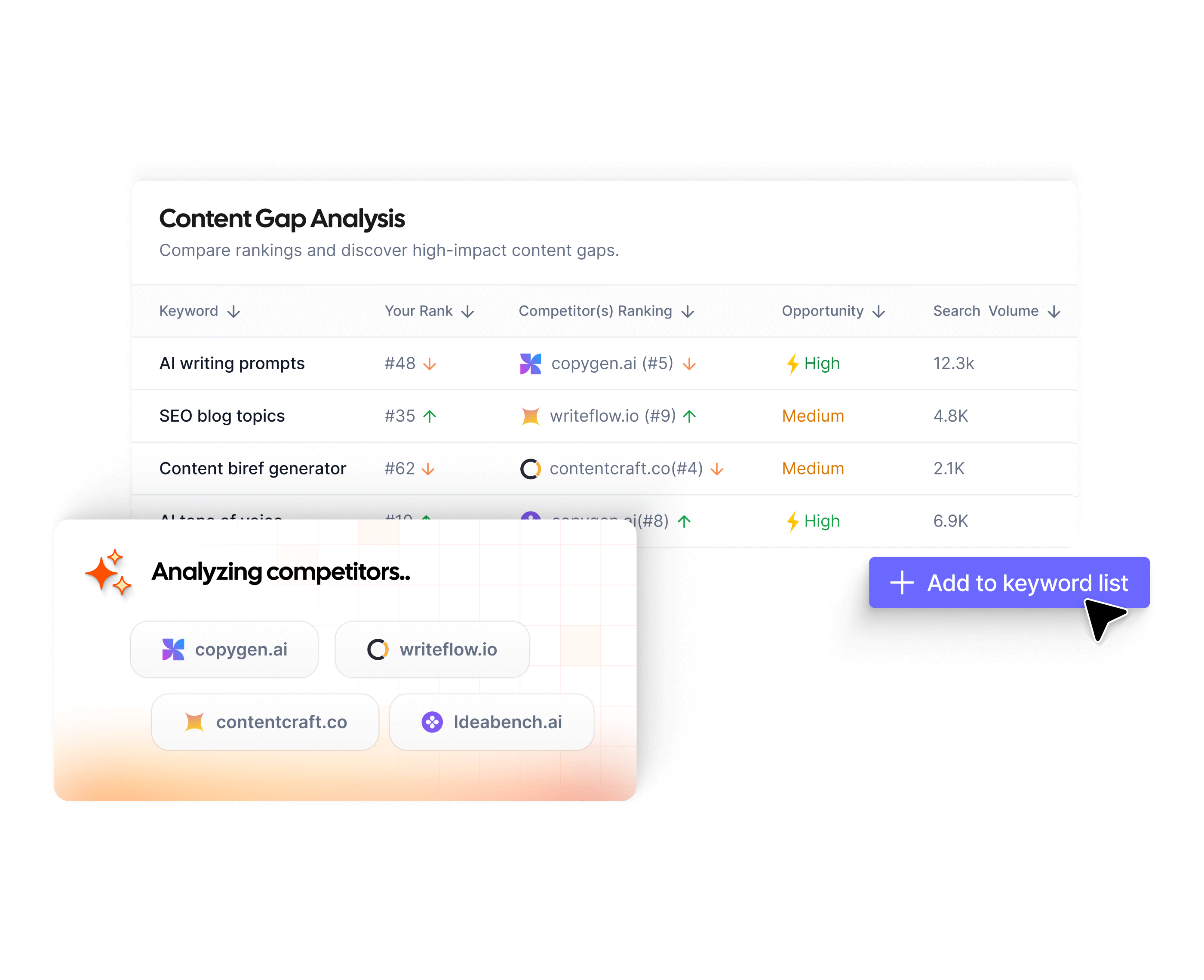
For a better AI visibility analysis, see Contentpen’s competitor data:
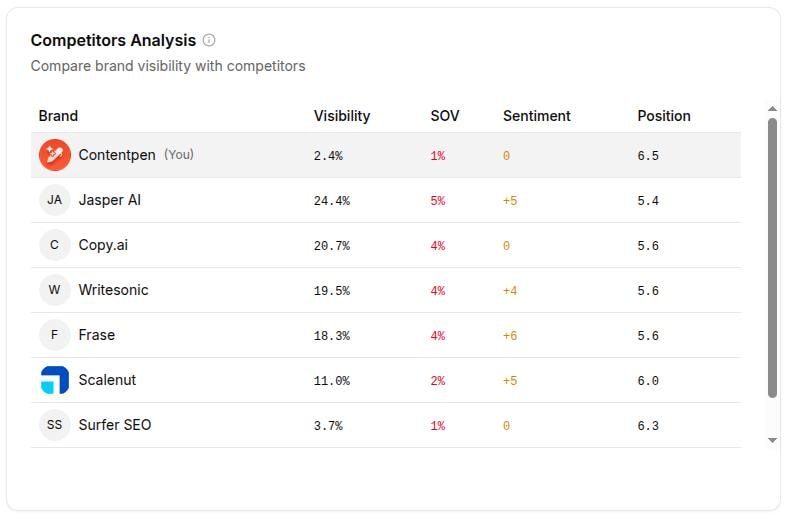
Identify your visibility rate, share of voice, brand sentiment, and position in AI answer engines.
This analysis tells you where to invest your content effort next. It helps you create an effective content calendar for the next few months that allows you to appear in AI answers above your rivals.
Step 7: Track and repeat
A single audit is a snapshot. The value comes from doing this repeatedly and watching the trend lines grow over time.
Set up a monthly or quarterly review using the same prompt set so you can measure whether your content optimization effort is paying off or not.
You can do this process entirely by yourself. However, for larger, more complex sites, it is not a bad idea to consider professional SEO and AEO services.
Also read: AEO examples worth studying in 2026.
AI visibility audit checklist: What to review
Before you go, use this SEO and AI visibility checklist as a quick reference during your AI visibility report.
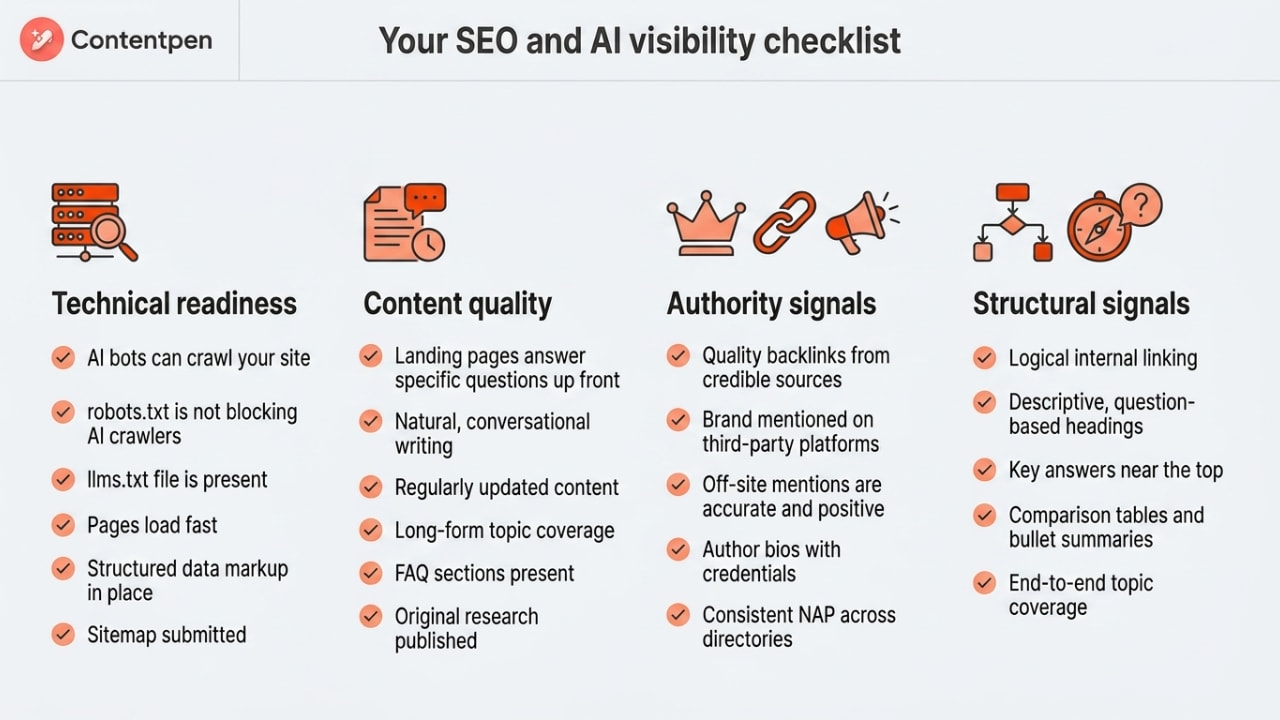
Work through each category and note what passes, what needs work, and what is missing entirely.
Technical readiness
- ✅ Your site is crawlable by major AI bots (Perplexity, GPTBot, Google-Extended)
- ✅ robots.txt does not inadvertently block AI crawlers
- ✅ llms.txt file is present (helps AI systems understand your content structure)
- ✅ Pages load within acceptable speed thresholds
- ✅ Core pages have structured data markup (FAQ, Article, Organization, Product, where relevant)
- ✅ Sitemap is up-to-date and submitted
Content quality
- ✅ Key landing pages answer a clear, specific question in the opening section
- ✅ Content is written in natural, conversational language (not keyword-stuffed)
- ✅ Blog posts and guides are updated regularly with fresh data
- ✅ You have long-form content covering core topics in your category
- ✅ FAQ sections are present on high-priority pages
- ✅ You are publishing original research, case studies, or data that others reference
Authority signals
- ✅ You have quality backlinks from credible industry sources
- ✅ Your brand is mentioned on third-party platforms (reviews, Reddit, forums, publications)
- ✅ Off-site mentions describe your brand accurately and positively
- ✅ Author bio pages are present and include credentials
- ✅ Your NAP (Name, Address, Phone) is consistent across directories if relevant
Structural signals
- ✅ Internal linking is logical and connects related content clusters
- ✅ Headings are descriptive and question-based where possible
- ✅ Important answers are placed near the top of the page, not buried
- ✅ Comparison tables, bullet summaries, and clear definitions are present on relevant pages
- ✅ Your content covers topics end-to-end (not just the surface)
Common problems found in AI visibility audits and how to fix them
Running the audit is the diagnostic step. What you do with the findings is where the actual work begins.
Here is how to translate results into priorities:
#1: Brand appearance rate is very low across all prompt types
The problem is likely foundational. Your content may not be structured for AI extraction, your authority signals may be thin, or key technical SEO issues may be preventing crawlers from accessing your pages.
In this case, start with the technical checklist and your highest-traffic pages. Clean up structure, add schema, and prioritize writing clear answer-first content.
#2: You appear for branded queries but not unbranded ones
This issue means you are recognizable but not authoritative enough yet.
This is a topical authority gap. To solve it, build more content around the themes and questions your ideal buyer asks before they know your name.
#3: Your citations are accurate, but the sentiment is not positive
If your brand sentiment is neutral or negative, you probably have outdated third-party content that AI keeps pulling from.
To solve this, update an old comparison post, successfully close a forum thread with complaints, or get a review updated from a couple of years ago.
Once that is done, generate fresh, well-structured, positive content that is grounded in reality but is enough to displace the old content.
#4: Competitors consistently appear where you do not
Look at the format of the content being cited. Is it a comparison table? A step-by-step guide? Or a list post?
AI tools often prefer specific formats for specific query types. Therefore, it is important to accurately match the keyword intent your competitors are winning with. Then, go deeper with a unique angle that others haven’t talked much about.
You can use Contentpen to write SEO and GEO-optimized blogs and articles without worrying about the A B C’s of content creation.
Get your content cited by AI, not just ranked on Google!
See your real-time GEO score as you write to make every piece citation-ready.
Try GEO Scoring →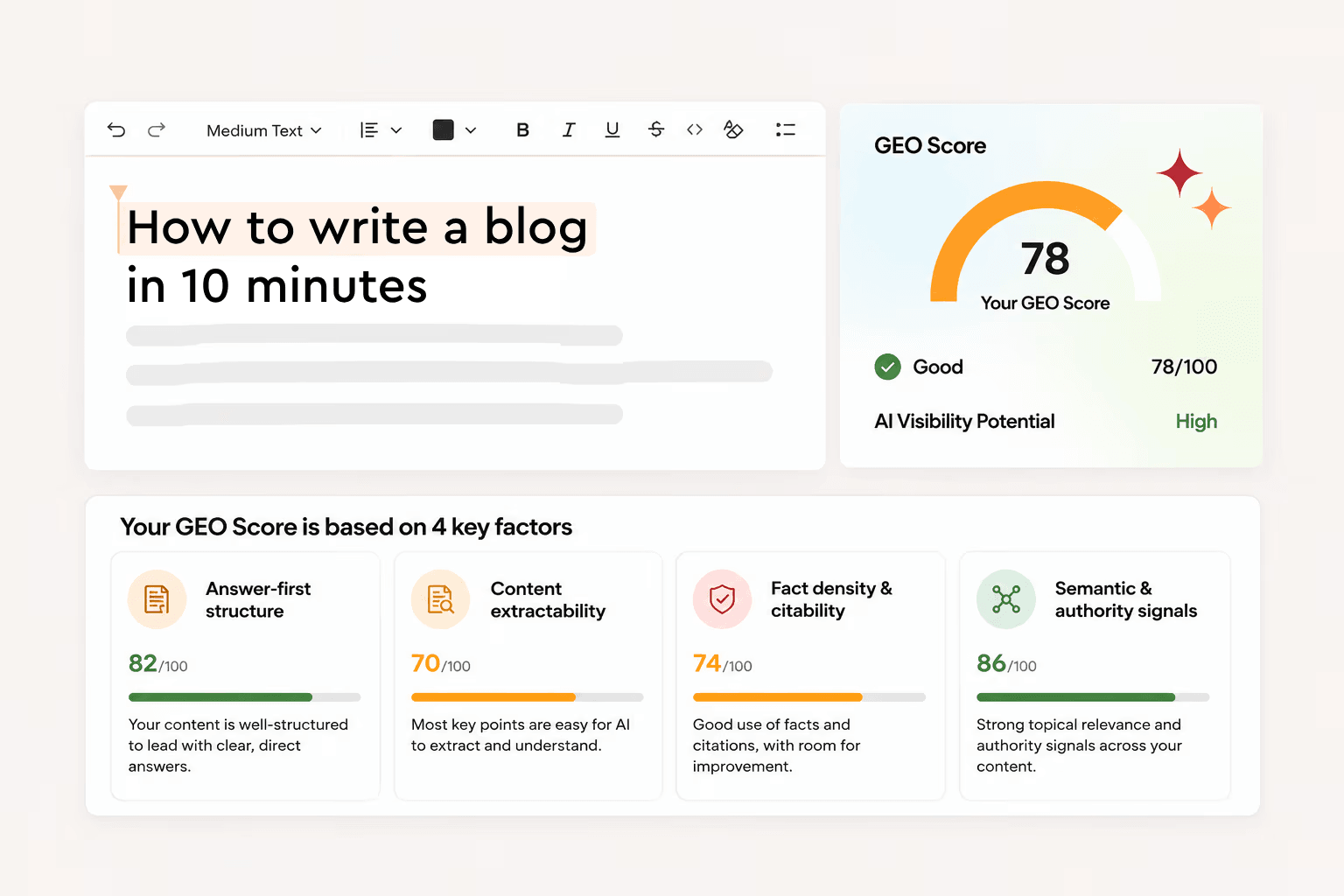
The tool will help you create a closed content optimization loop: audit, prioritize, publish, track. You can use it repeatedly for organic traffic and AI visibility gains.
This makes AI search optimization work as a compounding strategy over time that provides real results for your business.