 15 minutes
AI marketing automation is the use of artificial intelligence to run, optimize, and personalize campaigns with minimal human effort. It touches the channels marketers already run daily and simplifies the workflow to free them for strategy and relationship-building.
This guide goes deep into what AI marketing automation actually is and what it does. You’ll find the main types, the tools worth knowing, real examples, and a simple way to start without breaking what already works.
By the end, you’ll also see how an AI-powered tool like Contentpen can speed up your content marketing efforts to maximize organic growth.
Table of contents
- Key takeaways
- What is AI marketing automation?
- What AI actually does across content research, creation, and delivery
- How AI marketing automation works across the funnel
- Benefits of AI marketing automation
- Types of AI marketing automation
- AI marketing automation examples from real brands
- Best AI marketing automation tools
- How to start automating marketing with AI
- AI marketing automation jobs and skills
- Data regulations to be aware of regarding AI marketing automation
- Wrapping up
- Frequently asked questions
Key takeaways
- AI marketing automation uses machine learning to run marketing tasks like email sends, ad bids, and audience segmentation. It adjusts them based on real customer behavior instead of fixed rules.
- The global AI in marketing market is projected to reach $82.23 billion by 2030, growing at a 25% annual rate.
- The main types include email automation, social media automation, ad and PPC automation, lead scoring, personalization, and conversational marketing.
- Getting started works best one channel at a time, with a clear baseline to measure against before you scale up.
What is AI marketing automation?
AI marketing automation is the process of utilizing machine learning and natural language processing algorithms to complete marketing tasks automatically without manual hand-off. It is part of AI automation, which is the umbrella term that encompasses all types of automation.
For example, instead of sending the same email to everyone on a list, an AI-driven system can look at who opened the last three campaigns, who clicked but didn’t buy, and who went quiet. Smart tools then adjust the message and timing for each group to help you maximize returns.
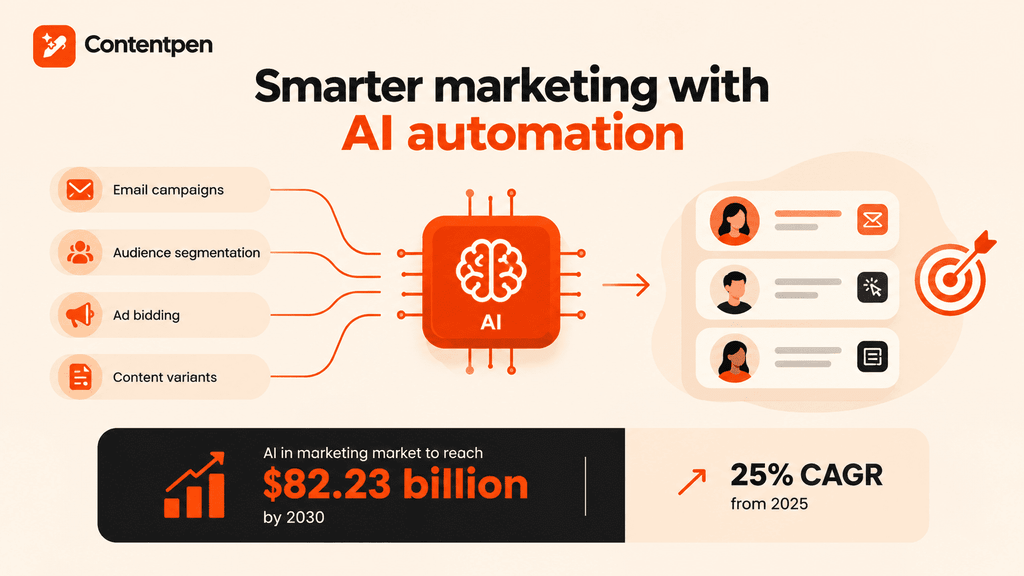
According to a report by Grand View Research, the global AI in marketing market is projected to reach $82.23 billion by 2030, growing at a 25% CAGR from 2025.
That growth tracks a real shift in daily work, not just budget lines. Marketers are automating audience segmentation, ad bidding, lead scoring, and content variants at a scale manual work never allowed.
What AI actually does across content research, creation, and delivery
AI marketing automation is doing one of three jobs, regardless of the distribution channel it is running in.
- Research: AI scans customer data, like purchase history, site behavior, and past campaign performance, to spot patterns a person would need days to find by hand. This is what powers audience segmentation and churn prediction.
- Creation: Once a pattern is clear, generative AI drafts the actual asset, an email variant, an ad headline, or a social caption, based on what has worked for that segment before. A person is still kept in the loop for edits and approvals.
- Delivery: The system decides when and to whom that asset goes out, adjusting send times or bid amounts in real time based on how people are responding right now.
Most AI marketing automation tools you’ll encounter online are strong at either one of these jobs, not all of them at once. Knowing which job a tool is actually built for saves you from buying something that doesn’t work for your needs.
Also read: 20+ best digital marketing tools in 2026.
How AI marketing automation works across the funnel
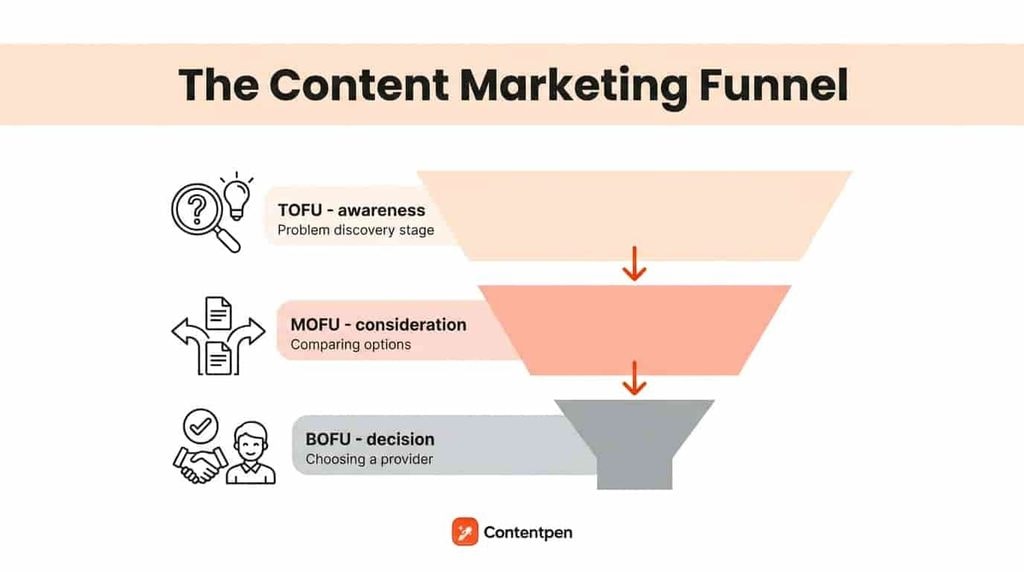
Marketing automation doesn’t run as one long workflow. It shows up differently at each stage of the funnel, and the AI layer plugs into whichever stage needs it.
At the top of the funnel, AI automation handles audience research and content generation, drafting blog outlines or briefs based on what’s ranking or converting for similar audiences.
In the middle, it scores leads and personalizes nurture sequences, deciding who gets a case study next and who needs a product demo instead.
Near the bottom, it times outreach based on buying signals, like a prospect revisiting a pricing page twice in one week. After the sale, it flags churn risk by watching for drops in product usage or support tickets, prompting a retention email before a customer cancels.
The common thread across all stages is the same one that runs through AI automation generally. A person still sets the goals and reviews the output. The AI handles the pattern recognition and the repetitive execution underneath it.
Benefits of AI marketing automation
The appeal isn’t just fewer manual tasks. A few benefits show up consistently once a team automates a marketing channel properly.
- Campaign personalization at scale: An AI system can maintain different messaging for hundreds of segments at once, which humans cannot realistically manage manually.
- Faster decisions: A system watching campaign performance in real time can shift budget toward what’s converting without waiting for a weekly review meeting. This speed in decision-making directly affects your ability to hit ARR and MRR goals by the quarter.
- Efficient lead prioritization: AI models weigh far more behavioral signals than a person scanning a spreadsheet ever could. This allows you to create better strategies to cater to cold, warmed-up, and hot leads, leading to improved conversion rates.
- Free up time for strategy: Since the repetitive execution work is handled by AI, businesses can scale with ease as human workers get more time for strategy-building, without increasing headcount.
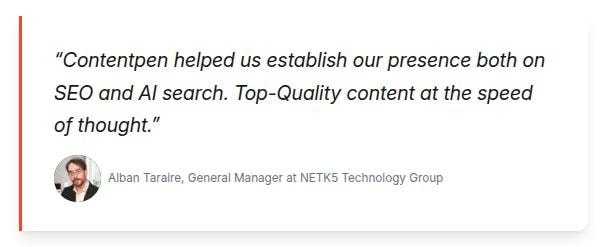
An example would be NETK5 Technology, which improved their search and AI visibility with Contentpen. They saved roughly $500 per month on SEO and AEO tasks by using AI content marketing automation, without adding more headcount to the team.
Types of AI marketing automation
AI marketing automation isn’t one tool doing one job. It spans several channels, each with its own use case and its own way of measuring success.
| Type | What AI handles | What to measure |
| Email marketing | Segmentation, subject lines, send-time optimization | Open rate, click-through rate, conversion rate |
| Social media | Post scheduling, caption drafts, engagement analysis | Engagement rate, follower growth, time saved per post |
| Ads and PPC | Bid adjustments, audience targeting, ad copy variants | Cost per acquisition, ROAS, conversion rate |
| Lead scoring and CRM | Ranking leads, flagging buying signals, routing to reps | Lead-to-opportunity rate, sales cycle length |
| Personalization | Dynamic website and email content by segment | Conversion rate by segment, revenue per visitor |
| Conversational marketing | Chatbots qualifying and routing site visitors | Response time, qualified leads captured |
| Content and SEO | Keyword research, drafting, on-page optimization | Time from keyword to live page, organic traffic |
Now, let’s discuss these types of AI marketing automation in more detail.
Email marketing automation
AI email automation tools segment a list by behavior. HubSpot’s own marketing team used an AI system that analyzed business URLs and content downloads to predict intent, and saw an 82% jump in email conversion rates.
HubSpot CMO Kipp Bodnar described the goal as “understanding individual customer needs at scale.” The gain came from matching the message to what each recipient actually needed, not from sending more emails.
Social media automation
AI tools draft captions in a brand voice, suggest posting times based on when an audience is actually online, and flag which post format is earning the most engagement that week.
The output still needs a human check before it goes live, as AI drafts can miss critical context at times. That said, the scale at which AI systems can draft, optimize, and post content is unmatched by manual effort.
Ad and PPC automation
Smart bidding tools adjust bids in real time across thousands of auctions a human could never track manually, weighing device, location, and time of day for each bid.
Over 80% of Google advertisers already use some form of Smart Bidding. AI-driven PPC and search engine marketing campaigns are reported to see meaningfully higher conversion rates than manually managed ones.
The catch is that AI bidding still needs a human defining the offer, the exclusions, and what counts as a quality conversion. Feed it bad conversion data, and it will optimize toward the wrong outcome just as confidently as the right one.
Lead scoring and CRM automation
AI-driven lead scoring looks at dozens of signals, like site visits, email opens, and content downloads, to rank which leads are most likely to convert, so reps can spend their time on the leads worth calling.
The accuracy gap is measurable. An NP Digital study of nine B2B companies scoring 9,702 leads found AI scoring reaching 83% accuracy against 68% for manual review.
That 15-point gap comes down to AI weighing far more signals at once than a person scanning a CRM record can.
This is also where AI marketing automation blends into sales automation, since a marketing-qualified lead and a sales-ready one often live in the same CRM record.
Personalization
Personalization engines change what a visitor sees on a website or in an email based on their segment, past behavior, or stage in the funnel. This ranges from swapping a homepage headline for return visitors to recommending different products based on browsing history.
Famous examples of content personalization at scale can be seen implemented by brands like Netflix, HBO Max, and Amazon Prime. They provide a ‘For you’ category of shows based on your watch history, which keeps viewers hooked and engaged with their platforms.
Conversational marketing automation
AI chatbots and assistants qualify site visitors in real time, answering common questions and routing serious leads to a rep while letting casual browsers self-serve.
The best implementations know when to hand off to a human, rather than trying to close every conversation with a bot.
Content and SEO automation
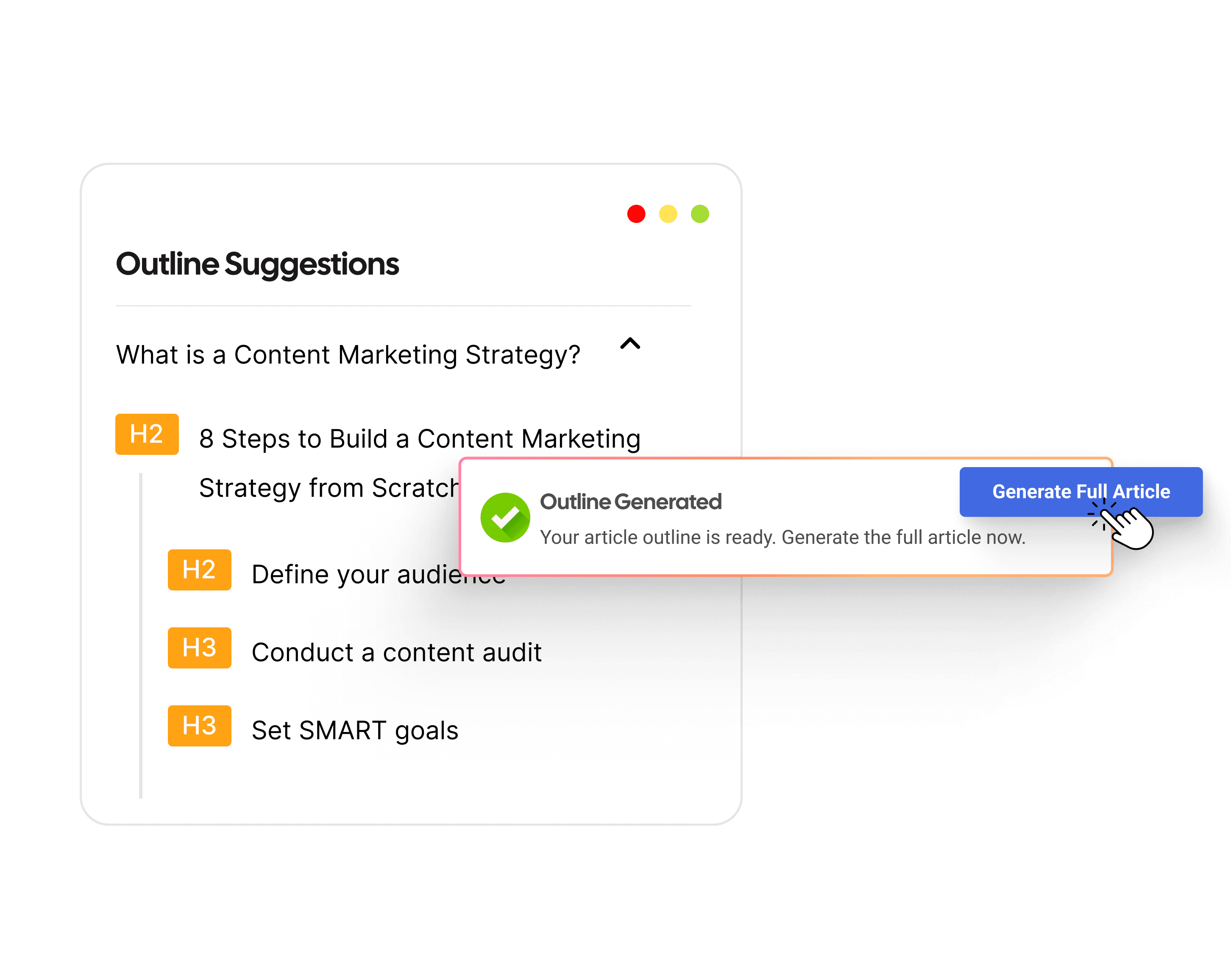
Content and SEO automation strings together different stages of content into one workflow instead of separate handoffs between writers, editors, and SEO tools.
Contentpen is a tool that does just that. Its SEO autopilot feature handles keyword research, gap analysis, writing, optimization, and publishing in one place, providing convenience to users to scale their growth without the manual hassle.
Write content that’s built to rank, not just read
Create search-optimized blogs aligned with SEO and GEO signals, so your content performs well across search and AI-driven discovery.
Try SEO Blogging FREE →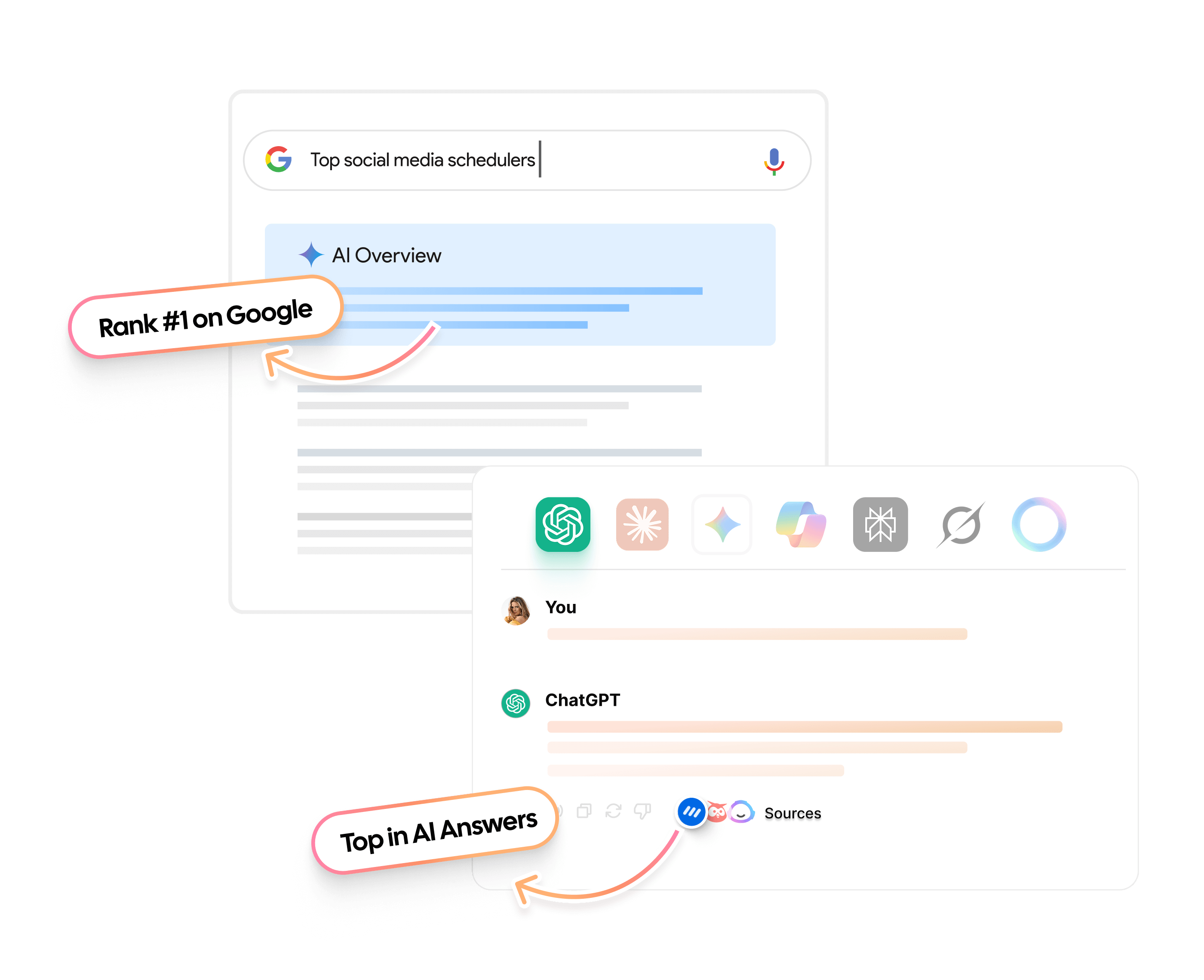
AI marketing automation examples from real brands
Below are a couple of documented results of AI marketing automation from real brands that you should learn about in 2026.
On the personalization side, HR software company Personio used AI to tailor its account-based marketing by company size instead of sending the same content to every prospect.
The small business segment saw a 46% jump in conversion rate and a 63% increase in email opt-ins, while the enterprise segment saw a 45% conversion increase. Same product, two different messages, built around who was actually reading it.
On the paid media side, Marin Software reports that agencies using its AI-based forecasting hit budget targets on 94% of campaigns and saw a 20% revenue lift within the first month.
Both examples point to the same lesson. The lift came from better targeting decisions, not from simply automating more tasks. A campaign sent to the wrong segment faster is still the wrong campaign, regardless of the pace it’s sent at.
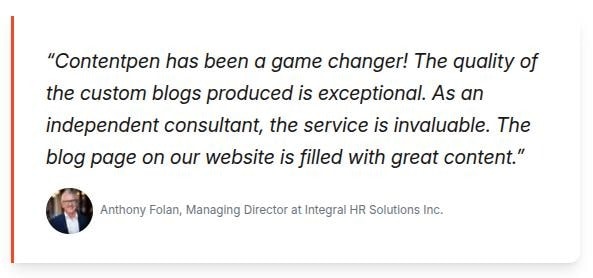
Another real example would be Integral HR Solutions. They used Contentpen’s brand knowledge and voice settings to create custom blogs at scale, improving their organic traffic and footprint.
If you want results like these, register at Contentpen for a free 7-day trial and get started with your first AI-powered SEO content workflow.
Write better blogs in less time, without sacrificing quality.
Let AI handle structure, clarity, and flow while you stay in control of the message.
Try AI blog writing →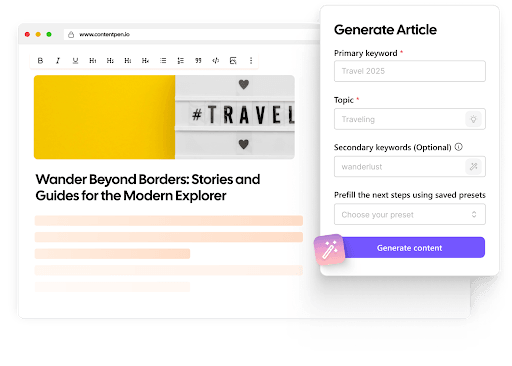
Best AI marketing automation tools
Below are some of the best AI marketing automation tools that you can use today to eliminate a specific roadblock in your workflow, along with their features and limitations.
| Tool | Best for | AI marketing features | Where it’s limited |
| HubSpot | Teams already using HubSpot’s CRM | HubSpot Breeze handles content drafting, lead scoring, personalized outreach, and predictive analytics | Deepest value requires being inside the HubSpot ecosystem, and can get costly at scale |
| Zapier | Connecting AI steps across many separate marketing tools | AI steps inside workflows, autonomous agents for research and outreach, chatbot builder | Not a CRM itself, so it depends on the quality of the tools it connects |
| Contentpen | Content and SEO automation | Keyword research, drafting, SEO scoring, and publishing in one pipeline with approval checkpoints | Not built for email, ads, or CRM automation |
Other honorable mentions include:
- Klaviyo: Used for e-commerce email and SMS marketing purposes. It also provides a predictive send timing feature and churn forecasting to its customers.
- ContentStudio: Ideal for generating social media captions, photos, videos, and scheduling posts, along with AI-powered sentiment analysis.
- Mutiny: Created for B2B content marketing campaigns, allowing companies to activate, convert, and understand their target accounts through personalized website experiences.
Choose the AI marketing automation tool according to your needs and current constraints (budget, time, scope). Never jump into the buying decision before trying out a free trial or plan.
How to start automating marketing with AI
To get started with AI marketing automation, you need to ask yourself a few questions.
- Which channel has the clearest pattern? Look at where your team spends the most repetitive hours right now. The channel with the most repeatable pattern gives AI the most reliable signal to learn from, and it’s usually the one worth starting with.
- Which tool actually fits your stack? A tool that fits what you already have is better than a new platform. For instance, if your team already uses HubSpot, its native AI features will likely take you further than bolting on a separate tool.
- How will you know it’s working? Record your current baseline first, things like open rates, response times, or cost per lead, before you turn anything on. Without that number, you have no way to tell if the automation actually helped you or not.
- When to trust it with more? Run the automation on one segment or one campaign first, with a person reviewing the output before it touches a full list. Expand to a second segment or channel only once the results hold up against your baseline.
Once you get clear answers to these four questions, you will be ready to implement AI marketing automation with a proper strategy.
AI marketing automation jobs and skills
Let us start by busting a common myth today about how AI marketing automation impacts your career.
The idea that algorithms are taking over marketing roles could not be further from the truth. While automated tools now handle traditional tasks like basic copywriting and routine data sorting, the industry is actually expanding.
AI marketing automation is creating more jobs than it replaces by introducing a completely new layer of required skills.
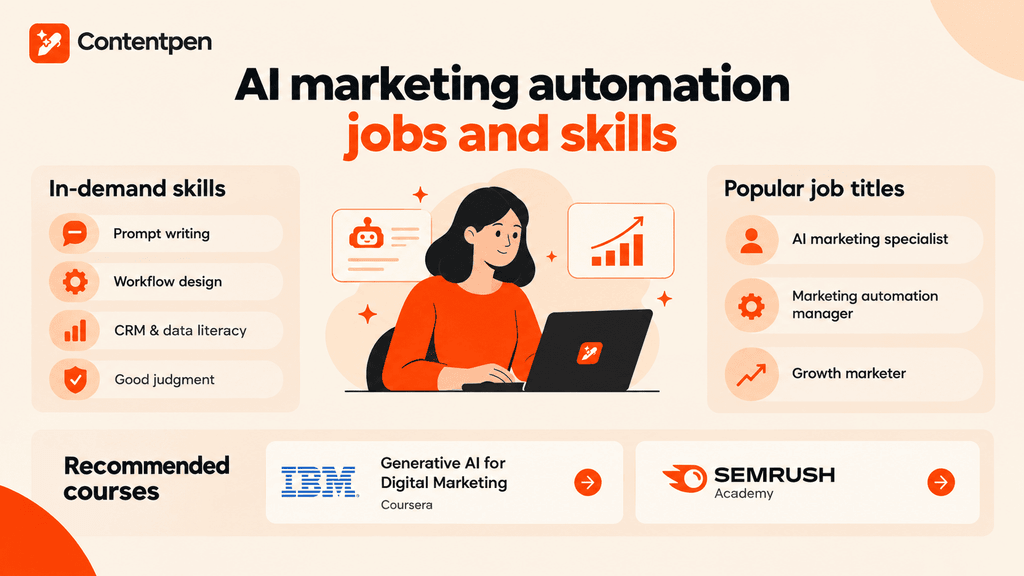
Job titles like AI marketing specialist, marketing automation manager, and growth marketer increasingly list prompt writing and workflow design as key requirements alongside the usual campaign and analytics skills.
The most in-demand skill, however, isn’t the technical side of things. It’s actually knowing how to structure a workflow, set the right guardrails, and judge when an AI-generated output is actually good enough to proceed.
Comfort with a CRM, basic data literacy, and the ability to write a clear prompt matter more than a programming background. So, while technical skills can certainly give you an edge, a computer science degree is no longer necessary to land these modern marketing jobs.
AI marketing automation courses worth considering
If you’re building an AI marketing automation skill set from scratch, then IBM’s Generative AI for Digital Marketing course on Coursera is a good starting point. It walks you through building repeatable AI workflows without tying you to one vendor.
If you want to learn in a more tool-specific approach, Semrush Academy is a viable option. It is free, uses Semrush’s own AI products to teach, and helps you apply those concepts practically.
Either way, a short course teaches you the concepts faster than trial and error. The real skill only builds once you’re running an actual campaign, not just a course exercise.
Data regulations to be aware of regarding AI marketing automation
Because AI marketing automation runs on customer data, a few US rules are worth knowing before you connect your data to a vendor.
- The CAN-SPAM Act still governs every automated email, so an AI-drafted subject line still needs to be honest, and every send still needs a working unsubscribe link.
- The CCPA gives California customers rights over their data, including the right to know what a tool collects and to opt out if it’s being sold.
- The Federal Trade Commission (FTC) has also actively pursued companies for overstating what their AI does, under an enforcement push called Operation AI Comply.
The practical takeaway is simple. Only claim what your automation actually does, and check what your vendor does with customer data before you place your connections.
Wrapping up
AI marketing automation isn’t a single tool you buy once. It’s a layer that touches email, social, ads, lead scoring, and content, each with its own use case and its own way of going wrong if left unsupervised.
The teams getting real results aren’t the ones automating everything at once. They’re the ones picking one channel, setting a baseline, and expanding only once the numbers hold up.
If content and SEO are the channels eating the most of your team’s time, then Contentpen’s SEO Autopilot is worth considering. It runs keyword research, drafting, and publishing in one place with approval checkpoints you control.
From outline to publish-ready content that fills them

Structured
Consistent
SEO-aligned
Fast