 11 minutes
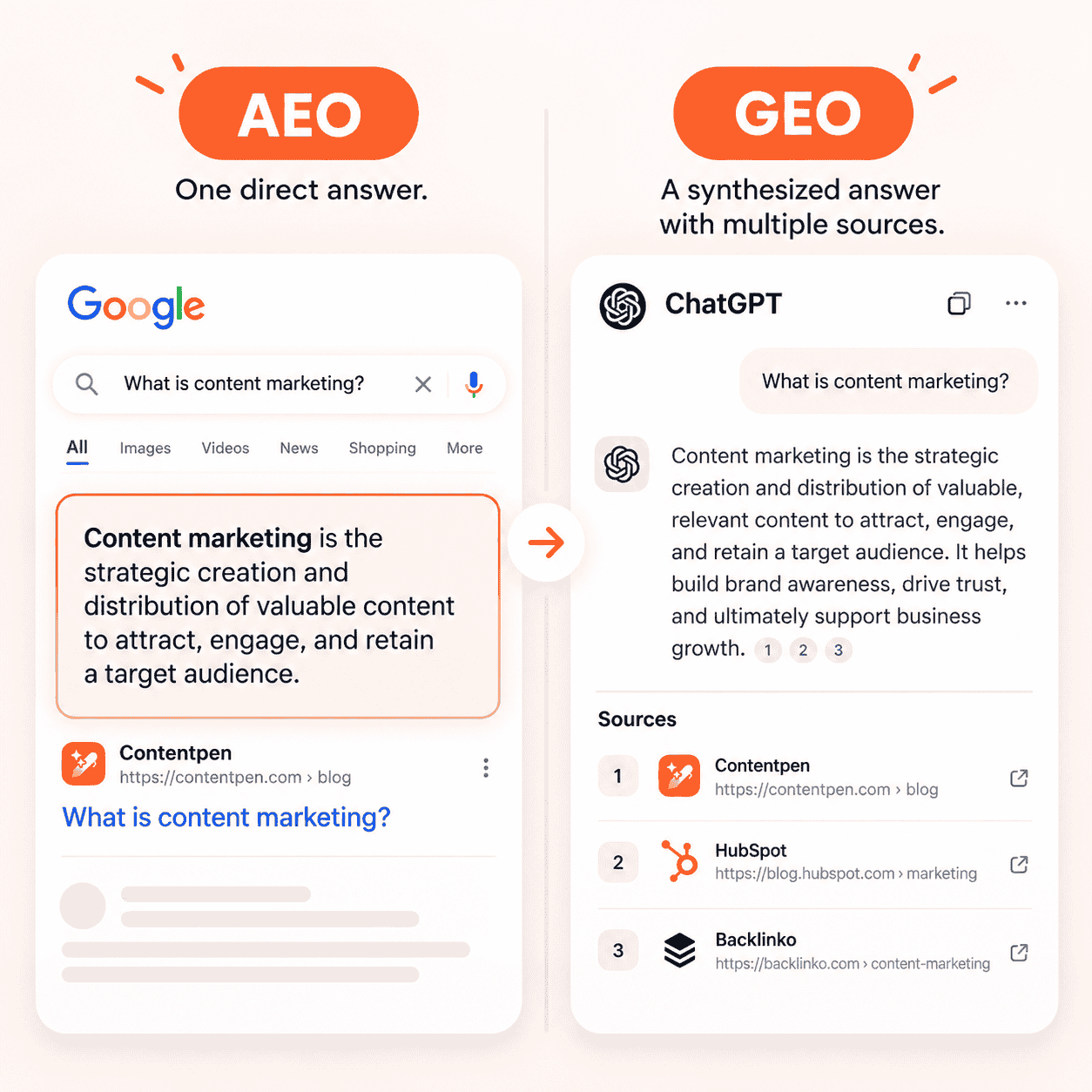
AEO (answer engine optimization) gets your content picked as the single, direct answer to a question. Think featured snippets, voice replies, and Google AI Overviews. GEO (generative engine optimization) gets your brand cited and recommended inside AI-written answers from ChatGPT, Perplexity, Gemini, and Claude.
So AEO wins the answer. GEO wins the mention.
Your rankings might look fine while clicks keep slipping. In a Pew Research Center study, Google users clicked a result in just 8% of visits when an AI summary appeared, compared with 15% when it didn’t.
Meanwhile, half the advice online treats AEO and GEO as rivals. The other half calls them the same thing. You end up with two half-built strategies and no clear way to measure either.
Once you see what each discipline actually optimizes for, you can build one content system that serves both.
Let’s break down the differences, the overlap, real examples, and the exact tactics to use.
Table of contents
- Key takeaways
- What does AEO mean?
- What does GEO mean?
- How are AEO and GEO different?
- Where do AEO and GEO overlap?
- AEO vs GEO vs SEO, AIO and LLMO: what’s the full form of each?
- What do AEO and GEO look like in a real search?
- Should you focus on AEO or GEO first?
- How do you optimize content for AEO?
- How do you optimize content for GEO?
- How do you measure AEO and GEO results?
- What are the most common AEO and GEO mistakes?
- How can Contentpen help you win at AEO and GEO?
- One content system, two kinds of answers
- Frequently asked questions
Key takeaways
- AEO targets one extractable answer. GEO targets citations and brand mentions inside synthesized AI responses.
- AEO success looks like a featured snippet or AI Overview extract. GEO success looks like share of voice across AI engines.
- Both sit on top of SEO. Google itself says optimizing for its AI features “is still SEO.”
- Most of the work overlaps: answer-first structure, clear entities, fresh facts, and strong authority signals.
- GEO leans harder on off-site signals like reviews, Reddit threads, listicles, and press mentions.
- Measure both with AI visibility metrics, not just rankings and clicks.
What does AEO mean?
AEO stands for answer engine optimization. It’s the practice of shaping content so a search or AI system can lift one clean answer straight from your page.
The idea started in the voice search era. Assistants like Alexa and Siri could read only one answer aloud, so being “the answer” mattered more than being on page one.
Today, answer engine optimization covers a few surfaces:
- Featured snippets and People Also Ask boxes
- Google AI Overviews and AI Mode extracts
- Voice assistant replies
- Knowledge panels
The win is precise. Your sentence, your definition, or your list becomes the response.
What does GEO mean?
GEO stands for generative engine optimization. It focuses on how your brand shows up when an AI model writes a full answer by pulling from many sources.
The term comes from a 2023 research paper by a team from Princeton, Georgia Tech, the Allen Institute for AI, and IIT Delhi. In the original GEO study, the authors found that targeted content changes could boost source visibility by up to 40% in generative engine responses.
Here, you’re not chasing one slot. You’re trying to be one of the three to five sources a model trusts, quotes, and recommends.
GEO mostly plays out on:
- ChatGPT and ChatGPT search
- Perplexity
- Gemini and Google AI Mode
- Claude, Copilot and Grok
How are AEO and GEO different?
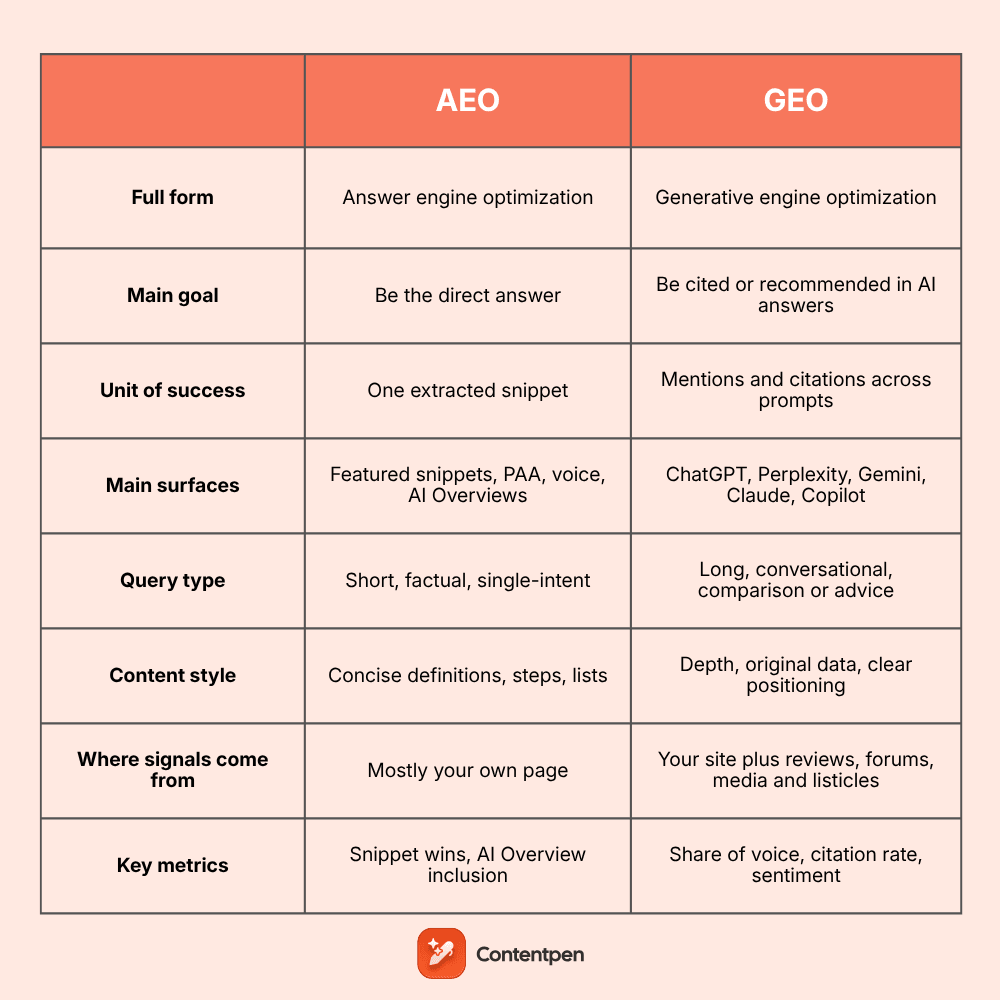
The simplest split is this. AEO optimizes a passage. GEO optimizes a brand’s presence across many passages and many sites.
| Factor | AEO | GEO |
|---|---|---|
| Full form | Answer engine optimization | Generative engine optimization |
| Main goal | Be the direct answer | Be cited or recommended in AI answers |
| Unit of success | One extracted snippet | Mentions and citations across prompts |
| Main surfaces | Featured snippets, PAA, voice, AI Overviews | ChatGPT, Perplexity, Gemini, Claude, Copilot |
| Query type | Short, factual, single-intent | Long, conversational, comparison or advice |
| Content style | Concise definitions, steps, lists | Depth, original data, clear positioning |
| Where signals come from | Mostly your own page | Your site plus reviews, forums, media, and listicles |
| Key metrics | Snippet wins, AI Overview inclusion | Share of voice, citation rate, sentiment |
| Origin | Voice search, around 2017 and 2018 | Academic research, 2023 |
Notice the “where signals come from” row. That one difference shapes most of your strategy.
Where do AEO and GEO overlap?
A well-built page can often win in both places.
Both approaches reward:
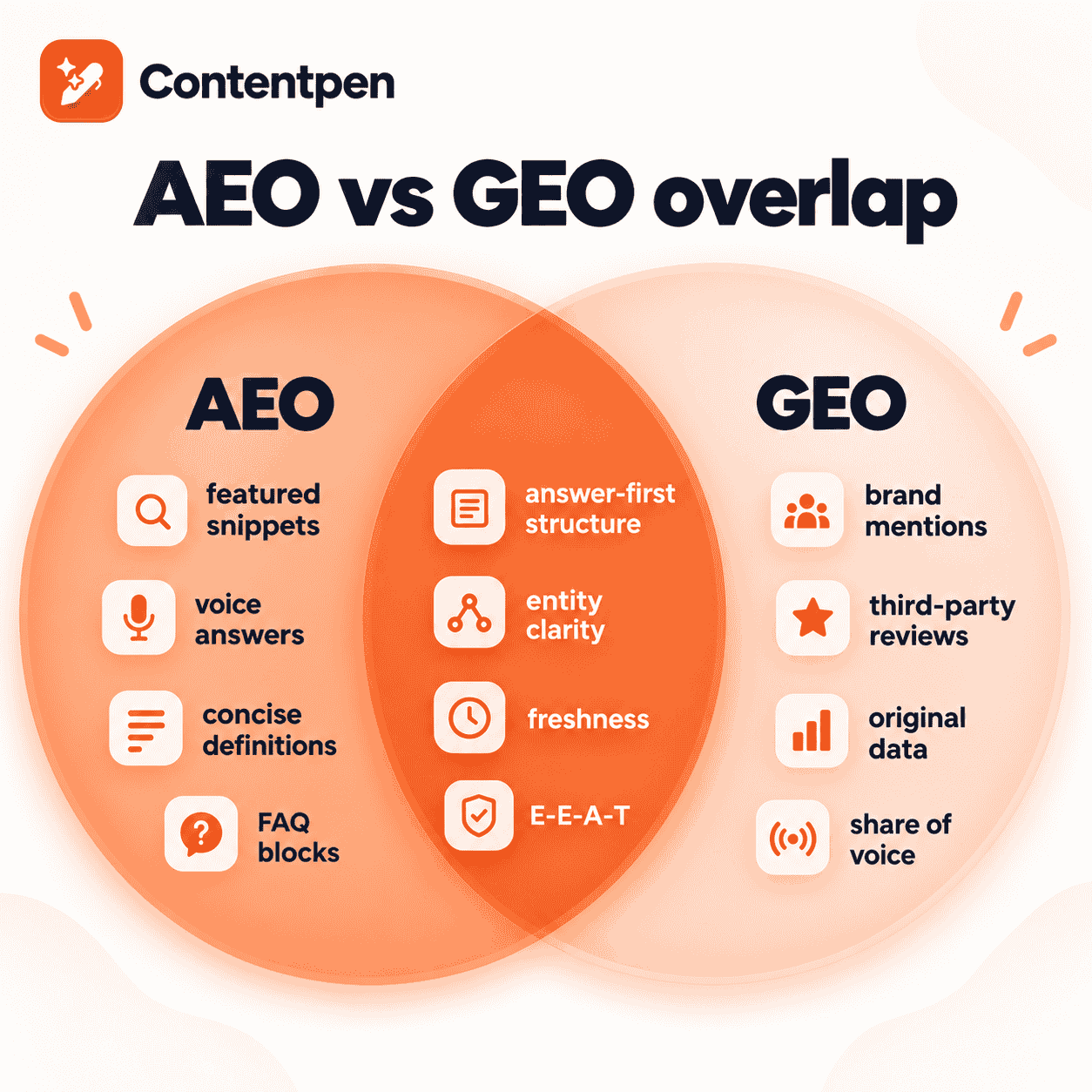
- Answer-first writing: Lead each section with the direct answer, then add context.
- Clear entities: Name your brand, product, category, and people the same way everywhere.
- Structure machines can parse: Question-based headings, short paragraphs, tables and lists.
- Freshness: Updated stats, current years, and accurate product details.
- Trust signals: Real authors, cited sources, and a consistent reputation off-site.
That’s why many teams treat AEO as the on-page half of the job and GEO as the on-page plus off-page whole. If you already invest in semantic SEO, you’re halfway there.

Create topical authority, not isolated posts that fills them

Group related content into SEO-friendly clusters
Strengthen rankings with internal relevance
AEO vs GEO vs SEO, AIO and LLMO: what’s the full form of each?
The acronyms keep multiplying. Let’s sort them out in one place.
| Term | Full form | What it focuses on |
|---|---|---|
| SEO | Search engine optimization | Ranking pages in traditional search results |
| AEO | Answer engine optimization | Being the single direct answer |
| GEO | Generative engine optimization | Being cited in AI-generated answers |
| AIO | AI optimization (sometimes AI Overviews optimization) | A broad label for optimizing for AI search, or Google AI Overviews specifically |
| LLMO | Large language model optimization | How models understand and describe your brand |
SEO is still the base layer. Google’s own guide to generative AI features in Search says optimizing for those features “is still SEO” and that no special schema markup is needed.
AIO and LLMO mostly overlap with GEO. The labels differ, but the work and the metrics are nearly identical.
For a deeper look at how AI search optimization compares with traditional SEO, see our full breakdown.
What do AEO and GEO look like in a real search?
Theory is easy. Let’s run one query through both lenses.
The query: “How often should I update old blog posts?”
The AEO outcome
Google shows an AI Overview or featured snippet. It pulls a two-sentence answer from one page: “Review high-value posts every three to six months. Update them sooner if rankings, stats, or product details change.”
The winning page had a question heading that matched the query. The answer sat directly underneath in under 50 words.
Update existing content without rewriting it that fills them
Improve outdated posts using live URL analysis
Refresh SEO, structure, and relevance in minutes
The GEO outcome
A user asks ChatGPT: “What’s the best way to keep my old blog content fresh, and which tools help?“
The model writes a longer answer. It blends advice from several sources, cites three of them, and names a few content refresh tools.
The brands that got named had something extra. They appeared in comparison articles, had helpful Reddit threads, and published their own refresh data.
See the pattern? AEO rewarded one tight passage. GEO rewarded a reputation spread across the web. You’ll find more real-world AEO examples in our separate guide.
Should you focus on AEO or GEO first?
It depends on how your buyers search. Use this as a starting point.
| Business type | Start with | Why |
|---|---|---|
| Local service business | AEO | Customers ask short, urgent questions on Google and voice |
| Publisher or content site | AEO | Snippets and AI Overviews drive most of your visibility |
| B2B SaaS | GEO | Buyers ask AI tools for tool comparisons and shortlists |
| Ecommerce brand | Both | Product questions need AEO; “best X for Y” prompts need GEO |
| Marketing agency | Both | Clients want reporting on Google and AI engines |
Still unsure? Start with AEO on your top 20 pages. It’s faster to ship, and that same structure feeds GEO later.
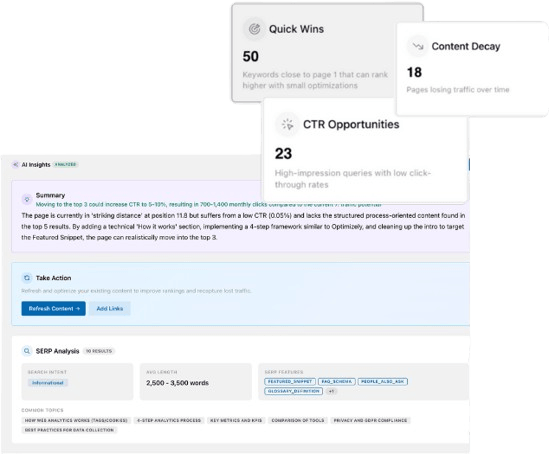
Turn existing content into growth opportunities
Identify pages losing traffic or CTR
Find quick wins to improve clicks and rankings
The pressure to act is real. Gartner predicted that traditional search engine volume would drop 25% by 2026 as people move to AI chatbots and virtual agents.
How do you optimize content for AEO?
AEO is mostly an on-page job. Small formatting changes can move the needle quickly.
Match headings to real questions
Pull questions from People Also Ask, autocomplete, and your support inbox. Turn them into H2s and H3s word for word where it reads naturally.
Answer in the first 40 to 60 words
Put the direct answer right under the heading. Then expand with detail, examples, and caveats.
Use the format the query expects
- “What is” queries want a one- or two-sentence definition.
- “How to” queries want numbered steps.
- “Best” and “vs” queries want tables and lists.
Add structured data where it fits
FAQPage, HowTo, and Article schema help machines read your page. They won’t force a snippet, but they remove ambiguity. Keep your technical SEO basics clean too, so crawlers can reach the page at all.
Keep each passage self-contained
AI systems often lift a paragraph out of context. Avoid “as mentioned above” and name the subject in every key answer.
Write better blogs in less time, without sacrificing quality.
Let AI handle structure, clarity, and flow while you stay in control of the message.
Try AI blog writing →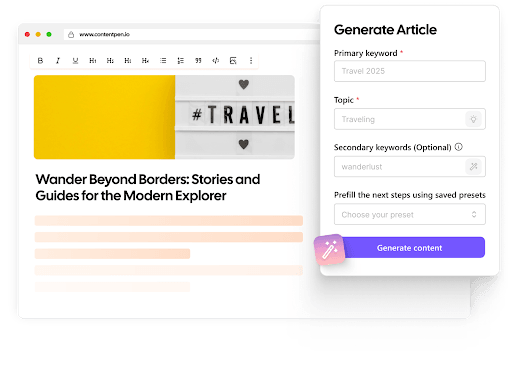
How do you optimize content for GEO?
GEO starts with everything above. Then it asks a bigger question: what does the rest of the web say about you?
Publish facts worth citing
Original surveys, benchmarks, and case study numbers give models a reason to quote you. The GEO paper found that adding statistics, quotations, and cited sources were among the strongest levers.
Build your brand footprint off-site
Models learn from reviews, forums, listicles and news coverage. Earn mentions on G2, Capterra, industry roundups and relevant communities. A smart Reddit SEO plan can help here.
Be clear about your positioning
Say plainly who you serve, what you do, and how you differ. Vague copy gives a model nothing to repeat.
Earn citations from trusted sources
Mentions on high-authority sites act like votes for your expertise. That’s the core idea behind citation SEO.
Connect your content with internal links
Strong internal linking helps crawlers and models see your topical depth. A cluster of linked pages beats one lonely article.
How do you measure AEO and GEO results?
Rankings alone won’t tell you much anymore. You need a mix of classic and AI-specific metrics.
| Metric | Tracks | Best for |
|---|---|---|
| Featured snippet wins | Pages owning position zero | AEO |
| AI Overview inclusion | Pages cited in Google’s AI answers | AEO |
| Share of voice | Your mentions vs competitors across prompts | GEO |
| Citation rate | How often your URLs are linked as sources | GEO |
| Sentiment | Whether AI describes you positively | GEO |
| AI referral traffic | Visits from ChatGPT, Perplexity and others | Both |
| Branded search growth | People searching your name after seeing it in AI | Both |
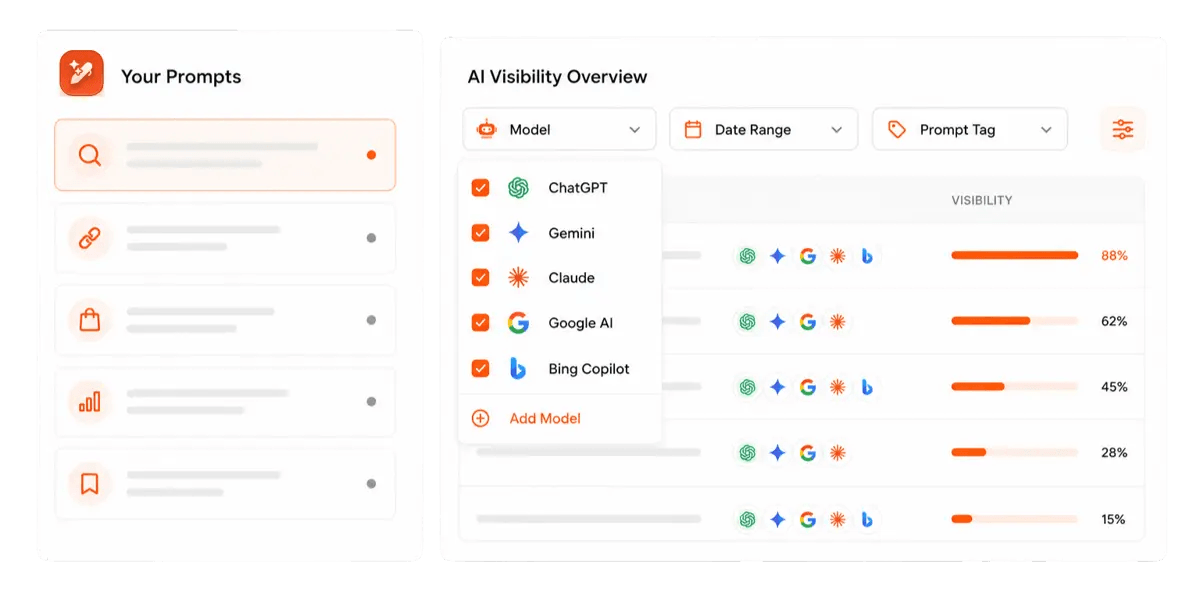
Start with a baseline. An AI visibility audit shows where you appear today and which competitors get cited instead.
Then track monthly. AI answers shift often, so one snapshot can mislead you.
Find your brand in AI search
Track AI citations, share of voice, and brand sentiment
Find the top sources driving citations
What are the most common AEO and GEO mistakes?
We see the same slip-ups again and again. Avoid these, and you’re ahead of most competitors.
- Building separate teams for each acronym: The work overlaps heavily. Split by task, not by label.
- Writing “AI-only” content: Thin, robotic pages don’t earn citations from AI or rankings from Google.
- Ignoring Google’s AI features: Many teams chase ChatGPT and forget how AI Overviews already shape clicks.
- Relying on llms.txt or special markup alone: Google says its Search doesn’t use llms.txt files at all.
- Measuring only traffic: Many AI answers are zero-click. Visibility and mentions matter just as much.
- Letting facts go stale: Old pricing or outdated stats get your page skipped or, worse, quoted wrongly.
How can Contentpen help you win at AEO and GEO?
Running both playbooks by hand means juggling five or six tools. Contentpen puts research, writing, optimization, and AI tracking in one place.
Here’s how it maps to the work:
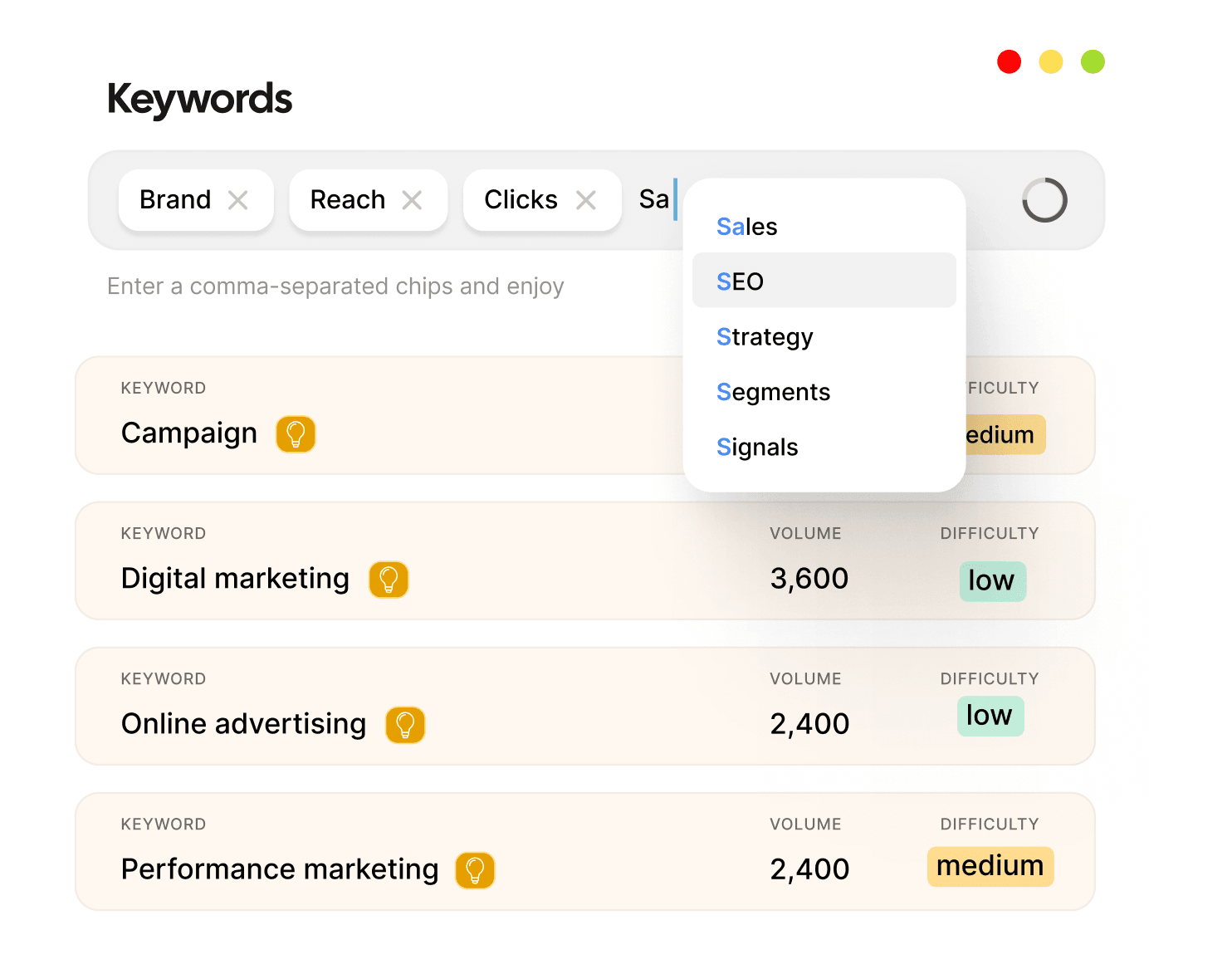
- Find the questions people ask: Keyword research and topic clusters surface the queries worth answering.
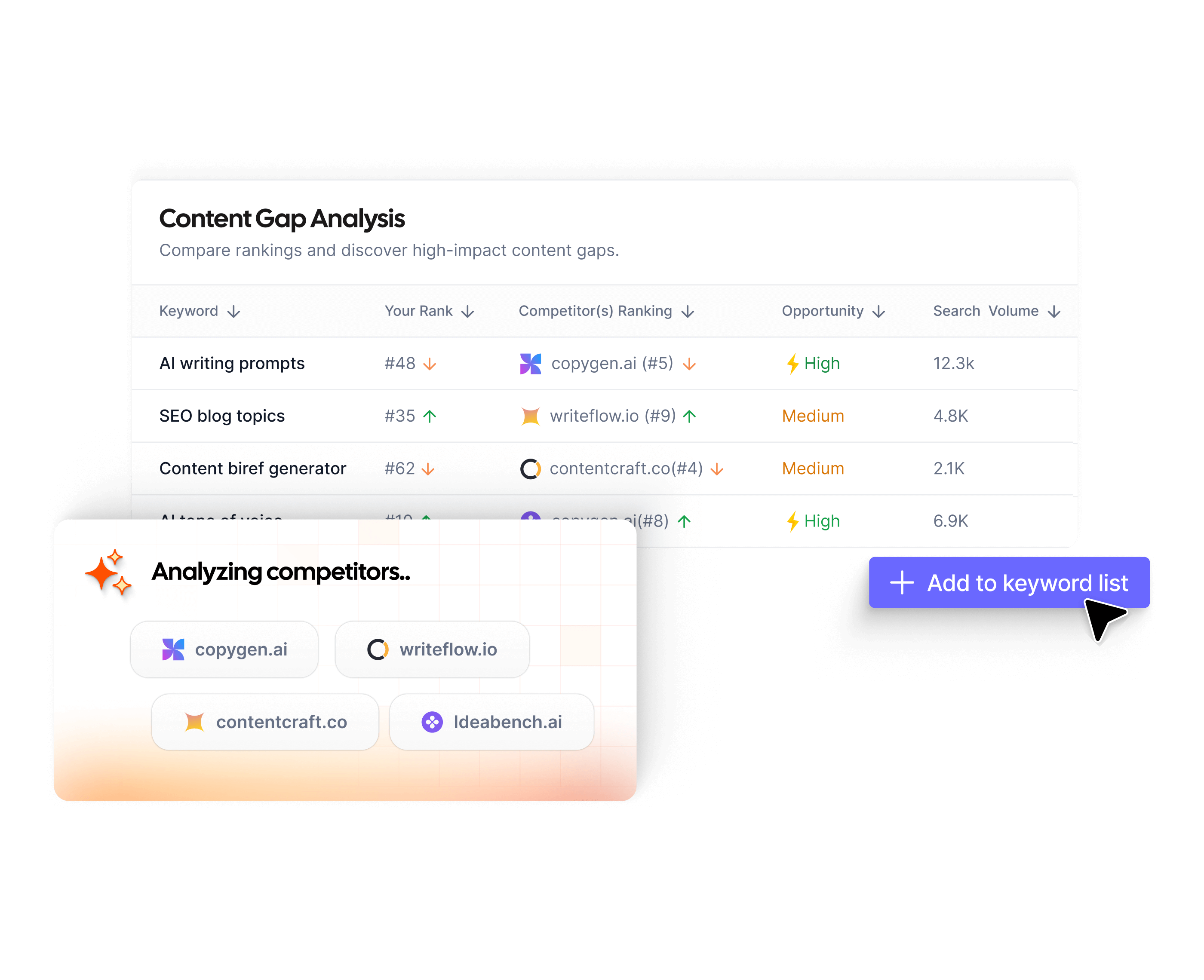
- See what ranking pages cover: SERP and content gap analysis show the angles competitors miss.
- Write answer-first content: The AI writer builds structured articles with key takeaways, FAQs, and question-based headings.
- Score as you write: Live SEO and GEO scoring flags gaps, and “Fix with AI” resolves SEO and GEO issues together.
- Track AI mentions: The AI visibility tool monitors ChatGPT, Google AI, Perplexity, Gemini, Copilot, Grok and Claude, with share of voice and source gaps.
- Publish in one click: Push to WordPress, Shopify, Wix and other CMSs, or let Autopilot handle the schedule.
Agencies can also export visibility reports as PDFs or share read-only links with clients.
Ready to stop guessing? Try Contentpen, the SEO AEO tool built for both search and AI answers.
One content system, two kinds of answers
AEO and GEO aren’t competing strategies. AEO makes your page the answer. GEO makes your brand part of the conversation.
Both stand on solid SEO. Both reward clear structure, real expertise, and fresh facts.
Start with answer-first pages, then widen your footprint across the web. Track AI visibility alongside rankings, and you’ll know exactly which half needs more work.
Frequently asked questions
No. Many AI engines run a live web search before they answer. Pages that rank and get crawled well are far more likely to be pulled in as sources.
Not anymore. Voice was its starting point, but AEO now covers featured snippets, People Also Ask, AI Overviews, and chat-style answers on Google.
Indirectly. Organization schema with sameAs links helps confirm who you are across profiles. It won’t earn mentions on its own, though.
AEO changes can show up within weeks once Google recrawls the page. GEO usually takes a few months, since it depends on off-site mentions building up.
Start where your buyers already are. Ask a few customers which AI tools they use, then check how each engine answers your top prompts today.
Yes. Rewrite your top pages answer-first, claim your review profiles, and answer real questions in relevant communities. None of that needs a big spend.
They do. AI engines answer in many languages and often cite local sources. Localized pages with native phrasing give you a better shot in each market.

Eeman Bokhari
Eeman Bokhari has over 9 years of experience in creating high-quality written content and more than 6 years of expertise in SEO and content marketing. She specializes in building search-first content strategies, aligning content with user intent, and driving sustainable organic growth for SaaS and B2B brands. Eeman’s work focuses on combining SEO insights, content systems, and performance data to create content that ranks, engages, and converts.
View all posts by this author