 18 minutes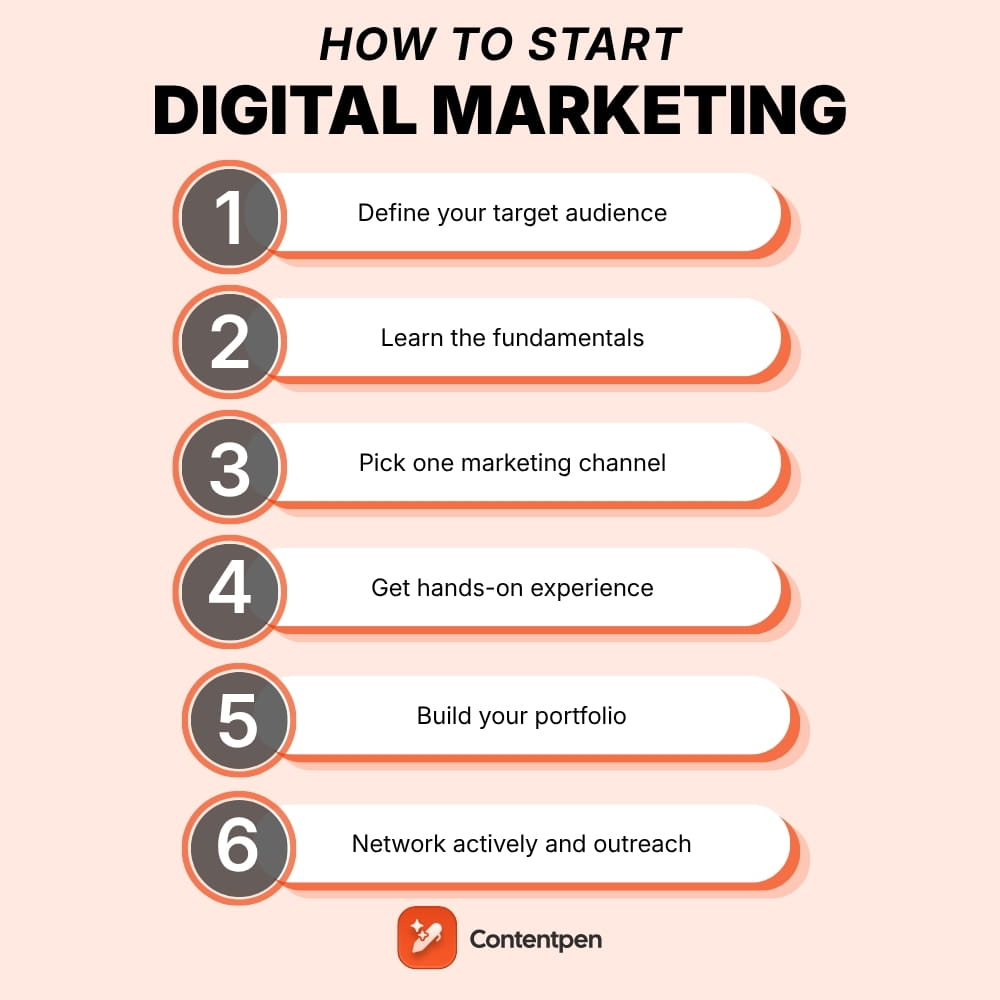
If you are wondering how to start digital marketing from scratch in 2026, you are not alone. You have probably searched to get going in this profession and felt confused with conflicting advice from many online gurus.
That noise creates confusion, wasted time, and sometimes lost money on courses or tools that do not match your goals. That frustration is real.
In today’s post, we aim to resolve all these problems by providing you with simple definitions and frameworks that you can follow today to get started with digital marketing.
Along the way, we’ll also see how AI fits in modern marketing workflows, how long learning takes, and quick answers to common beginner questions.
So, let’s get started.
Table of contents
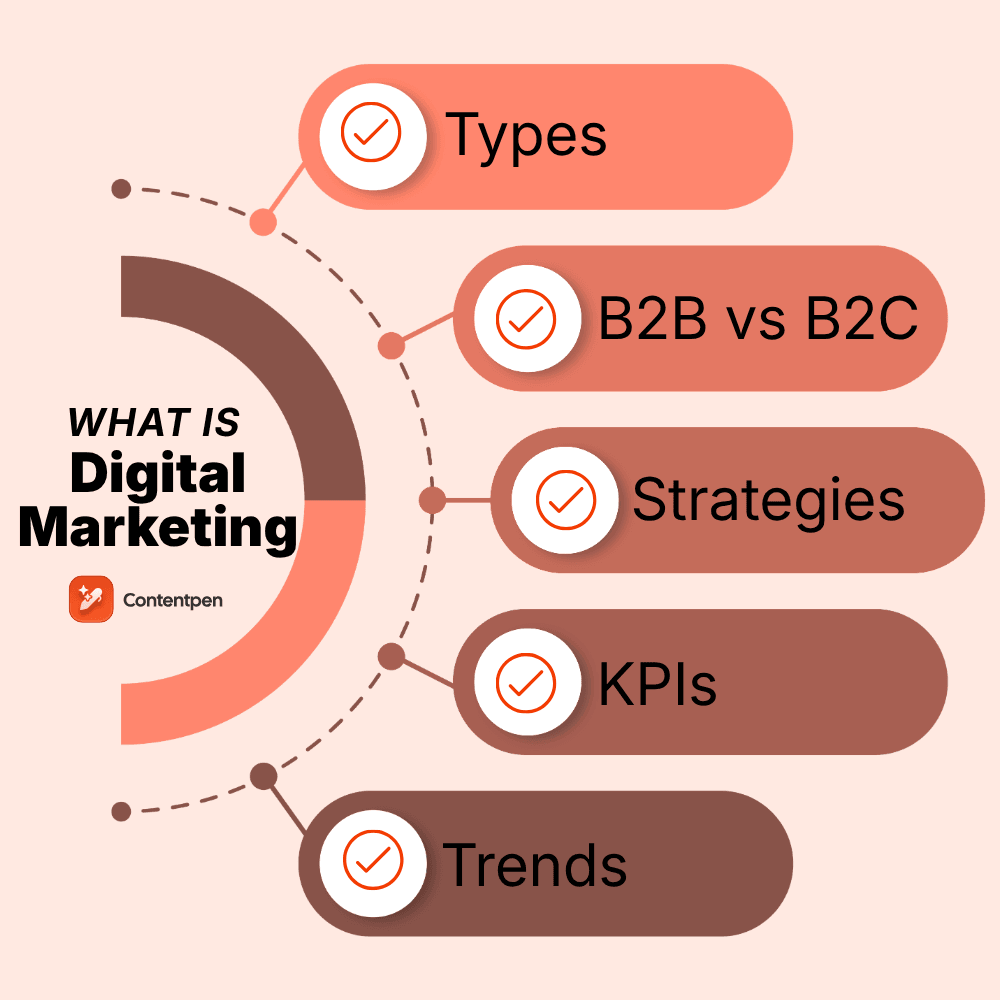
- What is digital marketing?
- The 7 types of digital marketing you need to know about in 2026
- How to start digital marketing: A step-by-step roadmap for beginners
- What does a strong digital marketing strategy actually look like?
- Common digital marketing mistakes beginners make
- How much can you earn in digital marketing?
- The bottom line: Your digital marketing path starts with one step
- Frequently asked questions
What is digital marketing?
Digital marketing is simply using the internet to promote products, services, or ideas to a target audience. That’s it.
It includes monitoring and optimizing for Google search results, Instagram ads, LinkedIn posts, YouTube videos, email newsletters, and landing pages.
Compared with billboards, print ads, or direct mail, digital marketing gives you far more control over your audiences and invested resources. You can see exactly who clicked, which campaign brought sales, and what it cost.
The 7 types of digital marketing you need to know about in 2026
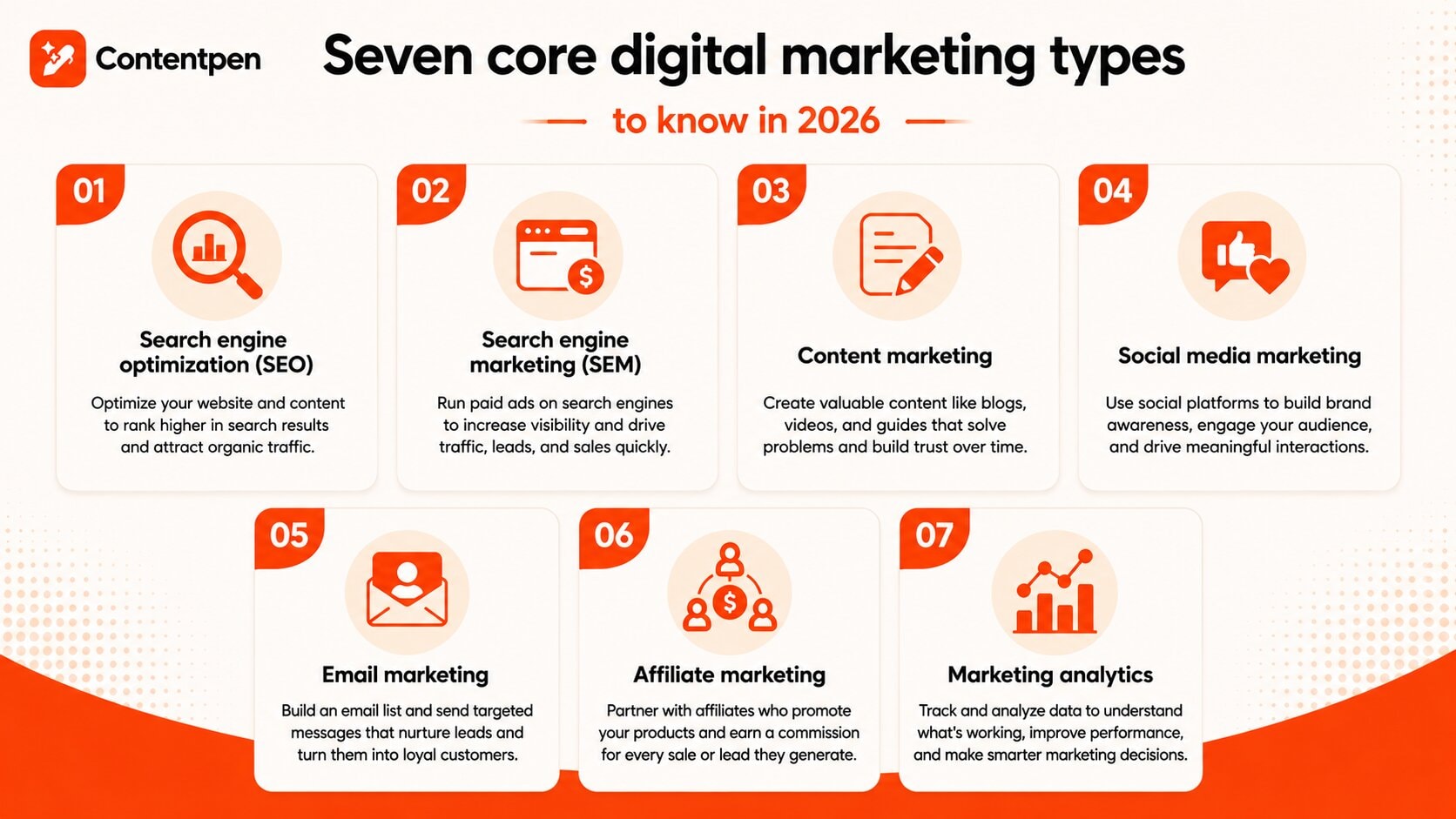
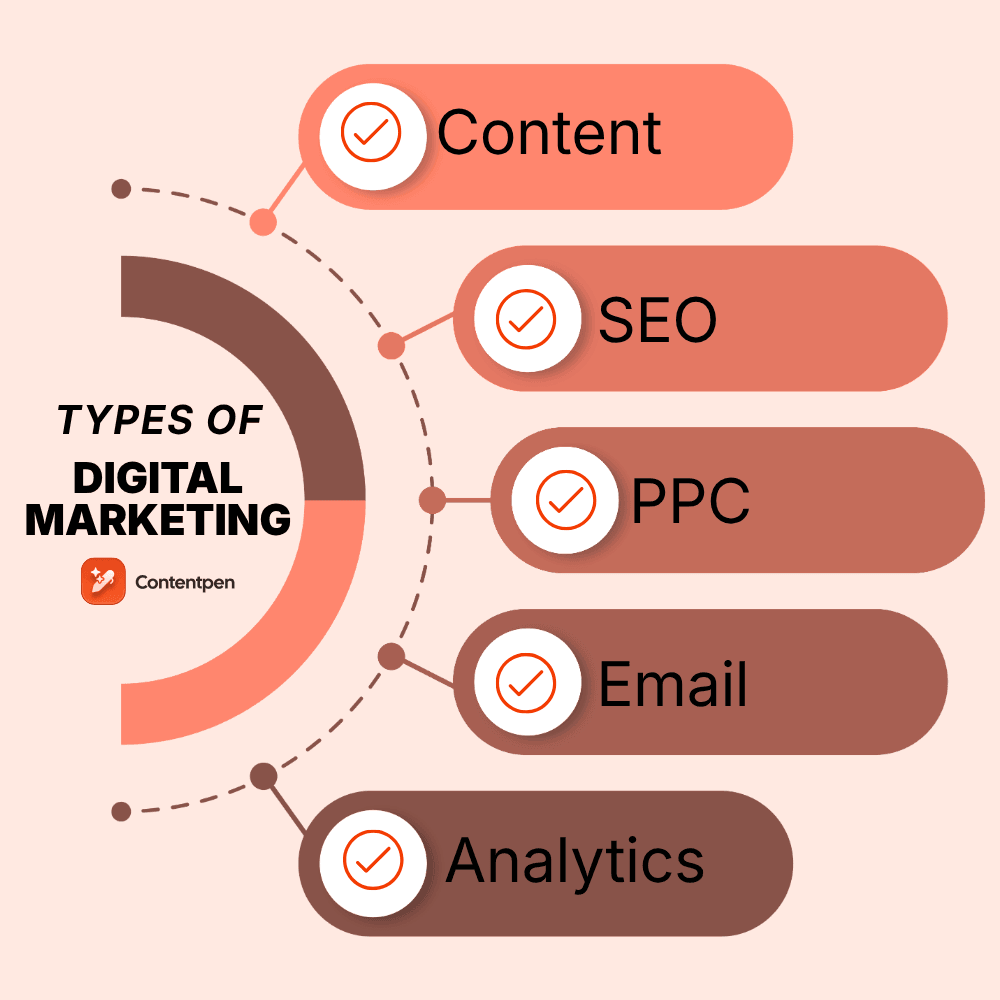
Mainly, there are seven core types of digital marketing that you need to get a grip on in 2026.
#1: Search engine optimization (SEO)
SEO means adjusting your site and content so Google, Bing, and other search engines show your pages for relevant searches. This means optimizing content for organic keywords, structuring blogs properly, and investing in technical SEO for a solid foundation for ranking.
Search engine optimization also includes taking care of your off-page signals, investing in link-building, and monitoring your platform with analytics tools for proper content updates.
If that sounds like a lot, don’t worry!
You can use Contentpen for optimizing content for SEO. It is made specifically for content marketers and freelancers who want the maximum returns from their SEO work with the least effort.
Our guided content workflows make sure you aren’t stuck at any step of the way. And the latest GEO scoring and AI visibility tracking features make your content ready to perform in 2026. Don’t know about GEO? Let’s discuss it in more detail.
Generative engine optimization (GEO)
GEO, AEO, and AI search optimization are all similar terms that you need to know about in 2026. They mean creating your content in a way that it’s easier for the AI answer engines to show your content to the users.
Since GEO builds on the basics of SEO, you need to first start with the fundamentals of how to do keyword research and maintain the on-page and technical aspects of your site. Then, invest in GEO once you’ve nailed down your SEO basics.
That said, with Contentpen, you can get to work right away without worrying about either the SEO or GEO aspect of your content. The tool’s outputs and automated interlinking ensure you get cited in AI engines and receive the best SERP results at the same time.
Get your content cited by AI, not just ranked on Google!
See your real-time GEO score as you write to make every piece citation-ready.
Try GEO Scoring →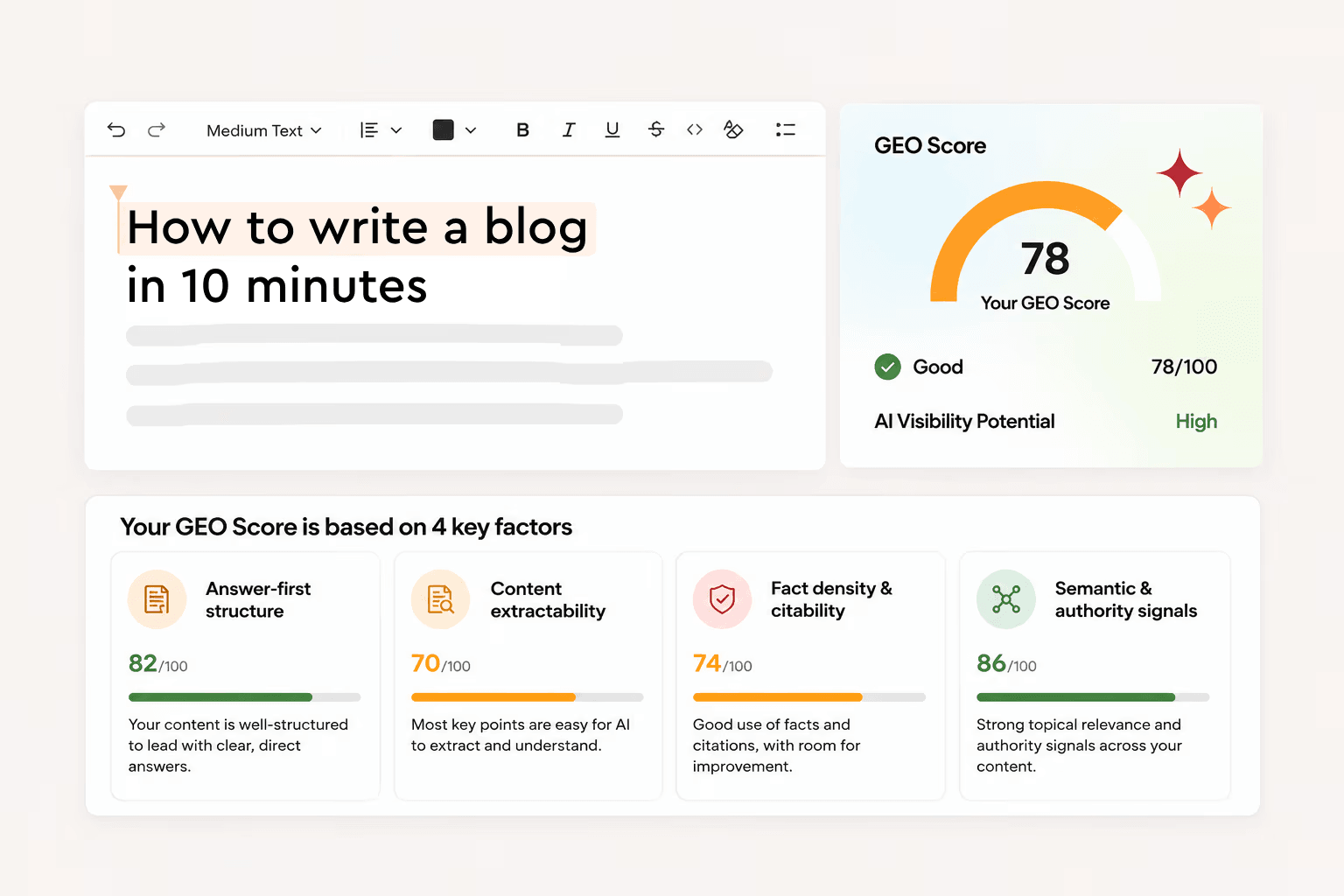
#2: Search engine marketing (SEM) and pay‑per‑click (PPC)
SEM, or search engine marketing, is all about paying for digital ads and appearing on users’ screens.
You can do so by bidding on keywords inside Google Ads, Microsoft Advertising, or Meta Ads if your primary goal is visibility on social media.
SEM suits people who enjoy numbers, testing, and fast feedback. You can turn campaigns on and off, test messages, and see which keywords actually bring organic traffic, leads, or sales.
#3: Content marketing
Content marketing means creating useful articles, guides, videos, podcasts, brochures, or any other types of online content that solve real problems for your audience. It feeds every other channel because search, social, and email all run on content.
Writers and agencies serving B2B or B2C brands often invest heavily in content marketing since it gives them an organic traffic engine that keeps providing returns over time.
#4: Social media marketing
Social media marketing uses platforms like Instagram, TikTok, Facebook, LinkedIn, and Pinterest to reach and introduce your brand to the audience.
Visual thinkers and community builders often prefer this path as it allows them to appear where their audiences normally are with eye-catching, engaging content.
As a social media marketer, post carousels, polls, and funny videos to appeal directly to the target audience and make them interested in your offerings through humor, intrigue, and curiosity.
#5: Email marketing
Email marketing builds a list of subscribers and sends them helpful, targeted messages. It is one of the strongest sales channels as it provides the most ROI of all. However, that statement is not always true.
If your other channels are not as proficient as email, then there is no incentive for the user to take your CTA to heart. They may click the link in your email just to find an unresponsive site or a landing page with copy that is unclear about what happens next.
So, even though copywriters and strategists who like building long‑term customer relationships enjoy email marketing, you need to know at which stage of your brand-building it will work and when it won’t.
#6: Affiliate marketing
Affiliate marketing pays partners a commission when they send you a sale or qualified lead through a tracking link.
Brands use networks like ShareASale, CJ Affiliate, and Impact to manage partners and payouts, and link management platforms like Replug.io for creating marketing links.
This suits people who already have an audience or those who want to monetize content without handling their own product stock or support.
#7: Marketing analytics
SEO analytics or marketing analytics ties everything together. It’s like reading a cheat sheet of what each channel did for you and where you need to focus your efforts next for the maximum reward.
If you take a look at the screenshot below that we took from Usermaven, you’ll see our overall site performance in the last 6 months.
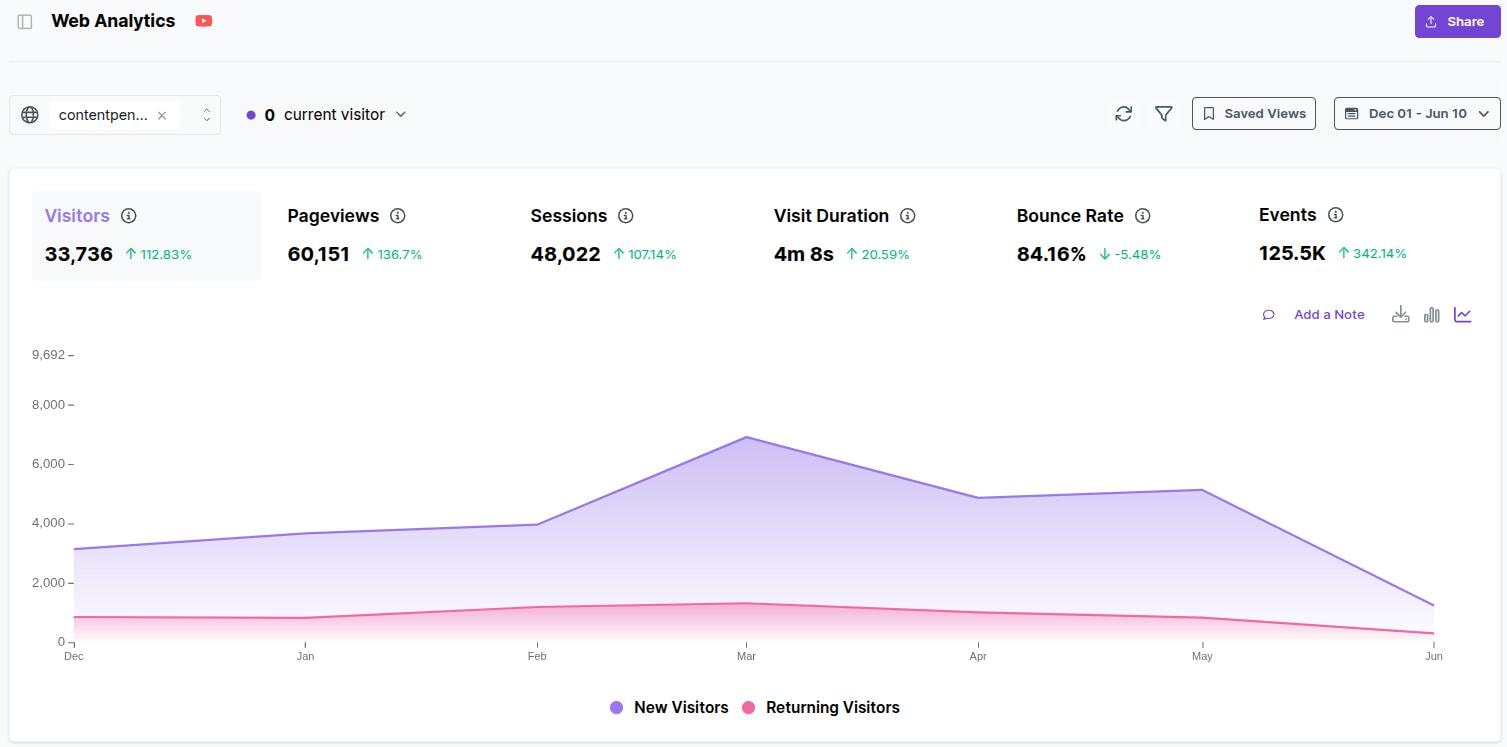
Sure, the numbers have increased, but these metrics mean nothing if there’s no attribution data to account for.
In simpler terms, attribution lets you know where your traffic came from and how they reacted when they did arrive at your platform. Did they sign up for a demo or purchase a product? If not, then what touchpoints or customer interactions do you need to improve further?
Marketing analytics is the playground for performance marketers who like to reduce bounce rates, improve conversions, and make digital products a success for businesses.
How to start digital marketing: A step-by-step roadmap for beginners
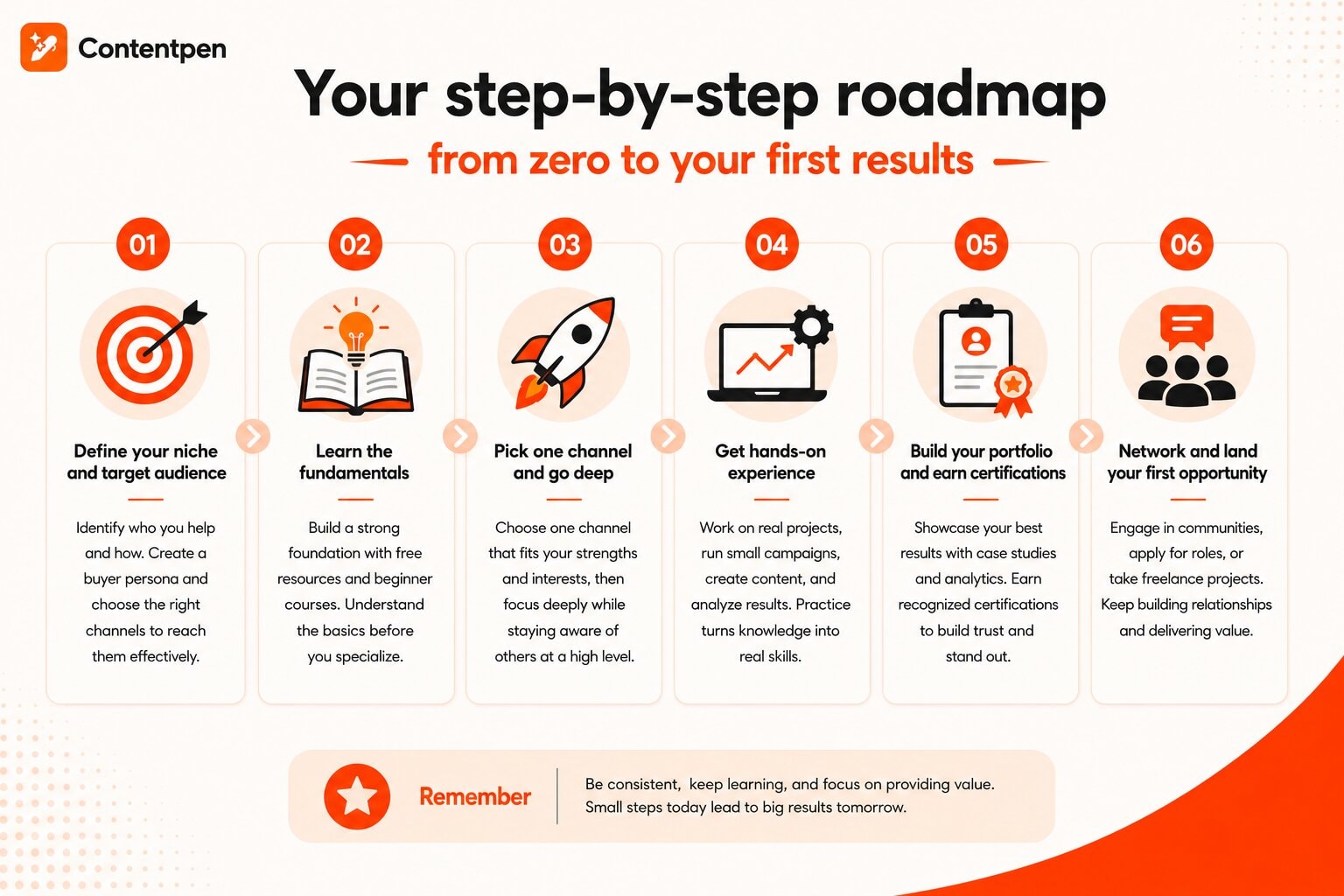
This roadmap for how to start digital marketing gives you clear, realistic moves from zero to your first results.
Think of it as a flexible path. You will define who you help, learn the basics, choose a main channel, practice on real projects, show your work, and then use that proof to land jobs or clients.
Step 1: Define your niche and target audience
Defining your niche and target audience is the first real step in starting digital marketing with focus. If you try to reach “everyone”, your message feels vague and forgettable.
First, try to think about who you will serve and how. For example, if you are a DTC skincare brand, you might want to lean more toward TikTok and social media marketing since this is where most users will find you.
But if you are a B2B SaaS company, you cannot just create eye-candy and “GRWM” content borrowing from Instagram or TikTok influencers.
In that case, you need a solid pitch for the businesses to be interested in your services or products, or for investors who’ll think their money is worth investing in you. Then, you can target them through LinkedIn, email, or SEO, all of which are quite professional methods of outreach.
When you are done creating a buyer persona in your head, it is time to learn the fundamentals of marketing and jump right in and create your first campaign.
Step 2: Learn the fundamentals before you specialize
At this stage, your goal should be to understand digital marketing basics so that blog posts, job ads, and course outlines make sense.
Work through free programs from Google Digital Garage, HubSpot Academy, Meta Blueprint, or Google Skillshop.
Then, you can explore beginner digital marketing courses on Coursera or Udemy. Read blogs from Moz, Neil Patel, and Contentpen a few times a week to stay close to recent innovative marketing examples and digital marketing trends.
After you are done going through all the material you could find online, take a step back and ask yourself the following questions:
- What is digital marketing?
- Why is it done?
- Who is it done for?
- What are the current ways to market your content online?
- Which ones are suitable for beginners?
If you get stuck on any of those questions, we’d recommend going back.
If reading material or resources is not your thing and you’d like a more visual way to understand things, then we highly recommend watching Adam Erhart’s videos on YouTube.
He explains digital marketing concepts to beginners in a very engaging manner that instantly catches your attention.
By the time you feel ready, start with step 3 of our ‘how to start digital marketing’ guide.
Step 3: Pick one channel and go deep
After a few weeks of learning, pick one primary channel and commit to it. For many beginners, focusing on one channel is the best way to start digital marketing without burnout.
Choose:
- SEO plus content marketing if you enjoy writing and research.
- Paid ads and PPC marketing if you like numbers and testing.
- Social media if you are drawn to visuals and short‑form content.
- Email if you like strategy and messaging.
We would say the toughest channel to master as a digital marketing beginner is email. You don’t have to write much, but whatever you write must land straight into the customer’s mind, which is tough, to say the least.
But hey, this is just a personal opinion. Every brain is wired differently, and don’t let us be the ones to put limitations on your learning.
Keep experimenting and growing because this is the step where you can fall and bounce back as many times as you like before mastering one key skill in digital marketing.
This follows the T‑shaped model: broad awareness of all skills, real depth in one.
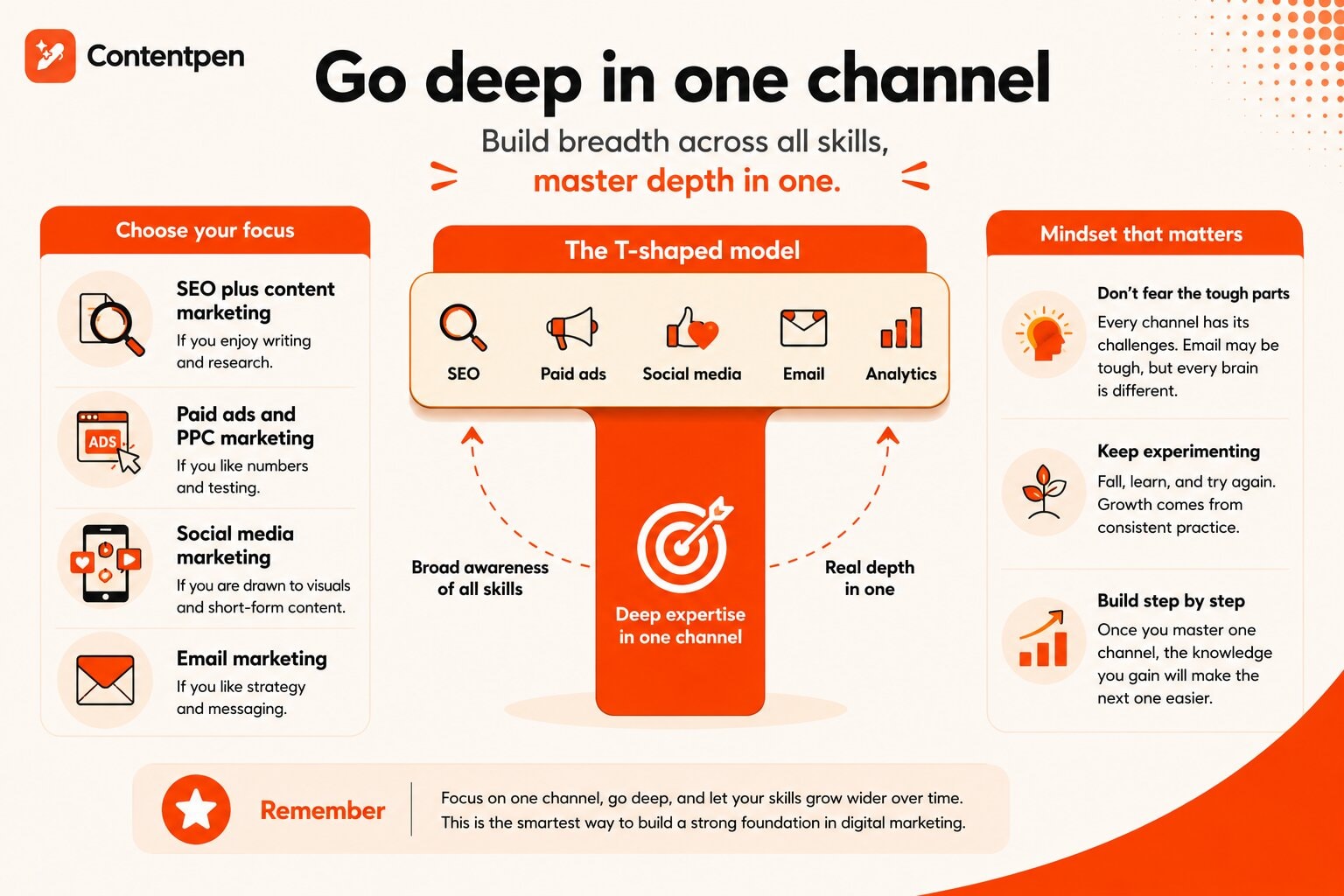
By the time you get a hold of a channel, you’ll be ready with the knowledge of another, and you could bridge all the skills you learned earlier to the next chapter.
Step 4: Get hands-on experience as fast as possible
Hands‑on projects turn how to start digital marketing from theory into skills. Watching tutorials helps, but you only build instincts by running real campaigns; even tiny ones count.
You can:
- Start a simple blog or newsletter in a niche you like, then apply keyword research and basic on‑page SEO. See if your efforts are working in the right direction. If not, you could consult an expert or use a certified SEO platform and AI writer like Contentpen for help.
- Create a social account for a theme and test hooks, formats, and posting rhythms. Again, monitoring and checking the basic numbers from Meta dashboards is necessary to know what’s working and what’s not.
- Run a small $30-50 campaign in Google Ads or Meta Ads Manager so you can see impressions, clicks, and conversions in your own dashboard.
- Offer free or low‑cost help to a local business or nonprofit in exchange for permission to share results.
When you create blog content for these projects, Contentpen can guide you through SEO‑friendly outlines, automated links, and formatting so your experiments also build long-term assets.
Write content that’s built to rank, not just read
Create search-optimized blogs aligned with SEO and GEO signals, so your content performs well across search and AI-driven discovery.
Try SEO Blogging FREE →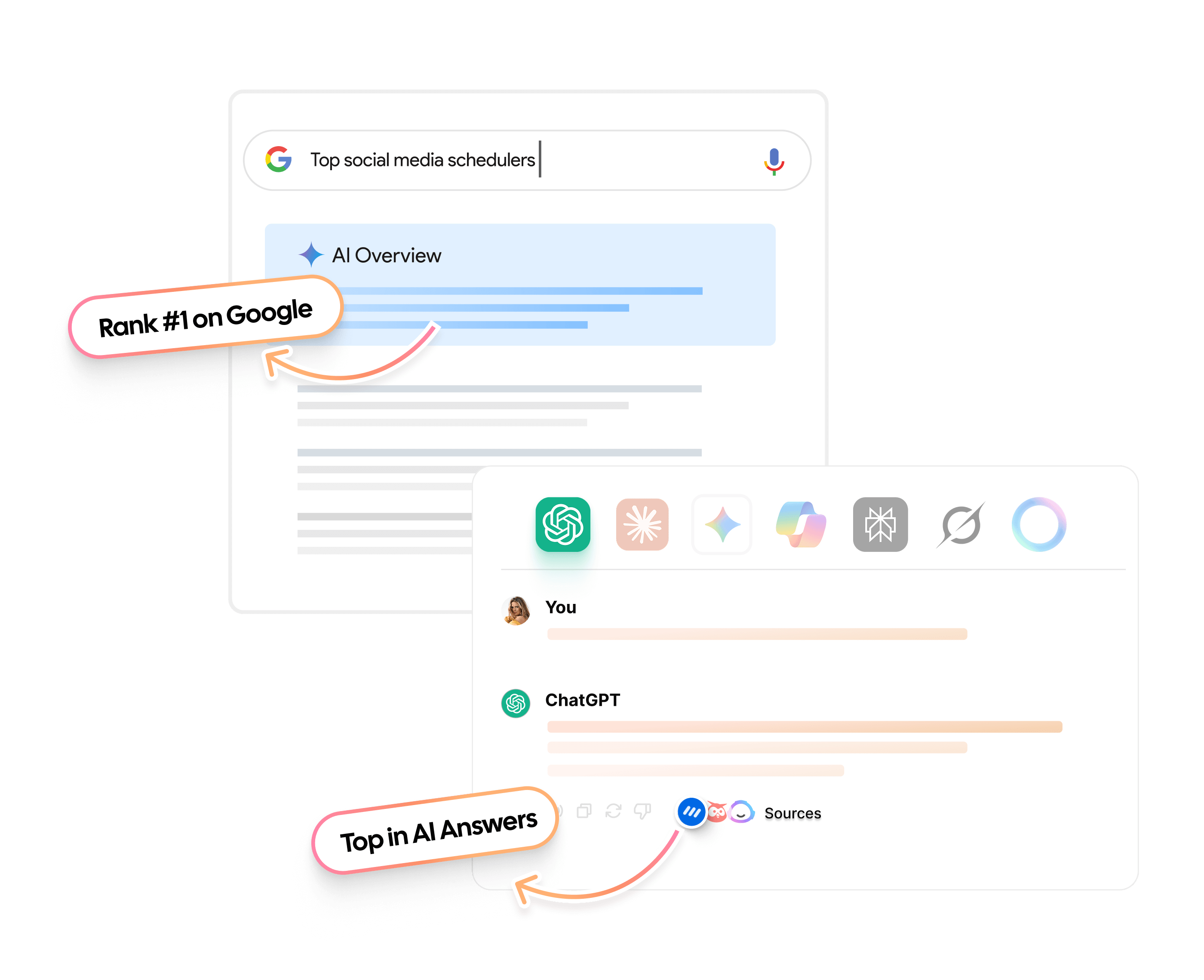
Step 5: Build a portfolio and earn certifications
Proof of results is what turns how to start digital marketing into getting paid for it. Employers and clients want to see what you have done, not only what you studied.
Collect screenshots, analytics views, and links that show before‑and‑after changes in traffic, leads, or sales.
Turn these results into 3 to 5 short case studies on a simple personal site or PDF. Alongside that, add a few respected certifications so people know you understand the digital marketing tools, and not just mention them randomly in a conversation.
Below are some certificates that you can get for free online:
| Certification | Provider | What it shows |
| Google Ads Certification | Google Skillshop | You can set up and manage search and display campaigns. |
| Google Analytics Certification | Google Skillshop | You can read GA4 reports and track key metrics. |
| Content Marketing Certification | HubSpot Academy | You understand content strategy and blogging. |
| Meta Blueprint Certification | Meta | You can run campaigns on Facebook and Instagram. |
| SEO Toolkit Certification | Semrush Academy | You can plan and execute an SEO-driven content strategy. |
Once you are done getting a certificate, make sure to display it on your LinkedIn to help you differentiate yourself as a digital marketer.
Step 6: Network actively and apply for roles or clients
Having some hands-on experience and certifications is the best way to get started with digital marketing. Once you have that, try networking with like-minded individuals online and engaging in community discussions to enhance your online footprint.
A good way to do so could be to join online communities such as r/digital_marketing on Reddit, Discord servers, or Facebook groups for peer learning.

Then, you can also apply for part-time or full-time roles like ‘Digital Marketing Assistant’, ‘Content Marketing Associate’, or ‘Social Media Intern’ in companies.
Rezi’s analysis of entry-level job postings shows that employers often prioritize practical skills, relevant certifications, and hands-on project experience, which is why building a portfolio before applying can improve your chances of getting noticed.
If you prefer an independent working style, use platforms such as Upwork and Fiverr to win early freelance projects. Start with basic SEO or social media handling tasks, then later take up large-scale content operations. One step at a time.
What does a strong digital marketing strategy actually look like?
A strong digital marketing strategy is a simple, written plan that links your audience, content, channels, and goals. It shows you not just how to start digital marketing, but how to keep your actions aligned month after month.
Most effective strategies follow a basic path often called the marketing funnel.

You start with awareness, where people first discover you through search, social, or referrals.
Then comes consideration, where they read your content, join your email list, or compare you with competitors.
Finally, conversion is where they buy or book a call and then become repeat customers or refer friends. Mostly in B2B marketing, professionals use this funnel style to plan content that supports each stage.
Here is a simple way to create a digital marketing plan that fits the digital marketing steps for beginners:
- Start with audience clarity. Write one short paragraph that describes who you help and what problem you solve.
- Choose 2 or 3 content pillars that match that audience, such as “SEO for local service businesses” or “nutrition tips for busy parents”.
- Pick one primary channel for the next 90 days, such as a blog, YouTube, or LinkedIn, and one support channel, such as an email newsletter.
- Set measurable goals, like page views, email sign‑ups, or booked calls, and review analytics every month inside tools such as Google Analytics 4 or Search Console.
How AI fits into your digital marketing strategy in 2026
AI fits into your digital marketing strategy as a speed and insight multiplier, not a replacement for your thinking. If used well, it helps with research, drafts, testing ideas, and personalizing experiences at scale.
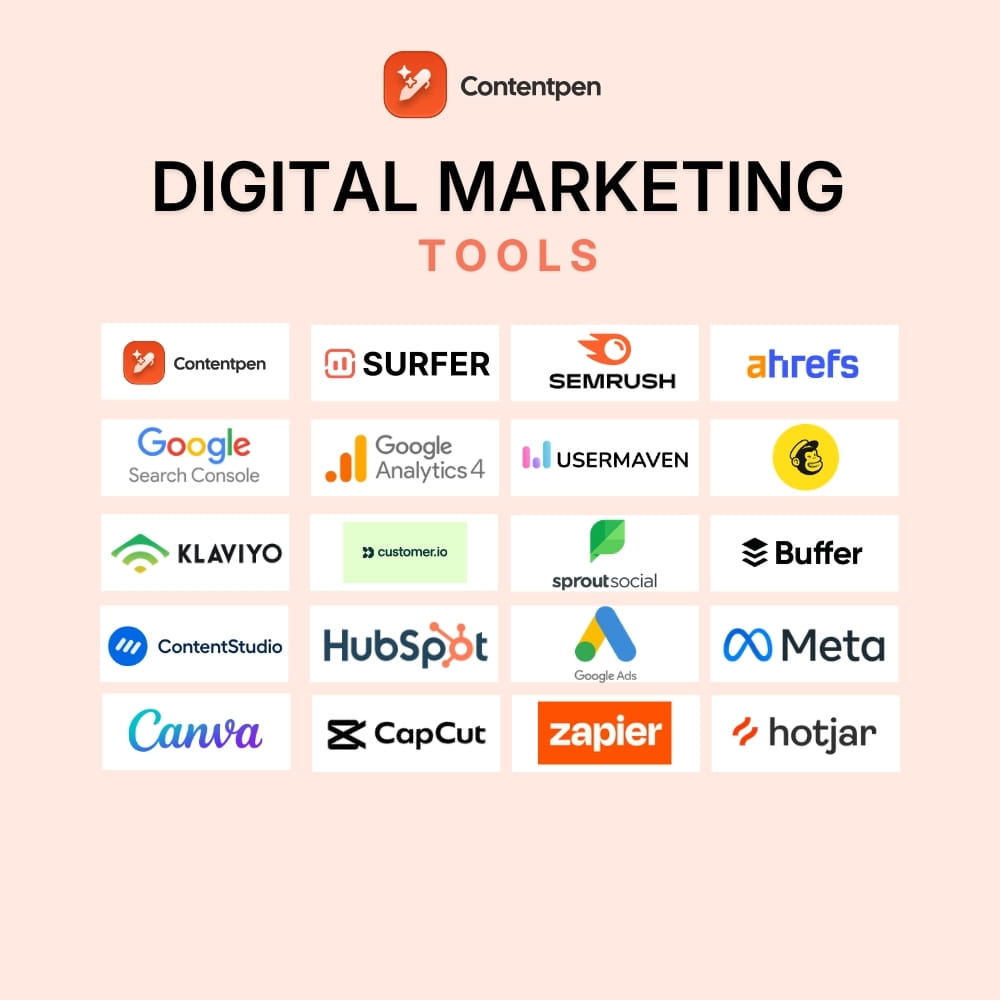
Tools like ChatGPT, Google Gemini, and Claude can help you brainstorm topics, write first drafts, generate images, and summarize analytics reports.
Email platforms such as Klaviyo and Mailchimp use AI to predict which leads are ready to buy, while AI chatbots on websites can handle common questions 24/7. This leaves a lot of room for you to invest in content marketing strategies while AI does the tedious tasks.
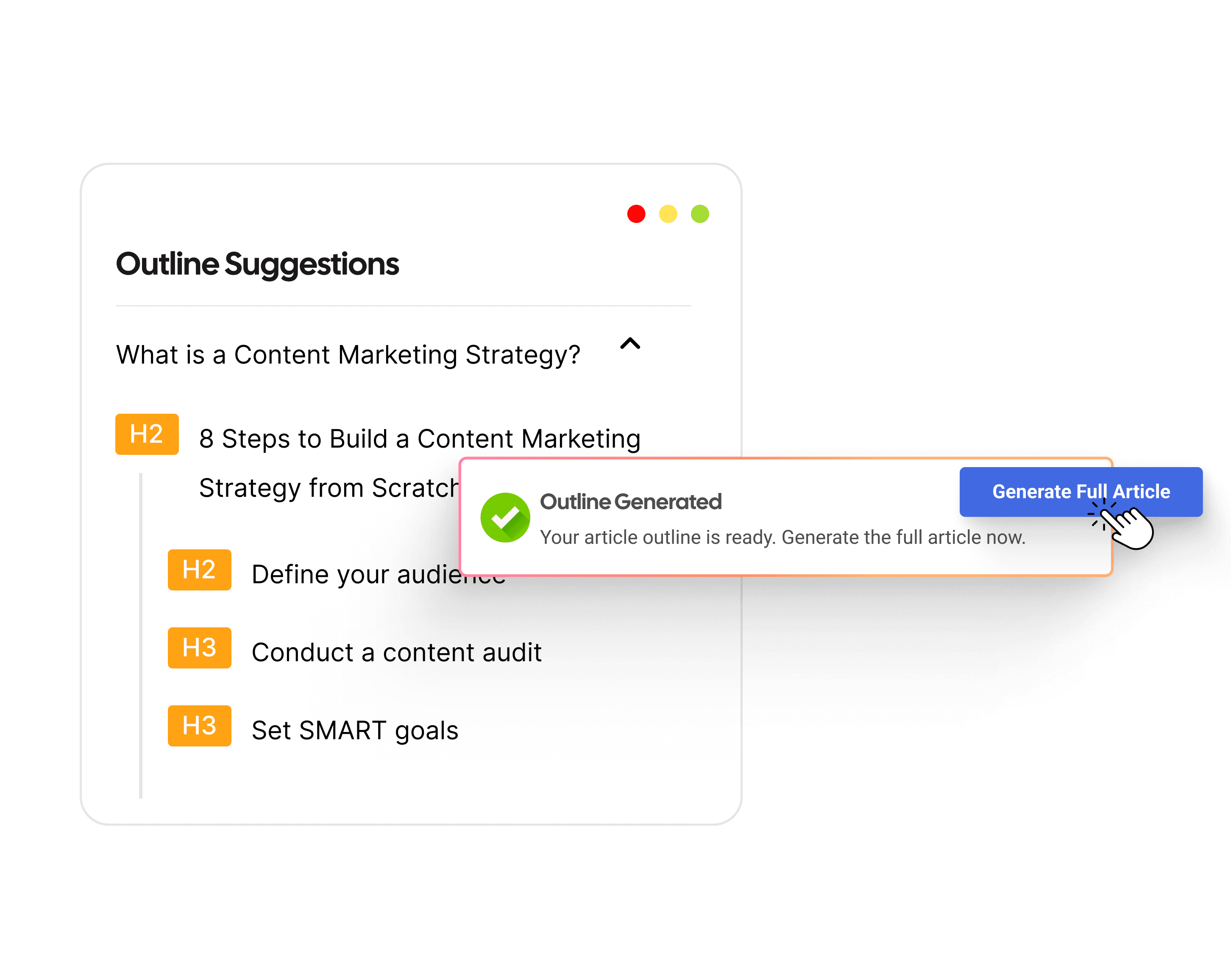
With tools like Contentpen online, you can easily let the platform write, edit, optimize, and publish blogs and articles that rank on Google and earn AI citations.
From outline to publish-ready content that fills them

Structured
Consistent
SEO-aligned
Fast
Common digital marketing mistakes beginners make
Even motivated beginners commit these common errors when getting started in digital marketing. Knowing these in advance saves you weeks of frustration and wasted resources.
#1: Trying to learn everything at once
Jumping between SEO, paid ads, social media, and email in the same week creates shallow knowledge across the board, which will do you no good for any of these channels.
Therefore, the better idea is to pick one channel from Step 3 and stay with it until you get real results. Later, you can expand to other forms of digital marketing, as we discussed earlier.
#2: Skipping analytics entirely
Most beginners focus on creating content and forget to measure it. If you are not checking Google Analytics or Search Console at least once a week, you are flying blind and repeating mistakes without knowing it.
So, it is highly important for you to keep marketing analytics at the forefront of every digital marketing strategy you run.
#3: Chasing vanity metrics
Follower counts and likes feel rewarding but rarely translate to actual revenue or results.
The better idea here is to track metrics that matter to the business goal. This may include, but is not limited to, organic traffic, email signups, conversion rate, or cost per lead.
#4: Waiting until everything is perfect
Beginners often delay publishing a blog or launching a campaign because the content feels unpolished.
But here is where most entry-level digital marketers make the mistake of not realizing that imperfect and live beats perfect and invisible every single time.
Therefore, it is important to publish, measure, and improve with time instead of waiting for the “perfect moment” to arrive.
#5: Copying competitors without understanding why
Seeing a competitor post daily on LinkedIn does not mean daily posting will work for you.
Thus, it is important to understand the goal behind the action before applying it so your work isn’t just noise. It drives you to meaningful results.
#6: Ignoring the basics of writing
Whether you end up in SEO, email, or social media, clear writing is the backbone of all of it. If you rush past this skill early on, every channel you try will underperform.
Try to get reviews from your peers on your work. Ask them if they clearly understand what you’re conveying. You can also consult any digital marketing professionals in your immediate circle for honest feedback before pursuing different channels.
How much can you earn in digital marketing?
Digital marketing is one of the few fields where your earning potential scales directly with how measurable your results are. The more you can point to traffic, leads, or revenue, the more you can charge.
Here is what the roles typically pay in the US in 2026, according to Glassdoor.
| Role | Average annual salary | Salary range |
| Digital marketing associate | $55,000 | $54K–$93K |
| Social media specialist | $65,000 | $52K–$86K |
| Email marketing specialist | $75,000 | $58K–$99K |
| SEO specialist | $85,000 | $65K–$114K |
| Digital marketing manager | $130,000 | $97K–$177K |
| SEO manager | $140,000 | $108K–$194K |
| Senior digital marketing manager | $160,000 | $128K–$217K |
Salaries vary by industry, company size, and location. Remote-first companies now pay close to the same as hub-city roles for senior positions, which has made geography less of a barrier than it used to be.
Freelancers follow a different curve entirely. Most beginners and freelance consultants track time to bill clients accurately and evaluate project profitability. Many start at $25–$50 per hour for SEO or social media work, while experienced freelancers with a strong portfolio routinely charge $75–$150 per hour.
The path matters less than the proof. Build a portfolio first, then negotiate from results when you’ve undeniable proof that you are the best person for the job.
The bottom line: Your digital marketing path starts with one step
The clearest path for how to start digital marketing is simple, even if the internet makes it look messy.
Define a specific audience, learn the fundamentals across channels, pick one main skill, practice on real projects, turn results into a portfolio, and connect with people who can hire or refer you.
But, most importantly, take your first step. You’ll never learn or grow if you don’t get started.
You do not need perfect tools or a complex funnel to begin. You only need a clear next action, such as enrolling in a free certification or outlining your first blog post.
If content and SEO feel like your thing, then try Contentpen. The tool gives you an end‑to‑end workspace to plan, write, and optimize long‑form articles that can rank and earn links, without deep technical knowledge.
Write better blogs in less time, without sacrificing quality.
Let AI handle structure, clarity, and flow while you stay in control of the message.
Try AI blog writing →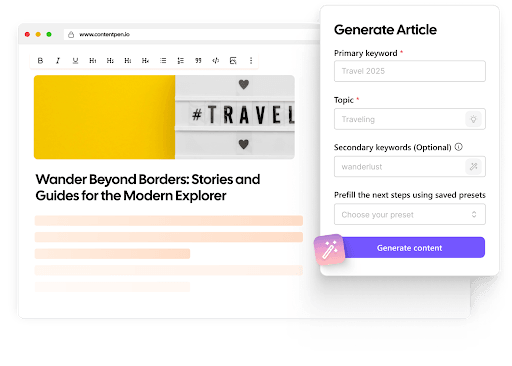
Frequently asked questions
Yes, you can start digital marketing with zero experience if you are willing to learn and practice. Begin with free courses from Google Digital Garage and HubSpot Academy, then apply what you learn on a simple blog, social page, or small ad campaign.
Yes, digital marketing is still a strong career choice in 2026 for employees, freelancers, and agency owners with salaries up to $177,000 per annum as a digital marketing manager.
The basics take a few weeks. Most people feel ready for junior roles or first freelance projects after 3 to 6 months of focused learning and hands-on practice. Real strategic judgment takes one to two years of actual experience.
Getting started can cost very little. You can rely on free tools like Google Analytics, Search Console, and entry‑level email platforms, plus low‑cost domains, hosting, and a small starter ad budget.
For many people, content marketing with basic SEO is the easiest first skill. You already know how to explain ideas; just use SEO to align those explanations with what people search.
First, build skills in one or two services, such as SEO or paid social, and collect small case studies. Then choose a niche, create a simple website with clear service packages, and use LinkedIn outreach, referrals, and a few freelance platforms to land your first clients.

Jawwad
Jawwad Ul Gohar is an SEO and GEO-focused content writer with 3+ years of experience helping SaaS brands grow through search-driven content. He has increased organic traffic for several products and platforms in the tech and AI niche. As an author at Contentpen.ai, he provides valuable insights on topics like SEO technicalities, content frameworks, integrations, and performance-driven blog strategies. Jawwad blends storytelling with data-driven content that ranks, converts, and delivers measurable growth.
View all posts by this author