 21 minutes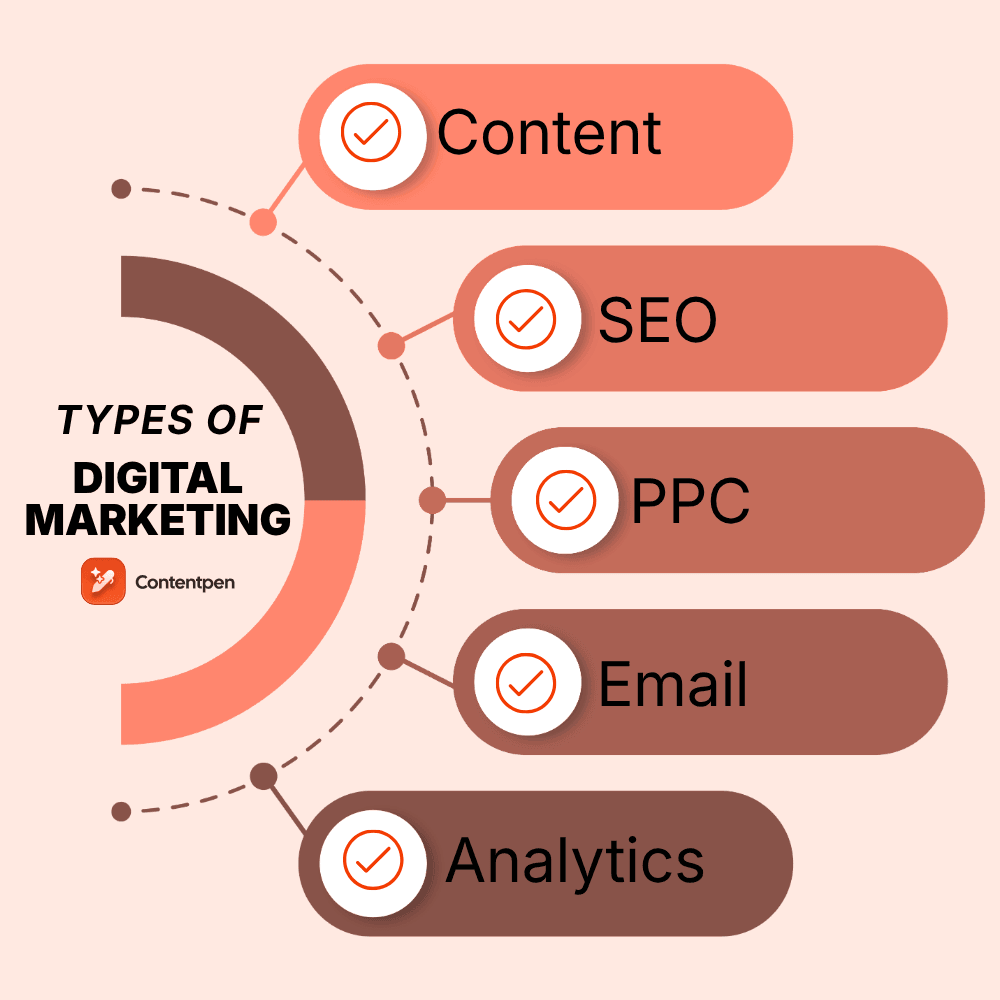
The main types of digital marketing are content marketing, SEO, PPC, social media, email, affiliate, influencer, video, mobile, and analytics.
These 10 distinct types of digital marketing channels reach audiences differently and serve various business goals. Knowing what each one does best lets you align your goals instead of guessing where to spend.
This guide walks through 10 types of digital marketing that still drive results in 2026, from content and SEO to mobile, video, and analytics. You will see how each channel works, when to use it, and how it pairs with the others.
By the end, you can sketch a simple mix that fits your budget and stage instead of copying random playbooks.
So let us get into the practical side of your digital marketing choices.
Table of contents
- Why is digital marketing important in 2026?
- The POEM framework that defines digital marketing categories
- 1. Content marketing
- 2. Search engine optimization (SEO)
- 3. Pay-per-click advertising (PPC)
- 4. Social media marketing
- 5. Email marketing
- 6. Affiliate marketing
- 7. Influencer marketing
- 8. Video marketing
- 9. Mobile marketing
- 10. Marketing analytics
- Which type of digital marketing is best for your business?
- The bottom line on choosing your type of digital marketing mix
- Frequently asked questions
Why is digital marketing important in 2026?
Digital marketing is the practice of promoting products and services through digital channels, including search engines, social media, email, and websites, to reach and convert target audiences online.
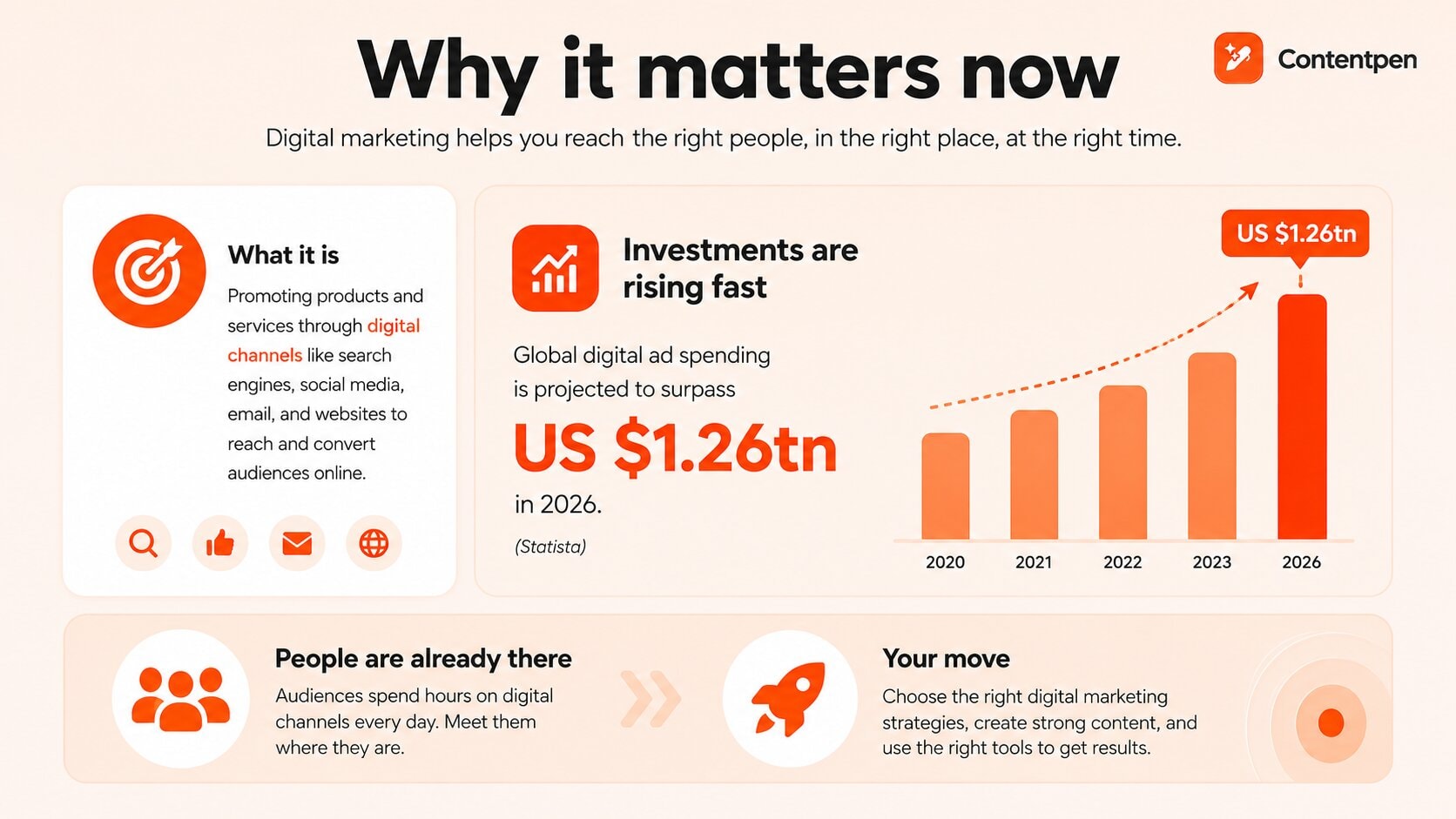
In 2026, digital marketing is no longer optional. Global digital ad spending is projected to surpass US $1.26tn in 2026. There is a consistent rise in this number from 2020, which shows that brands are actively targeting and spending resources on digital channels.
The reason? Because the audiences already spend hours on digital channels every day. Therefore, it is easier for businesses to meet their customers where they already are.
Your job is just to pick the right forms of digital marketing that fit your message, product, and time frame, then connect them with strong content and digital marketing tools.
If you want to learn about types of digital marketing with examples and current trends, check out our posts on digital marketing trends 2026 and marketing fundamentals 101.
The POEM framework that defines digital marketing categories
Most digital marketing activity falls into one of three categories: paid, owned, and earned, often called the POEM framework.
Owned media is everything your brand controls directly, including your
- Website
- Blog
- Email list
- Social profiles
Earned media is attention you did not pay for, such as organic search rankings, backlinks, press mentions, and user-generated content.
Paid media is any placement you buy, including PPC ads, sponsored posts, display banners, and paid influencer partnerships.
Each category plays a different role.
Owned channels are your long-term foundation. Earned channels build credibility and compound over time. Paid channels accelerate reach when you need faster results or are entering a new market.
The most resilient digital marketing strategies draw from all three rather than relying on any single source of traffic.
With this in mind, let’s see the main types of digital marketing in 2026, what each requires for success, and how you can master it.
1. Content marketing
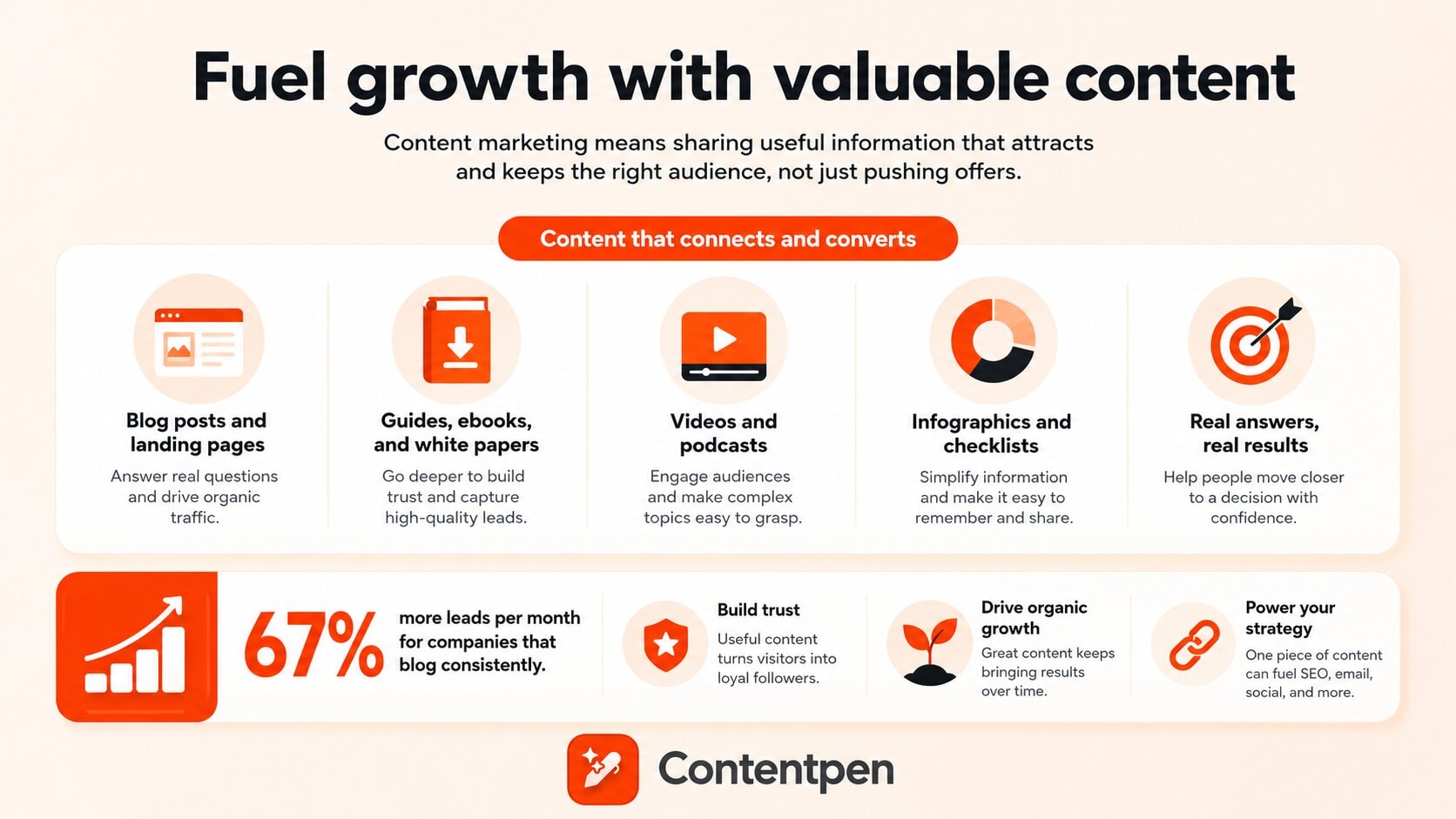
Content marketing means publishing useful information that attracts and keeps the right audience, instead of only pushing offers.
It covers:
- Blog posts and landing pages
- Guides, ebooks, and white papers
- Videos and podcasts
- Infographics and checklists
All of these pieces of content answer real user questions and help people move closer to a decision. That can be to purchase a product, compare services, or dive deeper into learning more about the offer you have.
When you keep publishing useful pieces, your site starts to feel like a library that people and search engines keep returning to. And numbers prove this story.
Companies that blog consistently generate 67% more leads per month than those that do not.
Over time, strong content builds trust and steady organic traffic. Useful content can keep bringing visitors long after the publish date, while ads stop the moment you pause spend.
Content also feeds other kinds of digital marketing, since one strong article can support SEO, email, social posts, and even video scripts. That is why content sits at the center of many online marketing strategies.
The hard part is staying consistent without burning out your team. This is where Contentpen fits in. It is an AI-powered blog creation platform that helps you produce high-quality, long-form, SEO- and GEO-focused articles at scale.
Through Contentpen, you can move from idea to draft to internal and external linking without juggling several tools or spreadsheets.
Write better blogs in less time, without sacrificing quality.
Let AI handle structure, clarity, and flow while you stay in control of the message.
Try AI blog writing →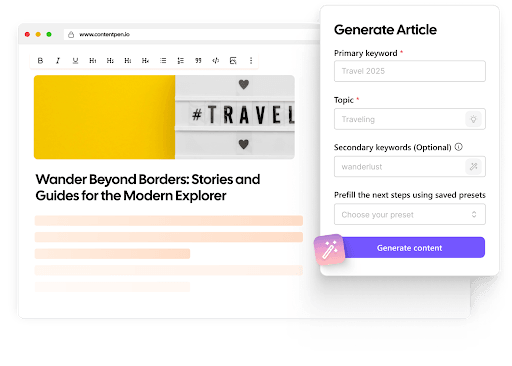
For you, that means less time formatting and fixing links and more time planning topics that match your audience.
2. Search engine optimization (SEO)
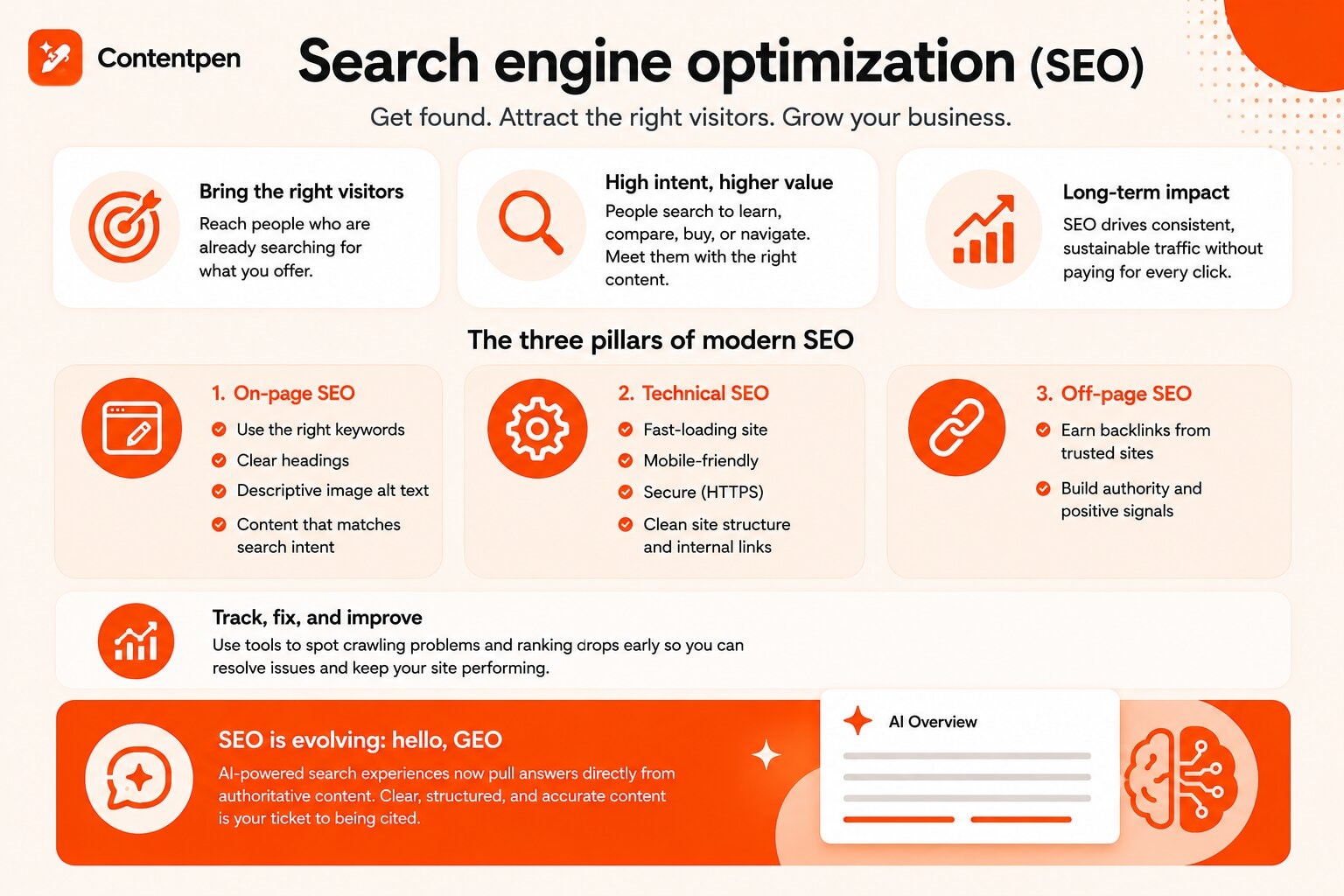
Search engine optimization (SEO) is the practice of tuning your site and content so it appears higher in search engine results.
The aim is simple: bring in visitors who are already searching for what you offer, without paying for every click.
SEO is one of the most effective types of digital marketing strategies because search intent is so strong. People are looking to learn, compare, buy, or navigate to a page already. You just need to be clever enough to meet them with your content.
Modern SEO has a few main pieces that work together. Some of the main types of SEO are listed below:
- On-page SEO: This is what people see and interact with on your site. On-page requires you to build your content around SEO keywords, write with clear headings, provide descriptive image alt text, and match the search intent.
- Technical SEO: For good technical SEO, you need to make sure that your site is fast-loading, mobile-friendly, secure, and cleanly interlinked so search engines and humans can browse everything you have to offer. Regularly auditing your site’s infrastructure with tools like a DNS checker can also help identify configuration issues that affect search performance.
- Off-page SEO: Off-page is about generating positive signals other than your own site. This includes getting backlinks from respected sites, which act like public recommendations for your pages and encourage more users to visit you.
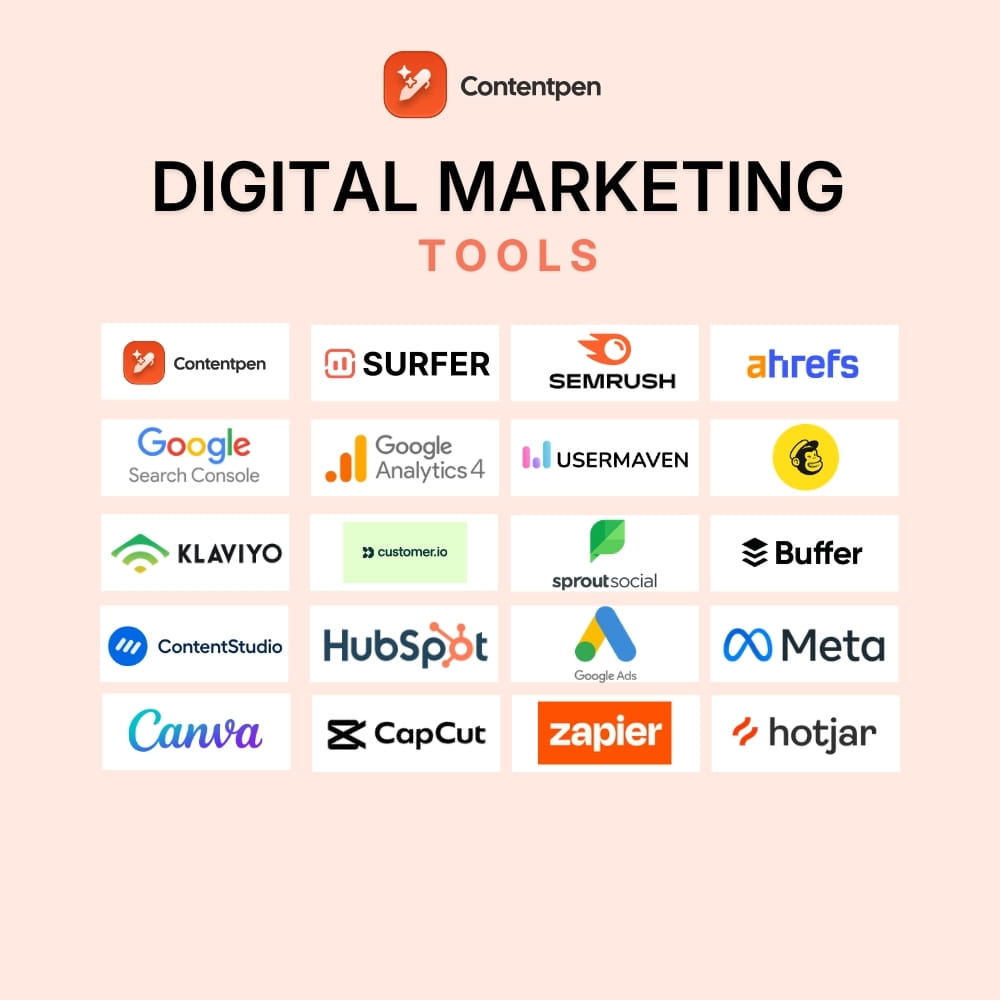
Tools such as Google Search Console, Moz, and Ahrefs help you spot crawling problems and ranking drops early.
Beyond traditional search, 2026 has also made generative engine optimization (GEO) a real consideration for content teams.
AI-powered search experiences like Google’s AI Overviews and ChatGPT Search pull answers directly from well-structured, authoritative content, bypassing organic clicks entirely.
Getting cited in those answers requires the same foundation as good SEO: clear structure, accurate data, and content that directly answers the question being asked.
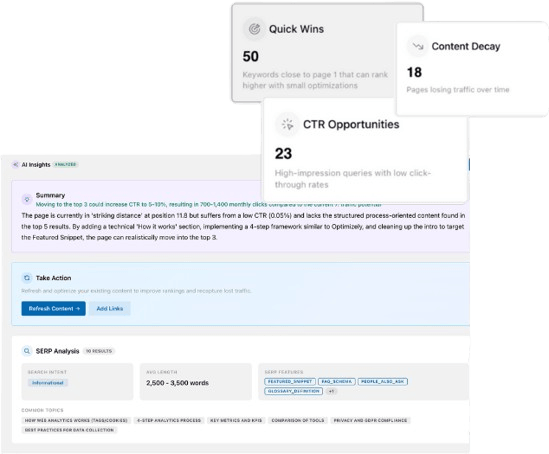
If you prefer working in a single window without switching tabs, consider Contentpen’s SEO opportunities and web analytics features. The tool helps you identify decaying pages, near-ranking ones, and apply the necessary fixes with AI inside a single window.
Turn existing content into growth opportunities

Identify pages losing traffic or CTR
Find quick wins to improve clicks and rankings
SEO differs from search engine marketing (SEM), where you pay for ad placements on top of organic results.
Paid search can bring instant traffic, but once you stop paying, the visitors also stop. Well-planned SEO is slower to start, yet keeps working for months or years to come. This is why many brands invest in organic traffic first before moving on to SEM.
3. Pay-per-click advertising (PPC)
Pay-per-click (PPC) advertising is a paid model where you pay only when someone clicks your ad. It covers:
- Search ads on Google and Bing
- Display banners on partner sites
- YouTube pre‑roll spots
- Ads on platforms such as Facebook, Instagram, and LinkedIn
Among all types of online advertising, PPC is one of the fastest ways to appear in front of high-intent searchers.
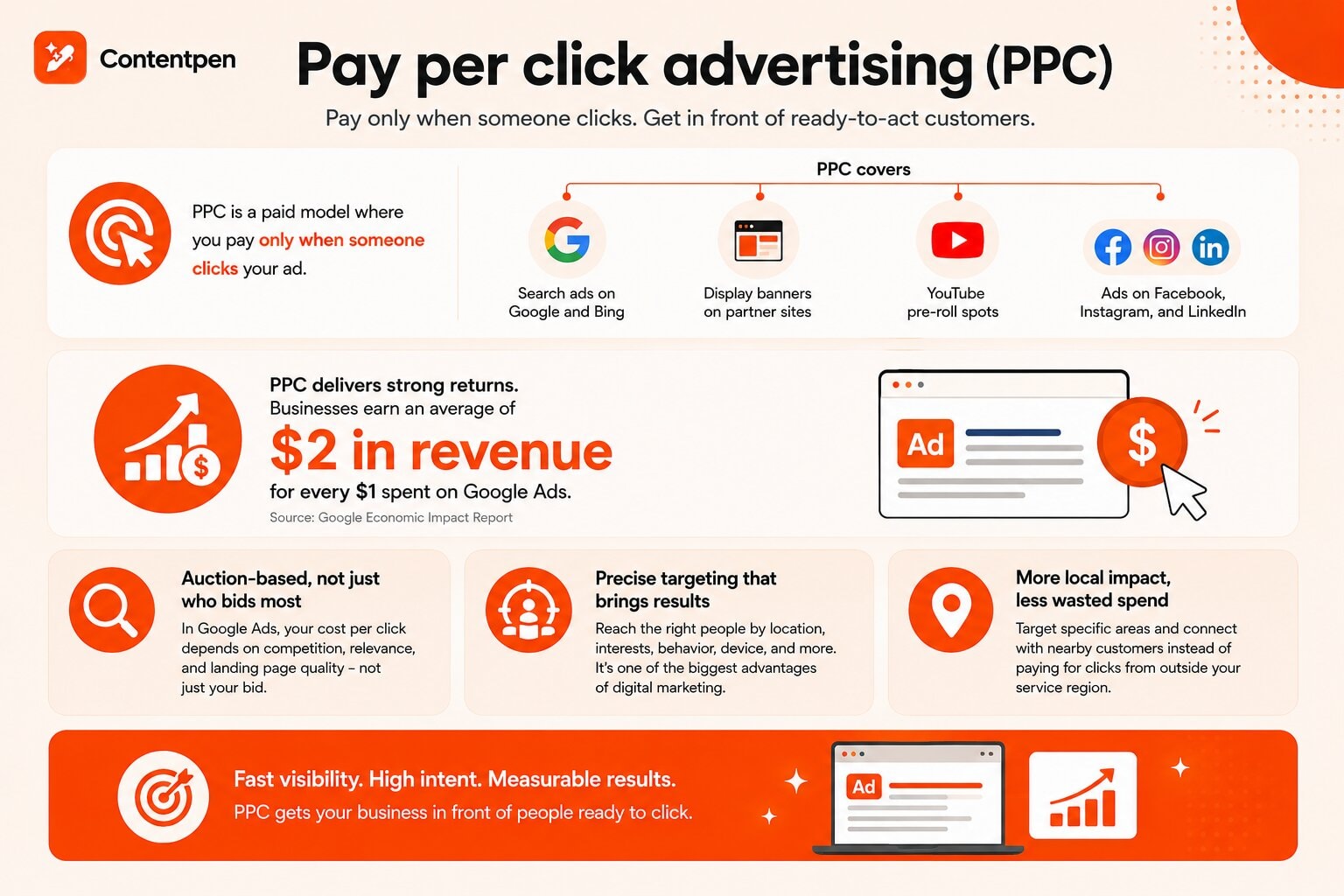
Businesses earn an average of $2 in revenue for every $1 spent on Google Ads, according to Google’s own economic impact data.
In Google Ads, you choose keywords and write text ads that enter an auction each time someone searches. Your cost per click rises or falls based on how many other advertisers bid on the same terms.
Your ad rank also depends on relevance and landing page quality, not just your bid. This setup pushes you to write helpful ad copy and send people to pages that match the promise.
With digital marketing, you get a lot of targeting options that help you reach very specific groups. This is one of the clear advantages of digital marketing and why it is more popular than offline marketing channels, such as billboards, TV ads, etc.
Because of such powerful targeting options, local businesses can enjoy traffic from a certain area instead of wasting spend on clicks from another county or region.
With that said, the main problem with PPC is the budget. You can quickly overspend on paid campaigns without even realising.
4. Social media marketing
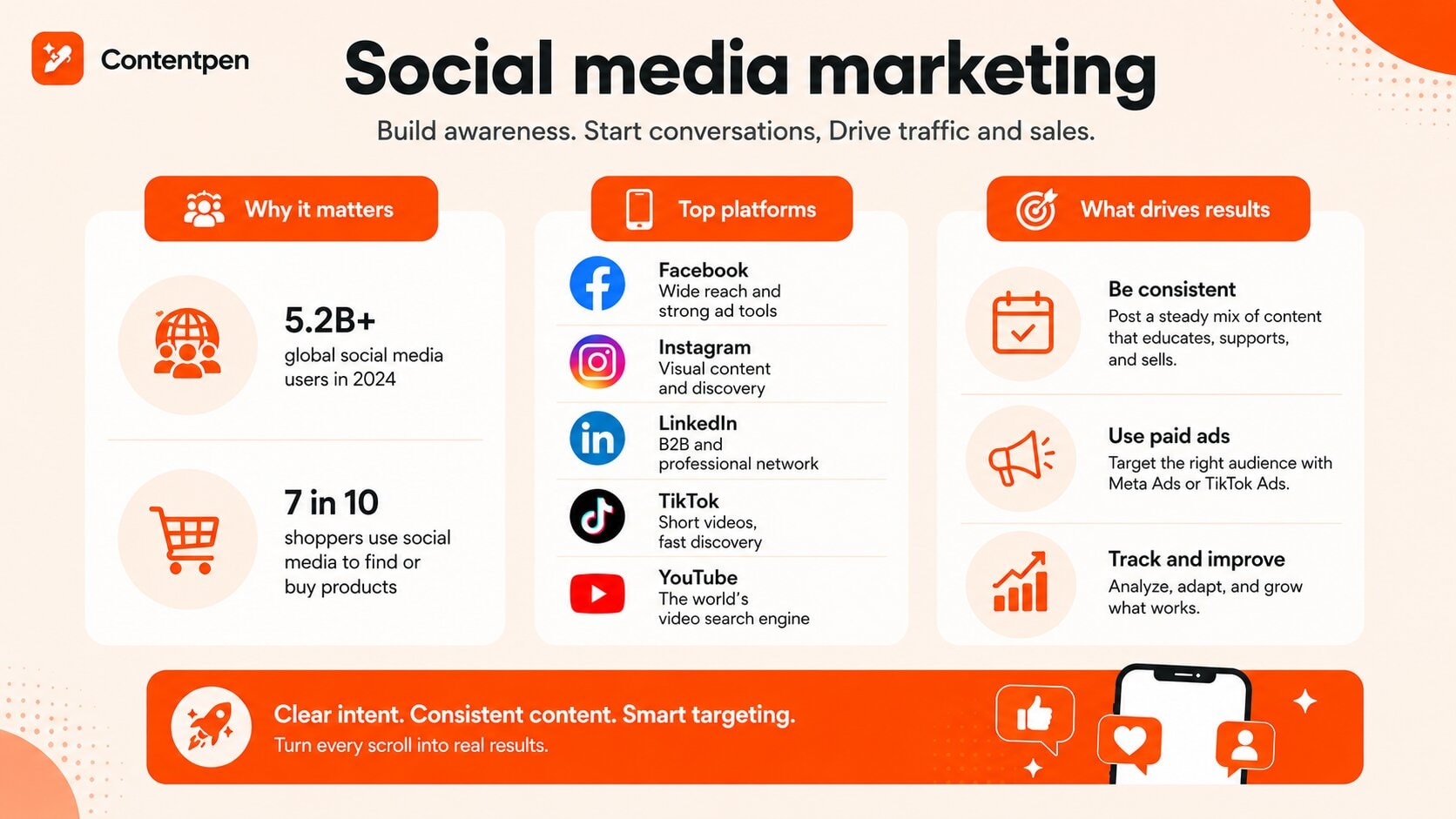
Social media marketing means using platforms such as Facebook, Instagram, TikTok, LinkedIn, X, Pinterest, and YouTube to build awareness, start conversations, and drive traffic or sales.
It sits among the most visible forms of digital marketing because people spend so many hours scrolling feeds each day. According to DataReportal, global social media users surpassed 5.2 billion in 2024, and that audience keeps growing.
Research cited by Investopedia shows that nearly seven in ten shoppers use social media to find products or complete purchases. That means your profile, content, and replies often shape the first impression of your brand.
The main social media platforms we all know of play different roles:
- Facebook: Wide reach and strong ad tools.
- Instagram and Pinterest: Great for visual products.
- LinkedIn: Strong for B2B and professional services.
- TikTok: Short, creative clips and quick discovery.
- YouTube: Acts as a video search engine.
What separates strong social media marketing from random posting is clear intent and consistency.
You pick a few platforms where your buyers already spend time. Then you publish a steady mix of posts that educate, support, and occasionally sell, all in a voice that matches your brand.
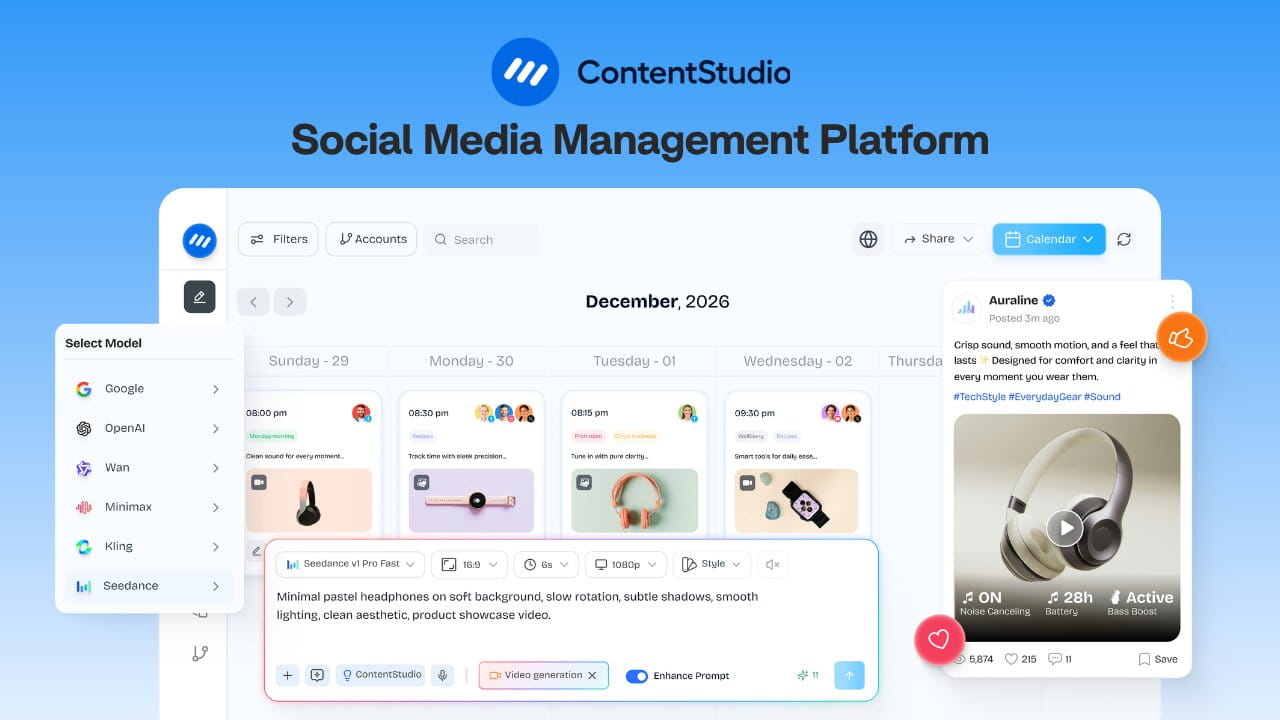
Tools like PostEverywhere, Hootsuite, ContentStudio, and Buffer can help you schedule posts, reply to comments, and analyze your social media presence in one place.
Paid social ads sit beside organic content as part of the same plan. With Meta Ads Manager or TikTok Ads, you can focus on precise interests and behaviors, such as people who visited your site last week or watched a previous video.
The risk with paid social traffic is that algorithms change often, which can cut organic reach with little warning. However, high-quality content and a healthy email list still give you a lot of chances to stay stable in such conditions.
5. Email marketing
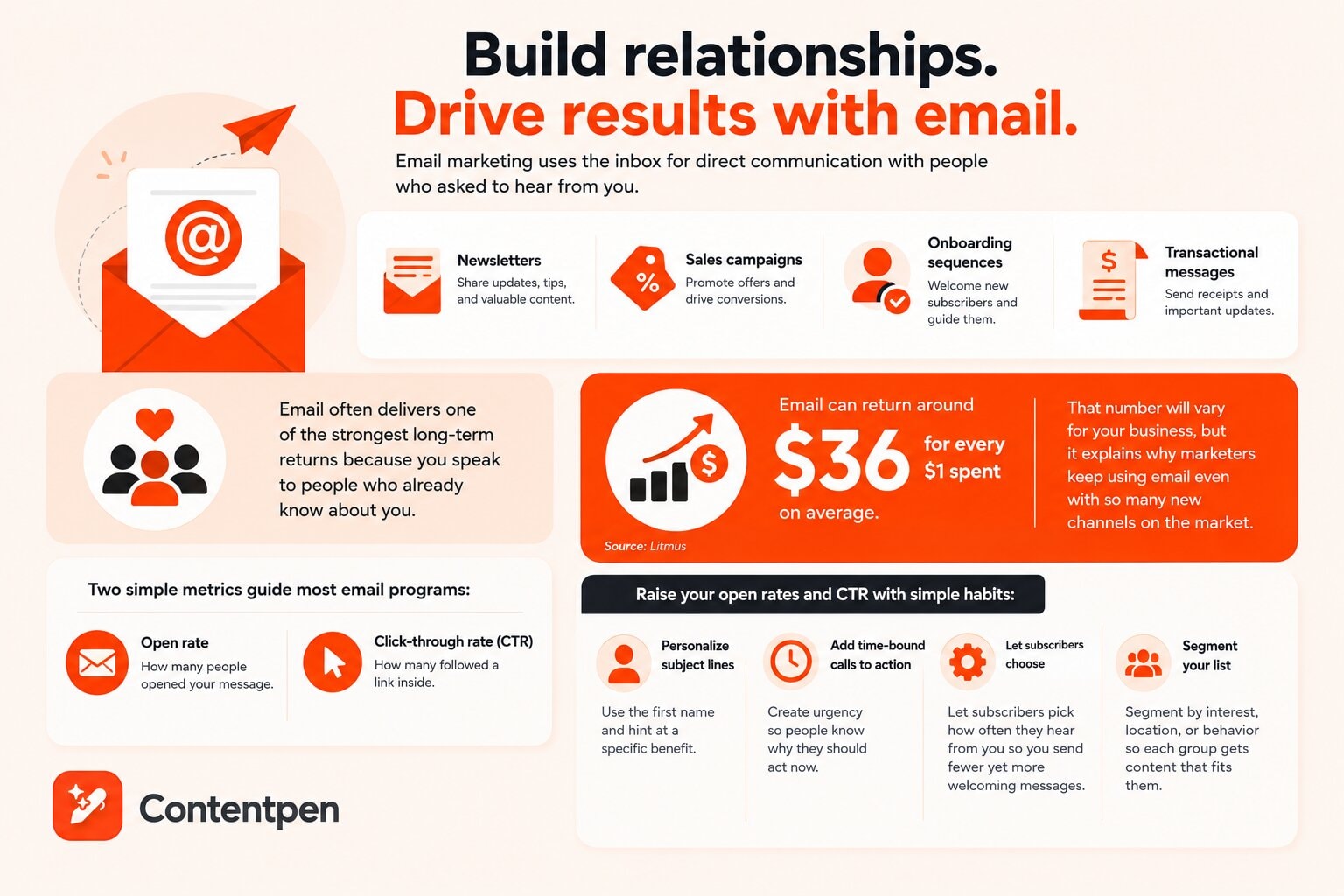
Email marketing uses the inbox for direct communication with people who have asked to hear from you. It includes newsletters, sales campaigns, onboarding sequences, and transactional messages such as receipts of purchase.
Among all types of internet marketing, email often shows one of the strongest long‑term returns because you speak to people who already know about you.
Studies from Litmus show that email can return around $36 for every $1 spent on average, making it one of the highest-ROI channels available.
That number will vary for your business, but it explains why marketers keep using email even with so many new channels on the market.
Two simple metrics guide most email programs:
- Open rate: How many people opened your message?
- Click-through rate (CTR): How many followed a link inside.
You can raise both numbers with a few simple habits:
- Use subject lines that feel personal and clear, often by adding the first name and hinting at a specific benefit.
- Add time-bound calls to action when you run a sale, so people know why they should act now.
- Let subscribers pick how often they hear from you so you send fewer yet more welcoming messages.
- Segment your list by interest, location, or behavior so each group gets content that fits them.
Modern tools such as Mailchimp, ConvertKit, HubSpot, and Brevo let you set up automated email flows that run on their own.
You can also utilize email services like the Mailtrap email API that handle the transactional email sending layer.
However, manual oversight is still required to ensure that your emails don’t end up in spam or as promotional content.
6. Affiliate marketing
Affiliate marketing is a performance-based model where partners promote your product and receive a commission on each sale or lead they bring.
It turns bloggers, YouTubers, newsletter writers, and niche site owners into an external sales force for your brand.
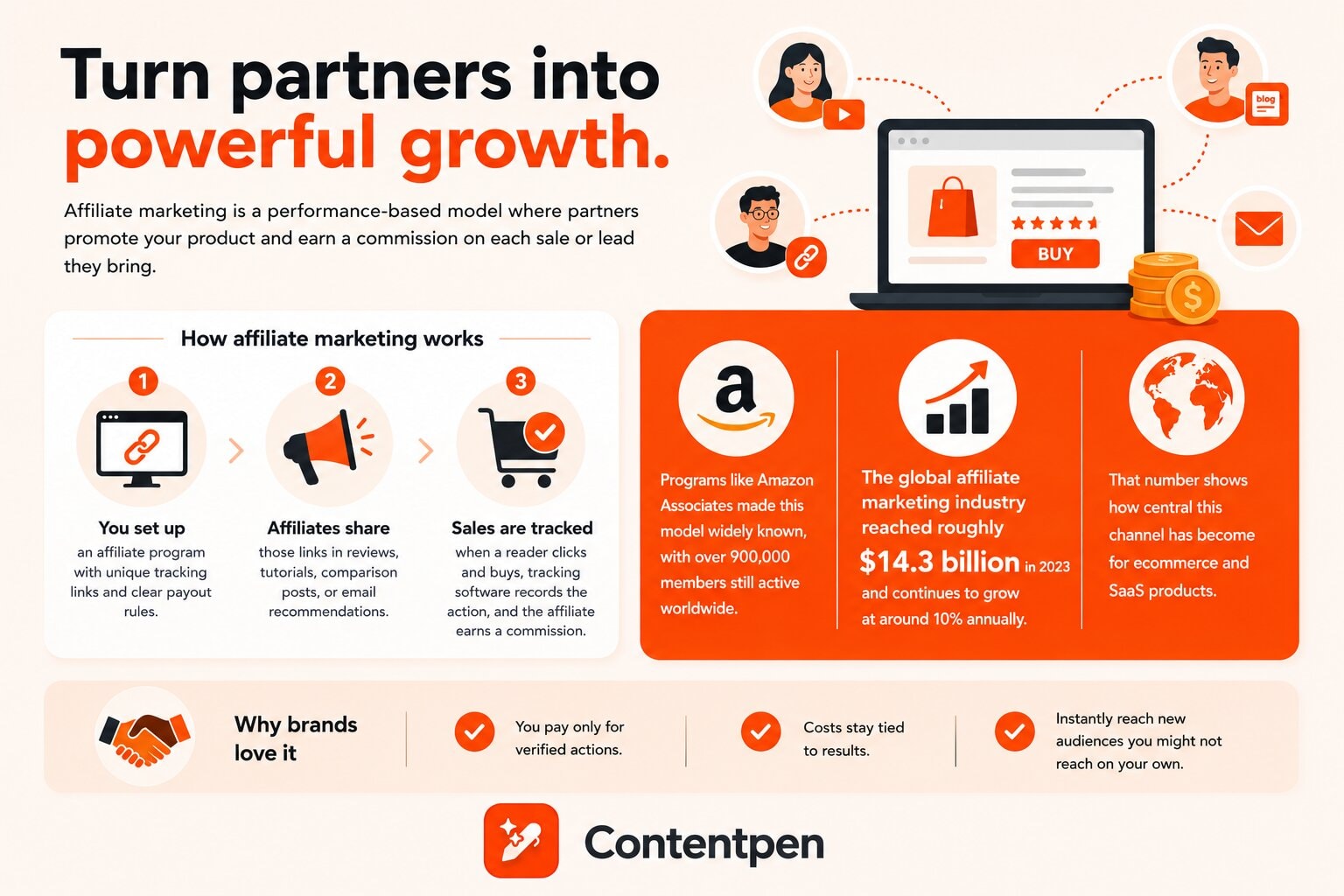
Among different types of digital marketing, affiliate marketing stands out because costs stay tied to results. The basic flow is straightforward:
- You set up an affiliate program with unique tracking links and clear payout rules.
- Affiliates share those links in reviews, tutorials, comparison posts, or email recommendations.
- When a reader clicks and buys, tracking software records the action, and the affiliate earns a percentage or flat fee.
Programs like Amazon Associates made this model widely known, with over 900,000 members still active worldwide.
According to Influencer Marketing Hub, the global affiliate marketing industry reached roughly $14.3 billion in 2023 and continues to grow at around 10% annually. That number shows how central this channel has become for ecommerce and SaaS products.
For a brand, the appeal is clear. You pay only for verified actions, and you instantly reach audiences you might not reach through your own channels.
With that said, the risks are real as well. Some affiliate partners may push low-quality tactics such as fake clicks or misleading claims, which can hurt trust in your brand.
Conversely, some affiliate programs may also not cooperate well enough with their partners, performing shady marketing tactics with no clear plan.
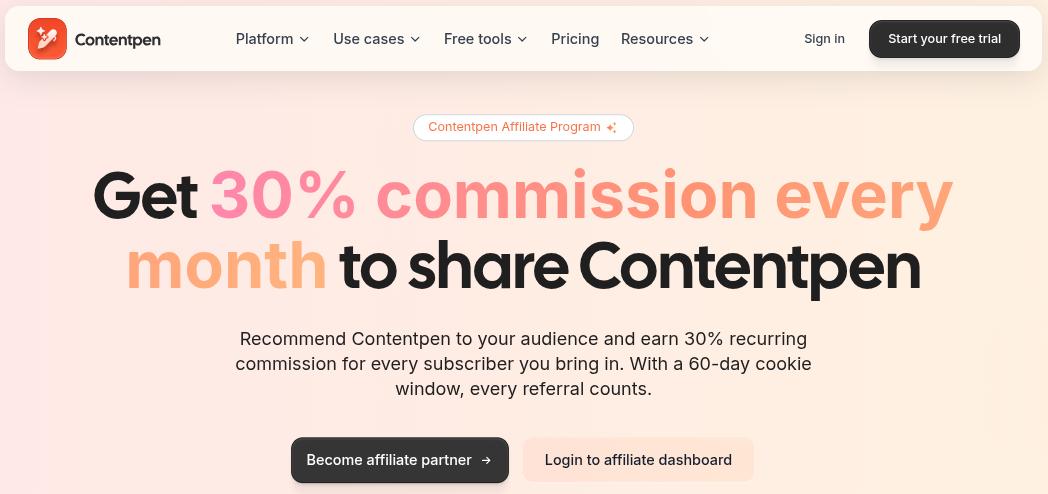
But if you’re looking to run a sound affiliate campaign with transparent terms and conditions, check out Contentpen’s affiliate program. You get a 30% recurring commission for every subscriber you bring in, with a 60-day cookie window, during which every referral counts.
Besides a solid affiliate program, you also need a good link tracking tool, such as the one from Replug.
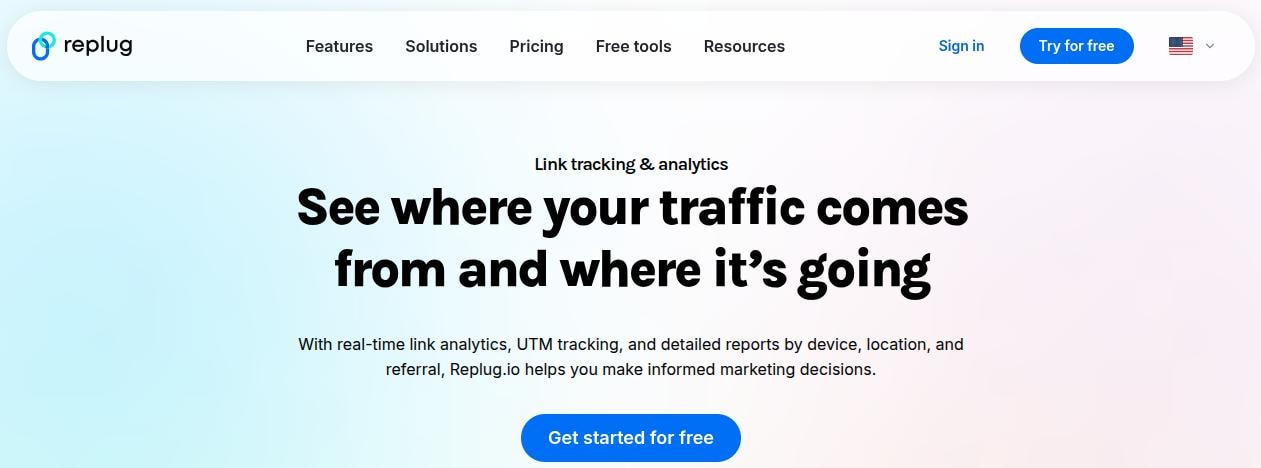
This will help you avoid any disputes down the line, either from the affiliate partner or from the program provider themself.
7. Influencer marketing
Influencer marketing means working with people who have already built a following on TikTok, Instagram, YouTube, podcasts, or blogs. Instead of buying ad space from a platform, you are paying for access to the trust that person has with their community.
Influencer marketing sits close to affiliate marketing, yet the focus is more on content and story rather than on pure link tracking.
Influencers come in different sizes, and bigger is not always better. Many brands now favor micro and nano creators over celebrity-style accounts.
Micro-influencers with niche audiences often see engagement rates of 3–5%, compared to under 1% for mega-influencers with millions of followers.
But again, this depends on your brand’s current strategy, goal, and standing in the market.
If you are already a highly successful company who are just looking to bring mass awareness, then mega influencers are not a bad consideration.
To simplify influencer tiers, check out the table below for your help:
| Influencer tier | Typical follower range | Best use case |
| Mega | Over 1 million | Mass awareness for broad consumer brands |
| Macro | 100k to 1 million | Large yet focused campaigns in a field |
| Micro | 10k to 100k | Targeted offers in specific niches |
| Nano | Under 10k | Local or tight community launches |
Compared with other types of digital marketing funnels, influencer marketing often feels more like a partnership. You agree on goals and conditions, then let the creator speak in their own style about your product so that the promotion feels natural without being pushy.
However, there are also some risks with influencers. You may get partnership and collaboration requests from individuals with fake followers, a poor fit for your brand, or the chance that the influencer later faces public issues.
Therefore, it is important for you as a brand or agency to run proper background checks and carefully curate a list of influencers who work best for your business. In that case, using an influencer marketing platform like Influee is a valuable option where you will find trusted and verified influencers for your work.
8. Video marketing
Video marketing uses video content to educate, explain, or persuade your audience across channels. People watch product demos, unboxing videos, explainers, and behind-the-scenes clips before they ever talk to a sales rep.
Video marketing is now one of the most important forms of digital marketing because users believe in the motto “seeing is believing”. People see before they make a decision, and numbers prove it all.
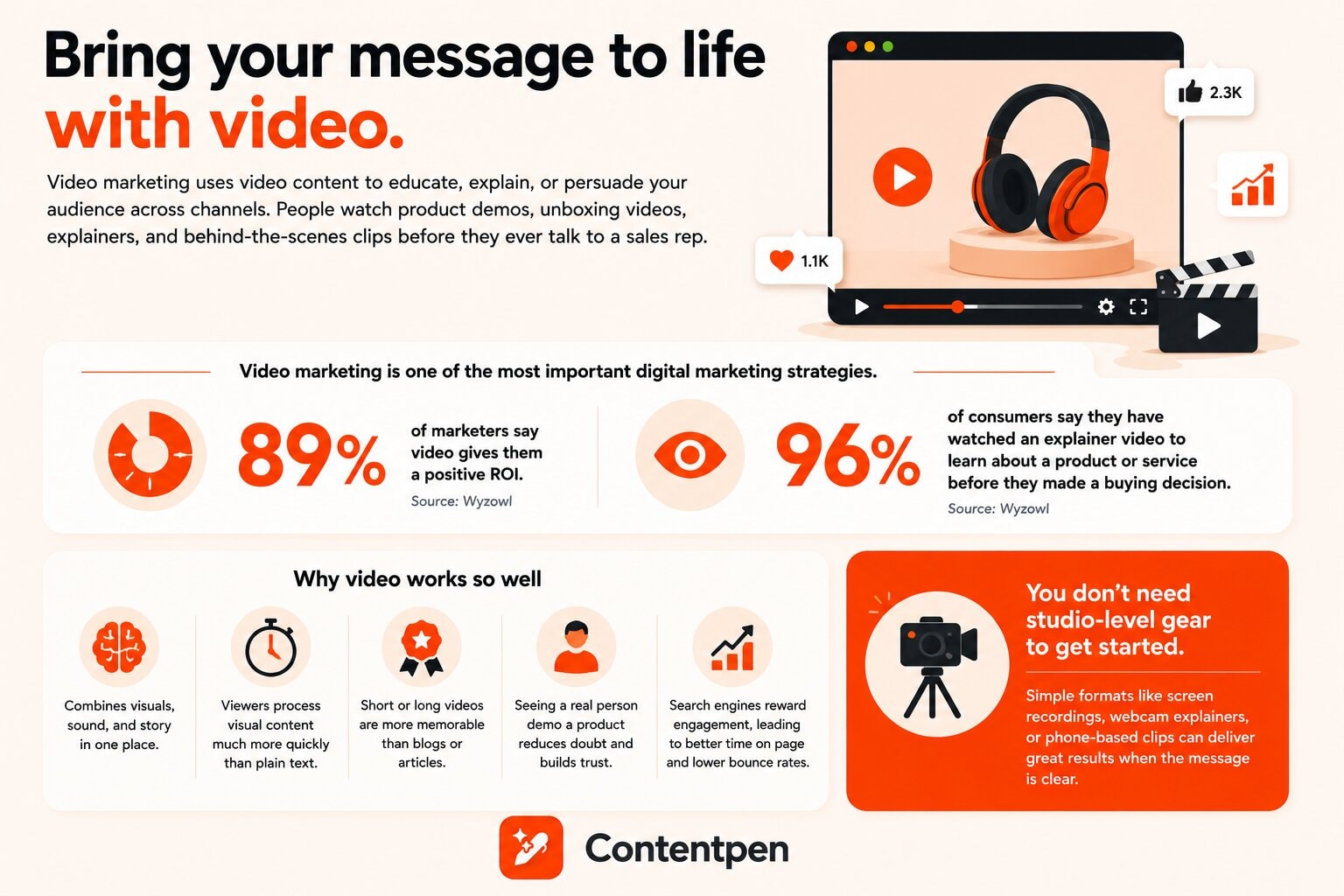
According to Wyzowl, 89% of marketers say video gives them a positive ROI. Also, 96% of consumers say they have watched an explainer video to learn about a product or service before they make a buying decision.
Video works so well because it combines visuals, sound, and story in one place. Viewers process visual content much more quickly than plain text. Short-form or long videos are also much more memorable to the audience than blogs or articles.
Seeing a real person demo a product also reduces doubt, since people can picture how it fits into their own life. Search engines notice this behavior, and pages with useful video explainers often see better time on page and lower bounce rates.
But here’s a thing that most brands don’t understand. You do not need studio-level gear to start video marketing.
Simple formats created with a screen recording tool, webcam explainers, or phone-based clips can also perform very well when the message is clear.
One strong video can turn into multiple assets, such as shorter cuts for social media, thumbnails for email campaigns, and embeds inside blog posts created in Contentpen. That reuse makes video one of the most flexible types of digital marketing right now in 2026.
9. Mobile marketing
Mobile marketing focuses on reaching people through smartphones and tablets, where they now spend a large part of their day.
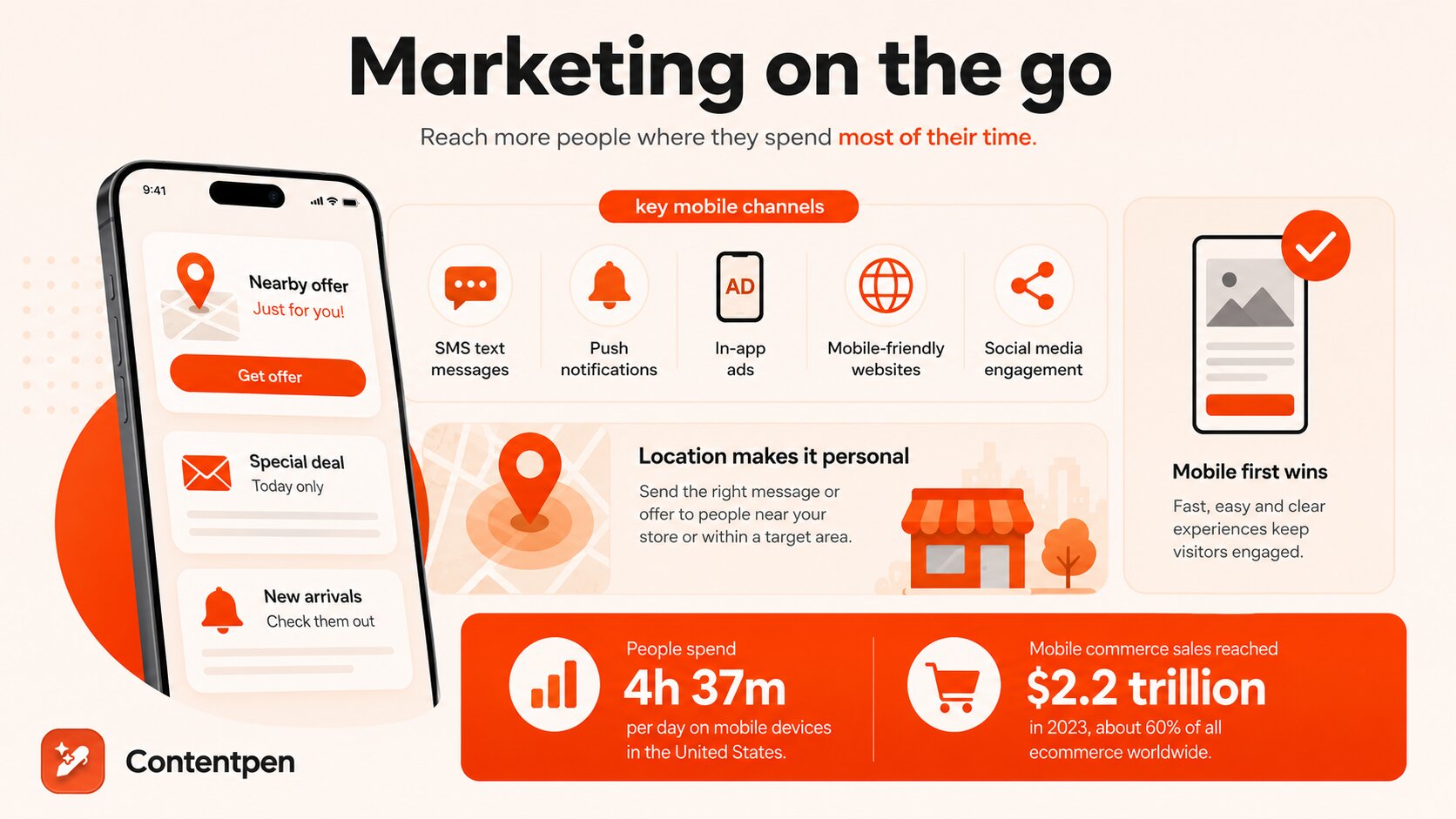
It links many other types of digital marketing, since search, social media, email, and video all run through mobile screens. In 2026, American adults spend an average of 4 hours and 37 minutes per day on mobile devices, and that time keeps increasing.
Key mobile channels include:
- SMS marketing
- Push notifications from apps
- WhatsApp marketing for personalized customer communication
- In‑app ads
- Mobile-friendly websites or landing pages
Social platforms are mostly mobile-first, which means your images, captions, and calls to action must look right on a small screen.
Related read: What are webhooks?
If your site loads slowly or displays badly on phones, visitors leave fast and rarely return. Google has made mobile-friendliness a clear, direct factor in search rankings for several years.
Mobile marketing also sits at the heart of ecommerce. Global mobile commerce sales reached $2.2 trillion in 2023, representing approximately 60% of all ecommerce transactions worldwide.
When your checkout, forms, and menus work smoothly on mobile, you remove a major barrier to buying. Payment options like Apple Pay and Google Pay also help ease the purchasing process further.
One standout feature of mobile marketing is geo-targeting. Location-aware, channel-specific messaging dramatically improves audience reach and response rates.
You can send offers or ads only to people near your store or within a certain area. That helps local shops and restaurants focus spend on nearby customers who can act fast, instead of burning their budget away on users who won’t.
10. Marketing analytics
Marketing analytics is the skill and practice of collecting, reading, and acting on data from all your digital channels. It is not a separate ad channel like search or social, yet it holds the mix together.
Without analytics, you are guessing which types of digital marketing channels pay off and which quietly waste money.
According to McKinsey, data-driven organizations are 23 times more likely to acquire customers and 6 times more likely to retain them than companies that do not prioritize analytics.
Analytics tools track what happens when someone sees your content or ad. They also help capture behavioral data that enables content marketers to make faster, more accurate campaign decisions.
With Google Analytics, you can see traffic sources, clicks, page views, impressions, and conversions in detail.
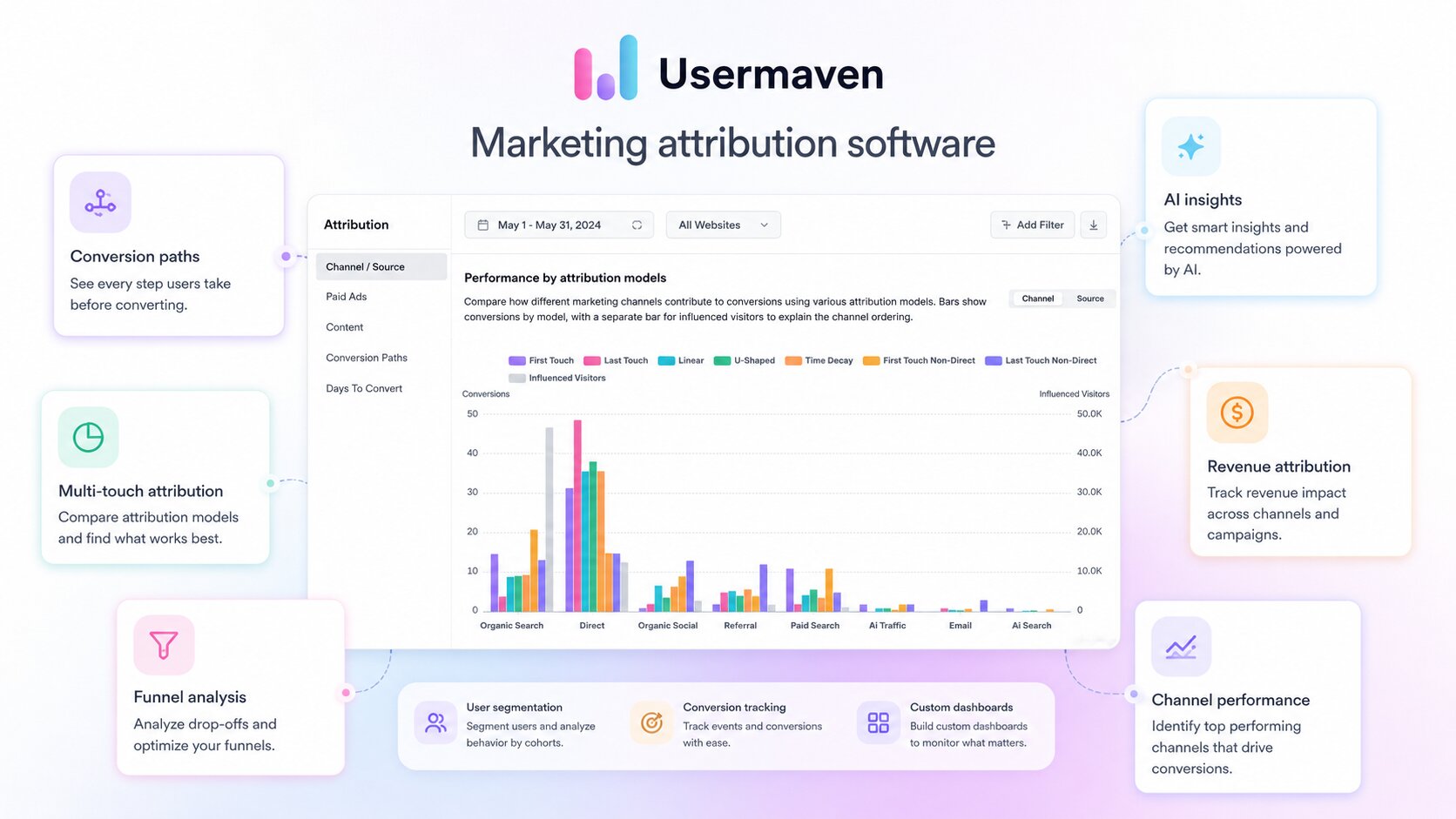
But marketing analytics is just one side of the picture. Attribution is what fills the gaps in between.
In simpler words, attribution is the process of connecting the dots between different channels to understand exactly which customer touchpoints contributed to a sale.
For marketing attribution, one of the tools that you can use is Usermaven. It helps you see the entire user journey, allowing you to identify and work on drop-off points to boost conversions.
For content-heavy programs, analytics also tells you which articles, keywords, and formats work best. When you create blogs with Contentpen and connect them to tracking, you can spot posts that bring steady visitors and expand on those topics.
Understand what’s working, and why with real-time analytics
Track performance and make smarter content decisions with clear insights.
View Analytics Dashboard →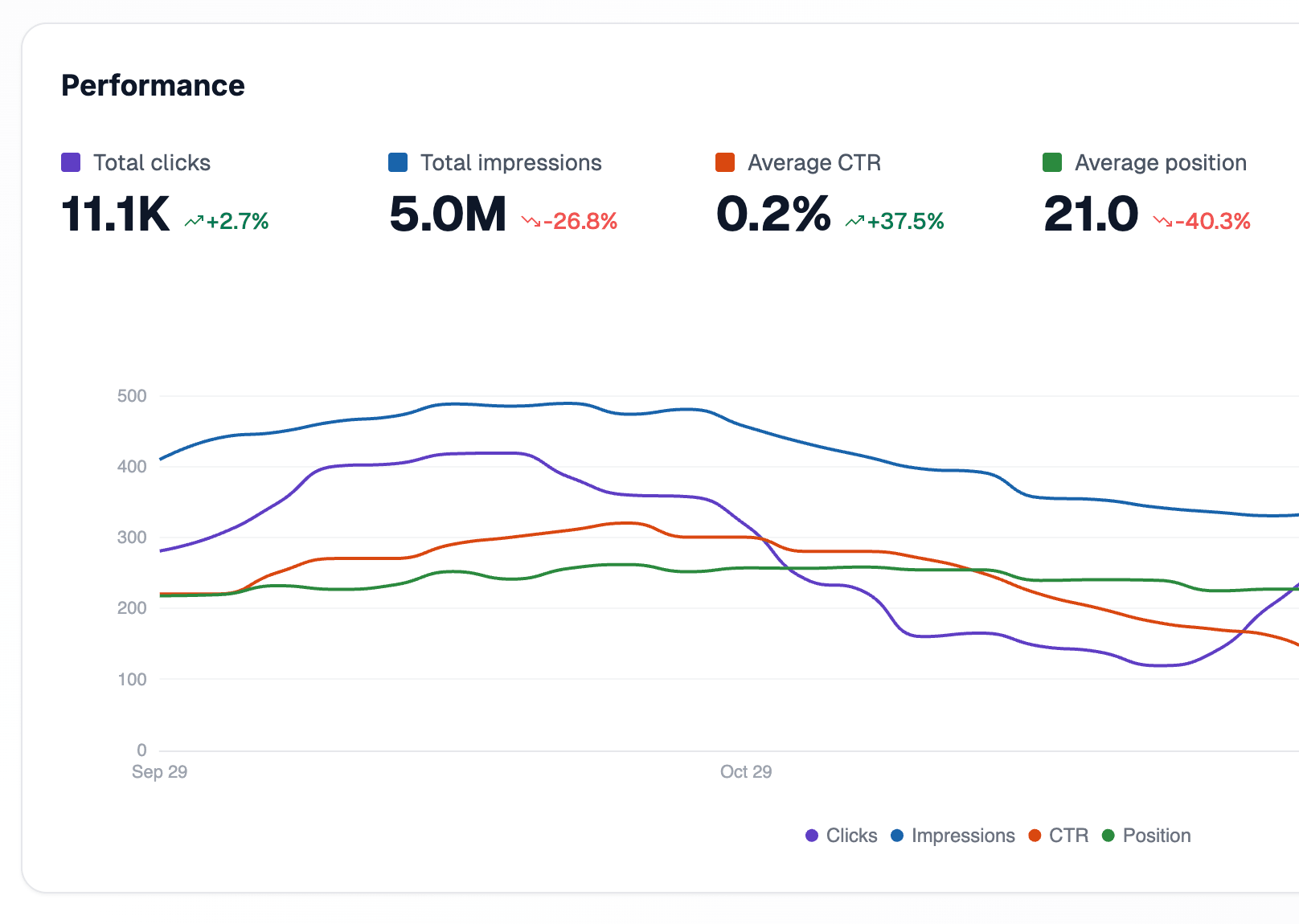
In the big picture, analytics turns your collection of digital marketing channels into a system you can tune, instead of a pile of unproven tactics.
Which type of digital marketing is best for your business?
There is unfortunately no clear-cut answer for this. The right type of digital marketing for your business depends on your goals, budget, audience, and time constraints.
What we’ve found through our time helping brands is that in most cases, a focused combination of 2- 3 channels often outperforms any single one. However, you must explore your own digital marketing mix yourself.
Why? Because the right mix for a cash-strapped startup will differ from that of an investor-funded SaaS company or a local service shop.
Therefore, instead of asking ‘which digital marketing channel is best overall’, first define your main goal for the next 6-12 months. Ask ‘What do you see yourself doing more in the future?’
Go through the table below to help you out on your journey to start digital marketing as a beginner:
| Primary goal | Good starting focus | Notes |
| Awareness | Content, SEO, social, video | Builds search presence and brand recall over time |
| Leads now | PPC, paid social, landing pages | Pair with email follow-up and content marketing |
| Online sales | SEO, PPC, email, mobile marketing | Strong product pages and checkout are key |
| Retention | Email, SMS, content marketing | Teach, support, and reward existing customers |
Most businesses end up mixing several types of digital marketing as they grow. The key is to start narrow, measure carefully, and add channels once the first few start working.
The bottom line on choosing your type of digital marketing mix
There is no single best type of digital marketing for every business. The right mix depends on who you serve, how fast you need results, and how much money and time you can invest. What works for a global retailer will not match a local bakery or a small B2B marketing agency.
That said, content marketing and SEO remain two of the highest compounding channels for long-term growth in 2026. They feed search, social, email, and even paid campaigns by giving you strong assets to point to.
If content is part of your plan, Contentpen can help you publish SEO friendly, long-form articles at a pace that is hard to match manually.
Write content that’s built to rank, not just read
Create search-optimized blogs aligned with SEO and GEO signals, so your content performs well across search and AI-driven discovery.
Try SEO Blogging FREE →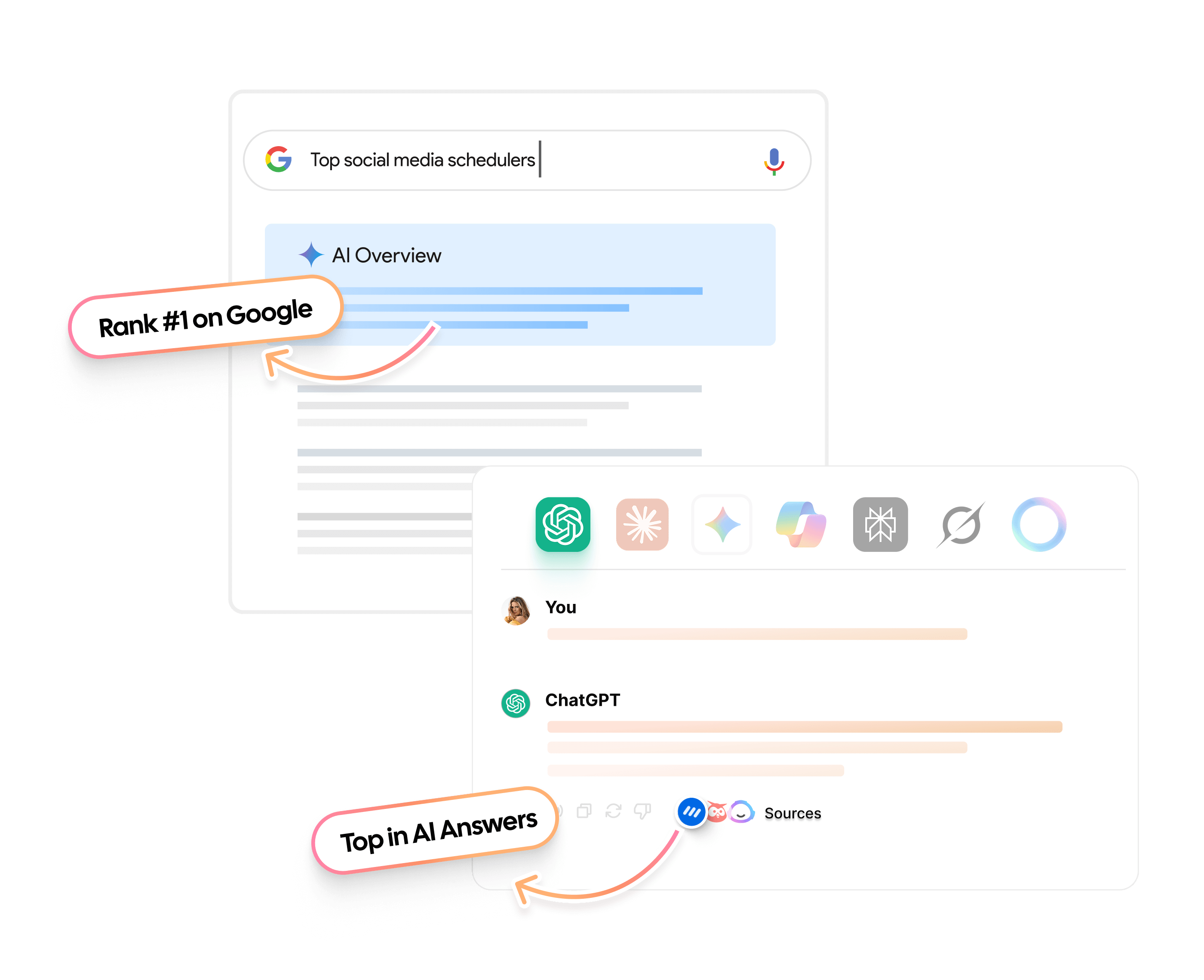
You can explore your own blog creation workflow with Contentpen and adjust your brand voice and content presets to best suit your needs.
Frequently asked questions
Start with one or two channels that align with your immediate goal and available bandwidth. Most beginners do best with content marketing and SEO as a foundation, then layer in email once they have a growing audience.
If we’re discussing in terms of impact, the top 7 forms of digital marketing are content marketing, SEO, social media, email, PPC, influencer marketing, and marketing analytics. However, this is entirely opinion-based. The exact types that work for you can be different.
Yes, especially through SEO, content, and social media. Large brands often focus on broad, high-volume keywords and mass-market messaging. Small businesses can outperform them by targeting specific long-tail keywords, serving a tighter audience, and building genuine community engagement that bigger brands struggle to replicate at scale.
Define your goal first, then track the metrics tied to it. For awareness, monitor impressions, reach, and organic traffic. For leads, track form fills, cost per lead, and email sign-ups. For sales, measure conversion rate, revenue per channel, and return on ad spend (ROAS).
Yes. Content marketing, SEO, and organic social media all require just time but no money to get started. Email marketing also has a very low entry cost relative to the return it generates.

Jawwad
Jawwad Ul Gohar is an SEO and GEO-focused content writer with 3+ years of experience helping SaaS brands grow through search-driven content. He has increased organic traffic for several products and platforms in the tech and AI niche. As an author at Contentpen.ai, he provides valuable insights on topics like SEO technicalities, content frameworks, integrations, and performance-driven blog strategies. Jawwad blends storytelling with data-driven content that ranks, converts, and delivers measurable growth.
View all posts by this author