 20 minutes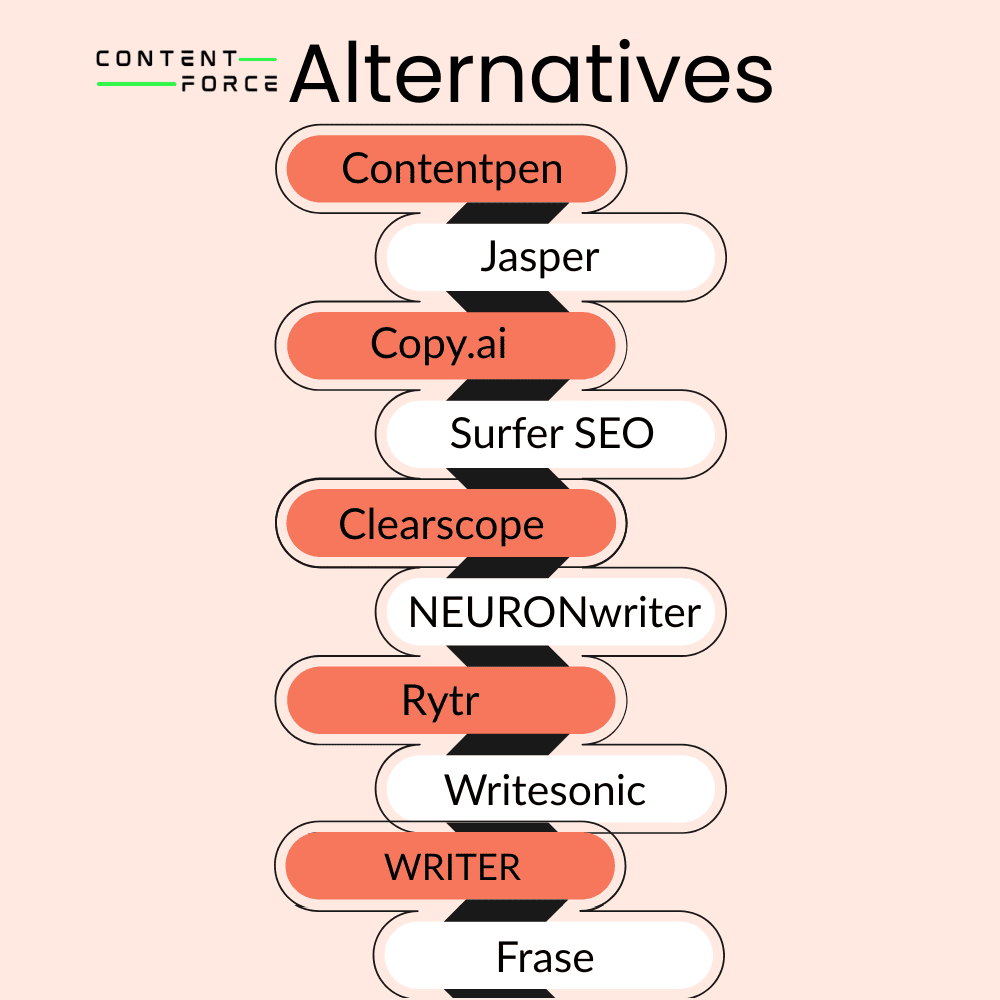
Picking the right AI writing tool feels harder than it should when your current one hits a wall. Maybe you have outgrown its credit limits, or you need features it simply does not offer. That is exactly why so many teams start hunting for ContentForce AI alternatives in the first place.
ContentForce AI has earned a reputation for pulling live SERP data and refreshing existing blog posts with real precision. But it also comes with credit caps, a narrow feature set on cheaper plans, and a strict SEO-only focus that leaves copywriting and social content out in the cold.
If your team needs more flexibility, better AI visibility tracking, or a wider set of publishing options, it is worth looking elsewhere.
This guide walks through 10 of the best ContentForce AI alternatives for 2026. You will find tools built for agencies, solo freelancers, enterprises, and everyone producing content at scale.
So, let’s get started.
Key takeaways
- ContentForce AI performs well for SERP-based content refreshing, but credit caps and a narrow lower-tier feature set limit its usefulness for growing teams.
- Contentpen leads this list of ContentForce AI alternatives with an end-to-end workflow that combines research, writing, SEO and AEO scoring, and one-click publishing.
- A side-by-side comparison table gives you pricing, best-fit use cases, and free trial details at a glance.
- The right pick depends on your content volume, how much you care about AI visibility, and whether you need copywriting or social features alongside SEO.
What is ContentForce AI and how does it work?
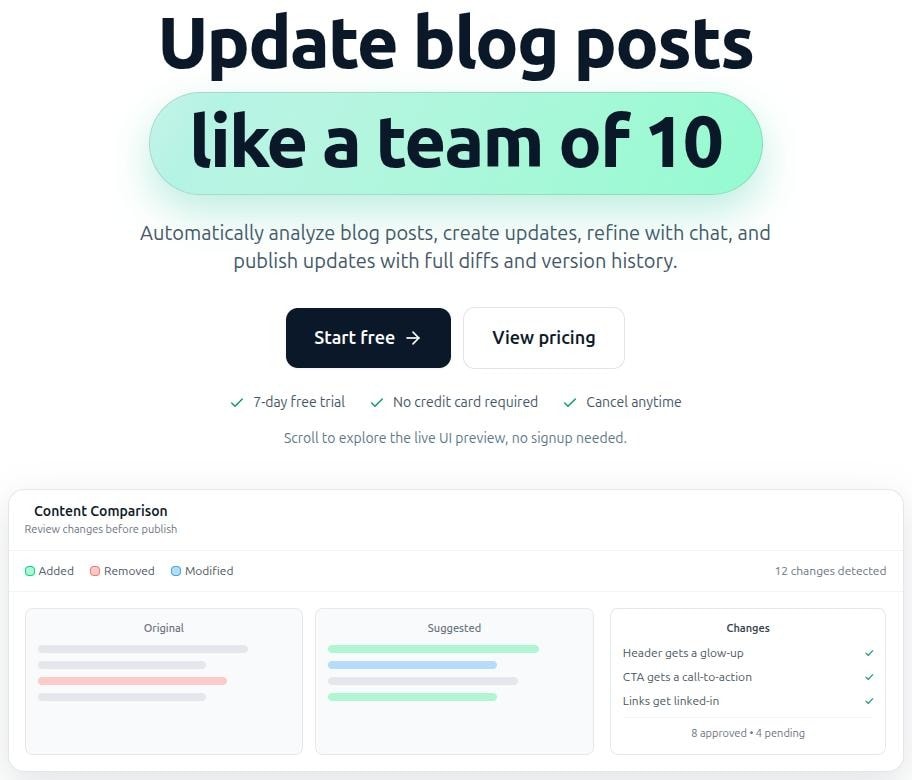
ContentForce AI is a content creation and optimization platform built around live search data rather than generic prompt expansion.
It pulls information directly from current Google search result pages, spots content gaps against top-ranking pages, and builds a data-backed improvement plan before it writes a single word.
This approach makes it particularly strong at auditing existing blog posts and refreshing them for freshness.
ContentForce AI runs on frontier models like Claude and Gemini entirely behind the scenes, so users never need to manage or pay for their own external API keys.
Its WordPress integration includes a side-by-side “diff” view and full version history, letting teams preview every change and roll back instantly if something goes wrong.
The platform also builds in AEO and GEO optimization, meaning that content is structured to get cited by AI tools like ChatGPT, Perplexity, Gemini, Claude, and Google AI Overviews.
That said, its lower-tier plans cap monthly usage tightly, and the tool sticks strictly to SEO content rather than covering copywriting, ads, or social posts.
Pros
ContentForce AI’s biggest strengths center on data quality and safety:
- Live SERP analysis and content strategy building
- Automated refreshing for aging blog content
- Safe WordPress integration with rollback protection
- Zero API key setup
Besides these strong points, ContentForce AI struggles significantly in some areas.
Cons
The drawbacks of ContentForce AI are just as clear once you start using it at scale:
- Lower tiers skip advanced writing features, which means you’ll have to pair it up with a writing tool separately
- The platform stays narrowly focused on SEO content with no support for copywriting or social media content
- There is no post-publishing analytics or ranking opportunities layer
- ContentForce AI doesn’t support AI visibility, so you won’t know your brand’s position, sentiment, or share of voice in your niche
- There are very few independent user reviews available for the platform
Also read: 16 best AI visibility tools in 2026.
These gaps push many SEO and AEO teams to look for a more complete ContentForce AI alternative that performs the writing, optimizing, and publishing tasks in one place.
Pricing
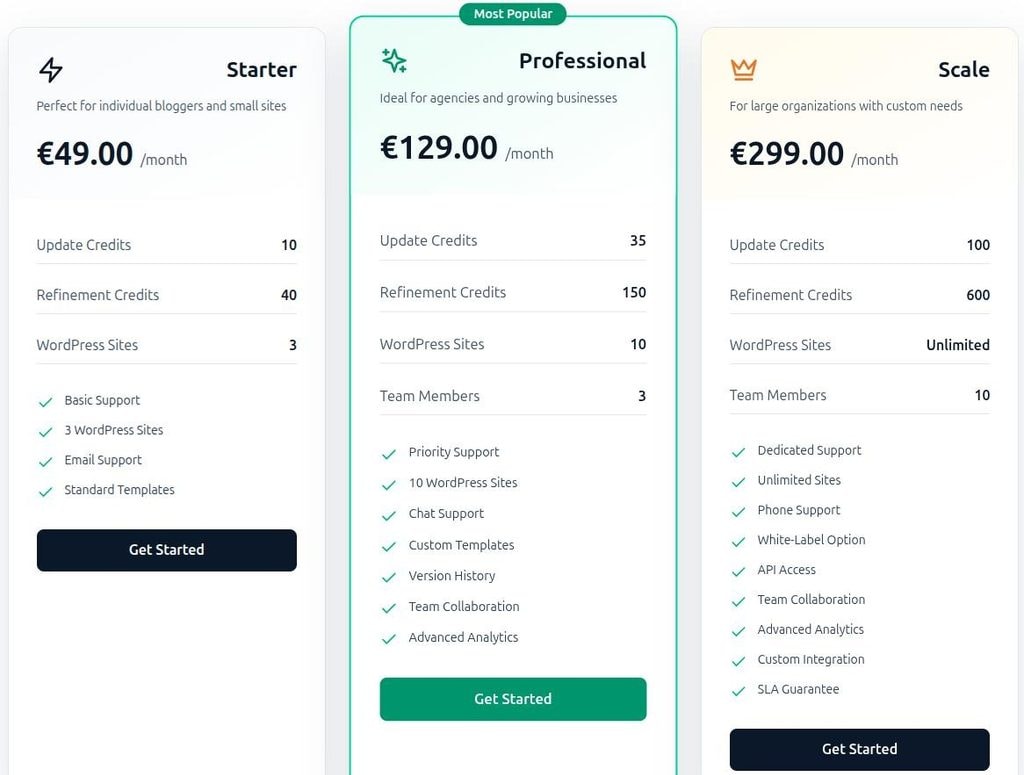
ContentForce AI pricing starts at €49/month, which includes only 10 update credits. Since each credit covers one full article refresh or creation, producing content at scale can burn through that allowance fast.
ContentForce AI alternatives compared at a glance
The fastest way to narrow down ContentForce AI alternatives is a direct side-by-side look at pricing, use case, and trial access. Each tool on this list serves a slightly different type of content team, from solo freelancers to enterprise marketing departments.
| Tool | Best for | Starting price (billed monthly) | Free trial |
| Contentpen | All-in-one SEO and AEO content workflow | $39/month | 7-day |
| Jasper | Brand voice consistency at scale | $69/seat/month | 7-day |
| Copy.ai | AI writing and GTM workflows | $29/month | Yes (limited resources) |
| Surfer SEO | Real-time on-page SEO optimization | $59/month | 7-day |
| Clearscope | Competitive content briefs | $129/month | 14-day |
| NEURONwriter | Semantic SEO and content optimization | $23/month | 7-day |
| Rytr | Budget-friendly solo creation | Free tier, $9/month | Free plan (limited) |
| Writesonic | AI writing with AEO tracking | $99/month | 7-day |
| WRITER | Enterprise content governance | Custom | 14-day |
| Frase | Content research and optimization | $49/month | 7-day |
Now, let’s see each tool in more detail.
1. Contentpen – Best all-in-one alternative for SEO and AEO content
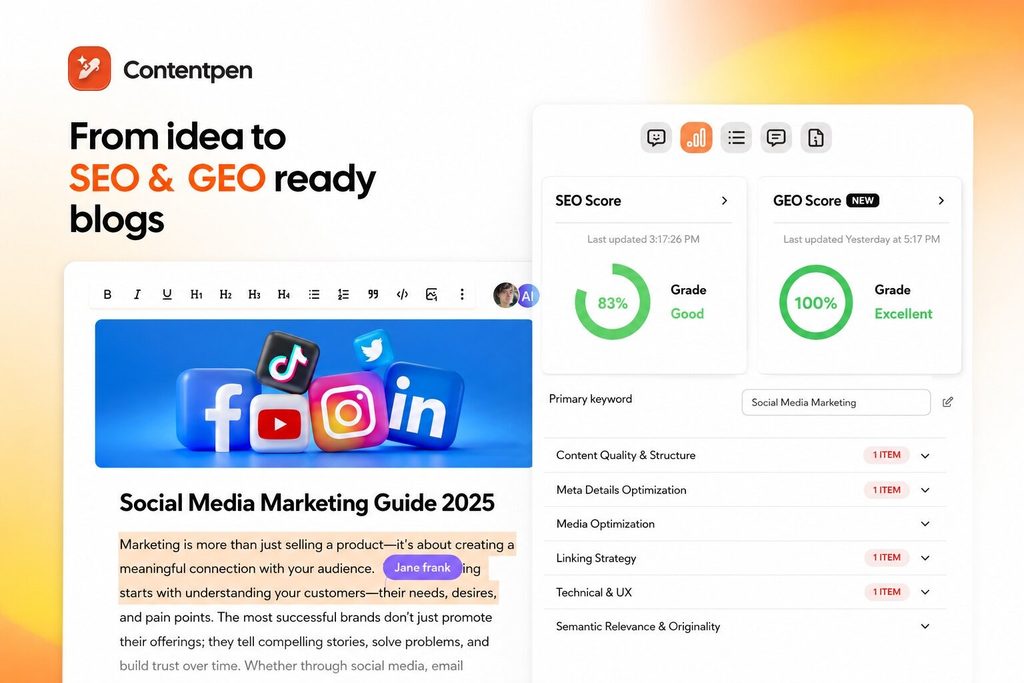
Contentpen stands out among ContentForce AI alternatives because it covers the entire content lifecycle inside a single workspace.
The platform starts with keyword research and clustering and runs SERP and content-gap analysis using real competitor data. Then, it generates AI-assisted drafts in over 50 languages, all scored live for both SEO and GEO readiness.
With the new Content Autopilot feature, you plug in your target keyword and let Contentpen handle the rest, including AI images, YouTube embeds, and automated internal and external linking.
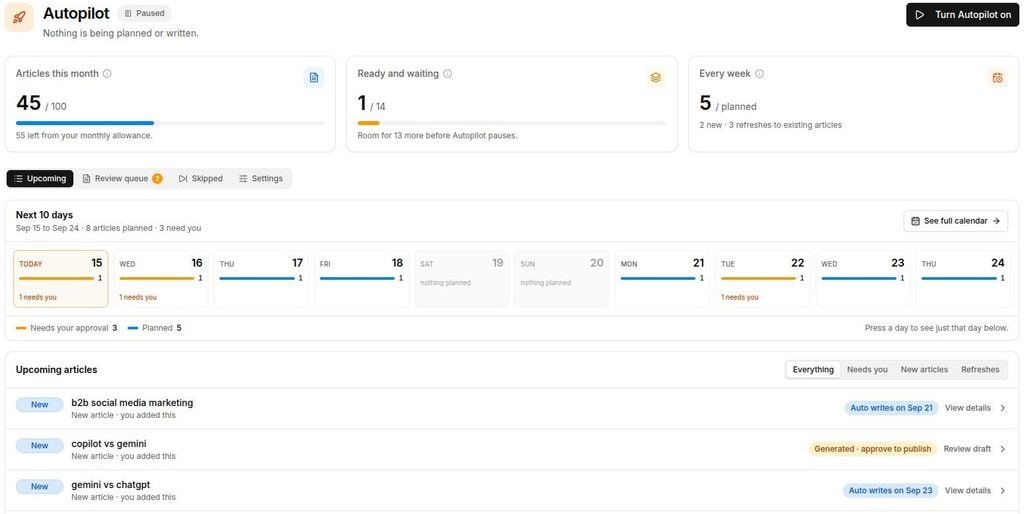
After the content is created, Autopilot publishes your content automatically to WordPress, Ghost, Wix, Webflow, Shopify, Em-Dash, or ContentStudio without any manual export step. For control purposes, you can also choose to receive publishing approvals before content goes live.
Key features:
- Autopilot mode handles repetitive content production tasks automatically.
- Branded imagery settings keep visuals on-brand without extra design work.
- The SEO Opportunities dashboard flags content decay, click-through gaps, and quick wins with one-click refresh options.
- AI visibility tracking across 7 major AI models, including ChatGPT, Gemini, and Perplexity.
- SEO and GEO scoring built into the same editor where you write, instead of being treated as a separate add-on.
For teams managing brand voice consistency, a custom knowledge base trains the AI on real brand tone and style rather than producing generic-sounding output.
The bulk content generation feature supports agencies and enterprises scaling production, while approval-based governance workflows add the review layers larger organizations need for legal or editorial sign-off.
Real customers back up these claims with numbers:
- Replug improved its average search position from 28.2 to 8.6.
- NetK5 Technology Group improved their search and AI visibility using Contentpen.
- Integral HR saved $1000 per month on content creation.
Cons:
- The tool doesn’t do ad copy or cover short-form content generation.
- There is no backlink data coverage.
You can read our other customer testimonials to see how businesses from different niches and industries improved their workflows and AI search performance with Contentpen.
Pricing:
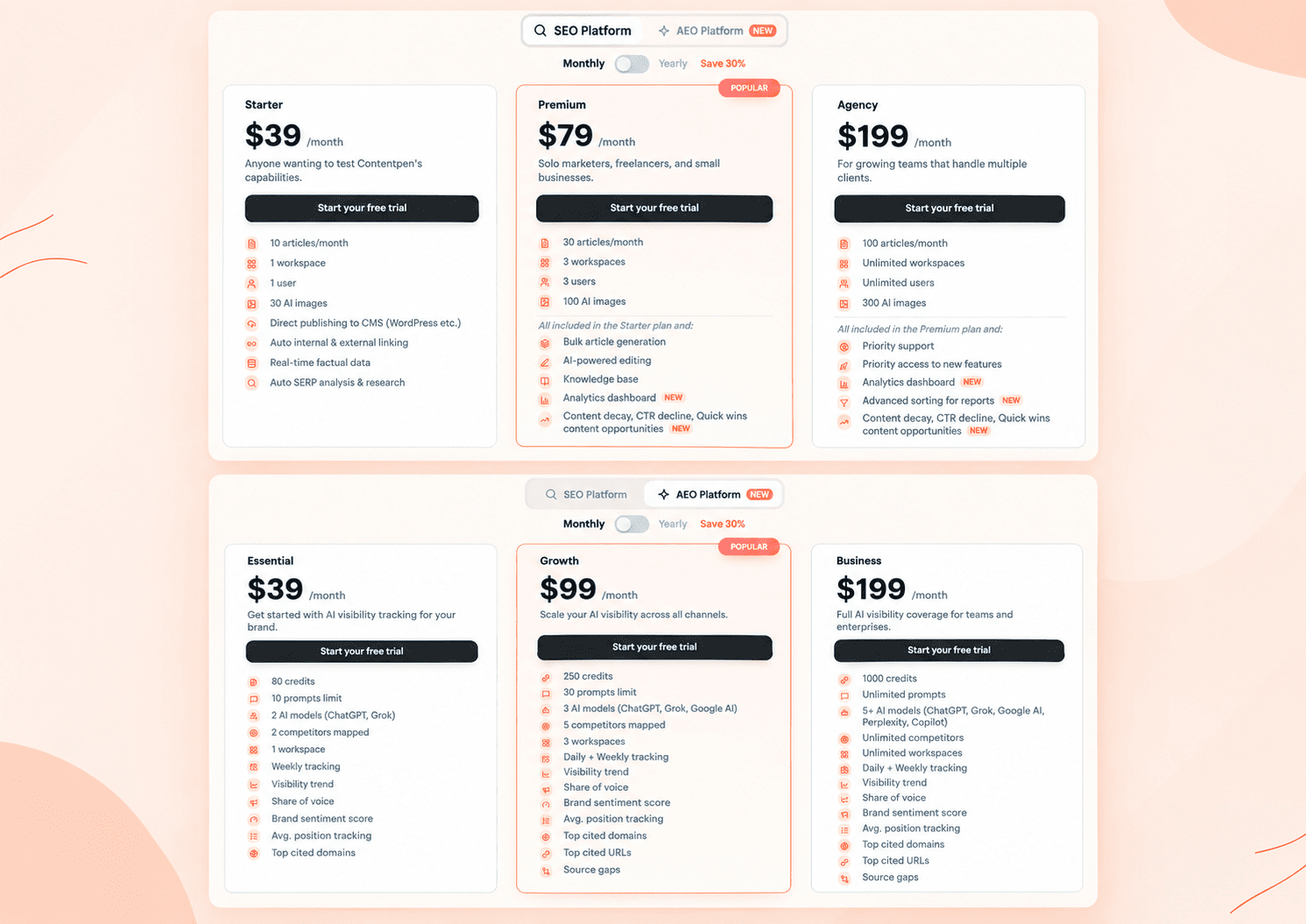
Contentpen pricing plans start at $39/month for both the SEO and AEO platforms. You get a 7-day free trial to test the tool before purchasing.
2. Jasper – Best for brand voice consistency at scale

Jasper is built for teams that need consistent brand voice across many clients or product lines at once. The platform’s Brand IQ feature and content templates let agencies lock in tone, vocabulary, and structure before writers or AI ever touch a draft.
Key features:
- Jasper Chat: Get quick answers for brainstorming ideas, topics, and more. It is Jasper’s conversational chat interface, kind of like ChatGPT or other AI chatbots.
- AI agents: You can ask the agents to run competitor analysis, translate content, generate ad copy, and more.
- Jasper Grid: With this feature, you can bulk generate content at scale by setting up a single workflow that takes in a keyword and target audience, and the tool runs for multiple rows at once.
Cons:
- Not made for individuals looking to get into AI content automation due to significantly expensive per-seat pricing.
- Can take a while to set up the Brand IQ and other Jasper features and workflows.
Pricing:
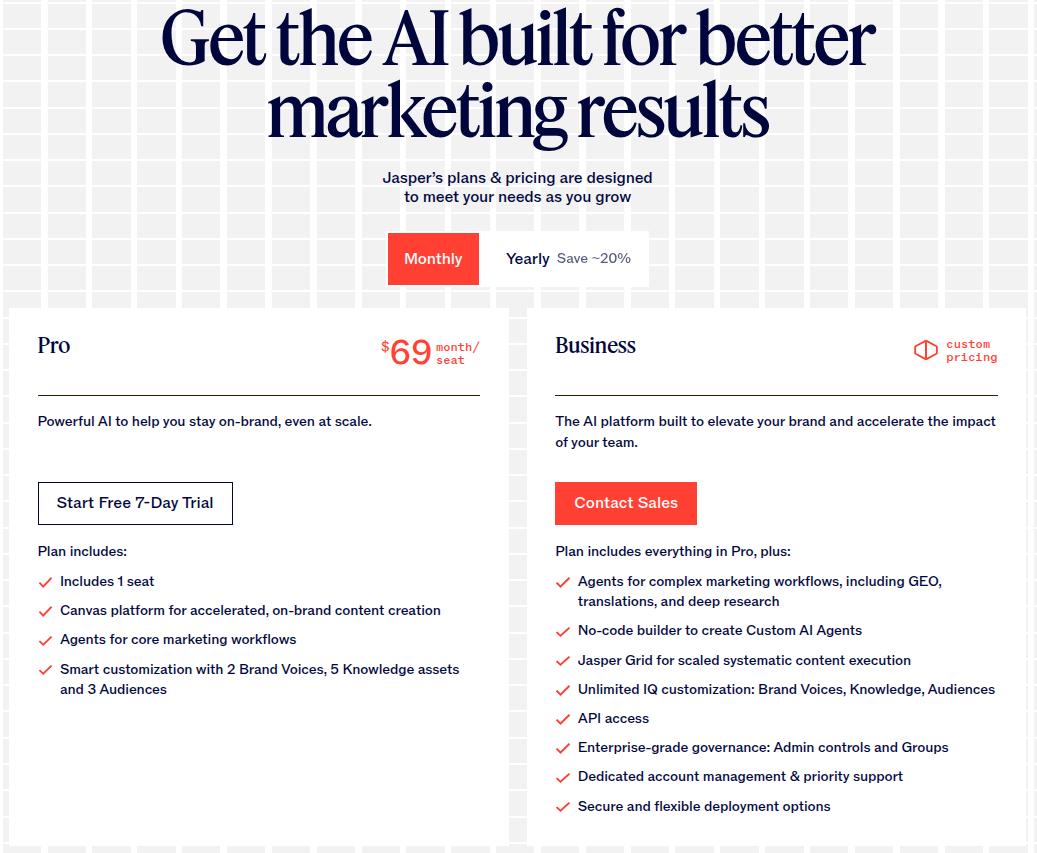
Jasper pricing starts at $69/seat/month, which provides users with 2 brand voices, 5 knowledge assets, and 3 audiences. You can get a 7-day free trial to experience the tool before purchasing.
3. Copy.ai – Best for GTM workflows
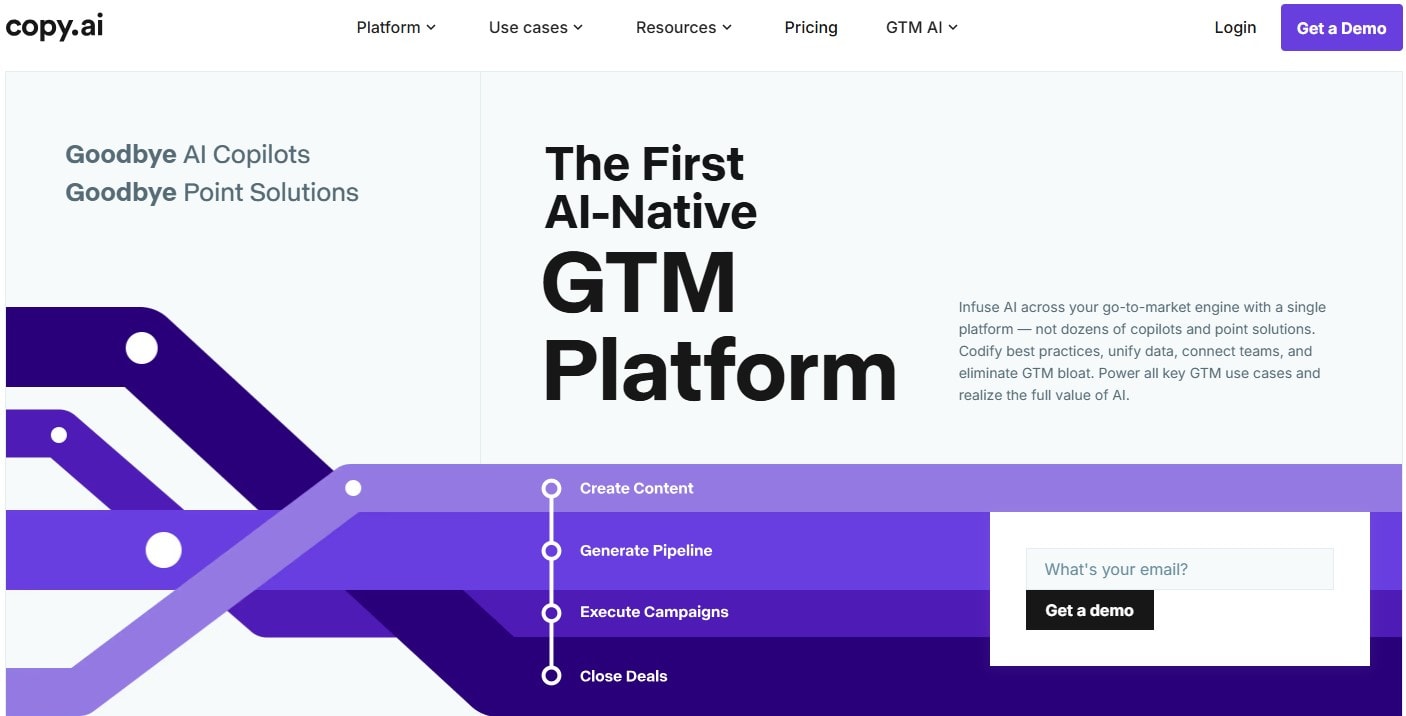
Copy.ai has moved away from being primarily a copywriting tool. It now positions itself as an AI-native GTM (go-to-market) platform for sales, marketing, and operations teams, automating repetitive workflows well beyond content generation.
Its template library spans many industries and content formats, helping teams move from a blank page to a draft in minutes.
Key features:
- AI chat: Access OpenAI, Anthropic, and Gemini models in one workspace.
- Sales prospecting automation: Perform detailed website scraping for lead research.
- Marketing workflow automation: With Copy.ai, you can create and deploy multiple workflows built around reusable playbooks.
- Brand voice management: Like many other ContentForce AI alternatives, Copy.ai also provides brand voice management and shared knowledge bases across workflows.
Cons:
- SEO capabilities are limited, with no built-in keyword research.
- Long-form content still needs heavy editing before it’s publish-ready.
- The broad feature set can overwhelm users who only need a writing tool.
Pricing:
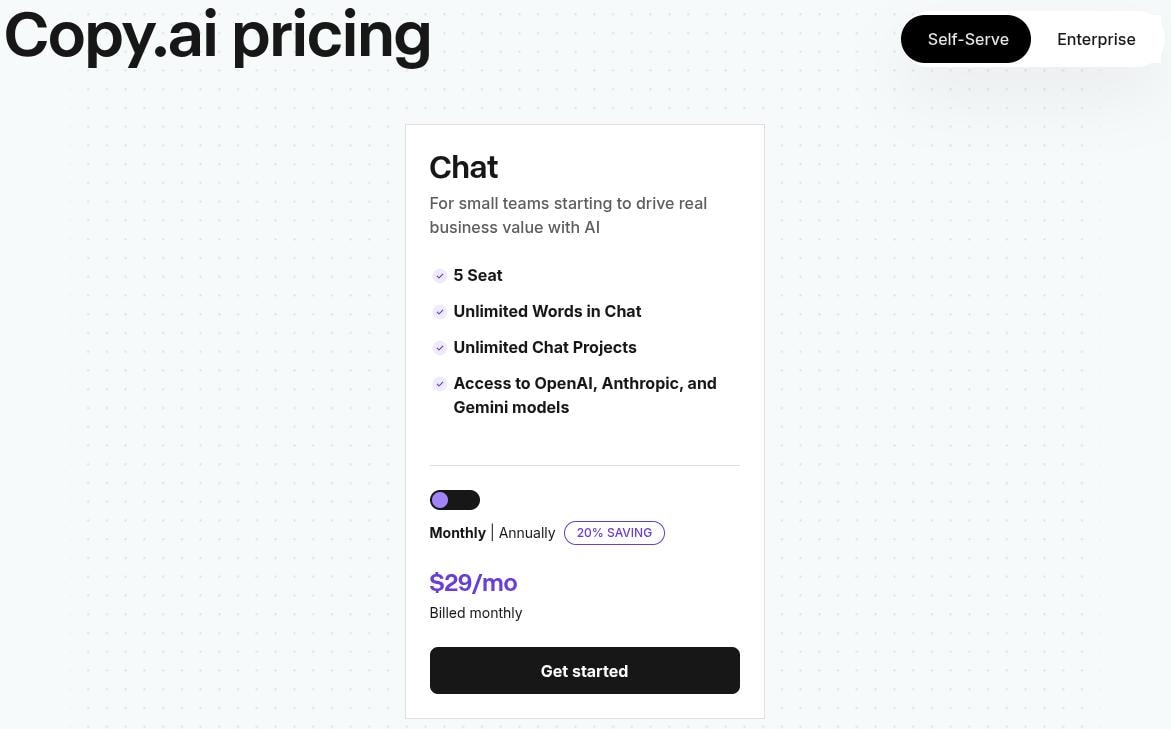
Copy AI pricing starts at $29/month, which includes unlimited words and projects, and access to multiple AI models. Enterprises can get a custom quote directly from the representatives.
Also read: 10+ best Copy.ai alternatives in 2026.
4. Surfer SEO – Best for real-time on-page SEO optimization
Surfer SEO analyzes top-ranking pages for a target keyword, breaking down structure, word count, and semantic elements that correlate with strong search visibility. Writers then get real-time guidance inside the editor, showing exactly where a draft falls short.
Surfer now focuses on AI search tracking and analytics, helping users track prompts for Gemini, ChatGPT, Google AI Overviews, AI Mode, and Perplexity.
Key features:
- Handy integrations: The platform integrates directly with Google Docs and WordPress, keeping SEO guidance inside existing writing workflows.
- Content audit: Surfer (now Positive Surfer) keeps monitoring your pages after publishing to surface decaying content and other ranking opportunities.
- Topic suggestions: Surfer deeply analyzes your site to create topical maps that you should cover to gain authority and trust signals from search and AI engines.
Cons:
- Independent user reviews show that non-English content, especially for German and Spanish, shows grammatical and accuracy issues.
- In our Surfer SEO review, we concluded that Surfer over-optimizes content sometimes to force a higher NLP term coverage and on-page SEO score.
Pricing:
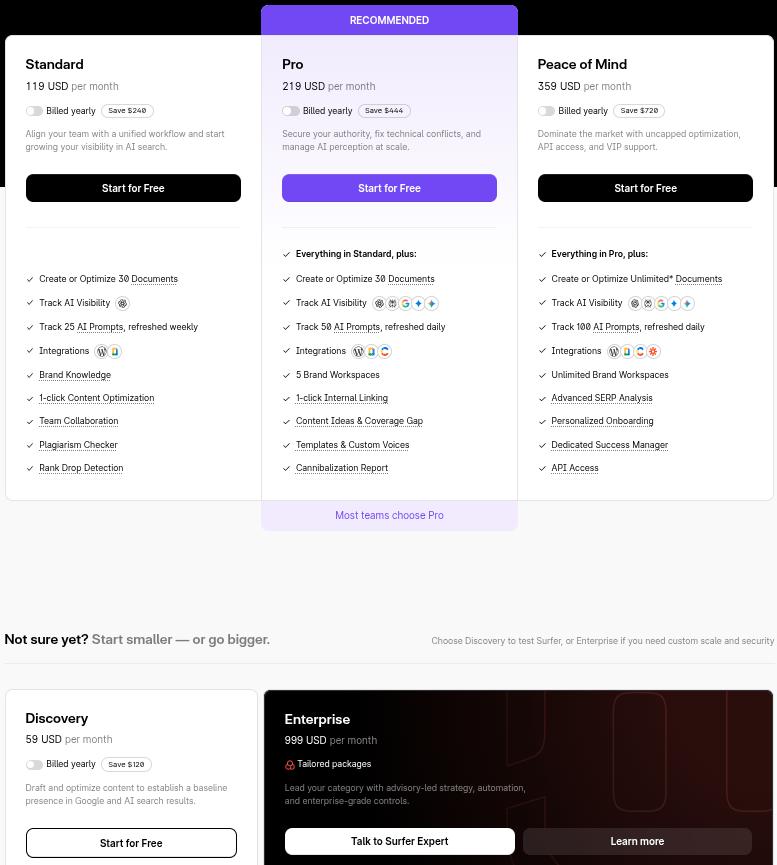
Surfer pricing starts at $59/month for the Discovery plan, which grants you 10 article creations and 10 document optimizations. New users can get a 7-day free trial to test the platform before committing.
5. Clearscope – Best for content briefs backed by competitive analysis
Clearscope builds detailed content briefs by studying pages that already rank for a target topic, pulling out subtopics, key terms, and structural patterns that successful content shares.
Key features:
- Query awareness: Clearscope expands a topic into related questions and prompts that you can create content on for better authority.
- Intent recommendations: The tool provides guidance to users on how they should cover the keyword intent for a topic.
- AI visibility tracking: Clearscope provides its users with the ability to track their brand inside ChatGPT, Gemini, and Claude. The covered AI models aren’t as extensive as other options, such as Contentpen, but the feature is there nevertheless.
Cons:
- The starting price is way too much for an individual or a freelancer to try.
- The user interface (UI) looks outdated, not according to modern design standards.
Pricing:
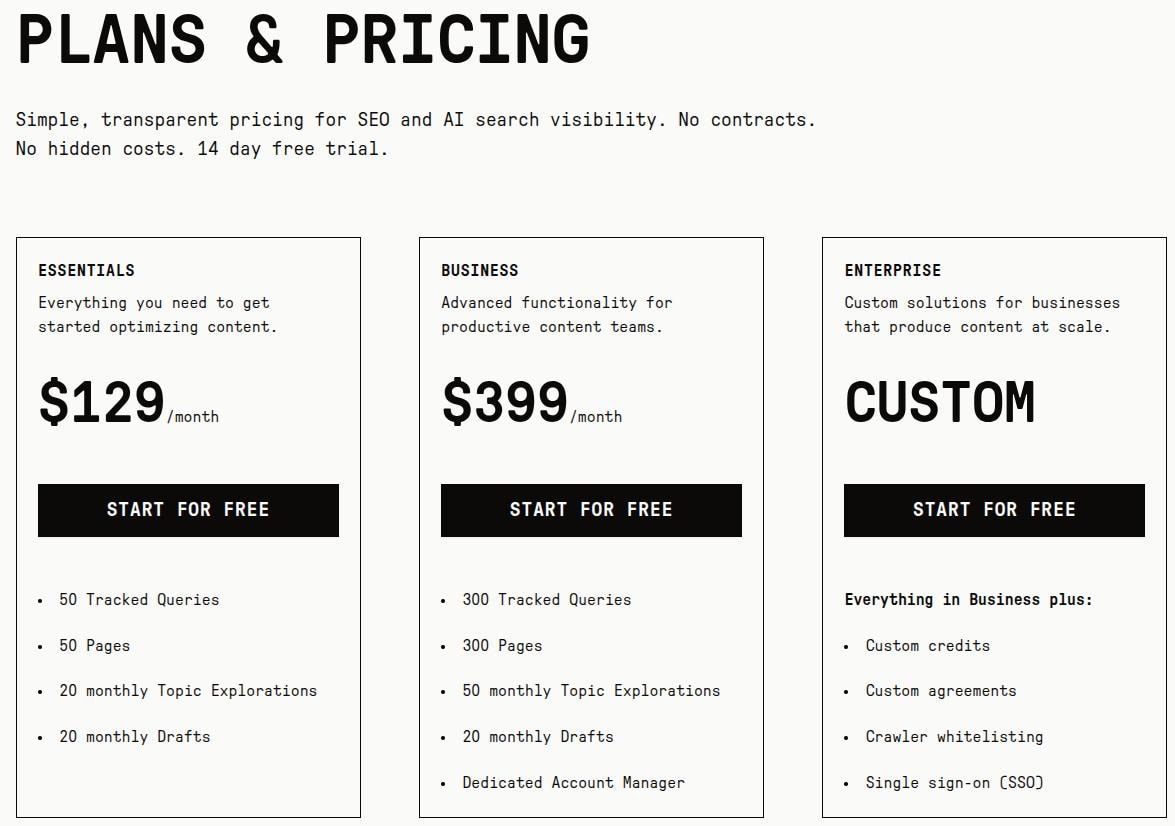
The Essentials plan starts at $129/month with 50 tracked queries and 50 pages. A 14-day free trial lets teams test the workflow with real content first before purchasing.
6. NEURONwriter – Best for semantic SEO and content optimization
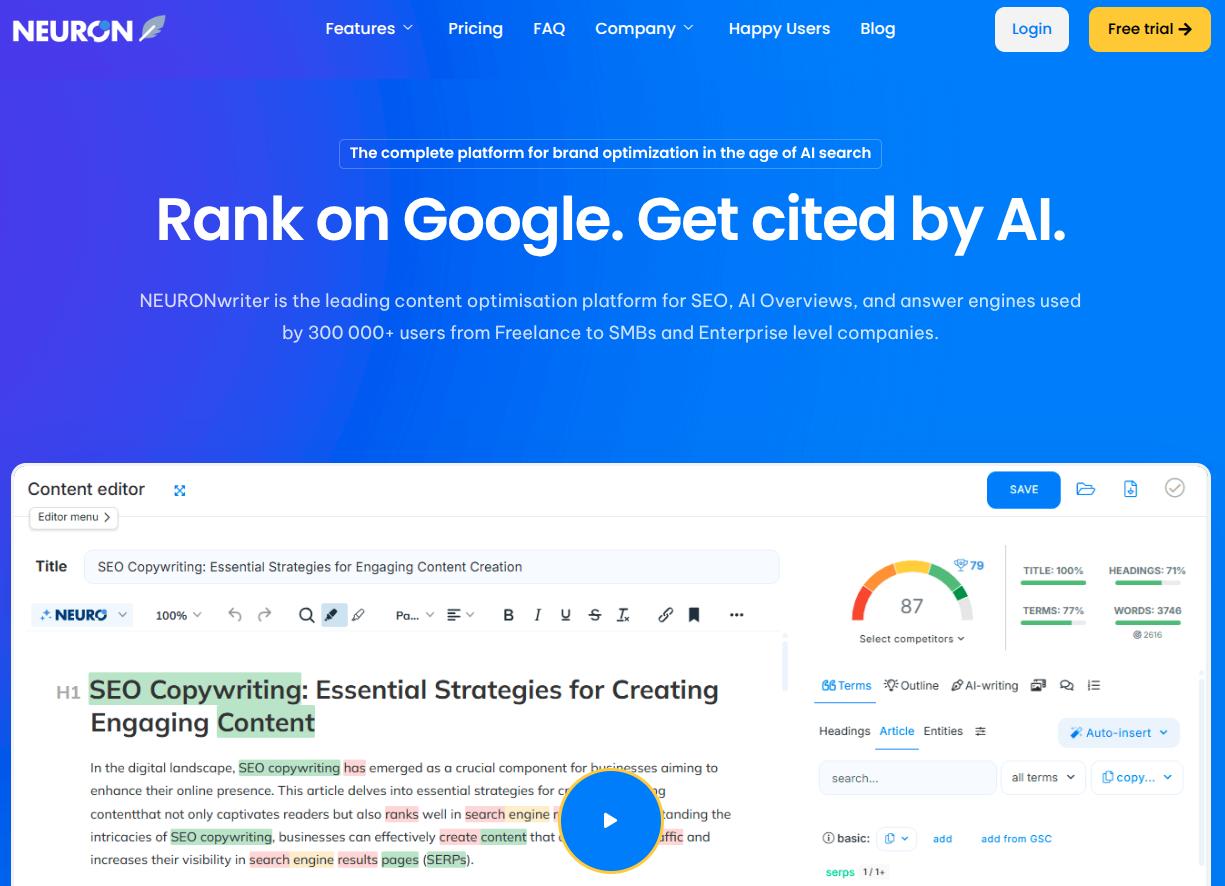
NEURONwriter sits between a research tool and an AI writer, built around semantic SEO. It pulls NLP terms and competitor SERP data to help content match what search engines expect, covering the dedicated keyword research analysis that ContentForce AI leaves out.
Key features:
- SERP analysis view: With NEURONwriter, you can compare competitor headings, word counts, and term usage side by side.
- Contextual internal linking: The tool places highly relevant internal links in your content to strengthen site structure and content discoverability.
- NLP term suggestions: This feature is built into the editor, helping you add LSI and semantic terms in your content for better visibility.
Cons:
- No built-in GEO or AI visibility monitoring.
- The interface gets cluttered once several projects are running at once.
- Not a full content marketing platform, since publishing and analytics are not supported natively.
Pricing:
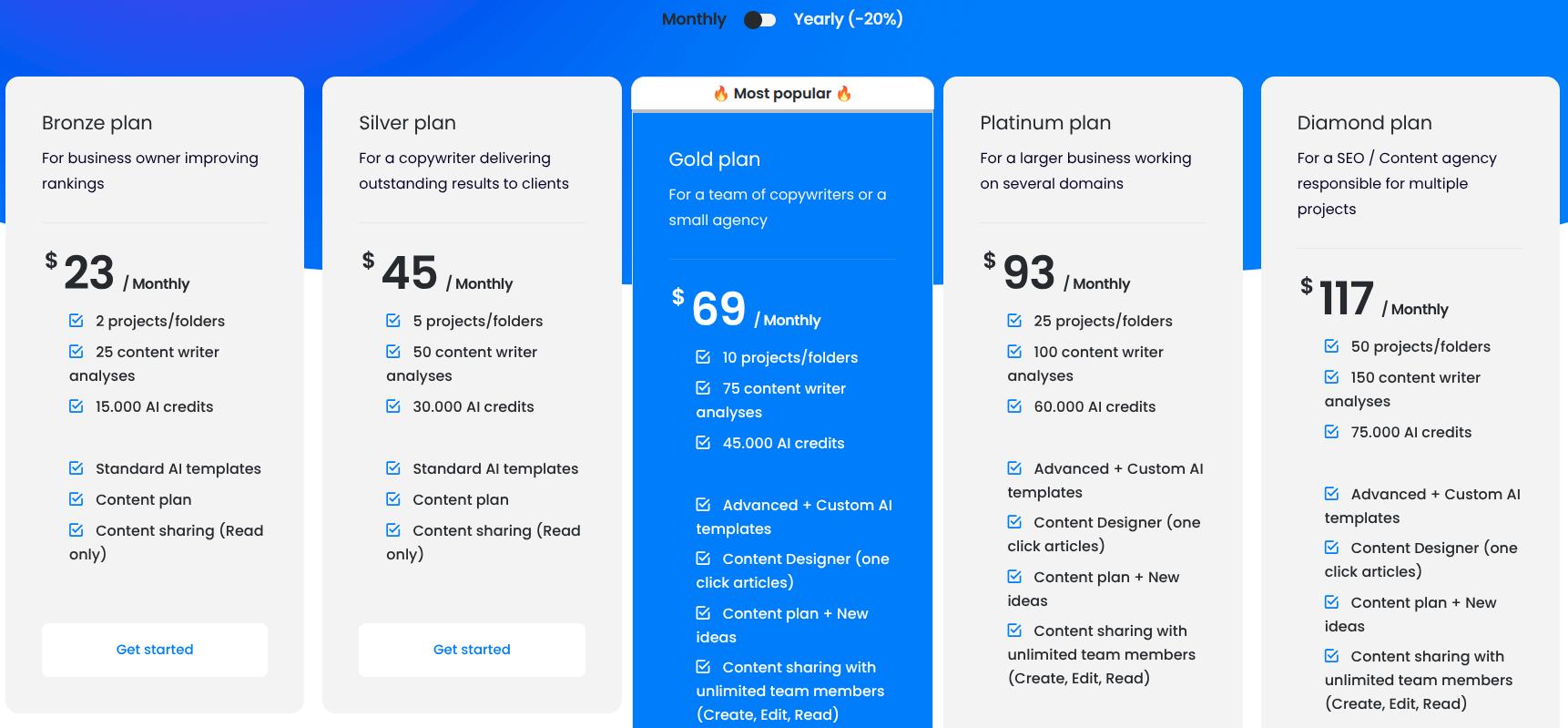
The Bronze plan starts at $23/month and includes 2 projects, 25 content analyses, 15,000 AI credits, keyword research, and SERP analysis. A 7-day free trial is available (no credit card required).
7. Rytr – Best budget-friendly option for solo creators
Rytr keeps things simple and affordable, making it a solid choice for freelancers and small businesses managing content without a dedicated marketing team. Rytr’s free plan includes 10,000 characters per month and grants access to more than 40 different content templates.
Key features:
- Simple writing interface: Rytr is ideal for users who don’t want complex AEO or GEO features cluttering their editor.
- Ideal for copywriting: Rytr specializes in copywriting tasks with several templates based on AIDA and PAS frameworks.
- Built-in content editor: You can change your writing tone, style, expand a section, or summarize content right in the editor.
Cons:
- Rytr is not made for long-form content. Creating longer articles feels like stitching multiple chunks of text together.
- No team collaboration tools mean agencies and enterprises that want to set up detailed content pipelines and workflows must look elsewhere.
- Extra editing is needed to make sure the copy doesn’t feel “surface-level”.
Pricing:
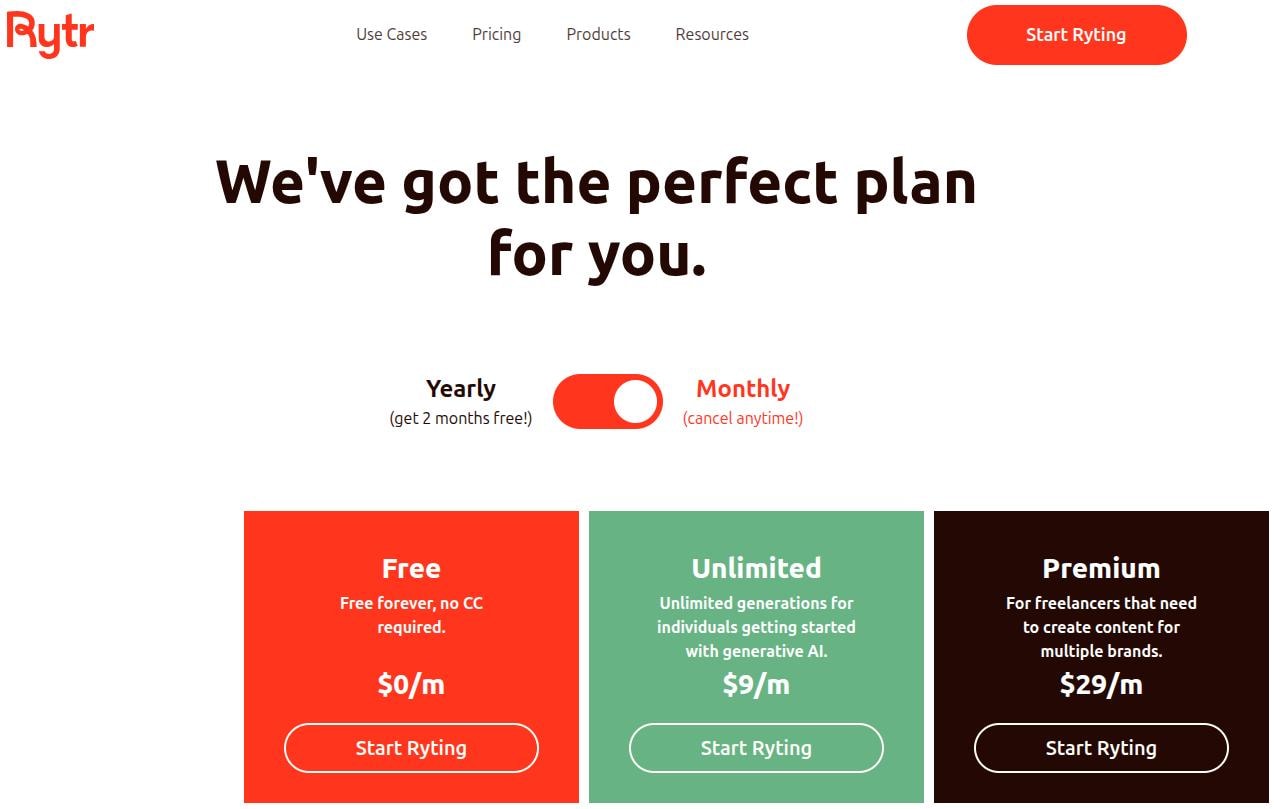
Paid plans start at $9/month for copy generation and priority support, with higher tiers adding multiple brand tones and support for 35+ languages.
8. Writesonic – Best for combining AI writing with AEO tracking
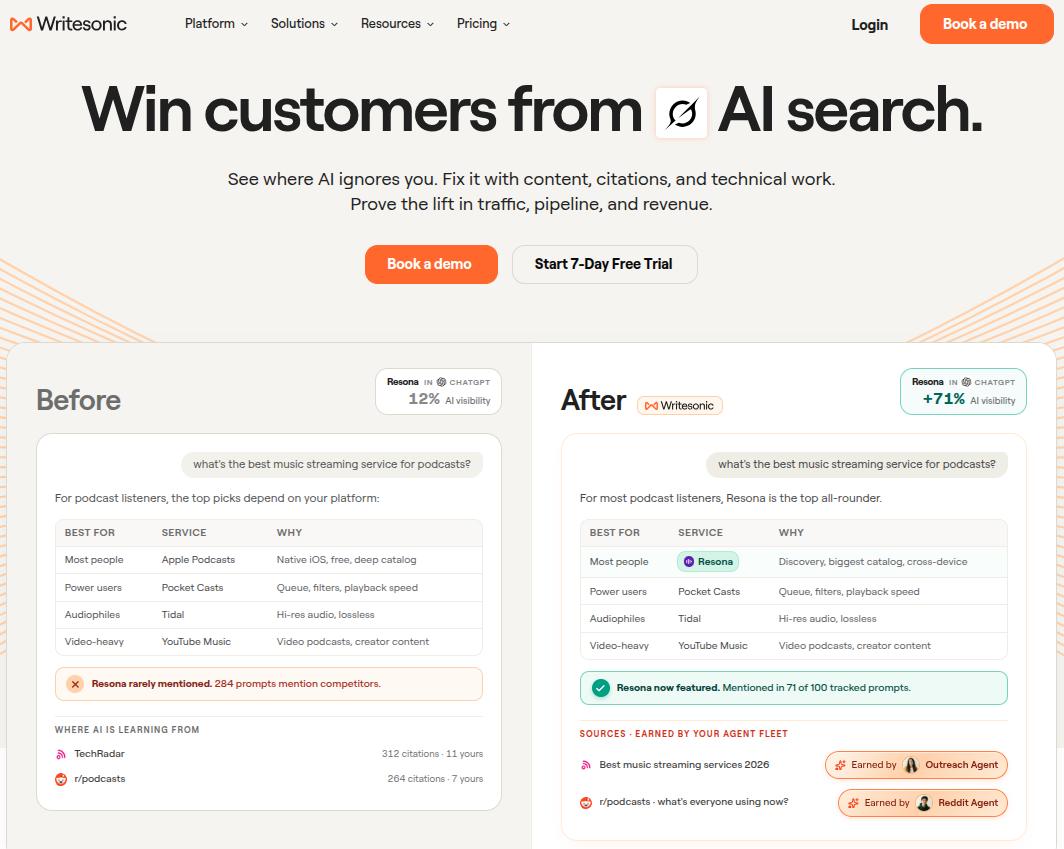
Writesonic offers a broad content template library covering ads, blog posts, and product copy, alongside a chat-based generation mode, called Chatsonic, for quick drafts and brainstorming without heavy setup.
Marketing teams use it to produce varied content formats from a single dashboard, while tracking and optimizing their AI mentions off-page.
Key features:
- AI Ads Tracker: Track your brand placements inside ChatGPT ads with ad-triggered detection and daily updates.
- AI Agent Analytics: See server-side tracking of your site and check how every AI crawler and human click came through, with sources tracked.
- AI writer: Writesonic provides you with over 100 step agentic pipelines for content creation while ensuring SEO and GEO-optimization.
Cons:
- According to independent reviews, you can’t cancel annual billing mid-cycle, which does frustrate a lot of users.
- Customer support takes significantly longer to respond to user queries and problems.
Pricing:
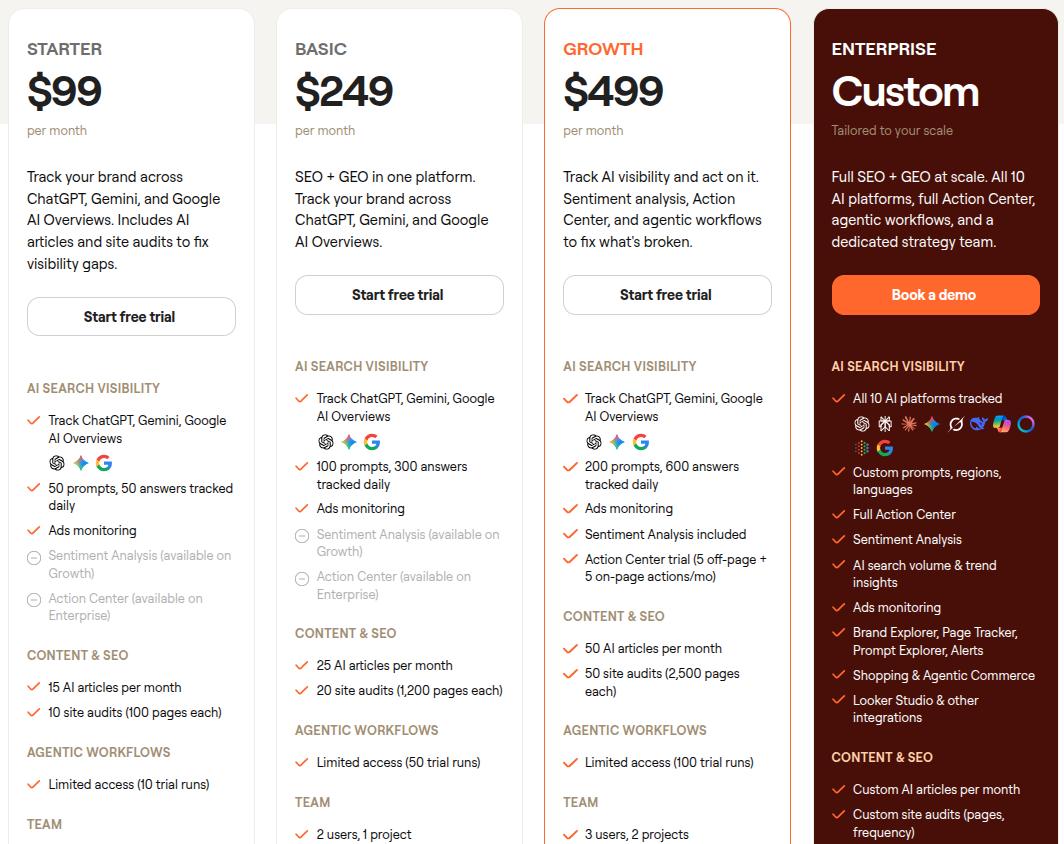
Writesonic pricing starts at $99/month, which provides 50 prompts, 15 AI articles, and 10 site audits. Custom plans are available for enterprises.
9. WRITER – Best for enterprise content governance and brand voice control

WRITER is built less as a drafting tool and more as an enterprise AI platform, wrapping content generation into style guide enforcement, terminology management, and automated brand-voice corrections.
Large, regulated organizations use it to keep AI output compliant and consistent across departments, not just marketing.
Key features:
- Agent Builder: WRITER provides 100+ prebuilt agents for content and workflow automation.
- Knowledge Graph: The tool grounds AI output in company-specific data and terminology.
- Enterprise security protocols: SOC 2 Type II, HIPAA, and GDPR support with SSO and admin controls.
Cons:
- Built for enterprise governance, not SEO or organic content growth.
- Setup and admin configuration take longer than most standalone AI writers.
Pricing:
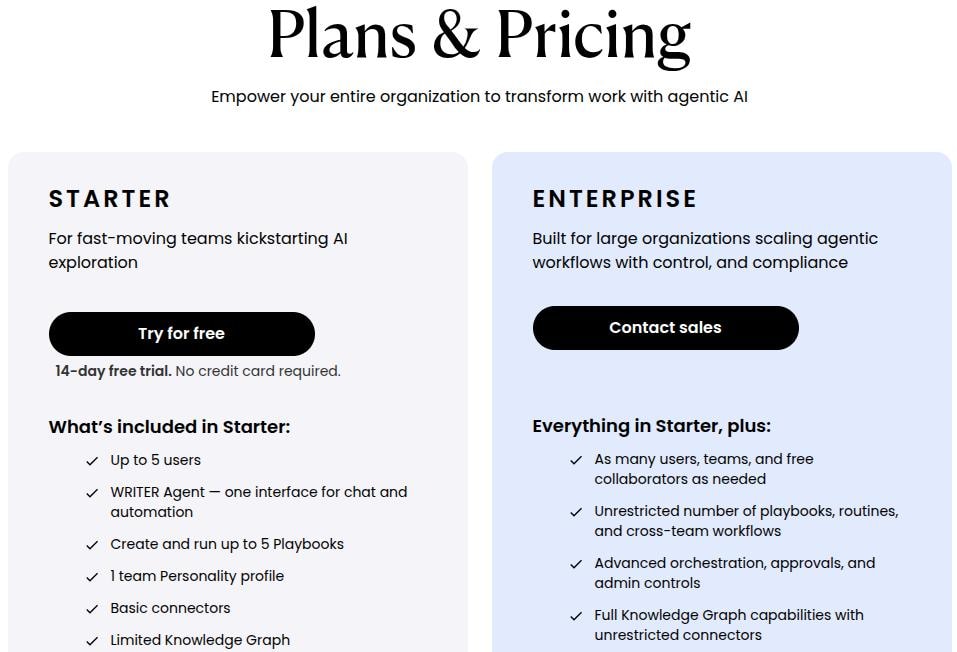
There is no publicly available WRITER pricing figure. However, you can try the platform for free with their 14-day trial. A custom plan is available for enterprises.
10. Frase – Best for combining content research with optimization
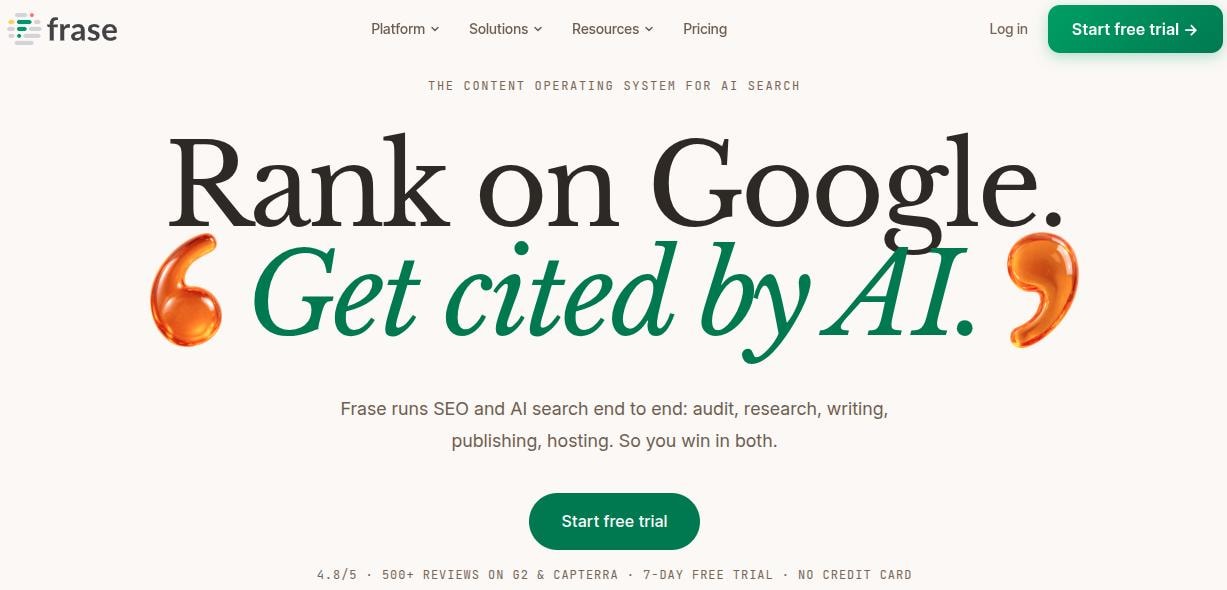
Frase specializes in SERP analysis and content brief generation, with particular strength in structuring content around the specific questions people ask search engines and AI systems. Its question-first approach helps content win featured snippets and get cited in AI Overviews.
Key features:
- Site audit: Frase finds technical SEO gaps and helps users fix underlying crawling and indexing issues for pages.
- AI visibility tracking: You can track your brand across 5 AI engines, including ChatGPT, Perplexity, Claude, Gemini, and Google AI.
- Content Guard: This feature allows you to monitor your published pages and fix decaying content, something that ContentForce AI doesn’t touch.
Cons:
- Frase.io doesn’t have any brand kits to control how your visuals will look. It only picks your brand colors and tone from your domain.
- Unlike Contentpen, there is no dedicated keyword research module to display key metrics, such as keyword difficulty, intent, CPC, and search volume, which are necessary for better content planning.
Pricing:
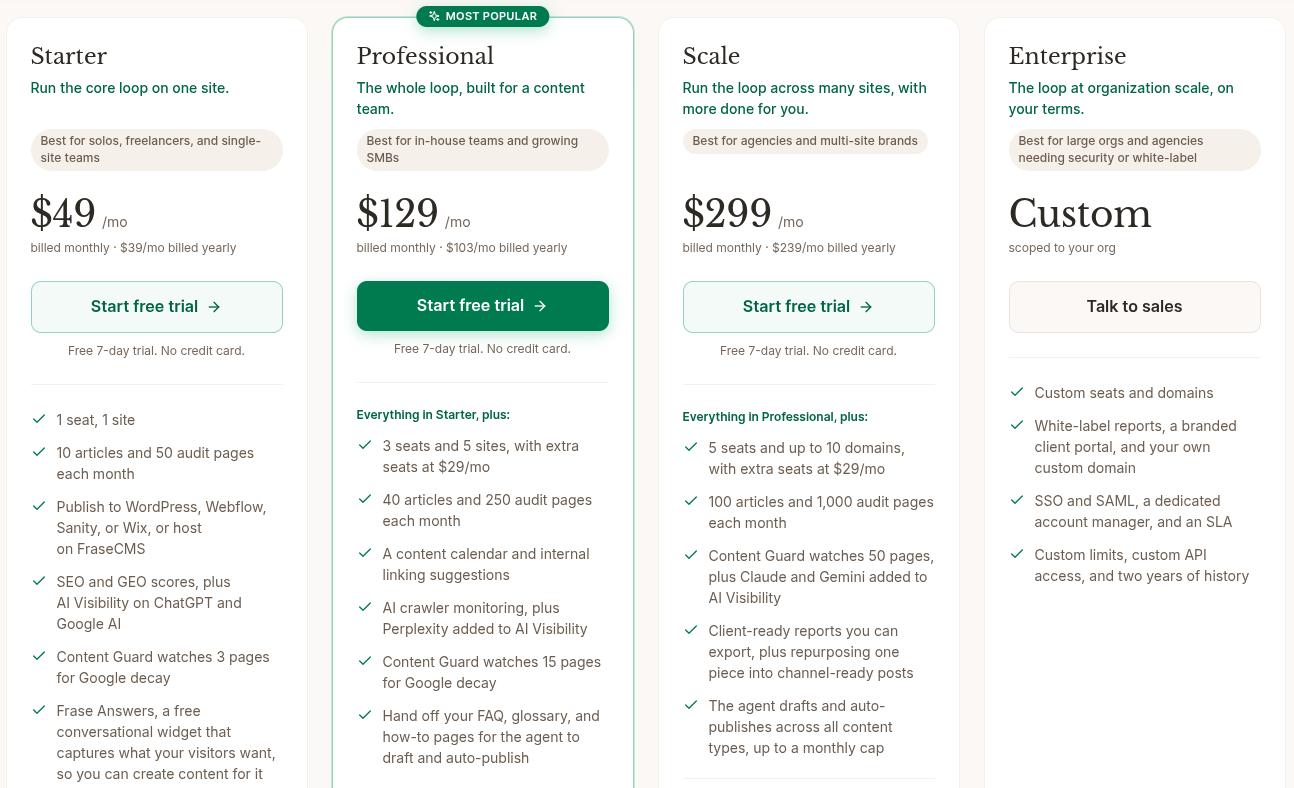
Frase pricing starts at $49 per month for the Starter plan, which includes SEO and GEO scores plus AI visibility tracking on ChatGPT and Google AI. A 7-day free trial is available.
Also read: Frase vs. Contentpen – key differences highlighted.
How to choose the right ContentForce AI alternative
Choosing among ContentForce AI alternatives comes down to matching a tool’s strengths against your actual workflow. Start by estimating your monthly content volume, since high-output teams need generous credit allowances or unlimited plans.
Consider whether SEO or AEO matters more right now, since some tools still treat AI visibility as an afterthought, while others, including Contentpen and Frase, build it into scoring from the start.
Beyond volume and optimization priorities, check a few practical factors:
- Integration requirements against your existing CMS and marketing stack
- Team size and how many people need simultaneous access
- Total budget, including any per-word or per-credit charges hidden inside subscription tiers
Once you have a shortlist of two or three candidates, run real content through each one during a free trial before locking into a paid plan. Hands-on testing with your own topics reveals usability issues and output quality gaps that vendors rarely mention.
Parting thoughts
ContentForce AI does one job well: refreshing existing content using live SERP data, with safe WordPress rollback and no API key hassle. But credit caps on lower tiers, a narrow feature set, and a strict SEO-only focus mean it is not made for everyone.
Among the alternatives covered here, Contentpen stands out for teams that want one workspace covering research, writing, SEO/GEO scoring, and direct publishing without exporting drafts elsewhere.
Write content that’s built to rank, not just read
Create search-optimized blogs aligned with SEO and GEO signals, so your content performs well across search and AI-driven discovery.
Try SEO Blogging FREE →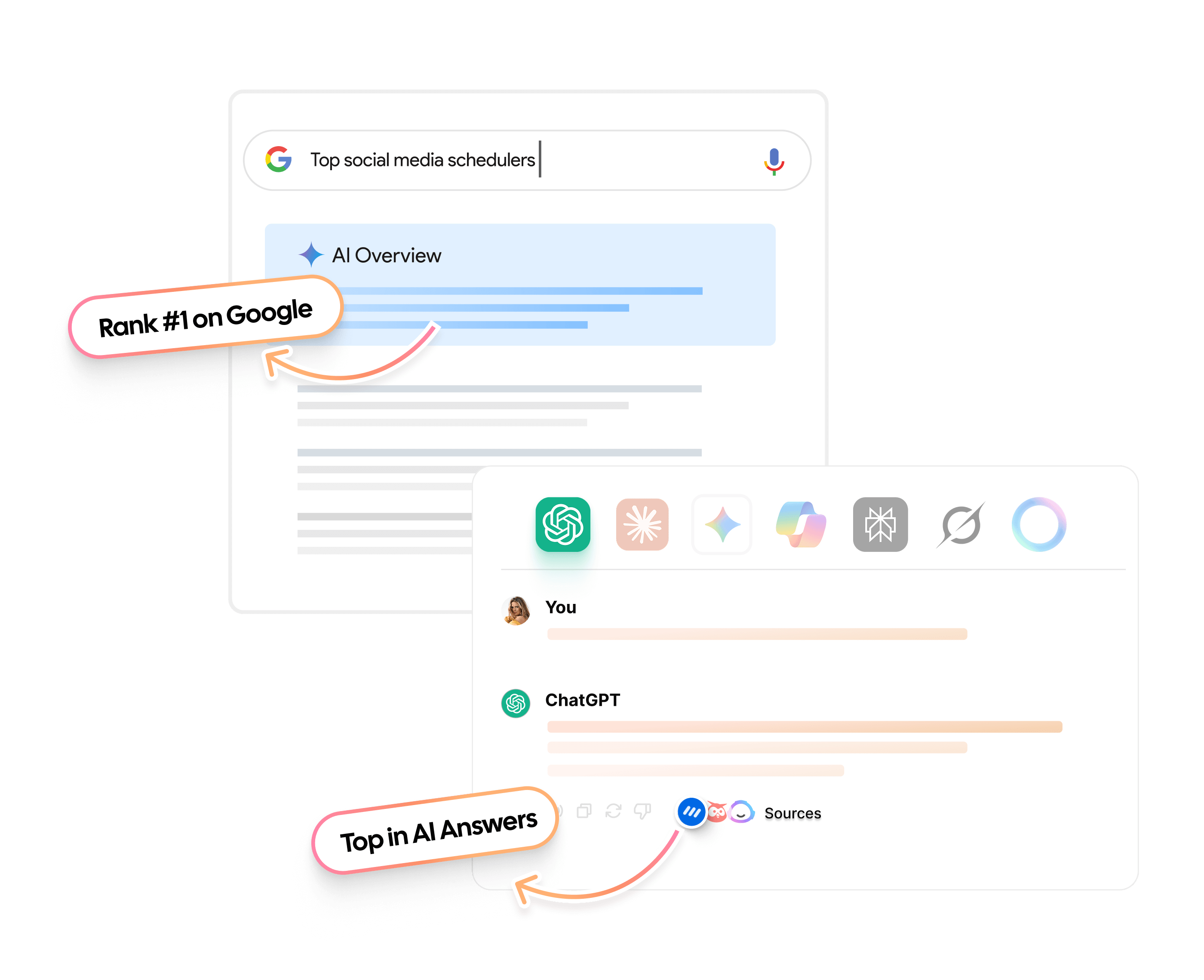
The best choice always depends on your specific workflow, budget, and niche. For the next steps, try a couple of shortlisted tools with your own content before committing.